
Peptides are the most asked about subject in my inbox this year, and almost none of the questions are really about peptides. They are about a dog who is slowing down, a joint that is not right, or an owner who read something hopeful at two in the morning. So this page does two jobs. It sets out what is actually known about peptides in animals, which is a good deal less than the marketing suggests, and it helps you work out what you are really trying to solve. If you read one line and close the tab, make it this one: ask what evidence supports that exact product for your dog’s diagnosed problem, and be careful of any seller who cannot give you one.
What peptides are In veterinary use BPC-157 and TB-500 Risks and unknowns Questions for your vet What to do now
Peptides for Pets: Evidence, Risks, and Questions for Your Vet
Peptides attract big promises about healing, mobility, and healthy aging. Before choosing a treatment for your Bulldog or French Bulldog, ask a smaller, more useful question: What evidence supports this exact product for my dog’s diagnosed condition?
5 things to know before treatment
- Peptides are a broad group. Evidence for one does not establish benefits for another.
- An approved medicine and an experimental peptide are not interchangeable.
- A pharmacy source does not by itself prove safety, effectiveness, or FDA approval.
- Research peptides are not established substitutes for needed surgery or other proven care.
- Agree on the goal, monitoring, cost, and stopping rules with your veterinarian.
Ask the smaller question
Owners bring me peptides now the way they used to bring me stem cells. The conversation runs the same way every time. Somebody has read that a compound helps tissue heal, and the dog sitting in front of me has a problem that nobody has actually named yet. The compound is the exciting part of that sentence. The naming is the part that decides how it ends.
None of this is a reason to turn down something your own veterinarian has recommended and can explain to you. What I would think twice about is ordering a vial from the internet for a problem that has not been diagnosed, because at that point you are treating a guess, and it is the dog who pays for the guess.
If you want somewhere useful to put that energy, put it into the dull things. Weight off the joints, steady daily support, and an honest look from a vet when something changes. Not glamorous, I know. The evidence is on their side though, and that is worth more than a promise.
What Are Peptides?
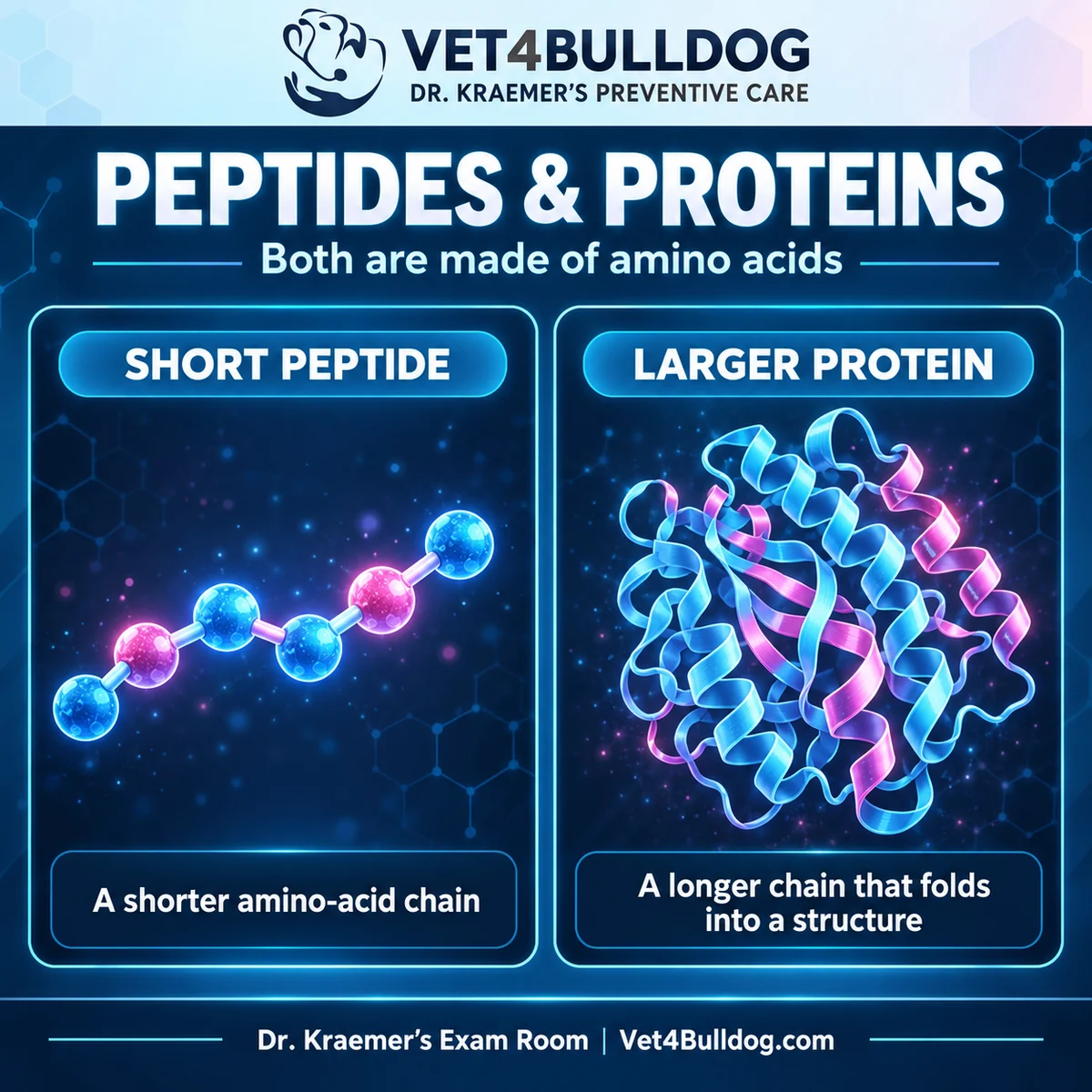
Peptides are short chains of amino acids, the building blocks also found in proteins. Some act as signals in the body. Their effects depend on their structure, dose, formulation, and route of administration. “Natural” or “synthetic copy” does not automatically mean safe.
Are Peptides Used in Veterinary Medicine?
Yes. Established peptide medicines include insulin products used to manage diabetes. That experience cannot be transferred to every peptide marketed for recovery or longevity. Each drug needs its own evidence and an appropriate veterinary indication.
Does FDA Approval Apply to Every Peptide?
No. Approval applies to a specific drug product and its labeled use. Human approval does not automatically establish approval for dogs, and a compounded animal drug is not the same as an FDA-approved animal drug.
Animal drugs compounded from bulk substances have not undergone FDA approval review for safety, effectiveness, or manufacturing quality. Compounding may meet an individual animal’s medical need in appropriate circumstances; your veterinarian and pharmacist must assess the applicable requirements.
Terms such as “503A” or “503B” describe human-drug compounding frameworks, not a guarantee that a peptide is approved or effective for your Bulldog. Regulatory reviews and advisory votes can change access discussions without establishing clinical benefit in dogs. Check current information with your veterinary team.
What About BPC-157, TB-500, and Growth Hormone Peptides?
BPC-157
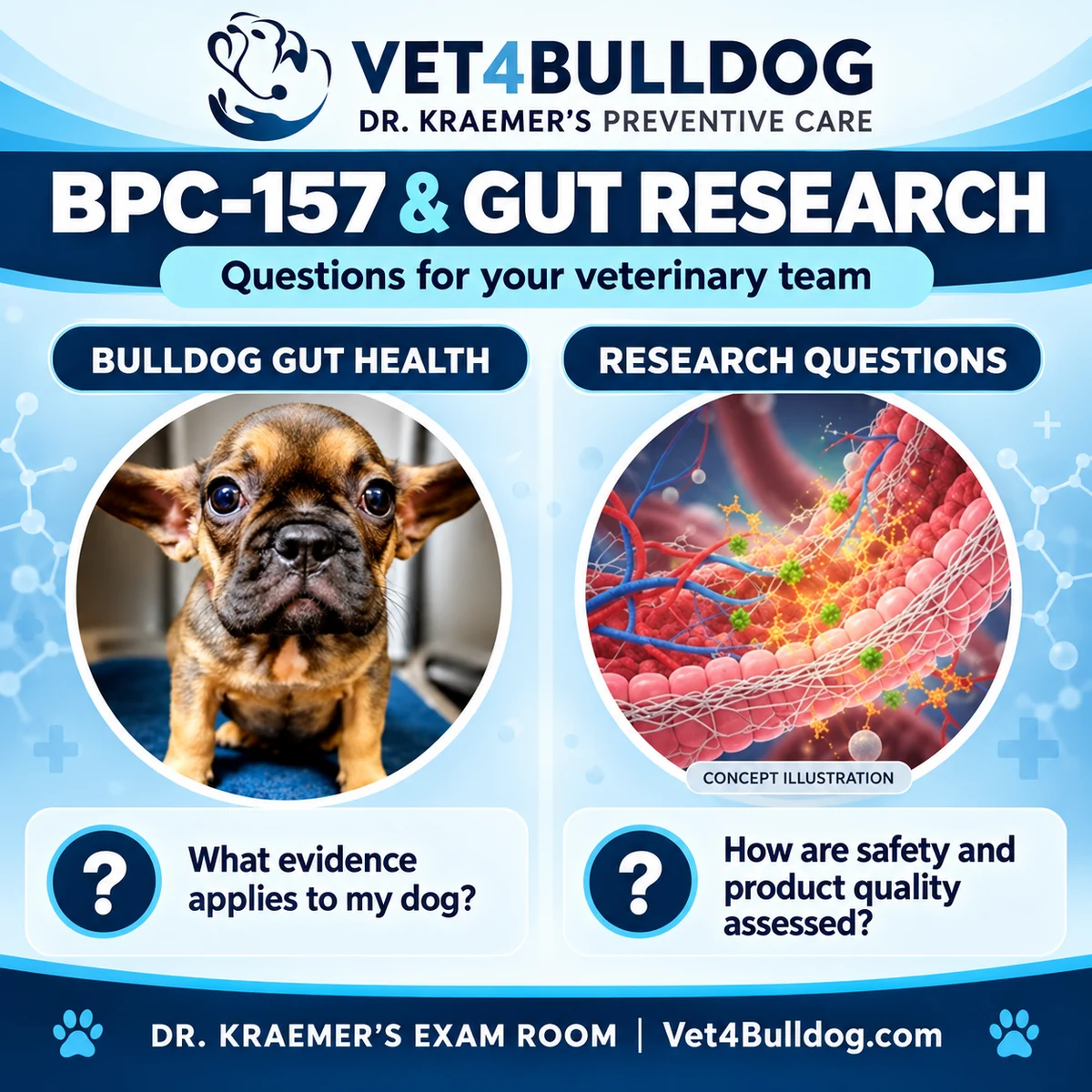
BPC-157 is discussed in research and marketing around tissue repair and gastrointestinal disease. Laboratory findings and owner reports do not establish that a particular product safely heals a torn ligament, treats IBD, or shortens recovery in Bulldogs. Ask to see evidence in dogs with the same condition before considering it.
TB-500
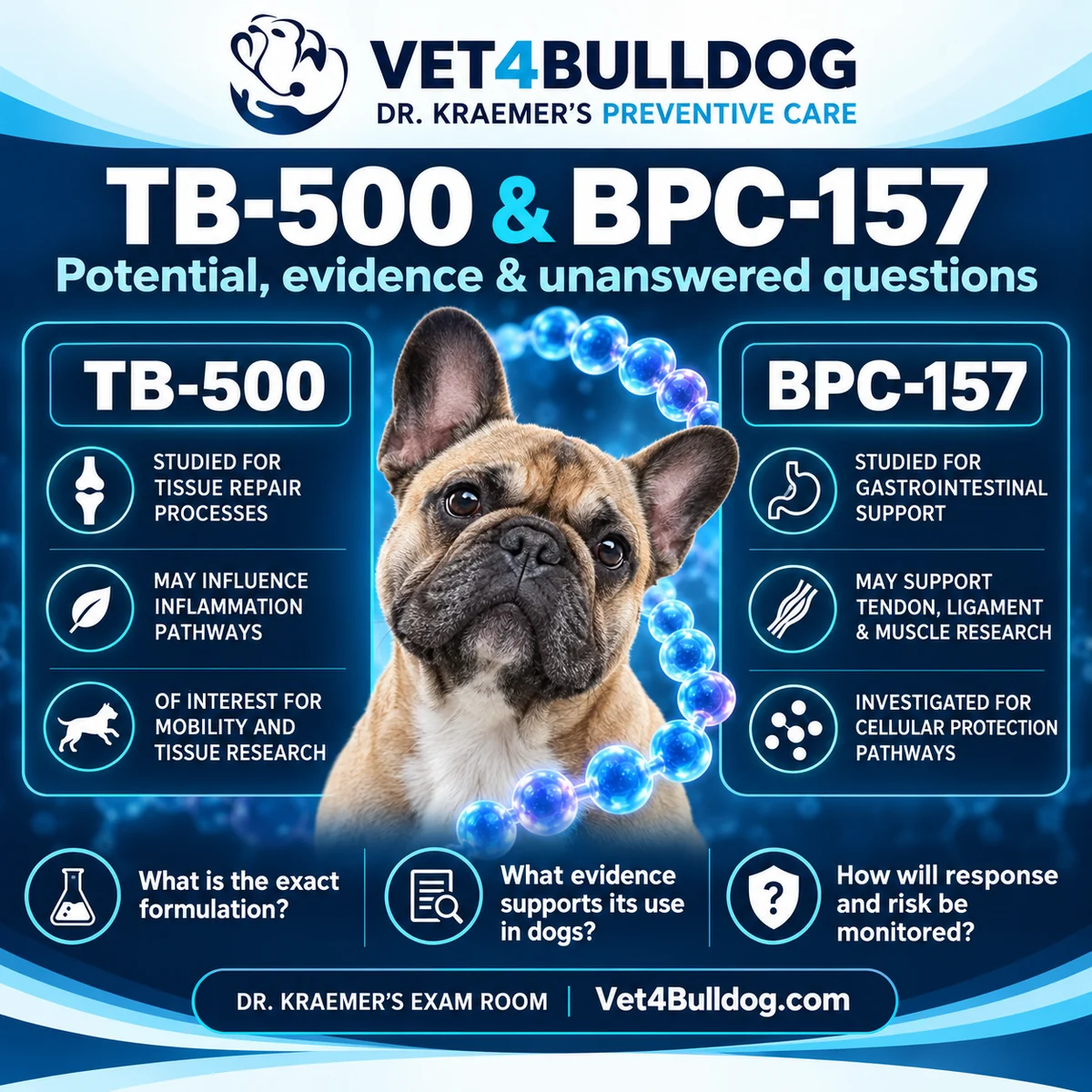
TB-500 is discussed in relation to thymosin beta-4 and tissue-repair research. Product identity matters: names, fragments, formulations, and combinations should not be treated as equivalent. Do not assume that combining it with BPC-157 improves results or safety.
Growth hormone secretagogues
Names such as CJC-1295, ipamorelin, and tesamorelin appear in longevity discussions. Influencing hormone signaling is not automatically a gentle or suitable treatment for an older dog. Ask which canine evidence supports the proposed use and what monitoring would be required.
Is an Injection Combo BPC-157 and TB-500 Recommended?
Combining BPC-157 and TB-500 in a single injection may seem logical because both are marketed for tissue repair but the combination can be problematic
Those two peptides have different clearance rate from your pet body, so while one remains active the other one could fall substantially
one injection ≠ one synchronized biological effect
Also their mechanisms aren’t simply additive. BPC-157 and TB-500 are often marketed together as though they are two interchangeable “healing peptides.” They aren’t.
Combining them isn’t analogous to combining two vitamins where more of the same pathway might simply produce more of the desired effect.
Different biological pathways can interact in ways that aren’t necessarily predictable.
There is another practical problem with putting BPC-157 and TB-500 into the same injection: they are often used on different dosing schedules.
BPC-157 is commonly discussed as a more frequent, sometimes daily, peptide, while TB-500 is commonly administered less frequently. Those schedules reflect differences in how the compounds are intended to be used, not simply differences in convenience.
Discussed this with your vet, and when giving both consider not doing it in joined single injection
Compatibility, stability, and safety also cannot be assumed simply because both peptides are being used for a similar goal.
What Are the Risks and Unknowns?
- Limited relevant evidence: Results from a laboratory model, another species, or a different disease may not predict your dog’s outcome.
- Product quality: Identity, concentration, sterility, storage, and contamination matter. Avoid self-treating with products sold as research chemicals.
- Uncertain effects: Absence of a reported problem is not proof of long-term safety. A blanket statement that peptides cannot cause cancer is not justified.
- Interactions: Tell your veterinarian about all medicines and supplements, existing masses, and previous illnesses.
- Delayed care: Trying an experimental product should not postpone diagnosis, pain relief, or necessary treatment.
An exam and selected tests help assess risk, but they cannot rule out every microscopic tumor or guarantee a treatment is safe.
Are Oral Peptides as Effective as Injections?
Absorption and activity depend on the particular peptide and formulation. Digestive breakdown can limit some oral products, but an injection is not proof of benefit. Ask for evidence supporting the exact product and route proposed for your dog. Do not change routes or doses yourself.
Can Peptides Replace Surgery or Reduce Anesthesia Risk?
Research peptides should not be presented as proven replacements for surgery for an ACL injury, luxating kneecap, or another structural problem. A treatment given without anesthesia does not correct the underlying airway or orthopedic condition by default.
For a Bulldog with breathing concerns, discuss a breed-aware anesthesia plan and the benefits and risks of each treatment. Cost comparisons should include the likelihood of benefit, follow-up, and the consequences of delaying effective care.
Four Questions to Ask Your Veterinarian
- Diagnosis: What are we treating, and which established options are available?
- Evidence: What studies support this exact peptide, formulation, and route in dogs?
- Quality and risk: Where does it come from, what is its regulatory status, and what adverse effects or interactions should we watch for?
- Follow-up: How will we measure improvement, when will we reassess, and when should treatment stop?
What Can I Do for My Bulldog Now?
Start with a diagnosis and a practical care plan. Ask about weight management, suitable activity or rehabilitation, nutrition, and prescribed symptom control for your dog’s condition. Keep a short record of mobility, appetite, comfort, and changes between visits.
If Peptides Brought You Here, What Are You Actually Trying to Solve?
Almost nobody wakes up thinking, my dog must have a peptide.
But you might wake up thinking, I want my dog to get up the stairs again without struggling. Or I want the miserable scratching to stop, the digestive issues to settle down, and for my pup to have more energy, or to finally have a normal stool, live better and longer.
Peptides are simply one of the answers you may encounter while looking for those answers. You may have read about one online, used one yourself, or even had one recommended to you.
That distinction matters, because those are two very different questions.
Does your dog need help with a particular problem? That is something you can start addressing today.
Does a particular peptide belong in your dog’s plan? That is a conversation to have with your veterinarian before giving it to your dog, and to help your decision on this matter I added the benefits as well as the potential risks.
In the meantime, there are things you can do without waiting for an appointment, a prescription, or a peptide.
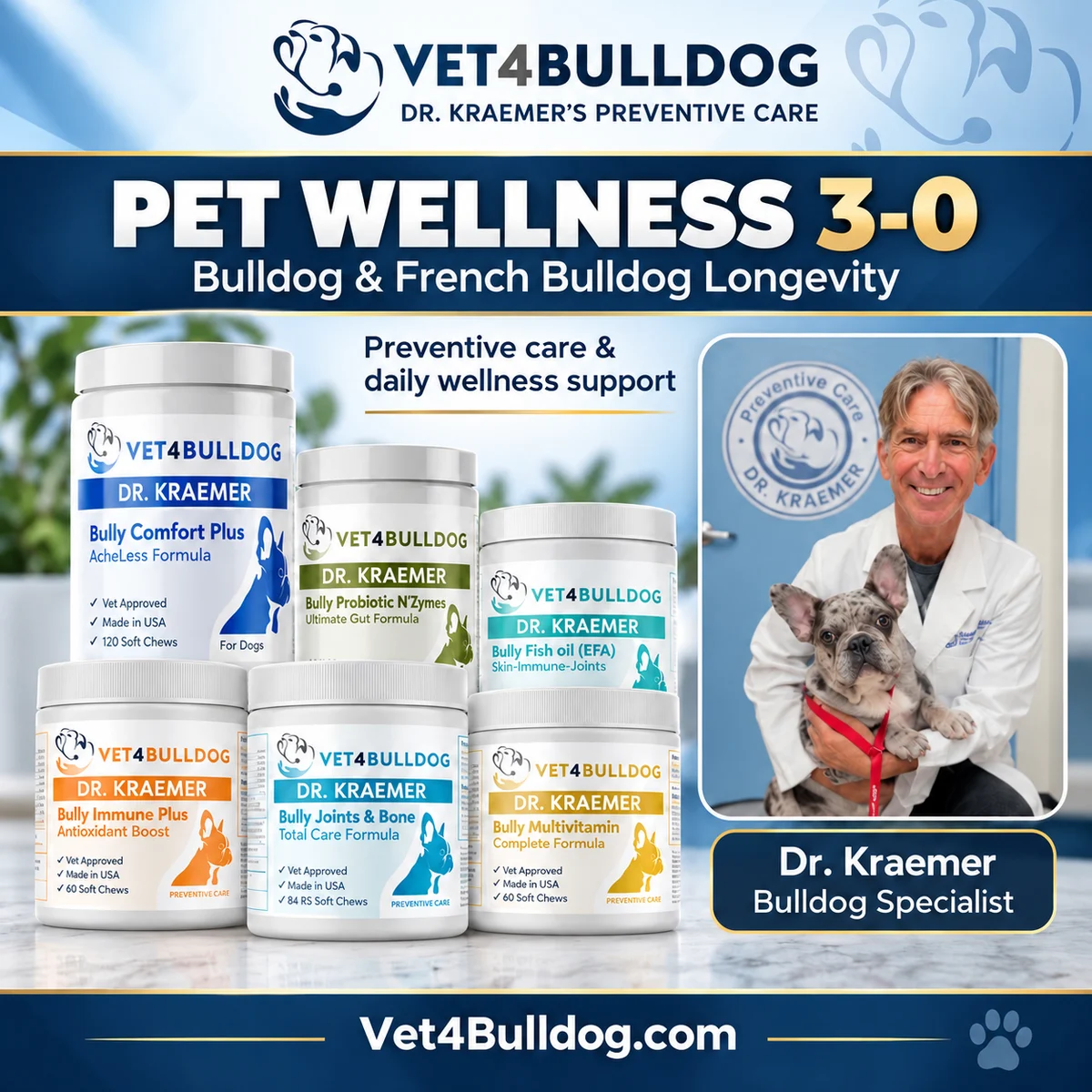
These are the nonprescription supplements I spent twenty years recommending as part of routine prevention, wellness maintenance, and longevity support, and often combine them with conventional veterinary care.
Though not peptides, nor a workaround for getting the right diagnosis, they often support the same systems that have owners looking toward peptides in the first place. And importantly, they have a generally wide margin of safety when used appropriately, a quality that cannot be assumed for everything being promoted in this corner of the internet.
The goal here isn’t to chase the newest compound.
It’s to start with what you can do safely, sensibly, and today.
Which of These Is the Real Question?
“Honestly, all of it. I just want him in the best shape he can be in.”
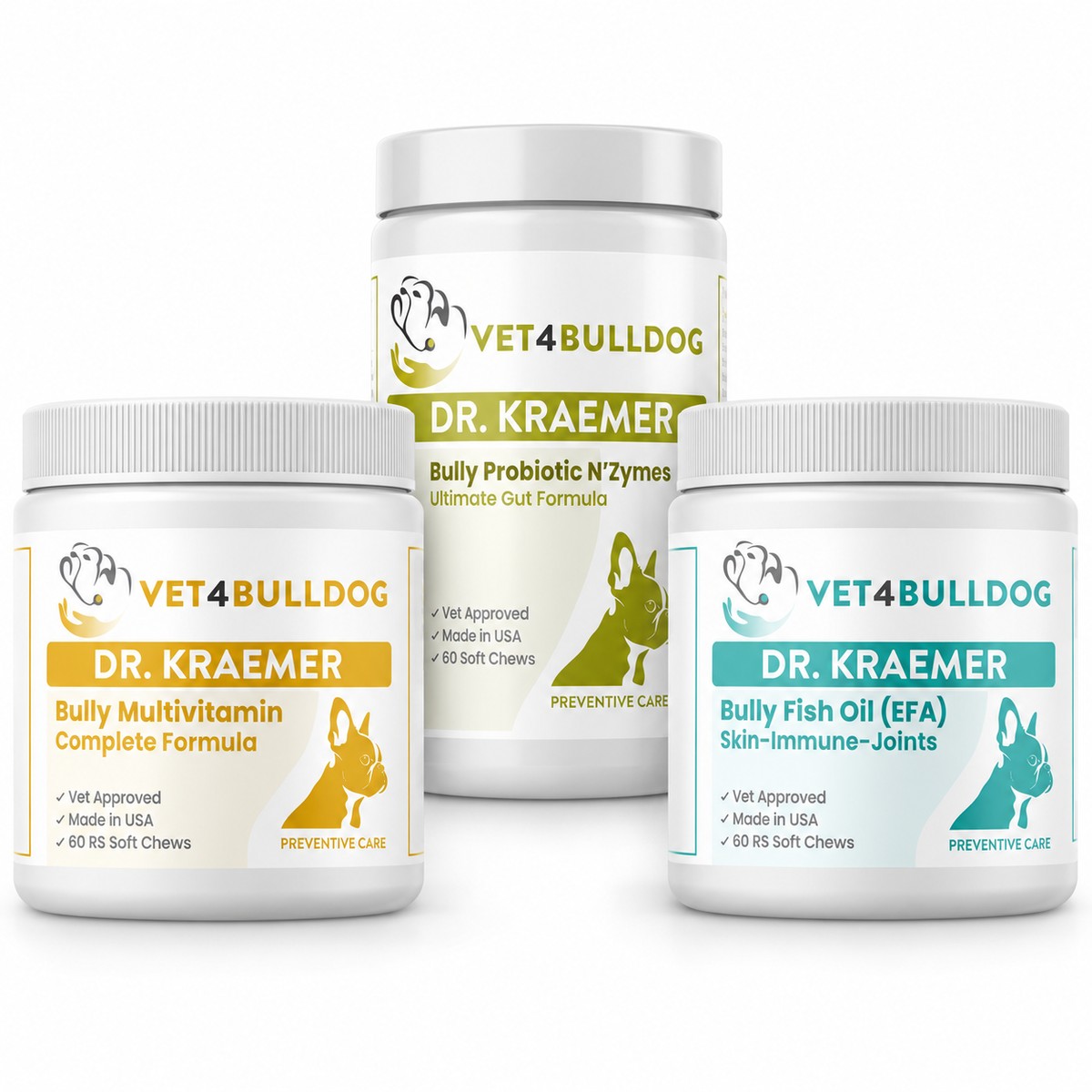
That is the most common answer, and it is why these are sold as one thing rather than six. The Longevity bundles carry the whole protocol at a saving, in two sizes, so you are not assembling it yourself.
Longevity Essentials, the three I would never skip, from $93.81 →
Longevity Vital, the full six, from $218.88 →
Would rather pick your own? The individual answers are below.
“He has started taking the stairs one at a time, or avoiding them entirely.”
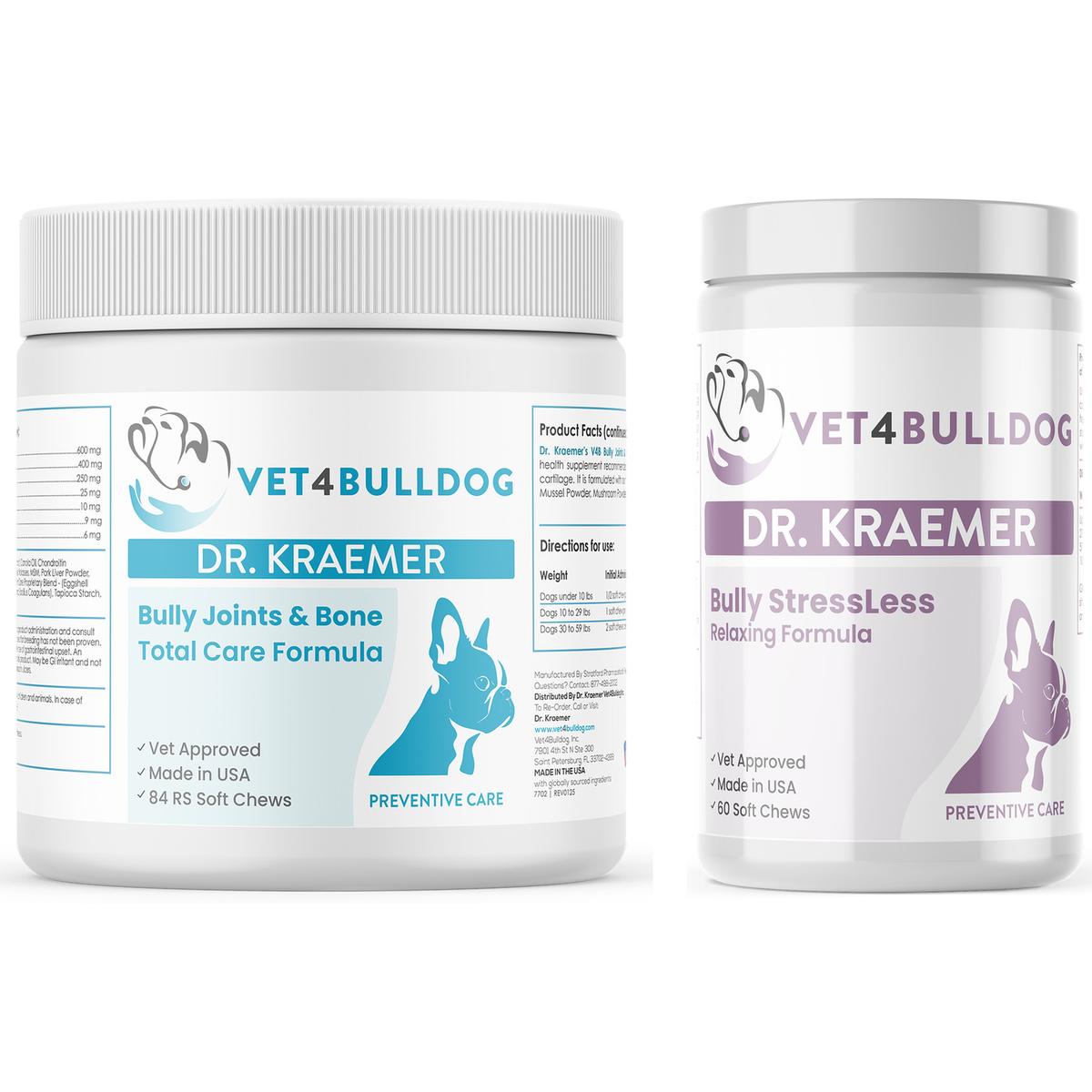
Mobility is where this breed spends its margin first. Joint and bone formulas may help support joint comfort and normal cartilage in a dog built the way yours is. Start them while the stairs are still easy, not after they are not.
“He is getting older and he seems uncomfortable, and slow to get up.”
For the everyday aches and discomfort that come with age and with carrying a bulldog’s frame around. These may help as part of the wider picture, alongside weight, activity and whatever your veterinarian has already put in place.
“It is the skin, the coat, the itching.”
Omega fish oils are the least glamorous thing on this page and the one I would give up last. They may help support normal skin barrier function and a healthy coat, and they are a habit rather than a treatment.
“I just want him in the best shape he can be in.”
This is usually the honest version of the peptide question. A multivitamin will not do anything dramatic, and that is rather the point: it fills the gaps quietly, every day, for years. May help support general condition and resilience.
“The gut is the problem. It always comes back to his digestion.”
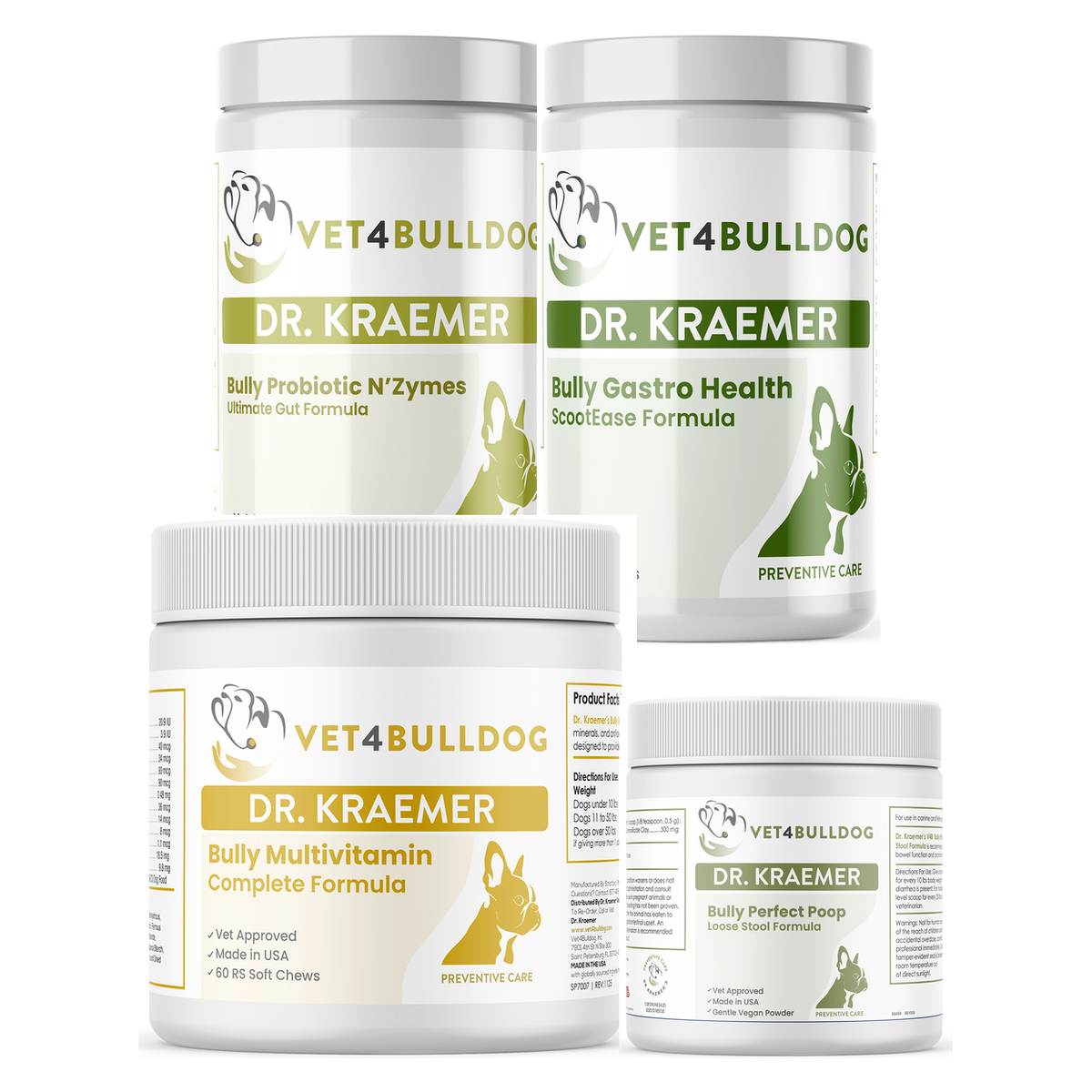
Prebiotics and probiotics may help support a normal digestive balance and normal stool quality. In this breed the gut and the skin tend to argue with each other, so this is rarely only a digestive question.
What to Expect, and What Not To
None of this works the way the internet promises peptides work. There is no before and after photograph. Give any of it a good few weeks, keep a short note of mobility, appetite, comfort and coat, and judge it on the small changes rather than the dramatic one. That note is also the single most useful thing you can bring to your next appointment, which is the quiet argument for starting now rather than later.
It is a bit like a pension. Nothing interesting happens in the first month, and you are very glad of it later.
To be clear: supplements are not substitutes for peptide drugs, surgery, or other prescribed treatment. If your dog is unwell, is being treated for a condition, or is already on medication, review any supplement with your veterinarian so it fits the plan you are already following. This page is educational and is not a diagnosis or a treatment plan for your own dog.
✔ Vet-formulated · ✔ Owner-favored · ✔ Ships fast
If you would rather think about it than buy anything today, that is the right instinct more often than not. Sign up for the free monthly bully newsletter, where the peptide updates and prevention reminders arrive as they come round, or ask a question in the Exam Room and I will answer it where other owners can read it too.
Request an appointment with Dr. Kraemer’s team to discuss your Bulldog’s diagnosis and options.
You will not find a peptide anywhere on this site. The animal research is early, the products sold straight to owners are not approved for pets, and I am not willing to put my name on something I cannot stand behind.
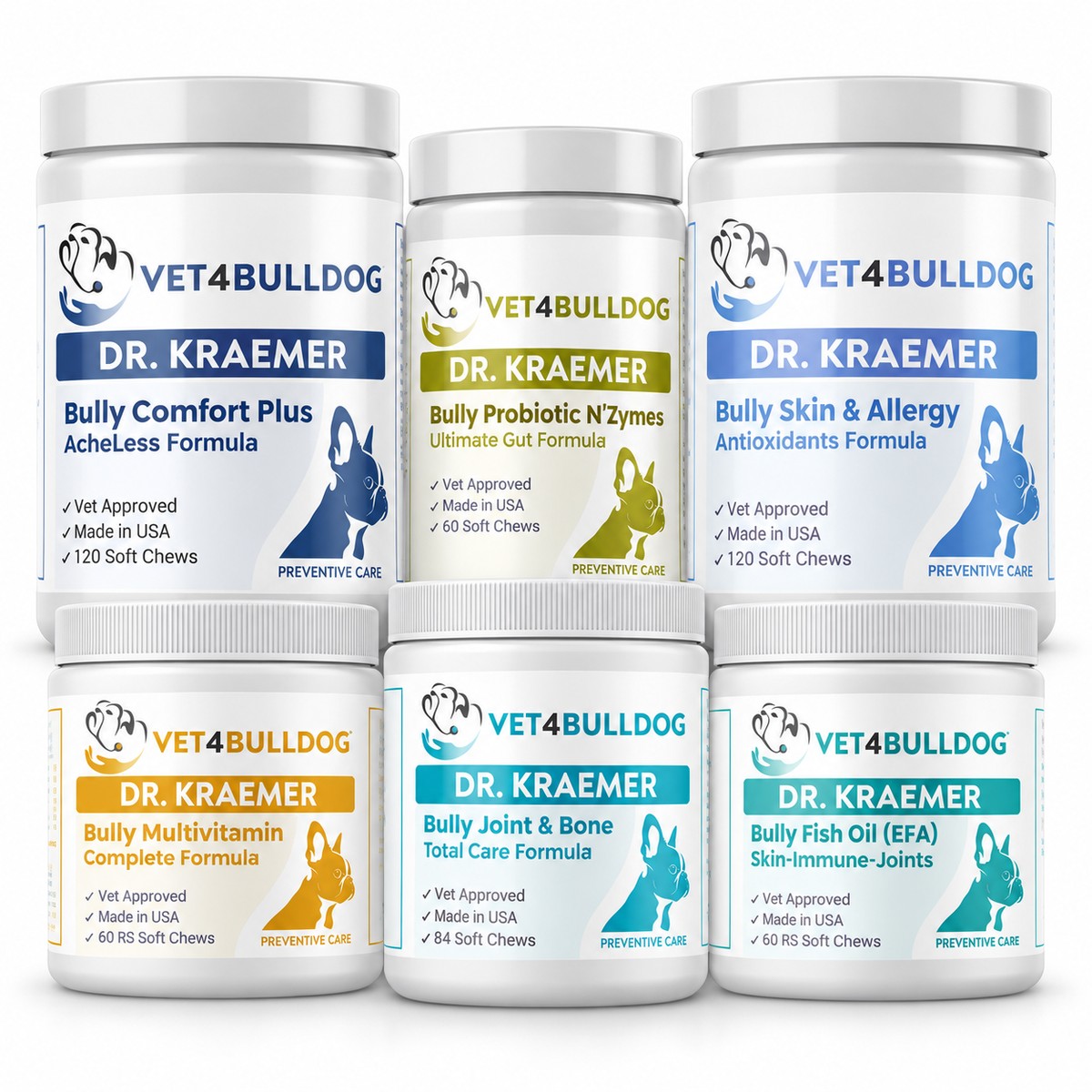
What we do make is the unglamorous daily support that the evidence does back for an ageing bulldog. Joint and bone care, omega oils, a gut that works properly, and a multivitamin that fills the gaps. Think of it as maintaining the car rather than hunting for a miracle fuel. It may help a dog stay comfortable and moving for longer, which is what most people asking me about peptides actually want.
This content is educational only and is not a substitute for veterinary examination, diagnosis or treatment.
Further Reading
Keep Reading on Peptides and Biohacking
5 Conditions That Benefit from Peptides and Biohacking →
Where the interest usually starts: joints and mobility, skin and coat, digestion, recovery after surgery, and the slow slide of old age. What is plausible in each, and what is still a sales pitch.
The 7 Most Effective Biohacking Strategies for Pets →
The unglamorous list that does most of the work: weight, rest, movement, nutrition, dental care, early detection and targeted supplements. None of it is new, which is rather the point.
FREE MONTHLY NEWSLETTER
🐾 Want the Latest Peptide Updates?
Sign up for Dr. Kraemer’s FREE Monthly Bully Newsletter, with the latest news on peptide availability, bulldog health tips, preventive care, and exclusive product updates.
No spam. Unsubscribe anytime. Bulldog health only.
Related Products