


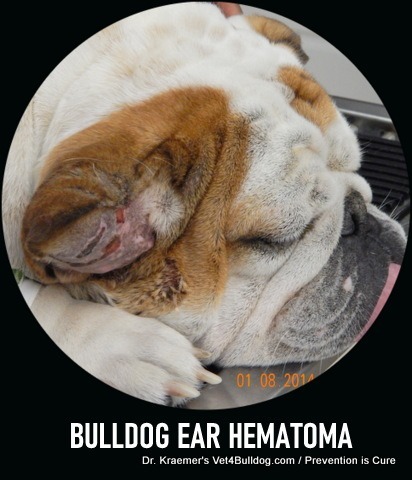
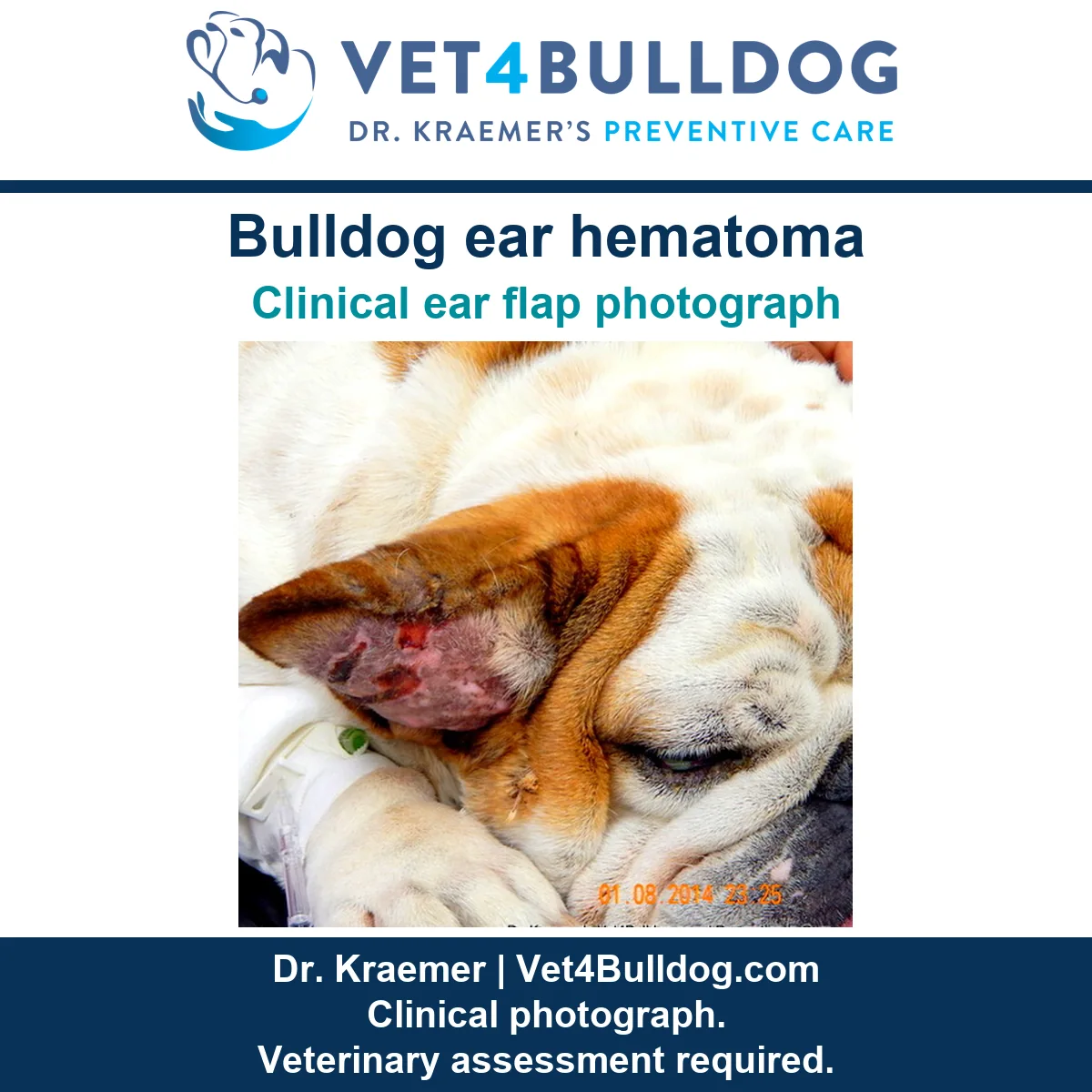
An ear flap that has swollen up like a small cushion, soft and warm and sore to the touch, is almost always blood collecting between the two layers of cartilage. It looks alarming, and it usually begins with something ordinary: an ear that itched, a dog who shook his head hard and often, and a few delicate vessels inside the flap that gave way. What matters is what happens next. The blood does not quietly reabsorb and leave the ear as it was. Left alone it clots and scars, and the flap can finish up thickened and crumpled for good. So the sensible order is to deal with the blood, deal with whatever made him shake his head in the first place, and keep the ear in good order afterwards.
Causes What you see Diagnosis Prevention Treatment Surgery Tips and warnings
Those two questions came in the right order, so I will answer them the same way.
What causes it is almost never the ear flap itself. It is the shaking and the scratching, and behind that there is usually an itchy or infected ear. The hematoma is the visible end of a chain that started further back, which is why draining the blood and leaving the ear alone tends to produce a second hematoma.
On the options: aspiration with a needle is the least distressing thing to do, and it suits small, recent hematomas, sometimes with a steroid or a pressure bandage alongside it. For anything substantial, surgery is the one that holds, because it closes the space so blood has nowhere to collect again. I know surgery sounds like the bigger intervention, but repeated draining over a good few weeks is harder on a dog than one procedure that works. Your veterinarian can tell which of the two this ear is by looking at it.
Whichever is chosen, ask about the underlying ear disease at the same appointment. That is the part that decides whether you are back here again.
Ear hematoma, known medically as “aural hematoma,” is a frequent occurrence in bulldogs and French bulldogs. This condition manifests as a collection of blood within the ear flap, pooling between the external and internal layers of the ear flap cartilage layers.
Bulldog Ear Aural Hematoma 5 X MUST KNOW
- The ear flap hematoma appears as a soft, enlarged, swollen area on the inside of the flap
- That ear is blood-filled due to trauma to the flap due to an ear infection, bite, or other.
- Usually, surgery is required to remove the blood and sutures to prevent rebleeding
- Treatment includes pain relief, ear disease, and allergy care
- Prevention includes Dr. Kraemer’s Ear Hematoma Care Bundles
Welcome to our “Prevention Over RX” bulldog community
Ear hematoma in bulldogs and French bulldogs / CAUSE:
- INJURY: an injury to the ear flap vessels leads to the bleeding
- TRAUMA: hitting the flap on a hard object.
- BITE: a dog nipping on the ear flap
- PAWING & RUBBING: due to ear infection or allergies
- OTITIS: allergic otitis, yeasty otitis, infectious otitis
EAR HEMATOMA PAIN WARNING:
Aural hematomas can be painful to the touch and may aggravate an underlying ear disease.
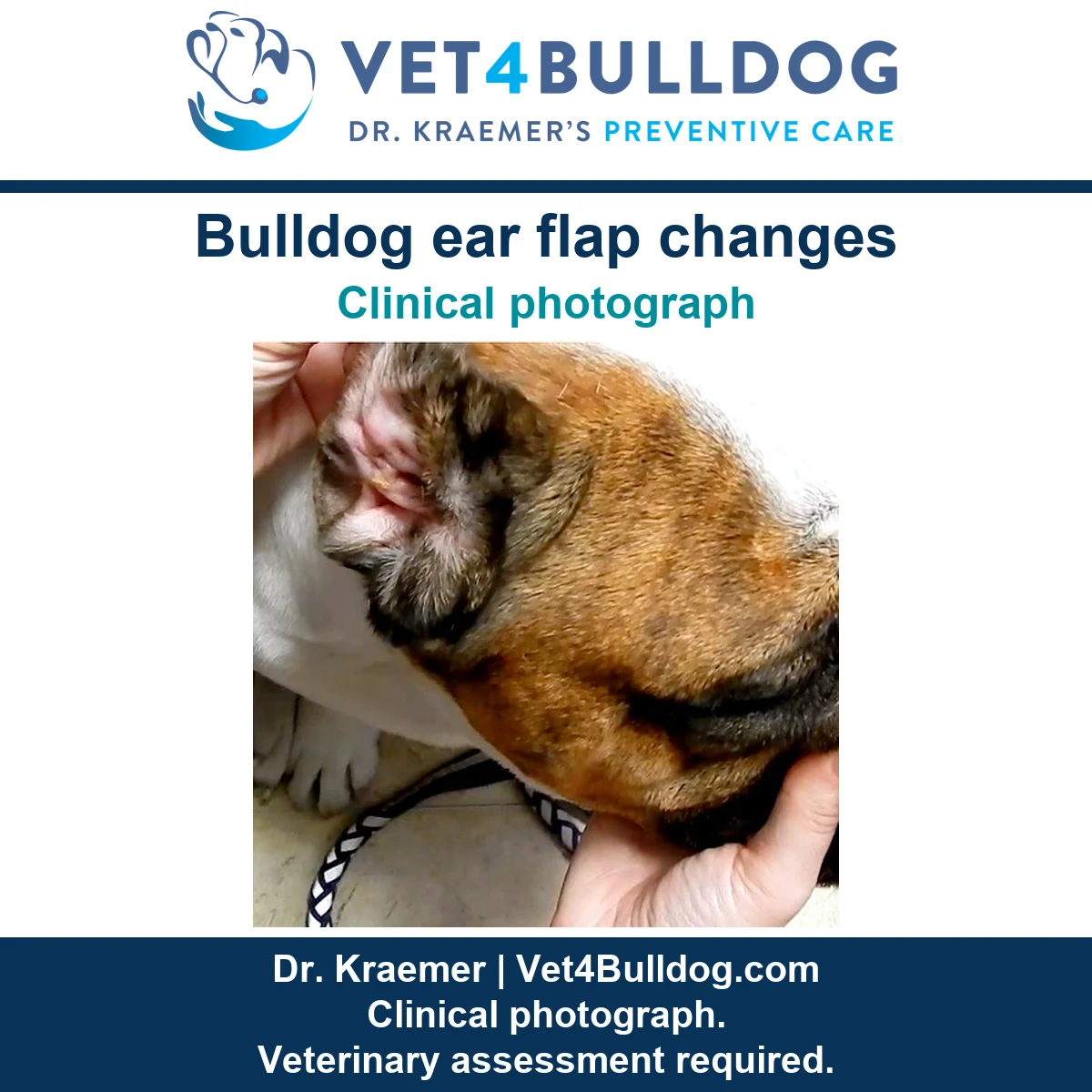
CAULIFLOWER EAR: Left untreated, the blood clots, leaving the ear deformed, a so-called “cauliflower ear.”
Bulldog Ear Hematoma PRESENTATION
- BLOWN UP PINNA (flap)
- RED, SWOLLEN, SOFT, INFLAMED PINNA (flap)
- HEAD SHAKING
- EAR INFECTION (sometimes)
- PAIN
Ear Aural Hematoma in Bulldogs / DIAGNOSIS
- Dr. Exam
- Otoscopic Exam
- Cytology of the blood if an abscess is suspected
Treat the cause, not just the blood
Owners come in asking about the swelling. The question that decides the outcome is why he was shaking his head.
Almost every ear hematoma I have drained had an itchy or infected ear behind it, and when that part is left alone the flap fills again. Owners are sometimes surprised that I spend more of the appointment looking down the ear canal than at the obvious lump on the flap. The canal is usually where the answer is.
The other thing worth saying is about timing. A fresh hematoma is a soft, fluid-filled flap and there are several reasonable ways to approach it. An older one has clotted and begun to scar, and the choices narrow considerably. This is not a wait and see condition. The crumpled cauliflower ear that people recognize is what waiting looks like.
Afterwards, weekly cleaning is dull and it is the whole of prevention. A rinse and a wipe on a Sunday evening costs almost nothing and keeps the chain from starting again.
Ear Hematoma in Bulldogs and French Bulldogs / PREVENTION
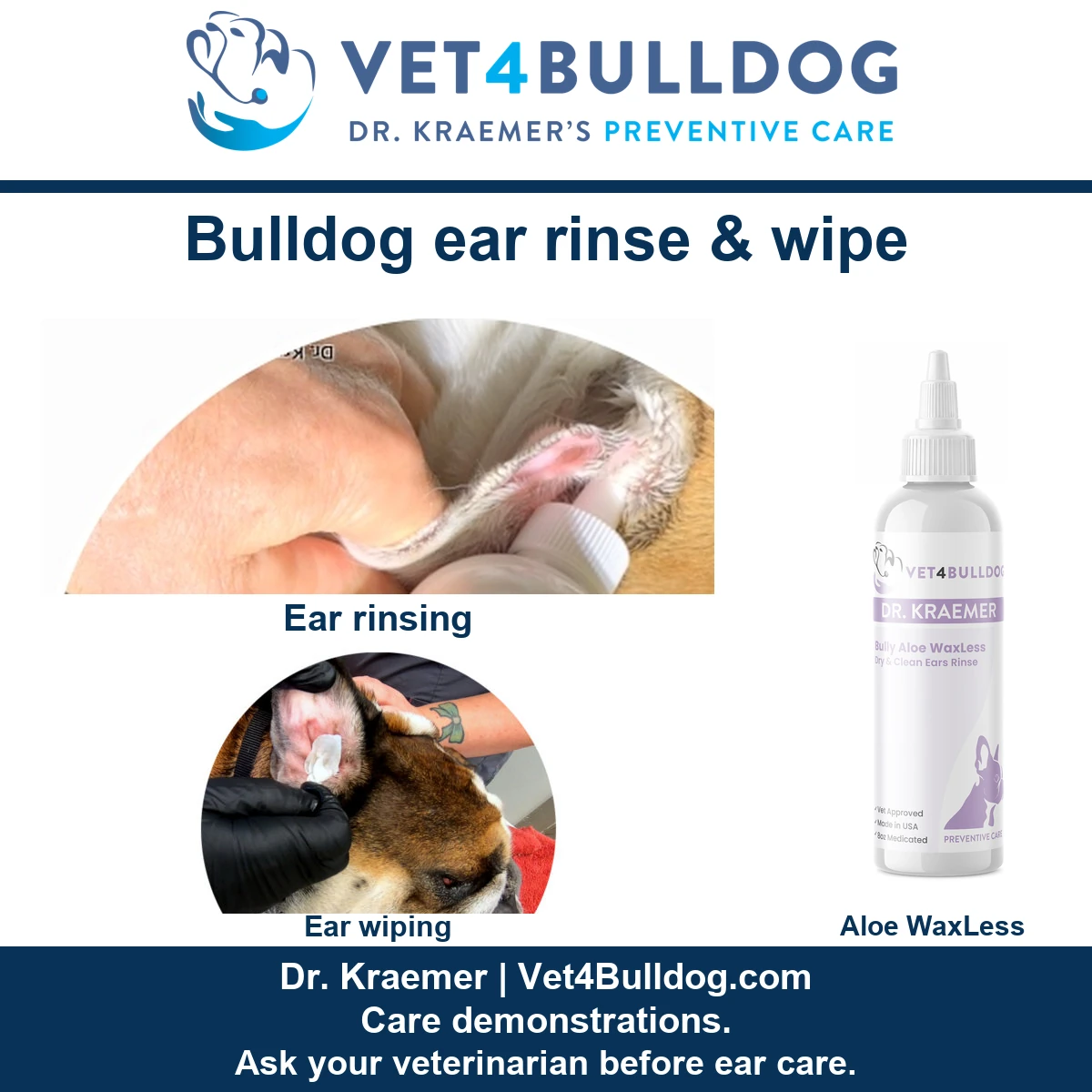
Weekly ear cleaning and wiping to prevent ear infections
BULLDOG EAR CLEANING & WIPING
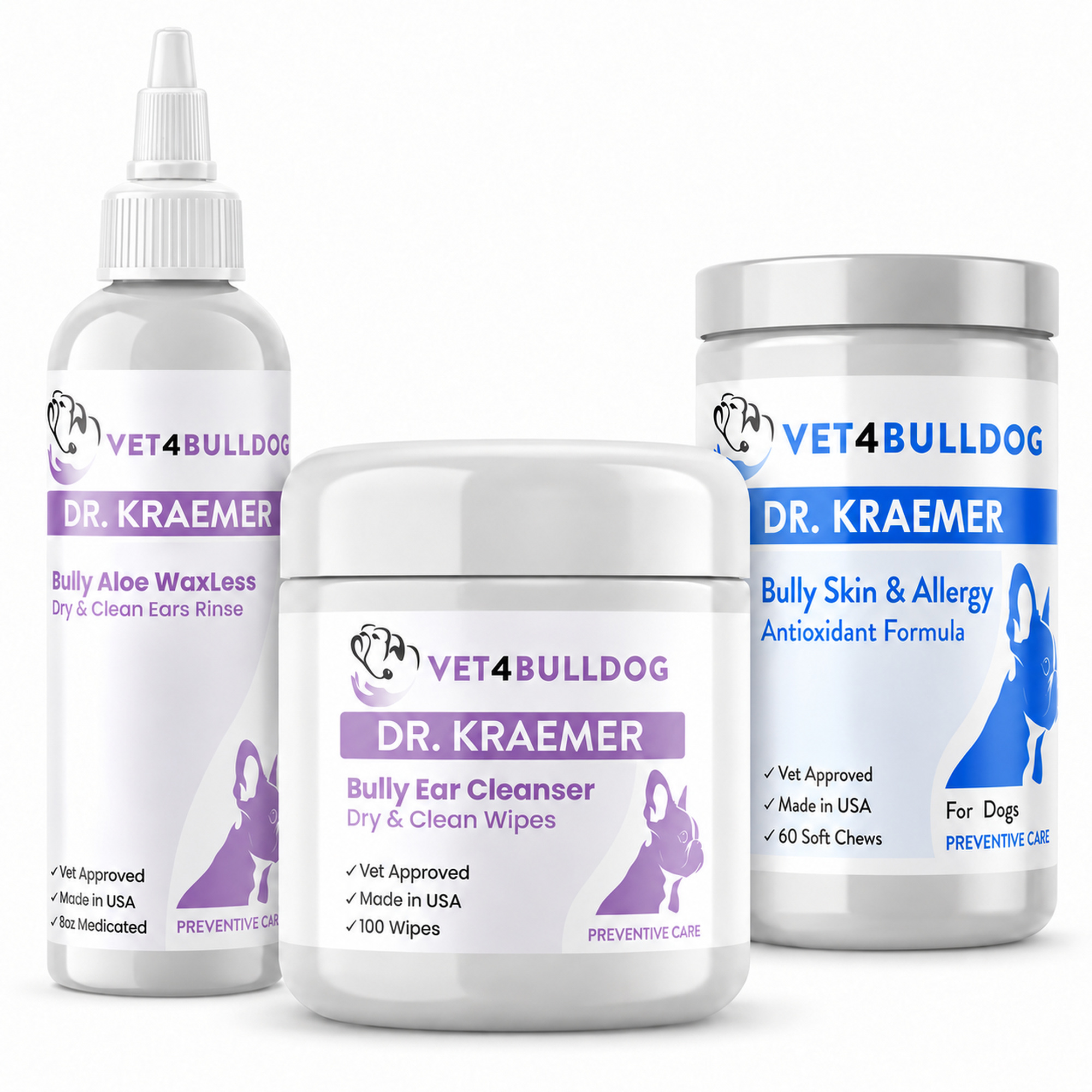
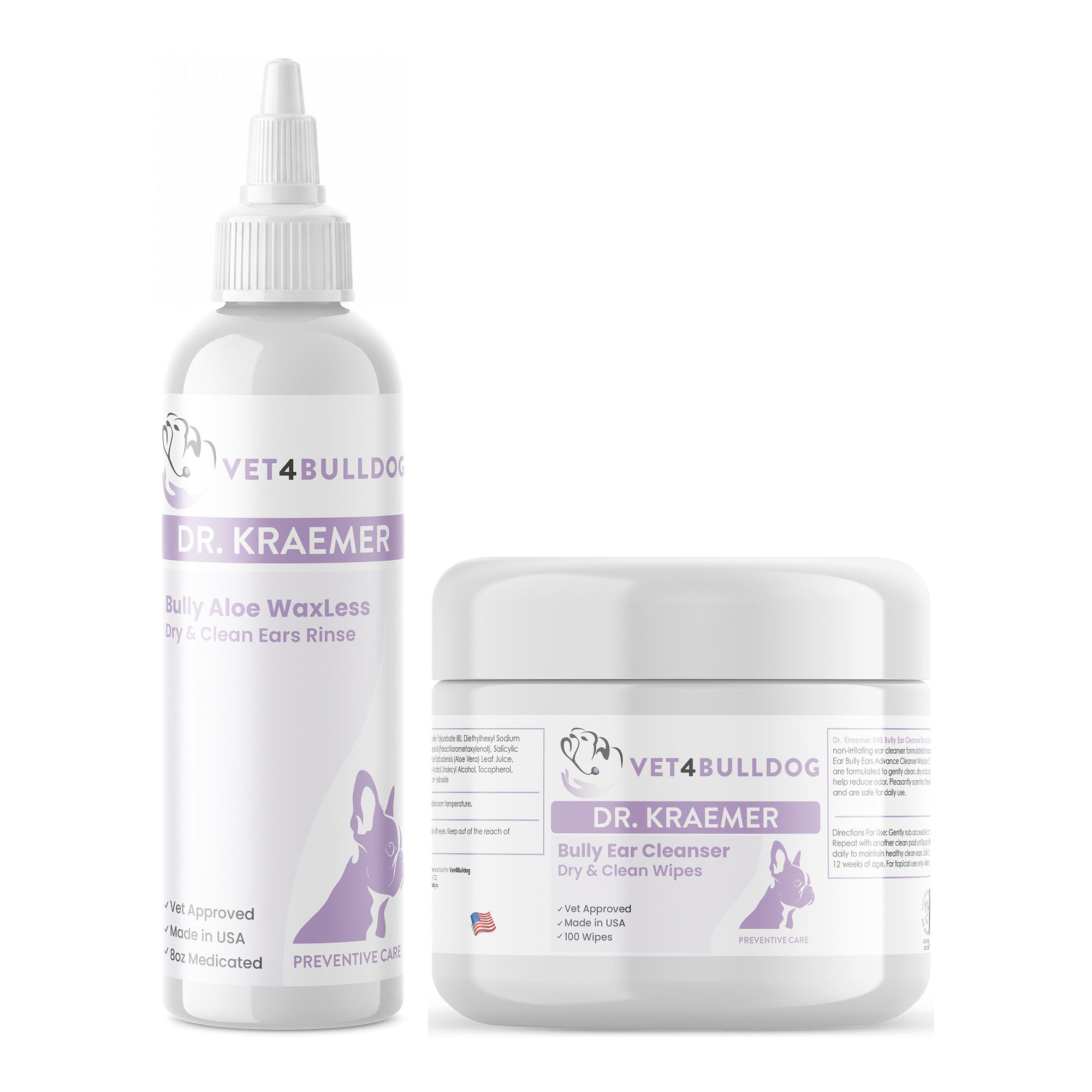
- Bully Cleansing Ear Wipes
- Bully WaxLess Drying and Acidifying Aloe Ear Rinse
- Yeasty Bully Ear Rinse
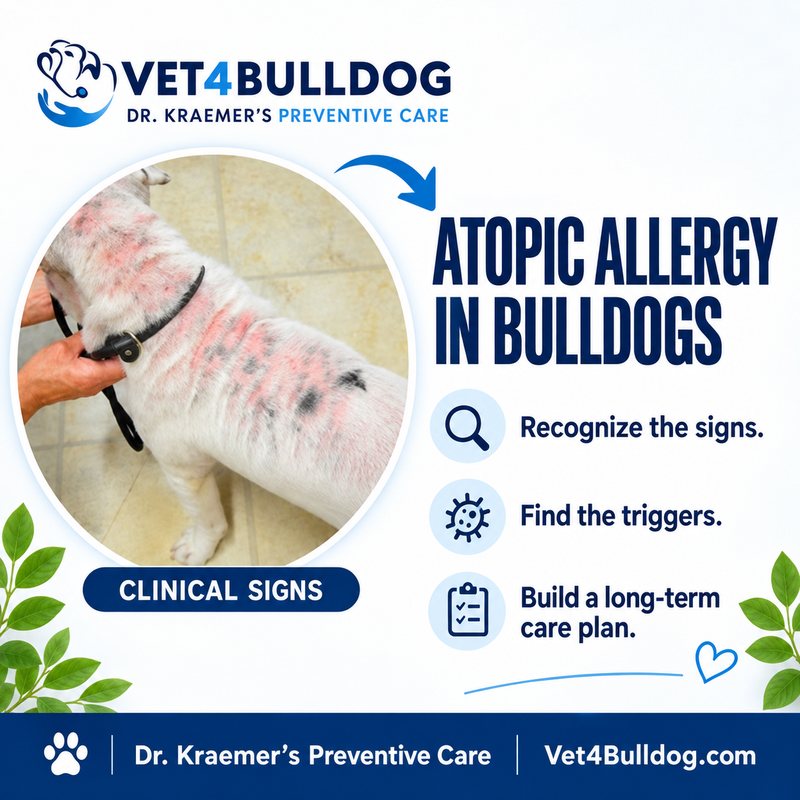
BULLDOG ALLERGIES & ITCHING
Control the common allergies and associated itch
- Bully ItchLess Shampoo
- Bully ItchLess Conditioner
- Bully ItchLess Spray
- Bully Hypoallergenic Shampoo & Conditioner
- Bully Fish Oil SKIN-IMMUNE-JOINT
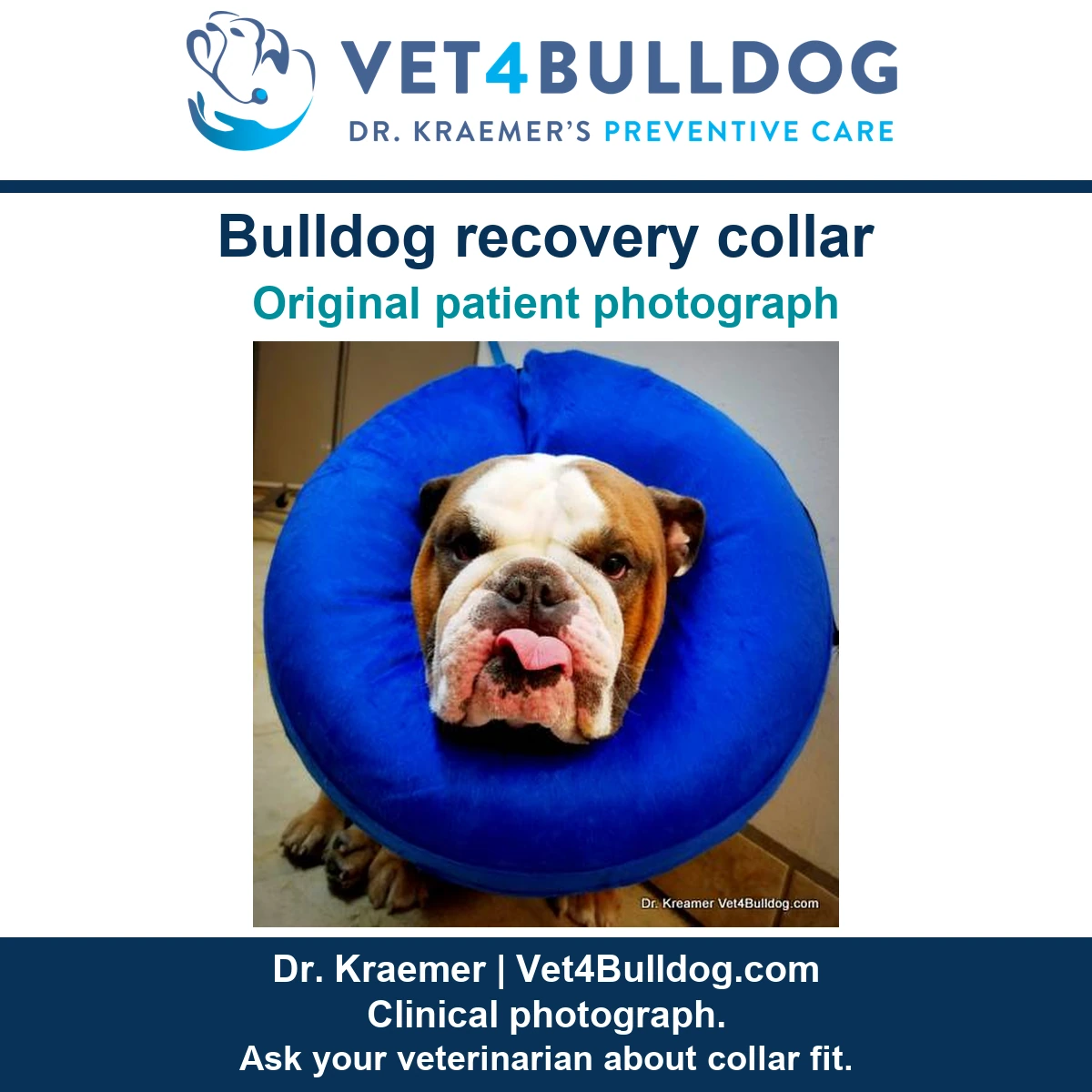
BUSTER COLLAR:
If the dog shakes or/and rubs the ear and ear base
Bulldog Ear Aural Hematoma TREATMENT
Treat the underlying cause as well as the hematoma
EAR INFECTION Left alone a large hematoma will predispose the ear to infection and make it difficult to manage an ongoing one.
CONTROL OTITIS:
You must control ongoing ear disease
- Topical RX
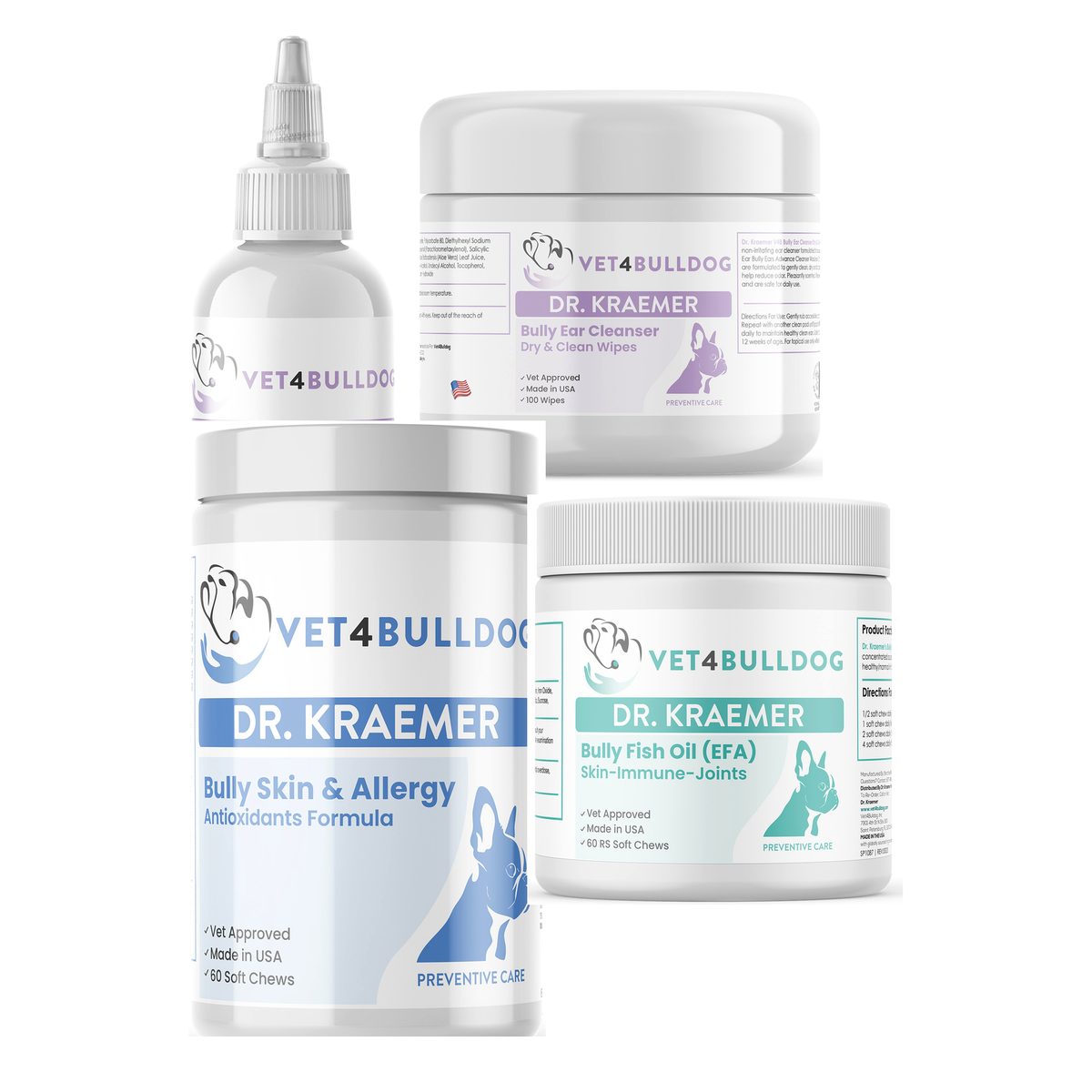
- Dr. Kraemer’s Bully Therapeutics Topical & Supplements
- V4B Bully WaxLess Aloe Rinse
- V4B Yeasty Bully Rinse
- V4B Bully Cleansing Ear Wipes
- V4B Bully Fish Oil EFA Chews
- V4B Derma Care Tabs
PAIN MANAGEMENT:
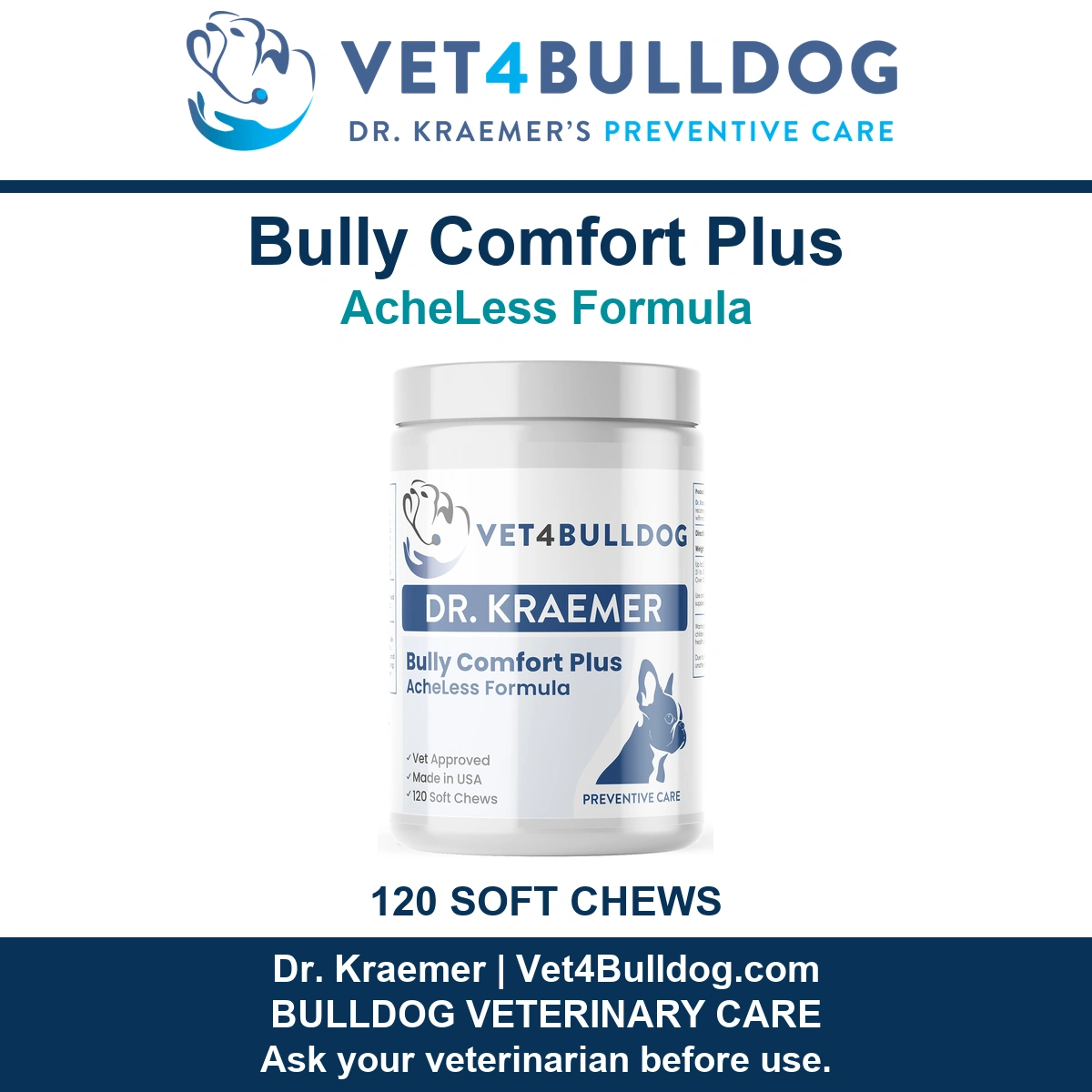
Large hematomas can be painful, so you should consider pain control
- RX: analgesics and NSAID
- Dr. Kraemer’s Non-RX Bully Comfort & Acheless Chews
BULLDOG EAR HEMATOMA TREATMENT
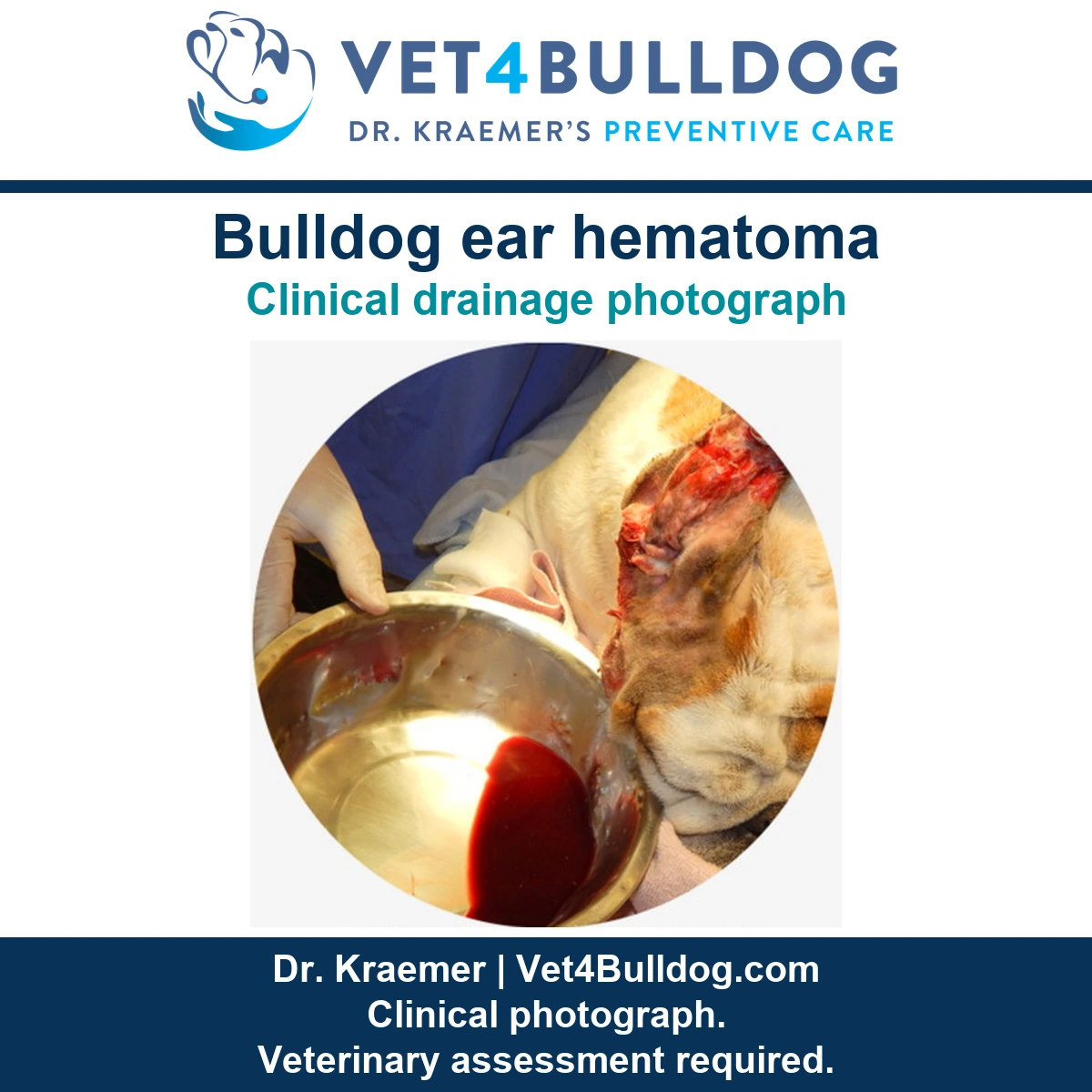
ASPIRATION & PRESSURE BANDAGE:
Remove the blood with a needle and apply a pressure bandage for a few days.
This might work for small hematoma.
STEROID INTRA-HEMATOMA INJECTION:
After aspiration, inject a steroid to reduce inflammation and itch. It might be effective for small, minor hematomas; a pressure bandage can be added for a few days
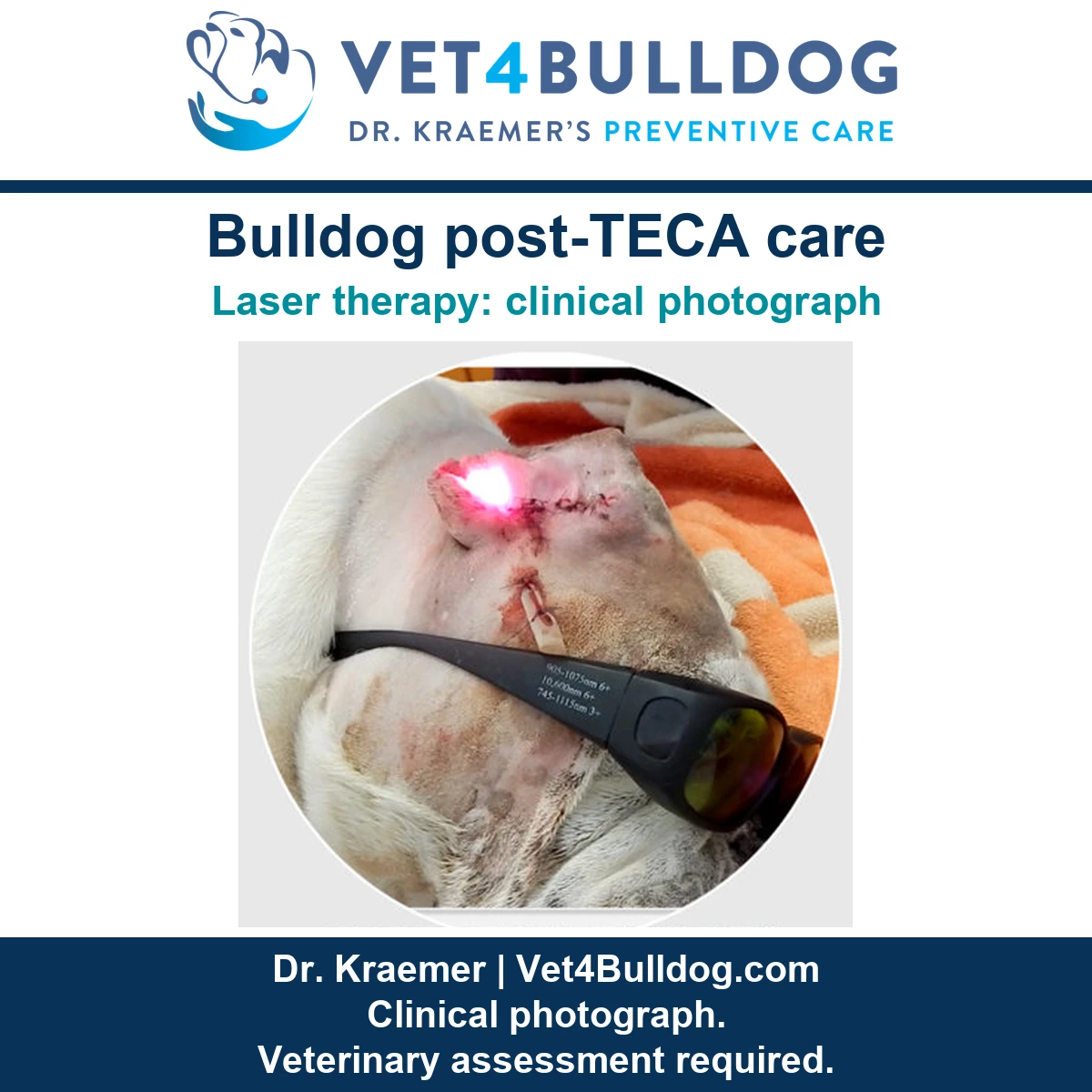
LASER THERAPY:
Class 4 laser sessions may help small hematomas by reducing swelling and inflammation.
BULLDOG EAR HEMATOMA SURGERY
Surgery is the gold standard. The procedure is very simple and involves removing the blood and then closing the dead space between the two cartilages, usually with parallel sutures.
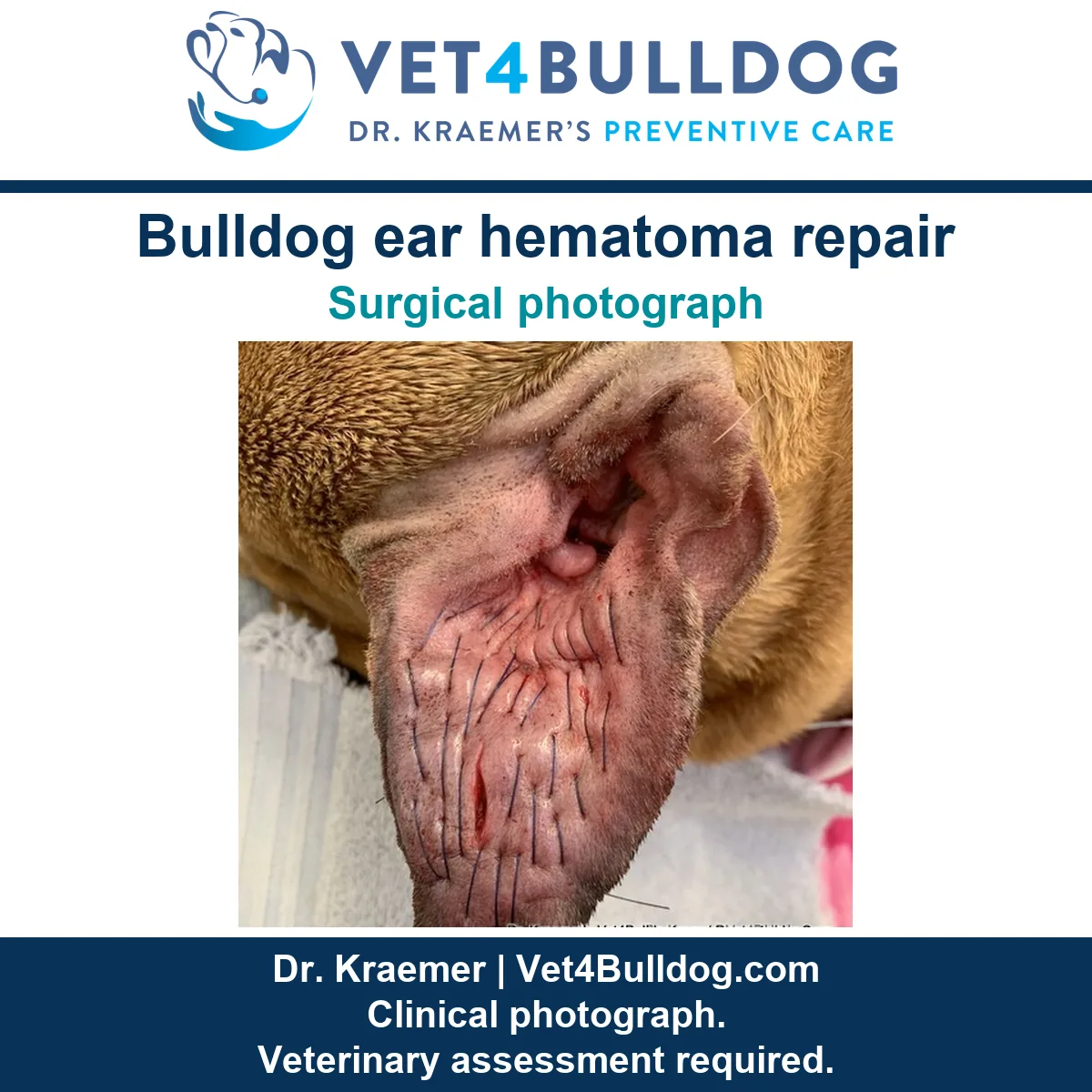
It’s best to fix it as soon as possible, once the blood clots, it will become fibrous, harden, and scar.
The cartilage will crumple to a cauliflower appearance, blocking Once this happens, it can’t be fixed except for amputating the pinna.
What happens if you leave it alone
Owners often ask whether the swelling will simply go away on its own, and the honest answer is more interesting than yes or no.
It will usually resolve eventually without anyone doing anything. The body reabsorbs the blood over time. What it leaves behind is the problem. As it shrinks it contracts, and the ear flap can scar down into a thickened, crumpled shape that does not come back. In people that look has a name, cauliflower ear, and once it has set it is permanent.
That is cosmetic and I will not pretend otherwise. A Bulldog with a crumpled ear flap is not in discomfort and does not care. But a scarred flap can narrow the opening of the ear and make a canal that was already hard to clean harder still, and in a breed that gets ear infections as readily as this one, that part is not cosmetic at all.
The other reason not to simply wait is the one from the top of this page. Whatever made him shake his head is still there while you are waiting, and it is usually something treatable that is bothering him right now.
One thing I would ask you not to do: do not drain it at home. It looks like a simple thing to let out and it is not. It refills, and you have added an opening for infection into a space full of blood. If it needs drawing off, it needs doing properly and with the cause dealt with at the same time.
Ear Hematoma in Bulldogs and French Bulldogs: TIPS & WARNINGS
Below are selected ear hematoma tips & warnings, courtesy of Dr. Kraemer
EAR HEMATOMA SUTURE PLACEMENT TIP:
When suturing an ear hematoma or performing any ear surgery on bulldogs, the sutures mustn’t be too tight. Post-operatively, the ear often experiences swelling, so overly tight sutures can restrict circulation and potentially cause discomfort and pressure sores.
Additionally, since the sutures typically remain in place for an extended period, the surgeon needs to use a type of suture that is not irritating to the ear tissues. This helps minimize irritation and promote proper healing during the recovery process.
EAR HEMATOMA SUTURE REMOVAL TIP:
Unlike sutures in other types of soft tissue surgeries that are typically removed within about 14 days, sutures for ear hematoma repair should remain in place for a longer period, usually around 3 weeks. This extended duration is necessary to ensure the formation of strong adhesions between the external and internal layers of cartilage in the ear pinna.
These adhesions are crucial for the successful healing of the ear and to prevent the recurrence of the hematoma, ensuring that the ear’s structure is maintained and the fluid does not accumulate again.
EAR HEMATOMA E-CONE TIP:
Keep a buster collar for safety before and for one week after the sutures are removed
AURAL HEMATOMA CAULIFLOWER WARNING:
Cauliflower bully ear, a condition often resulting from untreated ear hematomas, can lead to a permanent, irreversible thickened, wrinkled appearance of the ear flap. This deformation can obstruct airflow to the ear canal, creating an environment conducive to dampness.
Such conditions are likely to predispose the ear to canal diseases by fostering a moist environment where pathogens can thrive. Additionally, if there is already an ongoing ear disease, the altered shape and reduced airflow can exacerbate the condition, complicating treatment and healing processes.
To prevent such complications, don’t delay ear hematoma repair
BULLDOG EAR HEMATOMA INFECTION WARNING:
Bulldog and French bulldog ear hematoma is typically a sterile accumulation of blood between the cartilage and skin of the ear flap. There are circumstances under which it can become infected and abscessed.
This is particularly true in cases where the hematoma is a result of a bite, puncture, or any other form of open wound that introduces bacteria into the area. In such situations, the body’s response to the infection can lead to the formation of an abscess within the hematoma.
This often involves the administration of short-term antibiotics to combat the bacterial infection, along with the standard treatment for the hematoma
BULLDOG EAR HEMATOMA TREATMENT FAILURE:
Draining the hematoma through aspiration, whether accompanied by a compressive bandage or a steroid injection, seldom yields long-term success.
Typically, the evacuated area quickly refills with blood.
This method may serve as a temporary solution before the surgical intervention or could be considered for treating very minor hematomas.
His ear flap is swollen and soft. Is that a hematoma?
Will it go away on its own if I leave it?
Is draining it with a needle enough?
Why does my veterinarian keep looking down the ear canal?
What exactly is a cauliflower ear?
Does he really need the collar?
Can I stop this happening again?
Is it sore?
More Help from Dr. Kraemer
- Ear infection and otitis
- Allergic otitis, the itchy ear
- Itchy skin and allergies
- What you can handle at home, and when to see the vet
About the Author
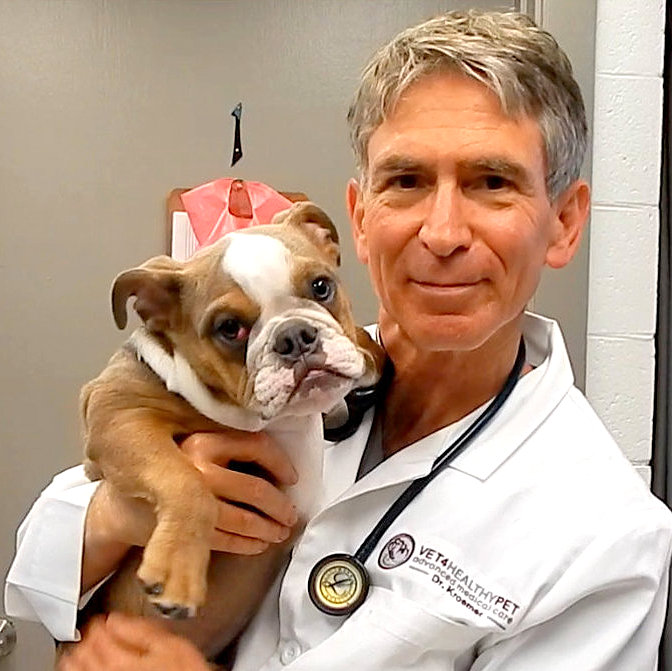
Roy Kraemer, DVM, is a veterinarian with extensive clinical experience caring for Bulldogs and French Bulldogs. His educational work emphasizes prevention, early recognition, appropriate at-home care, responsible medication use, and veterinary evaluation when a problem is persistent or severe.
Trusted by Vets ~ Recommended by Owners ~ Approved by Bulldogs
References
- Merck Veterinary Manual. Otitis Externa and Diseases of the Pinna in Small Animals
- Kuwahara J. Canine and feline aural hematomas, results of treatment with corticosteroids. Journal of the American Animal Hospital Association
- Hall J et al. Treatment of aural haematoma, a comparison of techniques. Veterinary Record
- Bajwa J. Canine otitis externa, treatment and complications. Canadian Veterinary Journal
To be clear: supplements or topicals are not substitutes for prescribed treatment. If your dog is unwell, is being treated for a condition, or is already on medication, review any supplement or topical with your veterinarian so it fits the plan you are already following. This page is educational and is not a diagnosis or a treatment plan for your own dog.