




Ear mites are real, they are genuinely contagious between animals, and they are common in puppies and in dogs newly out of a shelter, a breeder’s run or a pet shop. In that group they matter and they are easy to deal with once identified.
In an adult dog who has lived with you for years, they are far less likely than the thing they get mistaken for. A Bulldog with dark debris in his ear and an itch is usually dealing with yeast or bacteria, not parasites, and that distinction is not cosmetic: the treatments are different, and pouring a mite product into an infected ear treats nothing while the real problem advances.
Separating the two takes a swab and a microscope, and a few minutes. That is the entire difference between treating the right thing and spending a month on the wrong one.
We adopted a Bulldog from a rescue two weeks ago and he is shaking his head constantly. The rescue said he had been treated for ear mites before we got him. Should I just buy an ear mite treatment online, or does he need to be seen? I do not want to spend money on a consultation for something I already know the answer to.
He needs to be seen, and I would say that even though I understand exactly why you are asking.
The problem with treating ears from a shelf is that several quite different things produce a head shaking dog, and they need different treatments. Mites are one. Bacterial and yeast infections are others, and they are far more common in this breed than mites are, particularly in an adult. Treating the wrong one wastes the money you were trying to save and gives whatever is actually there another fortnight to settle in.
There is a second reason specific to ears that I would not want you to find out the hard way. Before anything goes into an ear, somebody needs to look inside it and confirm the eardrum is intact. Certain products can do genuine harm if it is not. That is not a scare story, it is the reason a veterinarian looks with a scope before reaching for a bottle, and it is not something you can check at home.
The fact that he was treated at the rescue is worth knowing but does not settle it. Rescue treatment is often done sensibly and in bulk, sometimes without an individual examination, and a dog who has been in a shelter environment may be carrying more than one thing. Take whatever paperwork came with him so your vet can see what he has already had.
One practical thing while you wait for the appointment: resist the urge to clean the ears out thoroughly beforehand. It is a kind instinct and it makes the examination harder, because what is in there is the evidence.
Subject: Urgent: Consultation Needed for Milo’s Ear Mites 🐶👂🔍 Dear Dr. Kraemer, I’m writing concerning my 9-month-old French Bulldog, Milo. 🌟 Unfortunately, he’s been showing signs of an ear infection, my cat “Mint” had ear mites last year and I was wondering of bulldogs can also get them. Thank you for your prompt attention! 🙏 #EarMites #BulldogHealth #VetConsultation Best regards, Tami and Milo 🐾
Introduction To Ear Mites in Bulldogs and French Bulldogs
Contrary to common belief, ear mites are relatively uncommon in Bulldogs and French Bulldogs. While these breeds are indeed predisposed to various ear canal problems, particularly otitis externa, ear mites are rarely the underlying culprit.
Bulldog Ear Mites 5 X MUST KNOW
- Ear mites Otodectes cynotis is not common in bulldogs.
- Ear mites pass from one infected pet to another and can easily be diagnosed with a microscope
- Itching, rubbing redness, and inflamed ears with dark discharge are commonly observed.
- Treatment includes bully therapeutics, cleaning wipes, and ear rinses.
- Prevention includes Dr. Kraemer’s Ear Mites Care Bundles
Welcome to our “Prevention Over RX” bulldog community

Ear mites in Bulldogs and French Bulldogs / CAUSE
The medical name for ear mites in bulldogs is Otodectes cynotis. Ear mites are highly contagious, typically transmitted from one household pet, such as a cat or dog, to another. Other more common causes of bulldog ear disease (otitis) are.
- Allergic otitis
- Bacteria and yeast Otitis
- Atopic & Food Allergies
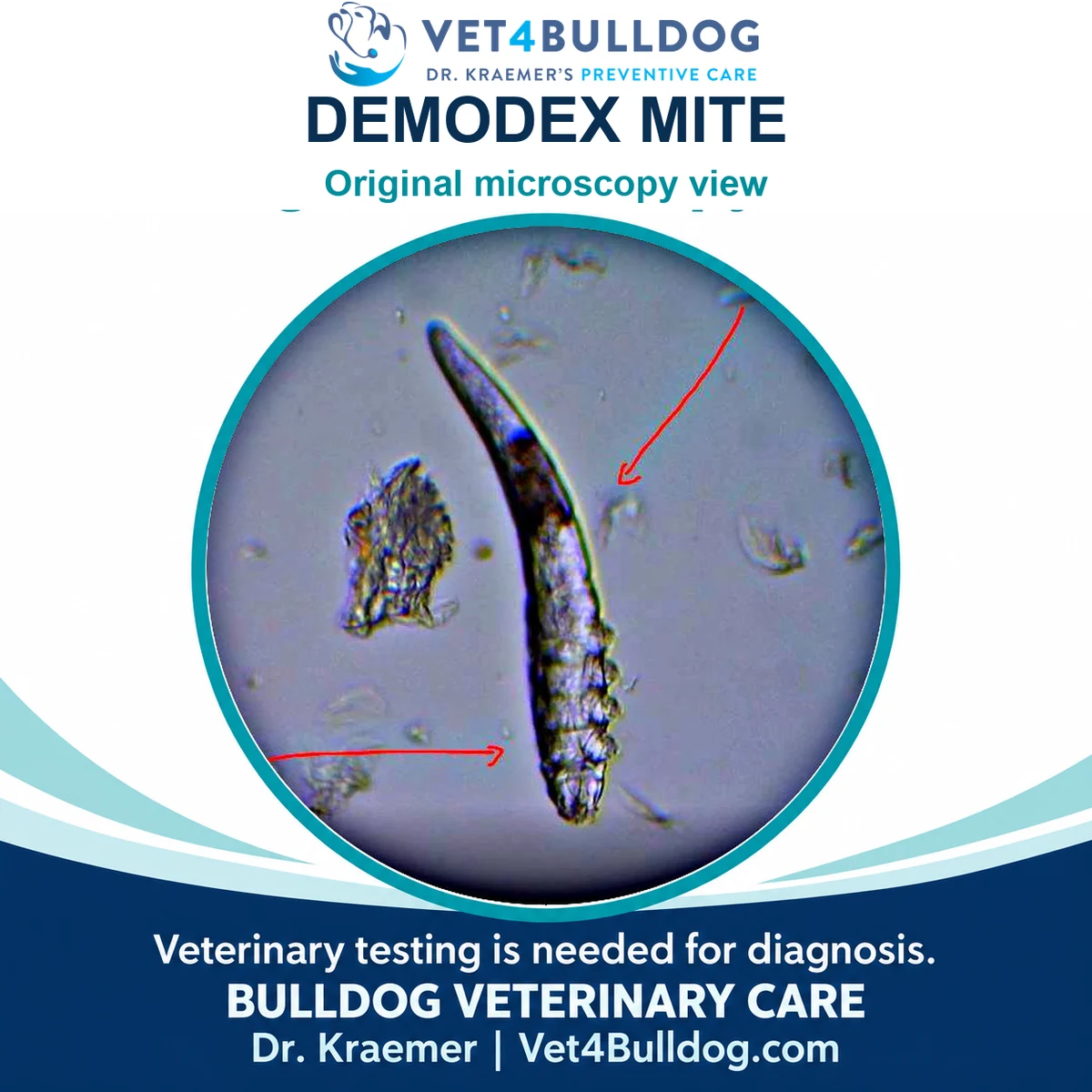
- Demodex skin mites can sometimes be found in ears
What Are The Symptoms of Bulldog Ear mites ?
- Dark Ear Discharge and debris
- Head-Shaking
- Itching, scratching, rubbing and pawing at the ears
- Redness and inflammation of the Ears and Ear base
- Bad odor from the ears
Ear mites in Bulldogs and French Bulldogs / DIAGNOSIS
- Dr. Ear Exam (Otoscopic)
- Microscopic: checking the ear debris for mites
- Allergy Testing
- Skin Scrape: of patch hair loss skin areas

Most ear mites in an adult dog are not mites
I want to lead with the mistake rather than the parasite, because the mistake is what I saw far more often. An owner notices dark crumbly debris and an ear their dog will not leave alone, reaches the reasonable conclusion that it must be mites, buys a mite treatment from a shop or online, and uses it. Some weeks later the ear is worse and the dog is miserable. The ear never had mites. It had a yeast or bacterial infection, and the product was never going to touch it.
Why the confusion is so easy is that the two look similar from the outside and the itch is the same. What tells them apart is a swab looked at under a microscope, and it takes minutes. Mites are visible, moving, and unmistakable once you see them. Yeast and bacteria look like something else entirely. There is no judgment involved and no waiting for a laboratory, which is why I would always rather an owner spent a short appointment on the answer than a month on a guess.
The group where mites genuinely are likely is puppies and dogs recently out of a shelter, a kennel or a breeder’s run, where a lot of young animals have been in close contact. There they are common and they spread readily, which is the one way they differ sharply from demodex: these mites are properly contagious. If one animal in the house has them confirmed, everything with fur in that house needs treating, and that very much includes the cat, who is often the quiet reservoir and may look perfectly well.
What makes any of this harder in a Bulldog is the shape of the ear itself. The canals in this breed tend to be narrow, which means anything that sets up in there is harder to clean out, harder to medicate down to the bottom of, and more inclined to become a long running problem rather than a single episode. It is also why this breed has so much yeast trouble in the first place, and why the two subjects keep colliding.
A practical warning about what goes into an ear. If the eardrum is damaged, and in a chronically infected Bulldog ear that is a real possibility, some preparations should not go in at all. That is a judgment your veterinarian makes by looking, and it is one of the better arguments against treating an ear on your own conclusion. Cleaning an ear is routine owner care and I encourage it. Medicating one you have not had examined is a different thing.
The last point is that mites and infection are not alternatives. A dog can have mites, scratch the ear raw, and develop a bacterial or yeast infection on top, at which point killing the mites is necessary and not sufficient. That is the usual reason a confirmed case does not settle as quickly as expected, and it is worth knowing in advance so that slow progress does not read as failure.
How To Prevent Ear mites in Bulldogs?
- Flea/Mite Preventives: Some topical and oral flea preventives also prevent ear mites
- Ear Mite Contact Prevention: Prevent contact with mite-infected animals and pets
- Disinfection: Wash any towels and dog beds used by your mite-positive bulldog
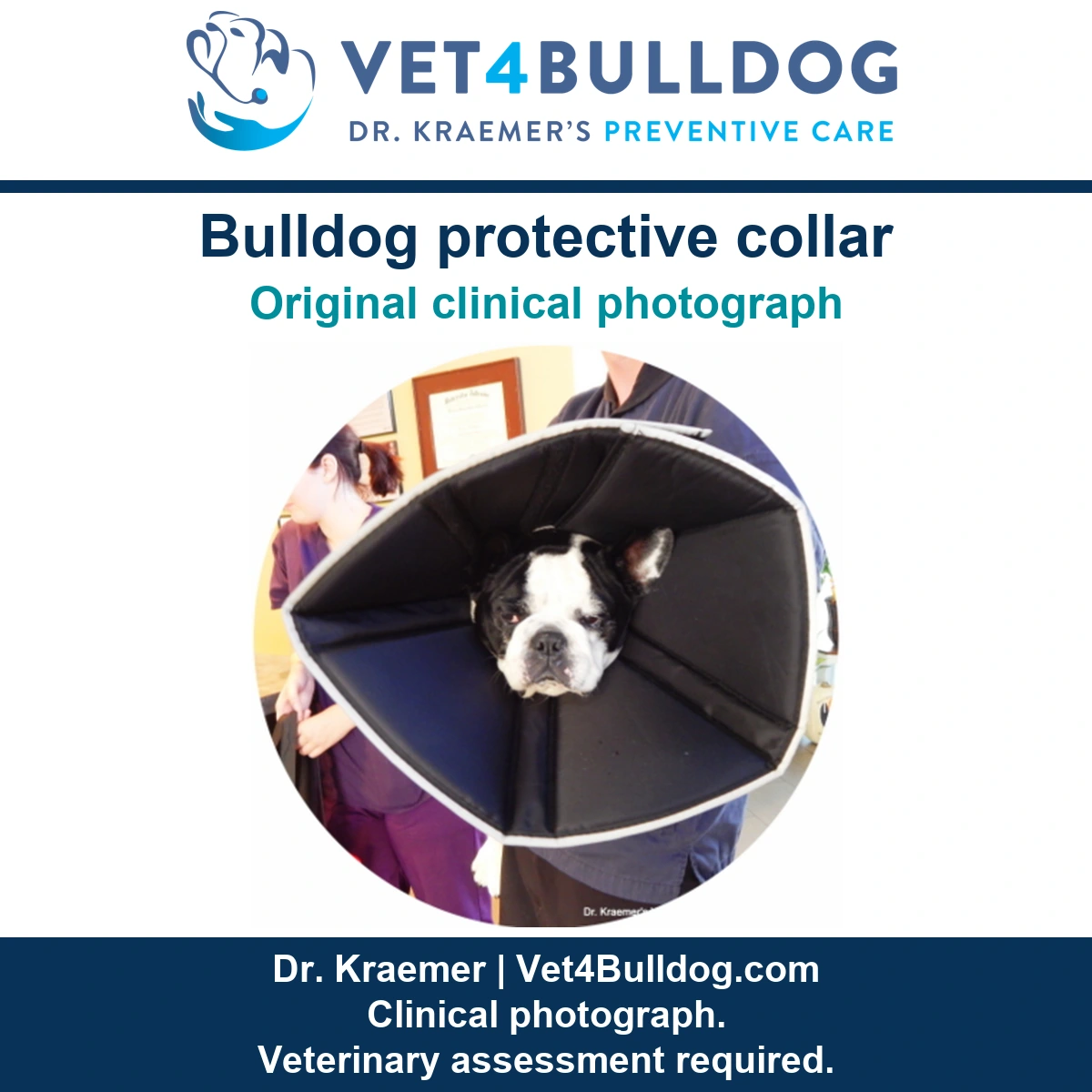
- E-Collar: Buster collar protector to prevent trauma secondary to itching
Ear mites are not considered contagious to humans
Bulldog Ear mites Prevent and Care THERAPEUTICS
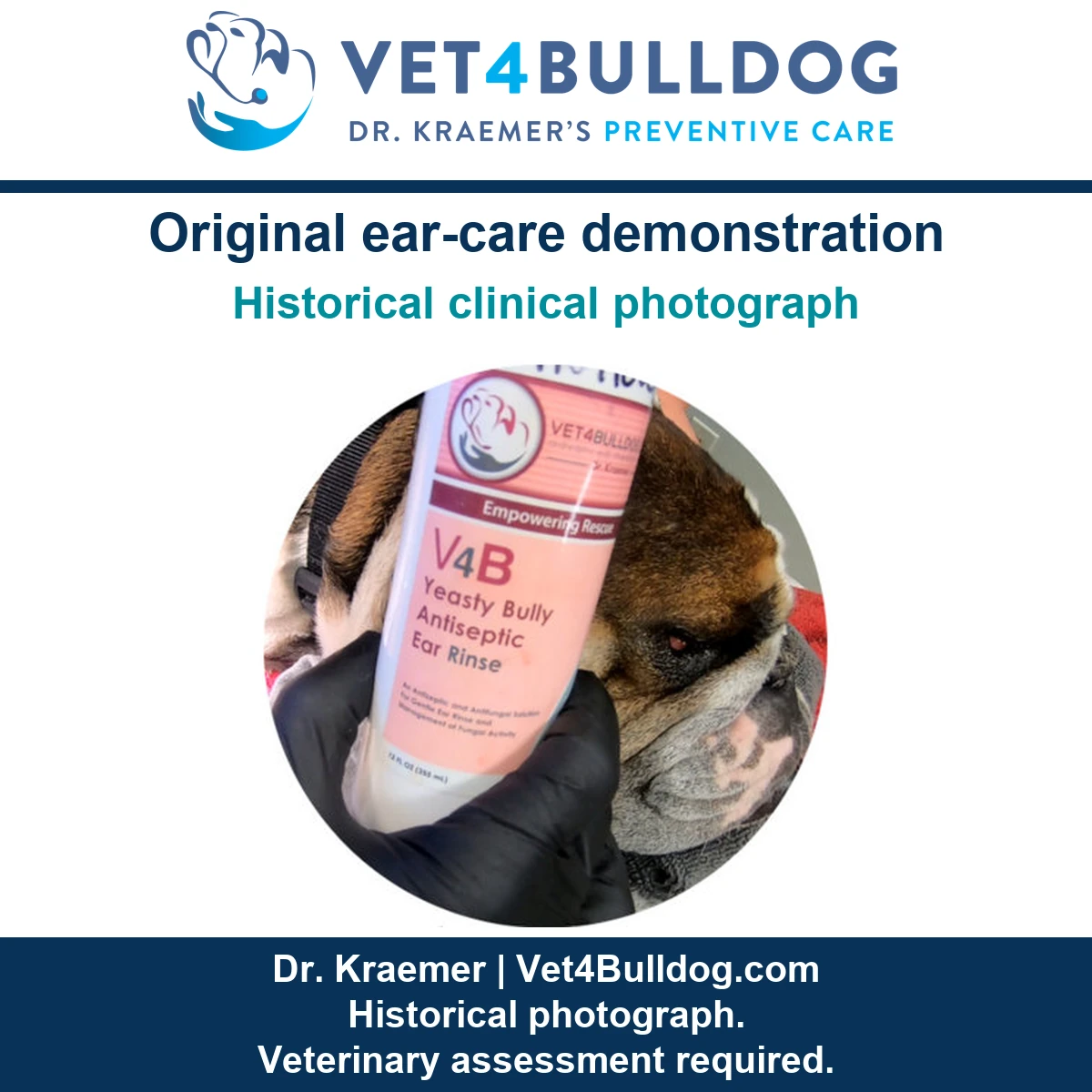
Use a bully ear rinse and cleansing wipes to remove all the debris
Dr. Kraemer’s V4B Bulldog Therapeutic Topicals
#1 EAR RINSE:
- V4B Bully WaxLess Ear Rinse
- V4B Bully Yeasty Bully Antiseptic Ear Rinse
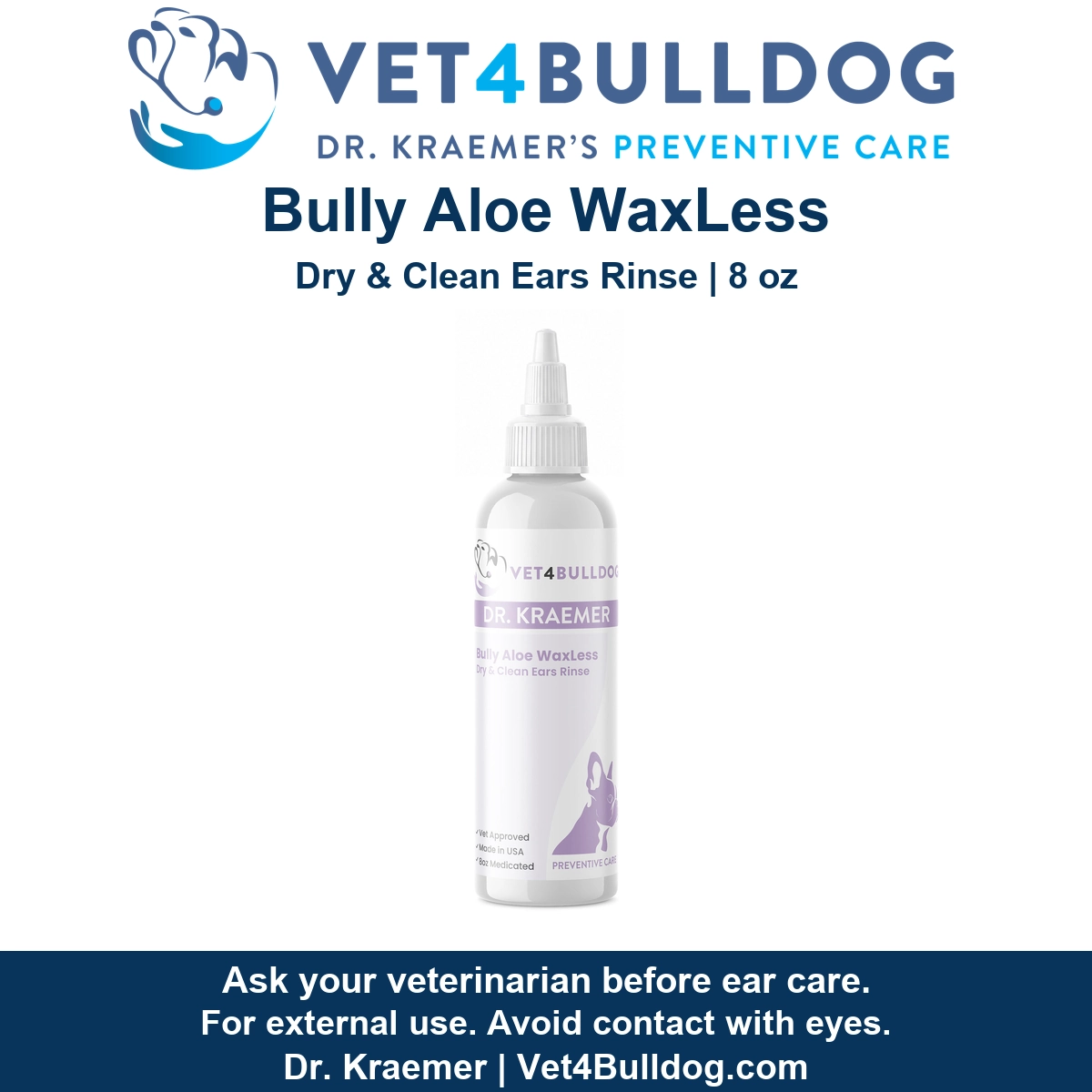 #2 CLEANSING WIPE:
- V4B Bully Ear Cleansing Wipes
Dr. Kraemer’s V4B Bulldog Therapeutic Supplements

Bulldog Ear Mite Prescription Medication
Usually topical drop is sufficient but they are also other preventive and care prescription you can implement #1 TOPICAL RX: There are various prescription topical medications. #2 MITE PREVENTIVES: There are a few topical and oral flea & mite ones that also help prevent and treat ear mites
Ear mites in Bulldogs and French Bulldogs WARNINGS:
Below is a selected list of ear mite warnings courtesy of Dr. Kraemer
Stated plainly because this is the exact page where somebody might hope otherwise: nothing here is a treatment for ear mites. Mites are cleared with a parasite medication your veterinarian prescribes, and if the ear has an infection on top of them that is a prescription too. Please do not treat an ear on a guess, from this page or anywhere else.

What routine ear cleaning is genuinely for is maintenance, which in this breed is not optional. A narrow Bulldog canal holds moisture and debris, and keeping it clean and dry is ordinary owner care, the same as the folds. These are topicals, so they sit alongside whatever your veterinarian has prescribed rather than instead of it, and the treatment decision stays theirs. If yeast is the recurring problem rather than mites, the yeasty ears range is the one built for that.
One caution worth repeating: if the ear is painful, or your dog has had long running ear disease, have it looked at before you put anything into it. Some preparations should not go into an ear with a damaged drum, and that is not something you can check from the outside.
To be clear: supplements or topicals are not substitutes for prescribed treatment. If your dog is unwell, is being treated for a condition, or is already on medication, review any supplement or topical with your veterinarian so it fits the plan you are already following. This page is educational and is not a diagnosis or a treatment plan for your own dog.
#1 Bulldog ear mite COMPLICATION WARNING
If left untreated, an ear mite infestation in Bulldogs can trigger a cascade of problems. The constant irritation often leads to chronic otitis which in turn predisposes the ear to secondary yeast otitis and bacterial infections. Persistent scratching and head shaking may also cause trauma to the ear flap, sometimes resulting in a painful aural hematoma. 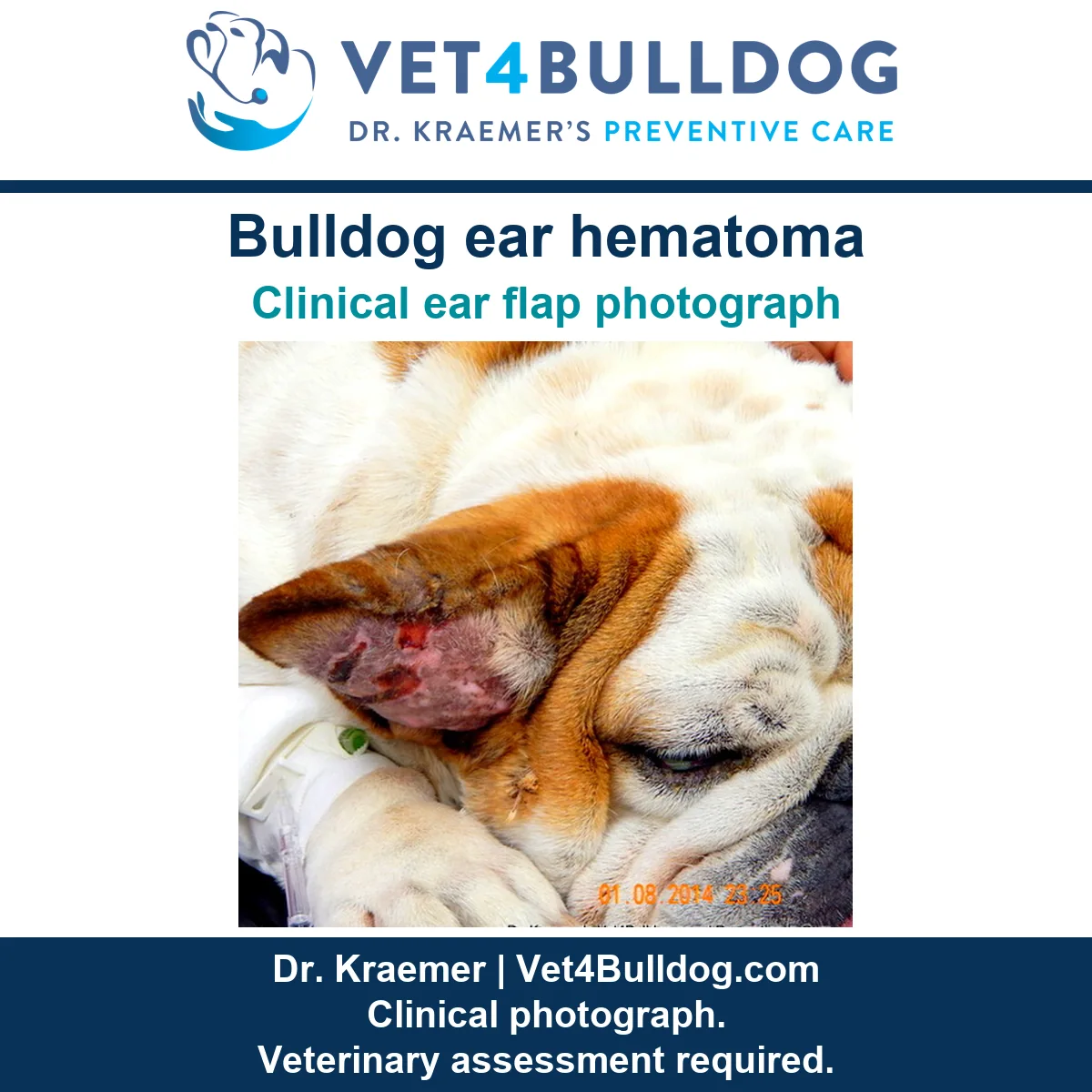 In severe or long-standing cases, the ongoing inflammation and damage can even progress to partial or permanent hearing loss.
#2 Bulldog ear mite CONTAGIOUS WARNING:
Although ear mites are rare in bulldogs, they are highly contagious among pets and can easily spread from one household pet to another, including cats.

How do I know whether it is mites or an infection?
Can I just buy ear mite drops from the pet shop?
Are they contagious? Do I need to treat the cat?
Can people catch ear mites?
His ears are full of dark debris. Does that mean mites?
Why does my vet want to look at a swab under a microscope?
Why do Bulldogs have so much more ear trouble than other dogs?
More Help from Dr. Kraemer
Ears in this breed are rarely a standalone problem, so these are the pages that cover what sits behind them.
- Ear infections in Bulldogs and French Bulldogs
- Allergic ear disease in Bulldogs and French Bulldogs
- Ear hematoma in Bulldogs and French Bulldogs
- End stage ear disease in Bulldogs and French Bulldogs
- Allergic and atopic itch dermatitis in Bulldogs and French Bulldogs
- Demodex mange in Bulldogs and French Bulldogs
If you have a question about your own dog, the Exam Room Q and A is where owners send them.
References
- Mange in Dogs and Cats, Merck Veterinary Manual
- Ear Infections and Otitis Externa in Dogs, Merck Veterinary Manual
- Otitis Externa in Animals, Merck Veterinary Manual
Trusted by Vets ~ Recommended by Owners ~ Approved by Bulldogs