


Usually it was something small and ordinary. Leftovers scraped into the bowl after a roast. A stolen butter dish. A visitor who thought a dog should have a treat. And yes, a sudden load of fat is one of the recognized triggers, so the connection is not imaginary. But it is one trigger among several, plenty of cases have no identifiable cause at all, and standing in the waiting room building a case against yourself does not help your dog.
What matters more in this breed is the background rather than the single meal. A Bulldog carrying extra weight is a Bulldog at higher risk, and this is a breed that gains easily and hides it under a shape that was never sleek to begin with.
One thing has genuinely changed in how this is managed, and it is worth knowing before you are handed advice by somebody who learned it a long time ago. The old teaching was to rest the pancreas by withholding food. Current thinking runs the other way, toward feeding sooner rather than later. If you are told to starve your dog for days, that is worth a polite question.
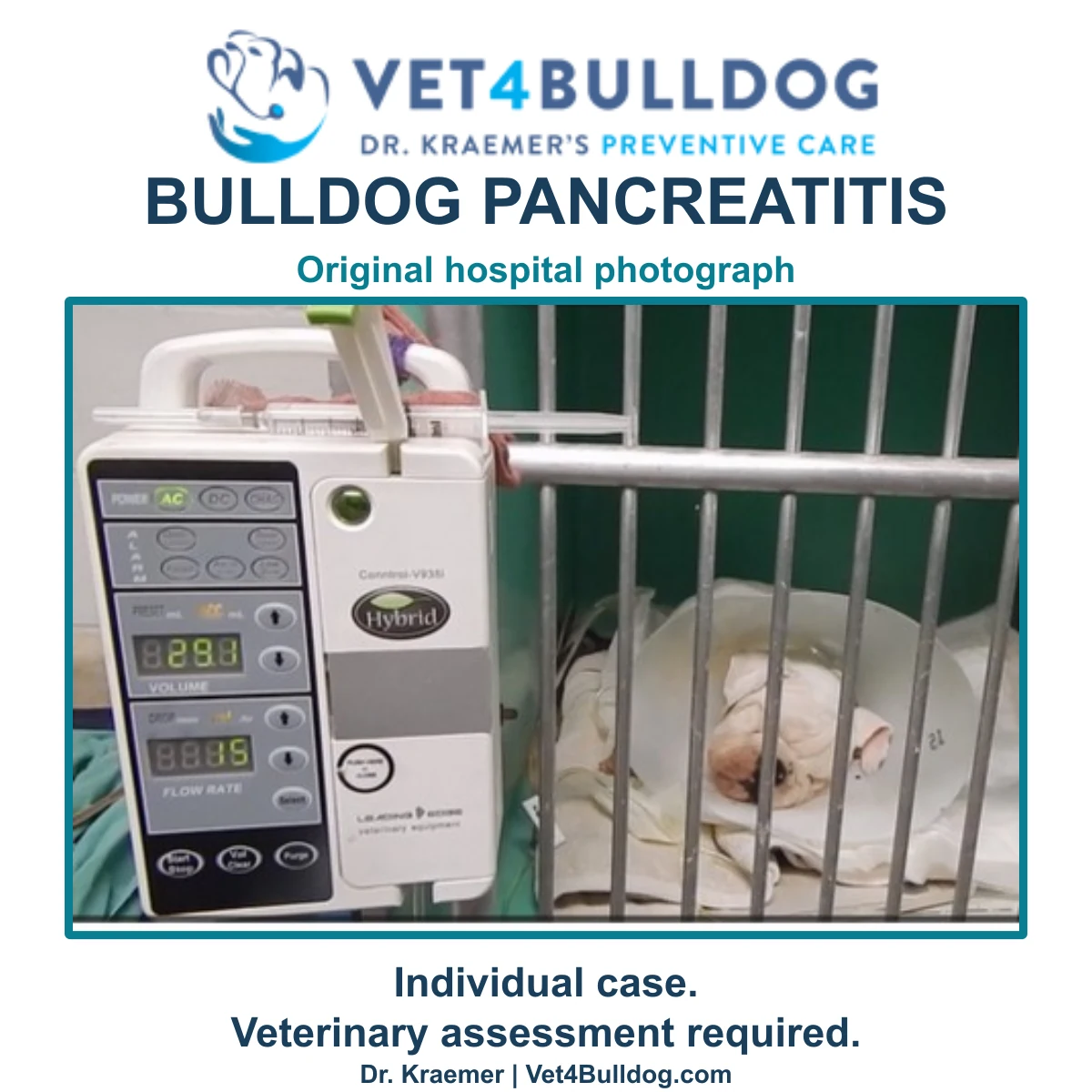
We nearly lost our bulldog to pancreatitis over Christmas. My father in law gave him the fat off the ham and I did not see it happen. He was in hospital on a drip for three days and he is home now on a prescription food. I cannot stop replaying it. Is he always going to be at risk now, and is it really safe to go back to his normal food eventually? Also he is on a fish oil for his joints and I am now afraid to give him anything at all.
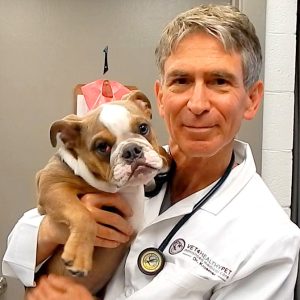
First, he came home. Three days on fluids and he walked out, and that is the outcome you want from this. Hold on to that when the replaying starts.
On whether he is always at risk: a dog who has had one episode is more likely than average to have another, so yes, the background risk changes. That is not the same as saying it will happen again. What moves that risk down is unglamorous and entirely within your control: keeping him lean, keeping fat out of the diet, and making sure every person who comes into your house knows that this dog does not get scraps, not even a little bit, not even at Christmas. That last conversation is awkward and it is the most protective thing on the list.
On going back to his normal food, that is your veterinarian’s call and it depends on how severe this was and what they saw. Many dogs move to a long term lower fat diet rather than returning to what they ate before, and plenty do perfectly well on it for years.
On the fish oil: do not simply stop it on your own, and do not simply continue it either. Ask the vet who treated him. An oil supplement is fat, and in a dog recovering from pancreatitis that is a reasonable thing to pause and reconsider rather than take on trust. I sell fish oil and I would still want that decision made by the person holding his file, not by me and not by a web page.
And on your father in law: he did not know. Most people genuinely do not. Tell him plainly what happened, because the version where nobody mentions it is the version where it happens again next Christmas.
Dear Dr. Kraemer, I am reaching out to you regarding our beloved bulldog, Moca. 🐕 She has been experiencing episodes of vomiting with bile for the last few weeks, and I’m worried it might be pancreatitis like my Frenchie that you treated last year.
I am giving him your bully probiotics and the prescription low-fat diet you recommended. Is there anything else I should do?
Thanks and happy new year, Anna
Pancreatitis in bulldogs and French bulldogs is an inflammatory condition that disrupts the normal functioning of the pancreas.
Bulldog Pancreatitis 5 X MUST KNOW
- Vomiting and sometimes diarrhea are among the most common medical findings.
- The cause of pancreatitis can be a high-fat diet with low fiber, obesity, infection, or drug reactions.
- Pancreatitis can be acute or chronic, severe or mild, short-term or long-lasting
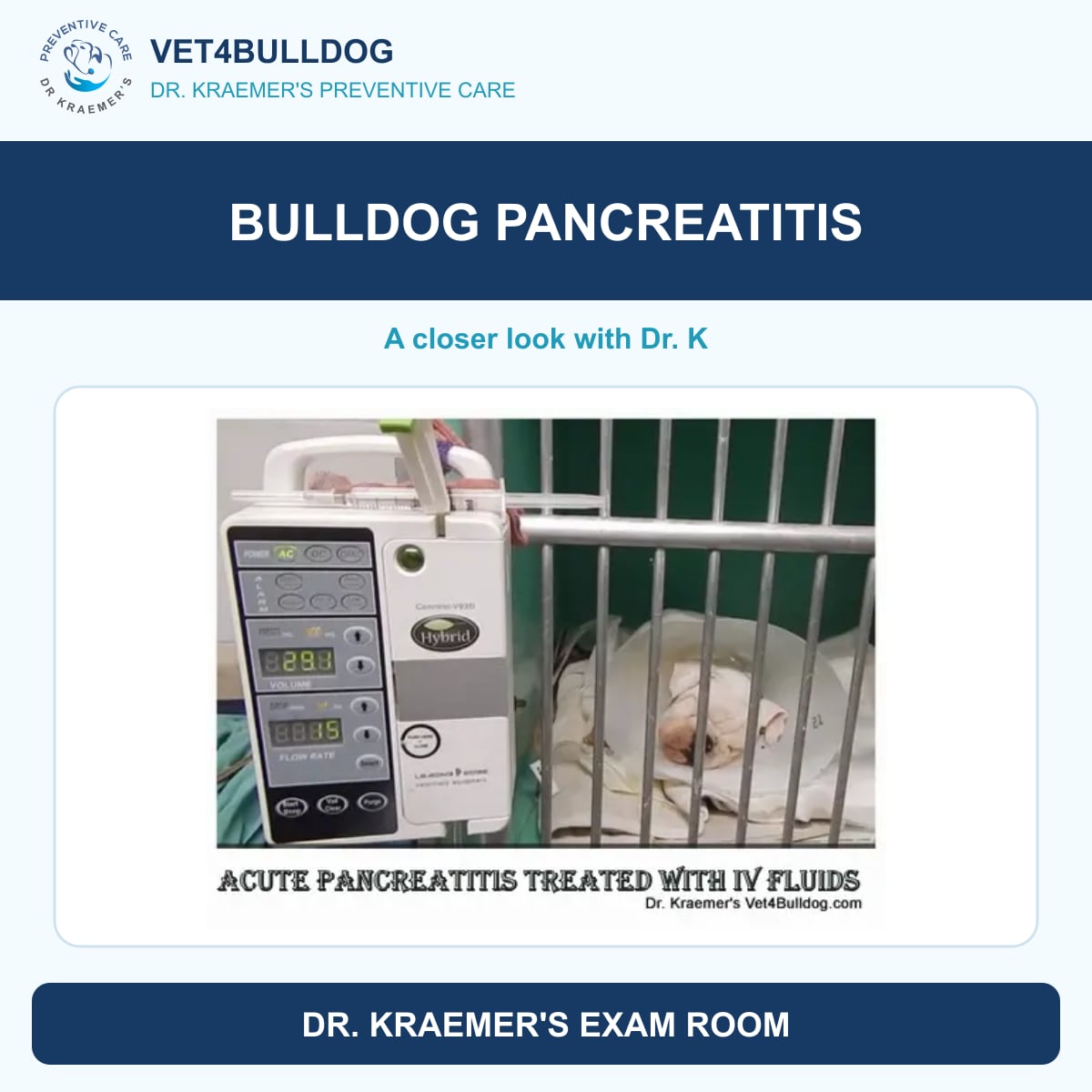
- Treatment might range from a diet change and pain medication in a chronic case to hospitalization, IV fluids, medications, and even surgery in an acute one.
- Prevention includes Dr. Kraemer’s
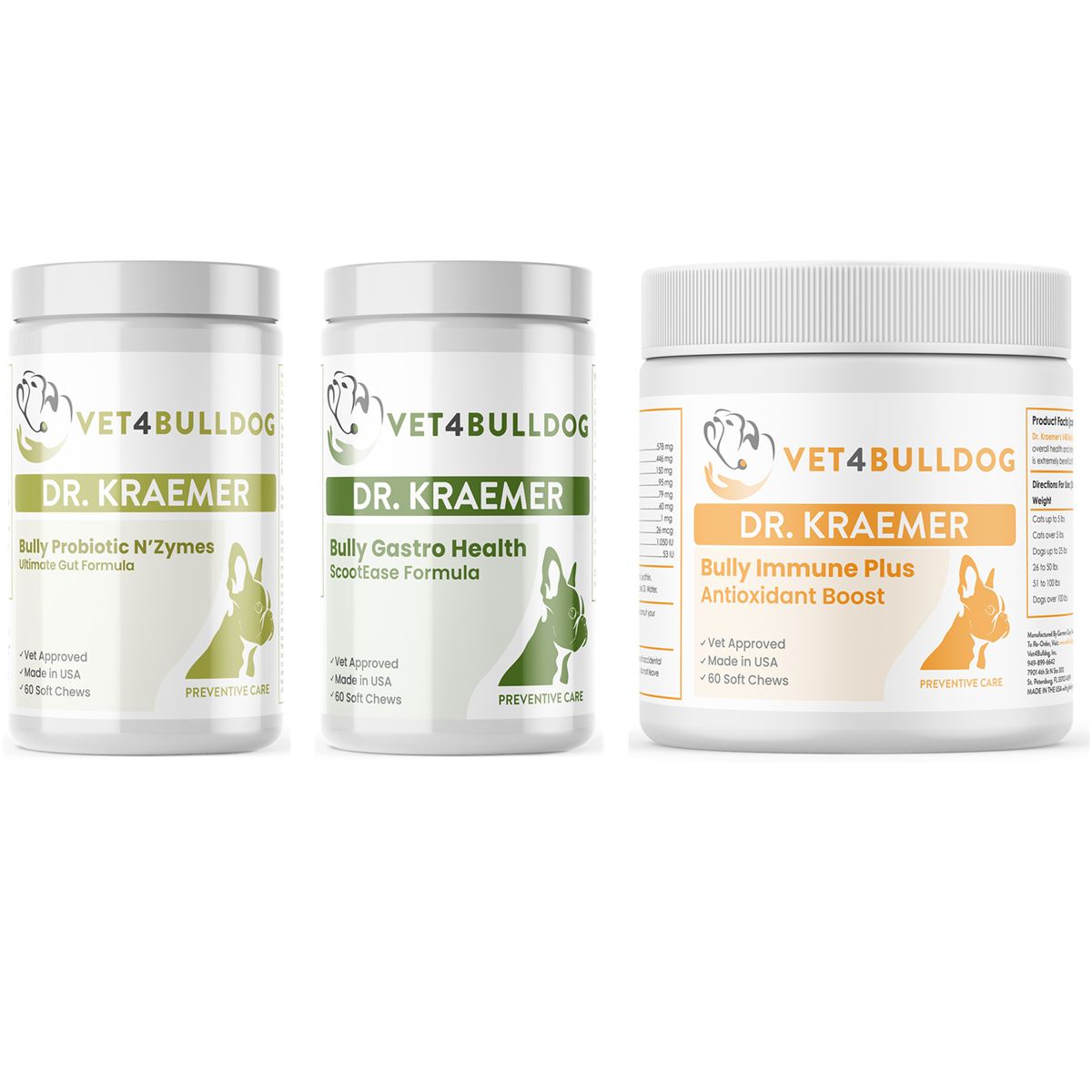
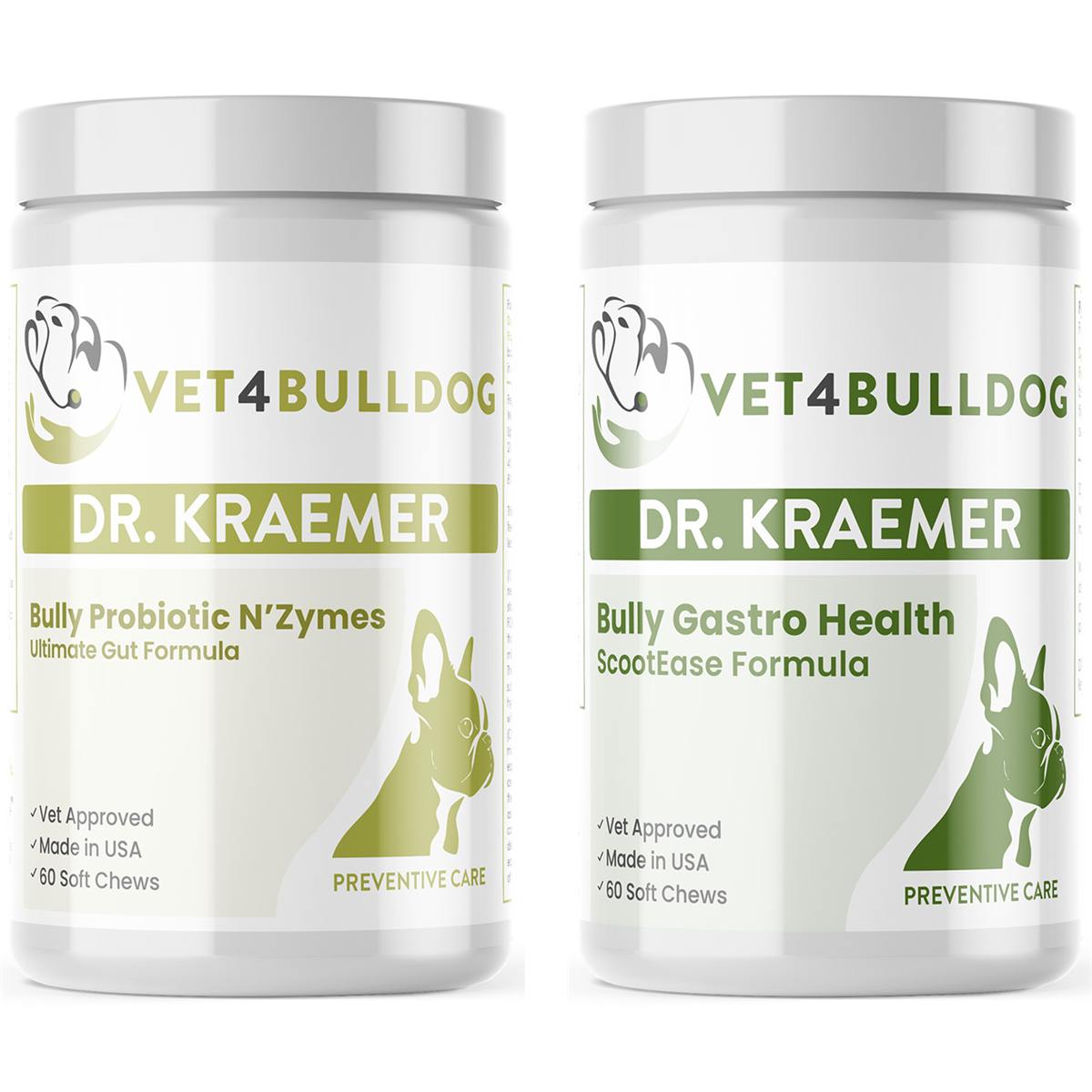
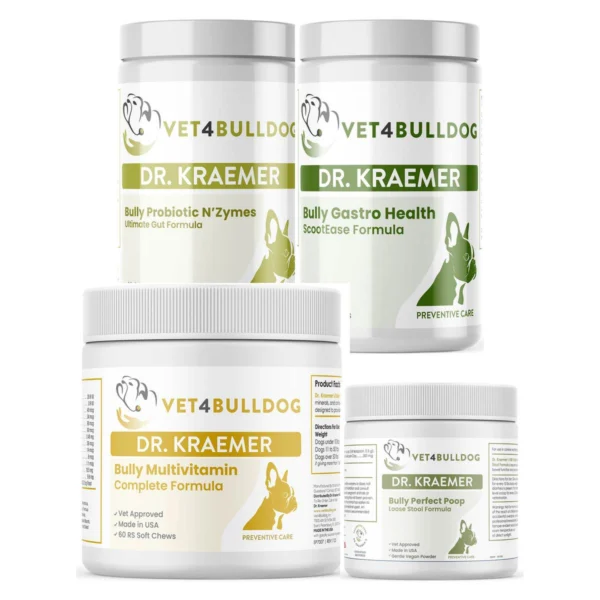
- V4B Bully Probiotics and Digestive Enzymes
- V4B Bully Immune Support
- V4B Bully Fish Oil EFA immune-skin-joint
- V4B bully Gentle Move Botanical Fibers
The owners of this bulldog community prefer prevention over RX
Bulldog Pancreatitis: PANCREAS ANATOMY
The pancreas is a gland near the stomach and the upper small intestine (duodenum). It is characterized by pink, soft, glandular tissue responsible for three crucial secretory functions.
Bulldog Pancreatitis: PANCREAS FUNCTION
The pancreas plays a crucial role in producing three essential products that are critical to your bulldog’s health:
INSULIN PRODUCTION:
The first function involves the secretion of insulin, a hormone known for regulating blood sugar levels.
- Function: regulates blood sugar levels.
- Importance: Helps cells absorb glucose for energy, maintaining optimal blood sugar balance.
DIGESTIVE ENZYMES PRODUCTION:
The second function, less known but equally vital, involves the secretion of digestive enzymes. These enzymes aid in breaking down digested food into smaller components such as amino acids, fatty acids, and carbohydrates.
- Types:
- Lipase: It breaks down fats into fatty acids and glycerol.
- Protease: Digests proteins into amino acids.
- Amylase converts carbohydrates into simple sugars.
- Importance: Facilitates the digestion of food in the small intestine, allowing the absorption of nutrients.
This enzymatic preparation allows essential nutrients to be absorbed and utilized, preventing their loss in fecal material.
Bulldog Pancreatic Enzyme Insufficiency Disease WARNING
A deficiency in pancreatic enzymes can lead to a severe condition causing maldigestion and malabsorption, resulting in critical nutrient deficiencies.
BICARBONATE SECRETION:
- Function: neutralizes stomach acid.
- Importance: It prevents damage to the small intestine and aids in the digestion process.
These products collectively play a vital role in the overall health and well-being of your bulldog by contributing to:
- DIGESTION: proper digestion
- ABSORPTION: nutrient absorption
- BLOOD SUGAR: maintenance of blood sugar levels
Pancreatitis in Bulldogs and French Bulldogs: ACUTE vs. CHRONIC
While acute and chronic pancreatitis in dogs share some similarities, they differ significantly in
- onset
- severity
- long-term management
Bulldog Pancreatitis ONSET:
- ACUTE PANCREATITIS: sudden, often appearing within hours or days.
- CHRONIC PANCREATITIS: Gradual, developing over weeks or months, sometimes with intermittent flare-ups
Bulldog Pancreatitis SYMPTOMS:
- ACUTE PANCREATITIS: typically severe, including
- intense abdominal pain
- vomiting
- diarrhea
- lethargy
- loss of appetite.
- CHRONIC PANCREATITIS: some bulldogs might be asymptomatic; it is often milder than acute pancreatitis, with symptoms such as
- intermittent episodes of vomiting
- diarrhea
- abdominal discomfort
Bulldog and French Bulldog Pancreatitis CAUSE:
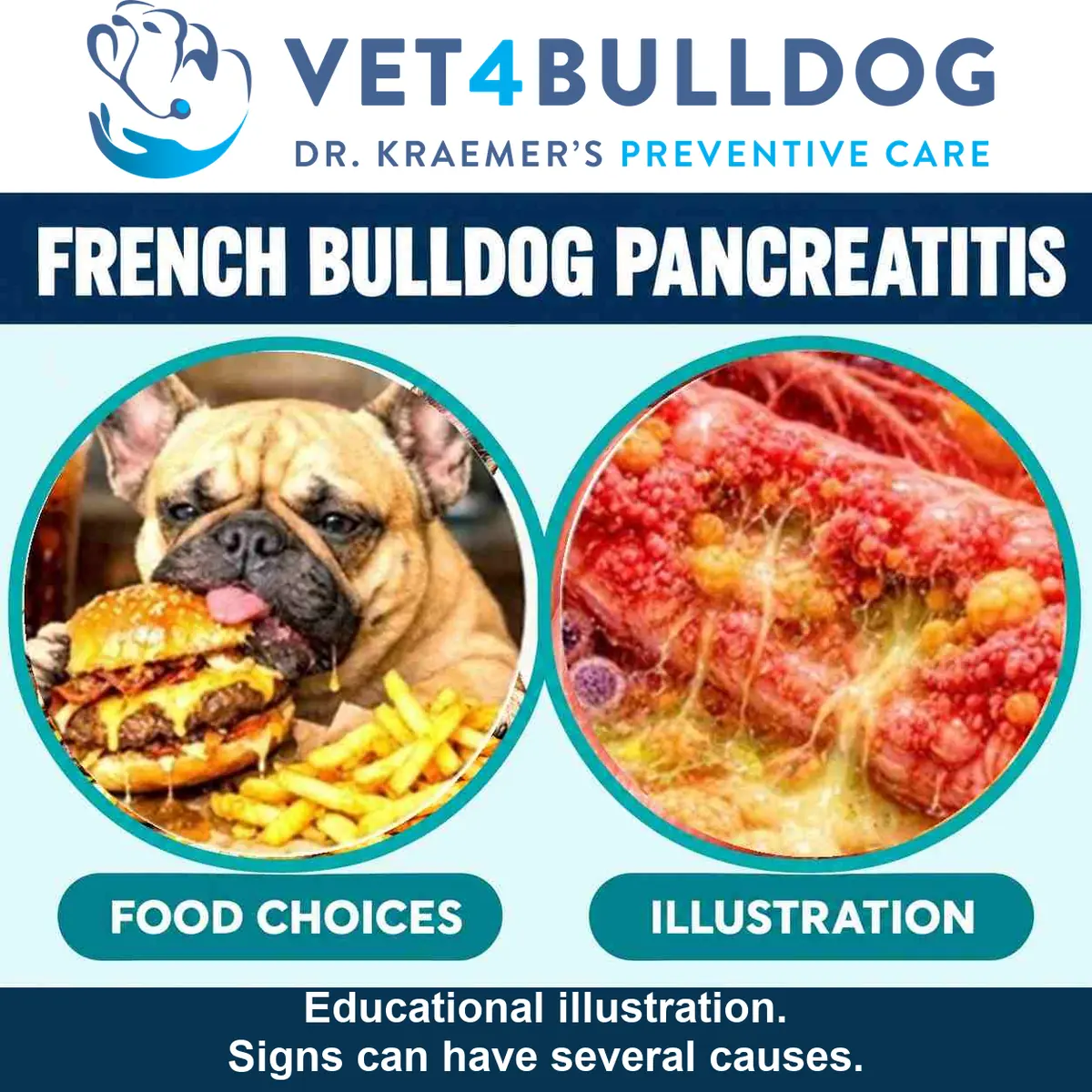
- ACUTE PANCREATITIS: Various factors, such as
- high-fat diet
- obesity
- certain medications, like steroids
- trauma
- infections.
- CHRONIC PANCREATITIS: Various factors, such as:
- Repeated bouts of acute pancreatitis
- dietary indiscretions
- an underlying disease like diabetes or hypothyroidism.
Bulldog Pancreatitis SEVERITY:
- ACUTE PANCREATITIS: The severity can range from mild to life-threatening, with potential complications like
- dehydration
- shock
- organ failure.
- CHRONIC PANCREATITIS: is generally milder than acute pancreatitis but can lead to long-term complications like
- malnutrition
- diabetes
- exocrine pancreatic insufficiency (EPI).
Bulldog Pancreatitis DIAGNOSIS:
- ACUTE PANCREATITIS: Based on
- clinical signs
- blood tests (elevated pancreatic enzymes) immunoreactivity test (PLI), and specific canine pancreatic lipase (SPEC cPL)
- imaging (ultrasound, X-rays).
- CHRONIC PANCREATITIS: is similar to acute pancreatitis but may require additional tests like a pancreatic biopsy to confirm chronic inflammation.
Bulldog and French Bulldog Pancreatitis PREVENTIVE CARE
- ACUTE PANCREATITIS: prevention must include
- weight management
- reduced-fat diet
- minimizing prescription drugs
- and avoiding trauma during abdominal surgery, such as spay. The surgeon must be careful not to pull, injure or probe the pancreas
- CHRONIC PANCREATITIS: same as acute
BULLDOG PREVENTIVE THERAPEUTICS FOR PANCREATITIS:
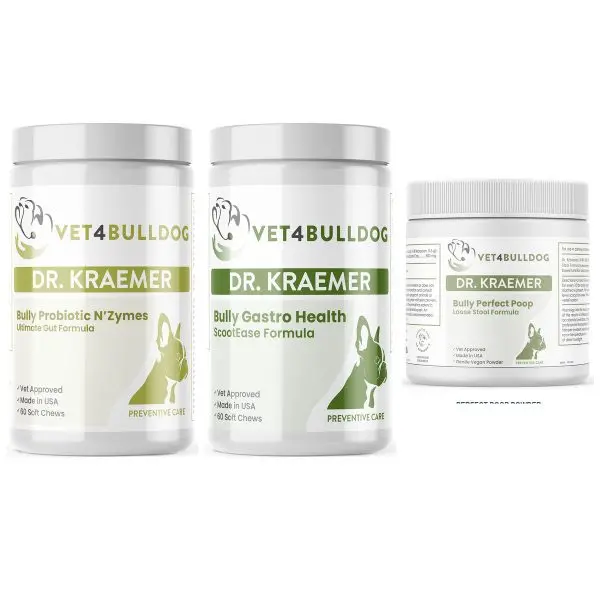
In addition to the preventive measures we listed above, you should keep your bulldog on preventive bully therapeutic supplements such as:
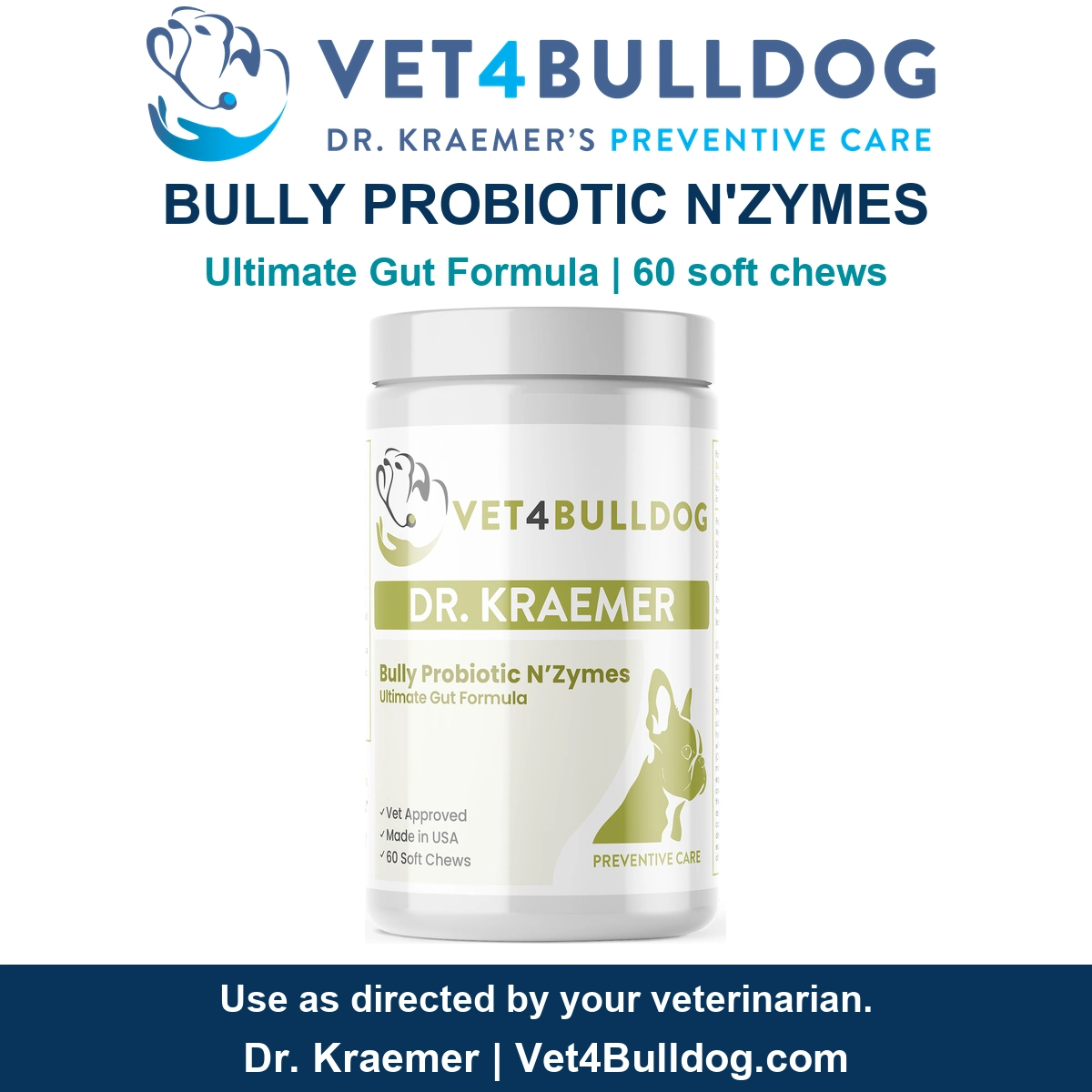
- V4B Bully Prebiotics, Probiotics, and Digestive Enzymes
- V4B Bully Gentle-Move: a blend of natural, active botanical fibers
- V4B Bulldog Immune Booster
- V4B Bully Fish Oil EFA skin-joint-immune
Bulldog Pancreatitis TREATMENT:
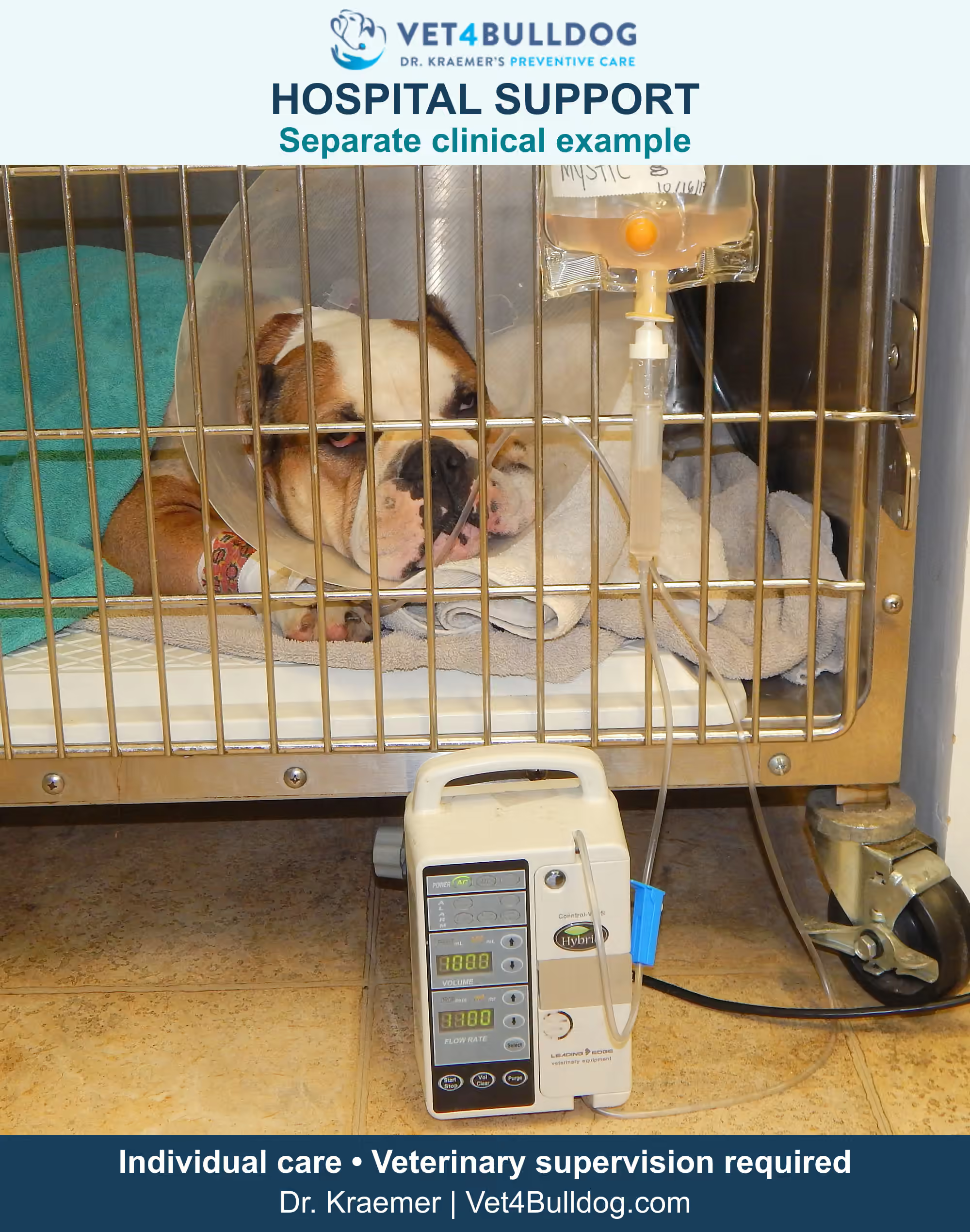
- ACUTE PANCREATITIS: Hospitalization with supportive care like
- fluid therapy
- pain medication
- antibiotics
- antinausea & anti-vomiting
- dietary adjustments.
- In severe cases, surgery may be required.
- CHRONIC PANCREATITIS: Primarily focused on managing symptoms and preventing flare-ups through
- dietary changes (low-fat, high-fiber diet)
- pain medication
- enzyme supplements for EPI if needed.
Bulldog Pancreatitis PROGNOSIS:
- ACUTE PANCREATITIS: Generally good with prompt diagnosis and treatment, but some bulldogs may experience relapses.
- CHRONIC PANCREATITIS: variable, with potential for long-term management but increased risk of complications compared to acute pancreatitis.
Pancreatitis in Bulldogs and French Bulldogs RULE OF THUMB
- Do Not Procrastinate: Early diagnosis and treatment are crucial for acute and chronic pancreatitis.
- Quality Food: Dietary management is essential for preventing flare-ups in both acute and chronic cases.
- Blood Sugar: Inflammatory episodes of the pancreas can deplete insulin-secreting cells, disrupt sugar regulation, and potentially trigger acute diabetes.
- Life-threatening: While most cases of bulldog pancreatitis are mild, local, and short-term, a severe form can cause major illness, become systemic, and even be life-threatening.
The starving advice is out of date
This is the piece of information most likely to be useful to you, because it is the one where common knowledge has not caught up with practice.
For a long time the standard approach was to rest the pancreas by withholding food, sometimes for several days, on the reasoning that feeding stimulates the organ that is already inflamed. It made sense and it is what a great many people were taught, including vets who qualified a while ago and most of the internet.
The thinking has moved. The current direction of travel is toward getting nutrition in sooner rather than later, because a gut that goes unused does not do well and a dog who is not eating recovers more slowly. In practice that means pain control and fluids first, then food reintroduced early rather than held back, often a low fat formulation, and sometimes with help if the dog will not eat voluntarily.
I am not telling you to overrule anybody. What I am telling you is that if the plan you are given is to withhold food for several days, it is entirely reasonable to ask whether earlier feeding has been considered for your dog. A good vet will have a clear answer, because there are cases where waiting is still the right call.
The weight is the part nobody wants to discuss
Of everything that puts a Bulldog at risk of this, the one with the strongest evidence behind it and the least conversation around it is body condition. A heavy dog is at higher risk, and this breed hides weight well because it was never a lean silhouette in the first place.
I understand why the subject goes unraised. Telling an owner their dog is overweight sounds like criticism of them, most people hear it that way, and a lot of vets would rather keep the appointment pleasant than have that conversation. So it does not get had, and the dog carries the consequence.
Let me put it in terms that are about the dog rather than about you. Weight is the single modifiable factor on the whole list. You cannot change the breed, you cannot change what happened last Christmas, and you cannot control everything that goes into a dog who is built to hoover. You can change the number on the scale, and doing so lowers the odds of this and of a long list of other things in the same stroke.
A practical note that owners find more useful than a target weight: measure the food rather than filling the bowl by eye, count the treats as part of the day’s food rather than as extras, and weigh him on the same scale every month so you are working from a number rather than an impression. Impressions are generous, in this breed especially.
An oil supplement is fat. In a healthy Bulldog that is unremarkable and often useful. In a dog who has had pancreatitis, or who is recovering from it, it is a reasonable thing to pause and reconsider rather than continue on autopilot. I sell fish oil and I would still rather you asked the veterinarian holding your dog’s file than took my word for it from a web page.
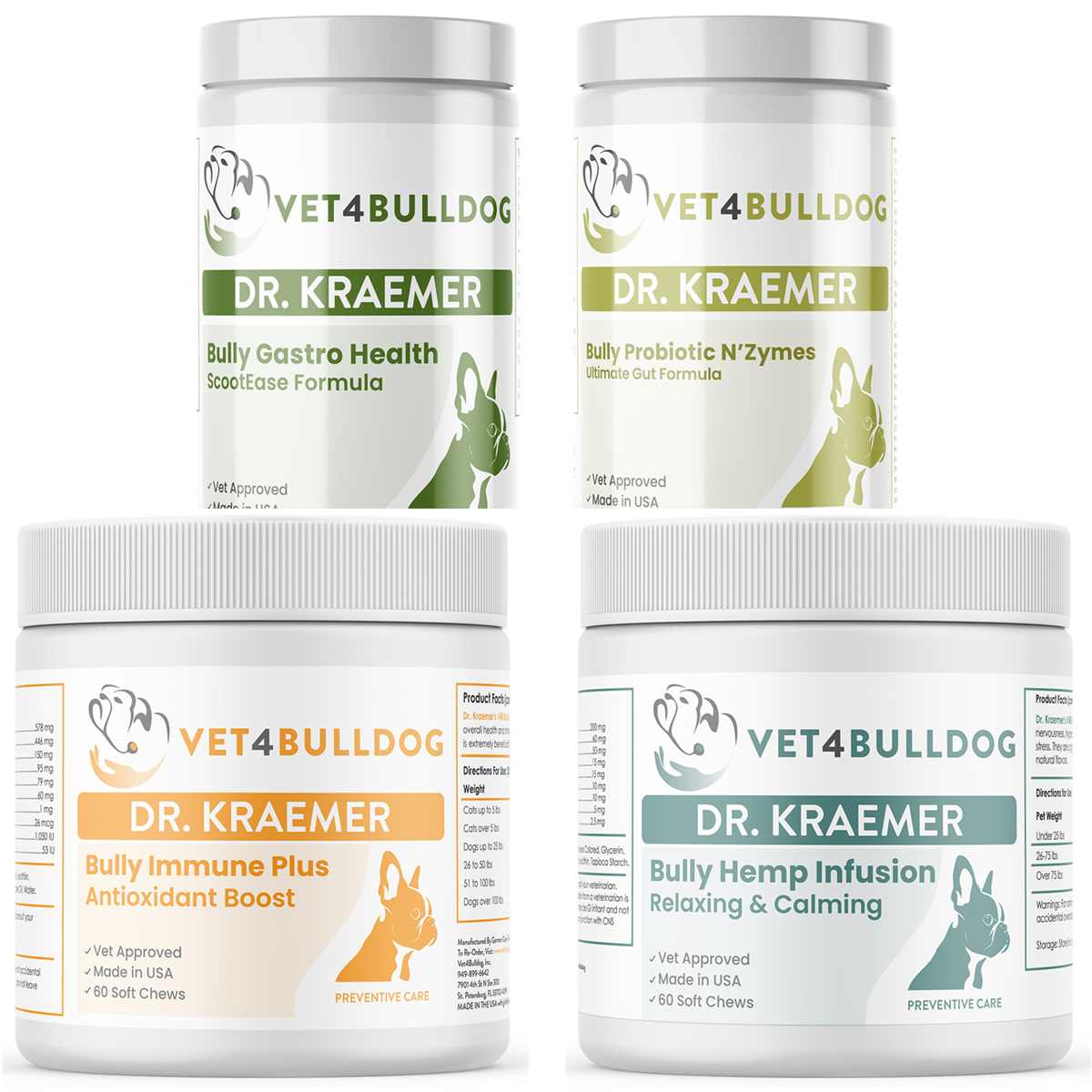
Where a supplement may have a sensible place here is digestive support alongside a low fat diet, helping a gut that has been through an inflammatory episode settle back into normal work over a good few weeks. That is a supporting role next to the diet, which is doing the real job, and not a treatment for the condition.
The thing that actually protects this dog costs nothing: keeping him lean, keeping fat out of his food, and making sure every visitor to your house knows he does not get scraps.
To be clear: supplements are not a treatment for pancreatitis and not a substitute for veterinary examination, diagnosis or treatment. This page is educational only.
Did I cause this by giving him scraps?
A sudden load of fat is one recognized trigger, so if that happened the connection is real. It is also only one trigger among several, and a good number of cases never have a cause identified at all. What I would say to you is what I said across the table many times: the useful thing now is not working out who is to blame, it is making sure everyone in the household understands why this dog does not get table food in future. That conversation protects him. The guilt does not.
Should I starve him to rest the pancreas?
Not on your own, and the thinking on this has changed. Withholding food for days was standard teaching for a long time and a lot of advice still reflects it. Current practice leans toward getting nutrition in earlier, because a gut that sits unused does not do well and a dog who is not eating recovers more slowly. Pain control and fluids come first, then food reintroduced sooner rather than later, often low fat. Follow the plan from the vet treating him, and if that plan involves several days without food it is fair to ask whether earlier feeding has been considered.
His routine bloodwork was normal. How was it missed?
Standard blood panels are not reliable for this, which surprises owners who assume a blood test is a blood test. The more specific test measures a pancreatic enzyme and is a separate request, and imaging adds to the picture. So a normal general panel does not rule it out. If your dog has the sort of episode that makes you suspect it and the routine bloods come back unremarkable, asking whether the specific test has been run is a sensible question rather than second guessing anybody.
He is on fish oil for his joints. Can he keep taking it?
Ask the vet who treated him, and please do not just decide either way yourself. Oil is fat, and fat is the thing being restricted, so it is exactly the sort of supplement worth revisiting after an episode rather than continuing out of habit. The answer depends on how severe this was and what else he is on. I say this as somebody who sells fish oil: this is one of the few situations where I would rather you asked first.
Will it happen again?
A dog who has had one episode carries a higher than average chance of another, so the background risk does change. That is not a prediction that it will recur. What lowers the odds is the dull list: keeping him lean, a consistent low fat diet with no exceptions, and no scraps from anybody. Many dogs who have had a bad episode go on for years without another, and the ones who do tend to be the ones whose households took the no scraps rule seriously rather than treating it as a guideline.
What should he eat long term?
That is your veterinarian’s call rather than mine, because it depends on how severe this was and what else is going on with him. The general shape is a consistently low fat diet, fed in measured amounts rather than by eye, with treats counted as part of the day rather than added on top. Some dogs stay on a prescription formulation long term and others move to a commercial low fat food. What matters as much as the brand is consistency, because the dog who does badly is usually the one whose careful diet is punctuated by occasional generosity.
If you suspect your dog has pancreatitis, seek immediate veterinary attention.
Trusted by Vets ~ Recommended by Owners ~ Approved by Bulldogs
More Help from Dr. Kraemer
Pancreatitis sits in the middle of diet, weight and gut health, so these are the pages I would read next.
- Weight Control and Exercise in Bulldogs and French Bulldogs
- Best Food and Diet for Bulldogs and French Bulldogs
- Inflammatory Bowel Disease in Bulldogs and French Bulldogs
- Digestion and Dental Problems in Bulldogs
- Food Allergy in Bulldogs and French Bulldogs
- Grain Free Diets for Bulldogs and French Bulldogs