


Subject: 🐾 Non-Itching Flank Baldness in My Frenchie, Mocha 🐾 Dear Dr. Kraemer, Mocha, has recently been experiencing some unusual dark baldness on her flanks. The strange part is that she doesn’t seem itchy or bothered by it at all. 🤔 Is this a common issue with bulldogs? I googled it and found “flank alopecia.” Is that the same? Is there something we should be doing to help Mocha💉💊? Thank you so much in advance! 🙏 #BulldogHealth #NonItchingBaldness #flankAlopecia
Seasonal Baldness Flank Alopecia In Bulldogs INTRODUCTION:
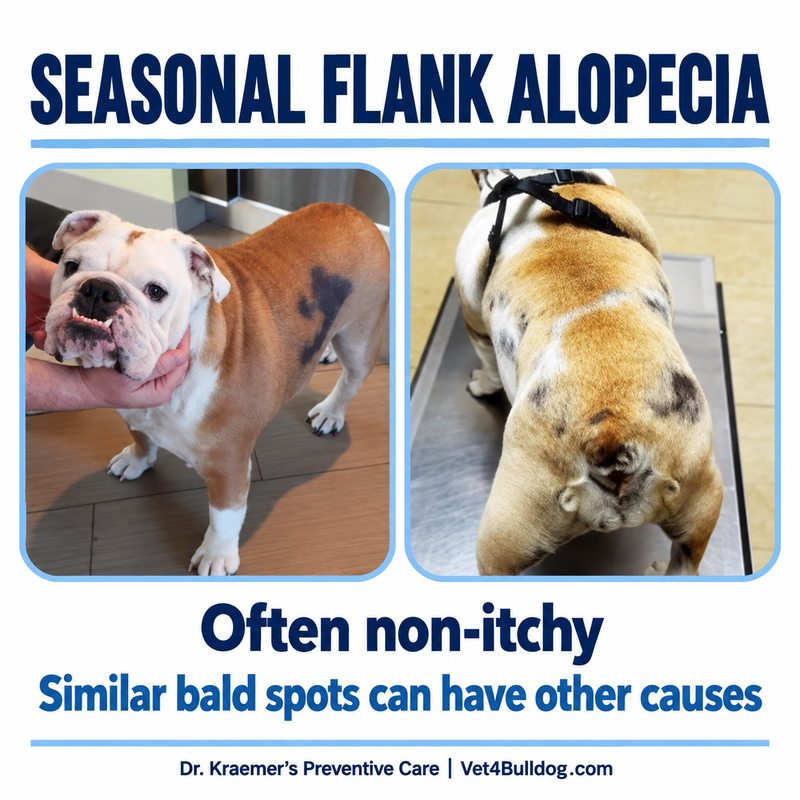
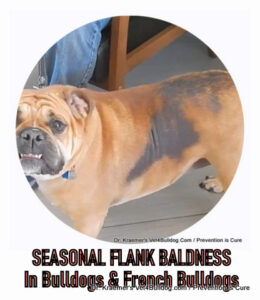
Flank alopecia is a breed-associated condition seen in Bulldogs and French Bulldogs.
It is a recurring pattern of hair loss associated with seasonal changes in daylight; the exact cause is not fully understood.
It typically appears as
- symmetric
- patchy bald spots on both sides of the back and flanks
- often with darkened skin in the affected areas.
In some cases the hair naturally regrows once daylight increases, highlighting the seasonal pattern.
In some cases, however, the hair loss may become permanent.
While usually harmless, it’s important to monitor your bulldog for additional signs to help rule out other possible causes of hair loss.

What Causes Flank Alopecia Seasonal Baldness in Bulldogs?
The cause is not fully understood. Seasonal changes in daylight and hormones such as melatonin may affect the hair-growth cycle.
Bulldog Seasonal Flank Alopecia 5 X MUST KNOW
- Seasonal flank alopecia occurs in several breeds, including Bulldogs; affected skin is usually not itchy or painful.
- The seasonal effect is likely due to sunlight and its impact on melatonin.
- Melatonin may help some dogs; discuss the diagnosis, product, and treatment plan with your veterinarian.
- Hair may regrow naturally, recur seasonally, or remain thin. No treatment guarantees regrowth.
- Skin Health Prevention & Care includes Dr. Kraemer’s Affordable Skin & Coat Bundles
Welcome to Our “Prevention Over RX” Bulldog Community
Flank Alopecia Seasonal Baldness in Bulldogs AGE FACTOR:
Bulldog flank non-itchy hair loss is not common to the young; the condition is usually seen as your bulldog matures, during adulthood and mid-age. It is uncommon for bulldog puppies to have flank alopecia.
What are The Symptoms of Flank Alopecia Seasonal Baldness?
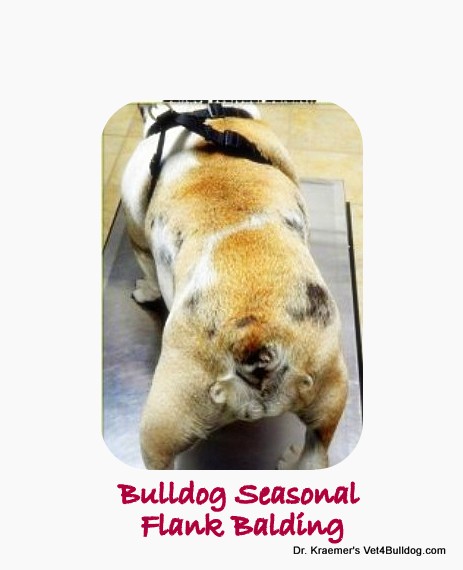
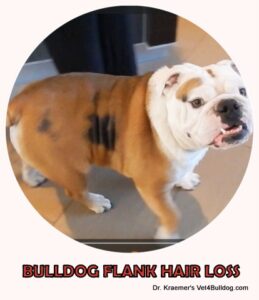
Seasonal flank alopecia often leaves irregular bald patches with darkened skin. The pigmentation is in the exposed skin, not simply a change in coat color.
The pattern often appears on both flanks, with similar areas of hair loss.
Is Bulldog Non-Itchy Flank Baldness Seasonal or Yearly?
Most cases of nonpruritic flank alopecia in bulldogs are seasonal. However, some bulldogs may remain bald indefinitely, regardless of the season, light exposure, or melatonin supplementation. While some bulldogs might experience complete hair regrowth, others may only see partial regrowth. It’s also important to note that not all instances of bulldog flank baldness follow a seasonal or cyclical pattern.
🚨Not every bulldog flank baldness is seasonal or cyclical.
Flank Alopecia Seasonal Baldness in Bulldogs / DIAGNOSIS
In most cases, bulldog flank alopecia is diagnosed based on:
- BREED PREDISPOSITION
- APPEARANCE
- HISTORY (indoors, winter non-sunny season)
Other diagnostics:
- BLOOD TEST
- SKIN SCRAPE
- DTM (fungal culture)
- SKIN CYTOLOGY
🚨In contrast to bulldog allergies and bulldog pyoderma, bulldog flank alopecia is usually NOT ITCHY.
How Is Seasonal Flank Alopecia Managed?
Once your veterinarian confirms seasonal flank alopecia and excludes other causes, treatment may be optional because the condition is usually cosmetic.
1. DAYLIGHT AND SAFE OUTDOOR TIME:
Daylight patterns may influence seasonal hair growth, but extra sun exposure is not a guaranteed treatment. Keep outdoor time comfortable and avoid overheating or sunburn on exposed skin.
2. MELATONIN TREATMENT FOR BULLDOG FLANK HAIR LOSS
Melatonin has been used for recurrent flank alopecia and may help some dogs. Natural regrowth can make response difficult to judge. Ask your veterinarian whether a trial is appropriate and how to assess progress.
3. TOPICAL SKIN CARE: WHEN IS IT RELEVANT?
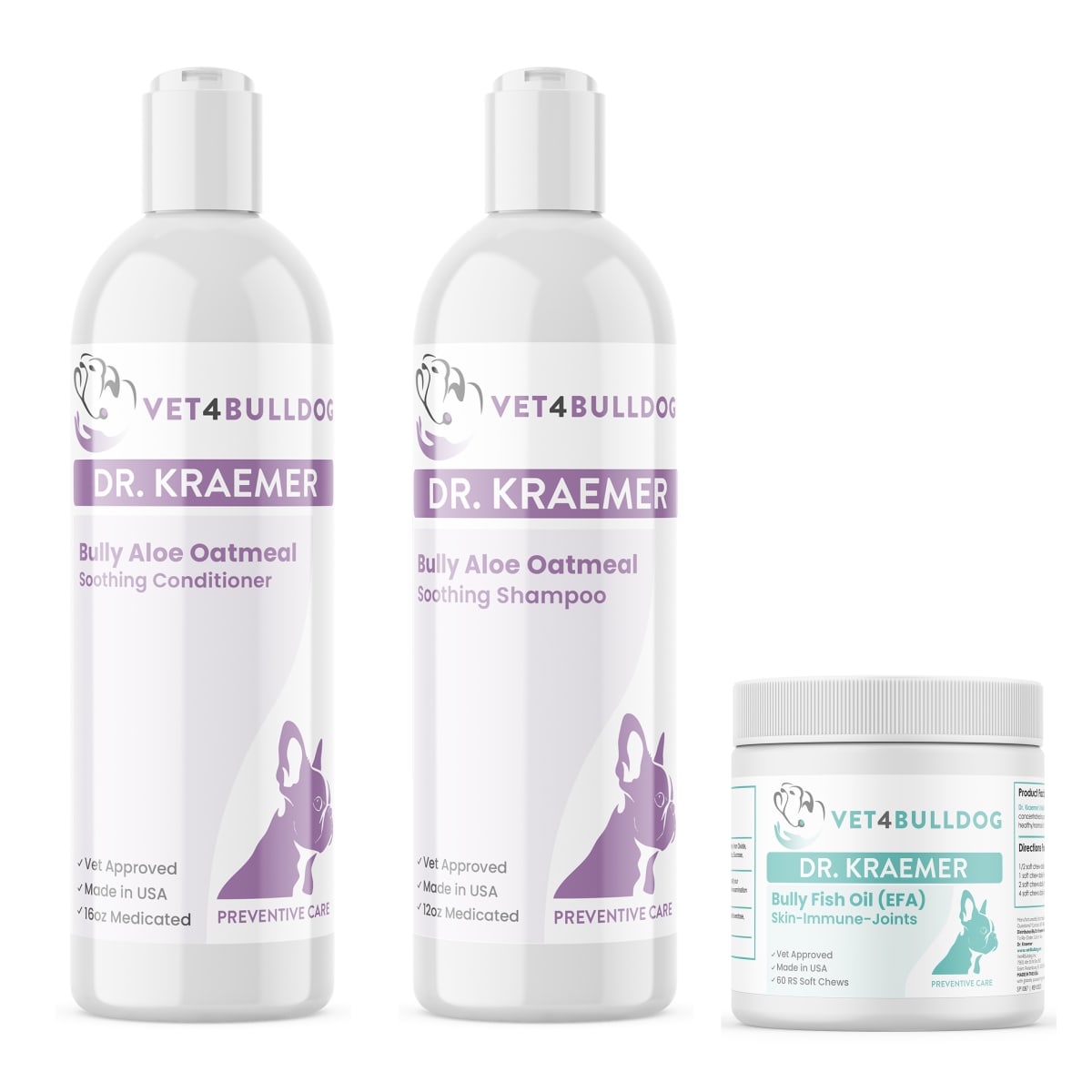
Topicals may be appropriate for a separately diagnosed skin problem, such as an infection or allergy. They are not a proven way to regrow hair from seasonal flank alopecia. Ask your veterinarian which, if any, of these options fits your dog:
- Therapeutic Bully waterless gels & lotions
- Soothing and antiseptic therapeutic shampoo baths
- Therapeutic Bully Skin Spray
- Therapeutic Bully 2-in-1 Shampoo and Conditioner.
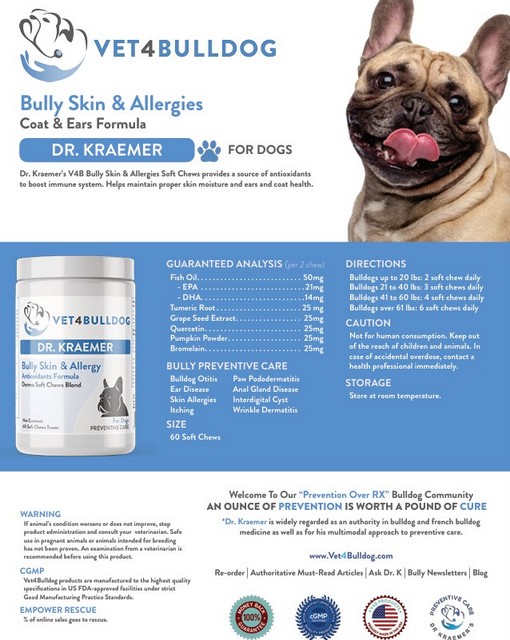
4. THERAPEUTIC SUPPLEMENTS FOR BULLDOG FLANK BALDING:
Discuss skin and coat supplements with your veterinarian if your dog has additional nutritional or skin-care needs. These products do not guarantee regrowth and should not replace a diagnosis.
- Bully Fish oil Omega EFA Skin-Immune-Joint Chews.
- Bully Immune Boosting & Support
- Bully Skin & Coat Derma Care
- Bully ItchLess & Allergies Formula
Bulldog Flank Alopecia Seasonal Baldness TIPS
Below are selective flank alopecia tips and warnings courtesy of Dr. Kraemer
#1 BULLDOG FLANK ALOPECIA MELATONIN TIP:
Use melatonin only with a veterinarian-selected product, dose, and follow-up plan. Suitability depends on your dog’s health and other medications; do not use a one-size-fits-all dose.
#2 BULLDOG BALDING SEASONAL TIP:
Hair regrowth can take months, with or without treatment. Agree on a reassessment date with your veterinarian.
#3 BULLDOG SEASONAL BALDING AND SUNLIGHT TIP:
Regrowth varies. Some dogs regrow hair over several months, some skip a season, and others retain bald patches. Take dated photos in similar lighting to track the pattern.
Is All Flank Hair Loss Seasonal Alopecia?
Some other non- or minimal itching, bilateral, or symmetrical alopecia can mimic bulldog flank alopecia seasonal baldness. There are other common causes of seasonal and non-seasonal hair baldness and darkening of the skin in bulldogs that might include the flanks. Examples of other medical conditions associated with baldness and skin darkening are:
- Bulldog demodicosis red mite
- Bulldog food allergies
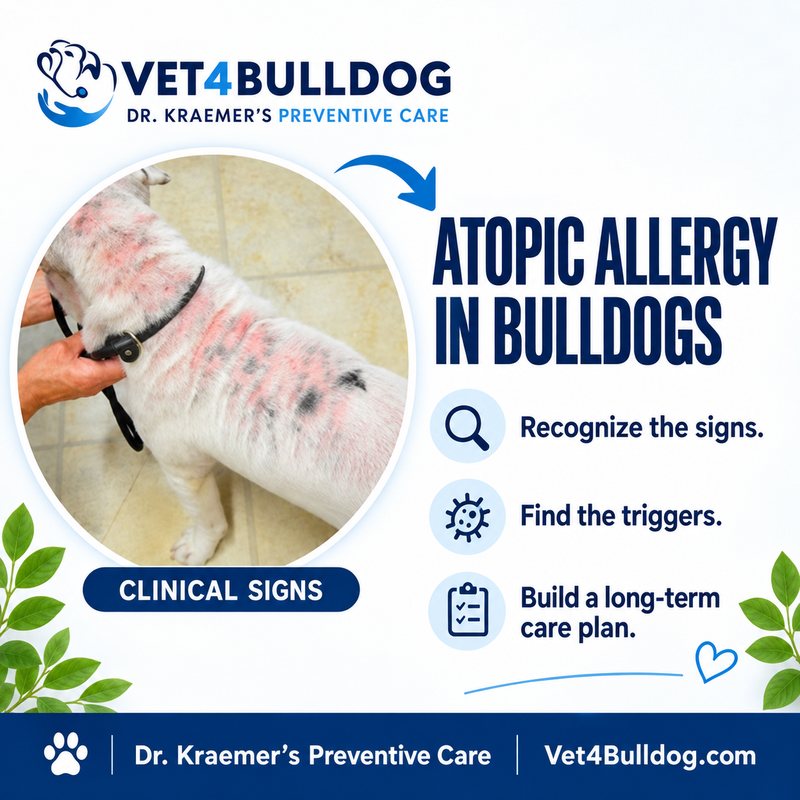
- Bulldog atopic allergic dermatitis
- Bulldog skin yeast infection.
To help with a definitive diagnosis, basic diagnostic testing might be required; examples are
- Skin scraping: to help rule out skin mites
- Skin cytology: help rule out bacteria, yeast, and abnormal cells
- Skin cultures: to help rule out bacteria type
- Skin fungal culture: to help rule out ringworm
Flank Alopecia in Bulldogs Dr. Kraemer’s FINAL ADVICE:
Start with the diagnosis, not a shelf full of products. Arrange an exam for new or changing bald patches, especially with itching, redness, odor, scaling, or changes in thirst, appetite, or energy. Bring dated photos and a list of current products. Request an appointment, then choose skin-care products that fit the findings.
Trusted by Vets ~ Recommended by Owners ~ Approved by Bulldogs