


Think of thyroid hormone as the gas pedal for the body. It sets the pace at which your Bulldog’s cells use fuel. When the gland stops making enough of it, that pace slows, and the slowing is so gradual that almost nobody catches it on a single day. The weight goes on while the food scoop stays the same. The walks get shorter and the naps get longer. The patch shaved for a procedure still has not grown back. It is easy to blame age, laziness, or a generous family member handing out snacks under the table. Sometimes the thyroid deserves a closer look.
A dog who is slowing down, gaining weight or losing coat needs an examination rather than an assumption. Several conditions produce the same picture as hypothyroidism, and the thyroid result only means something once it is read alongside your dog’s age, history and examination. Thyroid medication is not a trial you run at home.
“My six year old English Bulldog has put on nine pounds in a year on exactly the same food. He sleeps most of the day, he hunts for the warm spot by the radiator, and the patch the groomer shaved last spring still has not filled in. Our veterinarian ran bloodwork, said his thyroid was low, and started him on a tablet twice a day. We are months in and honestly he is no different. Does the dose need to go up?”
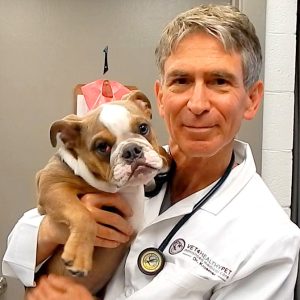
The sentence I keep coming back to is the last one. Months of treatment and no change. That is not a dose question yet, it is a diagnosis question, and it is worth asking before anybody reaches for a bigger tablet.
A dog with true hypothyroidism who is given the hormone he is missing usually gets his spark back, and the owner notices it at home before the laboratory confirms it. When nothing shifts over a good few weeks on a sensible dose, there are only a handful of explanations, and “not enough medication” is only one of them. The others are that the thyroid was never the problem, or that something else is running alongside it.
Here is the part most owners are never told: a low thyroid number on its own is not a diagnosis. Other illnesses lower it. Several common medications lower it. A dog can walk into the clinic with a perfectly functional thyroid gland and a low result on the printout. If that number was the only reason the tablets were started, then the real cause of the weight gain and the flat coat has had months to carry on unexamined while everyone watched the wrong organ.
What I would want before touching the dose is the whole picture written down. His age. What medications he is on, including anything for skin or seizures. A complete blood count, chemistry panel and urine test to see what else is going on. Then appropriate thyroid testing interpreted against all of that rather than on its own. If the diagnosis holds up, the dose conversation is easy. If it does not, you have just saved your dog a daily hormone he does not need.
Take the list of changes you wrote to me, in exactly that detail, to your veterinarian. That history is worth more than you think, and any veterinarian will be glad to have it.
Introduction to Bulldog and French Bulldog Hypothyroid Disease
Your Bulldog is putting on weight, but the food scoop has not changed.
Walks are getting shorter, naps are getting longer, and the patch shaved for a procedure still looks as though the hair is not growing back despite all your love and care.
It is easy to blame age, laziness or a generous family member sneaking treats under the table.
Sometimes, however, the thyroid deserves a closer look.
Bulldog Hypothyroidism: 5 Things to Know
- Hypothyroidism means the thyroid gland is not producing enough thyroid hormone, and the changes develop gradually rather than arriving overnight.
- The usual picture in an adult dog is weight gain on unchanged food, less energy, seeking out warm places, and a coat that is dull, thinning or slow to grow back.
- Most cases start in the thyroid gland itself. A failing signal from the pituitary gland is much less common in dogs.
- A low total T4 on its own is not a diagnosis, and your dog’s age counts for as much as the number does. Other illnesses and certain medications lower that number in a dog whose thyroid gland is working, and this is a disease of middle aged and older dogs.
- Treatment is a daily hormone replacement called levothyroxine, and for most dogs with primary hypothyroidism the outlook with proper treatment and monitoring is excellent.
An Ounce of Prevention is Worth a Pound of Cure
The shaved patch that never grew back
If I had to pick one detail that sends me to the thyroid, it is the clipped patch. A dog has an ultrasound, a blood draw or a small procedure, a square of hair comes off, and a season later that square is still a square. Hair that does not regrow after clipping is one of the quietest findings in this disease and one of the most useful, because owners can date it. You know exactly when that patch was shaved.
What makes it worth mentioning out loud is that nobody brings it up. Owners tell me about the weight, because the weight is on the scale and somebody has commented on it. They rarely tell me about the patch, because a slow regrow does not feel like a symptom, it feels like bad luck with a clipper. So I ask. And when the answer is yes, the patch is still there, that moves the thyroid from a maybe to a line of investigation.
It is not proof on its own. Nothing here is proof on its own. But bring it up at the appointment, with the date, and you have handed your veterinarian something genuinely useful.
What is Hypothyroid Disease?
Hypothyroidism means the thyroid gland is not producing enough thyroid hormone.
The changes often develop gradually, making them easy to overlook when you see your dog every day.
Where Is My Bulldog’s Thyroid Gland?
The thyroid sits in the neck, with a portion on either side of the windpipe, just below the voice box, or larynx.
You normally cannot see it from the outside or easily feel it with your fingers.
Small as it is, it has an important job throughout the body.
What Does the Thyroid Actually Do?
The thyroid produces hormones that help regulate metabolism, the pace at which the body uses energy.
Think of the gas pedal in your car. It helps control how hard the engine works and how much fuel it uses.
Thyroid hormone helps set the working pace for many of your Bulldog’s cells.
With too little thyroid hormone, that pace slows.
Your dog may burn less energy, gain weight, feel colder and lose some of that familiar spark.
You may recognize other conditions involving hormones, such as problems with insulin and blood sugar, growth hormone, or cortisol from the adrenal glands.
Hypothyroidism belongs to this same general family of conditions, called endocrine diseases.
Is Hypothyroidism Common in Bulldogs and French Bulldogs?
Hypothyroidism is a familiar hormonal disease in dogs, although Bulldogs and French Bulldogs are not uniquely known for it.
It is usually diagnosed in adult dogs, often during middle age or later. It would be an unusual explanation for these signs in a young puppy, and it stays uncommon in a young adult Bulldog of two or three years old.
Age and breed help guide the investigation, but neither makes the diagnosis. A tired, overweight Bulldog still needs a proper examination rather than an assumption.
What Causes Hypothyroidism?
Most cases begin with a problem in the thyroid gland itself. This is called primary hypothyroidism.
Much less commonly, the gland is not receiving the signals it needs from elsewhere in the body. This is called secondary hypothyroidism.
What is Primary Hypothyroidism?
The two main causes are:
- Abnormal immune reaction to the gland. The immune system mistakenly attacks thyroid tissue, causing inflammation and gradually reducing its ability to produce hormones.
- Shrinking of the gland without a clearly identified cause. The medical term is idiopathic thyroid atrophy. “Idiopathic” simply means we do not know the cause.
Rarely, a tumor can damage enough thyroid tissue to interfere with hormone production.
What is Secondary Hypothyroidism?
It is much less common in dogs. It occurs when the pituitary gland, located at the base of the brain, does not send enough thyroid stimulating hormone, or TSH, to the thyroid.
Think of the pituitary as the thermostat and the thyroid as the furnace.
The furnace depends on the signal to turn on. If the thermostat fails to send that signal, hormone production can fall even though the problem started outside the thyroid gland.
A disease affecting the pituitary, such as a tumor, can interfere with that signal.
Can Medication or Another Illness Affect Thyroid Levels?
Certain medications and other illnesses can lower thyroid hormone levels without permanent failure of the thyroid gland.
Phenobarbital, which is widely used to control seizures in Bulldogs, is the example worth knowing by name. It lowers thyroid hormone readings in a dog whose gland is working normally, and the readings settle again after the medication is stopped. For that reason your veterinarian will want to know every medication your dog is taking before interpreting a thyroid result, and may prefer to wait before testing thyroid function at all.
Radiation involving the thyroid can damage the gland itself, which is a different mechanism.
What Signs Might I Notice at Home?
Hypothyroidism often arrives with little drama. There may be no single day when your Bulldog suddenly looks ill.
Instead, you notice that life has gradually shifted into a slower gear.
Weight Gain Without Eating More
The food bowl looks the same, but the harness is getting tighter.
Owners understandably wonder whether someone else in the house is handing out extra snacks. That is worth checking, but weight gain despite an unchanged appetite and food intake can also be a reason to investigate thyroid function.
Less Energy and Enthusiasm
Your Bulldog may sleep more, tire sooner or show less interest in activities that used to get a response.
Bulldogs appreciate a good nap. What matters is a change from your dog’s normal behavior.
The Bulldog who always followed you into the kitchen now lifts one eyebrow and waits for you to come back.
Seeking Warm Places
Normal metabolism helps the body generate heat. A dog with hypothyroidism may start looking for warmer places to rest.
You might notice your Bulldog following the sunny patch across the floor like a little lizard. The behavior is more meaningful when it appears alongside weight gain, reduced energy or coat changes.
Skin and Coat Changes
You may notice:
- A dull, thin or poor coat.
- Hair loss without much scratching.
- Darkening of the skin.
- Hair that grows back slowly after shaving.
For example, a small shaved patch may remain visible long after you expected it to blend back into the coat.
These changes can have other causes, which is why the skin examination and the rest of your dog’s history matter.
What Else Looks Like This?
Two things in this breed produce a coat that looks much the same from across the room, and telling them apart is most of the work.
Flank alopecia, also called seasonal baldness. The bald patches can look very similar. What separates it is everything around them. It tends to appear in younger dogs, it is often seasonal and runs in a cycle, and the dog is otherwise well, with none of the weight gain, the flatness or the warmth seeking that comes with a thyroid problem. A Bulldog who is bald but bright, and bald at the same time each year, is pointing somewhere other than the thyroid.
A bacterial or yeast skin infection. This one is harder, because it is usually not an alternative at all. It is a passenger. Hypothyroidism and Cushing’s both leave the immune system weakened, and a weakened immune system is an open door to exactly these secondary infections. So the yeasty, inflamed, sore smelling skin in front of you may well be sitting on top of the hormone problem rather than standing in for it. Treat the infection on its own and it clears for a while, then returns, which is the same story owners tell me about recurring ear and fold trouble. That returning pattern is the reason your veterinarian will want to look past the skin.
Dry, flaky skin has its own article as well, since it overlaps with all of the above.
A Slower Heart Rate
Your veterinarian may detect an unusually slow heart rate during the examination. This is another clue to consider alongside the other findings.
So How Does My Veterinarian Diagnose Hypothyroidism?
The diagnosis begins with your dog, not the number printed on a laboratory report.
I want to know what has changed.
Is your Bulldog eating the same amount? Gaining weight? Sleeping more? Seeking warmth? Has the coat changed? What medications is your dog taking?
Those everyday observations help us decide whether a thyroid result fits the patient in front of us.
Total T4
Total T4 is a useful screening test. It is often included in adult wellness bloodwork.
A low result deserves attention, but it does not automatically mean the thyroid gland has failed.
Think of a warning light on your dashboard. It tells you to investigate. It does not tell you which part to replace.
Free T4 by Equilibrium Dialysis
This test measures the portion of thyroid hormone that is not attached to proteins in the blood.
The name is a mouthful, usually shortened to free T4 by equilibrium dialysis, or fT4ED. It helps clarify a low total T4 result when the history and examination raise suspicion of hypothyroidism.
Canine Thyroid Stimulating Hormone (cTSH)
Often shortened to cTSH, this test looks at the signal the pituitary sends to the thyroid.
It gives us another part of the picture. Your veterinarian may request total T4, free T4 and cTSH together when there is a strong suspicion of thyroid disease.
Other Bloodwork and Urine Testing
A complete blood count, chemistry panel and urine testing help assess your Bulldog’s general health and look for other explanations for the signs.
The thyroid results need to make sense alongside those findings.
Imaging
When a tumor is suspected, radiographs, ultrasound, CT or MRI might be required.
⚠️ Why Is a Low Total T4 Not Enough?
This is one of the most important points in the article.
A dog can have a low total T4 without having true hypothyroidism. Other illnesses and certain medications can lower the result.
Unfortunately, I have seen dogs prescribed thyroid medication because of a low total T4 alone, without enough attention to their age, history, examination or other test results.
Age is the part that gets skipped most often, and it is the one that should stop everybody in their tracks. This is a disease of middle aged and older dogs. A young adult with one or two signs that seem to fit and a low total T4 is far more likely to have something else going on, and the age alone is reason enough to go back to the beginning before any tablet is written up.
That can send the investigation in the wrong direction. The dog receives a hormone it may not need while the actual cause of the problem remains unresolved.
If your car slows down because something is wrong with the engine, pressing harder on the accelerator does not identify the fault.
Before committing a dog to thyroid treatment, I want the symptoms, history and appropriate follow up testing to support the diagnosis.
I also recommend checking tear production. I routinely perform this simple screening test on any Bulldog showing eye problems.
Hypothyroidism may reduce tear production in some dogs, making existing dry eye worse or pushing a borderline problem past the tipping point.
A low number is a reason to look, not a diagnosis
I want to be careful here, because this is the one part of the page where I am going against something an owner has often already been told. If your dog is on thyroid medication and doing well, nothing in this section is a reason to stop it. Speak to your veterinarian before changing anything.
But the pattern I see is specific and it repeats. A dog comes in slow, heavy and dull coated. A wellness panel shows a low total T4. Tablets are started that afternoon. And then nothing improves, because the low T4 was a consequence of whatever was actually wrong rather than the cause of it. A dog carrying a chronic skin infection, a dog on certain medications, a dog with another illness quietly in progress, all of these can hand you a low thyroid number from a working gland.
The version that bothers me most is the young dog. I have seen two year olds put on thyroid medication because one or two signs seemed to fit and the total T4 came back low, and the age by itself should have sent everybody back to the beginning. In more than thirty years in practice I cannot recall a single genuine case in a Bulldog that young. Not one. It is not impossible, and medicine always keeps an exception in its back pocket, but that is how rare it is. So when the patient in front of me is two and the file says hypothyroid, the thyroid is not the first thing I look at. I am looking for whatever else was going on that pulled that number down.
The cost of getting this wrong is not the tablet. The tablet is cheap. The cost is the time, because for as long as everyone believes the problem is solved, the real problem is unobserved and the dog is no better. That is the reason I would rather spend one more round of testing at the start than explain six months later why we were watching the wrong organ.
So the question I would put to your own veterinarian is a reasonable one, and no good veterinarian minds being asked it: does the rest of the picture support this diagnosis, or is the number carrying it on its own?
Can Hypothyroidism Be Prevented?
For the usual forms of primary hypothyroidism, there is no simple preventive routine that guarantees the gland will remain healthy.
Some forms have an inherited component, which helps explain why certain breeds are affected more often.
The practical approach is awareness. Notice changes, bring them to your veterinarian’s attention, and investigate when the findings justify it. A senior wellness routine is how most of these cases get caught, because the bloodwork is already being run and somebody is already asking how your dog is doing at home.
Can Hypothyroidism Be Treated?
The good news is that treatment is usually effective and straightforward.
Dogs receive a synthetic replacement for the hormone their thyroid is not making. The medication is called levothyroxine.
It is often prescribed twice daily, with the schedule and dose chosen for the individual dog.
The aim is to restore normal hormone levels and help your Bulldog feel and function more like himself again.
For most dogs with primary hypothyroidism, treatment becomes part of the daily routine.
Is Treatment Expensive?
Compared with managing some other hormonal diseases, thyroid replacement and routine monitoring are often relatively affordable.
Your veterinary office can explain the medication cost, the initial testing schedule and the expected ongoing expense.
Once the dose is established, monitoring usually involves a blood sample and a review of how your dog is doing at home.
Stable dogs may be checked every six to twelve months, with earlier testing when needed.
How Will I Know Whether Treatment Is Working?
Keep track of the same things that first caught your attention: energy, weight, activity and coat condition.
Your observations help your veterinarian interpret the follow up bloodwork.
A laboratory result matters, but so does whether your Bulldog is becoming more comfortable and returning to his usual routine.
If your dog is not improving, let your veterinarian know. The dose may need review, or another condition may be contributing to the problem.
⚠️ Can a Dog Receive Too Much Thyroid Medication?
Yes. More hormone does not mean a better result.
Contact your veterinarian if your dog develops new signs after starting treatment or changing the dose.
Those changes need assessment. They do not automatically prove the dose is too high, and you should not adjust the medication yourself.
Are There Any Supplements or Topical Products I Can Add for Hypothyroidism?
Nothing in this section replaces levothyroxine and nothing in it changes a thyroid level. What it deals with is the second half of the problem, the skin and the coat, which take the longest to come back and which often pick up a secondary infection along the way.
Think of the prescription as turning the heating back on in a house that has been cold all winter. The heating is the thing that fixes it. The damp that built up while it was off still has to be dealt with separately.
Supplements
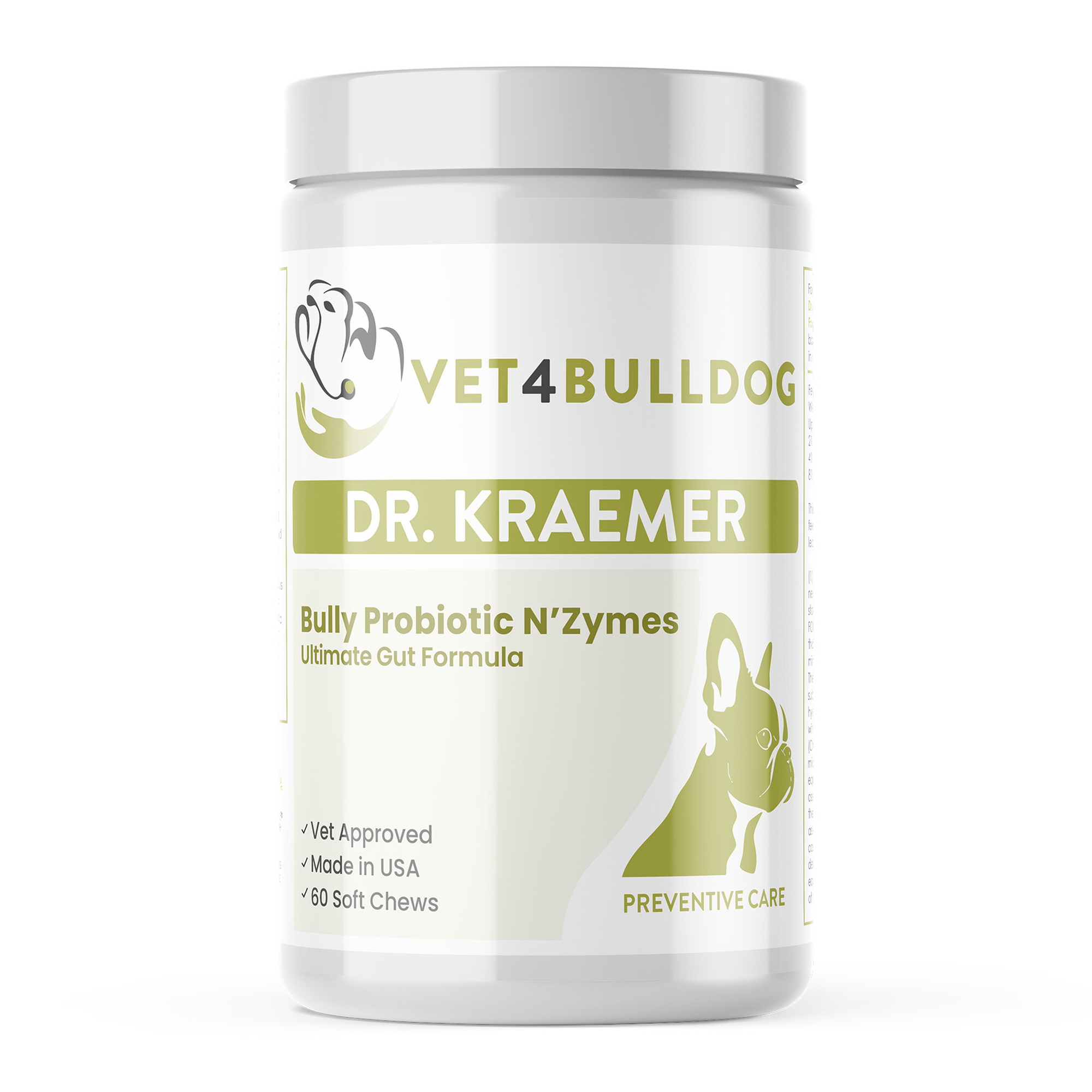
For supplements, you can discuss Fish Oil Omega 3, Skin and Ear Chews, Bully Multivitamin Plus Formula, Bully Probiotics and Immune Support with your veterinarian. Which ones to use will depend on your Bulldog’s diet, skin condition and individual needs.
- Fish Oil Omega 3 Skin, Joint and Immune Chews, also in a smaller size. May help as general support for the skin barrier and the coat while it regrows.
- Skin and Ear Chews. May help where the skin and the ears are both unsettled, which in this breed is usually the same conversation.
- Bully Multivitamin Plus Formula. May help cover the everyday basics in an older dog whose system is already under strain and being monitored anyway.
- Bully Pre and Probiotics. May help support digestion, which is worth a thought in a dog whose whole metabolism has been running slow.
- Immune Support Plus Chews. May help as general immune support, which matters here because a weakened immune system is what lets the secondary skin and ear infections take hold.
There is a reason these particular ones. An underactive thyroid leaves the immune system weakened, which is why secondary bacterial and yeast infections of the skin and ears ride along with this disease so often. The list above is aimed at that second problem, general immune and skin support, while the prescription deals with the hormone itself.
A dog already taking a daily hormone is exactly the situation where that conversation is worth having rather than guessing at home, so raise it at the next recheck when the blood sample is being taken anyway.
Topical Care
Bulldogs with hypothyroidism may develop a dull coat, dry or greasy flaky skin, and secondary skin infections.
Moisturizing shampoos and conditioners, such as our Aloe Oatmeal Soothing Shampoo and its matching Soothing Conditioner, are the routine skin and coat care that goes alongside the prescription rather than in place of it.
When a bacterial or yeast infection is present, your veterinarian may recommend an appropriate product from our antiseptic Yeasty Bully line, such as the antiseptic medicated shampoo for the coat, the no rinse medicated gel for a spot that cannot be bathed, or the antiseptic ear rinse when the ears are involved. These are used together with what your veterinarian prescribes, and the choice of product is their decision once they have looked at the skin.
For more on the skin side of this, see dry, flaky skin and bacterial skin infection in Bulldogs.
What Is the Outlook for a Bulldog With Hypothyroidism?
For most dogs with primary hypothyroidism that is unrelated to a tumor, the outlook is excellent with appropriate treatment and monitoring.
For secondary hypothyroidism, the outlook depends on the underlying cause. A condition involving a tumor requires a different discussion from routine thyroid hormone replacement.
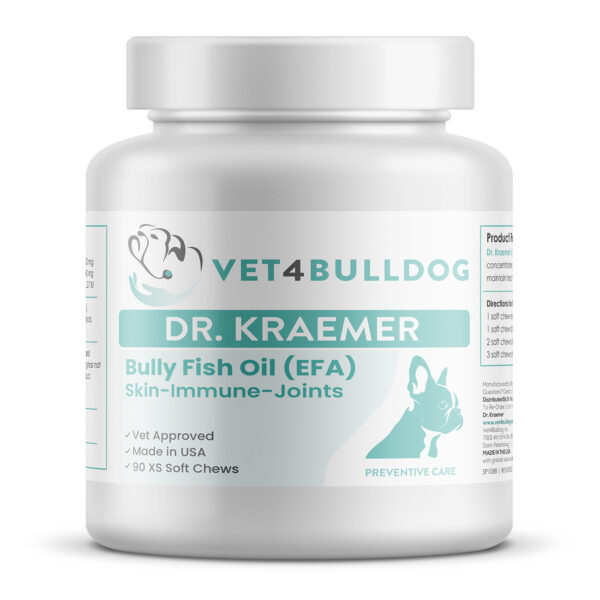
Let me be plain, because this is a page where owners are vulnerable to a promise. There is no supplement, kelp product, iodine chew or glandular formula in my store, and if you find one elsewhere advertised for a low thyroid, I would be wary of the site selling it. A dog whose thyroid gland has stopped producing enough hormone needs the hormone replaced. That is a prescription called levothyroxine, chosen and monitored by your veterinarian, and nothing on a shelf substitutes for it.
What is fair to say is this. Once the hormone is replaced, the coat usually recovers on its own, and the recovery takes a good few weeks because hair grows at its own pace. The skin and the coat are where my store has something to offer in the meantime, both the everyday supplements and the shampoos and conditioners for a dull coat or flaky skin. I have set all of it out, with what each one is for, in the section on supplements and topical care. None of it changes a thyroid level, and all of it sits alongside what your veterinarian prescribes rather than in place of it.
If your dog is slow and heavy and has not yet been tested, the honest recommendation on this page is not a product at all. It is an examination and the right bloodwork.
Dr. Kraemer’s Bulldog and French Bulldog Hypothyroid Final Words
The part I want my bulldog community to remember is simple: a slower, heavier Bulldog deserves an explanation. Sometimes the thyroid is responsible, and treatment can make a meaningful difference.
Sometimes it is another problem.
My Bulldog is gaining weight on the same food. Is it his thyroid?
It might be, and it is a fair reason to ask for testing. It is also the single most common reason an owner raises the thyroid with me, and most of the time the answer turns out to be something else: a change in activity, a second person in the house feeding, treats that are not counted, or another condition entirely. Weight gain on unchanged food is a reason to investigate rather than a diagnosis in itself. Bring the food measurements and anything else you have noticed to the appointment, because that history is what decides which tests are worth running.
My veterinarian said his T4 was low. Does that mean he has hypothyroidism?
Not on its own, and this is the most important thing on this page. A low total T4 can come from a working thyroid gland in a dog who has another illness or who is taking certain medications. It is a reason to look further, not a conclusion. Your dog’s age belongs in that picture too, because this is a middle aged and older dog’s disease, so a low result in a young adult is a reason to look harder at everything else rather than to start a tablet. Further thyroid testing, a complete blood count, a chemistry panel and urine testing, read together with your dog’s age, history and examination, are what support or rule out the diagnosis. If your dog is already on medication and doing well, do not stop it. Ask your veterinarian whether the rest of the picture supports the diagnosis.
My Bulldog is only two years old. Could this still be his thyroid?
It would be unusual. Hypothyroidism is a middle aged and older dog’s disease, and in more than thirty years of practice I cannot recall a single genuine case in a Bulldog that young. That does not make it impossible, and a young dog could still turn out to be the exception, but it does mean the bar should be higher rather than lower. If a young adult has been started on thyroid medication on the strength of a low total T4 and one or two signs that seemed to fit, the age alone is worth raising with your veterinarian, along with a proper look at what else might be pulling that number down. Do not stop the medication yourself.
Will his coat grow back once he is on medication?
In a dog who genuinely has hypothyroidism and is properly treated, the coat usually does recover, and the energy and the weight generally move first. Hair is slower than behavior because hair grows at its own pace, so give it a good few weeks before judging it, and keep an eye on the places you noticed first. If nothing at all has changed after a sensible period on treatment, that is worth reporting, because it is information rather than a reason to increase the dose by yourself.
Does he have to take the medication for life?
For most dogs with primary hypothyroidism, yes. The gland is not going to start producing again, so the hormone is replaced daily and it becomes part of the routine, much like any other long term medication. Monitoring settles into a blood sample and a conversation about how your dog is doing at home, usually every six to twelve months once the dose is stable. Where a low thyroid level was caused by a medication or another illness rather than by the gland failing, the situation is different, and that is one more reason to be sure of the diagnosis at the start.
Can a low thyroid affect my Bulldog’s eyes?
Hypothyroidism may reduce tear production in some dogs. In this breed that matters more than it would in most, because Bulldogs and French Bulldogs already run dry, so a small further reduction can make an existing dry eye worse or push a borderline one past the tipping point. I check tear production routinely on any Bulldog with an eye problem, and I would want it checked in a dog being worked up for a low thyroid. A sore, squinting or cloudy eye, or any change in vision, needs prompt veterinary attention regardless of the thyroid.
Is there anything in your store for hypothyroidism?
Nothing that treats the thyroid itself, and I would be suspicious of anyone who says otherwise. A gland that is not producing enough hormone needs the hormone replaced, which is a prescription your veterinarian chooses and monitors. What my store does have is for the second half of the problem, the skin and the coat: everyday supplements, moisturizing shampoos and conditioners for a dull coat or flaky skin, and the antiseptic range when a secondary infection has set in. The supplements and topical care section goes through them. All of it sits alongside the prescription, never in place of it.
More Help from Dr. Kraemer
- Cushing’s syndrome in Bulldogs and French Bulldogs
- Flank alopecia and seasonal baldness in Bulldogs
- Dry, flaky skin in Bulldogs and French Bulldogs
- Dry eye and KCS in Bulldogs and French Bulldogs
- Weight and exercise in Bulldogs and French Bulldogs
- Prevention and wellness in senior Bulldogs and French Bulldogs
About the Author
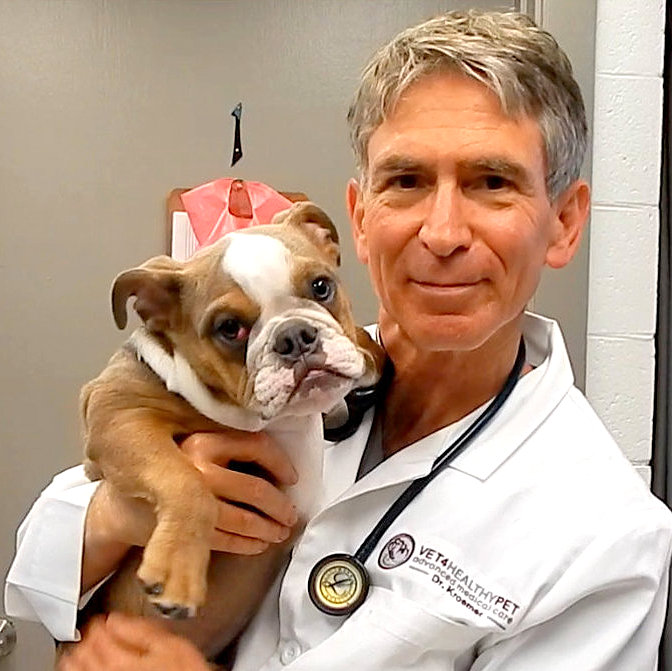
Roy Kraemer, DVM, is a veterinarian with extensive clinical experience caring for Bulldogs and French Bulldogs. His educational work emphasizes prevention, early recognition, appropriate at-home care, responsible medication use, and veterinary evaluation when disease is persistent or severe.
Trusted by Vets ~ Recommended by Owners ~ Approved by Bulldogs
See the immune and hormone guides →
References
- Mooney CT. Canine hypothyroidism: a review of aetiology and diagnosis. New Zealand Veterinary Journal.
- Scott-Moncrieff JC. Clinical signs and concurrent diseases of hypothyroidism in dogs and cats. Veterinary Clinics of North America: Small Animal Practice.
- Daminet S, Ferguson DC. Influence of drugs on thyroid function in dogs. Journal of Veterinary Internal Medicine.
- Gieger TL, Hosgood G, Taboada J, Wolfsheimer KJ, Williams MD. Thyroid function and serum hepatic enzyme activity in dogs after phenobarbital administration. Journal of Veterinary Internal Medicine.
- American College of Veterinary Internal Medicine. Hypothyroidism in dogs.
- Merck Veterinary Manual. Hypothyroidism in Animals.
To be clear: supplements or topicals are not substitutes for prescribed treatment. If your dog is unwell, is being treated for a condition, or is already on medication, review any supplement or topical with your veterinarian so it fits the plan you are already following. This page is educational and is not a diagnosis or a treatment plan for your own dog.