


Subject: Seeking Help for Max’s Food Allergy Symptoms 🐾😔 #BulldogHealth #FoodAllergy
Dear Dr. Kraemer, Max seems to be struggling with both his GI tract and skin. I’ve noticed digestive issues and skin irritation, which are causing Max significant discomfort. Can it be his food? Should I start him on a grain-free diet? How best to treat food allergies in bulldogs?
Warm regards, [Your Name] & Max 🐶💖 #BulldogMom #FoodAllergyCare
I am sorry, because that money would have bought a proper answer. Saliva and hair tests for food allergy do not work. They have been checked, including by sending samples from healthy dogs and in some studies from stuffed toys and tap water, and they come back with long lists of positives anyway. A long list is what they produce, not what your dog has.
Blood tests for food allergy are a different product and not much better. They have a place in building an environmental allergy picture, which is a separate thing. For food specifically there is no blood test that gives a diagnosis, and any report that names fifteen ingredients should be read with that in mind.
The only test that works is a proper elimination trial. One food, chosen with your veterinarian so it genuinely avoids what she has eaten before, nothing else going in by mouth, and long enough to mean something, which is a good few weeks rather than days. Nothing else is the part that sinks most trials: no treats, no chews, no flavored tablets if they can be avoided, nothing from the table, and a word with anybody else in the house. Then, and this is the step people skip, you put the old food back and see whether it returns. That is what makes it a test rather than a hopeful change.
The other thing I would not assume is that food is the culprit at all. An itchy Bulldog with soft stools can be reacting to something in the environment, to fleas, or to a yeast or bacterial problem on the skin that has its own momentum. Those are worth ruling out before you spend two months on a bag.
Prebiotics, probiotics and digestive enzymes may help steady her gut while this is being worked out. Discuss them with your veterinarian so they fit the trial rather than confusing it, since a flavored supplement counts as something going in by mouth.
Food Allergy in Bulldogs and French Bulldogs Introduction:
Food allergies in bulldogs and French bulldogs can affect the digestive tract and the skin. However, many bulldog owners mistakenly believe that their pet’s digestive or skin issues are solely due to a “food allergy,” leading them to change their pet’s diet. In reality, most of these problems are not food-related.
Even in cases where food allergies are present, owners often misunderstand how to correctly implement a “hypoallergenic” diet and the necessary trial duration. This can lead to inaccurate conclusions and ineffective treatments.
Bulldog Food Allergy 5 Must Know
- A food allergy can manifest as a gastrointestinal problem as well as a skin problem.
- Food allergies are mostly due to the diet’s protein source, not the grain
- The best way to test for bulldog food allergy is to do a few-week trial on a hypoallergenic diet
- Treatment often requires a hypoallergenic diet, itch control, bully topical, and supplement therapeutics
- Prevention and care include Dr. Kraemer’s Bulldog Food Allergy Control Bundles.
Members of this bulldog community prefer prevention over RX
Digestive Problems In Bulldogs:
Gastrointestinal problems are less likely to be due to food allergies and more likely to be due to:
- Intestinal parasites
- Intestinal virus
- Bacteria gastroenteritis
- Indiscretion eating

Skin and Itching Problems in Bulldogs:
Dermal conditions are less likely due to food allergies and more likely due to:
- Bulldog atopic dermatitis (environmental allergens)
- Flea allergy
- Bacterial and yeast dermatitis
- Contact allergy
- Skin mites
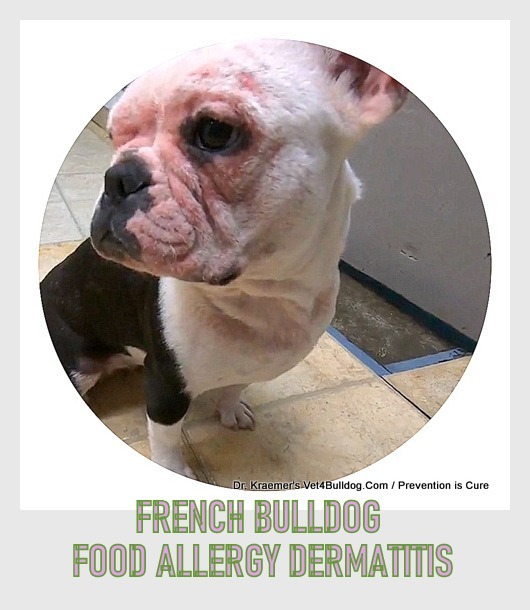
Seasonal versa Year Around Allergies
- YEAR-AROUND ALLERGIES: Allergies that persist year-round typically indicate food allergies
- SEASONAL ALLERGIES: Seasonal issues are unlikely to be related to food and are more likely to be atopic or flea-related.
Gastrointestinal vs. skin manifestation allergies
🚨If your bulldog is experiencing skin and digestive problems, food allergies should be prioritized on your list of potential causes.
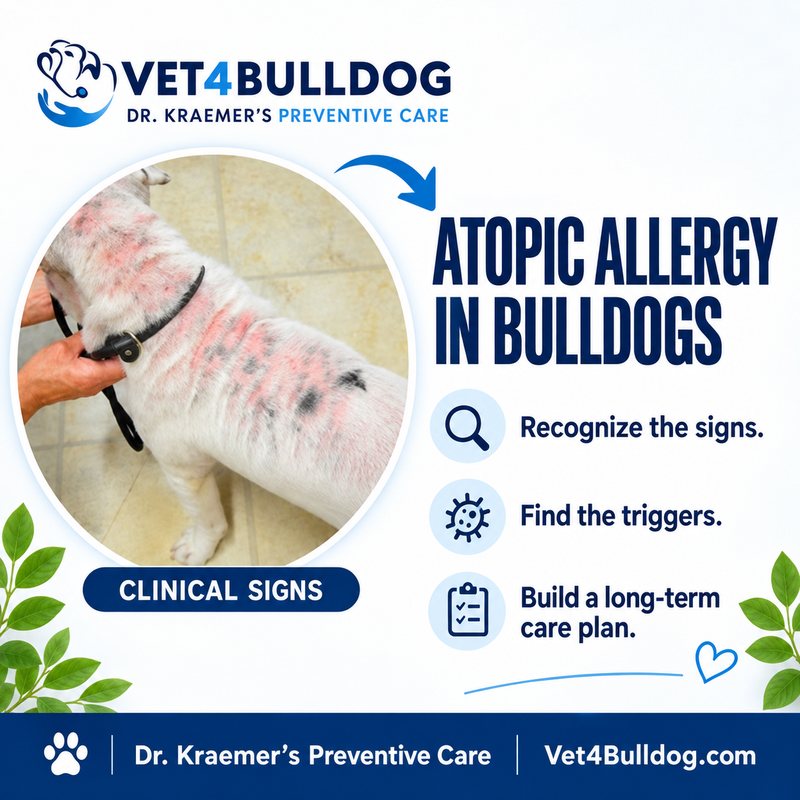
What are The Most Common Symptoms Of Bulldog Food Allergy Dermatitis?
Common symptoms include
- itching
- hair loss
- erythema (redness)
- flakes
- seborrhea
- secondary bacteria or/and yeast infection

What are The Most Common Symptoms Of Bulldog Food Allergy Gastroenteritis?
Symptoms include:
- Vomiting
- Diarrhea
- Flatulence
- Distended abdomen
- Abdominal pain
Milder forms of food allergies may manifest with symptoms such as frequent belly rumbling and flatulence (yes, the type that makes everyone recoil). However, your bulldog might also experience more severe symptoms like diarrhea, vomiting, and abdominal pain.
Grain free is not a test
Here is the mistake I watched owners make more often than any other on this subject. A Bulldog is itchy, somebody suggests food, the owner switches to an expensive grain free diet, nothing improves, and the conclusion is that it cannot be food after all. In fact nothing was tested. Allergens are nearly always proteins, and that includes the proteins inside grain, so grain free is not the clean separation it sounds like. What matters is which protein, and in dogs the ones most often responsible are the animal proteins, with chicken and beef at the top of the list. Most grain free foods are built around exactly those, so swapping the grain while keeping the chicken leaves the likeliest suspect sitting in the bowl. If you want to read where the grain free idea leads in a different direction, there is a heart problem associated with some of those diets, covered on the dilated cardiomyopathy page.
The second thing is the blood test, because owners arrive having paid for one. Serum allergy panels that list which foods your dog reacts to are not considered reliable for diagnosing food allergy, and neither I nor the dermatologists I referred to endorse them. They produce a confident looking list and the list is frequently wrong in both directions. The only thing that settles this is a proper elimination trial, which is cheaper and more honest, and the details of how long each kind runs are set out above.
And the trial only works if it is airtight, which is where most of them fail. One biscuit from a visitor, a flavored tablet, a lick of the other dog’s bowl, a dental chew somebody forgot to mention, and you have spent weeks testing nothing. The useful trick is to tell everybody in the house at the start, including whoever walks him, rather than assuming they will think of it. If he does improve, your veterinarian will probably want to put the old food back briefly to confirm it, which feels cruel and is the step that turns a suspicion into an answer.
Food Allergy in Bulldogs and French Bulldogs Diagnosis
- Wellness: Before initiating a hypoallergenic food trial, it’s essential to conduct thorough wellness checks and diagnostic assessments.
- Seasonal vs. Year-Round: If your bulldog exhibits skin dermatitis consistently associated with food allergies (such as year-round itching rather than seasonal fluctuations), prioritizing food allergies on your list of potential causes is advisable.
- Serum Testing: While some hospitals and labs offer serum allergen tests to categorize protein sources and assess sensitivity levels, these tests are costly, and their results are not considered diagnostically reliable. Neither I nor the accredited dermatologist endorses or recommends them.
- Food Trial: The gold standard for identifying food allergies is a food trial. The duration of the trial depends on whether the allergy affects the gastrointestinal tract or the skin.
Bulldog Gastroenteritis Food Allergy Trial
- A minimum trial period of 2 to 3 weeks with a hypoallergenic elimination diet is necessary
- Your adherence to this strict regimen is crucial for accurate results.
- I strongly advise using a prescribed hypoallergenic diet during this trial period
- It is imperative to strictly avoid any scraps of food, treats, or chewable medicine during the trial period.
A minimum trial period of 2 to 3 weeks
🚨Challenge: If your bulldog’s gastroenteritis shows improvement during the 2-3-week trial, a challenge with the previous diet is recommended to confirm the diagnosis.

Other testing for suspected Bulldog allergic gastroenteritis
- FECAL TEST (Test for Intestinal Parasites):
- smear
- PCR
- BLOOD TEST:
- CBC & Chemstires
- IBD screen
- GI Panel
- ➡️ IMAGING:
- Radiographs
- Ultrasound
Bulldog Food Allergy Dermatitis Testing
- A minimum trial period of 8-10 weeks with a hypoallergenic elimination diet is necessary.
- During this time, strict adherence is essential, meaning no table scraps, treats, or chewable medicine are allowed.
- I strongly recommend using a prescription hypoallergenic diet for the duration of the trial.
A minimum trial period of 8-10 weeks
🚨Challenge: If the skin dermatitis and itching improve by the end of the trial, it is recommended to reintroduce the previous diet to confirm the diagnosis.
Other testing for suspected Bulldog skin dermatitis
- CYTOLOGY: looking for Bacteria & Yeast organisms and various cell types
- SKIN SCRAPE: looking for Demodex & Sarcoptic skin Mites
- DTM: fungal culture to help rule out ringworm
How to Prevent Food Allergy in Bulldogs and French Bulldogs?
Allergic reactions are commonly triggered by the primary protein source in the diet, typically derived from animal meats such as:
- Chicken
- Beef
- Turkey
- Fish
- Etc.
In normal times, a high-quality and balanced pet diet is ideal for your bully’s good health.
ORGANIC NON-PROCESSED DIET TIP: Offering fresh, organic, unprocessed fruits and vegetables to your bully is commendable, but it’s important to be cautious and avoid potentially toxic options like onions and grapes (including raisins).
1. Hypoallergenic diet prevention
When a bulldog’s food allergy is suspected, a hypoallergenic elimination diet is usually required.
The hypoallergenic diet could be either:
- NOVEL DIET: A prescription novel protein diet
- HYDROLYZED DIET: is a prescription hydrolyzed protein diet
- PURIFIED AMINO ACID: a prescription diet
- HOME-COOKED NOVEL: or a home-cooked novel protein diet
🚨 Bulldog Food Allergy Hypoallergenic Diet Challenge: After the trial, if your bulldog’s symptoms have significantly improved, I recommend reintroducing their previous diet as a diagnostic challenge. Any gastrointestinal or skin issues are likely to reappear within a few days to two weeks of starting this reintroduction.
If the original clinical issues resurface during this challenge, it strongly indicates that your bulldog has a food allergy, necessitating a long-term commitment to a strict hypoallergenic diet.
2. Food allergy bully therapeutics
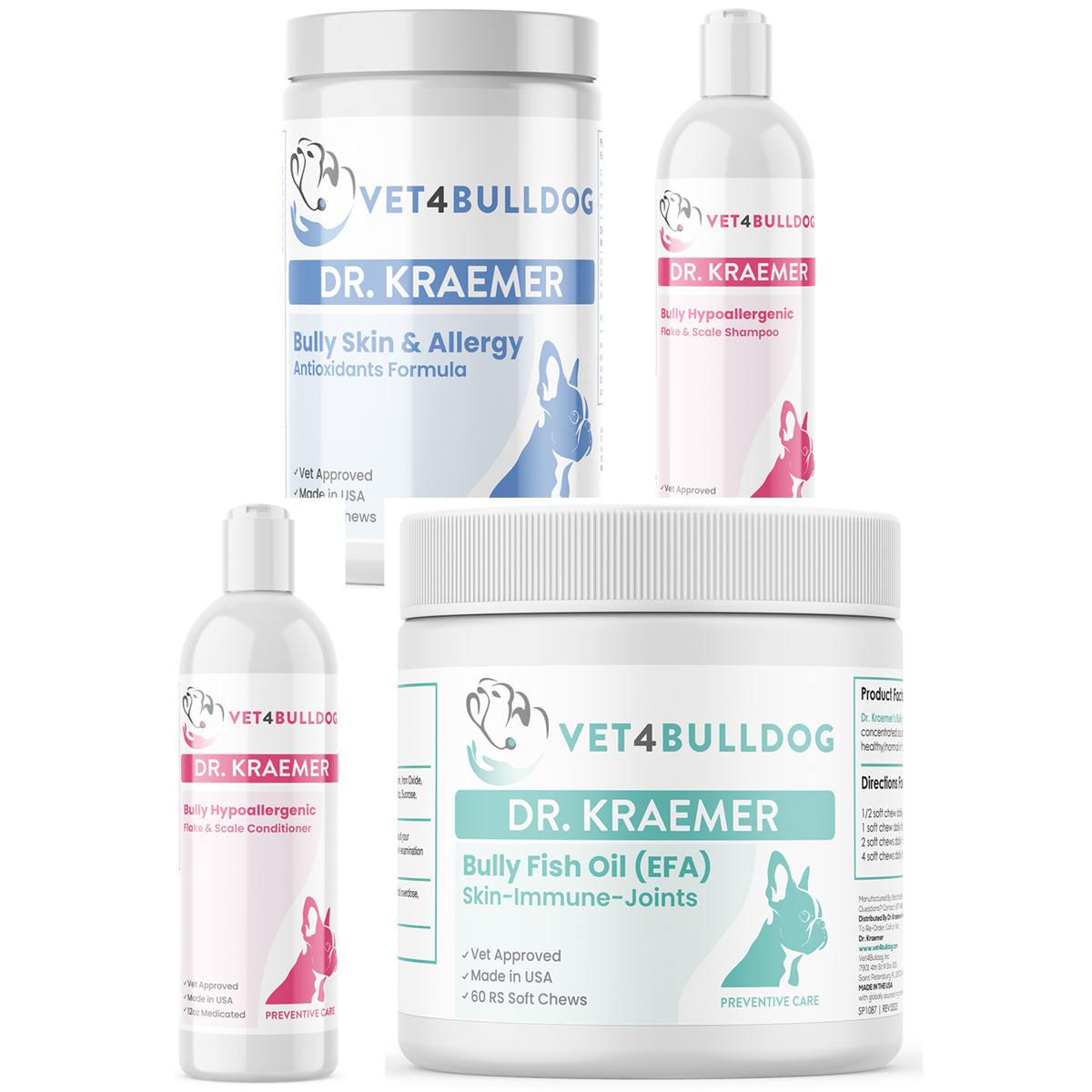
bully therapeutic supplements and topicals may also help prevent and manage allergies.
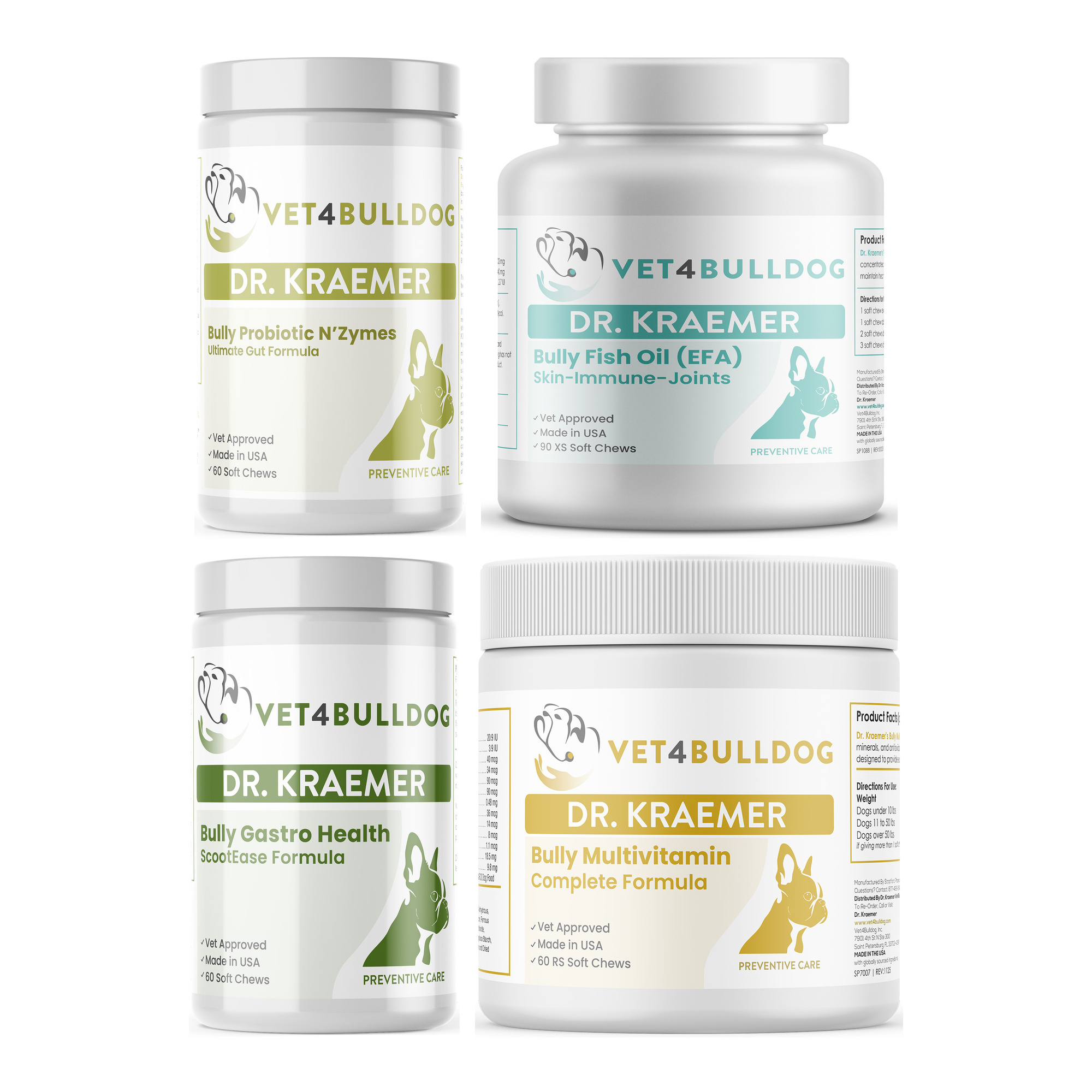
- Bully Fish Oil EFA
- Bully Skin & Coat Derma Care Tab
- Bully Immune Support
- Bully Pre/Probiotic & Digestive Enzymes
- Bully Gentle Move Fiber Formula
- Bully ItchLess Bundles
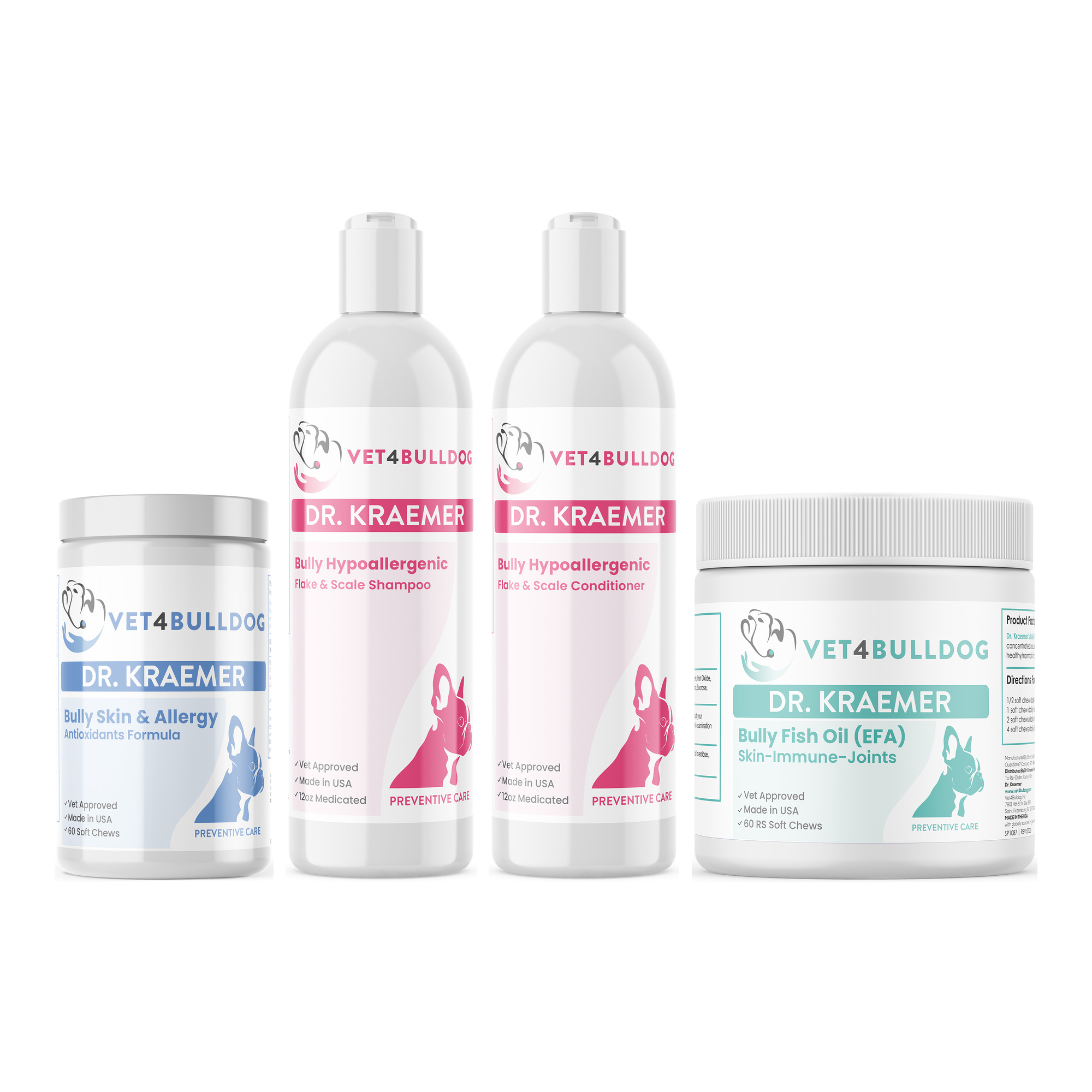
- Bully Hypoallergenic Bundles
🩺Bully Therapeutic Supplements Tip: While Dr. Kraemer’s Bully Supplements are low allergen, during the trial period, it’s essential to stick strictly to the prescribed diet. Avoid giving treats, oral fleas, heartworm preventives, or any other oral chews, as these could interfere with the accuracy of the trial results.
There is no blood test for food allergy
I want to be blunt about this one, because owners spend real money on it and arrive with a printout that looks scientific and answers nothing.
Food allergy is diagnosed by removing foods and seeing what happens, then putting them back and seeing what happens again. That is the whole test. It is slow, it is unglamorous, and it is the only thing that works.
What gets sold instead are panels: blood, saliva, sometimes a lock of hair. They return a list of positives. The list feels like information, the owner removes everything on it, and when the dog does not improve the conclusion is usually that the trial was not strict enough rather than that the test was never measuring the right thing.
It is a horoscope problem. The reading is detailed, it is personalized, and it would have been just as convincing for the dog next door.
There is a fair version of this. Blood testing for environmental allergens has a genuine role once the clinical picture already points that way, usually when a specialist is planning desensitization. That is a different question from what is in the bowl, and your veterinarian will tell you which one you are actually asking.
So before you buy a panel, ask what will be done differently depending on the result. If the honest answer is a food trial either way, keep the money and start the trial.
Grain-free Diet Myth
Grain-free diets are a popular choice among bulldog owners seeking a remedy for medical issues associated with food allergies.
⚠️ Many bulldog owners often associate food allergies with grains; however, the primary culprit is usually the protein source found in meat.
The most common pet food protein allergens are
- CHICKEN
- BEEF
- FISH
Also on the frequent allergen list are:
- CORN
- SOY
- DAIRY
- EGG
To read more about Grain-Free Diets and Bulldogs (“No Grain Diets”, “Low Grain Diets”)….CLICK HERE
A warning before anything else, and it matters more on this page than on any other in the range. If your dog is on an elimination trial, do not add any flavored chew or supplement without asking your veterinarian first, including ours. Flavoring means a protein, a protein means the trial is broken, and a broken trial costs you weeks and tells you nothing. That is the single most common way these go wrong.
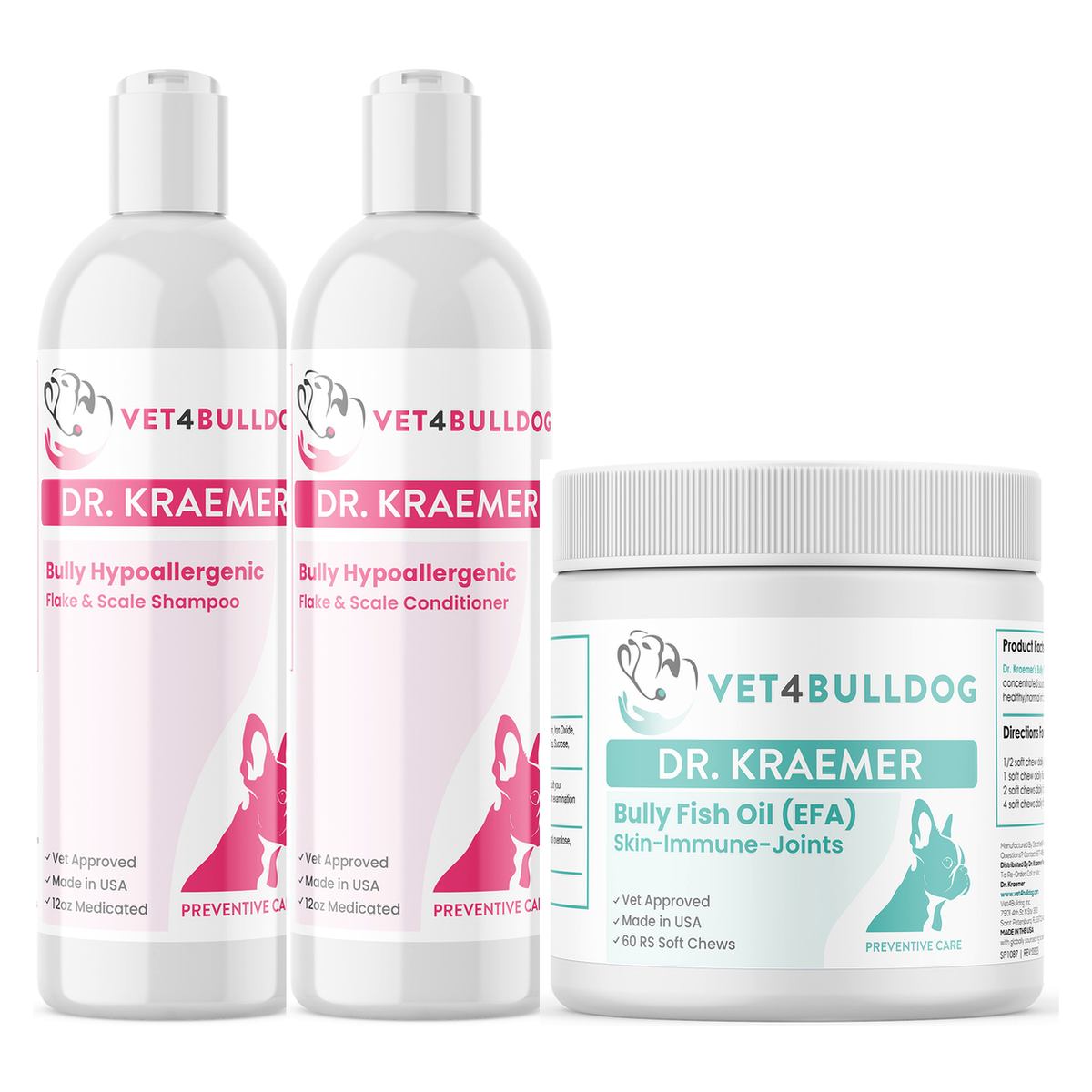
What is safe to use during a trial, and useful in its own right, is what goes on the outside. A food allergic Bulldog usually arrives with skin that is already damaged, often with a yeast or bacterial problem on top, and that is what is making him miserable day to day while the diet slowly does its work. A hypoallergenic medicated shampoo and the rest of this range are topicals, so they belong alongside whatever your veterinarian has prescribed rather than in place of it, with the treatment decision theirs. Once the trial is finished and a diet is settled, the skin and ear allergy chews and the skin and ears vital bundle may help support the skin barrier from the inside over a good few weeks. Before then, keep them out of it.
See the hypoallergenic skin range
To be clear: supplements or topicals are not substitutes for prescribed treatment. If your dog is unwell, is being treated for a condition, or is already on medication, review any supplement or topical with your veterinarian so it fits the plan you are already following. This page is educational and is not a diagnosis or a treatment plan for your own dog.
Food Allergy in Bulldog and French Bulldogs Tips & Warnings
Below are selected food allergy tips and warnings, courtesy of Dr. Kraemer
#1 Bulldog food allergy seasonal tip
When your bulldog experiences year-round itching and/or otitis (ear infections) alongside gastrointestinal problems, it’s crucial to prioritize food allergies as a primary consideration on your rule-out list.
#2 Bulldog food allergy food trial tip
The most effective method to diagnose a food allergy is through a strict food trial using a prescription hypoallergenic diet, which can either be a novel protein diet or a hydrolyzed protein prescription diet.
#3 Bulldog food allergy novel diet tip
If you choose a trial with a prescription novel protein, I prefer either
- Alligator
- Kangaroo
🛑Caution: Avoid relatives of chickens, beef, and fish, such as:
- duck
- turkey
- venison
- salmon
#4 Bulldog food allergy diet selection tip
Indeed, it’s crucial to recognize that not all bulldogs are alike. While one bulldog may respond positively to a particular type of hypoallergenic diet, another may not fare as well, and the next bulldog puppy could exhibit entirely different outcomes.
Individual variations in response to hypoallergenic diets highlight the importance of personalized dietary management for each bulldog with suspected food allergies.
#5 Food allergy hypoallergenic treats tip
For those struggling to adhere to the trial duration without giving their bully treats, there’s a solution. Many prescription hypoallergenic diets come with hypoallergenic treats. Additionally, these diets are available in cans, which can be used to create prescription “meatball-pill pocket” treats.
This allows you to maintain a strict dietary regimen while still providing your bulldog with treats they enjoy.
#6 Food allergy grain-free tip
If you suspect your bully’s allergies are related to grains, a grain-free dietary trial should last for the required duration.
During this trial, grains should account for less than one-third (<1/3) of the whole diet, with the remaining two-thirds consisting of meat, animal protein, fruits, and vegetables.
#1 Strict food allergy warning
It’s essential to understand that the goal of the hypoallergenic diet trial is twofold: to eliminate the offending allergen while ensuring the provision of essential dietary components such as calories and nutrients.
For example, if your child has a severe peanut allergy, their diet must be completely free of peanuts while still meeting all other nutritional requirements.
#2 Food allergy in Bulldogs OTC warning
If the cost of prescription hypoallergenic diets is prohibitive, you may consider trying over-the-counter (OTC) diets that do not contain common allergens such as soy, corn, chicken, dairy, beef, wheat, or fish. However, it’s important to note that while this is an option, I don’t recommend it as strongly as prescription diets for diagnosing and managing food allergies in bulldogs.
#3 Food allergy other pets warning
During the trial, it’s crucial to ensure that your pets do not share any food items with you or with each other. If you cannot be certain that your dog will not consume the diets of your other pets, I recommend placing all your pets on the hypoallergenic diet during the trial period. This helps to maintain the integrity of the trial and ensures accurate results.
#4 Food allergy in Bulldogs blood test warning
While blood testing may help diagnose atopic dogs, it is not as reliable for identifying food allergies.
The preferred and most effective diagnostic method for food allergies is a strict trial on a hypoallergenic diet followed by a food test challenge.
#5 Food allergy flavor warning
Remove everything with flavorings like
- treats and toys
- flavored medication
- flavored supplements
- flea tabs
- dental paste
- supplements, containing allergens
- various chews and tab
#6 Bulldog food allergy IBD warning
Untreated gastrointestinal disease due to food allergies could eventually lead to IBD (inflammatory bile disease) and an irritable bowel.
#7 Food allergy testing warning
It’s crucial to delay starting the food trial until a comprehensive medical workup has been completed and any existing health issues, such as thyroid dysfunction or gastrointestinal problems (e.g., parasitic infections), have been resolved. Addressing these underlying conditions ensures that the trial results are not influenced by other factors, enabling a more accurate assessment of your bulldog’s condition.
#8 Food allergy low-grade diets warning
Lower-grade diets pose a higher risk of unwanted adverse effects, such as allergies and immune-mediated diseases like inflammatory bowel disease (IBD). This is primarily due to the increased likelihood of unwholesome elements and contaminants present in these diets.
Opting for higher-quality diets may help mitigate these risks and promote better overall health for your bulldog
#9 Supplements in food advertisement warning
When selecting a diet and choosing the best food for your bully, it’s important not to base your decision solely on advertised “with added supplements.” While these supplements may not harm your bully, they are often more of a marketing tactic than a genuine value addition. Popular supplements like
- fish oil (omega 3 and 6)
- glucosamine
- chondroitin
- MSM
- probiotics
are commonly included, but typically, the dosages provided in these diets’ daily feeding recommendations are not sufficient to have a therapeutic impact on medical conditions. Therefore, it’s essential to focus on the overall quality and nutritional balance of the diet rather than solely relying on added supplements.
When medically indicated I recommend supplements to be given separately as a standalone treatment.
#10 Food contaminants warning
Food allergies can sometimes be attributed to undetected contaminants in grains and meats. This underscores the importance of sourcing high-quality ingredients and ensuring rigorous quality control measures in pet food production to minimize the risk of allergen contamination
Should I just put him on a grain free food?
The lab test said he reacts to chicken and wheat. Is that reliable?
He improved for about a week and then went back to itching. Did the diet fail?
Can he still have his usual chews and supplements during the trial?
Why does the skin trial take so much longer than the stomach one?
He only itches in summer. Could that still be food?
Do I have to change my other dog onto the same food?
More Help from Dr. Kraemer
Food takes the blame for a lot that is not its fault. These pages cover the usual alternatives:
- Itchy skin and allergy in Bulldogs
- Gut and GI disease in Bulldogs
- Inflammatory bowel disease
- Yeast infection in Bulldogs
- Grain free diets, what the evidence actually says
- The best food and diet for Bulldogs
About the Author
Roy Kraemer, DVM, is a veterinarian with extensive clinical experience caring for Bulldogs and French Bulldogs. His educational work emphasizes prevention, early recognition, appropriate at-home care, responsible medication use, and veterinary evaluation when disease is persistent or severe.
References
- Merck Veterinary Manual. Cutaneous Food Allergy in Animals
- Merck Veterinary Manual. Chronic Enteropathies in Small Animals
- AAHA. Management of Allergic Skin Diseases in Dogs and Cats Guidelines
- WSAVA Global Nutrition Guidelines
Trusted by Vets ~ Recommended by Owners ~ Approved by Bulldogs