


Bulldogs & French Bulldogs
PREVENT & TREAT
Bulldogs and French Bulldogs are prone to a wide range of painful and debilitating breed-related medical conditions. Most can be prevented and safely treated at your home, at a minimal cost.

Anesthesia and Sedation in bulldogs are complex and much riskier than in other dog breeds. The risk is likely to intensify as your bully ages.
Screening tests and a specially customized bully anesthetic protocol should be implemented. The procedure and monitoring should be conducted by a team experienced with bulldog anesthesia and the associated safety protocols.

A balanced diet and proper nutrition are essential to your senior bully’s health and well-being. Supplementary nutrients and nutriceuticals, vitamins, minerals, immune boosters, fiber, and probiotics that are specially formulated for your bulldog can be added daily.
There isn’t one superior best senior bulldog diet that fits all, your choice might depend on factors such as food sensitivity, activity and lifestyle, medical history, and your senior bulldog food’s personal taste and preference.

Intestinal parasites can be harmful to your senior bulldog, other pets, and your family members. Proper hygiene and routine fecal testing are recommended.
A fecal exam should be done during your senior bulldog annual exam. Some of the flea and heartworm preventives also prevent intestinal parasites.

The adult flea is only 5% of the flea cycle the other 95% is in your surroundings, thus flea preventive for the entire summer or even the entire year is recommended.
If your senior bulldog is exhibiting skin problems consistent with a flea allergy, start our V4B topical & supplements therapeutics itch control. Fleas carry the tapeworm, deworm your senior bully for tapeworms if fleas are found.
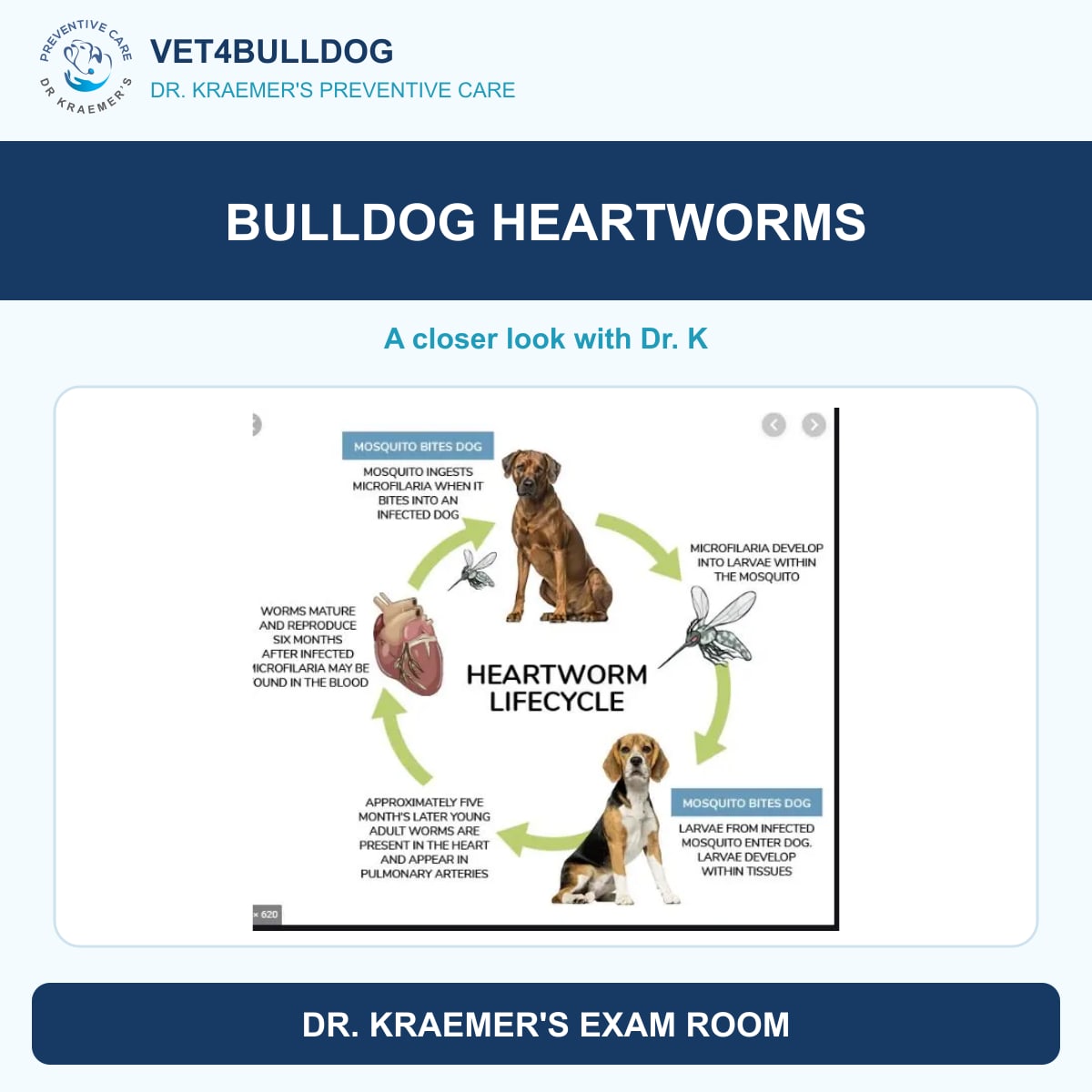
Heartworms are transmitted by a mosquito bite, they clog the heart vessels and heart chambers, and are potentially life-threatening.
Heartworm preventives can be given annually by injection or monthly via the oral or topical route.

Same-day stem cell therapy treatment or recalled cryobanked stem cells can help prevent and treat a wide range of medical problems. It requires little to no anesthesia and is relatively painless.
Stem cells can be extracted and treatment provided on the same day, in addition, multiple treatments can be cryobanked at a young age for future needs.

Cherry eye is a casual name for a prolapsed gland of the third eyelid (nictitans membrane) a condition common to bulldog puppies. When inflamed and exposed it looks like a "cherry".
Unilateral or bilateral red, rosy "cherry" like tissue at the inner corner of the eye. The pet might rub causing it to swell, ulcerate and bleed.