


Picture the immune system working from a list of what belongs in the body and what does not. It is ruthless about anything on the second list, which is exactly what you want when a bacterium turns up. In autoimmune disease a line gets written onto the wrong list, and the body begins defending itself against itself. Which tissue ends up on that list is the only thing that decides what the disease gets called: red blood cells, platelets, skin, tear glands, joints, the thyroid gland.
That single idea carries the most important practical rule on this page, and it runs directly against instinct. Treatment works by turning the immune response down. Every product on a shelf marketed to build up or support immunity is pushing the wrong way, and that holds for every condition described below without exception.
The other thing worth knowing before any of the detail: a good deal of what looks autoimmune began as something else. An infection, a medication, a tick borne disease, occasionally a tumor sitting quietly in the background. Your veterinarian will spend time and money ruling those out before settling on a diagnosis, and owners sometimes read that as stalling. It is the opposite. A case driven by a trigger that can be removed has a different and often better future than one that is not.
Our five year old bulldog was diagnosed last week with immune mediated anemia. They said his own body is destroying his red blood cells. He is on steroids and we are back in two days for more bloodwork. I keep going over everything I have given him this year trying to work out what I did. And my sister keeps telling me to get him on something to build his immune system up. Is that right? I feel like I am failing him.
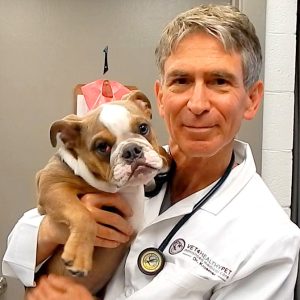
Take the last sentence first, because it is doing the most damage. You are not failing him. You noticed something was wrong and he is being treated. That is the whole job.
Your sister means well and she is wrong, and I would rather be blunt about it than polite. Building the immune system up is precisely the opposite of what your dog needs. His immune system is not underperforming, it is performing extremely well against the wrong target, which in his case is his own red blood cells. The steroids are there to take it off that target. Anything sold to stimulate immunity may work against the drug that is currently keeping him alive. Please do not add anything at all, including anything from my own shop, without putting the bottle in front of the vet treating him.
On what you did: almost certainly nothing. These cases are sometimes set off by an infection, a tick borne disease or a medication, which is why your vet may be testing for things that seem unrelated. Often no trigger is ever found. Going back over the year looking for your own mistake is a very human thing to do and it does not usually end in an answer.
The bloodwork in two days is the part that matters now. What everyone wants to see is the destruction slowing and the bone marrow answering back by producing new cells. That first fortnight tends to be the anxious one, and it is normal for the dose to move around while they find the level that holds him.
What Autoimmune Disease Actually Is
The immune system identifies anything foreign and destroys it. To do that safely it has to recognize the body’s own tissue and leave it alone, a property called tolerance. Autoimmune disease is tolerance breaking down for one particular tissue, so the immune system starts treating part of your dog as an invader.
It is worth separating this from two things it is often confused with. It is not immune deficiency, which is the immune system failing to respond. And it is not allergy, which is the immune system overreacting to something genuinely foreign, such as pollen or a food protein. Autoimmune disease is an accurate, powerful response aimed at the wrong target, which is why the treatment is to turn it down rather than build it up.
The name a case ends up with depends entirely on which tissue is being attacked. The underlying process is the same, the drugs used are largely the same, and the principles below apply across all of them.
Why Bulldogs and French Bulldogs
There is a genetic component to most autoimmune disease, which is why some breeds appear more often than chance would predict. In a breed with a relatively narrow gene pool, traits of all kinds concentrate, and immune regulation is one of them.
I want to be careful here rather than alarming. Most Bulldogs and French Bulldogs never develop an autoimmune disease. What is fair to say is that this breed turns up more often than average for several of the conditions below, that the skin forms are the ones I met most frequently, and that a dog who develops one autoimmune condition has a somewhat higher chance of developing another at some point.
For anyone breeding, this matters more than it does for a pet owner. An affected dog, and often its close relatives, is not a dog to breed from, and that is a decision made on the pedigree rather than on one animal.
The Forms We See Most Often
Blood: red cells and platelets
Immune mediated hemolytic anemia is the immune system destroying red blood cells faster than the marrow can replace them. Immune mediated thrombocytopenia is the same process aimed at platelets, the cells that let blood clot. Both are serious, both are treated urgently, and both are the reason a vet looking at a pale or bruised dog will want bloodwork the same day rather than next week.
Skin: the pemphigus family
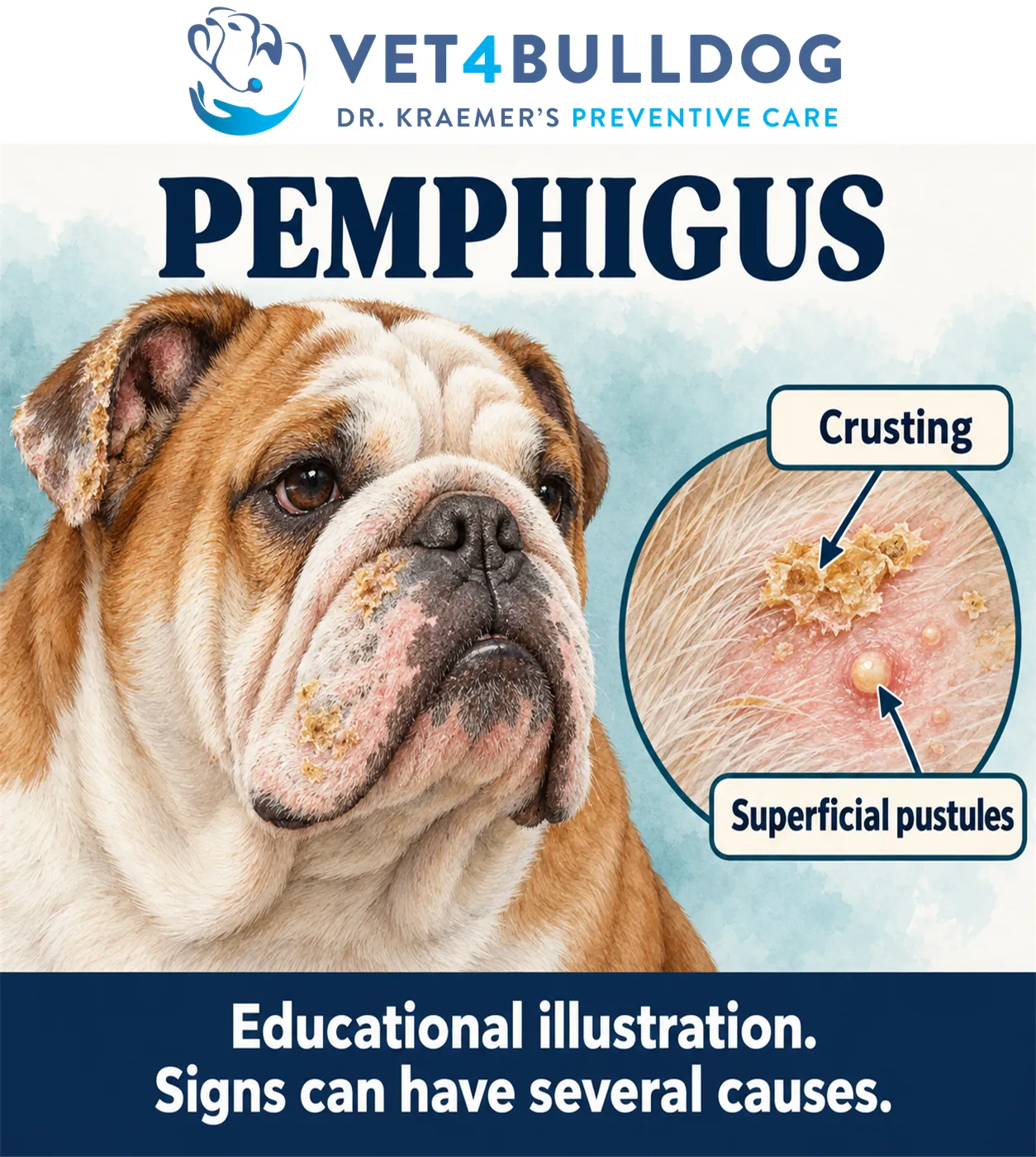
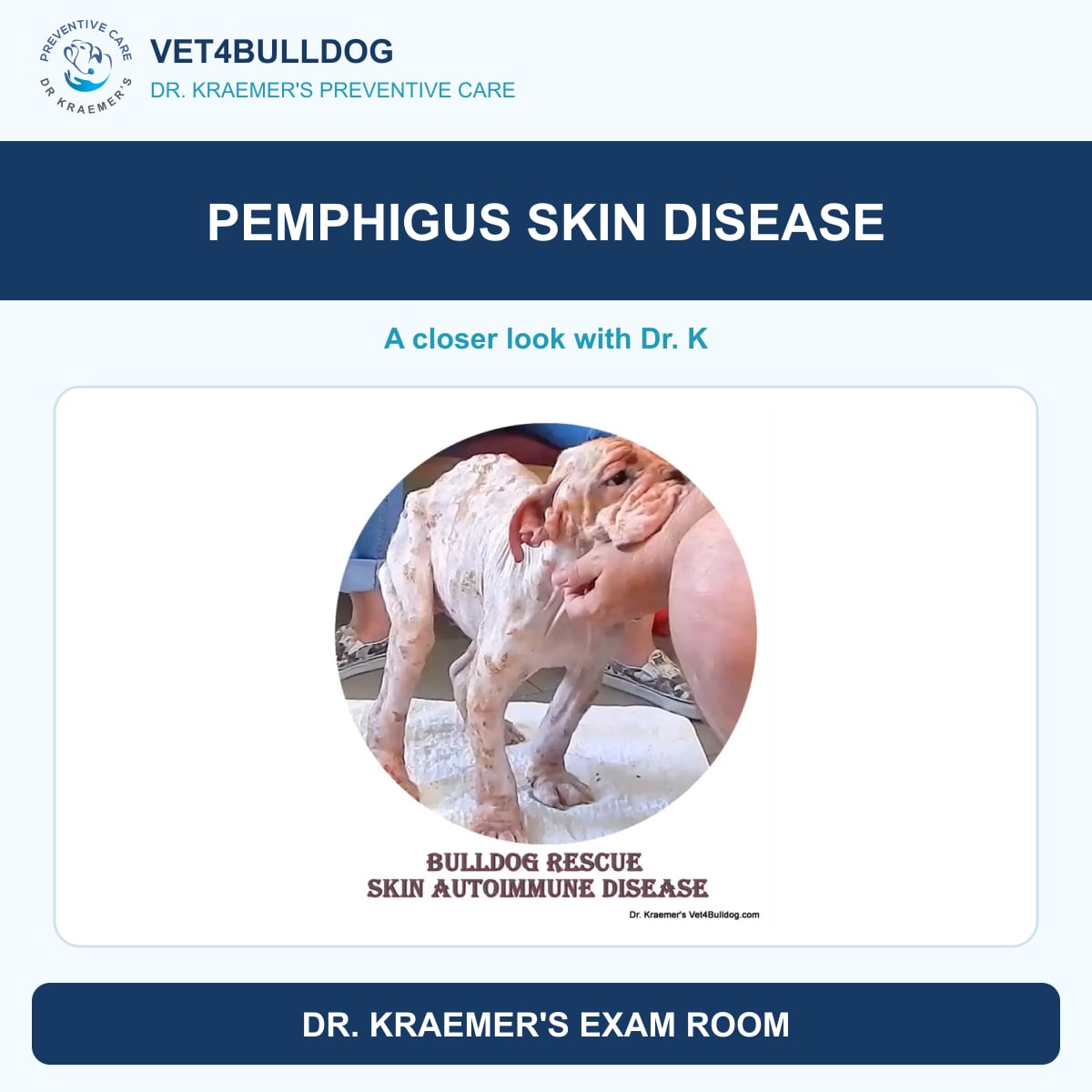
The commonest autoimmune skin disease in dogs attacks the proteins holding the surface layer of skin together, producing crusting that owners usually notice on the face, ear margins and footpads. This is the form I saw most in Bulldogs, and it has a detailed page of its own linked below, because it is a large subject in its own right.
Eyes: tear production
Dry eye, properly keratoconjunctivitis sicca, is often immune mediated destruction of the glands that produce tears. It matters disproportionately in this breed because a Bulldog eye is already exposed and already vulnerable, and a dry cornea is far easier to damage.
Thyroid
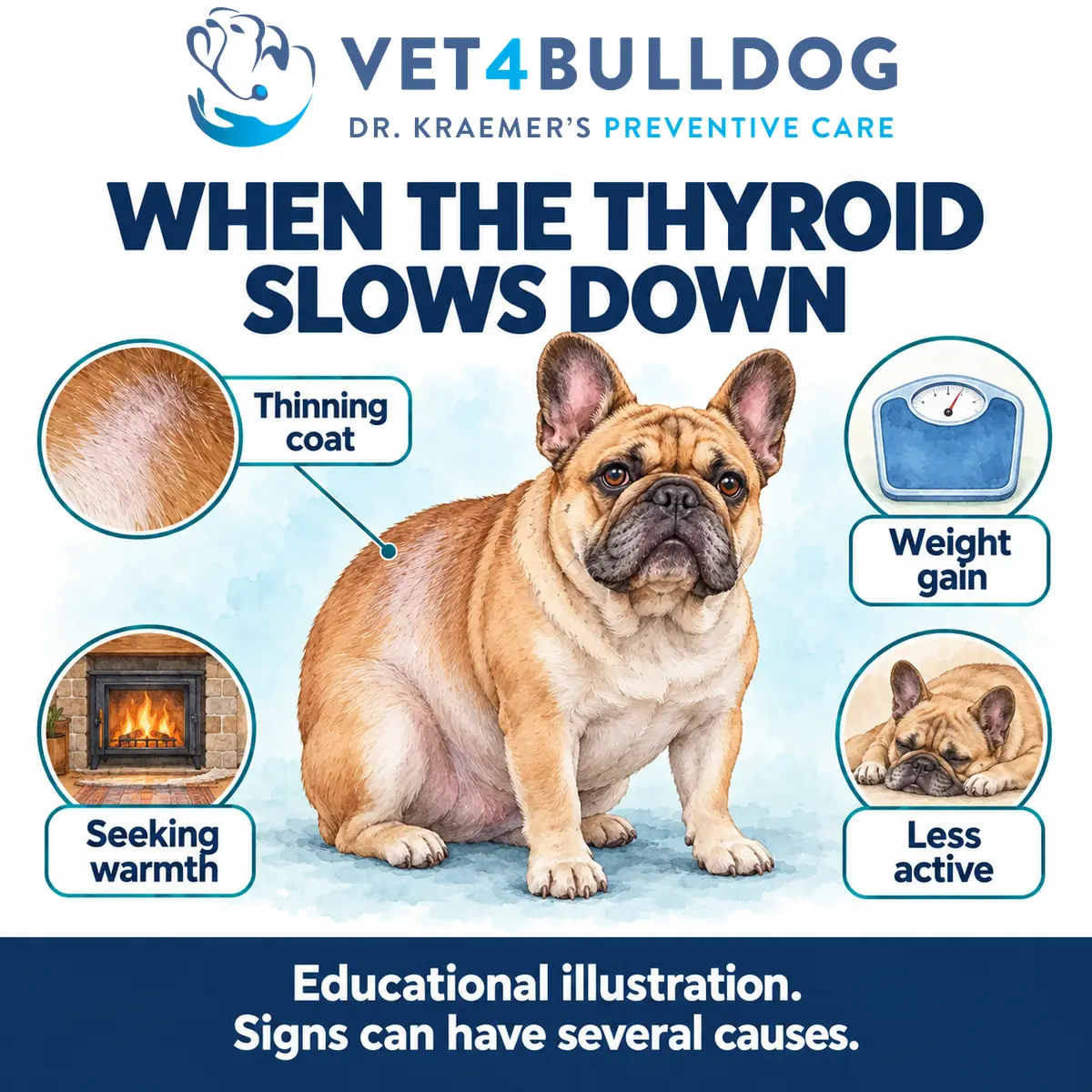
A large share of canine hypothyroidism is immune mediated destruction of the thyroid gland. It develops slowly and quietly, which is why it is usually found on bloodwork rather than noticed at home.
Joints and muscle
Immune mediated polyarthritis targets joint linings, often several joints at once, and tends to produce a dog who is stiff, sore and off color rather than lame in one leg. Less commonly the immune system targets the muscles used for chewing.
Gut
Inflammatory bowel disease is not purely autoimmune, but it involves an immune response to the gut that has lost its proportion, and it is managed with many of the same drugs.
What Sets It Off
In a large proportion of cases, nothing identifiable. That is an unsatisfying answer and it is the honest one, and it is worth hearing early because owners spend a great deal of energy hunting for the mistake they think they made.
Where a trigger is found, the usual suspects are infection, particularly tick borne disease, a medication the dog has recently been given, and occasionally an underlying tumor. Each of those changes the plan, which is why they are looked for before a diagnosis is settled.
Owners frequently ask about vaccination. It is a fair question and it deserves a straight answer rather than either reassurance or alarm. An association has been discussed in the veterinary literature for some immune mediated conditions, the evidence is limited and far from settled, and the diseases that vaccines prevent are themselves dangerous. What I would not do is stop core vaccination on the strength of anything read online, including this page. What is entirely reasonable is to raise it with your own veterinarian, particularly for a dog who already has an autoimmune diagnosis, and let them weigh timing and necessity for that individual animal.
Getting a Diagnosis
Autoimmune disease is largely diagnosed by excluding other explanations, which shapes everything about how the workup feels. There is rarely one test that announces the answer.
What that looks like in practice: bloodwork to see which cells are affected and how the body is responding, imaging to look for anything hidden, infectious disease testing appropriate to where the dog lives and has traveled, and for the skin forms, a biopsy. The biopsy is the one owners most often want to avoid and the one I would most often push for, because skin disease that looks autoimmune and skin disease that is autoimmune are not the same thing, and they are treated very differently.
If you take one question into that appointment, make it this: are we treating this as primary, or are we still looking for a trigger. The answer tells you where you are in the process.
Treatment
The backbone is immunosuppression, usually beginning with a corticosteroid at a dose high enough to stop the attack, then reduced in stages toward the lowest dose that holds the disease quiet. A second medication is frequently added so that the steroid can be reduced further, because the side effects of long term steroids are real and worth avoiding where possible.
Owners are often uneasy about steroids and that unease is reasonable. You will see the drinking, the appetite and the panting, and they are unpleasant to watch. What has to go on the other side of the scale is what the disease does if it is not suppressed, which is worse. The aim is never to stay on a high dose, it is to get control quickly and then come down carefully.
Where the disease has damaged a particular tissue, there is usually supportive treatment alongside: topical care for skin that is crusted and prone to secondary infection, tear replacement and medication for dry eye, thyroid hormone where the gland has been destroyed. Those are managed by the veterinarian running the case and they work alongside the immunosuppression rather than instead of it.
Living With It
Most of these conditions are managed rather than cured. The realistic goal is long, quiet stretches on as little medication as possible, with the owner and the vet watching for the first signs of a flare.
Relapse most often follows the dose coming down too quickly, or coming down at a bad moment, which is why the taper is slow and why it is worth resisting the temptation to stop medication because the dog looks well. The dog looking well is the medication working.
Practically, that means regular bloodwork even when nothing appears to be wrong, a written note of what dose your dog is on and when it last changed, and a low threshold for ringing your vet when something seems off. Owners who keep that simple record make better decisions in the moments that matter, and they are the ones who catch a flare early.
Turning the immune system down, not up
If you remember one thing from this page, make it this. I have spent a career telling owners that prevention beats prescription and that a well chosen supplement has a place. This is the family of diseases where I say the opposite, and I say it to people who are already buying from me.
Autoimmune disease is an immune system working hard at the wrong job. Mushroom extracts, colostrum, beta glucans, echinacea, any of the long list of things sold to stimulate immunity, are at best wasted money here and at worst actively unhelpful alongside drugs whose entire purpose is to quieten that response. The instinct to build your dog up when he is ill is a good instinct. This is the one disease where it points the wrong way.
The practical version I gave owners in the consulting room: bring the actual bottles to the appointment, all of them, including anything from a pet shop, a friend, or my own range. Let the vet read the labels. If they say take it out, take it out. Nobody will think less of you for having tried something.
There is a narrow exception worth knowing, because it is not a contradiction. Dogs on long term immunosuppression sometimes need support for the consequences of the treatment rather than the disease, such as a stomach that is struggling or skin that keeps picking up secondary infection. That is a decision for the veterinarian managing the case, made with the full picture in front of them, and it is a completely different thing from buying an immune booster off a shelf.
Why your vet is running so many tests first
Owners often tell me they felt their vet was going the long way round. Tick borne disease panels, chest and abdominal imaging, a careful history of every medication given in the past few months. When your dog is visibly unwell and you want the treatment started, that can feel like delay.
Here is what is actually happening. Autoimmune disease comes in two flavors and they look identical from the outside. Primary, where the immune system has simply gone wrong on its own, and secondary, where something else set it off: an infection, a drug reaction, a tick borne organism, sometimes a tumor the owner had no idea was there. The treatment for the first is to suppress the immune response. The treatment for the second is to suppress the immune response and remove whatever started it, and if you skip that second half the dog relapses the moment the dose comes down.
That is why the tests come first. They are not ruling out exotic possibilities for the sake of it, they are deciding whether this dog has one problem or two. A secondary case with the trigger found and dealt with often has a far better outlook than a primary one, so the money spent looking is frequently the best money spent in the whole case.
What you can usefully bring to that appointment: every medication, supplement, flea and tick product and wormer given in the last few months, with dates if you have them, and anywhere the dog has traveled. Owners underestimate how much that history narrows things down, and it costs nothing.
I sell supplements, and a good part of this site argues that prevention beats prescription. This is the family of diseases where that argument does not apply, and I would rather lose the sale than have you work against your own veterinarian. Anything marketed to build up, support or boost immunity is pushing against the medication keeping your dog well. Please tell your vet about everything in the cupboard, ours included, and take out whatever they ask you to.
Where products here have a legitimate place is the damage rather than the disease. Autoimmune skin disease leaves a surface that crusts and picks up secondary infection easily, and medicated topicals are part of the multimodal approach to that skin, used alongside what your veterinarian prescribes rather than instead of it. Keeping the surface clean and comfortable makes the prescribed treatment’s job easier. The treatment decision stays with your vet.
If your own veterinarian has already said topical care is appropriate for your dog, the skin care range is where to look.
To be clear: nothing here treats autoimmune disease, and topicals are not a substitute for veterinary examination, diagnosis or treatment. This page is educational only.
Did I cause this? Was it something I fed him?
Almost certainly not, and this is the question I was asked most often in the room. Autoimmune disease has a genetic component and is sometimes set off by an infection, a medication or something else entirely, and in a large share of cases no trigger is ever identified. Diet is not what did this. Owners spend a great deal of energy going back over the year hunting for their own mistake and it rarely produces an answer, while it reliably produces guilt that helps nobody, least of all the dog who needs you thinking clearly.
Should I give something to support his immune system?
No, and I say that while selling supplements. Autoimmune disease is not a weak immune system, it is a capable one attacking the wrong tissue, and the treatment works by turning that response down. Anything sold to boost immunity pushes the other way and may work against the medication. Take every bottle you own to the appointment, including anything of mine, and let the vet decide what stays. The only supplements that belong in an autoimmune case are ones the veterinarian managing it has specifically approved.
Was it the vaccine?
A fair question and it deserves a straight answer rather than reassurance or alarm. An association has been discussed in the veterinary literature for some immune mediated conditions. The evidence is limited and the question is not settled. What is also true is that the diseases vaccines prevent are genuinely dangerous. What I would not do is stop core vaccination on the strength of anything read online, this page included. What is entirely reasonable is to raise it with your own veterinarian, especially for a dog already diagnosed, and let them weigh timing and necessity for that individual dog.
Will it ever go away?
Usually it is managed rather than cured, and the realistic goal is long quiet stretches on the smallest amount of medication that holds it. Some dogs do settle onto very little and a few come off treatment entirely and stay well. The exception worth knowing is a secondary case, where the whole thing was set off by something that can be removed, such as an infection or a medication. Deal with the trigger and those cases can genuinely resolve, which is one of the main reasons your vet looks for one.
How long will he be on steroids, and are they safe?
The usual pattern is a higher dose to get control, then a staged reduction over a good few weeks toward the lowest dose that keeps the disease quiet, often with a second medication added so the steroid can come down further. The side effects are real and you will see some of them, mainly drinking, appetite and panting. What has to sit on the other side of that scale is what the disease does unchecked, which is worse. The thing that most often causes a relapse is the dose coming down too fast, so the slow taper exists for a reason even when your dog looks completely well.
Can I still breed from him, or from his litter mates?
An affected dog should not be bred from, and that is the straightforward part. The harder part is the relatives. There is a genetic component to these diseases, so a diagnosis in one dog is information about the line rather than about that animal alone, and a responsible breeding decision takes the pedigree into account rather than just the individual in front of you. This is a conversation worth having honestly with whoever bred your dog, uncomfortable as it is, because the information is only useful if it travels.
Trusted by Vets ~ Recommended by Owners ~ Approved by Bulldogs
More Help from Dr. Kraemer
Each of these is one of the forms autoimmune disease takes in this breed, covered in its own detail.
- Pemphigus: Autoimmune Skin Disease in Bulldogs and French Bulldogs
- Dry Eye and KCS in Bulldogs and French Bulldogs
- Hypothyroidism in Bulldogs and French Bulldogs
- Inflammatory Bowel Disease in Bulldogs and French Bulldogs
- Atopic Dermatitis in Bulldogs and French Bulldogs
- Lymphoma in Bulldogs and French Bulldogs
About the Author
Roy Kraemer, DVM, is a veterinarian with extensive clinical experience caring for Bulldogs and French Bulldogs. His educational work emphasizes prevention, early recognition, appropriate at-home care, responsible medication use, and veterinary evaluation when disease is persistent or severe.