


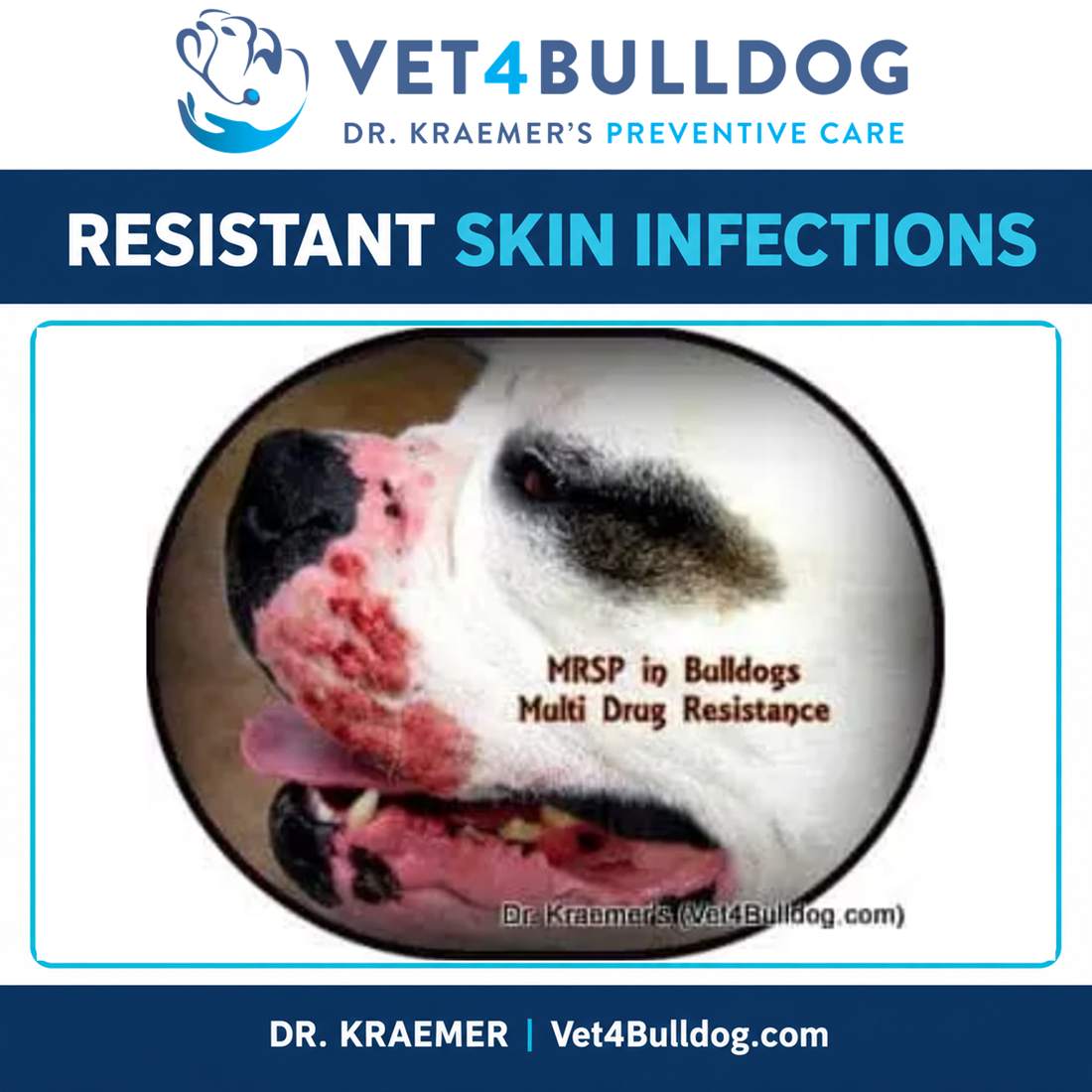
The word resistant frightens owners more than it should, so let me separate two things that get mixed up. Resistance is not virulence. MRSP is the same organism that causes ordinary Bulldog skin infections, behaving the same way, and it is not eating its way through your dog faster because of the letters in front of its name. What has changed is the pharmacy, not the bug. Fewer antibiotics will touch it, so the job becomes choosing correctly rather than choosing quickly.
How the list got short is the part worth understanding, because it is also where the prevention lives. Every course of antibiotics kills the susceptible bacteria and leaves the ones that happened to survive, and those survivors are what repopulate. Do that repeatedly and you are steadily selecting for a population that your usual drugs no longer reach. Bulldogs are exposed to this more than most dogs, not through any fault of their own, but because the breed arrives with allergic, folded, infection prone skin and therefore collects a treatment history that other dogs never accumulate.
Which leads to the two things that actually change the outcome: a culture to find out what works instead of guessing, and antiseptic topical treatment, which kills bacteria by means that do not breed resistance the way antibiotics do.
Our Bulldog has had a skin infection on and off for most of the year. The last swab came back as MRSP and the vet said it is resistant to several antibiotics. I have read what MRSA means in people and I am frightened, both for him and for our family. Did we cause this by using antibiotics too often?
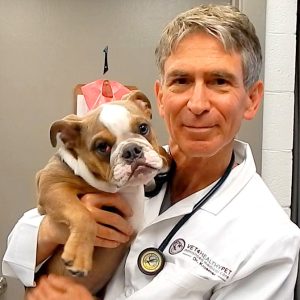
Take the fear down a notch first, then we will deal with the question, because frightened is not a useful state to make decisions in.
What resistance means here is narrower than the headlines suggest. It does not mean the infection is untreatable. It means a particular group of antibiotics will not work on it, so the treatment has to be chosen by what the laboratory found rather than by what usually works. That is precisely why your veterinarian swabbed it. The swab is the thing that turns guesswork into a plan, and having one is good news rather than bad.
On whether you caused it: almost certainly not in the way you mean. Resistance in this situation is usually less about any one owner and more about a dog whose skin keeps getting infected for an underlying reason, being treated repeatedly, often because the underlying reason was never settled. In this breed that reason is frequently allergy or the folds themselves. So the question I would put to your veterinarian is not only how do we clear this one, but what is making his skin an easy target in the first place.
The practical part that is genuinely yours, and it matters more here than in an ordinary infection: finish the course exactly as prescribed even when he looks better, and do the topical care properly if any is prescribed. Topical treatment is doing real work in resistant cases, and it is the part owners quietly abandon once the skin looks calmer. Stopping early is one of the few things an owner can do that genuinely contributes to resistance.
On your family: raise it directly with your own doctor and with the vet rather than reading about it tonight. There is sensible hygiene advice for households in this situation, it is not alarming, and it is better given by someone who knows which organism you are dealing with.
MRSA and MRSP infection in Bulldogs and French Bulldogs multidrug-resistant bacteria are becoming common findings in unresolved ear and skin infections.
MRSA and MRSP Infection in Bulldogs
MRSA stands for “Methicillin-Resistant Staphylococci Aureus and is common to people
HUMANS MRSA MULTI-DRUG RESISTANT BACTERIA:
In contrast to MRSP, MRSA is an indigenous component of normal humans ( NOT dogs).
MRSA MULTIDRUG RESISTANCE BACTERIA IN BULLDOGS
- MRSA is rarely diagnosed in bulldogs and is usually the result of contact with a human carrier.
- Most bulldogs and French bulldogs exposed to MRSA do not develop clinical disease, and most will eventually eliminate the organism.
BULLDOG MRSP MULTI-DRUG RESISTANT BACTERIA:
MRSP is native to your English bulldog or French bulldog puppy’s skin, but not to humans. MRSP stands for “Methicillin-Resistant Staphylococci Pseudintermedius
Staphylococci Psudointermdius bacteria are part of the normal microflora of your bulldog’s skin. Staphylococcus pseudintermedius is the most common bacteria found on bulldog’s skin.
OPPORTUNISTIC INFECTION: If your bulldog or French bulldog suffers from an underlying condition that compromises their immune system and/or their skin barrier, this “normal” Staph skin bacteria may cause opportunistic skin infections. Like people, colonized animals usually show no adverse effects unless risk factors allow for the development of clinical infection. Those risk factors could be:
- Recent surgical procurement
- Trauma
- Skin wounds
- Immunosuppression.
RISK, MORTALITY and MORBIDITY Unlike MRSA in people, which is often associated with increased morbidity and mortality, there does not appear to be a significant difference in patient outcome between dogs infected with MSSA (Methicillin SENSITIVE Staph Aureus) vs. MRSA (Methicillin RESISTANT Staph Aureus), possibly because most infections are superficial (pyodermas and otitis) and not invasive deep pyoderma.
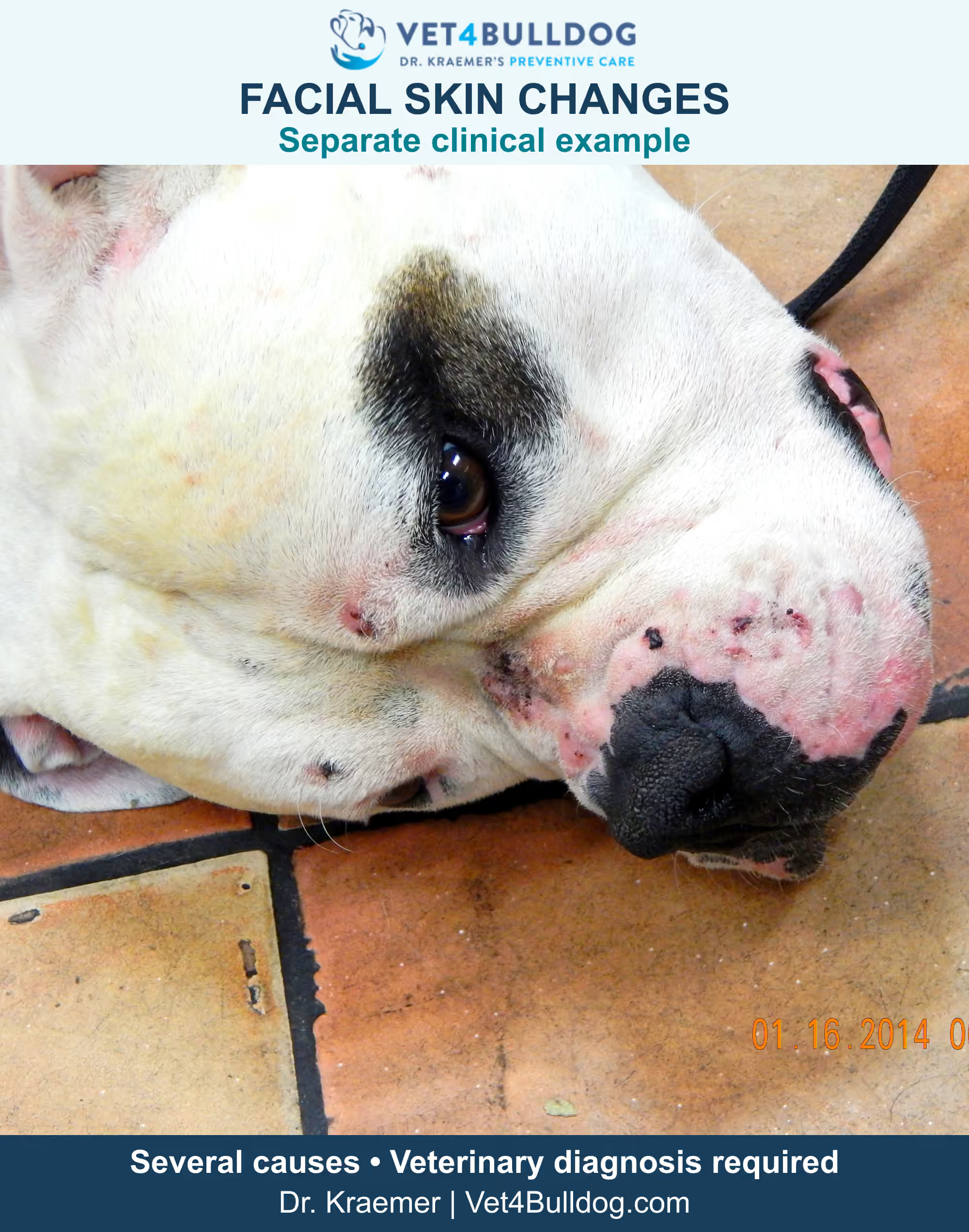
BULLDOGS & FRENCH BULLDOGS ALLERGIES:
One of the most common causes of bulldogs’ compromised skin barrier is allergies. The two most common allergies known to bulldogs are hypersensitivity to the environment (“Atopy”, “Atopic Dermatitis”) and hypersensitivity to food (“Food Allergy”).
BULLDOG SKIN PARASITES & MITES:
The other frequent underlying causes of compromised skin barrier are parasites such as fleas (Flea Allergy Dermatitis) and mites (demodex and Scabies Mites). Allergies and parasites are considered “primary causes”, while most bacterial skin infections (“Pyoderma”) are usually secondary.
Resistant does not mean more aggressive
The first thing I say to an owner handed this diagnosis is that resistance and aggressiveness are two different properties, and people hear the first and assume the second. MRSP is the same Staphylococcus that causes everyday Bulldog skin infections. It is not more destructive, it does not spread through tissue faster, and the prognosis for a superficial skin infection is generally good. What is different is that the list of antibiotics that will work on it has become short. That makes it a problem of choosing the right drug rather than a problem of a dog in greater danger, and the distinction matters because frightened owners make rushed decisions.
Now where the resistance came from, because this is the part that is actually under your control in the long run. An antibiotic course kills the bacteria that are susceptible to it and leaves behind whichever ones happened to survive, and those survivors are the population that grows back. Repeat that enough times and you have selected, step by step, for bacteria that your reliable drugs no longer reach. No single prescription did this. The pattern did. And Bulldogs accumulate that pattern faster than other dogs because allergic skin, deep folds and recurring infection mean course after course over a lifetime. If you have ever wondered why I am as insistent as I am about prevention rather than reaching for the prescription pad, this page is the reason.
The single most useful thing you can ask for is a culture and sensitivity test. It takes a sample from the infection, grows it, identifies it, and then tells you which antibiotics actually work on this particular dog. The alternative is choosing by educated guess, which is reasonable the first time and gets less reasonable with every repeat. My own view is that if a skin infection has come back for a third time, that is the moment to culture rather than reach for a third empirical course. It costs more up front and it takes days, and it is cheaper than two more courses that do nothing while the skin carries on deteriorating.
The part owners find most surprising is that antiseptics do a great deal of the work here, and sometimes all of it. Chlorhexidine, benzoyl peroxide and the other topical antibacterials kill bacteria by physical and chemical means rather than by the targeted biochemical route an antibiotic uses, and that difference matters enormously: bacteria do not develop resistance to them in the way they do to antibiotics. For a superficial resistant infection, thorough and frequent topical treatment can be the main treatment rather than a supporting act. They are still used alongside what your veterinarian prescribes and the treatment decision stays theirs, but this is the one category where being diligent at home genuinely substitutes for a drug rather than merely helping.
What I would not want you to take from any of this is that the infection is the problem to solve. The infection is nearly always sitting on top of something: an allergy, a fold that stays damp, a parasite, a hormonal condition. Clear the bacteria and leave that underneath untouched and you will be back, and the next course will be chosen from an even shorter list. So the real treatment plan for a recurring resistant infection is two plans running at once, one for the bacteria now and one for whatever keeps inviting them, and the second one is what decides whether you are still doing this in two years.
On the people in your household, I want to be accurate rather than alarming. These organisms can pass between dogs and people, which is a real thing and not a common one, and the sensible response is ordinary hygiene rather than isolation: wash your hands after handling him or treating the skin, keep his bedding clean, and do not let an open wound of your own be in contact with an infected area. If somebody at home is immune compromised, recovering from surgery, or has an open wound, mention the dog’s diagnosis to their own doctor, because that is a conversation for a physician rather than a veterinarian.
MULTIDRUG-RESISTANT BACTERIA IN BULLDOGS:
Staphylococci that carry the methicillin-resistant gene are resistant to all beta-lactam antibiotic drugs. Methicillin-resistant infections in pets are an increasing problem in veterinary medicine and are driven by antibiotic pressure (i.e. overuse, indiscriminate, “blanket”, “defensive” etc).
MRSP Skin Infection in Bulldogs and French Bulldogs PREVENTION:

On most pages on this site I am careful to say that the topicals sit alongside the prescription. That is still true here, and the treatment decision is still your veterinarian’s. But it is worth being clear about why this category carries more weight on this particular subject than anywhere else in the range.
Antiseptics kill bacteria by physical and chemical means rather than by the precise biochemical mechanism an antibiotic relies on. That is the reason bacteria do not build resistance to them the way they do to antibiotics, and it is why thorough topical treatment matters most in exactly the situation where the antibiotic options have run short. For a superficial resistant infection, frequent and diligent washing is doing real therapeutic work rather than keeping the dog comfortable while a drug works.
Two honest qualifications. First, a deep or widespread infection is not a job for a shampoo and your veterinarian will say so. Second, this does nothing about the allergy, fold or parasite underneath, and if that is left alone you will be here again: the pyoderma page covers the recurring picture and the food allergy page covers one of the commonest reasons behind it.
To be clear: supplements or topicals are not substitutes for prescribed treatment. If your dog is unwell, is being treated for a condition, or is already on medication, review any supplement or topical with your veterinarian so it fits the plan you are already following. This page is educational and is not a diagnosis or a treatment plan for your own dog.
Bulldog Antibacterial Antiseptic Therapeutics:
Topical therapeutics are highly effective against superficial bacteria dermatitis-like MRSP and MRSA.
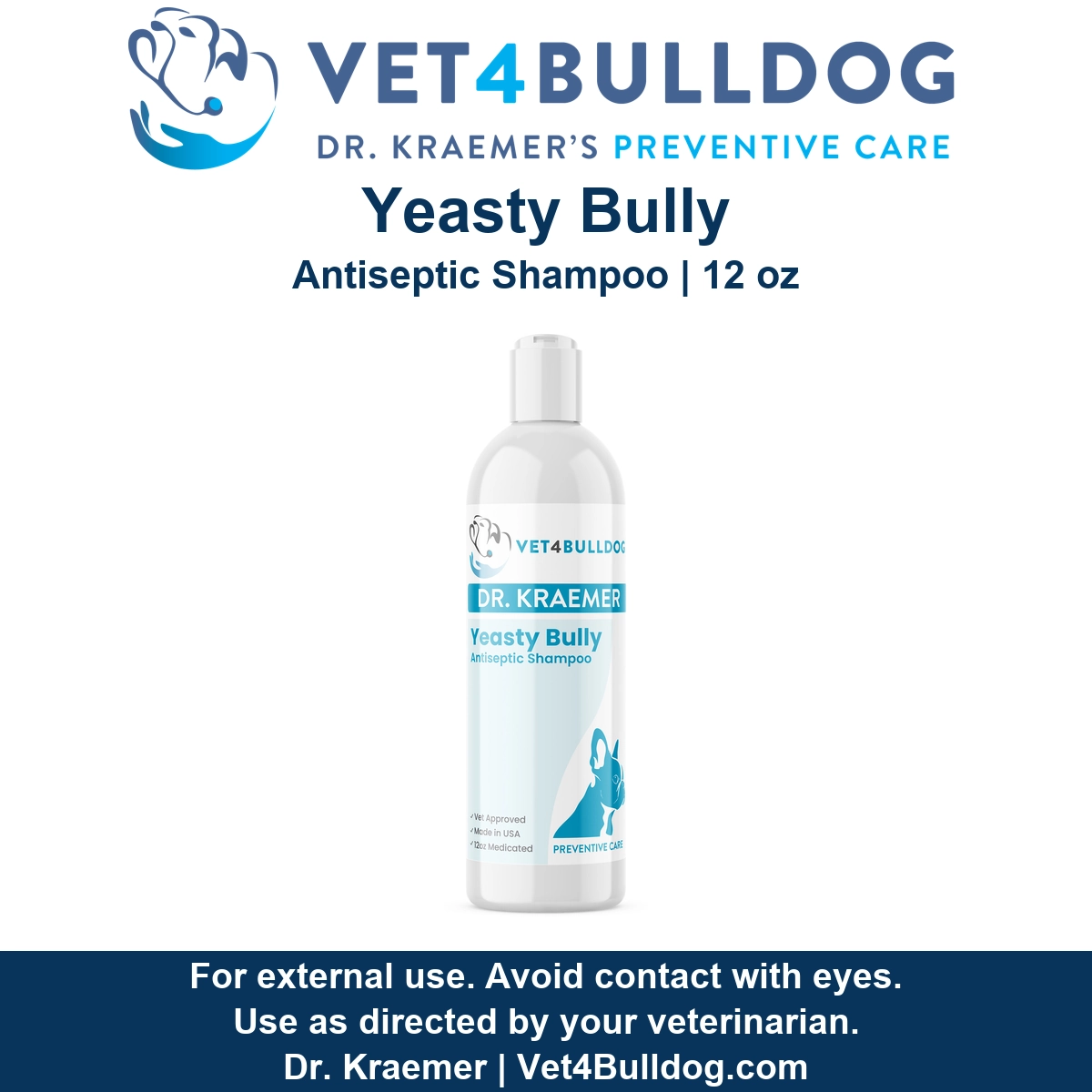
ANTISEPTIC MEDICATED SHAMPOOS
Frequent baths using a medicated shampoo like Dr. Kraemer’s
- V4B Bulldog Antiseptic Shampoo and V4B Yeasty Bully Shampoo
- V4B Bully Extra Strength Antiseptic Shampoo
Daily or every other day, 10 minutes of contact before rinsing.
ANTISEPTIC MEDICATED WATERLESS GEL
On days you are unable to bathe your bulldog, I recommend you apply a waterless shampoo like Dr. Kraemer’s
Between shampoo’s, shake, place on the site (no rinsing is required, its waterless)

CREAM RINSE CONDITIONER FOR BULLDOG MRSP INFECTION:
To help hydrate and moisturize the skin, you can use a conditioner like Dr. Kraemer’s
BLEACH SOAK FOR BULLDOG MRSP INFECTION:
Daily soaks in diluted bleach 1:10 (1 part bleach to 10 parts water). You can sponge, bathe, or soak, but don’t rinse, and leave your pet to air dry. You should prepare a fresh new dilute each time you bathe your pet.
OTHER ANTISEPTIC TOPICALS FOR BULLDOG MRSP INFECTIONS:
like Dr. Kraemer’s
ORAL ANTIBIOTICS FOR BULLDOG MRSP PYODERMA:
MRSP pyoderma systemic antibiotics are based on culture sensitivity results.
SUPPLEMENTS FOR BULLDOG MRSP INFECTION:
IMMUNE SUPPORT
- V4B Bulldog Fish Oil has anti-inflammatory properties, can improve various skin conditions, and boosts the immune system.
- V4B Bulldog Immune Support may help to enhance the immune system.
PRE/PROBIOTICS: Bulldogs suffering from MRSP pyoderma are usually on long-term antibiotics. Prolonged use of antibiotics will likely affect the gut good bacteria and cause dysbiosis (bad gut bacteria), thus supplementing with probiotics, prebiotics, and digestive enzymes might be required.
MANUKA OIL FOR BULLDOG PYODERMA:
Essential oils from plants have long been used for medicinal purposes due to their antibacterial, antifungal, antiviral, antioxidant, and insecticidal properties. Manuka oil has excellent antimicrobial activity and inhibits biofilm production. I don’t know enough about this oil’s use in bulldog skin infections, how to apply it, how often, and if there are any drug interaction issues. I recommend you do some of your own research before using it.
Dr. Kraemer’s MRSP Infection in Bulldogs RULE OF THUMB:
MRSP may be isolated from healthy individuals with no signs of disease; this is considered “colonization”, and is distinguished from “infection,” wherein the MRSP is causing signs of disease. Bulldog skin infection caused by MRSP can present as any other non-resistant staph strain and is NOT inherently a more dangerous infection. CULTURE: However, clinically proven MRSP requires the appropriate antimicrobial selection and should be based on culture and susceptibility testing.
Fortunately, infections, and diseases attributed to MRSP are very rare in people, and many of your bulldogs and other pet owners have been exposed to it.
Dr. Kraemer’s MRSP Skin Infection in Bulldogs TIPS & WARNINGS:
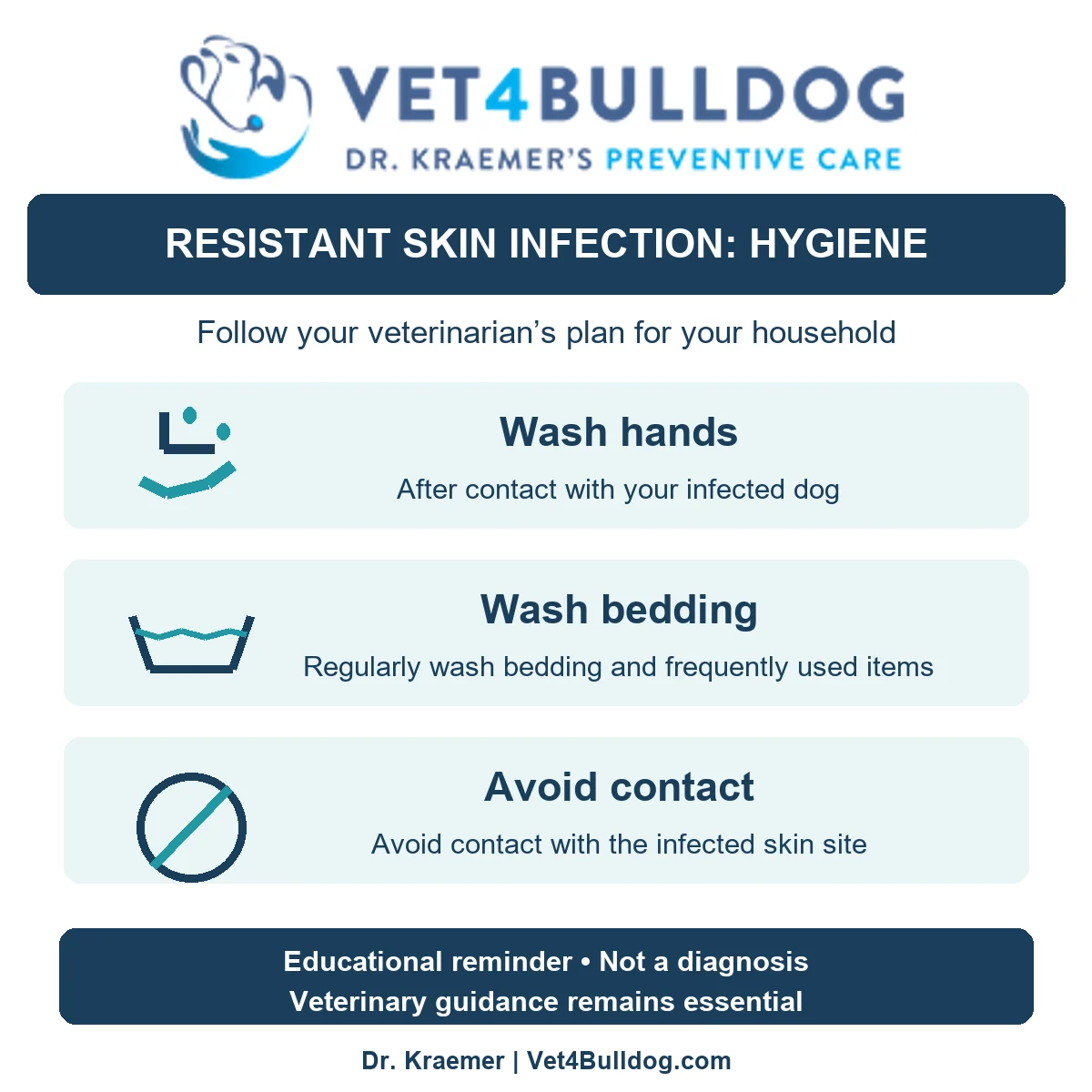
Bulldog MRSP Infection BE VIGILANT TIP: While the odds of you picking up MRSA or MRSP from your bulldog are very low, you should be vigilant and aware. The use of proper hygiene and infection control measures is always important, particularly around a pet with an active infection. These measures include:
- HAND WASH: Frequent hand washing after contact with your infected bulldog.
- CONTACT/SITE: Avoid contact with the infected site.
- LAUNDRY: Regular washing (in hot water, with hot air drying, whenever possible) of your bulldog’s bed and other items that come into close and frequent contact with your pet.
- HYGIENE: Keeping your bulldog puppy’s infected site covered.
- CONTACT/PET: reducing contact with your infected bulldog puppy’s nose, and in general, reducing close contact with your bulldog (snuggling, nuzzling, hugging, and kissing) during the period of infection.
Bulldog Skin Infection STEM CELL THERAPY:
I have been treating chronic atopic itch allergic dermatitis with secondary MRSP with a new, cutting-edge, regenerative medicine, a self-healing treatment called Stem Cell Therapy. This state-of-the-art, new, treatment uses your pet’s anti-inflammatory repair cells to enhance healing, repair the immune system, control itch, and reduce inflammation.

Bulldog MRSP Multi-Drug Resistant CULTURE TIP:
In contrast to a typical staphylococcus pyoderma, which is often treated symptomatically with antibiotics, MRSP antibacterial treatment choices should be based on culture and sensitivity testing.
Bulldog MRSP Skin Infection VIRULENCE TIP:
Unlike MRSA in people, there is NO indication that MRSP is more virulent than methicillin-susceptible staphylococcus pseudintermedius (MSSP), and most reported infections have been treated successfully, though they usually take longer to resolve.
Bulldog MRSP Infection TREATMENT DURATION:
Treating MRSP can take 6 to 8 weeks, much longer than the 4-6-week MSSP infection
Multi-Drug Resistant MRSP TREATMENT RESPONSE:
The clinical signs of methicillin-resistant infections are identical to methicillin-sensitive infections. Clinical suspicion of methicillin resistance includes lack of response to appropriate empirical therapy, worsening of signs while receiving therapy, and/or recurrent infections (particularly of the skin and ears). Bulldog Yeast Infection / YEAST & SEBORRHEA: Often, methicillin-resistant staphylococcal infections in bulldogs and French bulldogs are complicated by secondary yeast overgrowth and yeast infections, as well as primary or secondary seborrhea. Both of those secondary medical dermal conditions must be treated appropriately. Dr. Kraemer’s V4B product line may help control those medical skin conditions
MRSP Skin Bacteria ZOONOSIS TIP:
Staphylococcus pseudintermedius is NOT a commensal organism in people and poses a little zoonotic risk.
Bulldog Skin Infection PROPER HYGIENE TIP:
All wounds should be kept covered to decrease the risk of environmental contamination.
Hand hygiene and environmental disinfection at home are just as important as in the clinic.
MRSP Bacteria Poyderma EMPIRICAL TREATMENT:
A methicillin-resistant infection should be suspected whenever there is a poor response to empiric antibiotics, especially if a patient has a history of treatment with multiple prior antibiotics, with limited improvement.
Bulldog MRSP UNDERLINING PROBLEM:
When treating multi-drug-resistant staph pyoderma, it is important to also treat the underlying, or predisposing conditions (allergies, parasites, hypothyroidism, etc).
Bulldog Skin Infection FOLLOW-UP EXAM:
Have your veterinarian re-evaluate your bulldog during therapy to ensure an appropriate response to treatment.
MRSP INFECTION DISINFECTION:
Disinfection of potentially contaminated surfaces is recommended.
BULLDOG MRSP SKIN INFECTION WARNINGS:
Although pets that are colonized or infected with MRSA, are most likely to contract the bacteria from people, pets may have the capability to be carriers of MRSA and subsequently pass it back to a human.
MRSA ZOONOSIS WARNING:
Humans at risk:
- immune-incompetent children
- hospitalized patients
- immune-suppressed individuals.
MRSA CONTACT WITH PETS:
Infected or colonized dogs should not be outdoors so that they will not encounter other dogs. Infected or colonized cats should be kept indoors.
BULLDOG MRSA KISSING:
While the infection is active, owners should be discouraged from kissing their pets or allowing their pets to lick them.
BULLDOG MRSA SHARING A BED:
During treatment, owners should not allow the pet to sleep in their bed, or with children.
MRSA vs. MRSP:
You must differentiate between MRSA and MRSP. Even though colonization of bulldogs with Staphylococcus aureus is possible, it is not very common since it is an indigenous component of normal humans, not dogs.
If your bulldog becomes colonized, the pet may serve as a source for infection to people without ever manifesting clinical signs.
Pet owners, rescue members, and veterinary personnel who come into contact with Staphylococcus aureus-colonized pets may then become MRSA carriers, which is why proper hygiene in those cases is so important.
Bulldog Skin Infection: EMPIRICAL ANTIBIOTICS WARNING:
When suspecting MRSP, I do not recommend empirical antibiotic treatment. A culture and sensitivity test is required to assure treatment to which the MRSP is not resistant.
MRSP INFECTION ZOONOSIS WARNING:
If your bulldog was diagnosed with MRSA (Staphylococcus aureus), be aware of the potential for zoonotic transmission. In general, the risk of clinical disease is probably low for immunocompetent people (i.e. a healthy immune system), nevertheless, everyone in contact with your dog should be alerted.
MRSP IMMUNE COMPROMISED RISKS:
Immune-compromised individuals, (HIV/AIDS, chemotherapy, high doses of immune suppressant drugs like steroids, Prednisone and other chemotherapy drugs), are more susceptible to contracting MRSP from pets. Those immune incompetent and immune-suppressed individuals should avoid contact with pets and high-risk carriers like healthcare workers. In those cases, it is prudent to contact a family physician and inform him/her of the situation. Precautions should be taken by these individuals to avoid contact with open wounds and pet feces.
BULLDOG MRSP ANTIBIOTICS WARNING:
Never treat methicillin-resistant infections in bulldogs with beta-lactam antibiotics (i.e., penicillins and cephalosporins), even if your veterinarian reports to you that the susceptibility test shows you can consider it an error.
Bulldog Skin Infection TREATMENT DURATION:
One of the most common reasons for a partial response to antibiotic treatment for pyoderma is its short duration. In addition, insufficient duration, or non-compliant owners can lead to bacterial multidrug resistance.
Is a resistant infection more dangerous than an ordinary one?
How did my dog get a resistant infection?
Why does my vet want a culture? It costs more and takes days.
Can antiseptic washes really work when the antibiotics have not?
Can my family catch it from him?
He looks much better. Can we stop the antibiotic early?
How do I stop this happening again?
More Help from Dr. Kraemer
Resistant skin infection is usually the end of a longer story, so these are the pages that cover what started it.
- Allergic and atopic itch dermatitis in Bulldogs and French Bulldogs
- Skin fold dermatitis in Bulldogs and French Bulldogs
- Yeast dermatitis in Bulldogs and French Bulldogs
- Topical therapy and prevention for Bulldogs and French Bulldogs
- Paw dermatitis in Bulldogs and French Bulldogs
- Prevention and wellness guide for the adult Bulldog
If you have a question about your own dog, the Exam Room Q and A is where owners send them.
References
- Pyoderma in Dogs and Cats, Merck Veterinary Manual
- Pyoderma in Dogs, Merck Veterinary Manual
- 2023 AAHA Management of Allergic Skin Diseases in Dogs and Cats Guidelines
Trusted by Vets ~ Recommended by Owners ~ Approved by Bulldogs