


Almost nobody arrives at this page wondering whether spaying is a thing people do. They arrive carrying two worries at once. One is the anesthetic, because she is a flat faced dog and somebody has told them a story. The other is the timing, because the advice online contradicts itself depending on which week you read it. Both worries are reasonable and both have answers. What follows is what the evidence actually supports, what it does not, and the handful of questions worth putting to the practice that will be doing it. The decision stays with you and your own veterinarian. This page is here so you walk into that conversation knowing what to ask.
The common worries Weight Behavior The benefits Anesthesia Cryobanking
I get a version of this message most weeks, and the confusion in it is not the owner’s fault. The published advice on timing genuinely has moved, and it varies by breed and by what each study was measuring.
Let me separate the two worries, because they are different questions.
On the anesthetic: the concern is real but it is not a reason to avoid the procedure. A flat faced dog needs an airway watched carefully before, during and after, and recovery is the part that deserves the most attention rather than the surgery itself. That is a question about who is doing it and how, not whether it should be done. Ask the practice directly how they monitor a brachycephalic patient in recovery. A good team will be pleased you asked.
On the timing: this is a conversation rather than a rule, and it belongs with the veterinarian who has examined your own dog. What I would say is that the decision should be made on her, her size, her temperament and her household, and not on something read in a forum. If your own vet has suggested a month, ask them what they are weighing. You are allowed to ask for the reasoning, and hearing it is usually what settles this.
Spay Risks & Rewards in Bulldogs and French Bulldogs INTRODUCTION
Bulldog and French bulldog spaying is one of the most common surgical procedures customers inquire about, and in most veterinary hospitals, it is the #1 surgery performed for female pets.
- When is the ideal time to spay my bulldog or French bulldog?
- What are the health benefits of spaying a female bulldog?
- What are the risks?
- When is the ideal age?
- Should my bully have a litter of puppies first?
All those questions and concerns are valid and should be considered in your decision.

Ask about the anesthetic, not just the surgery
Owners spend weeks agonising over whether to spay and about ninety seconds on who will be giving the anesthetic. In a flat faced breed I would turn that round. The surgery itself is routine in competent hands. The airway is the part that is not like other dogs, and it is the part worth asking about.
So when you book it, ask three things. Who stays with her while she is asleep, and are they watching her or watching a clock. How is she monitored, and is somebody reading those numbers the whole way through. And what happens in recovery, because with a bulldog the waking up matters as much as the going under. A practice that answers those easily is telling you something useful. A practice that finds them awkward is also telling you something useful.
None of that is a reason to put it off. It is a reason to choose carefully and then stop worrying, which is a far better place to be than putting the decision off for another year while the reasons to do it quietly stack up.
Is My Bulldog Spaying Concerns Fact Base?
There are many spaying concerns of which the most common ones are anesthetic risk, obesity, and behavioral changes
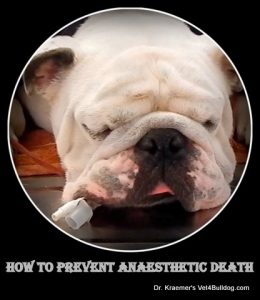
1. SHOULD I NOT SPAY MY BULLDOG DUE TO ANESTHETIC RISKS?
Many English bulldog and French bulldog owners are most concerned about the spaying anesthetic risks and, thus, are reluctant to elect for the procedure. Complications and even tragic outcomes during or after an elective procedure are indeed more likely in brachycephalic breeds (flat-faced breeds) due to their unique airway and respiratory conditions.
Bulldog Spay Anesthetic Risk Concern:
Q: “Dr. Kraemer, does the anesthetic risk to my bulldog outweigh the benefits of spaying” ❓
A: While anesthesia always carries some inherent risks, these risks can be significantly reduced with proper precautions and expertise.
Brachycephalic breeds, such as bulldogs, present unique challenges due to issues like airway obstruction (BOAS).
However, with careful planning, the right protocols, and experienced professionals, spaying can be performed safely, even for these breeds.
Selecting the appropriate anesthetic protocol and maintaining careful monitoring are crucial steps in ensuring the safety of your bulldog.
Conclusion: The risk versus reward of any anesthetic procedure should always be discussed thoroughly with your veterinarian, especially for bulldogs.
To learn more about bulldog and French bulldog anesthetic safety click HERE
🚨The risk/reward should be discussed with any bulldog anesthetic procedure
2. WILL MY BULLDOG GAIN WEIGHT AFTER SPAYING?
Many of the alleged weight-gain risks associated with spaying bulldog puppies are myths.
Q: “Dr. Kraemer, will my French bulldog gain unhealthy weight if I spay her”❓
A: Bulldog obesity and weight gain are less about the spaying procedure and more about:
- Lifestyle
- Improper feeding
- Too many calories
- Inadequate physical activity
3. WILL SPAYING MY BULLDOG CHANGE HER BEHAVIOR?
Another spaying myth is its effect on your bulldog and French bulldog personality and behaviors
- Temperament
- Attitude
- Disposition
Q: “Dr. Kraemer I was told that my bulldog’s sweet demeanor would change if I spayed her.”❓
A: There are no medical or clinical research studies that support those claims.
The best way to keep your bulldog sound and fit is to offer her:
- SOCIALIZATION: Socialize your bulldogs at a young age.
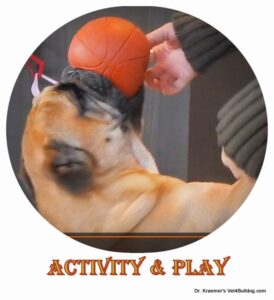
- PLAYTIME: Allow your bulldogs sufficient playtime.
- STIMULI: Offer them stimulus by challenging play.
- LOVE & CARE: it goes without saying, that you provide a healthy dose of love and care.
Those are the true essentials for ultimate bully physique and intelligence.
Bulldog Rescue and Spaying:
Dr. Kraemer has a long-standing collaborative relationship with Bulldog Rescue.
As a rule, all rescue bulldogs are spayed or neutered before adoption.
RESCUE ADOPTION VS. PURCHASE COST:
The adoption fee is a fraction of the cost of buying a bulldog puppy from a breeder, and you will also be providing a home for a bulldog in need!
The rescue also provides a
- free veterinary exam
- screening blood test
- heartworm test
- flea prevention
- vaccines
- fecal test, and deworming
We recommend that you contact rescue before you buy a new bulldog puppy.
What Are The Benefits of Bulldog Spay?
Below is a short list of some of the benefits associated with spaying
Spaying a bulldog, or French bulldog, is safer when performed at a young age. Spaying early will prevent medical conditions such as:
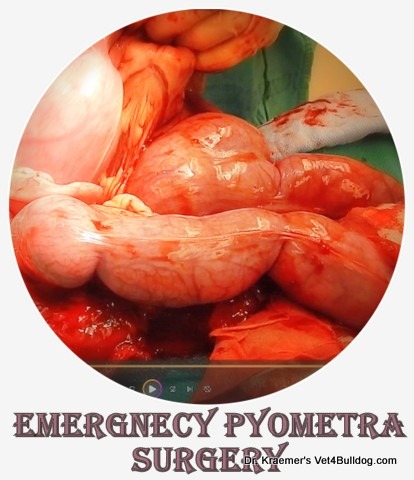
- Pyometra Uterine Infection
- Mammary Brest Tumors
- Ovarian and Uterine Tumors
- Unwanted Pregnancies
- Associated Medical Problems
- Prolapsed uterus
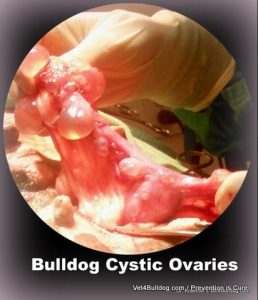
- Cystic ovaries
- Hydrometra
- Transmissible Venereal disease
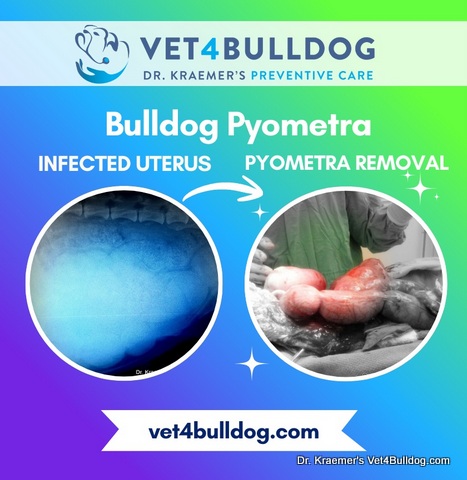
1. BULLDOG AND FR BULLDOG PYOMETRA
Pyometra is a deadly infection of the intact bulldog female uterus. It requires a high-risk emergency and expensive surgery. The longer your bulldog remains intact, the higher the odds they will suffer from pyometra.
Pyometra is more common in mature older intact bulldog females than in young ones.
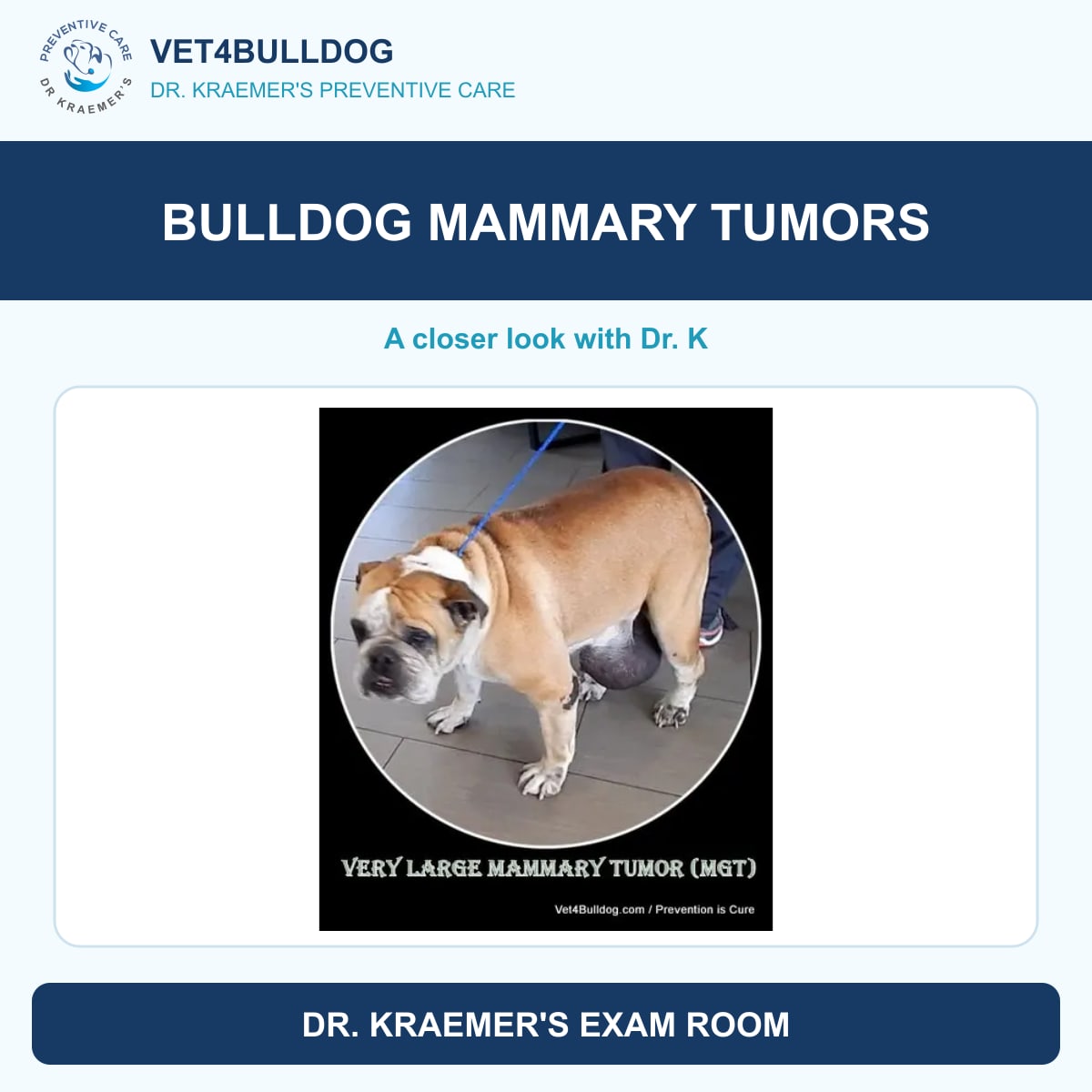
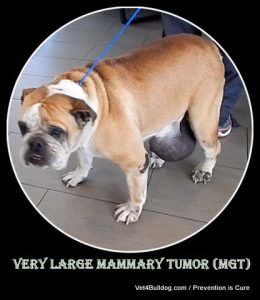
2. BULLDOG AND FRENCH BULLDOG BREAST TUMORS:
Mammary gland tumors can be avoided by spaying at a young age.
- LOCATION: The breast tumor can be found in a single location or simultaneously in multiple breasts.
- SIZE: They can range from small pea-sized lumps to large multilocular hard ulcerative ones.
- MALIGNANCY: they can be low-risk benign or aggressive cancerous ones
🚨50% of the bulldog breast tumors are malignant
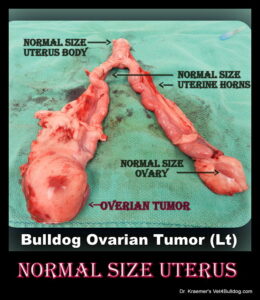
3. BULLDOG OVARIAN AND UTERINE TUMORS:
Other potentially cancerous tumors in intact bulldog and French Bulldog females are uterine and ovarian tumors. Spaying your bulldog will prevent them.
4. PREVENTING UNWANTED PREGNANCIES:
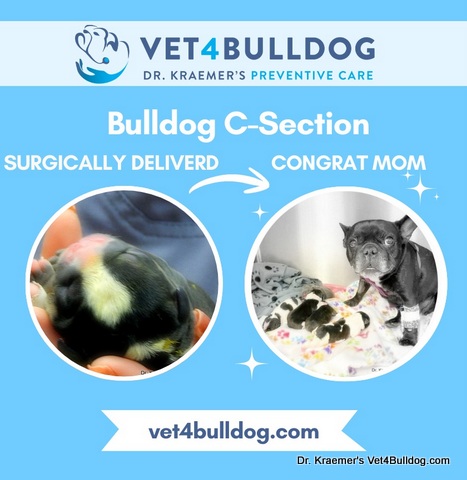
Preventing unwanted, unplanned, premature pregnancies is an additional benefit of spaying your bulldog puppy early before they reach sexual maturity.
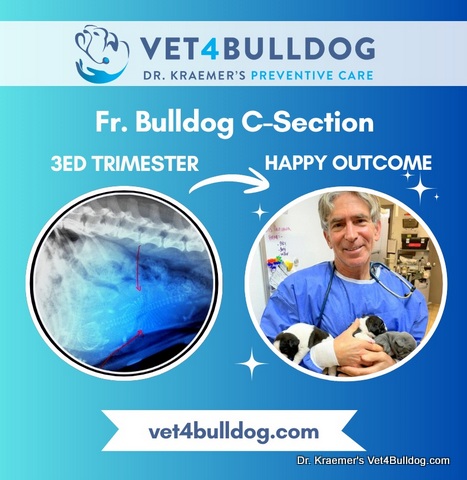
Remember bulldog pregnancies usually require C-Section
Dr. Kraemer’s Bulldog Spay RULE OF THUMB👍:
Spaying your bulldog or French bulldog puppy at a younger age will likely extend their life span and quality of life.
I recommend spaying your bulldog puppy:
- Before the first heat but at least 6 months old
- Or after the first heat cycle
- When having a C-Section for the first litter (OVH at the same time)
- No later than their third or fourth heat cycle while they are still young and in good physical shape.
Bulldog and French Bulldog Spay TIPS & WARNINGS:
Below is a selective spay tips and warning shortlist courtesy of Dr. Kraemer
#1 NON-SPAY FACTORS TIP
Even though spaying your bulldog early in life can prevent certain diseases, there are other contributing factors to those medical conditions, such as
- environmental factors
- nutrition
- genetics
#2 BULLDOG SPAY AND STEM CELL CRYOBANKING TIP
Stem cell therapy is a safe, minimally invasive procedure. We usually recommend that stem cell Cryobanking is done at the same time as your bulldog’s elective spay surgery.
When a bulldog owner schedules an elective surgery like a spay or neuter, they can also request that we harvest their pet stem cells (stored in adipose tissue near the spay surgical site), and then ship it to be cryobanked as “insurance” for future medical emergencies and illnesses.
These stem cells are anti-inflammatory, healing repair cells that may help treat a wide range of illnesses and medical conditions. For the life of your pet, you will be able to call at a day’s notice and ask to retrieve and ship your bulldog’s cryobanked stem cell treatments.
Fortunately, most pet insurance companies recognize the benefits of stem cell therapy, and thus, cover the procedure.

#1 BULLDOG SPAY ANESTHESIA WARNING:
Seeking a veterinary practice with experience in breed-specific anesthesia and equipped with Sevoflurane is crucial for ensuring the safety of brachycephalic breeds during anesthesia.
Additionally, having a medical team that understands the unique needs of brachycephalic breeds, including proper induction techniques, vigilant monitoring throughout the procedure, and careful management during the recovery phase, is essential for a successful outcome.
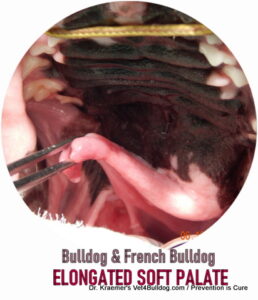
#2 ELONGATED SOFT PALATE WARNING:
If your bulldog puppy exhibits signs consistent with brachycephalic syndrome they must be addressed before or during the spay procedure.
No supplement makes an anesthetic safer or a spay unnecessary, and I would not want anybody reading it that way. That decision belongs with you and the veterinarian doing the procedure.
Where supplements earn their place is the ordinary business either side of it. Keeping her weight sensible once her body has settled, since that is the single thing owners most often lose control of afterwards. Supporting the gut if she has been through a course of antibiotics. Covering the daily basics in a young dog who is still being built. Think of it as looking after the ground crew rather than flying the plane.
See the Puppy Essential bundle
To be clear: supplements or topicals are not substitutes for prescribed treatment. If your dog is unwell, is being treated for a condition, or is already on medication, review any supplement or topical with your veterinarian so it fits the plan you are already following. This page is educational and is not a diagnosis or a treatment plan for your own dog.
Endorsements For Early Spay:
Early-age spay and neuter have been endorsed by:
- The Association of Shelter Veterinarians (ASV)
- The American Veterinary Medical Association (AVMA)
- the American Animal Hospital Association (AAHA)
- Canadian Veterinary Medical Association (CVMA)
Is anesthesia genuinely riskier for a bulldog?
When should it be done?
Will she put on weight afterwards?
Will it change her personality?
What is pyometra and how worried should I be?
What should I actually ask the practice?
Can anything else be done at the same time?
Is there anything useful to have at home for afterwards?
Related Reading
- Anesthesia in bulldogs, what makes it different
- Elongated soft palate
- Brachycephalic airway syndrome
- What you can handle at home, and when to see the vet
About the Author
Roy Kraemer, DVM, is a veterinarian with extensive clinical experience caring for Bulldogs and French Bulldogs. His educational work emphasizes prevention, early recognition, appropriate at-home care, responsible medication use, and veterinary evaluation when a problem is persistent or severe.
Trusted by Vets ~ Recommended by Owners ~ Approved by Bulldogs
References
- American Animal Hospital Association. Canine Life Stage Guidelines
- American Veterinary Medical Association. Spaying and neutering, literature review
- Association of Shelter Veterinarians. Veterinary Medical Care Guidelines for Spay-Neuter Programs
- Downing R, Hagen K. Anesthetic considerations in brachycephalic breeds. Veterinary Clinics of North America