


A spot of blood on the bedding from a young male Bulldog is frightening out of all proportion to how much blood is actually lost. This is usually the reason, and the hard part is not fixing it once. It is stopping it coming back.
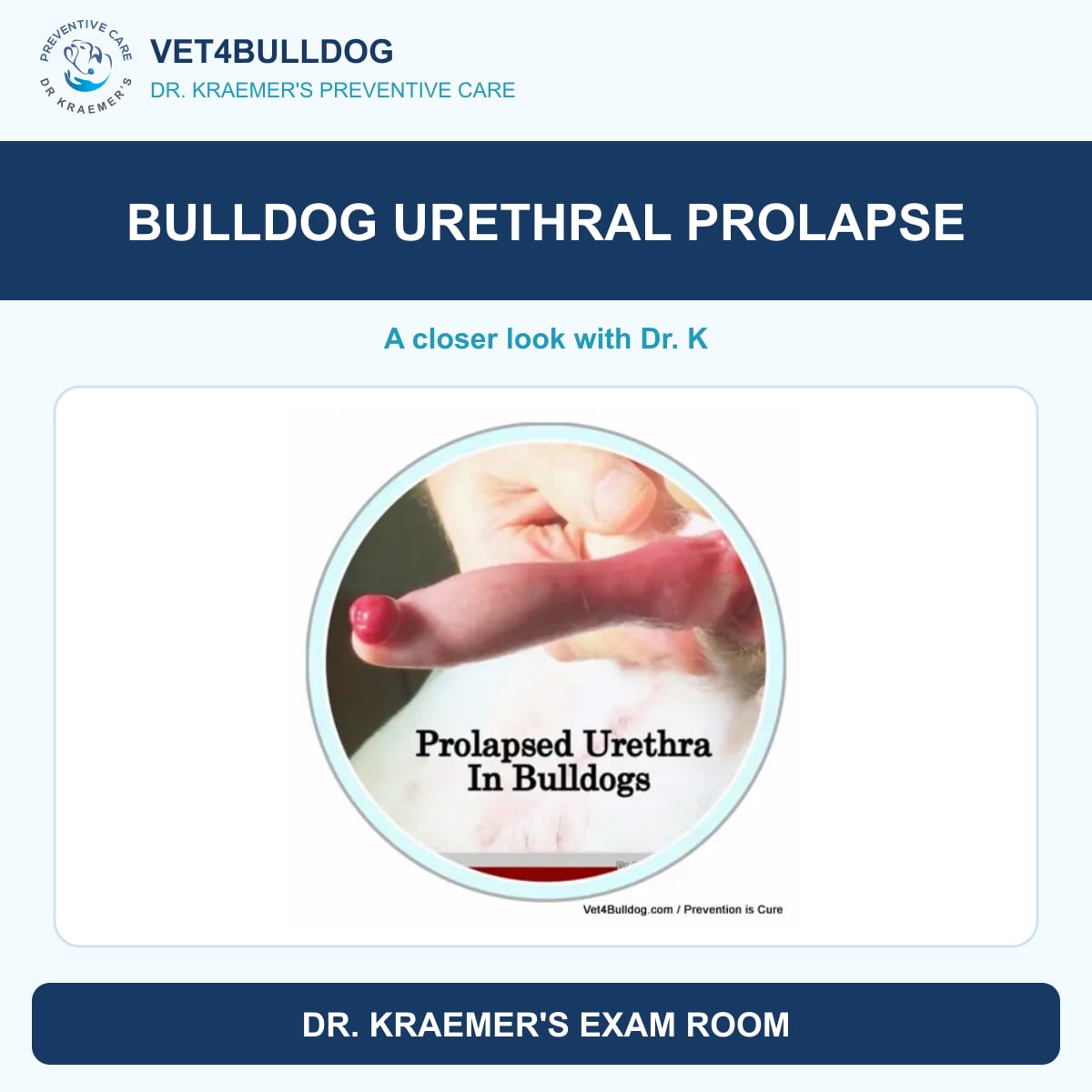
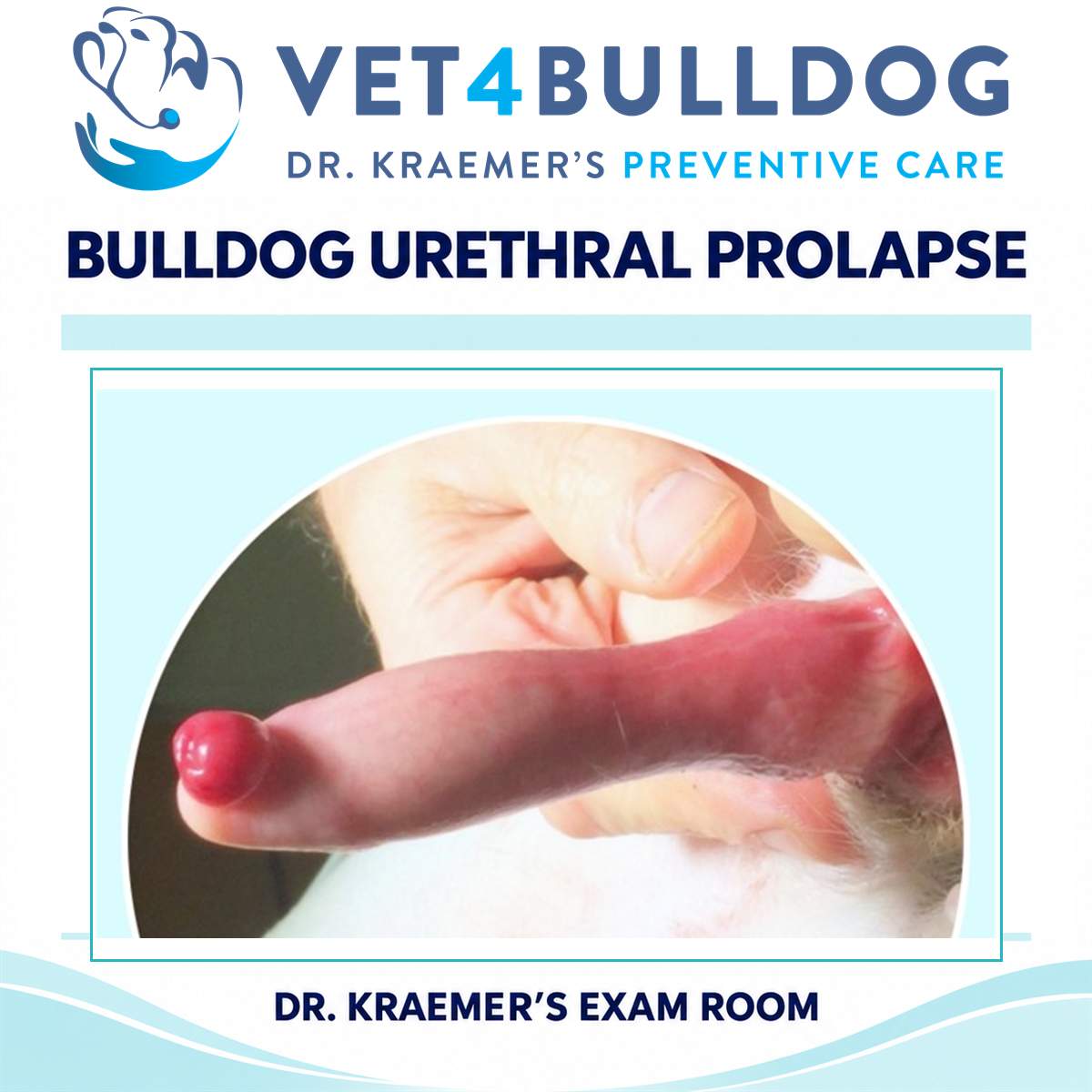
Urethral prolapse is the lining of the urethra pushing out at the tip, where it sits as a small red or purple bead. It bleeds, it bleeds intermittently, and because it bleeds from an alarming place onto pale bedding it brings owners in convinced something catastrophic is underway. It very rarely is. The blood loss itself is almost never the problem.
It is close to a Bulldog specific condition. Young intact males, overwhelmingly English Bulldogs, and the things that drive it are sexual excitement, straining, and in this breed the simple mechanical business of working hard to breathe, which raises pressure inside the abdomen every time he does it. That last connection is the one almost nobody makes, and it is why this condition and the airway belong in the same conversation.
What it is not is something to diagnose from a photograph or from this page. Blood at the tip has several possible sources, some of which matter a great deal more than this one, so it needs looking at properly before anybody settles on an answer.
The prolapsed urethra in Bulldog and French Bulldog puppies is a relatively common medical condition, particularly compared to other dog breeds. Pet owners may notice a red, pea-sized tissue protruding from the tip of their male dog’s penis, which is the prolapsed urethral tissue. This exposed tissue is delicate and vascular, making it prone to bleeding, sometimes profusely.

Bulldog Prolapse Urethra 5 Must Know
- The prolapsed urethra is unique to bulldogs and a multifacet one
- It’s most noticeable by the rosy bulge at the penis tip and the spraying and pooling of blood
- At times, a few days of rest and mild sedation with no stimuli may help stop the bleeding wound
- Milder cases can benefit from pexy surgery, while more severe ones might require an amputation of the prolapsed area
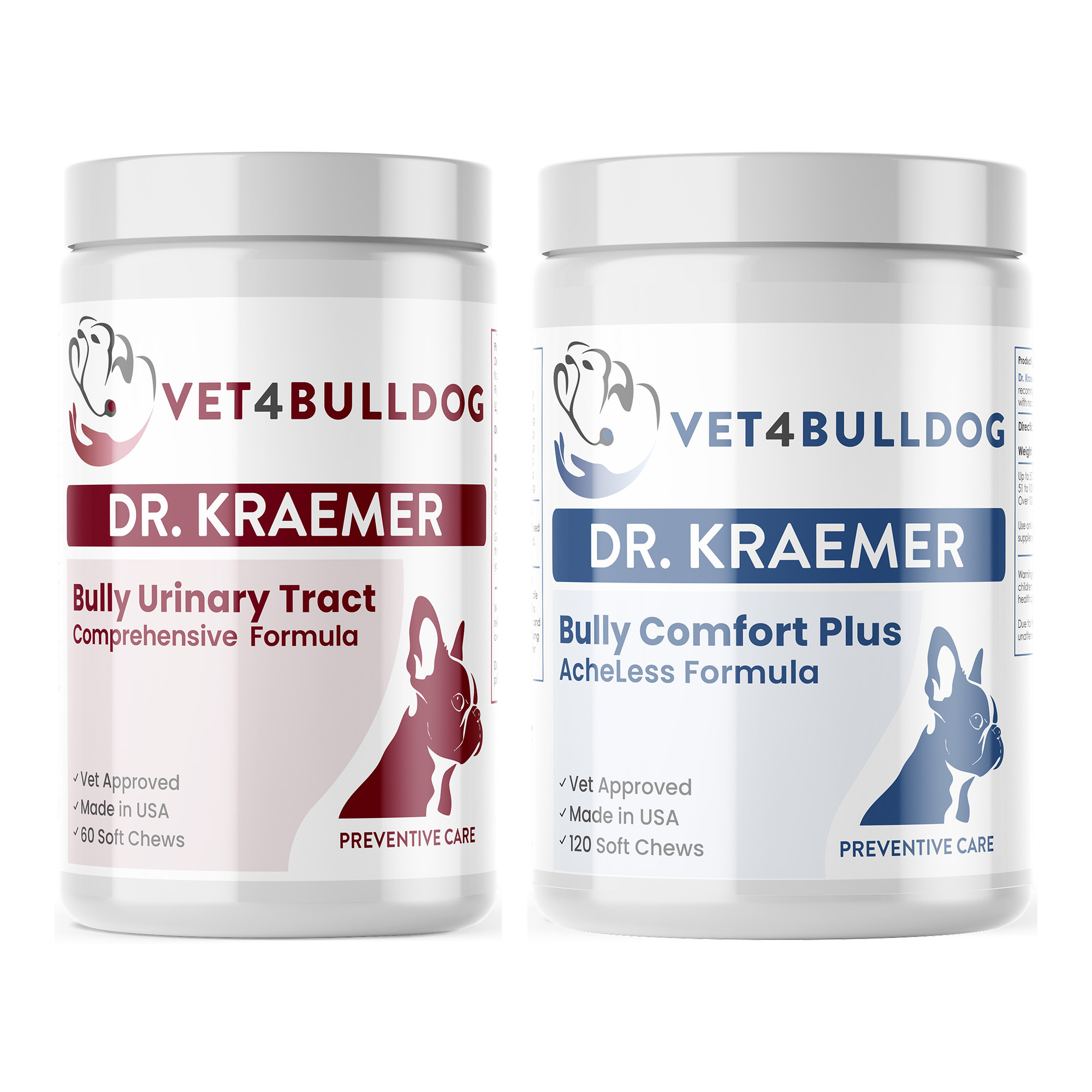
- Prevention and care include neutering and Dr. Kraemer’s Bulldog Prolapse Urethra Bundels.
Members of this bulldog community prefer prevention over RX

Recurrence is the whole story
I should say at the outset why I write about this with more confidence than I would about most things. Over the years I performed more urethral prolapse surgeries than I can account for, almost certainly more than anybody else, simply because I was the Bulldog practice in the area and this is a Bulldog condition. So what follows is not assembled from reading. It is what I saw repeatedly, including the parts that went wrong.
First, the reassurance owners need before anything else. The bleeding looks far worse than it is. It comes from an alarming location, it drips onto bedding and pale flooring where it spreads, and it stops and starts without obvious reason, so an owner can reasonably believe their dog is bleeding to death when the actual volume is small. In itself this does not threaten the dog. That is not a reason to leave it alone, but it is a reason to stop panicking while you arrange to have it seen.
Second, and this is where I would push back on anybody diagnosing from a photograph including from this page: blood at the tip has more than one explanation. An infection, a stone, prostate trouble, an injury, and in an older dog other possibilities, all present in roughly the same place. Some of those matter considerably more than a prolapse. So the first visit is about establishing what you are actually dealing with, and if your dog has a urinary tract infection sitting underneath, that needs treating regardless of what else is found.
Now the part that is the whole point of the page. Fixing a prolapse once is not technically difficult. Keeping it fixed is the problem, and in my experience the operations that failed were almost always the ones where the prolapse was treated as a lump to be dealt with rather than as a symptom of pressure and excitement. Resect the protruding tissue, do nothing about what pushed it out, and a good proportion of those dogs are back. The surgery holds when it is done alongside addressing the drivers, not instead of addressing them.
Which brings me to neutering, and I will be direct because owners deserve a straight answer rather than a hint. Sexual excitement is one of the main forces behind this, and in an intact young male that force does not go away because you have operated. Neutering removes a large part of the mechanism. I understand entirely that for an owner with a show dog or breeding plans this is unwelcome news, and the decision is yours and your veterinarian’s rather than mine from here. But an owner choosing to keep a dog intact should go in understanding that they are accepting a materially higher chance of doing this again, and plan accordingly rather than being surprised.
The airway connection is the one I would most like to put in front of Bulldog owners, because it sounds unrelated and is not. A dog who labors to breathe generates repeated sharp rises in pressure inside his chest and abdomen, and that pressure has to go somewhere. In a brachycephalic dog that is happening many times a day, every day. So a dog whose brachycephalic airway has never been properly assessed is a dog with a pressure problem nobody has addressed, and I have watched prolapses recur in dogs whose surgery was faultless and whose breathing was never looked at. If your dog has this condition, have the airway evaluated as part of the plan rather than as a separate project for another year.
Last, on choosing who operates. This is an uncommon procedure that most general practices will see a handful of times, and the technique and the judgment about how much tissue to take both matter. It is entirely reasonable to ask a surgeon how many of these they have done, and it is reasonable to ask for a referral if the answer is very few. Asking that question is not rudeness, it is the same question I would ask on behalf of my own dog.
Two straight answers.
Tonight: no, assuming he is passing urine normally and is otherwise himself as you describe. The bleeding from this looks far worse than it is, because it comes from an alarming place and spreads on pale bedding, but the actual volume is small and it does not threaten him. Get him seen in the next day or two rather than at midnight. If he ever stops being able to pass urine, that changes completely and becomes urgent.
Surgery: not necessarily, and not yet. A proportion of these settle with medical management, particularly when whatever is making him strain or get excited is dealt with at the same time. The first appointment should establish what it actually is, because blood from that area has several possible explanations and not all of them are a prolapse. A urine sample is usually part of that.
On recurrence, which is the fair question. This does come back, and the reason is almost always that the pressure which pushed the tissue out in the first place is still there. A young intact male who strains, mounts, gets wound up or struggles to breathe is raising abdominal pressure repeatedly through the day. Repair the tissue and leave all of that in place and you are asking a small repair to hold against the same force that broke it. So the conversation worth having is not only about the surgery. It is about neutering, about settling the excitement, and in a Bulldog about whether his airway is making him strain every time he gets warm.
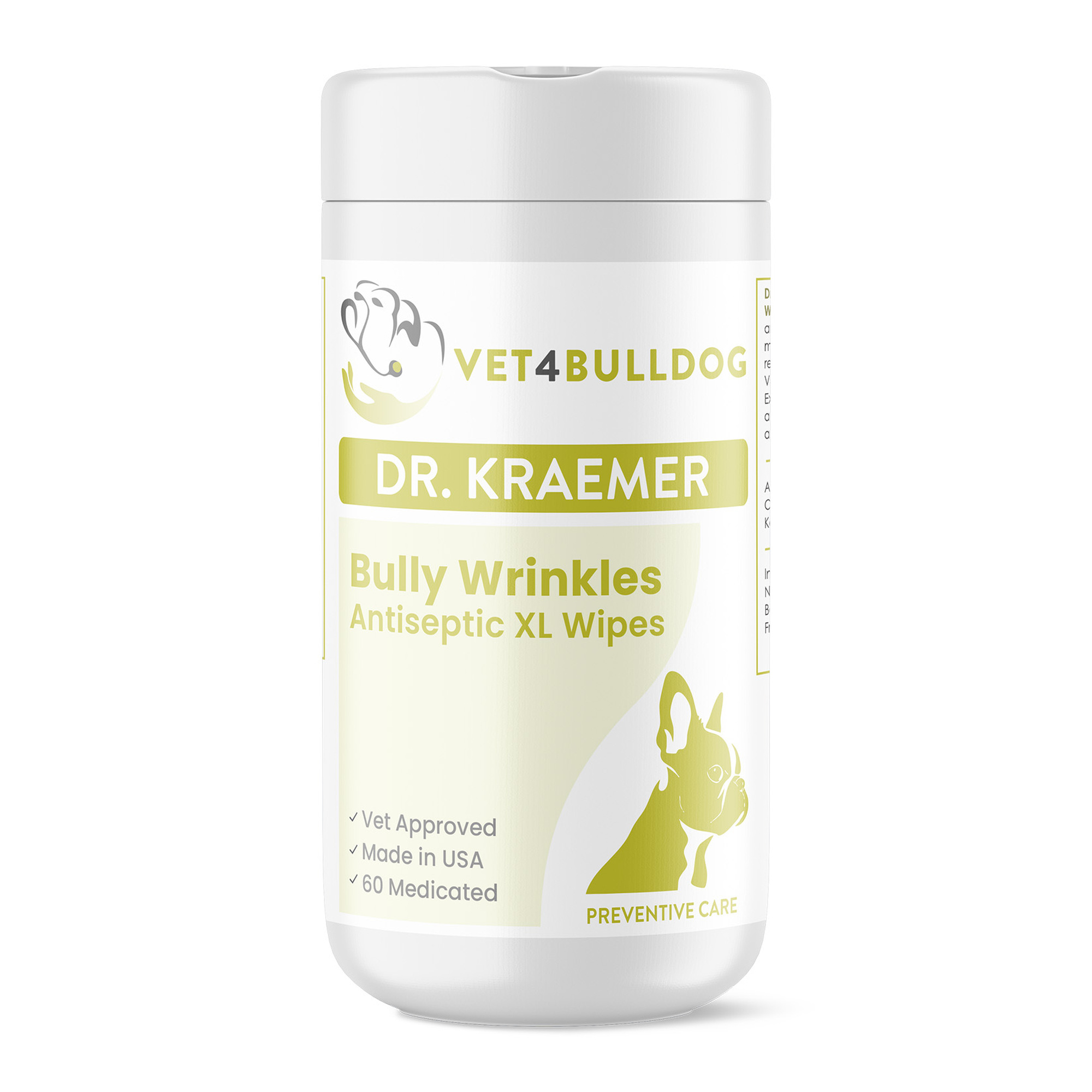
What you can usefully do at home in the meantime is keep the area clean and dry with an antiseptic wipe made for the job, which sits alongside whatever your veterinarian advises rather than in place of it, and stop him licking at it if you can, because the licking keeps it irritated.
Prolapse Urethra in Bulldogs / Cause
- GENETIC: English Bulldogs, French Bulldogs, and Boston Terriers, the prolapsed urethra may be linked to abnormalities in urethral development.
- BLOOD FLOW: Additionally, factors such as impaired penile blood flow during urination and sexual activity can contribute to this condition.
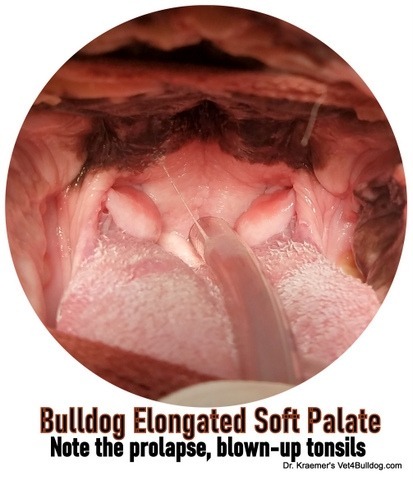
- FLAT FACE SYNDROME: Breeds predisposed to brachycephalic syndrome are at increased risk, characterized by airway abnormalities like
- stenotic nares
- elongated soft palate
- hypoplastic trachea
- everted laryngeal saccule
These airway conditions can lead to increased intra-abdominal pressure, potentially impeding blood flow to the penis and contributing to the development of prolapsed urethra in Bulldog puppies.
Prolapse Urethra in Bulldogs / Diagnosis
Diagnosing a prolapsed urethra is relatively straightforward. Pet owners may notice an unusually bulged, red swelling at the tip of the penis, which represents the prolapsed delicate mucosal layer of the penile urethra. In more severe cases, the bulge may appear larger and more pronounced, sometimes accompanied by bleeding.

Some testing is recommended to rule out other underlying medical conditions, including
- General blood test
- Urinalysis
- Urine culture: when the urinalysis returns with high WBC and bacteria organisms on cytology
- Radiograph & Ultrasound: if stones or other structural problems are suspected
Prolapse Urethra in Bulldogs Prevention
- NEUTERING: early neutering can reduce sexual excitement and the odds of a prolapse.
- SPAYING: if you have a female dog, spaying her before her first heat can reduce your male bulldog’s arousal
- CALM & RELAX: reducing excitement and arousal may help reduce the odds of a prolapsed urethra
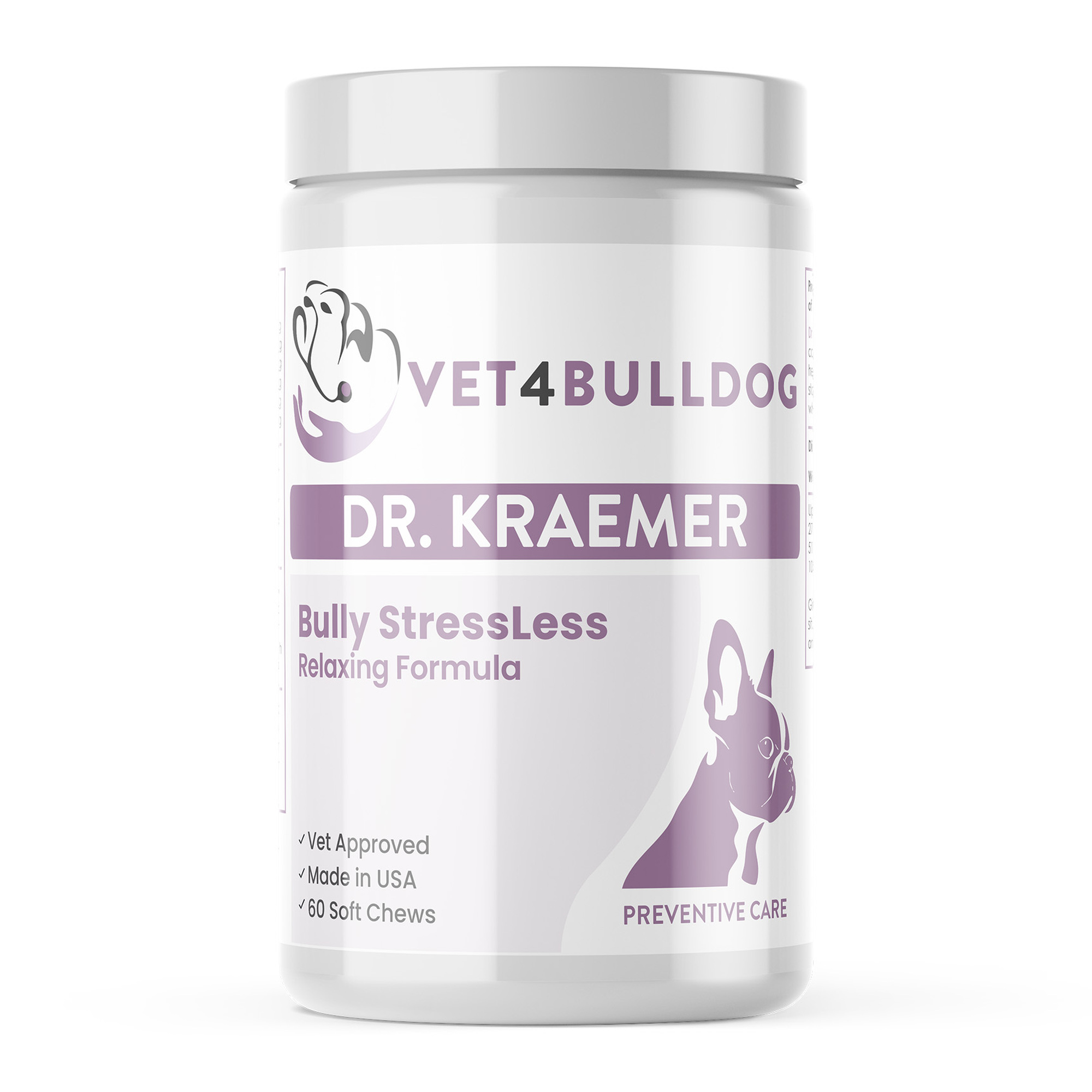
- V4B bully HEMP Relax & Calm Chews
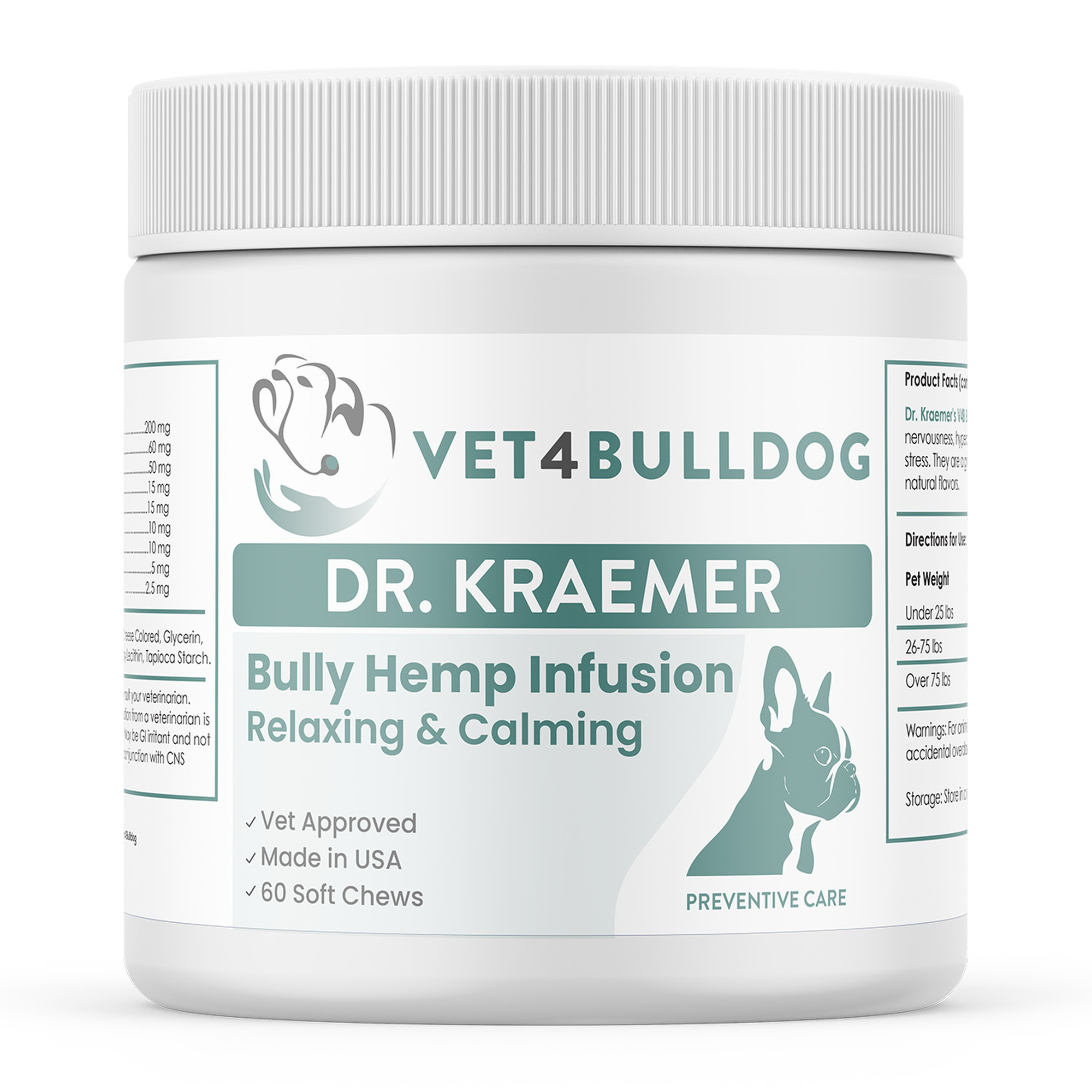
- V4B Bully StressLess Formula

- BRACHYCEPHALIC SURGRY: surgical correction of the flat-face bulldog respiratory problems will help reduce prolapse problems.
- stenotic nares
- elongated palate
- everted saccules
The repair is small. Choosing the moment is not.
Having done a great many of these, the part I would want an owner to understand is that the operation itself is not the difficult bit. The judgment around it is.
Some of these dogs do not need surgery at all. A mild prolapse in a dog who is comfortable, treated medically while the reasons for straining are addressed, can settle and stay settled. Rushing to theater takes that option off the table.
Where surgery is right, the thing that decides whether it holds is what happens to the pressure afterward. Tissue comes out because something keeps pushing it out: straining, excitement, mounting, and in this breed the simple work of breathing through an airway that was not built for it. Repairing the tissue without touching any of that is like patching a tire and leaving the nail in the road.
And there is a practical reason to get the first attempt right. Each repair leaves less tissue and more scar to work with, so the second one is harder than the first and the third is harder again. If this is going to be done, it is worth asking who in the practice has done them before, and how many. That is not a rude question. Any surgeon worth having will answer it plainly.
So the sequence I would follow is: find out exactly what it is, treat anything else that is going on, deal with the straining and the hormones and the airway, and let that decide whether the knife is needed at all.
Prolapse Urethra in Bulldogs Treatment
In milder cases of urethral prolapse, surgery may not be immediately necessary.

Mild prolapse urethra / medical care
A conservative approach focusing on rest and minimizing bleeding can be effective. Applying a cold pack to the affected area may help reduce swelling and slow down any bleeding, a critical first step in managing the condition non-surgically.
To aid in this process, prescription tranquilizers may be employed to lower blood pressure and ensure the dog remains sufficiently sedated. This helps prevent any sudden movements or excitement that could disrupt the formation of a stable blood clot at the site of the prolapse. A calm environment is crucial for allowing the body’s natural healing processes to take place without interference.
Bully StressLess and Calm Bundles
This period of rest and confinement, typically spanning 3-5 days, should be strictly observed to ensure no arousing stimuli can provoke the dog, potentially leading to a recurrence of bleeding. During this time, the goal is for a fibrous clot to form securely, aiding in the natural healing process and reducing the risk of further injury or complication.
All prolapased urethra cases should be neutered
Severe prolapse urethra / surgical care
Surgical repair should be considered for bulldogs suffering from a prolapsed urethra when it is accompanied by bleeding, pain, or evidence of extensive penile injury and/or urethral ulceration.

Bulldog Prolapse Urethra Pexy:
For cases where the prolapsed urethral tissue is present but not severely damaged or compromised, a less aggressive surgical approach can be considered. This method avoids the tramautic removal of tissue and focuses on correcting the prolapse to protect the exposed mucosa.
The procedure involves placing a few strategic pexy stitches to rotate the exposed prolapsed urethral mucosa inward, allowing it to be shielded once again by the outer penile skin.
This technique aims to preserve as much of the natural structure and function of the urethra as possible while still addressing the prolapse. By repositioning the mucosa without cutting or removing tissue, the risk of complications is minimized, and the recovery process can be smoother and quicker compared to more invasive procedures.

URETHRA PEXY SURGERY BENEFITS:
- Short Anesthesia Time/Safety: the procedure takes only a few minutes, making it a safer procedure
- Reduced Cost: much less expensive than a full amputation
- Atraumatic: there is no cutting or tissue trauma
- Minimal Risk of Complications: The likelihood of encountering complications following surgery is quite low. The primary concern might be urination, which can occur if the pexy sutures are too tight, causing a narrowing at the tip of the urethra. Should this issue arise, it can typically be addressed by loosening or removing one or more of the sutures.
- Speedy Recovery: there is no post-op bleeding and no need for post-op hospitalization aftercare
Postoperative care for this less invasive approach typically includes measures to reduce the risk of infection and ensure proper healing, such, as pain management, and possibly temporary restrictions on physical activity. The veterinarian may also recommend follow-up examinations to monitor the success of the procedure and ensure that the prolapsed tissue remains correctly positioned.
Bulldog Prolapse Urethra Amputation
If the prolapsed urethral tissue has become necrotic or otherwise compromised, surgical removal of the affected tissue is recommended.

The primary goal of surgical intervention in cases of urethral prolapse is to stop the bleeding, preserve the function of the urethra, and remove any damaged tissue that cannot heal on its own. This procedure can alleviate discomfort, prevent further damage, and reduce the risk of infection or other complications associated with necrotic tissue.

Bulldog Prolapse Surgery Amputation Risks:
- Long anesthesia time
- Traumatic: often bleeds post-op and requires aftercare
- Expensive
When choosing to proceed with surgical amputation, I always pair it with a pexy procedure to significantly increase the likelihood of long-term success.
Prolapsed Urethra in Bulldogs and French Bulldogs / Tips & Warnings:
Below are a few selected prolapse urethra tips and warnings, courtesy of Dr. Kraemer
Bulldog prolapse urethra care tip
Surgery is not indicated in some mild cases, in those non-bleeding cases, the prolapse could be left alone, as is.
Brachycephalic syndrome and prolapse urethra
I recommend the repair of the elongated soft palate, stenotic nares and laryngeal saccules in all English bulldog and French bulldog puppies, as well as other brachycephalic breeds
Bulldog prolapse urethra home care tip
Tranquilizers and anti-inflammatory RX could help reduce the bleeding until you can get your bulldog to a veterinarian.
Bulldog prolapse urethra re-occurrence warning
Given the multifaceted breed predisposition to this issue, the recurrence of prolapse is not uncommon, often happening within 6 months to 2 years. This is particularly likely if any underlying causes predisposing the animal to prolapse have not been identified and addressed.
Bulldog prolapse urethra surgeon warning
Urethral Prolapse is unique to bulldogs, therefore, repair should be done by an experienced surgeon and one who is familiar with the breed.
Bulldog prolapse urethra neutering
All bulldogs diagnosed with a prolapsed urethra should be neutered to prevent recurrence and re-prolapse. Also, due to the possible genetic link associated with this condition, I do not recommend breeding bulldog males with a known prolapsed urethra.
This medical issue is particularly common in bulldogs, so it’s crucial to seek a surgeon with experience in this type of surgical correction.
Unfortunately, options for revising a prolapsed urethra are limited due to the proximity of the os penis (a penile bone unique to canines) to the tip of the penis. After a second or third revision, there’s minimal, if any, space left for further repair between the tip and the bone.
At this stage, the options become limited, and the remaining courses of action are often salvage procedures, such as amputation and urethrostomy.
There is blood at the tip. Is this an emergency?
What does a urethral prolapse actually look like?
Why do Bulldogs get this when other breeds do not?
Will neutering fix it?
Does it always need surgery?
It came back after surgery. Why?
What does his breathing have to do with this?
I will be plain, because this is a page where a hopeful purchase could delay the right care. A urethral prolapse is diagnosed and treated by a veterinarian, and in some dogs it needs surgery. Nothing on our shelves repairs it, replaces that, or should hold it up.
Where our range has a legitimate place is the surrounding care. Keeping the area clean and dry with an antiseptic wipe belongs alongside what your veterinarian advises rather than instead of it, and it matters because a constantly wet, licked area stays irritated. Urinary support may help a dog who also has infections or discomfort in that system, which is common enough that it is worth asking about. Calming support may help the dog whose excitement is part of what keeps pushing the tissue out. All of it is support around a veterinary plan, not a substitute for one, and a good few weeks is a fair trial before judging any of it.
To be clear: supplements or topicals are not substitutes for prescribed treatment. If your dog is unwell, is being treated for a condition, or is already on medication, review any supplement or topical with your veterinarian so it fits the plan you are already following. This page is educational and is not a diagnosis or a treatment plan for your own dog.
More Help from Dr. Kraemer
This one sits alongside several others in the same young male Bulldog:
- Urinary tract infection in Bulldogs
- Cystitis and bladder inflammation
- Bladder and urinary stones
- Spay and neuter, risks and benefits
- Anxiety and excitement in Bulldogs
- Anesthesia in Bulldogs, and how it is made safer
About the Author
Roy Kraemer, DVM, is a veterinarian with extensive clinical experience caring for Bulldogs and French Bulldogs. His educational work emphasizes prevention, early recognition, appropriate at-home care, responsible medication use, and veterinary evaluation when disease is persistent or severe.
References
- Merck Veterinary Manual. Reproductive Disorders of Male Dogs
- Merck Veterinary Manual. Disorders of Micturition in Dogs and Cats
- Merck Veterinary Manual. Infectious Diseases of the Urinary System in Small Animals
- Merck Veterinary Manual. Laryngeal Disorders in Animals
Trusted by Vets ~ Recommended by Owners ~ Approved by Bulldogs