


Bulldog and French Bulldog Arthritis Introduction
Arthritis and arthritic pain in English Bulldogs and French Bulldogs are progressive, degenerative conditions that worsen over time. This disease targets the smooth articular cartilage within your bulldog’s joints, which serves to protect the bone surfaces and enable smooth, pain-free movement. Arthritic pain, often referred to as osteoarthritis or degenerative joint disease (DJD), results from inflammation in one or more joints.
Three Key Points About Bulldog Arthritis
- It progressively worsens over time.
- It damages the cartilage that protects bones within the joint.
- It causes joint inflammation, leading to significant pain.
PREVENTION OVER RX

What Bulldog Joints Are Most Prone To Arthritis
Commonly affected joints include:
- Hip Joint: due to hip dysplasia
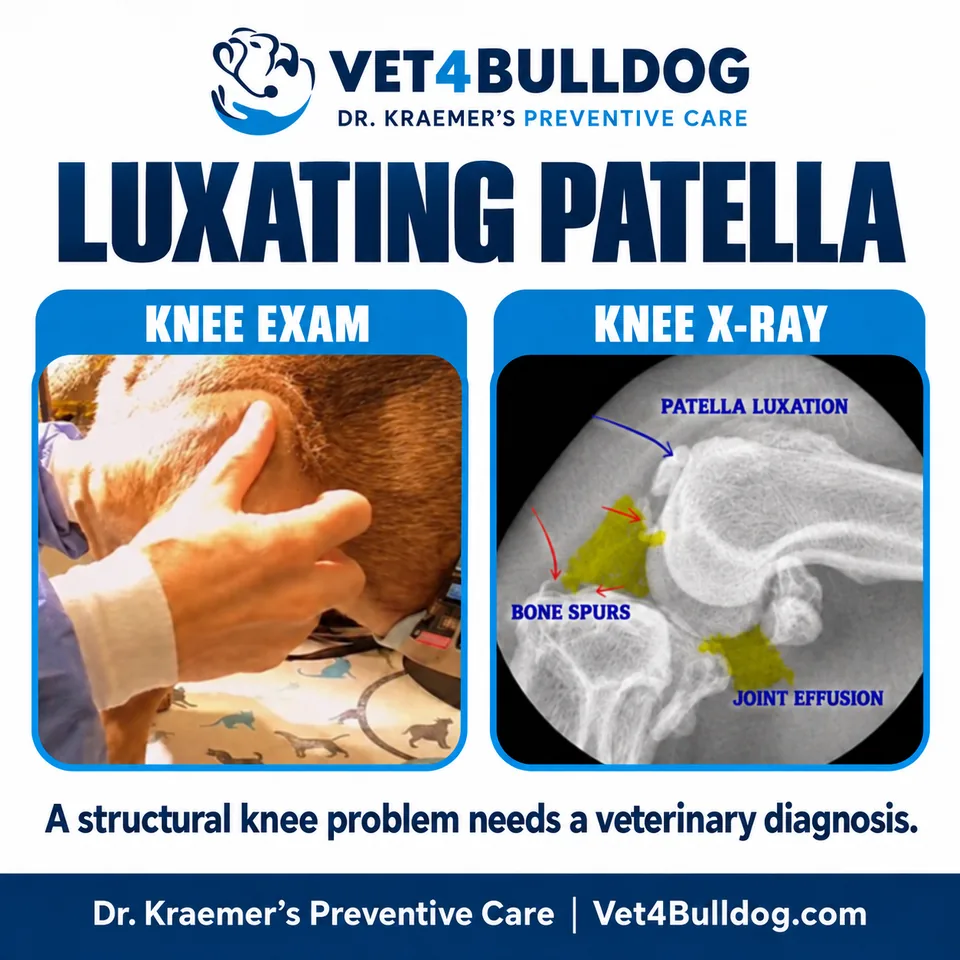
- Knee Joint: due to ACL and MPL injuries
- Elbow Joint: due to elbow dysplasia
- Also Spondylosis: Arthritis of the vertebra
What Causes Arthritis and Arthritic Pain in Bulldogs?
When the cartilage in your bulldog’s joints is damaged or worn down, the protective cushion between the bones is lost. This exposes the bone surfaces, causing them to rub against each other during activities like walking, climbing stairs, or playing. This friction leads to inflammation and a painful condition commonly referred to as “bone-on-bone” which can significantly impact your bulldog’s comfort and mobility. Arthritic pain stems from joint inflammation and damage, which can result from several causes, including:
- Wear and tear (osteoarthritis)
- Autoimmune disorders (rheumatoid arthritis)
- Infections
- Trauma
Recognizing and addressing these causes early may help manage your bulldog’s pain and improve their quality of life.
1. Arthritic Pain Due to Damaged Cartilage
Joints are protected by cartilage, which cushions the ends of the bones and allows for smooth movement. Arthritis leads to the breakdown of this cartilage, causing the bones to rub against each other, causing pain 
2. Arthritic Pain Due To Inflammation:
The body’s response to cartilage degradation and bone rubbing is to increase blood flow to the area, leading to inflammation. This inflammatory process involves the production of various chemicals and enzymes that further break down cartilage and irritate the joint lining, causing swelling, warmth, and pain.
3. Arthritic Pain Due To Bony Change
As arthritis progresses, the constant inflammation and cartilage loss can lead to changes in the bone itself, such as the development of bone spurs (osteophytes). These spurs can exacerbate pain by increasing the friction within the joint or by impinging on surrounding tissues.
4. Bulldog Arthritic Pain Due to Synovitis:
In a healthy joint, synovial fluid provides lubrication, reducing friction. In arthritic joints, the quality and quantity of synovial fluid can decrease, and the inflamed synovial membrane can produce fluid that’s less effective at lubricating, further contributing to pain.
5. Arthritic Pain Due to Injured Ligaments and Tendons
As the joint structure changes and becomes less stable, the ligaments and tendons around the joint can become strained. This strain, along with the compensatory mechanisms animals (or humans) adopt to relieve pain or improve function, can lead to additional discomfort and pain.
6. Arthritic Pain Due to Muscle Atrophy
Chronic pain and inflammation often lead to a decrease in activity, which can result in muscle weakness and atrophy. This loss of muscle support for the joint can lead to further instability and pain.
Arthritis and Arthritic Pain in Bulldogs Main Factors:
Many factors can lead to arthritis in bulldogs, including:
- Obesity: Excess weight places added stress on the joints, increasing the risk of arthritis
- Genetics:
- Aging: As bulldogs age, the wear and tear on their joints can lead to the development of arthritis
- Joint infection
- Immune system disorders: Conditions that affect the immune system, such as rheumatoid arthritis, can also lead to joint inflammation and arthritis in bulldogs.
- Overexertion: High-impact activities or excessive exercise can strain the joints and lead to arthritis.
- Traumatic injury (resulting from car accidents or other physical trauma)
- Cranial cruciate ligament rupture
- Medial patella luxation
- Elbow dysplasia
- Hip dysplasia
What Are the Symptoms of Bulldog Arthritis?
Bulldogs and French Bulldogs suffering from arthritis and arthritic pain will generally display noticeable signs. These signs/symptoms include:
- SWELL & HEAT: Swollen warm joints
- LIMP: Lameness & abnormal gait
- MUSCLE ATROPHY: muscle disuse atrophy.
- JOINT SOUNDS: There is sometimes a noticeable cracking sound when the affected joint(s) are in motion.
- MOVEMENT: inactivity, difficulty getting up/down
- BEHAVIORAL:
- low mood
- aggressive
- trouble sleeping
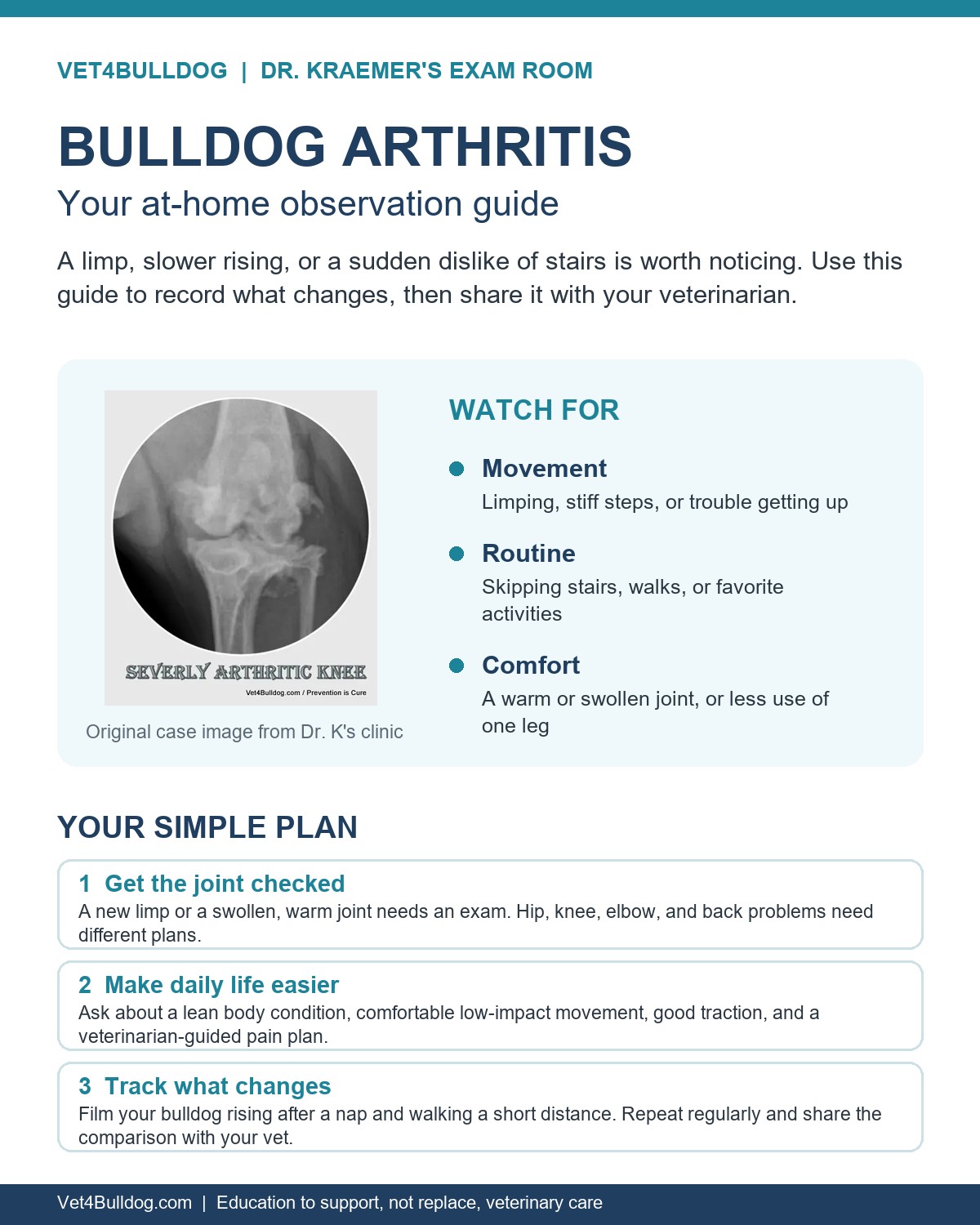
As pain increases, your bulldog’s will and ability to move, and exercise decreases.
Steroids are not wrong, they are just the wrong thing to lean on. Prednisone will take the inflammation down quickly, and that is genuinely useful in a bad flare, but long term it brings infection risk, raised blood sugar, thirst and urination, behavior changes and liver trouble. For chronic arthritis I would rather have him on an NSAID made for dogs, carprofen, meloxicam or deracoxib, with bloodwork to watch his liver and kidneys, than on a steroid for months. The click and the refusal to do stairs tell me more than the limp does. A bulldog who stops using a leg loses muscle on it, and that lost muscle destabilises the joint and makes the next year worse. So the real work is not the drug. It is getting weight off him, keeping him moving on low impact surfaces, veterinarian-directed rehabilitation when appropriate, and reviewing any supplements as part of his individual care plan. If you want more than that, I use options such as laser, PEMF and PRP in selected clinic cases. We should discuss their evidence, costs and precautions before adding them.
How to Support a Bulldog with Arthritis
An arthritis care plan may include the following, tailored to your Bulldog’s diagnosis and comfort:
1. WEIGHT CONTROL:
lean body weight 
2. EXERCISE:
comfortable, controlled walks on even surfaces or veterinarian-directed rehabilitation. Water-based exercise requires professional advice and close supervision, especially for Bulldogs with breathing or swimming difficulties.
3. BULLY THERAPEUTIC SUPPLEMENTS
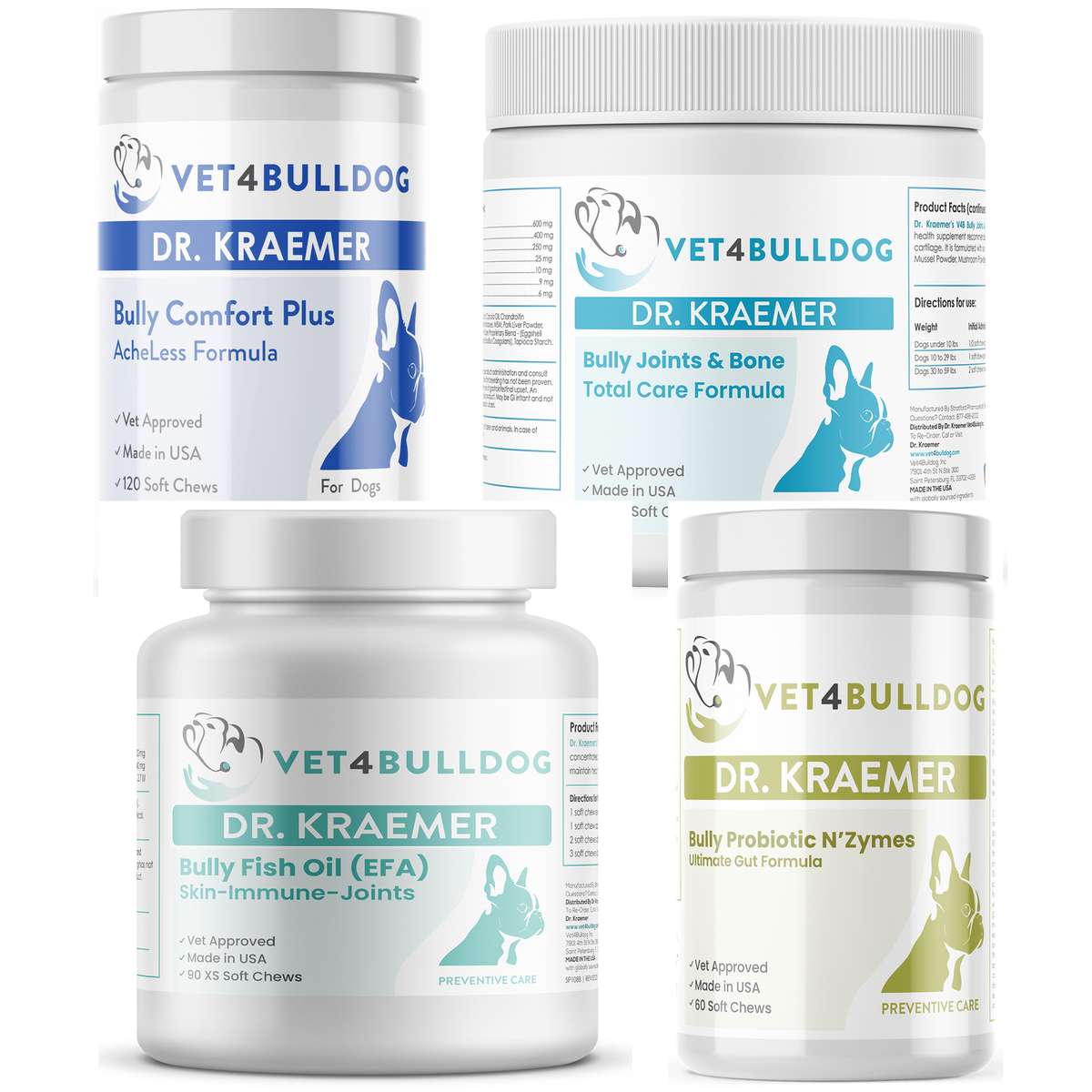
Start with the whole care plan: Keep your Bulldog at a healthy weight, provide a balanced diet and discuss appropriate activity. Ask your veterinarian whether a supplement is useful for your dog, which formula to choose and how to assess a response. A supplement should not be presented as guaranteed arthritis prevention in a puppy.
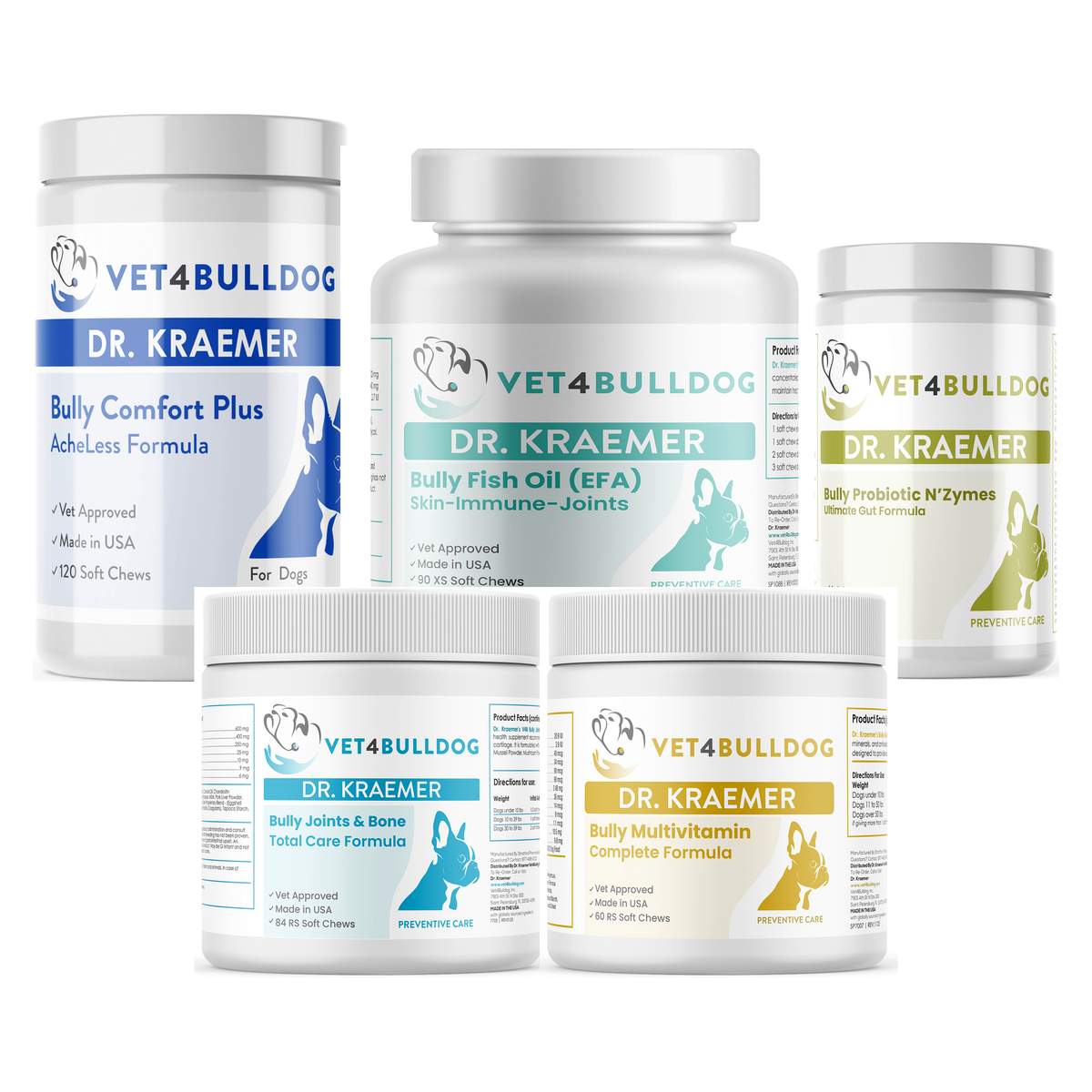
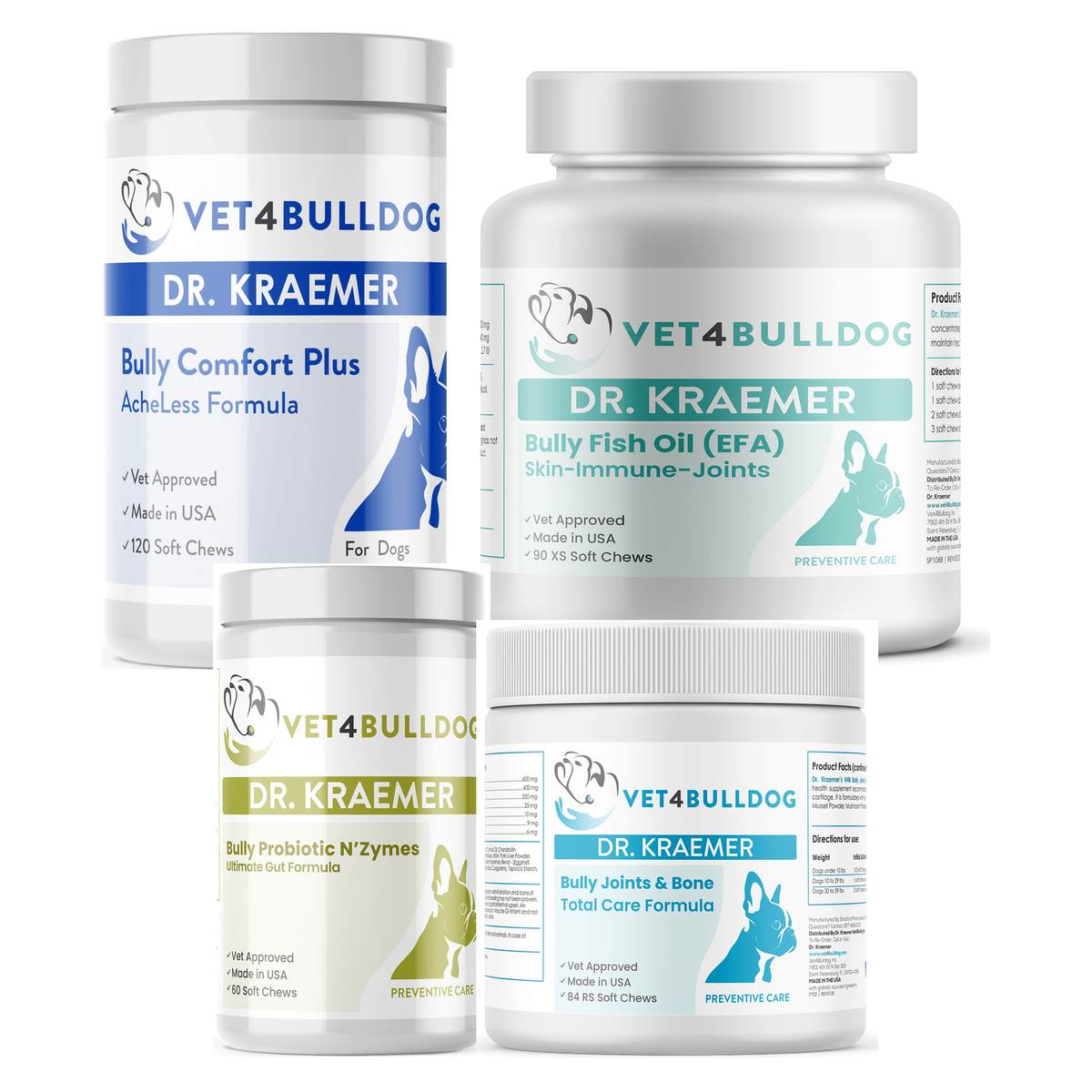
- Dr. Kraemer’s V4B Bully Total Joint
- V4B Comfort Plus Advanced Formula
- V4B Bully EFA Fish Oil Joint-Skin-Immune Soft Chew.
- V4B Bully Arthritis Pain and Ache Basic Bundle
- V4B Bully Hemp Calm & Relax
Therapeutic bully supplements should be reviewed with your veterinarian as part of the care plan
Preventing and treating arthritis early in Bulldogs is essential for preserving joint function and improving their quality of life.
4. STEM CELL THERAPY FOR ARTHRITIS:
Regenerative therapy such as stem cell and PRP therapy may be discussed for selected cases; ask about the evidence, risks and realistic goals for your dog
5. PEPTIDES FOR ARTHRITIS
Peptides is another regenerative longevity topic to discuss critically with your veterinarian; do not assume a peptide product prevents or treats arthritis
Bulldog Arthritis Early Intervention
Early assessment can identify treatable causes of pain and help build a plan for comfort and movement. Medication, weight management, rehabilitation and selected surgical procedures may help, but owners should not expect established cartilage damage to reverse. 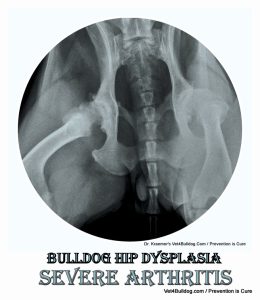
Bulldog and French Bulldog Arthritis & Pain Prescription RX
At times prescription medication might be required to reduce pain and discomfort.
- NSAID: veterinary nonsteroidal anti-inflammatory drugs may be prescribed after an examination and assessment of individual risks. Never combine an NSAID with aspirin, another NSAID or a corticosteroid. Ask your veterinarian how to switch treatments safely.
- PAIN RELIEVERS:
- gabapentin may help with mild pain.
- Tramadol is also often used, though it’s not a true analgesic, it affects the mood, not pain.
Dr. Kraemer’s Arthritis and Pain in Bulldogs TIPS & WARNINGS:
Below are selective arthritis tips & warnings courtesy of Dr. Kraemer
#1. BULLDOG OBESITY TIP:
Treating arthritic pain in Bulldogs and French Bulldogs can be approached in multiple ways, depending on the severity of the case and the age of your bulldog. Addressing obesity is a significant factor in managing arthritis. Putting your bulldog on a special veterinary-recommended nutritional diet to promote weight loss, along with implementing proper and moderate exercise, can be very helpful in alleviating arthritic pain and slowing down the progression of the disease.
#2 NEW AGE MODALITIES FOR BULLDOG ARTHRITIS TIP:
I also offer additional treatment options in selected cases. Their evidence, cost, invasiveness and precautions differ, so discuss the expected benefit and follow-up for your Bulldog. Options discussed in my practice include
- Class 4 Cold Laser Therapy
- Pulse Electromagnetic Field (PEMF)
- Platelet-Rich Plasma Therapy PRP)
- Stem Cell therapy & Cryobanking
- Peptides
- Bully Therapeutic Supplements
These non-invasive procedures are highly beneficial because they are not harmful to your pet and offer a long-term solution to the suffering and pain that can come with arthritis
#1 BULLDOG ARTHRITIS STEROIDS WARNING:
While corticosteroids, like pred, can be effective for reducing inflammation and providing temporary pain relief in bulldogs with advanced arthritis, they do come with a range of potential long-term adverse effects. These effects can include an increased risk of
- infections
- altered blood sugar levels
- increased thirst and urination
- possible behavioral changes
- liver changes
- other
Due to these potential side effects, their use is often limited to short-term management or in cases where other treatments have failed to provide relief. For managing chronic arthritis and providing long-term pain relief to bulldogs and other pets, many veterinarians recommend nonsteroidal anti-inflammatory drugs (NSAIDs) designed specifically for animals. These NSAIDs are generally safer for long-term use and can effectively manage the pain and inflammation associated with arthritis. Examples include
- carprofen
- meloxicam
- deracoxib
 🚨 It’s important to note that all medications can have side effects, so pets on any long-term medication for arthritis should be closely monitored. This typically involves regular checkups to assess the pet’s liver and kidney function and to make any necessary adjustments to their treatment plan.
Insider tip
How do I know it is arthritis and not just age?
Which joints does it hit in Bulldogs?
Why does my bulldog hurt in six different ways?
What is the single most useful thing I can do?
When should supplements start?
Are steroids safe for long term arthritis?
Is there anything beyond medication?
Veterinary Care and Supportive Products
A bulldog who is limping, refusing stairs, losing muscle on one leg, or showing a swollen warm joint needs an examination, because the treatment depends on which joint and which cause. No supplement rebuilds cartilage that is already gone. Discuss the evidence and suitability of each supplement with your veterinarian. The bundle levels below describe different product combinations, not a diagnosis or a medically defined stage of arthritis.
The Arthritis bundles, 59lb and under

- Arthritis Pain and Ache Basic Bundle, compare the included products and current label directions
- Arthritis Pain and Ache Essential Bundle, adds gut support and double strength fish oil
- Arthritis Pain and Ache ULTIMATE Bundle, the full stack for an established arthritic bulldog
The Arthritis bundles, 60lb and over

- Arthritis Pain and Aches Basic Care Bundle
- Arthritis Pain and Aches Essential Bundle
- Arthritis Pain and Aches ULTIMATE Bundle
More Help from Dr. Kraemer
Arthritis in a bulldog almost always has a named cause underneath it. These guides cover the ones I see most:
- Hip dysplasia in Bulldogs and French Bulldogs
- Elbow dysplasia in Bulldogs and French Bulldogs
- ACL tear in Bulldogs and French Bulldogs
- Medial patella luxation (MPL)
- Spondylosis, arthritis of the vertebrae
- Steroids for Bulldogs and French Bulldogs
About the Author
Roy Kraemer, DVM, is a veterinarian with extensive clinical experience caring for Bulldogs and French Bulldogs. His educational work emphasizes prevention, early recognition, weight and mobility management, responsible medication use, and veterinary evaluation when disease is persistent or severe.
Trusted by Vets ~ Recommended By Owners ~ Approved By Bulldogs
References
- Merck Veterinary Manual. Osteoarthritis in Dogs
- American Animal Hospital Association. 2022 AAHA Pain Management Guidelines for Dogs and Cats
- WSAVA. Global Nutrition Guidelines, Body Condition Scoring