

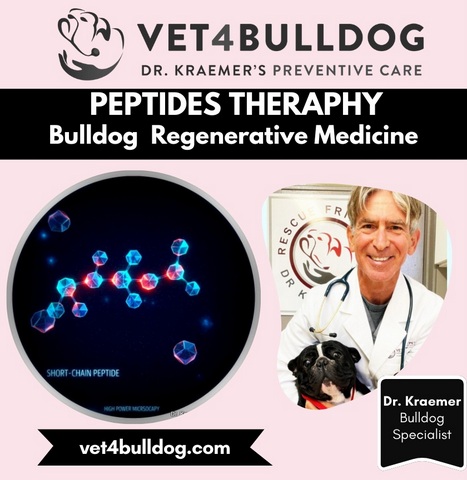
Peptides for Pets, Hype, Hope, and What You Must Know
Peptides are trending everywhere, from human anti-aging clinics to elite dog rehab centers, and like anything trendy, they come with big promises and even bigger confusion. Let’s break it down in simple, bulldog-friendly language.
Peptides Buzz Words:
Buzz words you might have heard are:
- Biohacking: which is fancy language for science, data, and targeted interventions to optimize performance.
- Longevity: the science of extending health span by slowing aging and preventing chronic disease.
- Medicne-3.0: proactive, customized medical model focused on prevention and early detection.
- Regenerative therapy: treatments that stimulate the body’s own repair mechanisms to heal and restore damaged tissues and function.
What Are Peptides?
Think of your pets body as a busy factory.
- Proteins are the big machines doing heavy lifting
- Peptides are the tiny command buttons signaling to those machines when and how to work

If proteins are hardware, Peptides are the software instructions.
Both are made from amino acids, but peptides are short chains (5–50 amino acids), while proteins are long, massive and complex.
Peptides, like proteins, are made from amino acids, but they are much shorter chain and less complex.
Why Are Peptides a Big Deal?
Some of the great benefits of peptides are:
- SPEED: work fast
- CUSTOMIZED: target specific tissues
- REGNERATIVE: quietly nudge healing and repair
- INEXPERNSSIVE: low cost
- @HOME: can be administered at home
- SAFE: high safety record (synthetic copies of organic peptides)
Are Peptides Used in Veterinary Medicine?
Although thousands of natural peptides exist, only a few hundred have been used medically to date.
Most of the research began in rodents, and much of the practical experience comes from human clinical use.
Veterinary medicine is catching up, but many bulldog owners already use peptides on themselves, and naturally ask if their pets can benefit, too.
Unfortunately, veterinary application, trials, and research in dogs are still 5–10 years behind human medicine, but interest in the field is rapidly accelerating.
Are Peptides Approved by The FDA?
Some peptides are FDA-approved drugs.
However, many others are not, despite being widely used and researched.
Peptides fall into 2 regulatory categories:
#1 FDA-Approved Commonly Used Peptides:
- Insulin
- GLP-1 agonists (like Ozempic)
You also might recognize some common peptides approved in pets and bulldogs:
- Insulin (for diabetics)
- Oxytocin (whelping & lactation)
- Calcitonin (for eclampsia/milk fever)
So yes, your bulldog has already benefited from peptide science.
#2 Research Peptides (Not FDA-Approved)
Many peptides despite not being FDA approved are gaining popularity in various categories of veterinary medicnce such as:
- Pet wellness
- Pet senior care
- Functional medicine
- Sports medicine
- Veterinary integrative care
- Rehabilitation
The most known ones are
- BPC-157 (Body Protection Compound): The “Body Repair Peptide”
- B-500 / Thymosin Beta-4: The “Tissue Builder”
- Growth Hormone Secretagogues (CJC-1295 / Ipamorelin, Tesamorelin): “The Master Recovery Signal”
Those Peptides target Longevity, Wellness, Rehabilitation & Regenerative Care
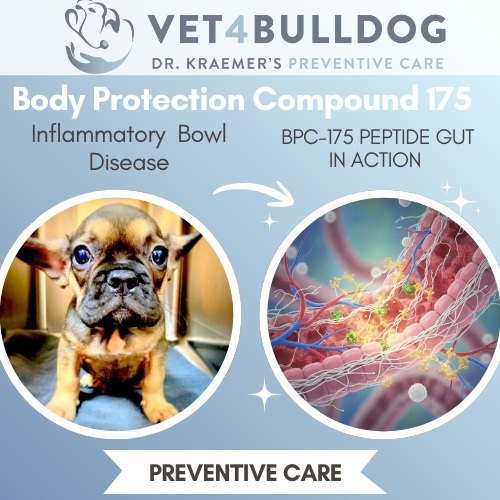
What is BPC-157 and How It Helps Your Pet?
Body Protection Compound 175 can be found naturally in gastric juice and is designed to protect and heal the gastric lining.
The BPC-157 synthetic form is one of the most well-known, used off-label peptides
BPC-157 Can Help You Pet:
- Circulation: It promotes blood vessel formation (angiogenesis)
- Repair: Stimulating collagen and tissue repair
- Healing: Supporting tendon, ligament, muscle, and gut healing
- Inflammatory: Modulating inflammation
- Immune Modulation
What Are The Veterinary Applications of BPC-157?
There are many applications, the most common ones are:
Orthopedic Tendon & ligament injuries:
- ACL Tear
- MPL repair and recovery
- Hip Dysplasia
- Arthritis
GI issues such as:
- Gastric ulcers
- Dysbiosis & leaky gut
- IBD
While evidence in dogs is still emerging, early clinical experience has been encouraging, especially when used under veterinary supervision and sourced from legitimate pharmacies
BPC-157 is one of the most promising therapeutic peptides for
- Gut health
- Orthopedic
- Tissue Repair
- Injury recovery
What is TB-500 and How it Helps Your Pet?
TB-500 is a synthetic fragment of the naturally occurring protein Thymosin Beta-4 (Tβ4), found in almost all animal cells.
It plays a key role in tissue repair, cell migration, and regeneration.
What Are The Veterinary Applications of TP-500 Peptides?
TP-500 is believed to help:
- Cellular: Promotes cell migration and proliferation
- Healing: Regulates actin, a protein required for cell structure and movement
- Circulation: Enhances blood vessel formation, oxygen delivery, and tissue remodeling
- Inflammatory: Modulates inflammatory pathways
- Recovery: Helps Soft-tissue healing & Muscle recovery
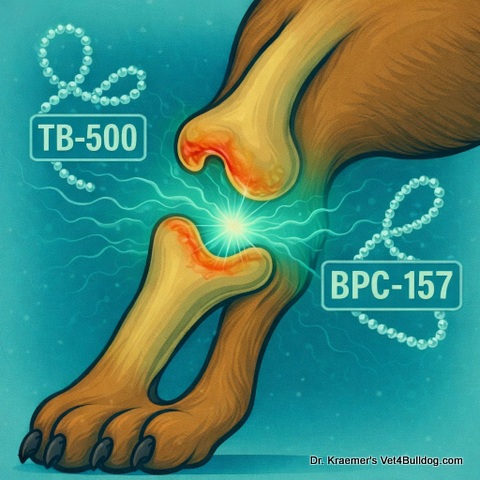
TP-500 is Often cycles with BPC-157 for enhanced healing. BPC-157 is more like a gut-protective, joints repair and inflammation-modulating peptide.
TB-500 is best thought of as a tissue-repair signal and heal muscles, wounds, and soft tissues.
What is Growth Hormone Secretagogues Peptides and How it Helps Your Pet?
Think of them as gentle growth-signal boosters.
Growth Hormone Secretagogues (GHS) are synthetic peptides designed to stimulate the body’s own growth hormone (GH) release
Commonly used Growth Hormone Peptides Are:
- CJC-1295
- Ipamorelin
- Tesamorelin
What Are The Veterinary Applications Of Growth Hormone Peptides?
Uses seen anecdotally in geriatrics pet helping :
- Prevent Muscle loss
- Improve appetite
- Spike coats health
- Speed recovery after surgery
Are There Risks in Treating Pets with Peptides?
Peptides can be amazing tools for healing and recovery, but there are a few important things to keep in mind:
#1. Risk Associated With Limited Research in Pets:
Most studies come from rodents or humans, so we’re still learning how bulldogs respond.
Every dog is different, and results can vary.
#2. Peptides and Existing Tumors Risk:
Peptides don’t cause cancer. However, because they enhance circulation, help tissues grow and repair, they might speed up any existing microscopic tumors.
This is why a veterinary check-up is important before starting therapy.
#3 Peptide Quality Control Risk:
Avoid “research chemical” websites, which may sell
- impure
- contaminated
- incorrectly dosed products
Only use peptides from trusted, FDA-regulated compounding pharmacies (503A/503B).
#4 Risks Associated With Peptide Dosing Safety:
Giving too much can trigger immune reactions, or too little can reduce effectiveness.
Always follow a veterinarian’s guidance for dosing and administration.
Bottom line: Peptides can be very helpful, but the right source, the right dose, and veterinary supervision are essential to keep your bulldog safe and healthy.
How to Use Peptides Safely for Bulldogs?
- Consult: Consult a Knowledgeable Veterinarian
- Expert: Work with an integrative or regenerative medicine veterinarian who understands peptide therapy and dosing for bulldogs.
- Trust: Use Trusted Sources Only
- Quality: Purchase peptides only from FDA-regulated 503A or 503B compounding pharmacies to ensure quality, purity, and correct dosing.
- Screen: Screen for existing health risks before starting peptides, your vet should perform a thorough exam, run lab tests, and, if needed, imaging to rule out cancer or other conditions that could be affected by peptide therapy.
How To Administer Administer Peptides in Pets?
Most therapeutic peptides are administered by injection.
Your veterinarian should demonstrate the proper technique to ensure safety and effectiveness.
Are Oral Peptides Effective?
Some websites offer oral (by-mouth) peptide products because they’re convenient and needle-free. Sounds great, right?
Right now, there is no solid, peer-reviewed research showing that oral peptide products (like those sold online) reliably reach the bloodstream or create the same healing effects seen with injectable peptides
Though some peptides can be compounded for oral administration or given sublingually (under the tongue), there therapeutic impact is typically limited.
Systemic bioavailability with standard oral forms is very low
Oral vs. Injectable Peptides
Most peptides are poorly absorbed when taken orally because digestive enzymes and stomach acid break them down before they can reach the bloodstream.
Injectable peptides remain the standard in peer-reviewed research when people seek systemic effects such as regenerative or healing actions, due to much higher bioavailability.
What Medical Conditions Peptides May Help Treat?
- Skin disease
- Autoimmune conditions
- Tissue repair after injury or surgery
- Joint & orthopedic issues
- Neurologic recovery
- Pain & inflammation (arthritis)
- GI diseases (IBD, ulcers, leaky gut)
🐾 Can’t Access Peptide Therapy Yet?
While awaiting peptide regulatory approval and veterinary guidelines, support your bulldog’s health today with Dr. Kraemer’s targeted therapeutic supplements.
Expertly formulated for to help maintain healthy joints & bones, immunity, digestion, and skin & coat.
Trusted by vets, recommended by owners, and backed by over 30 years of bulldog-focused veterinary experience.
How Peptides Can Be a Game Changer for Bulldogs?
- Eliminate Anesthesia Risks: reduce the need for anesthesia (huge for BOAS patients and seniors)
- @ Home: can be given at home
- Stem Cell & PRP Therapy: pair beautifully with PRP, stem cells supplements, and rehab therapy
- Therapeutic Bully Supplements: supplements, and rehab therapy
- High Safety: They are relatively safe when used correctly
- Low-Cost: Inexpensive compared to surgery

How Peptides Can Reduce Risks In Bulldogs?
For bulldogs anesthesia and surgery can be risk
Peptides may become a valuable alternative or companion treatment to injures such as:
- ACL/Cruciate injuries
- Patella (MPL) issues
- Soft tissue tears
- Arthritic degeneration

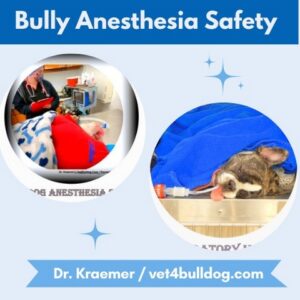
Can Peptides Reduce Anesthetic Risk?
Peptides can support healing, pain control, and tissue repair without needing full anesthesia or invasive procedures.
This is especially valuable for:
- Aging bulldogs
- BOAS patients (breathing issues)
- Those who have already had multiple surgeries
- Peptides are more affordable than major surgery, many bulldog owners and rescue groups simply cannot afford surgery (TPLO surgeries, hip replacements, endoscopies and MPL repairs)
Peptides Offer Less risk, less stress, and often a faster return to comfort.
Can Peptides Reduce Veterinary Care Cost?
Peptides are a budget-friendly alternative
Peptides are a meaningful improvement in comfort, mobility, and healing at minimal cost
Peptides do not require operating room costs or hospitalization.
Are Peptides Easy to administer?
Most peptides are injected under the skin using tiny needles, or given orally when properly formulated
This means fewer hospital visits and more comfort for anxious bulldogs.
Do Peptides Work With Other Regenerative Therapies?
Peptides aren’t a standalone “magic bullet” —they shine when used alongside:
- PRP
- Stem cell therapy
- Supplements
- Rehab and physical therapy
Together, these can boost tissue healing and reduce pain, even in older or surgery-averse bulldogs.
Can Peptides Reduced Recovery Time?
Many peptide users report:
- better mobility
- faster healing
- reduced swelling
- improved tissue quality
Benefits Of Peptides Summary
Bulldogs and French bulldogs are a high-risk anesthetic breeds with big orthopedic burdens
Peptides can offer a low-risk, more affordable, and easily administered option to support healing and quality of life.
Why can’t I buy those peptides for my Pets?
Many well-established peptides, such as BPC-157, which have a long track record of safety and effectiveness, were recently restricted by the FDA.
The official reason given is “safety,” even though these peptides have been used safely for years and are produced by reputable compounding pharmacies.
The reality is that that what the FDA means by “safety” is a matter of regulatory compliance (large scale clinical trials, manufacturing standards, etc.) not toxicity.
There is also the matter of political influenced by large pharmaceutical companies who are seeking to control production, patent these compounds, and sell them at much higher prices.
My hope is that public health and patient access remain the priority, rather than lobbying, profits, and politics.
FREE MONTHLY NEWSLETTER
🐾 Want the Latest Peptide Updates?
Sign up for Dr. Kraemer’s FREE Monthly Bully Newsletter — the latest news on peptide availability, bulldog health tips, preventive care, and exclusive product updates.
No spam. Unsubscribe anytime. Bulldog health only.