


Quick answer
Sinusitis is inflammation of the sinus lining and rhinitis is inflammation of the nasal cavity, and in a bulldog both are almost always downstream of something else. Treating the discharge without finding that something is why so many of these cases come back.
Read the pattern. One nostril suggests a foreign body such as a foxtail, an infected tooth root, a polyp or a tumor. Both nostrils suggest a virus or an allergy. Clear discharge leans allergic, purulent leans infected, and bloody raises tumor, dental disease or a clotting problem, including rat poison.
Age helps too. Puppies are more prone to viral infection, while adults and seniors are more prone to infected teeth and tumors. And in this breed specifically, check the gumline: impacted hair can destroy gum and bone and open an oronasal fistula, a hole between the mouth and the nose.
Introduction to Allergic Sinusitis in Bulldogs
Sinusitis is an inflammation of the sinus cell lining (mucosa)
Rhinitis is an inflammation of the nasal cavity.
Bulldog Allergic Sinusitis and Nasal Problems 5 X MUST KNOW
- There are many underlying causes for bulldog nasal disease
- Some are related; others typically appear in only one nostril, discharge can be clear, purulent, or bloody
- At times it is due to subgingival hair impaction that causes oronasal fistula
- Management includes wiping the hair off the teeth, vaccines, and allergen control
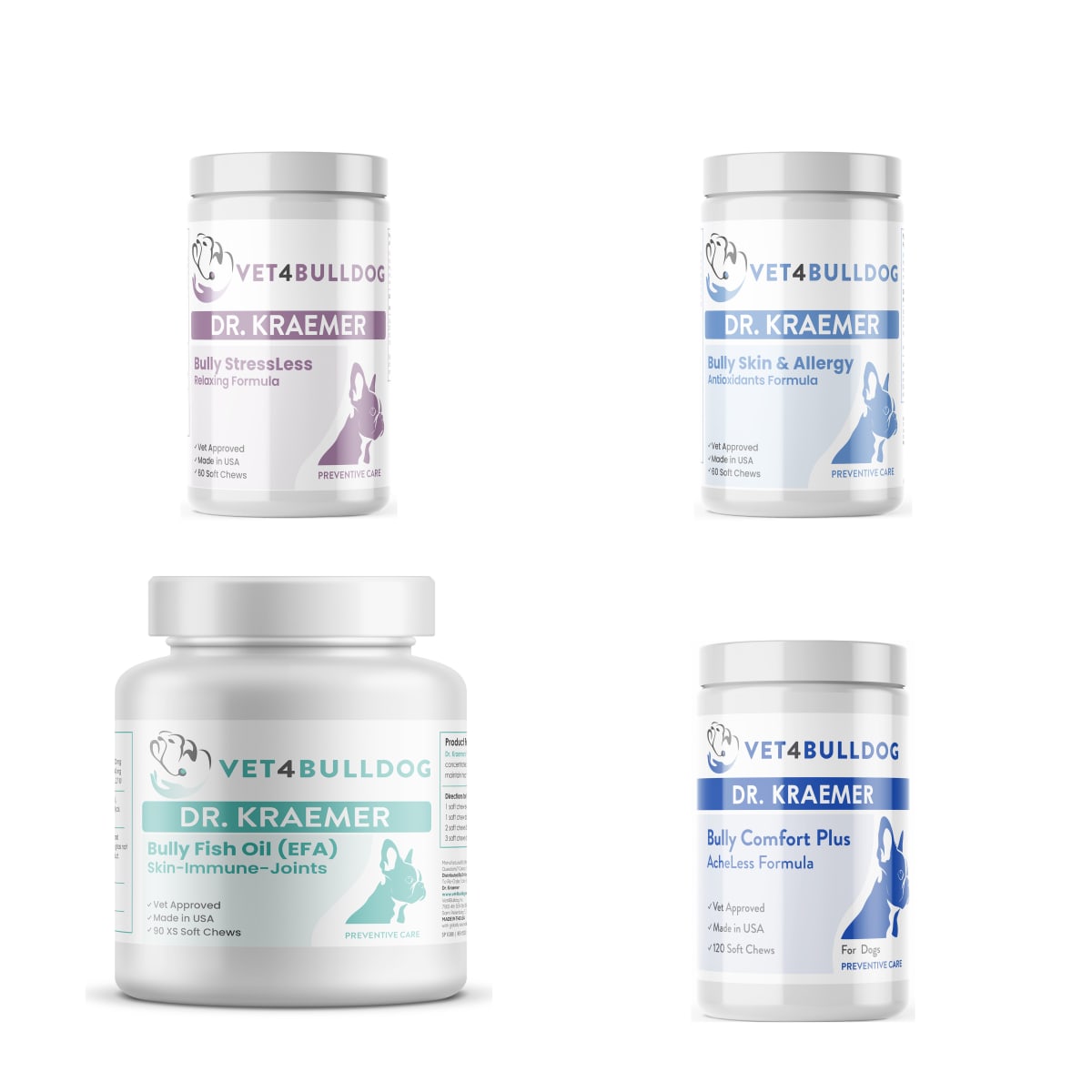
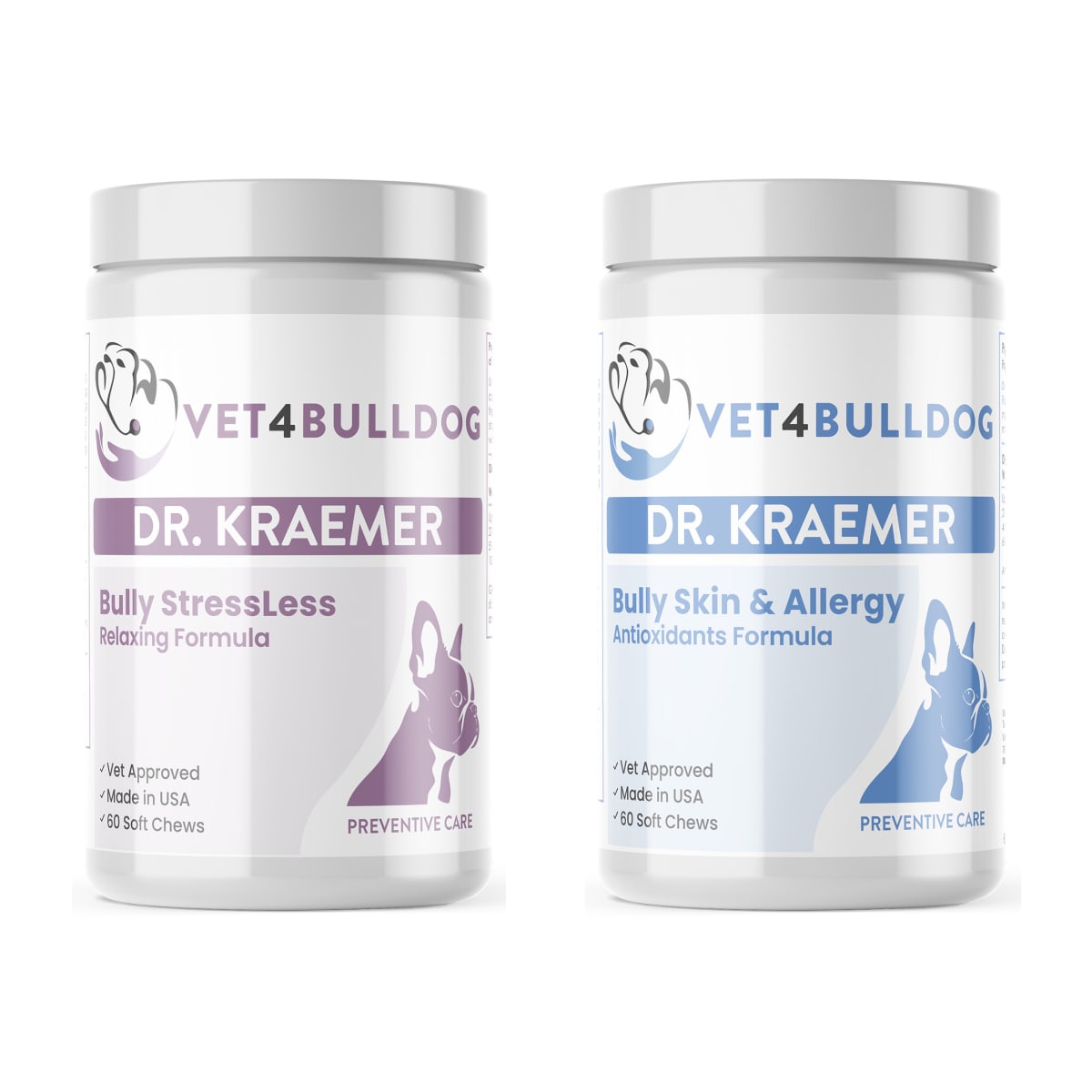
- Prevention & Care includes Dr. Kraemer’s Affordable Respiratory & Breathing Bundles
Members of this bulldog community prefer prevention over RX
What Causes Sinusitis Nasal Discharge and Allergic Rhinitis in Bulldogs?
- Viral
- Bacteria (often secondary)
- Allergy: smoke, mold, dust
- Mycotic (fungal): there are a few types most are regional
- Infected tooth (root): dental disease, periodontitis
- Subgingival Hair: hair impaction
- Foreign Body: foxtail, plant material
- Oronasal Fistula: hair impaction
- Nasopharyngeal polyps
- Tumors
TIP: bulldog puppies are more prone to viral infection while adults and seniors are to infected teeth and tumors
You have already told me the answer in your last sentence, and I would bet on it. Allergy is a both nostrils problem. One nostril, four months, and a relapse every time the antibiotic stops is a structural problem, not an allergic one. The antibiotic is working on the secondary infection sitting on top of whatever is actually there, which is why she improves every time and why it comes straight back. In a bulldog Daisy’s age my list is short: an infected tooth root on the left side, impacted subgingival hair that has eaten into the nasal cavity and opened an oronasal fistula, a foxtail, or a polyp. Three of those four are found in the mouth, not the nose, and they are found under anesthesia with dental radiographs, not on a physical exam with an awake dog. That is the request to make: a sedated oral exam with dental radiographs of the left side, and rhinoscopy if the mouth is clean. If a tooth is the cause, extracting it cures her permanently and no further antibiotic is needed. I would also stop the fourth course of antibiotics until you know, because each one makes the picture harder to read. And whatever the answer turns out to be, start wiping the hair off her gumline daily. It is the one cause on this list you can prevent for the price of a wipe.
What Are The Symptoms of Sinusitis and Allergic Rhinitis in Bulldogs?
#1 Sneezing:
- ONE NOSTRIL: Foreign bodies, infected roots, tumors, and polyps might be from one naris
- BOTH NOSTRILS: Viral, allergy, from both nares
#2 Nasal discharge:
- Clear (allergy)
- Purulent (infected)
- Bloody (tumor, clotting problems, dental disease)
#3 Pawing & Rubbing
- Pain: foreign body, fungus, abscess
- Itching: allergy
#4 Oral (mouth) :
- Blood
- Bad smell
- Oral discharge
- Pain: not eating
- Swollen, inflamed gums
#5 Deformity:
- Facial bumps
- Facial swelling
- Open wound and discharge (draining tracts)
Allergic Sinusitis and Breathing Problems in Bulldogs DIAGNOSIS
#1 Oral Exam
- Impacted hair on teeth
- Gingivitis
- Bad smell
- Loose teeth
- Abscess
#2 History
- Not eating
- Rat poison
- Foxtail in yard
- Foxtail found in toe or ears
#3 General Blood Test
- CBC
- Coagulation Profile (clotting factors)
#4 Images:
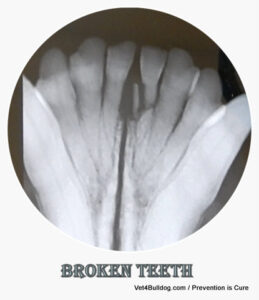
- Radiographs
- Dental radiography
- MRI
- CT
- Rhinoscopy
#5 Others:
- Cytology
- Biopsy
- Fungal Culture
How To Prevent Sinusitis and Nasal Discharge in Bulldogs?
#1 BULLDOG DENTAL HYGIENE
- Remove Hair
- Dental prophy: routine scale and polish
- Dental Radiographs
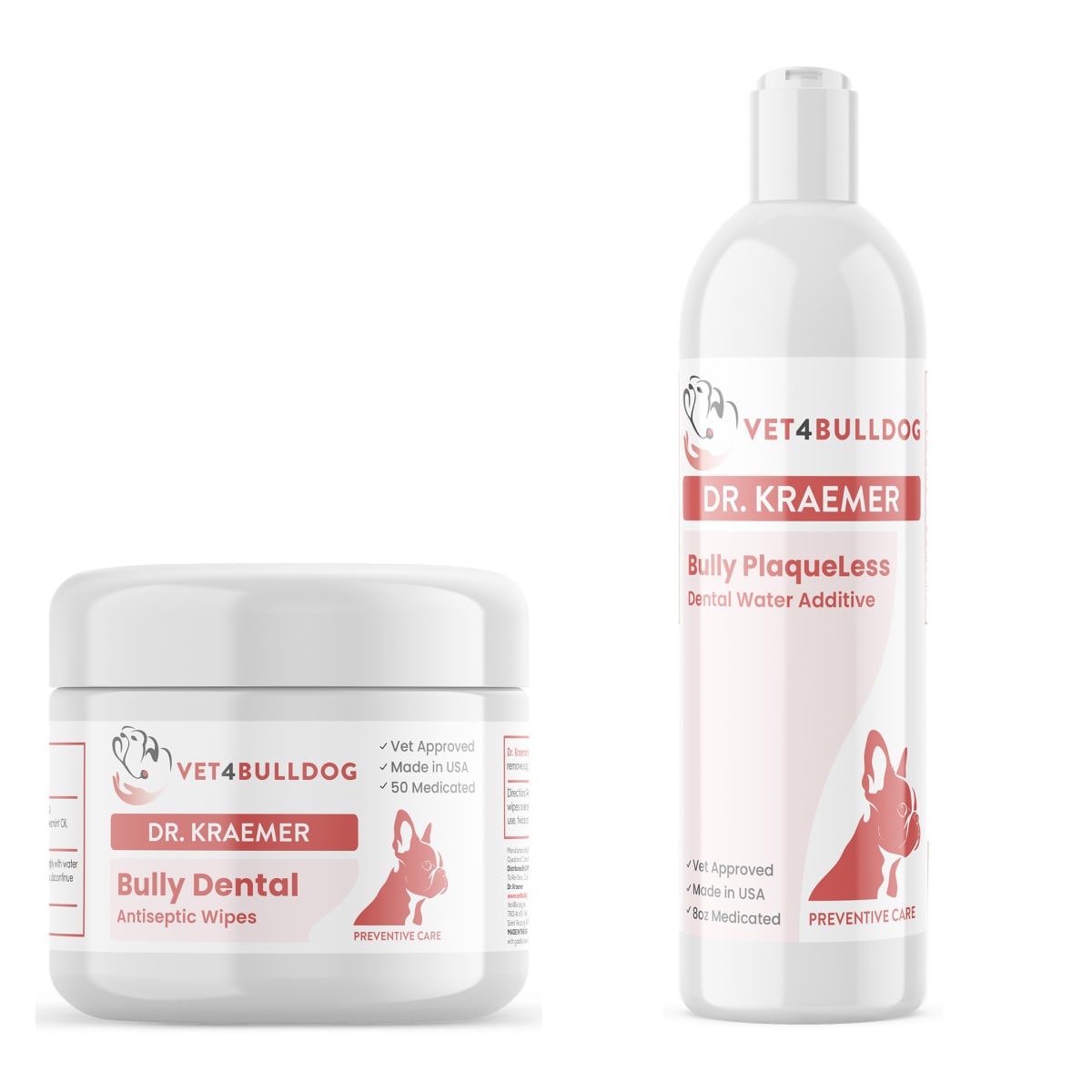
- Dr. Kraemer’s V4B Dental Hygiene Bully Bundle
#2 BULLDOG ALLERGENS and IMMUNITY:
- Remove environmental allergens: pollen, mold, cat litter, smoke
- HEPA Filter
- Dr. Kraemer’s V4B Bully Immune Booster Bundles
#3 BULLDOG VACCINATION
- Bordetella
- Parainfluenza
#4 OTHER BULLDOG SINUSITIS PREVENTIONS
- Remove foxtails from the yard
- Control allergies
- Remove rat poison
How To Treat Sinusitis and Rhinitis in Bulldogs and French Bulldog?
- Tooth Extraction
- Remove Foxtail
- Humidifiers & HEPA filter
- Antibiotics
- Antifungal
- Surgical removal of polyp or tumor

Tips For Bulldog Sinusitis and Rhinitis in Bulldogs:
Below are selected tips courtesy of Dr. Kraemer
#1 Bulldog Sinusitis Underlying Cause Tip:
Treating the symptoms is not a long-term fix, it is critical to find and treat (or remove) the underlying cause.
#2 Bulldog Sinusitis Nasal Discharge and bleeding Tip:
Nasal bleeding could be caused by coagulation clotting problems due to rat poison, hypertension, or an invasive tumor.
#3 Bulldog Subgingival Hair Tip:
Subgingival hair is a bulldog-specific problem that’s easy to prevent.
If ignored, it can cause infection, destroy gum and bone tissue, and lead to an oronasal fistula.
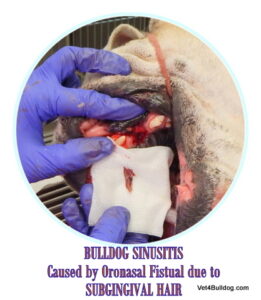
Use Dr. Kraemer’s Dental Antiseptic Wipes daily (or as needed ) to remove the hair and kill bad bacteria
Insider tip
Subgingival hair is the one I want you to remember, because it is a bulldog problem that most vets outside the breed have never looked for. Bulldogs groom and chew, hair works its way under the gumline, and it sits there. It does not come out on its own. It causes infection, destroys gum and bone, and in the worst cases opens an oronasal fistula so that food and fluid pass from the mouth into the nose.
It is also the cheapest thing on this page to prevent. A daily antiseptic wipe along the gumline removes the hair before it impacts and kills the bacteria feeding on it.
One more, on the bloody nose. Owners assume trauma. Before you do, think about rat poison, hypertension and an invasive tumor, because nasal bleeding from a coagulation problem is an emergency and the dog will not look like one at first.
One nostril or both, does it matter?
What does the color of the discharge tell me?
What causes it?
How is it diagnosed?
What is subgingival hair and why does it matter so much?
How is it treated?
What can I do to prevent it?
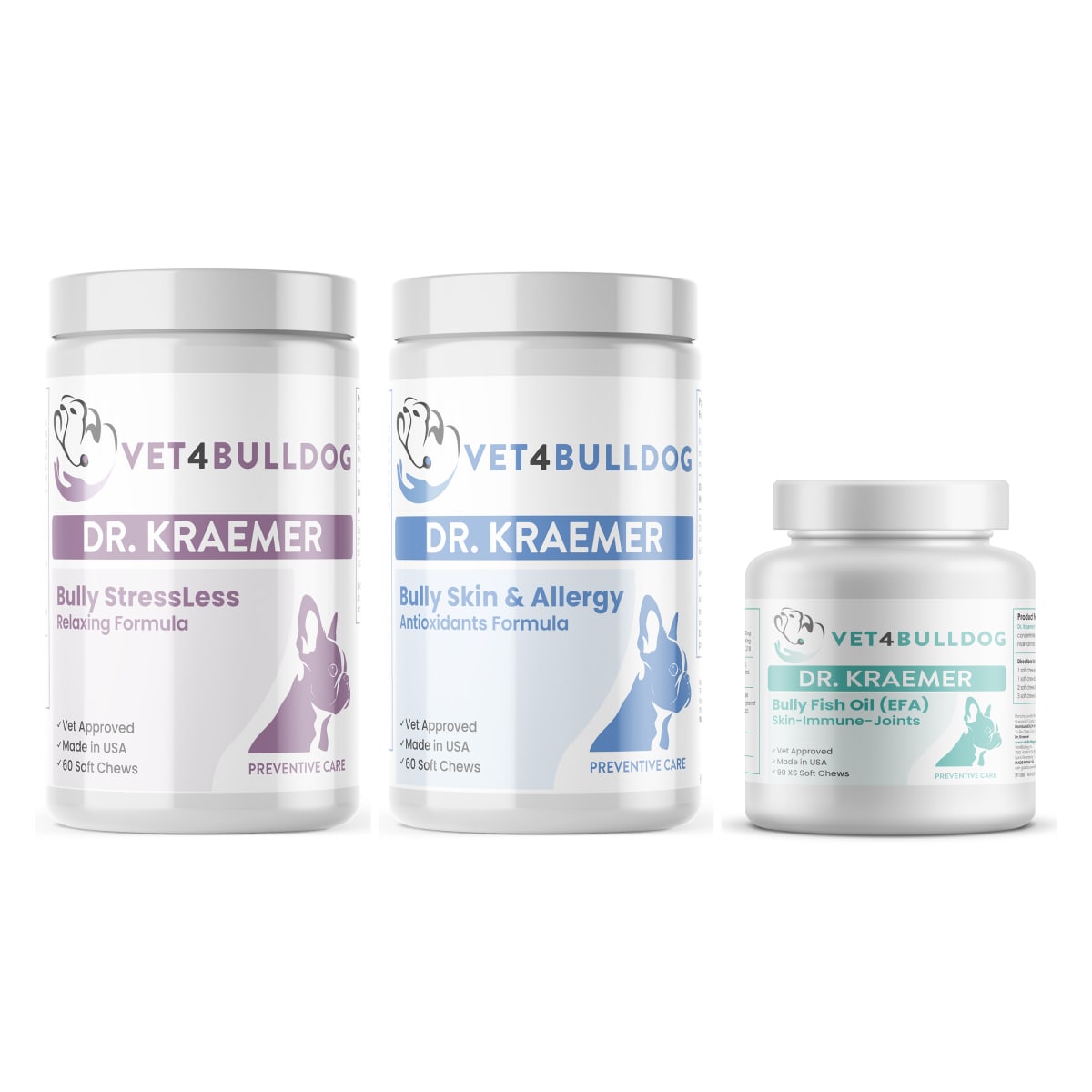
Veterinary Care and Supportive Products
A nose that has run for more than a couple of weeks, discharge from one side only, or any blood at all, all earn a veterinary examination rather than another course of antibiotics. Ask specifically for a sedated oral exam with dental radiographs before anyone settles on allergies, because in this breed the nose is often the last stop for a problem that started in the mouth. No supplement removes a foxtail or an infected root. What supplements do is support the immune response and damp down the inflammation on the allergic side of the problem.
The Sinusitis & Rhinitis bundles
- Sinusitis & Allergic Rhinitis Basic Care Bundle
- Sinusitis & Allergic Rhinitis Essential Bundle
- Sinusitis & Allergic Rhinitis ULTIMATE Bundle
For the dental side, which is where many of these start
- V4B Bully Dental Health Essential Bundle
- V4B Bully Antiseptic Dental Wipes, for the daily gumline wipe
More Help from Dr. Kraemer
The nose rarely acts alone. These cover what sits behind it:
- Subgingival hair impaction in Bulldogs
- Stenotic nares, the pinched nose
- BOAS, the whole picture
- Poisons and toxins in Bulldogs
About the Author
Roy Kraemer, DVM, is a veterinarian with extensive clinical experience caring for Bulldogs and French Bulldogs. His educational work emphasizes finding the underlying cause before treating the symptom, breed-specific problems that are easy to miss, and prevention over repeat prescriptions.
Trusted by Vets ~ Recommended by Owners ~ Approved by Bulldogs
Shop Sinusitis & Rhinitis Support →
References
- Merck Veterinary Manual. Rhinitis and Sinusitis in Dogs
- American Veterinary Dental College. Periodontal Disease
- WSAVA. Dental Guidelines