


Struggling to breathe, blue or gray gums, or collapse? Seek emergency veterinary care now. Keep your Bulldog calm and out of heat; a supplement or routine appointment is not an adequate response to breathing distress.
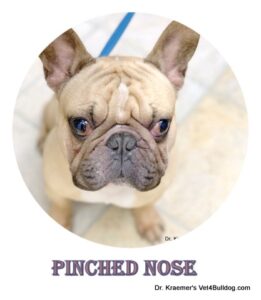
Introduction to Pinched Nose In Bulldogs and French Bulldogs
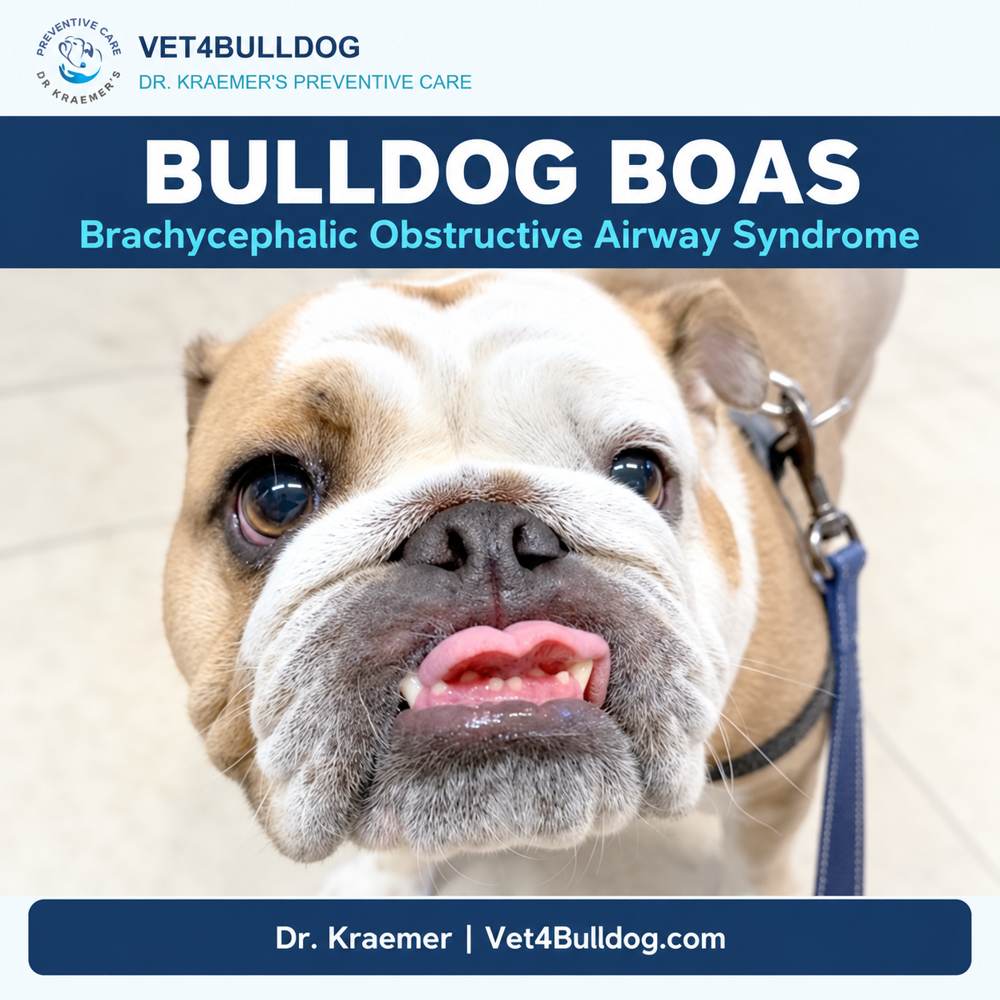
Stenotic nares in Bulldogs and French Bulldogs are only one manifestation of a bulldog airway syndrome that falls under the “flat face” (brachycephalic obstructive airway syndrome), or in short, BOAS.
Other common signs of BOAS include
- Elongated Soft Palate
- Everted Laryngeal Saccules
- hypoplastic trachea
- Other secondary airflow obstructive conditions,
- swollen, prolapsed tonsils
- laryngeal cartilage atrophy (i.e. laryngeal collapse).
PINCHED STENOTIC NOSE MUST KNOW:
Many owners are unaware of this condition’s impact on their bulldog’s health and quality of life. Unfortunately, even some veterinarians may underplay its significance, leading to hesitation and skepticism about the benefits of repair.
However, after reading this article, I believe you’ll feel assured and motivated to take the necessary steps to address it.
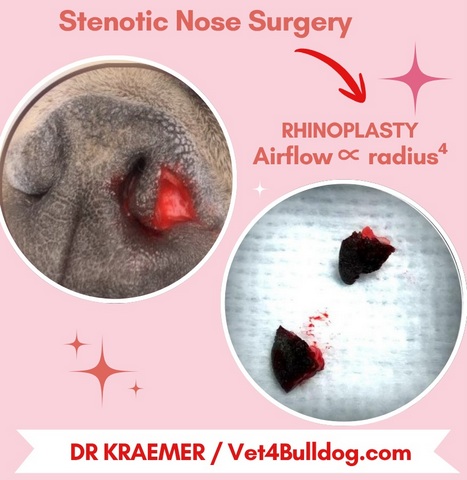
FRENCH BULLDOG PINCHED NOSE POISEUILLE LAW:
Poiseuille law describes flow in an idealized tube. It is an analogy here, not a formula for predicting an individual Bulldog’s surgical result.
This drastic airflow improvement is critical, especially for smaller patients with smaller airways like French Bulldogs.
Increasing a bulldog nares size will raise airflow by the power of four
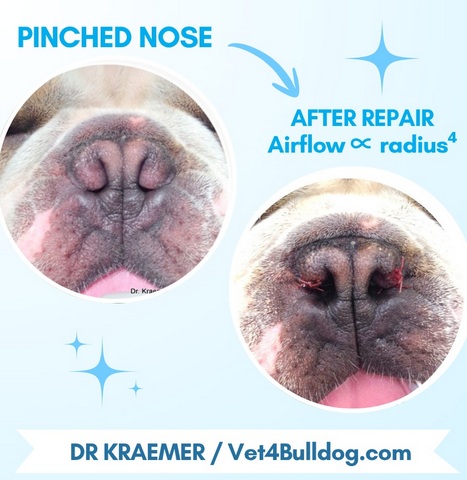
Bulldog Stenotic Nares: Five Things to Know
- Stenotic nares are very common in the bulldog breed, particularly French Bulldogs.
- It is a severe, debilitating obstructive airway condition that usually requires surgery.
- They usually present with loud breathing sounds and, at times, sleep apnea.
- Management includes weight control, a stress-free environment, a cool temperature, and supplements
- Prevention & Care includes Dr. Kraemer’s Affordable Stenotic Nares Bundles
Members of this bulldog community prefer prevention over RX
What Causes French Bulldog Stenotic Nares?
The cause of a bulldog’s pinched nose disorder is the compressed structure of their face and nose, which results in malformation, cartilage atrophy, and inward collapse.
This narrowing of the nostrils significantly restricts airflow into and through the bulldog’s nasal passages, making breathing more difficult.
“Dr. Kraemer, our Frenchie Pearl is eight months old and her nostrils look like two thin slits. Our vet said it is cosmetic and not to bother unless she struggles. She snorts constantly and snores loudly. Should we just leave it?”
I hear that advice often and I disagree with it, so let me give you the reason rather than just the opinion. Nostril widening may help, but Pearl needs an assessment of her whole airway to estimate the likely benefit and surgical risks. The second reason not to wait is that this does not stand still. Narrow nostrils mean more effort on every breath, and that effort is what drags the soft tissue behind it inward. Left long enough you get everted laryngeal saccules, then laryngeal swelling, then cartilage atrophy and collapse, and laryngeal collapse cannot be undone. There is a list of knock on problems too: gastrointestinal inflammation and reflux, heat intolerance, fainting, aspiration pneumonia, and strain on the heart. At eight months Pearl is at the age I would act. She is mature enough for the surgery, and if she also has an elongated soft palate, which is common, both can be corrected in the same anesthetic rather than putting her through two. Meanwhile keep her lean, keep her cool, keep the excitement down, and use calming support so she is not adding anxiety on top of a narrow airway.
What Are the Symptoms of Pinched Nostril in Bulldogs?
Bulldog puppies with stenotic nares will typically exhibit:
- SNORTING & GASPING
- STERTOR: noisy breathing due to obstructive nasal airflow
- SNORING
Most will snort when excited and snore when relaxed or asleep.
Severely affected bulldogs will exhibit:
- Pronounced airway noise
- Tire easily with exercise
- Retch, regurgitate or vomit
- Lightheaded & faint
- APNEA: Many bulldogs and French bulldogs with stenotic nares exhibit apnea and stertor (snorting) while asleep.
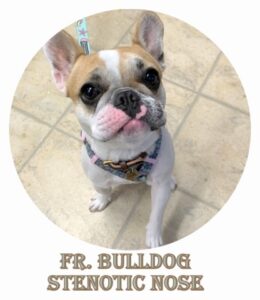
Pinched nose is COMMON in English bulldog and VERY COMMON in French bulldogs.
What are The Health Risks of Stenotic Nares in Bulldogs?
The health risk will progress with time, therefore timely repair is critical.
- Increased respiratory effort
- Increased airway resistance
- Gastrointestinal inflammation
- Heat stroke:
- Airway crisis: obstructive airway crisis
- Heart failure: hypoxia, pulmonary hypertension, and heart failure
- Pneumonia: gastric content inhalation due to retching, regurgitating, reflux, and vomiting.
- Everted Laryngeal Saccules
- Laryngeal Edema
- Laryngeal Collapse: laryngeal cartilage atrophy and irreversible collapse
- Pulmonary Edema: due to critical reduction of intrathoracic pressure.
- DEATH: Increases the chance of sudden death.
How Stenotic Nares in Bulldogs and French Bulldogs is Diagnosed?
Diagnosis of stenotic nares is usually made during the physical exam via a visual inspection.
How to Treat French Bulldog Stenotic Nares?
For Most moderate to severe stenotic nares surgical correction is recommended to help widen the pinched nostrils.
For the milder cases, pre surgery or those who cant afford the procedure or high anesthetic risk patients the following should be implemented
- WEIGHT CONTROL: Weight control is instrumental in proper bulldog care and more so for those suffering from BOAS problems.
- CONTROLLED ACTIVITY: Avoid strenuous exercise until the condition is repaired.
- CLIMATE CONTROL: Avoid hot or humid conditions.
- STRESS & ANXIETY: Reduce anxiety and a stress-free environment.
Supportive Products to Discuss With Your Veterinarian
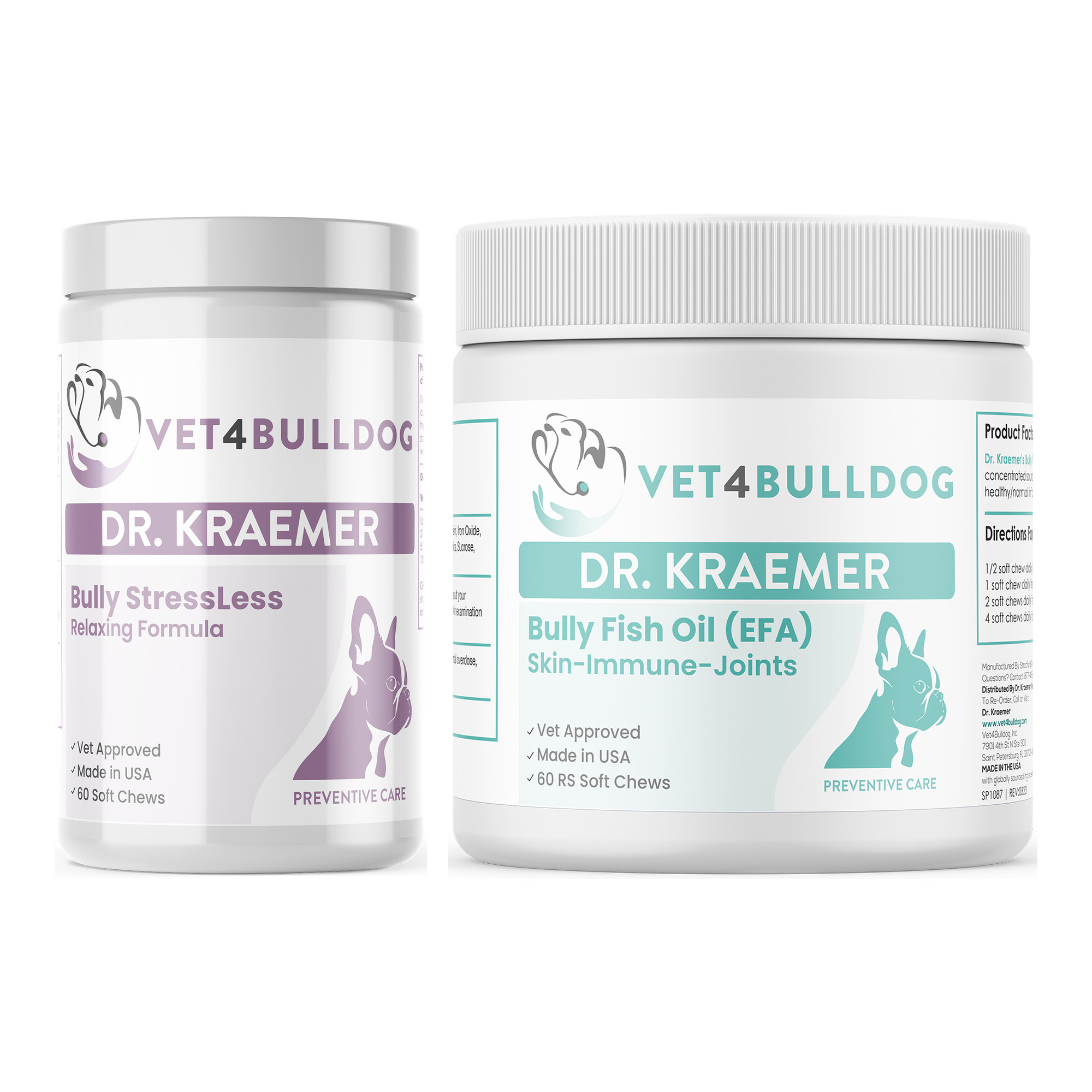
While waiting for surgical repair or mild non-surgical might benefit from nonprescription bully supplements such as:
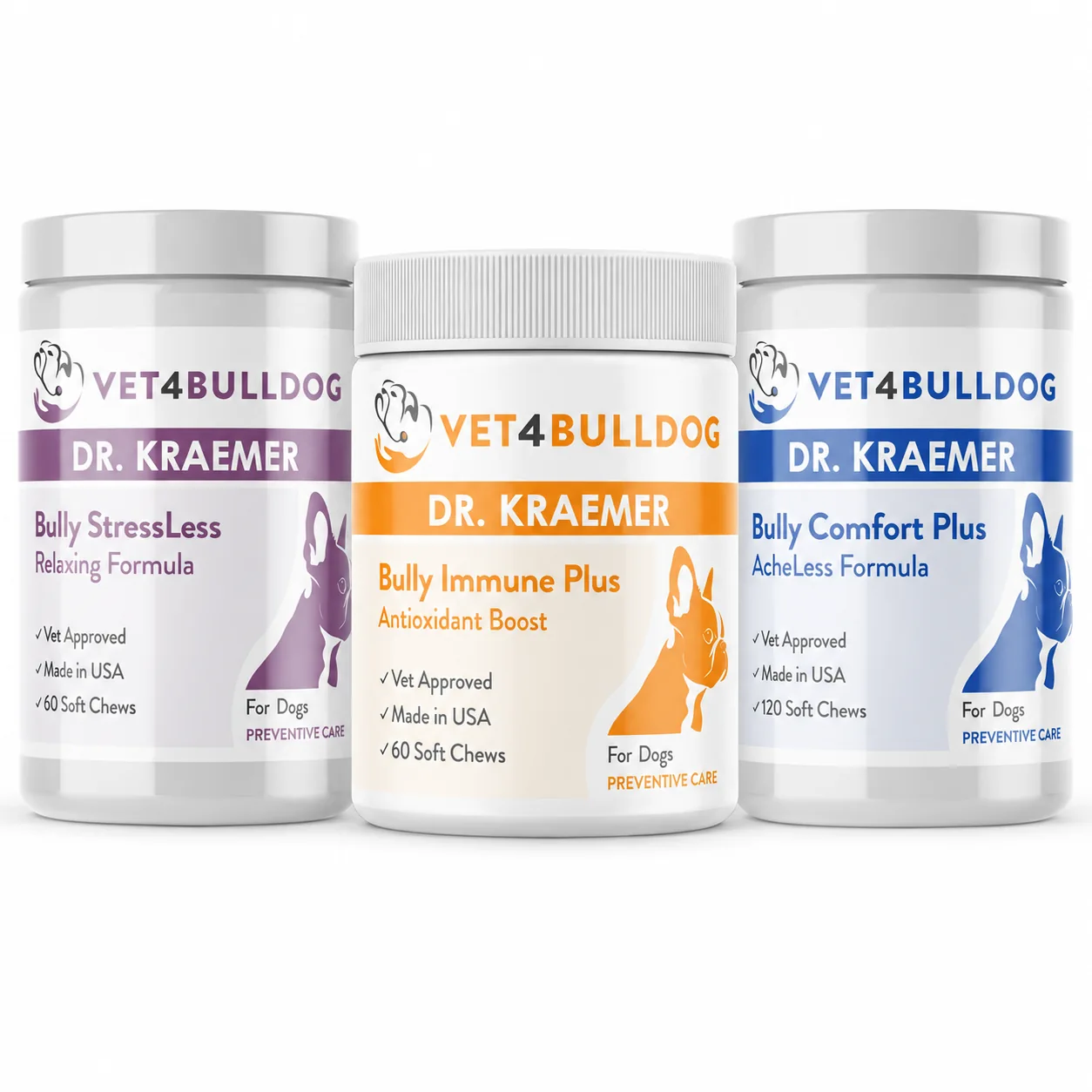
1. Bulldog STRESS & CALM
2. Bulldog IMMUNITY
3. Bulldog Gut Health for REFLUX & VOMIT
Who To Treat Bulldog and French Bulldog Pinched Nose?
- ANTI-INFLAMMATORY RX: such as cortisone for short-term relief of airway inflammation, swelling, edema, and respiratory distress.
- TRANQUILIZER RX: tranquilizers to help calm your bulldog.
- COOLING: BAS cases, like those bulldogs suffering from stenotic nares, often overheat. Keep them cool with a fan and/or AC.
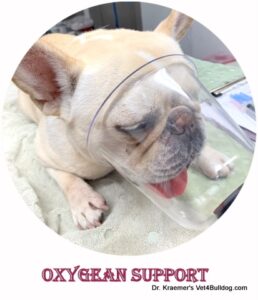
- OXYGEN: At times, BAS patients become hypoxic and cyanotic, a condition that requires oxygen therapy (cage flow masks).
🚨It’s important to note, that medical management of this condition does not correct the underlying anatomical abnormalities, but merely lessens the symptoms.

BULLDOG PINCHED STNOTIC NOSE SURGERY:
To improve airflow through the nostrils, bulldog stenotic nares a surgical correction is usually recommended.
Bulldog stenotic nares are a major contributor to airway resistance. Thus, correcting your bully-pinched nose will greatly reduce airway pressure.
🚨SURGERY is required for most of the BAS anatomic abnormalities that interfere with the patient’s breathing
What is the Post-Up Care For Stenotic Nose?
Some bulldog owners worry about unflattering cosmetic changes after surgery. While there may be some temporary changes, like a crusty or inflamed nose for a few days post-op, this is short-term and will typically heal within a few weeks. Once the healing period is over, the only noticeable difference will be your bulldog’s improved breathing.
Stenotic Nares in Bulldogs and French Bulldogs Rule of Thumb:
There is an abundance of research and strong clinical evidence that suggests stenotic nares are likely to lead to a long list of bully medical problems associated with the “Brachycephalic Syndrome”.
Thus, left untreated for a long period, bulldog stenotic nares can lead to:
- Serious health problems
- Diminished quality of life
- Shorter life expectancy
Stenotic Nares in English Bulldogs Tips & Warnings:
Below are essential pinched nose tips and warnings courtesy of Dr. Kraemer
#1 PINCHED NOSE TIMING TIP:
Timely correction may improve breathing and reduce ongoing airway strain. It does not guarantee prevention of every secondary BOAS problem; follow-up assessment remains important.
#2 STENOTIC NARES BULLDOG VET TIP:
Seek a bulldog veterinarian familiar with
- BOAS problems
- with Bulldog anesthesia
- stenotic nares, and all other BOAS conditions requiring surgical repair.
#3 ELECTIVE SURGERY FOR BULLDOG PINCHED NOSE TIP:
To avoid tragic post-op complications of elective procedures such as spaying & neutering, have any BOAS problem repaired at the same time or before those electives.
#4 FRENCH BULLDOG STENOTIC NARES COOLING TIP:
Keep your stenotic nares bully cool and well-ventilated. In addition to AC, moving cool air over your dog with a fan or open window (car) is inexpensive and effective.
#5 PINCHED NOSE OXYGEN TIP:
At times, supplementation with oxygen is necessary.
#6 ELONGATED SOFT PALATE TIP:
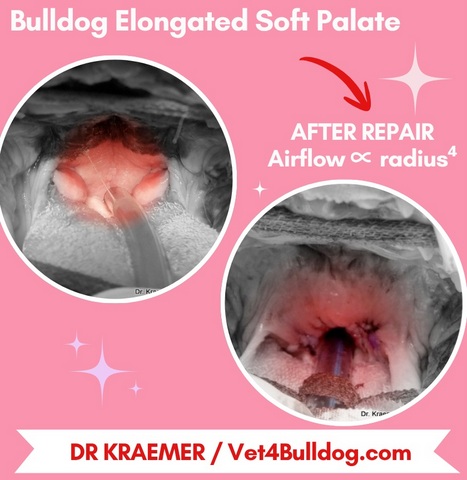
Bulldogs with stenotic nares often suffer from other brachycephalic syndrome conditions, such as elongated soft palate.
It is critical to evaluate the palate and repair it when your bully is induced for his/her stenotic nares repair.
#7 FRENCH BULLDOG PINCHED NOSE RADIOGRAPHS TIP:
A chest radiograph should be taken pre-op to evaluate your bulldog’s trachea, heart, airways, and lungs.
#8 BULLDOG STENOTIC PINCHED NOSE BREATHING TIP:
Bulldogs with stenotic nares (pinched nostrils) who do not have other common Brachycephalic Obstructive Airway Syndrome (BOAS) conditions may compensate by breathing through their mouths.
#1 PINCHED NOSE REPAIR TIMING WARNING:
Medical problems related to bully stenotic nares get worse over time, therefore, timing is critical.
#2 STENOTIC NARES DECOMPENSATION WARNING:
A bully with stenotic nares often decompensates when he or she becomes excited or stressed.
Acute decompensation can lead to acute respiratory distress, therefore, it is critical to keep your bully in calm, stress-free surroundings.
What is the Prognosis for Bulldog Stenotic Nares?
The overall prognosis for bulldog and French bulldog patients depends on:
- BOAS: How many brachycephalic airway syndrome anatomic abnormalities are present
- TIMING: How soon they are corrected.
Insider tip
The two sounds tell you different things, and owners mix them up. Snorting when excited is the nose. Snoring when relaxed or asleep is also the nose. If your bulldog stops breathing for a beat while asleep, that is apnea, and it is far more common in this group than people realize.
The practical tip: if your bulldog needs an anesthetic for anything else, a dental, a spay, a neuter, that is the moment to have the nostrils assessed and repaired. You have already accepted the anesthetic risk, and combining procedures means one recovery instead of two. Ask specifically whether the palate should be done at the same time.
A Bulldog in breathing distress or a heat crisis needs emergency veterinary care. Move an overheated dog out of the heat, begin cooling with cool water over the body and moving air, and arrange prompt transport. Keep water away from the nose and mouth. Do not wait for a temperature reading before seeking help.
What actually causes the pinched nose?
Is it really worth operating on something so small?
What are the signs?
What happens if it is left alone?
How is it diagnosed?
What can I do while we wait for surgery?
Should the soft palate be done at the same time?
Veterinary Care and Supportive Products
Stenotic nares are diagnosed by looking, so ask your vet to assess the nostrils at the next visit, and to say plainly whether the soft palate should be assessed under sedation at the same time. If your bulldog needs an anesthetic for anything else, that is the moment to combine procedures. No supplement widens a nostril. What supplements do is reduce the anxiety, inflammation and reflux that add load to an already narrow airway, which is what carries a bulldog through to surgery and out the other side.
The Stenotic Nares bundles
More Help from Dr. Kraemer
The nose is one fault among several. These cover the rest of the airway:
- BOAS, the whole picture
- Elongated soft palate
- Everted laryngeal saccules
- Sleep apnea in Bulldogs
- Anesthesia and sedation in Bulldogs
- Aspiration pneumonia
Trusted by Vets ~ Recommended by Owners ~ Approved by Bulldogs
References
- American College of Veterinary Surgeons. Brachycephalic Syndrome
- Merck Veterinary Manual. Brachycephalic Airway Syndrome in Dogs
- University of Cambridge. BOAS Respiratory Function Grading Scheme
To be clear: supplements or topicals are not substitutes for prescribed treatment. If your dog is unwell, is being treated for a condition, or is already on medication, review any supplement or topical with your veterinarian so it fits the plan you are already following. This page is educational and is not a diagnosis or a treatment plan for your own dog.