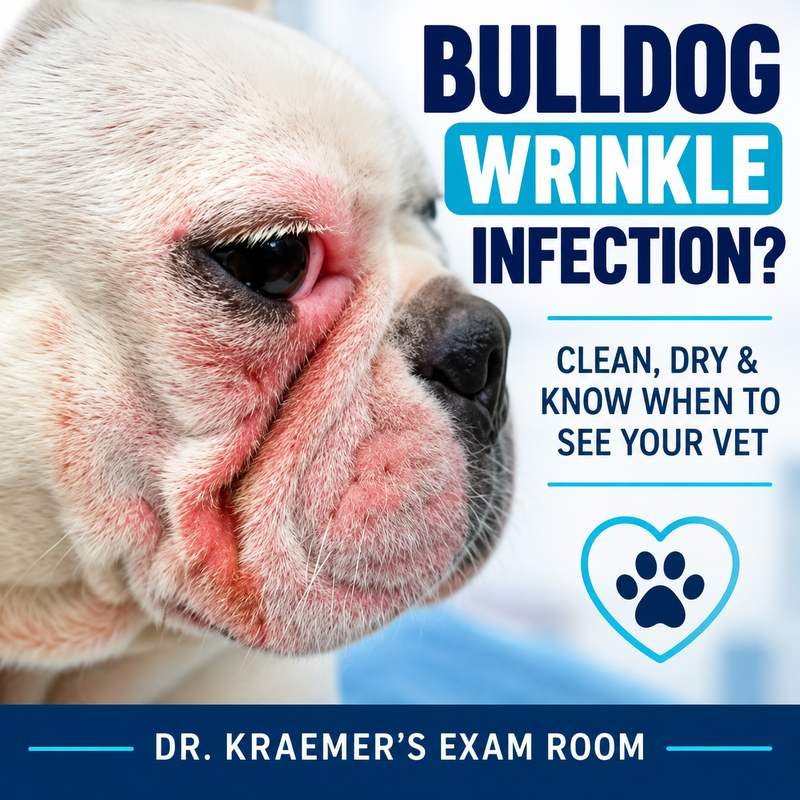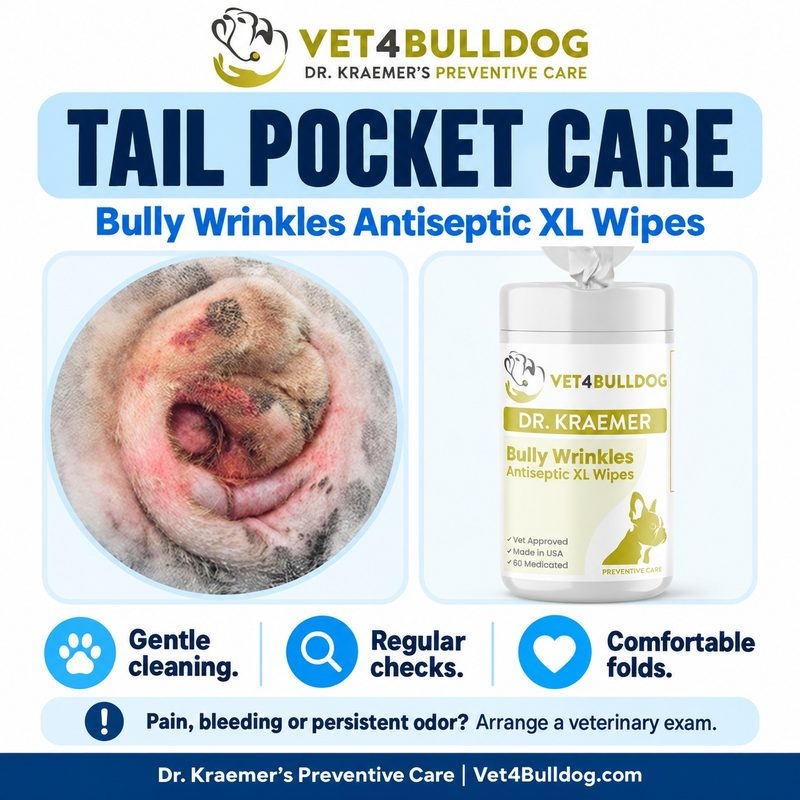



Bleeding, painful cracks, discharge, or limping? Arrange a veterinary examination. A sudden change or a one-sided lesion also deserves assessment. Do not trim or peel the crust while waiting for advice.
There are two questions in there and they have different answers. Is it worrying: usually not, when the nose is thick and dry, both sides look the same, and the dog is comfortable. That is the breed producing more keratin than it sheds, which is mechanical rather than sinister. Have your veterinarian look at it anyway next time you are in, because a nose that has changed character rather than simply thickened is a different conversation and it is worth settling early.
Is it just how he is: no, and this is the part I would rather you heard from me now than worked out later. Those pads carry every step he takes. The hard lip along the edge is where splits start, and a split pad is uncomfortable, slow to settle because he keeps standing on it, and spends its day on the floor. Owners treat the nose first because it is the part they can see. I would do the pads first.
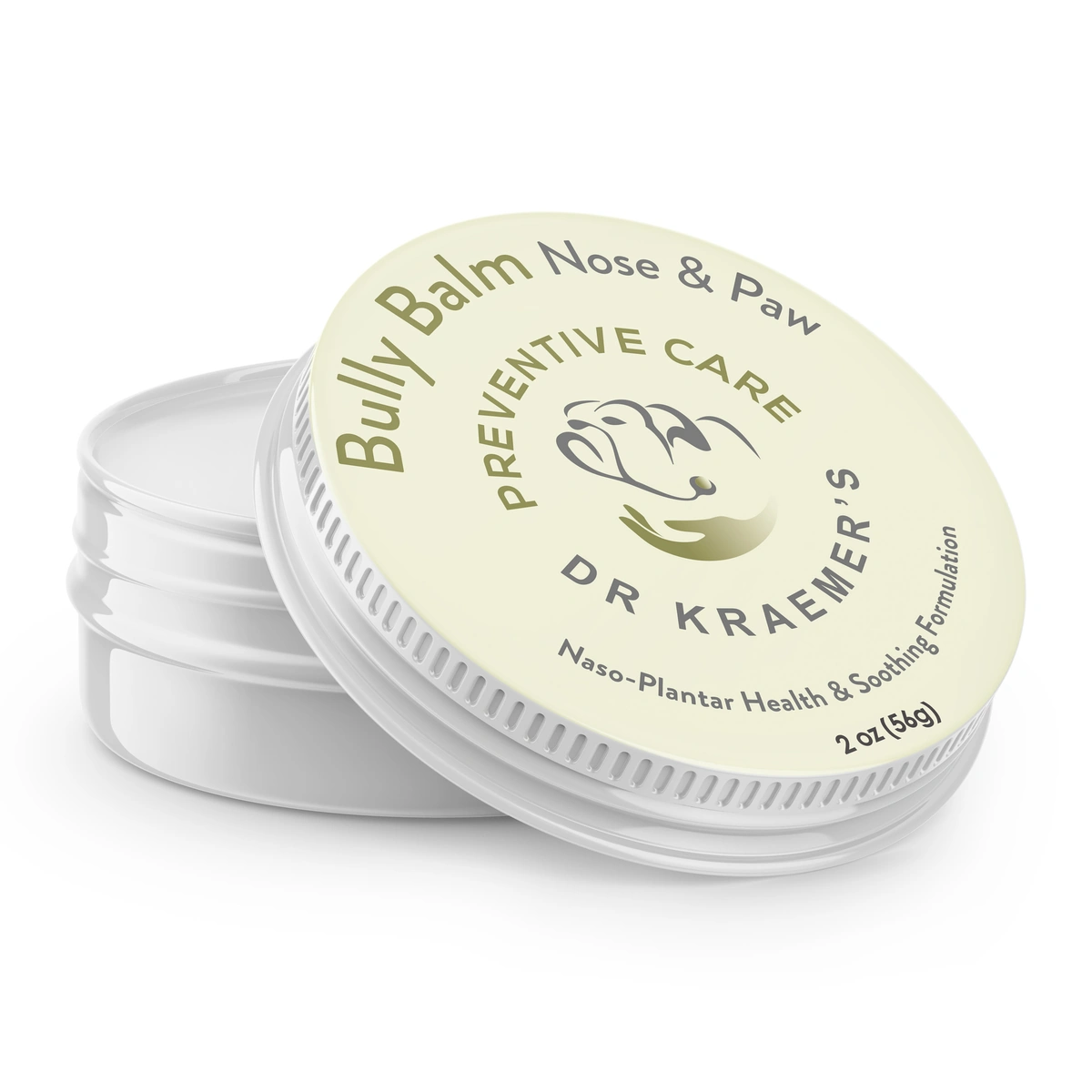
On what you tried: coconut oil and most scented pet shop balms sit on the surface and are gone within the hour. Softening is the whole job, and it needs something that stays where you put it, applied when he has settled for the evening rather than a minute before he walks on it. Our nose and paw balm is a topical, so it belongs alongside whatever your veterinarian advises rather than in place of it. Fish oil and skin and coat support may help from the inside over a good few weeks. The thing almost everyone gets wrong is stopping once it looks better, which is the exact moment it starts building again.
Dr. KraemerMy adorable bulldog is dealing with a crusty bleeding nose. I’d love your expertise to ensure I’m on the right track. Any quick tips or product recommendations? Your advice means the world to us! 🌎❤️
Thanks a ton! 🙌 [Gayle and “Belichick”] #BulldogHealth #HyperkeratosisHelp🙏
Crusty Nose and Paw Pads in Bulldogs and French Bulldogs
Crusty, dry nose and paw hyperkeratosis are more prevalent in Bulldogs and French Bulldogs than in other breeds.
Hyperkeratosis involves excessive thickening of keratin, a protein responsible for the formation of nails, hair, and the outer layer of the skin.
Proper management of this condition is essential for the health and comfort of Bulldogs and French Bulldogs. Regular care and attention may help alleviate the symptoms and prevent complications associated with hyperkeratosis.
- Can it be prevented?
- Is it contagious?
- How should it be treated?

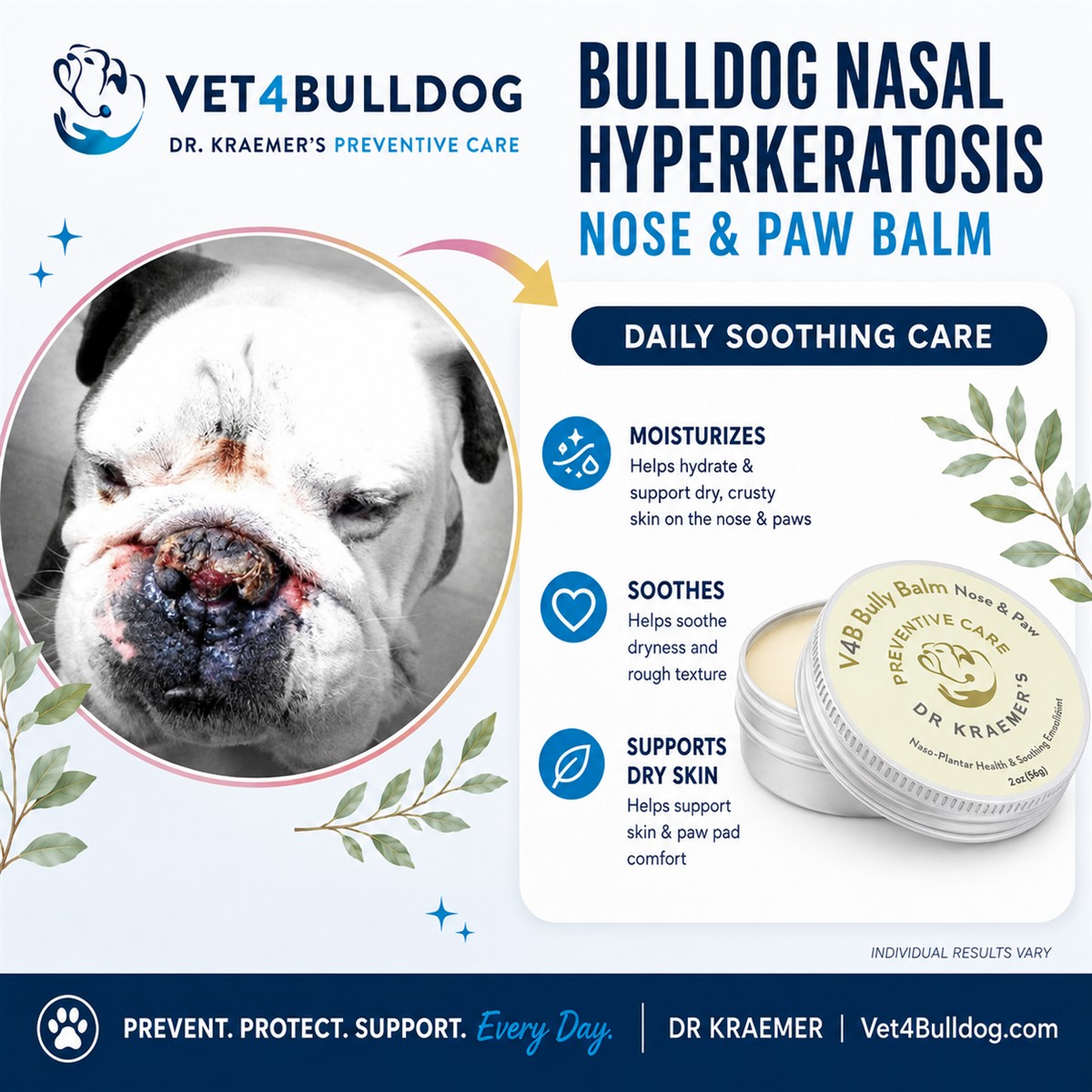
One clinical case shown before and after care. Results depend on the cause and treatment; the photos do not establish a result for every dog.
Where am I most Likely to find Bulldog Dry, Crusty Skin?
There are two common areas:
Naso-Plantar Hyperkeratosis
is the most common
- the nose (naso)
- the paw (plantar)
Other less common hyperkeratosis locations are:
- ear tips
- elbow callus
Bulldog Nose and Paw Hyperkeratosis: 5 Things to Know
- Hyperkeratosis is due to excess keratin production, genetics, and flat-faced breed conformation.
- Most are mild and can be managed without a prescription.
- The severe form might require topical antibiotics and pain management.
- Treatment includes
- Bully Naso-Plantar Balm
- Skin therapeutic supplements
- antiseptic wipes or lotion
- Care depends on the cause. A painful, bleeding nose or paw pad needs an examination before choosing a home-care product.
Members of this bulldog community prefer prevention over RX
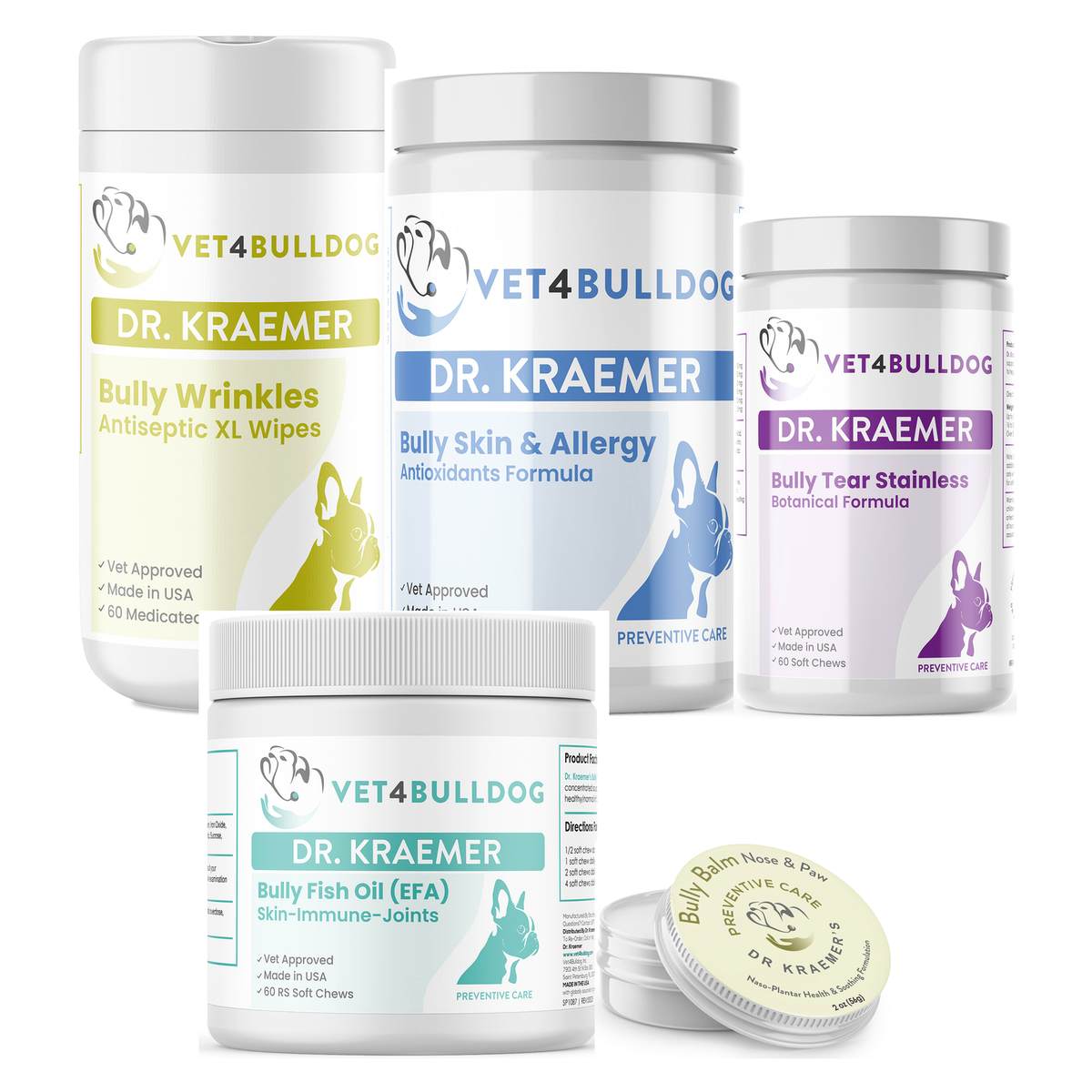
Soften first, scrape never
Every so often an owner arrives having picked or trimmed the crust off, usually with the best intentions and sometimes with nail clippers. Underneath is raw skin that now has to heal, and the keratin comes straight back anyway. So before anything else: do not pull it, cut it or scrape it.
What works is dull and consistent. Soften it, let it come away on its own, and keep going after it looks better, because the moment people stop it rebuilds. Think of it like a callus on a gardener’s hand. You are not curing the hand, you are keeping it comfortable, and that is a job without an end date rather than a two week course.
One thing worth ruling out first. A nose that has changed color, lost its texture at the edges or become sore rather than simply thick is a different conversation, and it is worth your veterinarian taking a proper look before you settle into a routine. Thick and comfortable is usually mechanical. Sore is not.
What Are the Contributing Factors to Bulldog Dry Crusted Nose and Paw?
Factors Contributing to Hyperkeratosis:
- Genetics: Bulldogs and French Bulldogs may overproduce keratin due to their flat-faced conformation.
- Climate: Dry weather, allergies, and sun exposure can exacerbate the condition.
- Flat Face: The brachycephalic structure of these breeds can contribute to dryness and irritation, further promoting hyperkeratosis.
What Are The Symptoms of Crusty Dry Nose in Bulldogs?
Many of you have seen a bulldog with a crusty, thick layer of keratinized skin over its nose and paw pads and wondered what it is.

1. Mild dry crusty nose
Most cases are mild, with only mild, benign
- Crusty nose or paw
- Chapped
- Fissured
- Thick callus
2. Severe dry crusty nose
- Oozing
- Bleeding
- Deeply Fissured
- Painful
- Infected
What Are the Symptoms of Dry Crusty Paws In Bulldogs?
Just like your bulldog’s dry nose, the paw might suffer from mild to more severe hyperkeratosis
- MILD FORM: In its mild form, though unappealing, hyperkeratosis is typically benign and considered cosmetic and harmless.
- SEVERE FORM: In contrast, the severe form represents an advanced stage where the condition may progress to “fracture,” fissure, or split, and in some instances, even bleed.
These more pronounced changes can disrupt the natural keratinized protective skin barrier, potentially leading to infections and causing pain, especially when affecting the nose or paw pads.
As a result, your bulldog’s paw may become irritable, itchy, and painful, prompting the bulldog to lick it and potentially exacerbate the injury.
Managing severe hyperkeratosis becomes crucial to alleviate discomfort and prevent complications.
What Do Crusty Nose and Paw Problems Look Like?
- Nose: dry, cracked, crusty, and potentially painful, leading to rubbing and discomfort.
- Paws: thickened, crusted paw pads potentially cracking and causing pain, limping, and difficulty walking.
- CRUST: Thickened, crusty skin on the nose or paw pads
- CRACKS: Cracked keratinized layer, often with dry blood
- PAIN: Pain and Discomfort
- ITCH: Licking and Rubbing
- LIMP: Limp if paw pads are affected
- INACTIVITY: Limping and inactivity if the paws are affected.
- INFECTION: Active Infection in a severe case (deep cracks)
🚨A severe case of paw digital hyperkeratosis can also cause pain and lameness.
What Causes Crusty Dry Nose and Paw?
Normal Keratinization: Keratin helps make the top layer of skin and acts mostly as a protective barrier
- KERATINIZATION: the normal process of forming the protective outer skin layer
- HYPERKERATOSIS: an overproduction of keratin
Hyperkeratosis happens when too much keratin is made.
1. Dry crusty nose, genetic cause
Nasal hyperkeratosis is much more common in bulldogs than in most other breeds, making genetics a likely cause.
2. Bulldog hyperkeratosis, idiopathic cause
Hyperkeratosis’s cause is often unknown (idiopathic), but it is suspected that an inherited origin is involved.
3. Crusty dry Bulldog nose, anatomical cause
Another reason could be a failure of the keratin to wear down due to the breed’s flat facial bones and smooshed face (brachycephalic).
4. Paw hyperkeratosis, orthopedic cause
Uneven weight bearing is thought to be the cause of bulldog paw hyperkeratosis. In bulldogs, it is usually due to their abnormal conformation and the breed’s common orthopedic conditions, such as:
- Bulldog elbow dysplasia
- Bulldog ACL Tear
- MPL: Bulldog Medial Patella Luxation
- Bulldog hip dysplasia
5. Crusty, bleeding nose and paw, other causes
- ZINC DEFICIENCY
- PEMPHIGUS: an autoimmune disease
- VIRAL: Canine Distemper
- IMMUNOLOGICAL: Immune incompetence
- CANCER
🚨Due to its genetic nature, bulldog nasal and digital hyperkeratosis is a condition that requires lifelong management and care
How To Diagnose Nasal and Paw Crusty Hyperkeratosis In Bulldogs?
- Visual exam
- Culture: to rule out bacterial infection
- Biopsies in a severe case
- Distemper Test: viral test
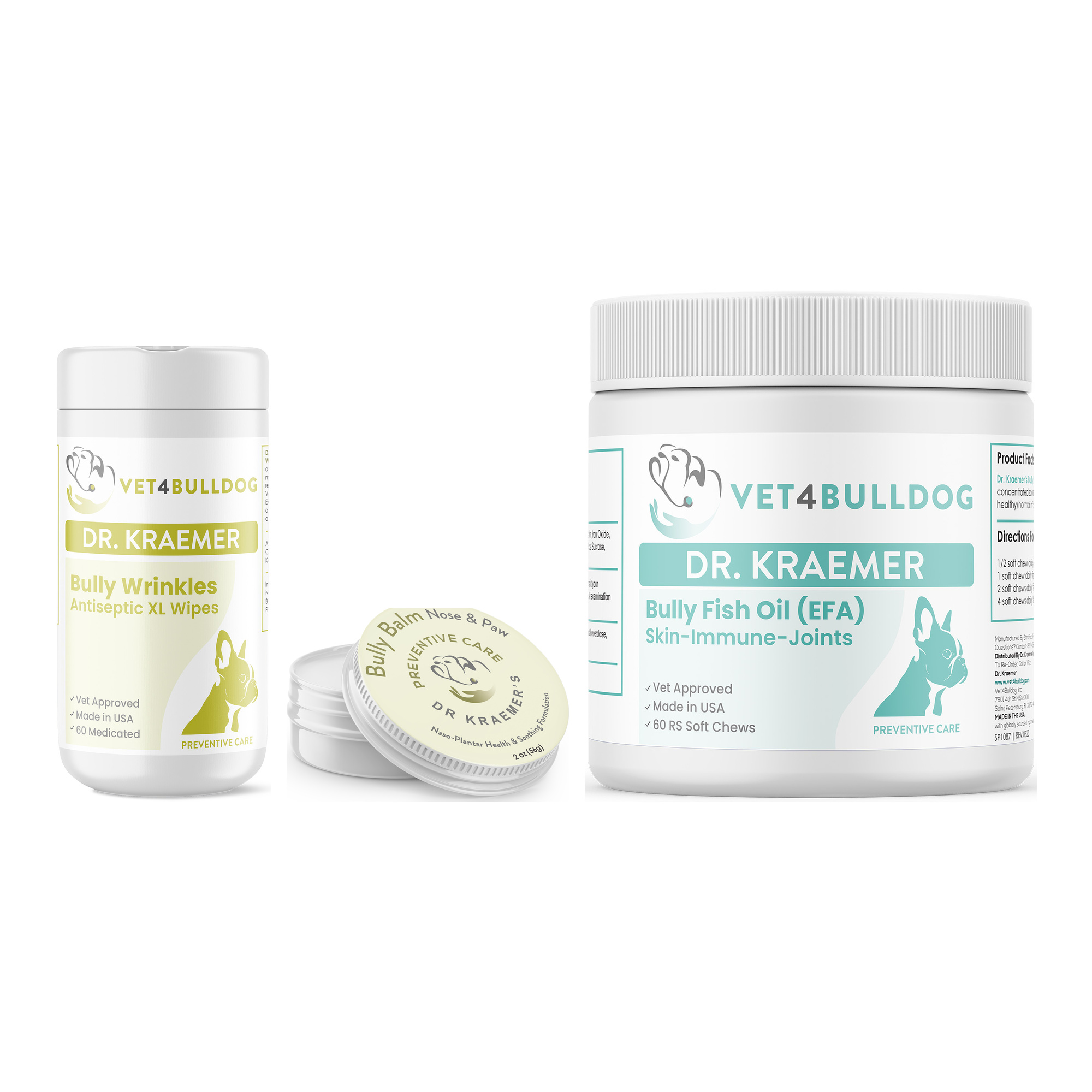
I am usually the one telling people a supplement is not the answer. Here I will say the opposite, because softening the surface is the management, and a balm made for the job beats a kitchen cupboard remedy by a distance.
Our balm is a topical, so it sits in the same category as the rest of our topical range: part of the multimodal approach, used alongside whatever your veterinarian advises rather than in place of it, with the treatment decision theirs. Fish oil and skin and coat support may help from the inside over a good few weeks, though the balm is the part doing the visible work. Keep using it once it looks better. Stopping is why it comes back.
To be clear: supplements or topicals are not substitutes for prescribed treatment. If your dog is unwell, is being treated for a condition, or is already on medication, review any supplement or topical with your veterinarian so it fits the plan you are already following. This page is educational and is not a diagnosis or a treatment plan for your own dog.
The pads matter more than the nose
Almost every owner who brings me a crusty Bulldog leads with the nose. It sits at eye level, it photographs badly, and it looks like something has gone wrong. The pads come up second, usually as an afterthought on the way out of the room.
I would reverse that order. In most of these dogs the nose is largely cosmetic. It is thick, it is dry, and apart from the occasional crack it does not trouble them a great deal. The pads are a different matter, because they are load bearing. Every step puts the whole dog through a surface that has stopped being flexible, and keratin built up along the edge of a pad eventually splits rather than bends. A split pad is uncomfortable, it is slow to settle because he keeps standing on it, and it spends its day on the floor.
Think of a pair of leather boots. The uppers can look rough for years and nobody minds. Let the soles dry out and crack and you feel it with every step.
So when you are deciding where the effort goes on a busy evening, start at the bottom. Soften the pads, keep them supple, and run a thumb along the edges every so often rather than waiting for a limp to tell you. The nose still deserves attention and the same balm does both, but if only one of them gets done tonight, make it the feet. If he is already licking or chewing at a foot, that is a different problem sitting on top of this one, and it is worth having looked at.
How to Manage a Bulldog’s Thick, Crusty Nose
You can take several simple and cost-effective measures to manage hyperkeratosis in Bulldogs. Some supportive care steps include:
1. Discuss Supportive Supplements With Your Vet
These products are optional topics for your veterinary visit, not a required combination or a proven way to prevent every cause of hyperkeratosis.
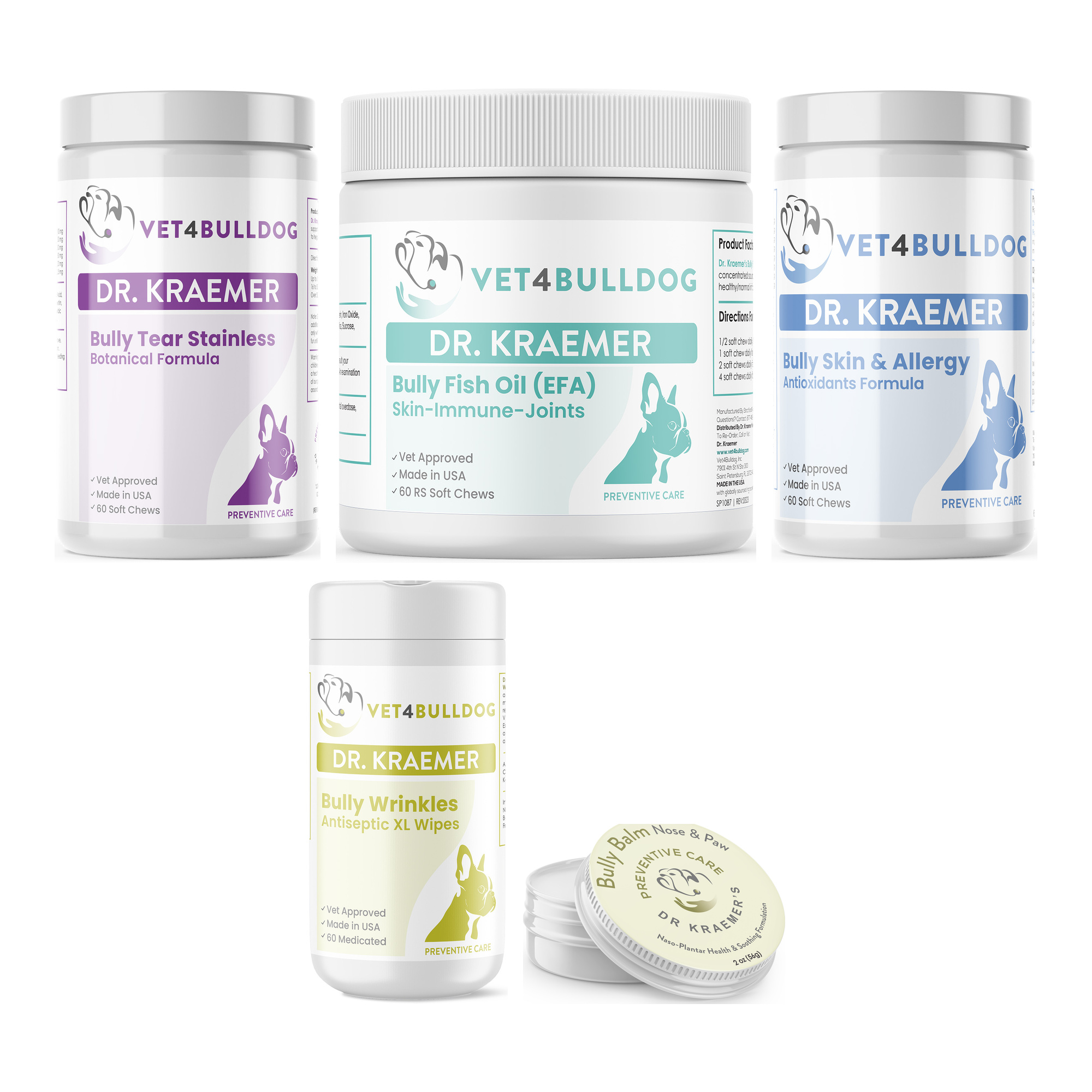
- Bully Skin & Allergies: Bully Skin & Allergy DermaCare
- Bully Fish Oil: V4B Bully Fish Oil EFA
- Bully Immune Booster: V4B Bully Immune Support Formula
- Bully Multivitamins: V4B Bully Multivitamin (VIT E)
- Bully Comfort: V4B Bully Comfort & AchLess Formula
- Bully Joints & Bones: V4B Bully Total Joint Support
2. Bulldog and French Bulldog therapeutic topicals
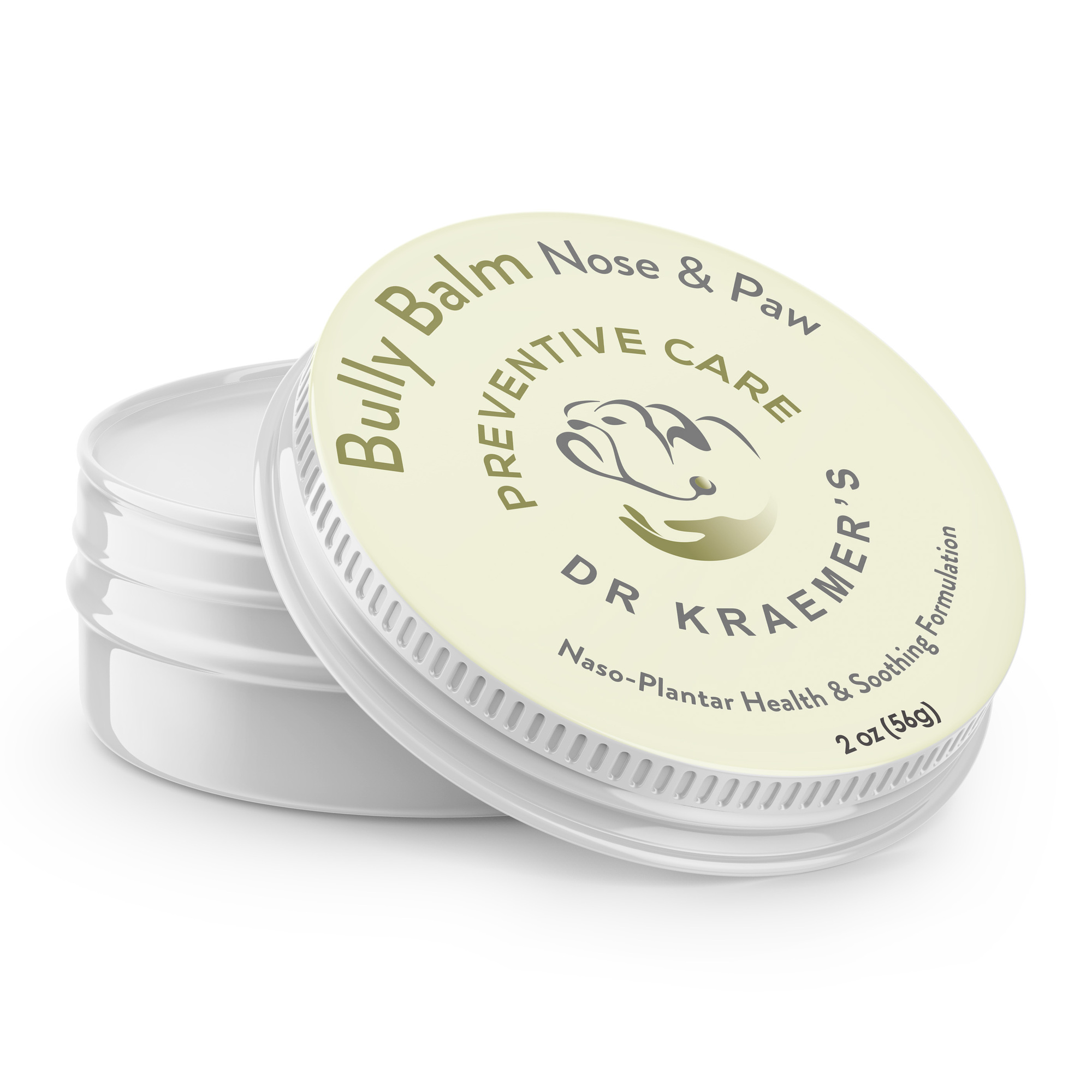
- Bully Nose and Paw Balm: V4B Naso-Plantar Bully Balm
- Bully Antimicrobial Wipes: like Bully Skin Folds Wipe
- Bully Antiseptic Gel and Lotion: antiseptic or yeasty Gel and lotion
- Bully Antiseptic Spray and Rinse: like the V4B antiseptic Hot Spot
3. Bulldog crusty nose and paw care
- Checking the pads: Inspect for cracks, soreness, and changes in walking. Do not cut, shave, or pull off thickened skin at home; ask your veterinarian whether professional trimming is needed.
- Hydrating and Lubricating Lubrication, Hydrating, and Emollients.
- Ensuring your bulldog has an adequate water supply helps maintain skin hydration from the inside out.
- Soaking: Ask your veterinarian whether soaking is appropriate and which product and dilution to use. Do not mix products without instructions.
- Hygiene: Good Hygiene
- Keratolytic products: Use products that soften excess keratin only when your veterinarian has selected the formulation and application instructions.
- Weight Control: for paws/digit bully hyperkeratosis
- Balanced Nutrition: A complete, balanced diet supports skin health. Do not add zinc or other supplements to treat a suspected deficiency without veterinary assessment.
- Avoid Harsh Elements: Protecting your bulldog from extreme weather conditions, such as excessive sun exposure or harsh cold, can minimize the impact on the skin.
- Boots: dog booties to protect your bulldog’s paw pads from rough surfaces and extreme temperatures.
How To Treat Crusty Nose In Bulldogs And French Bulldogs?
- ANTISEPTIC MEDICATION: if the site is infected, topical and oral antimicrobial and Antifungal
- ANALGESICS: Pain medication
- BANDAGE: Paw bandaging or boot
- OINTMENT: A veterinarian-selected product to soften excess keratin, when appropriate
- COLD LASER THERAPY
- SUPPLEMENTS: therapeutic supplements for pain relief, like Dr. Kraemer’s V4B Bully Comfort Formula
- TOPICALS: therapeutic topicals like Dr. Kraemer’s antiseptic wipes and gel. And Bully Naso-Plantar Balm
Crusty Nose in Bulldogs and French Bulldogs: Tips and Warnings
Below are Dr. Kraemer’s selected tips and warnings
Tip 1. Bulldog nose and petroleum jelly
Ask your veterinarian to recommend a suitable moisturizer and amount for your Bulldog’s nose or pads. Avoid applying products inside the nostrils, discourage licking, and stop if irritation develops.
Tip 2. Bulldog crusty paw hydration
Moisturizing may soften thickened skin, but softening does not make it safe to peel or cut off at home. For a comfortable, unbroken paw pad, follow your veterinarian’s maintenance instructions. Bleeding, discharge, painful cracks, or limping need an examination.
Tip 3. Bulldog crusty nose, the cosmetic question
For the majority of Bulldogs, mild hyperkeratosis of the nose is primarily a cosmetic concern. In its mild form, this condition is typically not infected and causes minimal discomfort or irritation. Preventive measures and regular maintenance are often sufficient to manage mild hyperkeratosis.
Bully wipes and bully derm-care balm are used to keep the nose moisturized and comfortable.
Warning 1. Bulldog dry nose is lifelong care
Ask your veterinarian which of these maintenance measures fits your Bulldog’s diagnosis:
- HYDRATION
- MOISTURIZERS
- PROFESSIONAL TRIMMING IF NEEDED
- TOPICAL BULLY THERAPEUTICS
- THERAPEUTIC BULLY SUPPLEMENTS
Warning 2. Bulldog crusty paws and weight control
A healthy body weight reduces unnecessary load on the paws and joints. It does not guarantee prevention of hyperkeratosis.
Warning 3. Paw pad orthopedic warning
If your Bulldog limps or bears weight unevenly, have the underlying problem assessed. Joint supplements have not been established here as a way to prevent paw-pad hyperkeratosis.
Warning 4. Paw interdigital cyst warning
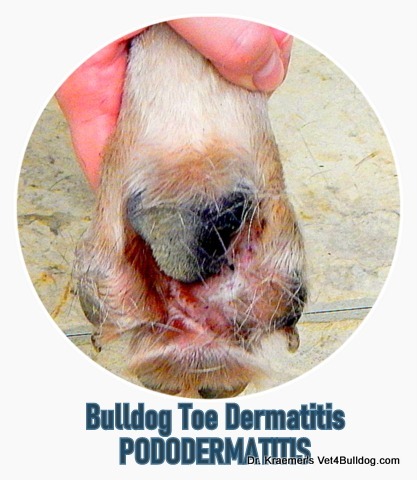
A sore or draining lump between the toes needs its own diagnosis and care plan. Do not assume every paw lesion is hyperkeratosis or treat it with the same topical product.

His nose used to be black and damp. Now it looks pale and rough. Is that the same thing?
Is it contagious? I have another dog and small children at home.
The crust is lifting at one edge. Can I just peel that bit off?
Can I use petroleum jelly, coconut oil or olive oil from the kitchen?
He licks the balm straight off. Does it still do anything?
Can it be prevented, or is he going to have this for life?
Does his weight really have anything to do with his paw pads?
More Help from Dr. Kraemer
Crusty pads rarely travel alone. These guides cover the problems that tend to turn up on the same feet:
- Paw licking, red paws and pododermatitis
- Five interdigital cyst do’s and don’ts
- Dry, flaky skin in Bulldogs
- Three common causes of limping
- What you can handle at home, and when to see the vet
References
- Merck Veterinary Manual. Nasal Dermatoses of Dogs
- Merck Veterinary Manual. Hyperplastic and Seborrheic Syndromes in Animals
- Merck Veterinary Manual. Principles of Topical Treatment in Animals
- Merck Veterinary Manual. Interdigital Furunculosis in Dogs
Trusted by Vets ~ Recommended by Owners ~ Approved by Bulldogs