
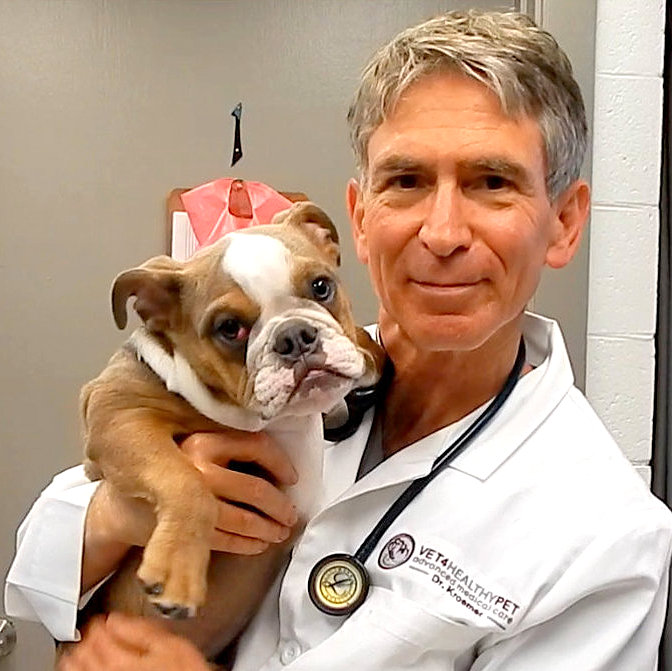


Subject: 🐾 Non-Itching Flank Baldness in My Frenchie, Mocha 🐾 Dear Dr. Kraemer, Mocha, has recently been experiencing some unusual dark baldness on her flanks. The strange part is that she doesn’t seem itchy or bothered by it at all. 🤔 Is this a common issue with bulldogs? I googled it and found “flank alopecia.” Is that the same? Is there something we should be doing to help Mocha💉💊? Thank you so much in advance! 🙏 #BulldogHealth #NonItchingBaldness #flankAlopecia
“My three year old English Bulldog has gone bald on both sides, almost a mirror image, and the skin under it has gone dark. It started in the fall, the same as last year, and last year it filled back in by spring. He is not scratching at all, he eats like a horse and he is bouncing around as usual. Our groomer is convinced it is his thyroid. Should I be asking for a blood test?”
You have already given me most of the answer without realizing it, and it is in the parts you probably thought were small talk.
Mirror image on both sides. Started in the fall. Did the same thing last year and filled back in by spring. Not scratching. Eating well. Bouncing around. That combination is the picture of seasonal flank alopecia, and it is one of the few things in this breed where the story tells you more than the skin does.
Your groomer is not being silly, and the instinct behind it is sound. Hair loss does send people to the thyroid, and a thyroid problem can take hair off a Bulldog. But it almost never travels alone. It brings weight gain on the same food, a dog who has gone flat, one who hunts out the warm spot, and often a skin or ear infection that keeps coming back. Your dog has none of that. He is three years old, which is young for a thyroid problem, and he is thriving.
So is a blood test unreasonable? No. If it settles your mind, run it, and bring the dates with you. I would simply want you to expect a normal result rather than be surprised by one, because a low number in a well, young, bouncing dog is far more likely to be a laboratory quirk than a diagnosis, and I have seen that number turn into a daily tablet a dog never needed.
What would change my mind: if the bald areas start itching, if they spread beyond the flanks, if the hair stops coming back in spring, or if he starts gaining weight and slowing down. Any of those, and we are having a different conversation. Until then, take photographs with the date on them. That record is worth more than any single blood result.
Seasonal Baldness Flank Alopecia In Bulldogs INTRODUCTION:
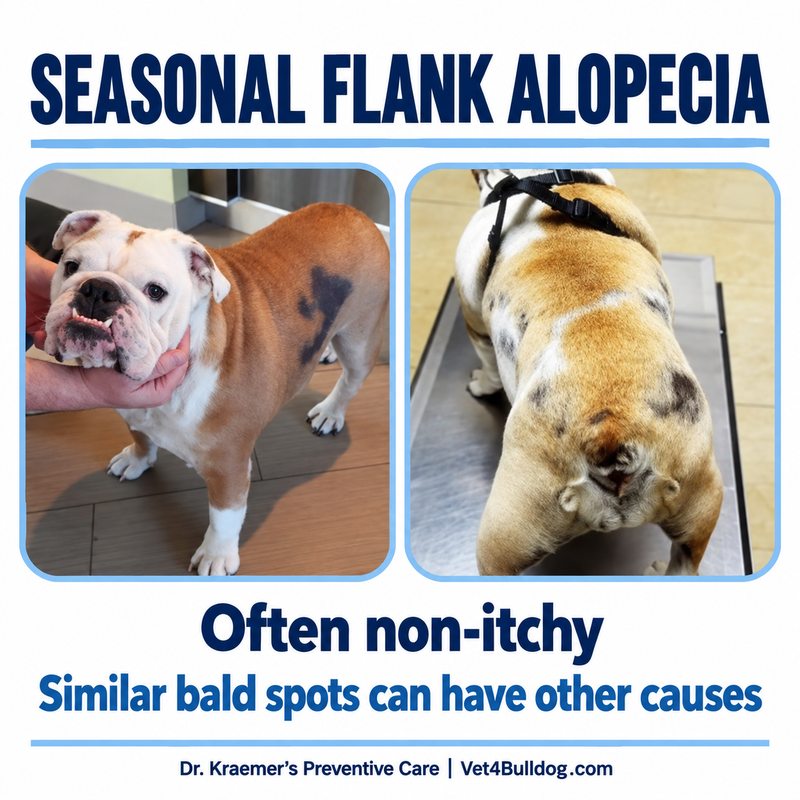
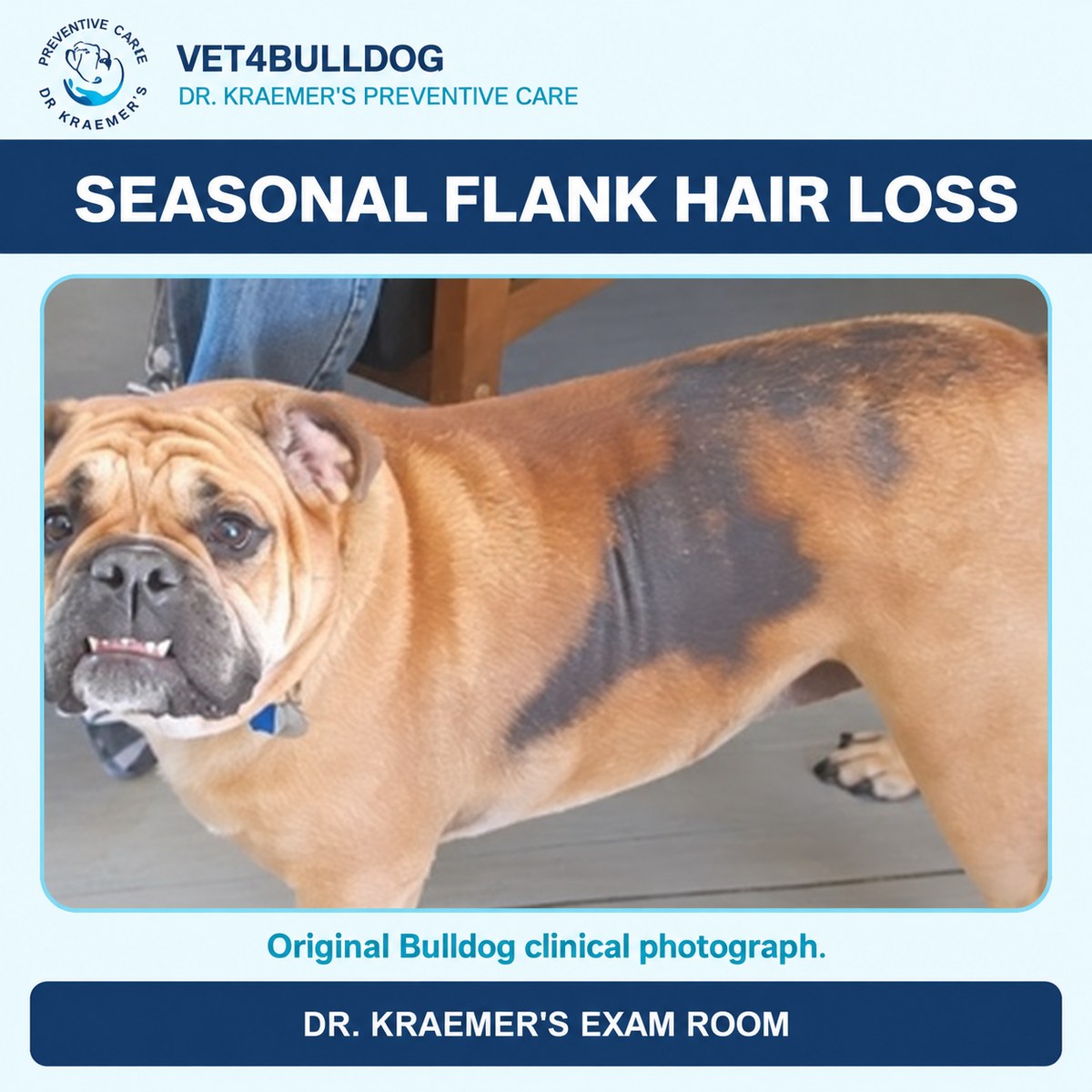
Flank alopecia is a breed-associated condition seen in Bulldogs and French Bulldogs.
It is a recurring pattern of hair loss associated with seasonal changes in daylight; the exact cause is not fully understood.
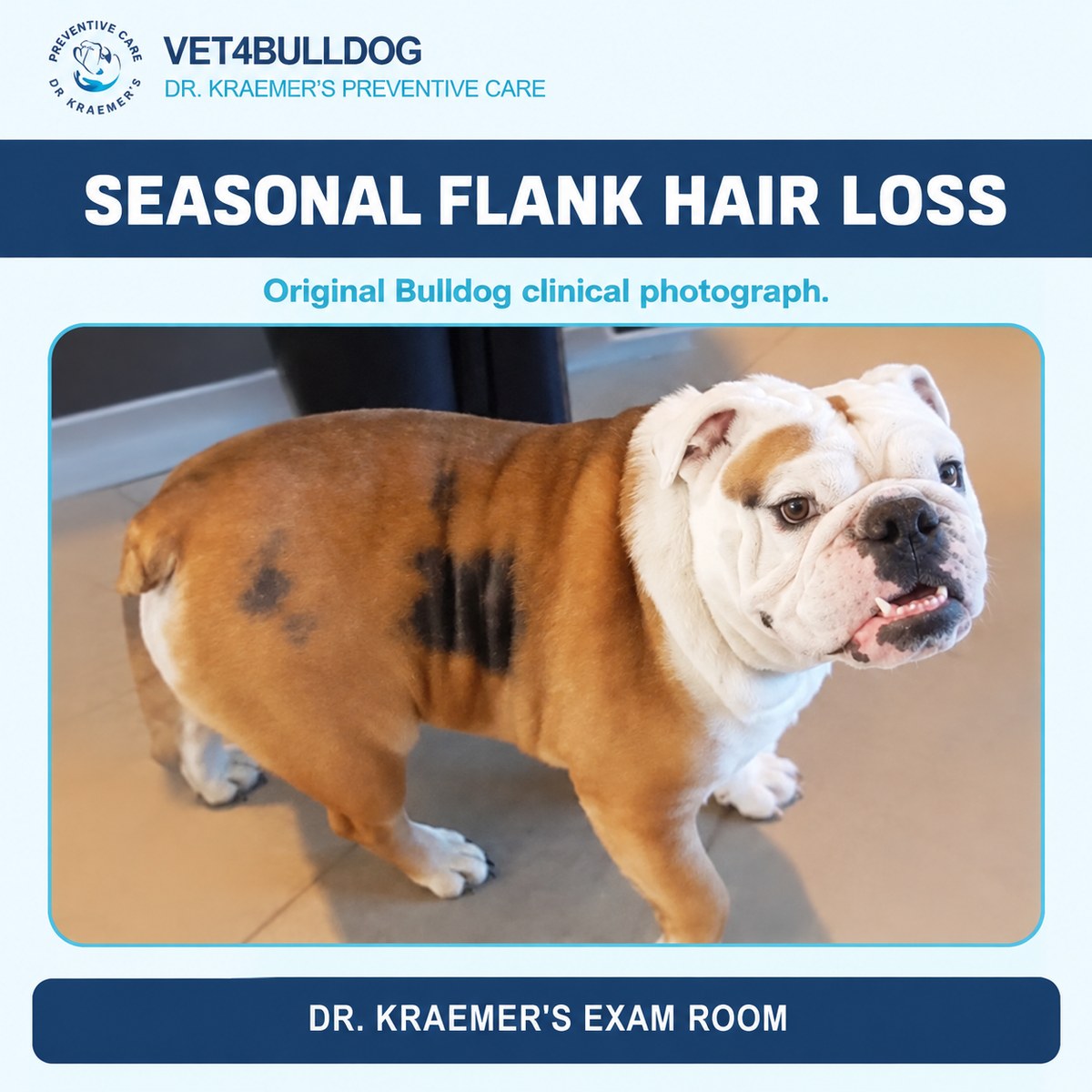
It typically appears as
- symmetric
- patchy bald spots on both sides of the back and flanks
- often with darkened skin in the affected areas.
In some cases the hair naturally regrows once daylight increases, highlighting the seasonal pattern.
In some cases, however, the hair loss may become permanent.
While usually harmless, it’s important to monitor your bulldog for additional signs to help rule out other possible causes of hair loss.
The itch is the question, not the bald patch
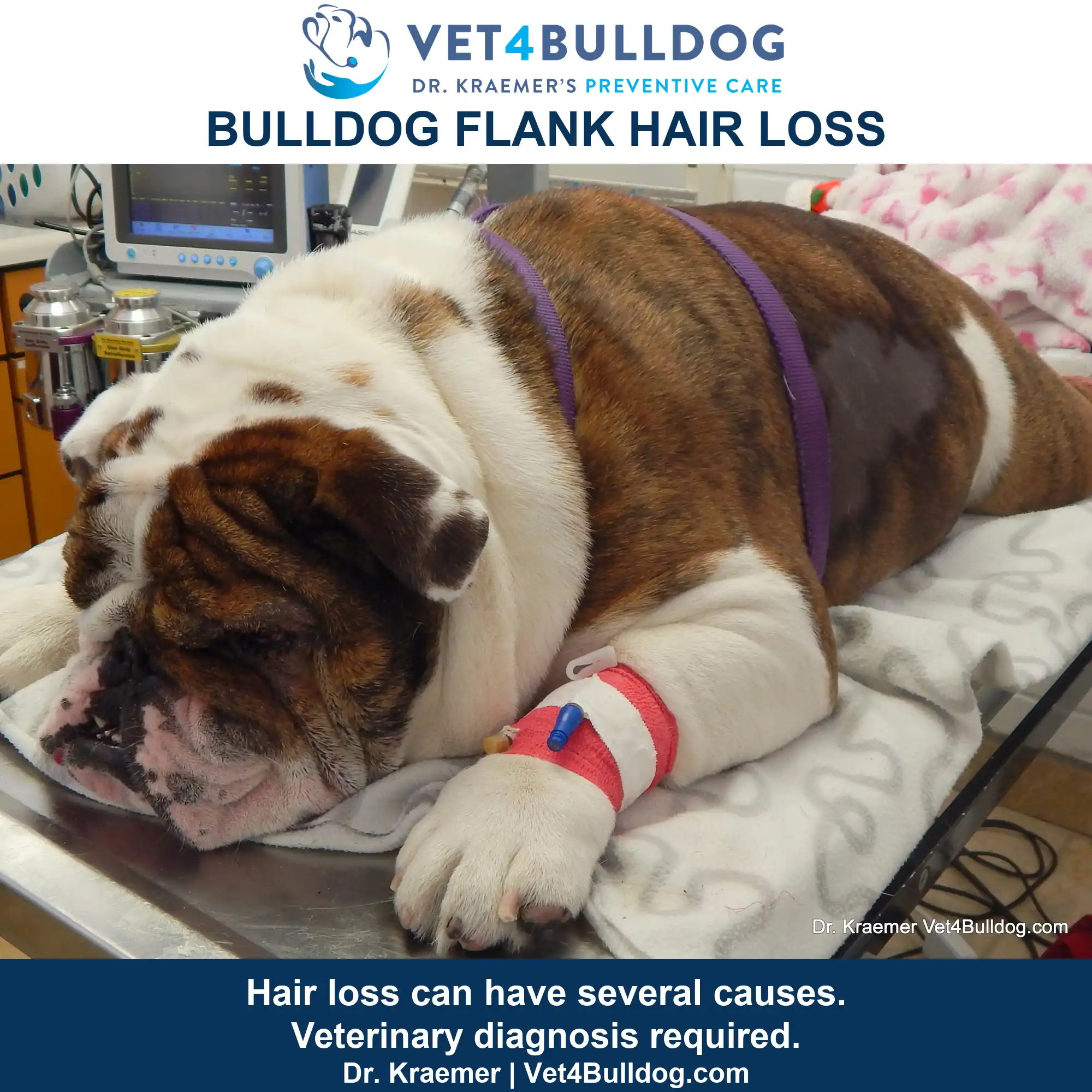
When an owner shows me a bald flank, the first thing I want to know is not how big it is or how dark it is. It is whether she is bothered by it. A dog who ignores the patch entirely is telling me something quite different from a dog who cannot leave it alone, and that single observation sorts most of these cases before I have touched her.
The second thing I ask is when it started, and whether anything like it happened last year. This one keeps a calendar. Owners often remember the pattern once they are asked, and the moment that pattern appears the picture usually settles.
What I would not do is reach for a medicated shampoo on a dog who is not itchy, which is the most common thing owners try before they get to me. It does nothing for this and it costs weeks. Take a photograph instead, note the date, and let your veterinarian confirm it rather than treating a guess. If the hair has not come back after a good few weeks, or she starts being bothered by it, that is a different conversation and worth having.
What Causes Flank Alopecia Seasonal Baldness in Bulldogs?
The cause is not fully understood. Seasonal changes in daylight and hormones such as melatonin may affect the hair-growth cycle.
Bulldog Seasonal Flank Alopecia 5 X MUST KNOW
- Seasonal flank alopecia occurs in several breeds, including Bulldogs; affected skin is usually not itchy or painful.
- The seasonal effect is likely due to sunlight and its impact on melatonin.
- Melatonin may help some dogs; discuss the diagnosis, product, and treatment plan with your veterinarian.
- Hair may regrow naturally, recur seasonally, or remain thin. No treatment guarantees regrowth.
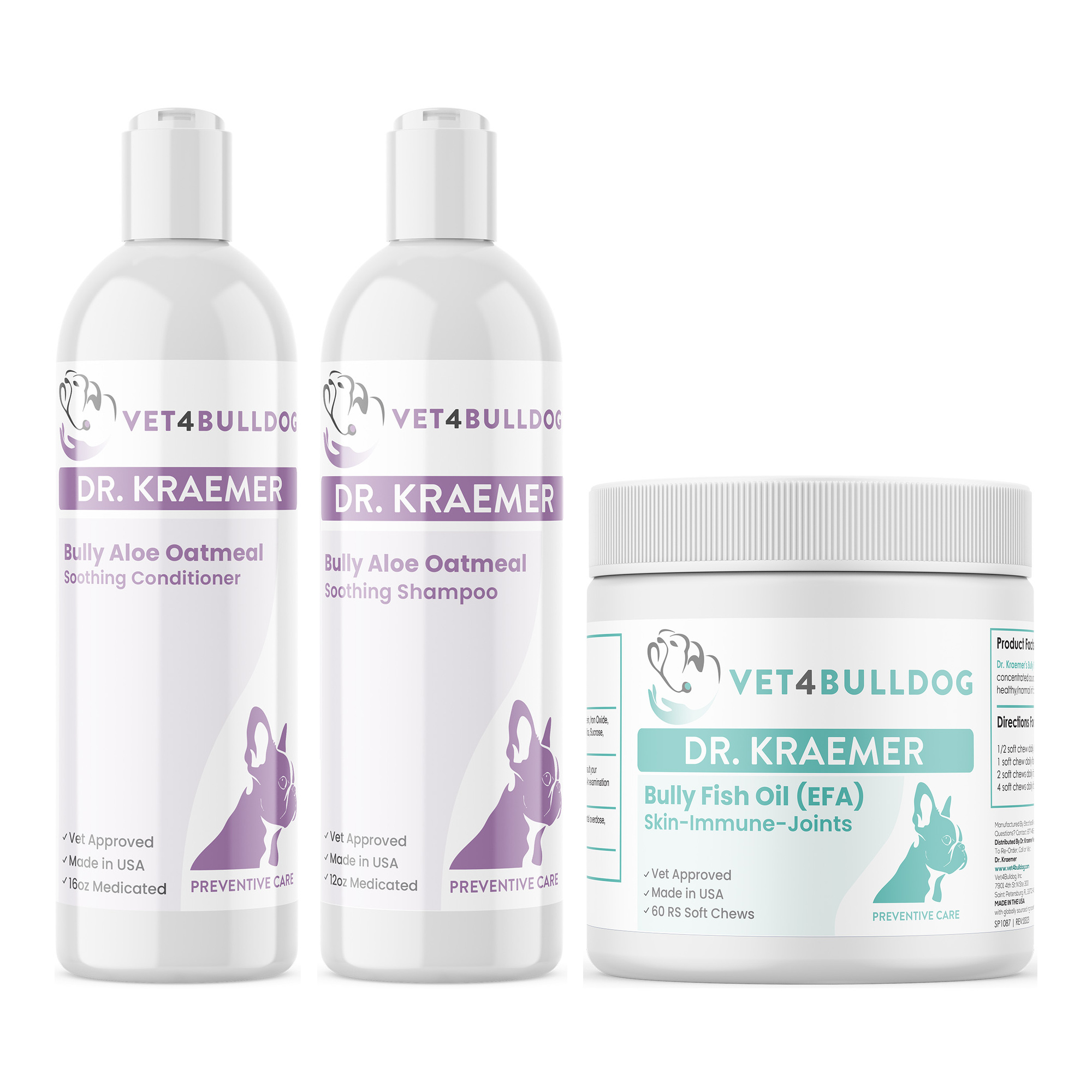
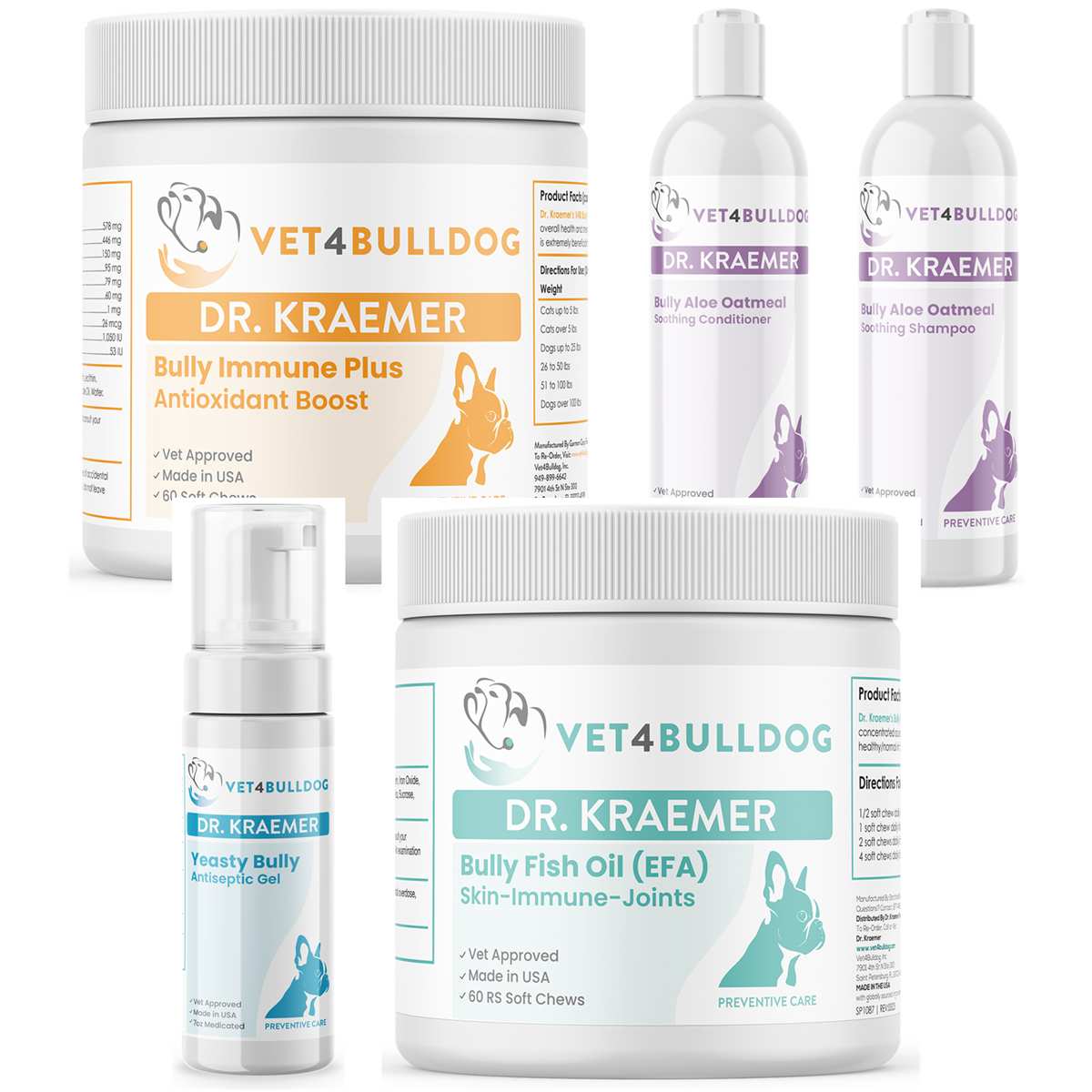
- Skin Health Prevention & Care includes Dr. Kraemer’s Affordable Skin & Coat Bundles
Welcome to Our “Prevention Over RX” Bulldog Community
Flank Alopecia Seasonal Baldness in Bulldogs AGE FACTOR:
Bulldog flank non-itchy hair loss is not common to the young; the condition is usually seen as your bulldog matures, during adulthood and mid-age. It is uncommon for bulldog puppies to have flank alopecia.
What are The Symptoms of Flank Alopecia Seasonal Baldness?
Seasonal flank alopecia often leaves irregular bald patches with darkened skin. The pigmentation is in the exposed skin, not simply a change in coat color.
The pattern often appears on both flanks, with similar areas of hair loss.
Is Bulldog Non-Itchy Flank Baldness Seasonal or Yearly?
Most cases of nonpruritic flank alopecia in bulldogs are seasonal. However, some bulldogs may remain bald indefinitely, regardless of the season, light exposure, or melatonin supplementation. While some bulldogs might experience complete hair regrowth, others may only see partial regrowth. It’s also important to note that not all instances of bulldog flank baldness follow a seasonal or cyclical pattern.
🚨Not every bulldog flank baldness is seasonal or cyclical.
Flank Alopecia Seasonal Baldness in Bulldogs / DIAGNOSIS
In most cases, bulldog flank alopecia is diagnosed based on:
- BREED PREDISPOSITION
- APPEARANCE
- HISTORY (indoors, winter non-sunny season)
Other diagnostics:
- BLOOD TEST
- SKIN SCRAPE
- DTM (fungal culture)
- SKIN CYTOLOGY
🚨In contrast to bulldog allergies and bulldog pyoderma, bulldog flank alopecia is usually NOT ITCHY.
How Is Seasonal Flank Alopecia Managed?
Once your veterinarian confirms seasonal flank alopecia and excludes other causes, treatment may be optional because the condition is usually cosmetic.
1. DAYLIGHT AND SAFE OUTDOOR TIME:
Daylight patterns may influence seasonal hair growth, but extra sun exposure is not a guaranteed treatment. Keep outdoor time comfortable and avoid overheating or sunburn on exposed skin.
2. MELATONIN TREATMENT FOR BULLDOG FLANK HAIR LOSS
Melatonin has been used for recurrent flank alopecia and may help some dogs. Natural regrowth can make response difficult to judge. Ask your veterinarian whether a trial is appropriate and how to assess progress.
3. TOPICAL SKIN CARE: WHEN IS IT RELEVANT?
Topicals may be appropriate for a separately diagnosed skin problem, such as an infection or allergy. They are not a proven way to regrow hair from seasonal flank alopecia. Ask your veterinarian which, if any, of these options fits your dog:
- Therapeutic Bully waterless gels & lotions
- Soothing and antiseptic therapeutic shampoo baths
- Therapeutic Bully Skin Spray
- Therapeutic Bully 2-in-1 Shampoo and Conditioner.

I will say that plainly even though it is a strange thing to put above a product. Where the dog is comfortable and the hair is coming back on its own, patience costs nothing and works.
Where supplements may earn a place is in the coat itself, supporting skin and hair quality in a dog whose coat struggles anyway, which many bulldogs do. Topicals are a different matter: they are part of the multimodal approach used alongside what your veterinarian prescribes, and they belong in the picture when there is something going on in the skin rather than simply absent hair. If your dog is itchy, sore or the skin looks angry, that is not this, and it is worth a proper look.
To be clear: supplements or topicals are not substitutes for prescribed treatment. If your dog is unwell, is being treated for a condition, or is already on medication, review any supplement or topical with your veterinarian so it fits the plan you are already following. This page is educational and is not a diagnosis or a treatment plan for your own dog.
4. THERAPEUTIC SUPPLEMENTS FOR BULLDOG FLANK BALDING:
Discuss skin and coat supplements with your veterinarian if your dog has additional nutritional or skin-care needs. These products do not guarantee regrowth and should not replace a diagnosis.
- Bully Fish oil Omega EFA Skin-Immune-Joint Chews.
- Bully Immune Boosting & Support
- Bully Skin & Coat Derma Care
- Bully ItchLess & Allergies Formula
A cosmetic problem on a healthy dog
I want to say something that is not in most articles on this, because it is the thing that decides how much money an owner spends.
Seasonal flank alopecia is a cosmetic condition. The dog is not sore, not itchy, not unwell, and not shortened by it in any way. The hair usually comes back. The only thing that has actually gone wrong is that your Bulldog looks odd for part of the year, and he does not know that.
That matters because a visible problem on a healthy dog is the easiest thing in the world to sell treatment for. There is always another supplement, another oil, another light therapy, another something. Melatonin has a reasonable rationale behind it and I have no objection to a trial, with your veterinarian, with an agreed point at which you decide whether it did anything. What I would not do is keep adding products to a dog who is perfectly well, chasing a cosmetic result that was very likely going to arrive on its own in spring.
Where the money is better spent, if the skin needs anything at all, is keeping the bald areas comfortable and protected. That is a small job, not a campaign.
The one thing worth being firm about: get the diagnosis right first. Everything above assumes this really is seasonal flank alopecia, and that assumption is only safe when the dog is otherwise well and the pattern repeats with the seasons.
Bulldog Flank Alopecia Seasonal Baldness TIPS
Below are selective flank alopecia tips and warnings courtesy of Dr. Kraemer
#1 BULLDOG FLANK ALOPECIA MELATONIN TIP:
Use melatonin only with a veterinarian-selected product, dose, and follow-up plan. Suitability depends on your dog’s health and other medications; do not use a one-size-fits-all dose.
#2 BULLDOG BALDING SEASONAL TIP:
Hair regrowth can take months, with or without treatment. Agree on a reassessment date with your veterinarian.
#3 BULLDOG SEASONAL BALDING AND SUNLIGHT TIP:
Regrowth varies. Some dogs regrow hair over several months, some skip a season, and others retain bald patches. Take dated photos in similar lighting to track the pattern.
Is All Flank Hair Loss Seasonal Alopecia?
Some other non- or minimal itching, bilateral, or symmetrical alopecia can mimic bulldog flank alopecia seasonal baldness. There are other common causes of seasonal and non-seasonal hair baldness and darkening of the skin in bulldogs that might include the flanks. Examples of other medical conditions associated with baldness and skin darkening are:
- Bulldog demodicosis red mite
- Bulldog food allergies
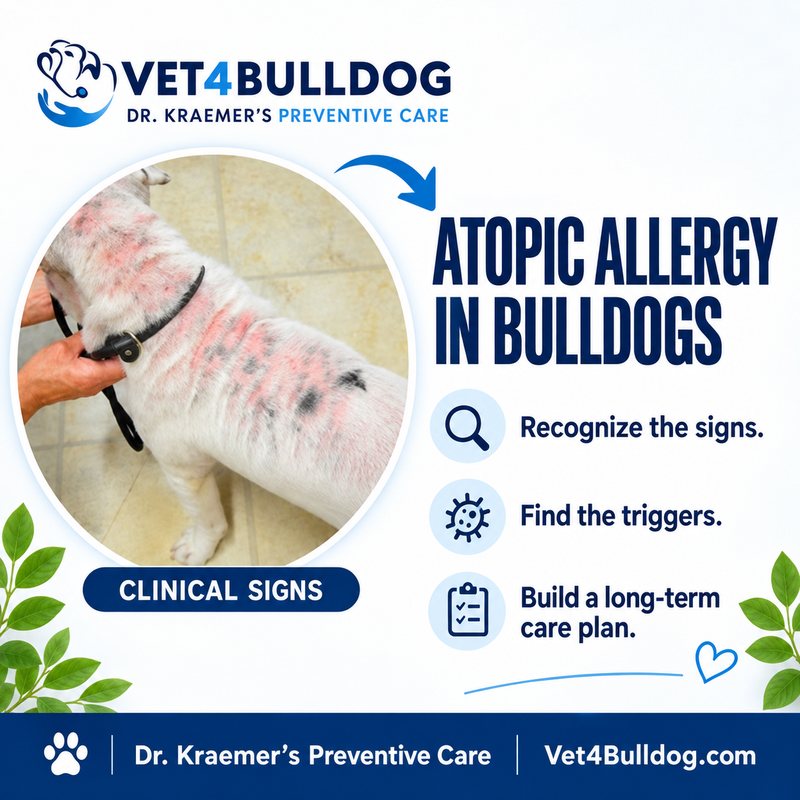
- Bulldog atopic allergic dermatitis
- Bulldog skin yeast infection.
- Bulldog hypothyroidism
- Bulldog Cushing’s syndrome
The two hormonal ones are worth separating out, because the bald pattern can look almost identical. What points back to seasonal flank alopecia is everything around the bald patch. The average age is younger, the hair loss is often seasonal and runs in a cycle, and the dog is otherwise well.
A thyroid or adrenal problem usually brings company: weight gain, low energy, seeking out warm places, and very often a secondary bacterial or yeast infection sitting on top of it, because both conditions weaken the immune system and that is an open door. A Bulldog who is bald but bright, bald at the same time each year, and with nothing else going on, is pointing at this page. One who is bald, heavier than he was, flat, and keeps picking up skin or ear infections is pointing somewhere else.
To help with a definitive diagnosis, basic diagnostic testing might be required; examples are
- Skin scraping: to help rule out skin mites
- Skin cytology: help rule out bacteria, yeast, and abnormal cells
- Skin cultures: to help rule out bacteria type
- Skin fungal culture: to help rule out ringworm
Flank Alopecia in Bulldogs Dr. Kraemer’s FINAL ADVICE:
Start with the diagnosis, not a shelf full of products. Arrange an exam for new or changing bald patches, especially with itching, redness, odor, scaling, or changes in thirst, appetite, or energy. Bring dated photos and a list of current products. Request an appointment, then choose skin-care products that fit the findings.
He has gone bald on both flanks. Is something wrong with him?
Should it be itchy?
Will the hair grow back?
Does melatonin actually work?
Does more daylight help?
How do I know it is this and not something else?
Will it come back next year?
Should I be putting anything on the bald skin?
More Help from Dr. Kraemer
- Itchy skin and allergies, when hair loss does come with scratching
- Demodex and mange
- Ringworm
- Hypothyroidism in Bulldogs and French Bulldogs
- Cushing’s syndrome
- What you can handle at home, and when to see the vet
Trusted by Vets ~ Recommended by Owners ~ Approved by Bulldogs
References
- Merck Veterinary Manual. Alopecia in Dogs
- Miller WH, Griffin CE, Campbell KL. Muller and Kirk’s Small Animal Dermatology, chapter on cyclical flank alopecia
- Paradis M. Melatonin therapy in canine alopecia. Veterinary Dermatology
- Daminet S, Ferguson DC. Influence of drugs on thyroid function in dogs. Journal of Veterinary Internal Medicine