


Most of what gets called a sensitive stomach in this breed turns out to have a name. This page is about working out which one.
A Bulldog who brings his breakfast back up now and then, clears a room on a regular basis, or produces a stool you would rather not discuss gets filed by most owners under a delicate constitution, and then gets managed with a succession of food changes. Sometimes that really is the whole story. More often the dog has something specific, it has a name, and it answers to something other than another bag of food.
The reason a page like this exists is that the conditions underneath all look alike from the outside. Loose stool, wind, bad breath and the occasional vomit are the shared vocabulary of a food allergy, a parasite, an inflamed bowel, a mouthful of diseased gums, and an esophagus that is not moving food along as it should. They are not told apart by watching. They are told apart with a stool sample, a proper look in the mouth, and sometimes imaging.
What follows is the short version of each one with a route through to the full article. If you read only far enough to work out which page you actually need, this has done its job.
Food allergy Gum disease Grain free Giardia IBD Megaesophagus
Digestion and indigestion in bulldogs and French Bulldog puppies aren’t uncommon, and many owners can attest to this.
Digestion and Dental Problems in Bulldogs and French Bulldogs NAMES
- “Bully stink bomb” (flatulence)
- Bad breath, loose stool
- “Nervous stomach”
- Sporadic vomiting of either water, food, or both, which can sometimes be confused with regurgitation (food material that never reaches the stomach).
Many bulldog owners will try to relieve digestion and dental problems in bulldogs and French bulldogs with a “grain-free,” raw, or homemade diet, some of you might find them helpful. If your new dietary try did not pan out and your bully GI problems persist, please talk to your veterinarian.
Vomiting and regurgitation are not the same thing
There is one distinction I would rather an owner brought me than any other on this subject, because it changes where I look first, and hardly anybody arrives with it. Vomiting and regurgitation are different events. Vomiting has effort behind it: there is heaving, the abdomen works, and what comes up has been sitting in the stomach, so it is partly digested and often carries bile. Regurgitation has no effort at all. Food simply reappears, undigested, sometimes still in a tube shape, often soon after eating and often while he is lying down. If what you are seeing is the second kind, the stomach is probably not your problem and the esophagus is, and megaesophagus moves to the top of the list. Watch him next time and note which one it was. It is the most useful thing you can hand your veterinarian.
The second thing I would check is the one owners almost never connect. Bad breath gets treated as a digestion symptom, and in this breed it very often is not one. It is a dental problem, and a Bulldog’s crowded, rotated, undershot jaw makes periodontal disease close to inevitable without help. A mouth carrying that much infection also means a dog swallowing infected material all day long, which does the gut no favors at all. So when the complaint is breath, I look in the mouth before I look at the bag of food.
Third, and this one disappoints people: food allergy is the most popular explanation and it is not the most likely one. Infection, parasites and plain dietary indiscretion accounted for far more of what came through my door. Food allergy climbs the list sharply when the skin is involved as well, and an itchy Bulldog with a loose stool is a different conversation from a comfortable skinned Bulldog with a loose stool. Either way it is settled with a proper elimination trial run by your veterinarian, not with a change of brand.
Fourth: get the stool sample done before you redesign his diet. It is cheap, it is quick, and it rules a whole group of causes in or out, none of which any diet will fix. Giardia in particular is common in this breed’s age group, presents as exactly this picture, and keeps returning if it is not dealt with properly.
On the diet changes themselves I am not against them, but the order matters. Changing food every few weeks while the real cause goes uninvestigated does two separate kinds of damage: it delays the answer, and it muddles the evidence, because by the time somebody takes it seriously nobody can remember what he actually reacted to. If you are going to change the food, change it once, deliberately, with your veterinarian, and then leave it alone long enough for the result to mean something, which is a good few weeks rather than days.
And the grain free question comes up in every one of these conversations, so it earns a line here. Grain is not the villain it has been made into, grain feeds the bacteria you want him to have, and some grain free diets have been linked to a serious heart condition. There is a full page on it below and it is worth your time before you commit to one.
Food Allergy in Bulldogs:
Food allergies in bulldogs are not as common as you might think. In most cases, gastrointestinal problems are more likely due to other causes, i.e. bacteria, viruses, and parasites. If your bulldog also has a skin allergy along with their digestive problems, then a food allergy is a higher possibility….Read More
Gingivitis & Gum Disease in Bulldogs:
One of the most common and potentially medically harmful conditions seen in veterinarians’ offices is periodontal disease, because the initial infection, known as gingivitis, can spread very quickly….Read More
Dental and Periodontal Disease in Bulldogs:
Periodontal and dental disease in bulldogs is usually caused by bacteria. Initially, pellicle forms on the clean tooth, also often clumps of hair from excessive licking. Endotoxins released by the anaerobic bacteria can cause tissue destruction and bone loss which leads to your bulldog teeth loos…..Read More
Grain-Free Diets for Bulldogs & French Bulldogs:
In contrast to what many of you believe, there are many nutritional benefits to grain. Grains stimulate the growth of beneficial, “good” gastrointestinal bacteria (i.e., probiotics). It’s important to know that many of those grains also provide your body with essential vitamins & minerals….Read More
Giardiasis, Giardia Infection in Bulldogs:
Giardia is an infection caused by a microscopic protozoan organism that usually infects the intestines of both pets and humans. Giardia in bulldog puppies can inflict varying degrees of digestive problems, especially diarrhea…..Read More
Inflammatory Bowel Disease (IBD) in Bulldogs
Inflammatory bowel disease in bulldogs is better known as bulldog IBD. IBD in bulldogs can affect both the upper (stomach and small intestine) and lower (colon, large intestine) tracts. The most common manifestations of IBD in bulldogs and other dogs and cats are diarrhea and weight loss….Read More
Megaesophagus in Bulldogs and French Bulldogs:
Megaesophagus in Bulldogs and French Bulldogs is a medical disorder characterized by an abnormally large esophageal pocket (distention). This abnormally distended esophageal pocket collects the recent meal and, in doing so, prevents it from reaching its normal destination, your bulldog stomach….Read More
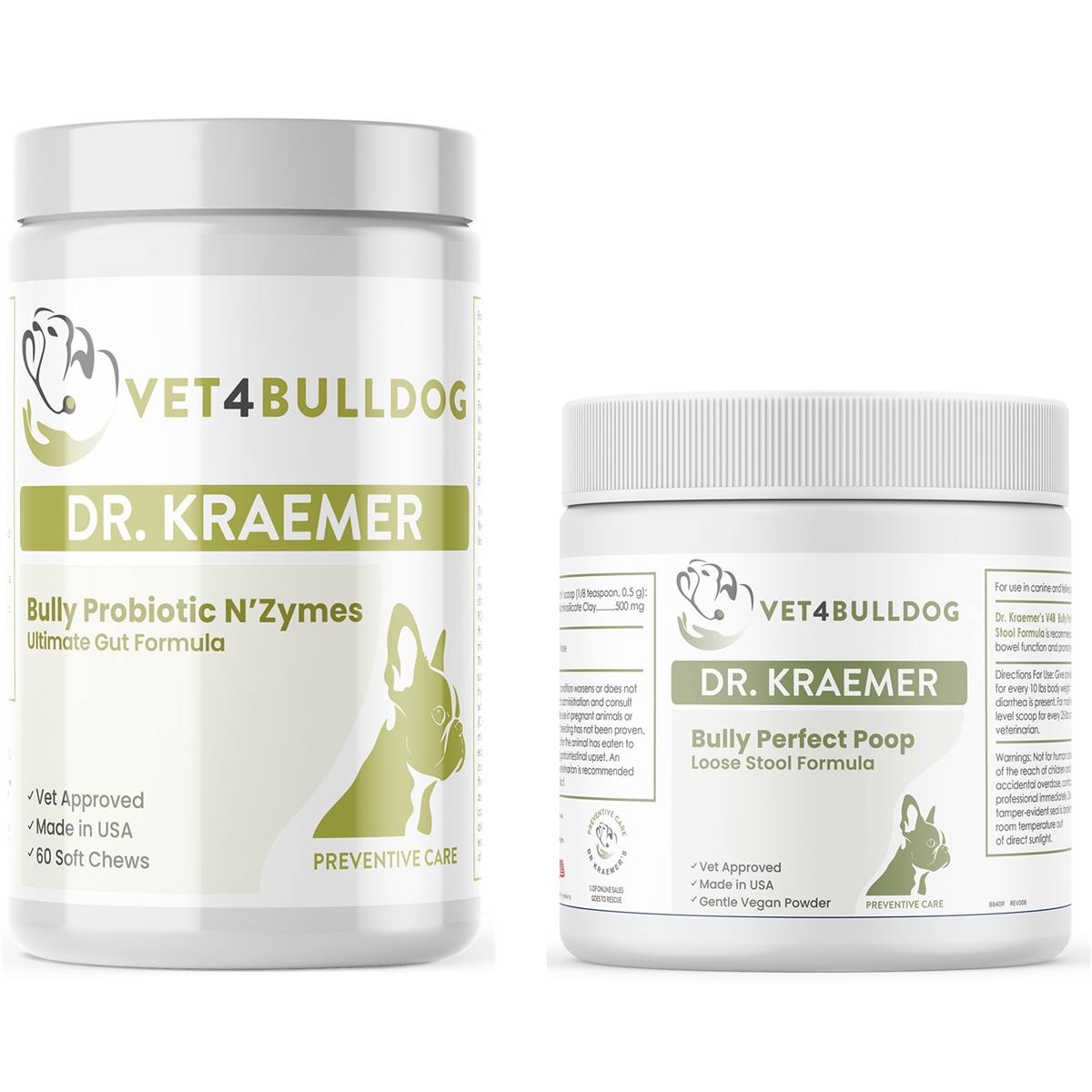
The order I would want here is: find the cause, treat the cause, then support the gut. Not the other way around. A probiotic handed over instead of a stool sample only delays the answer, and on a page listing this many possible causes I would rather say so plainly than sell you something early.
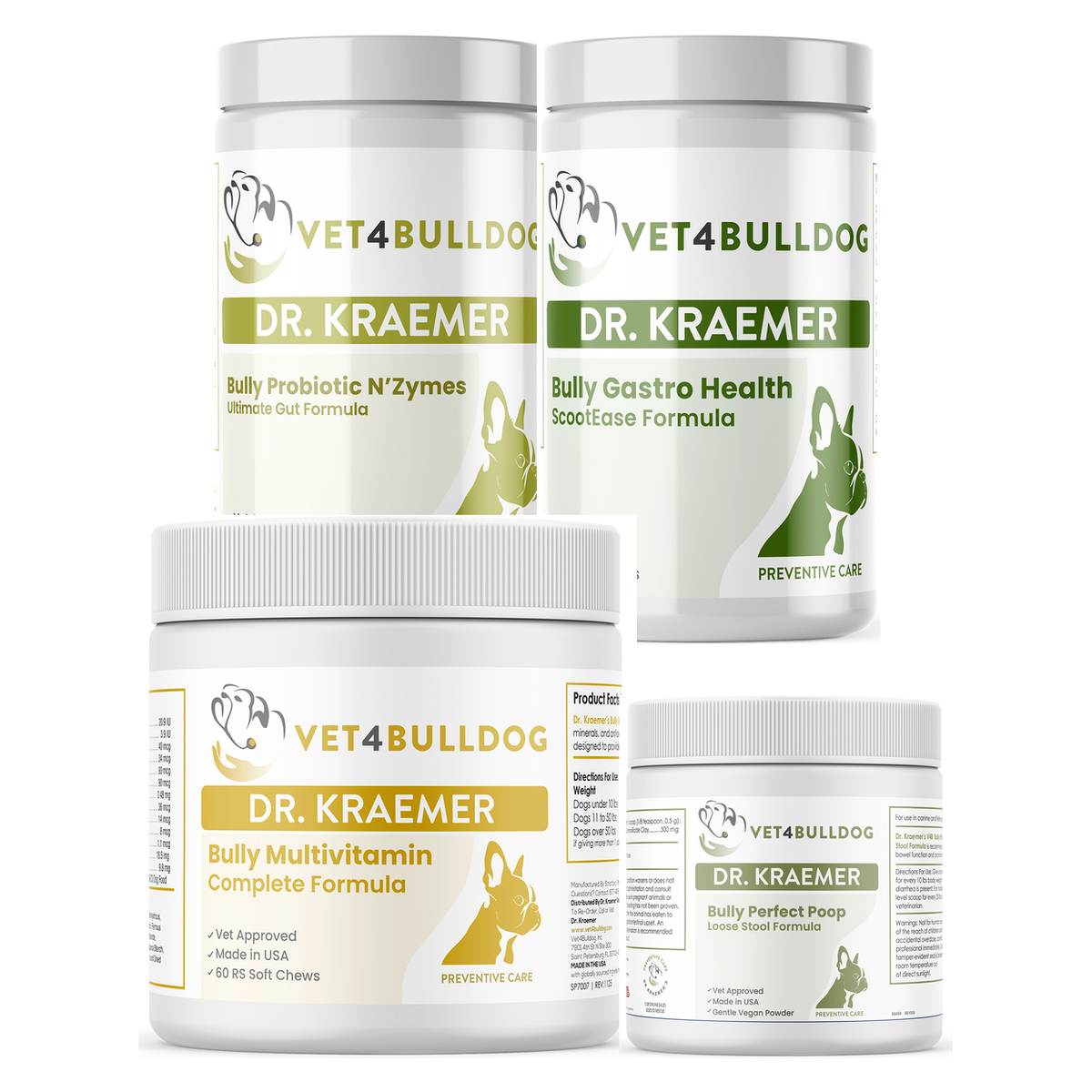
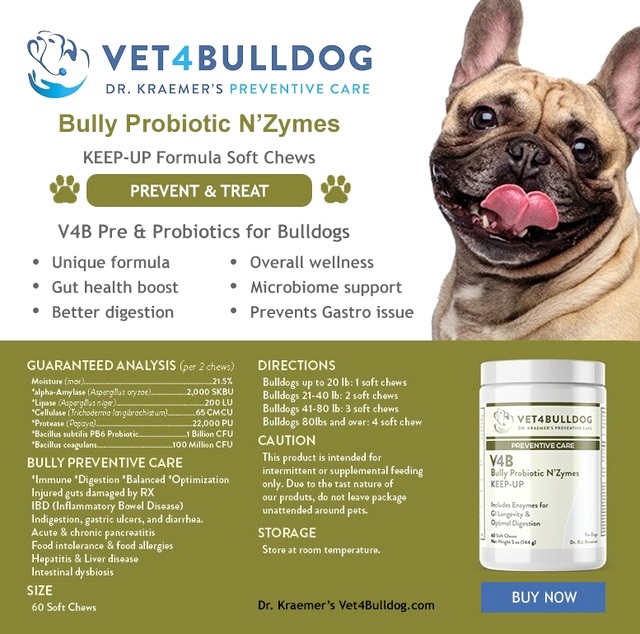
Once a cause has been identified and dealt with, or where your veterinarian has looked properly and found nothing specific, supporting the flora is a reasonable thing to do and this is the range built for it. It may help settle things over a good few weeks. If the issue is mainly stool consistency rather than the flora, the Perfect Poop formula is the narrower tool for that job. And if his breath is the real complaint, the honest answer is that no supplement addresses a diseased mouth: that is the dental page, not this one.
See the probiotic and digestion range
To be clear: supplements or topicals are not substitutes for prescribed treatment. If your dog is unwell, is being treated for a condition, or is already on medication, review any supplement or topical with your veterinarian so it fits the plan you are already following. This page is educational and is not a diagnosis or a treatment plan for your own dog.
Bulldog digestion: quick answers
Why does my Bulldog have such appalling wind?
Partly build and partly contents. A flat faced dog swallows a great deal of air with every meal and every panting session, and that air has to leave by one end or the other. On top of that, the breed does badly on diets that ferment heavily in the large bowel. So some of it is structural and permanent, and some of it is diet and fixable. What is worth knowing is that a sudden, dramatic change in wind, especially alongside loose stool or weight loss, is not a joke about the breed. That is worth a stool sample and a conversation with your veterinarian rather than an air freshener.
He throws up undigested food. What does that actually mean?
Possibly that he is not vomiting at all. If the food comes back undigested, with no heaving and no effort behind it, often soon after a meal, that is regurgitation, and it points at the esophagus rather than the stomach. The esophagus is the tube that should be carrying food down, and when it stops doing that properly the meal collects there instead and then reappears. The condition behind that is covered on the megaesophagus page. If instead there is real heaving and what comes up is partly digested or has bile in it, that is vomiting and the list of causes is a different one. Which of the two it is matters more than how often it happens, so note it next time.
Is a sensitive stomach simply normal for the breed?
Bulldogs do have genuine built in disadvantages here, and some degree of wind and noise goes with the face. But a sensitive stomach is a description, not a diagnosis, and it is also where real conditions go to hide. Every page linked above is something I have watched get dismissed for months as the breed being the breed. If the problem is constant, if it is getting worse, or if his weight or his coat is going with it, that is not a constitution. That is something with a name and it is worth finding.
Should I try a grain free or a raw diet?
Not as a first move, and not as a test. Grain free in particular has a reputation it has not earned: grain supplies useful nutrients and it feeds the beneficial bacteria in the bowel, and some grain free diets have been linked to a serious heart condition, which is covered on the grain free page. Raw brings its own question, which is bacterial, and it matters more in a household with young children or anybody immune compromised. None of this means a diet change is wrong. It means a diet change is a decision to make once, with your veterinarian, after the cheap tests have been done, rather than the thing you do instead of them.
His breath is awful. Is that coming from his stomach?
Usually not. In this breed the overwhelming majority of bad breath is coming from the mouth itself, and a Bulldog’s crowded, rotated teeth and undershot jaw make gum disease close to a certainty without active care. Have the mouth looked at before you go anywhere near the diet. Start with gingivitis and then dental and periodontal disease. It is worth adding that a mouth in that state is not just an odor problem: he swallows that infection all day, and the bacteria do not stay in the mouth.
How long should I give a new food before deciding it did not work?
Longer than most people do, and the exact stretch is your veterinarian’s call rather than a number off a web page. What I can tell you is that a few days proves nothing, and that a gut which has been inflamed needs a good few weeks to show you what it is going to do. The more common mistake is not impatience with one food, though, it is the carousel: four foods in three months, no single one given a fair run, and no record kept. Pick one, with advice, write down the date you started, and give it a proper chance.
If I only do one thing first, what should it be?
A stool sample, and a look in the mouth. Between them they are inexpensive, they need no preparation, and they settle or exclude a large share of what is on this page, including the parasites that no diet will touch and the dental disease that gets mistaken for a digestive complaint. Everything else on the list, the elimination trial, the imaging, the biopsy, is more involved and more expensive, and none of it should be started before those two have been done.
Recommended by Owners Approved by Bulldogs