


Breathing hard or fast, blue or gray tongue, marked weakness, or collapse after regurgitation? Seek emergency veterinary care. New coughing, fever, or lethargy also warrants prompt assessment for aspiration pneumonia. Do not force-feed a dog struggling to breathe.
“My French Bulldog, Oliver, has been retching and passively regurgitating his entire meal soon after he finishes his food. From your article I suspect it might be megaesophagus or GERD. Oliver is such an important part of our family. I was worried that he would inhale some of it and end up with pneumonia.”
Two things in that message are worth separating. Passive regurgitation of a whole meal is not vomiting, and the difference matters, because the list of things that cause one is not the list that causes the other. If it comes back up undigested and without effort, the food never reached the stomach, and the question becomes why the pipe is not moving it along.
Your worry about him inhaling it is the right worry. That is the complication that turns a feeding problem into a serious illness, and it is the reason this deserves a proper workup rather than another change of food. Ask for the airway to be assessed as part of that, not instead of it.
In the meantime, raise the bowl, give small amounts at a time, and keep him upright afterwards for as long as your veterinarian advises. Gravity is free, and here it is doing more work than anything you can buy.
Megaesophagus and GERD in Bulldogs and French Bulldogs
The bulldog esophagus is a muscular tube that serves as a vital part of the digestive system in dogs. It connects the throat (pharynx) to the stomach, facilitating the passage of ingested food and liquids.
BULLDOG ESOPHAGUS ANATOMY
The esophagus is a muscular tube that connects the mouth to the stomach, playing a critical role in the digestive process by transporting food and liquids.
The canine esophageal body contains striated muscle. Coordinated contractions, called peristalsis normally move swallowed food toward the stomach.
Lined with a mucous membrane, the esophagus is designed to lubricate and protect the food passage.
At its lower end, the esophagus features a muscular ring called the lower esophageal sphincter (LES), which functions as a valve to prevent stomach contents from flowing back into the esophagus, maintaining the efficiency of digestion.
Bulldog Megaesophagus and GERD: 5 Things to Know
- BOAS, reflux, and hiatal disease deserve assessment in Bulldogs, but megaesophagus can have several causes.
- Regurgitation is a common sign of megaesophagus.
- Regurgitation often leads to aspiration pneumonia, a potentially deadly disease
- Care includes weight management, the timely repair of BOAS, and elevated upright feedings
- Supplements do not replace diagnosis, an individualized feeding plan, or treatment of aspiration pneumonia.
Members of this bulldog community prefer prevention over RX
What is Bulldog Gastroesophageal Reflux Disease (GERD)?
Gastroesophageal Reflux Disease (GERD) in bulldogs occurs when the lower esophageal sphincter (LES), a valve between the stomach and esophagus, malfunctions.
Normally, this valve prevents stomach acids from flowing back into the esophagus. However, if the LES becomes loose or does not close properly, it allows stomach acids to splash back upward, leading to irritation, inflammation, and esophagitis.
This condition can cause significant discomfort and potentially lead to further complications if left untreated.
🚨GERD===> vomiting, gastric reflux===>esophagitis===>megaesophagus
WHAT CAUSES BULLDOG & French Bulldog GERD?
There are multiple underlying causes of bulldog GERD, including:
- Loose LES (lower esophageal sphincter)
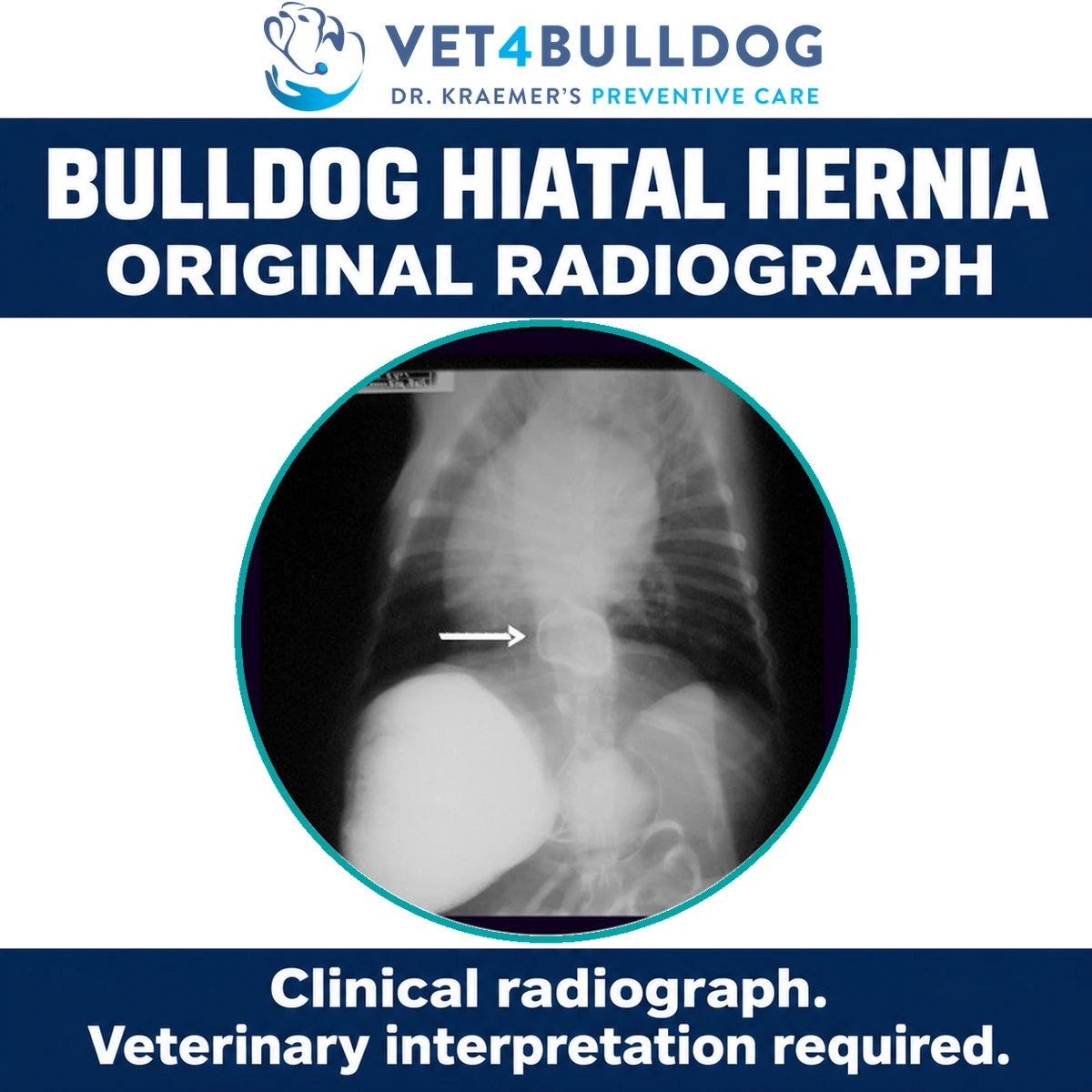
- Hiatal hernia
- Obesity
- Certain diets
- Drugs like NSAIDs
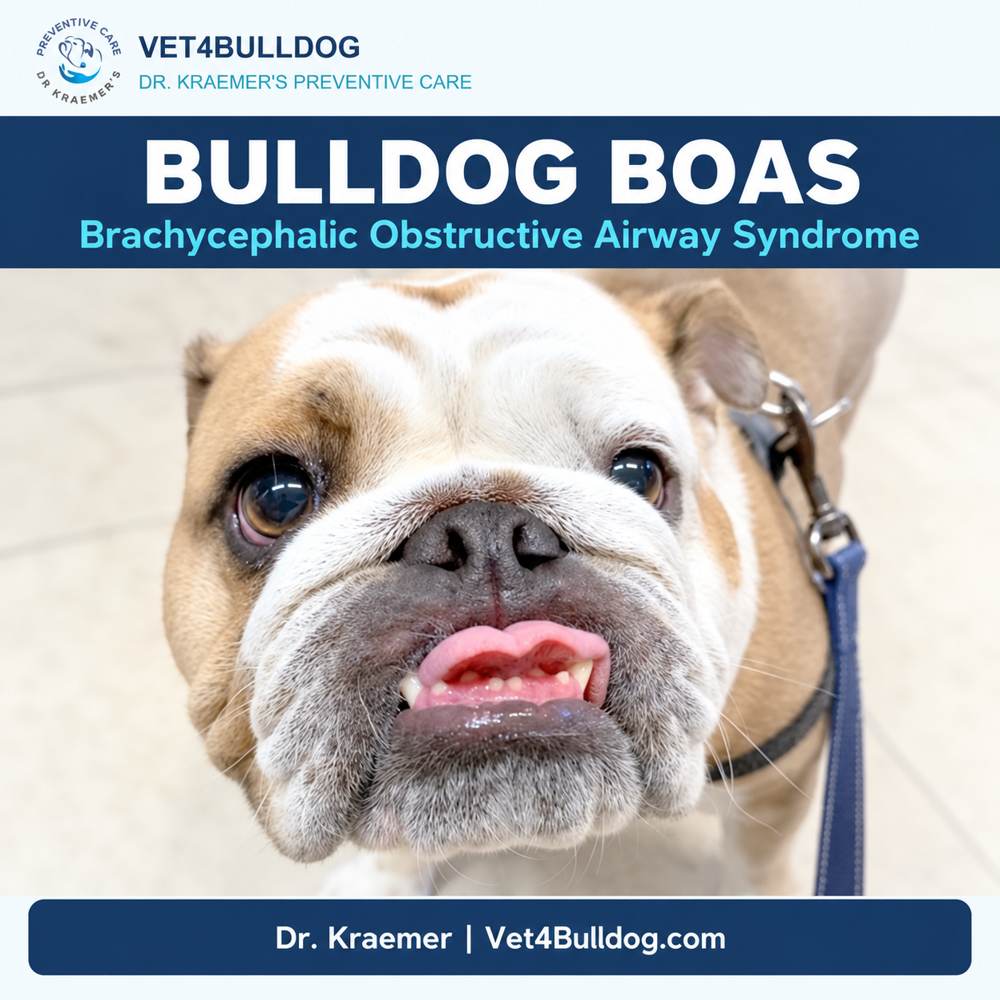
- BOAS (brachycephalic obstructive airway syndrome)
Bulldog and French Bulldog ESOPHAGITIS
Persistent GERD, vomiting, and gastric reflux can cause ongoing damage to the esophageal lining as gastric acid erodes its sensitive tissue, leading to inflammation, redness, and swelling, a condition known as esophagitis.
Over time, chronic esophagitis results in the formation of scar tissue along the esophagus, which both stiffens and weakens its muscles.
This makes it harder for the esophagus to contract properly and push food down into the stomach. As the muscles weaken and scar, the esophagus can dilate and form a pouch-like pocket, a condition medically referred to as megaesophagus.
What is Bulldog and French Bulldog MEGAESOPHAGUS?
Megaesophagus in Bulldogs and French Bulldogs is a medical condition where the esophagus becomes abnormally
- enlarged
- dilated
- and forms a distended pouch
This esophageal pocket traps chewed food and liquids, preventing them from moving efficiently down to the stomach. As a result, your bulldog may experience regurgitation, difficulty swallowing, and inadequate nutrition due to the inability to properly transport food to the stomach for digestion.
What Causes Megaesophagus in Bulldogs and French Bulldogs?
Megaesophagus may be congenital, have no identified cause, or occur with other disease. Bulldog assessment should include possible neuromuscular, obstructive, and other causes as well as reflux and Brachycephalic Obstructive Airway Syndrome (BOAS).
1. MEGAESOPHAGUS DUE TO BOAS:
Airway disease can coexist with reflux and swallowing problems. Features of BOAS that warrant assessment include:
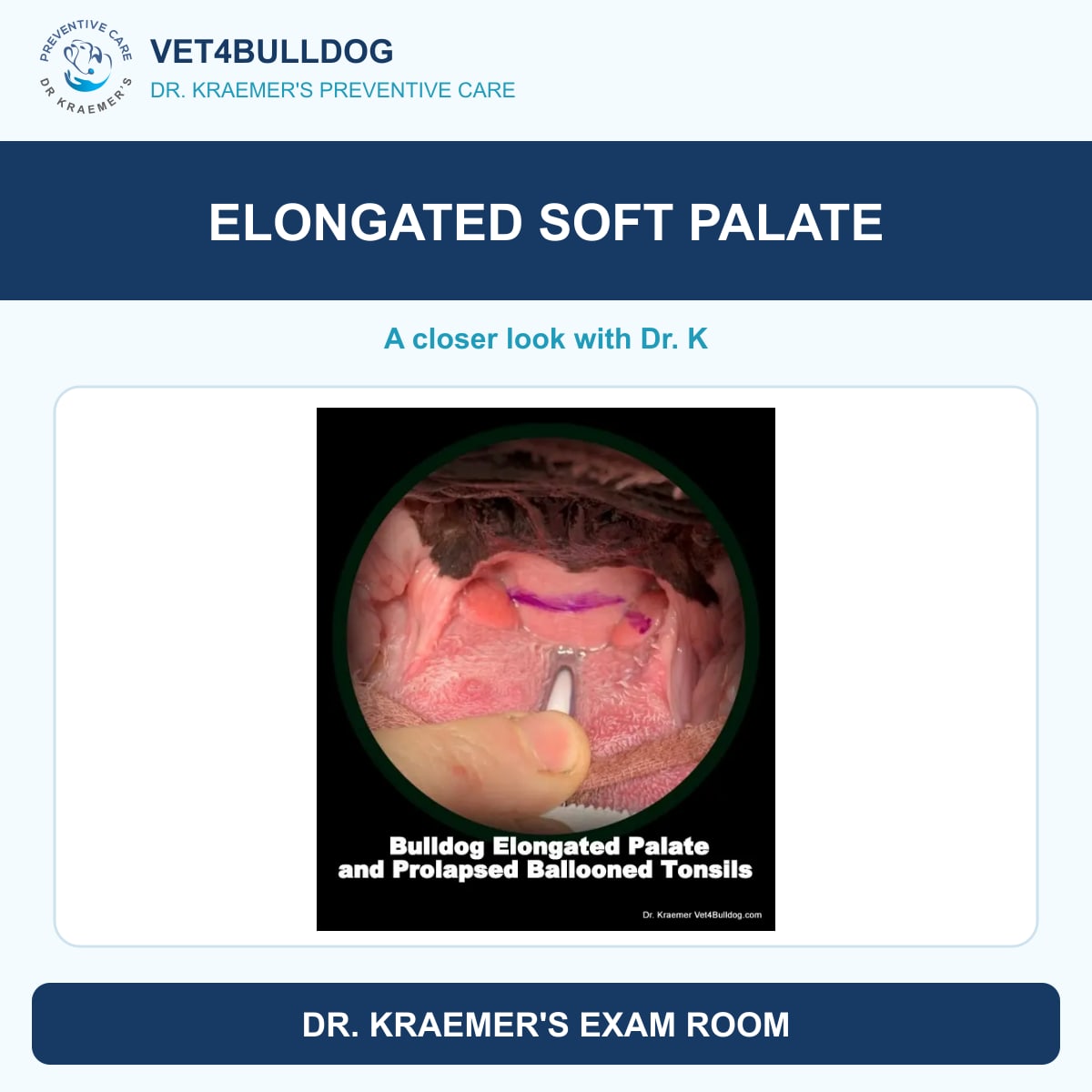
- Elongated Soft Palate
- Stenotic Nares
- Others:
- Everted Laryngeal Saccules
- Hypoplastic Trachea
- Laryngeal Collapse
- Swollen Nasal Turbinate
- Obstructing Aberrant Nasal Turbinate (CAT)
- Laryngeal Obstruction
- Oropharyngeal Narrowing
BOAS can be associated with gastrointestinal problems; megaesophagus is not an inevitable outcome.

Those BOAS changes include:
- Airway compression abnormalities
- Airway resistance
- Negative intra-airway pressure
- Intra-abdominal pressure
- High vasovagal tone
🚨BOAS===>gastric reflux===>esophagitis===>megaesophagus===>regurgitation
2. MEGAESOPHAGUS DUE TO NON-BOAS MEDICAL CONDITIONS
Other possible underlying problems include:
- Esophageal obstructions due to a foreign body
- GERD
- Esophageal obstructions due to stricture or mass
- Neuromuscular diseases
- Infectious diseases
- Immune system abnormalities
- Hormonal disorders and toxins
- Diaphragmatic Hernia
- Esophageal and gastric Sphincter problems
What are The Symptoms of Bulldog and French Bulldog Megaesophagus?
- REGURGITATION: undigested whole food
- HACKING and RETCHING
- WEIGHT LOSS
- DYSPHAGIA: Difficulty swallowing
- COUGH: mostly due to the aspiration of acid and food into the lungs
What is The Difference between Regurgitation and Vomiting?
Regurgitation is usually passive; vomiting involves active retching or abdominal effort. A short video of an episode may help your veterinarian distinguish them, provided recording does not delay care.
Some bulldog owners fail to distinguish between regurgitation and vomiting.
It’s crucial to recognize the clear differences and understand the distinct underlying causes of each.
VOMITING BULLDOG:
- STOMACH: Food that reaches the stomach interacts with digestive juices and is mixed up with bile
- CONTRACTION & EXPULSION: involve retching, nausea, with forceful stomach contractions, and expulsion
- COMMON TO:
- gastritis
- gastroenteritis
- viral, bacteria
- dietary indiscretion
- food poisoning
REGURGITATING BULLDOG:
- ESOPHAGUS: food that never reached the stomach, therefore is whole in appearance
- PASSIVE EXPULSION: effortless expulsion, passive
- COMMON TO:
- Megaesophagus
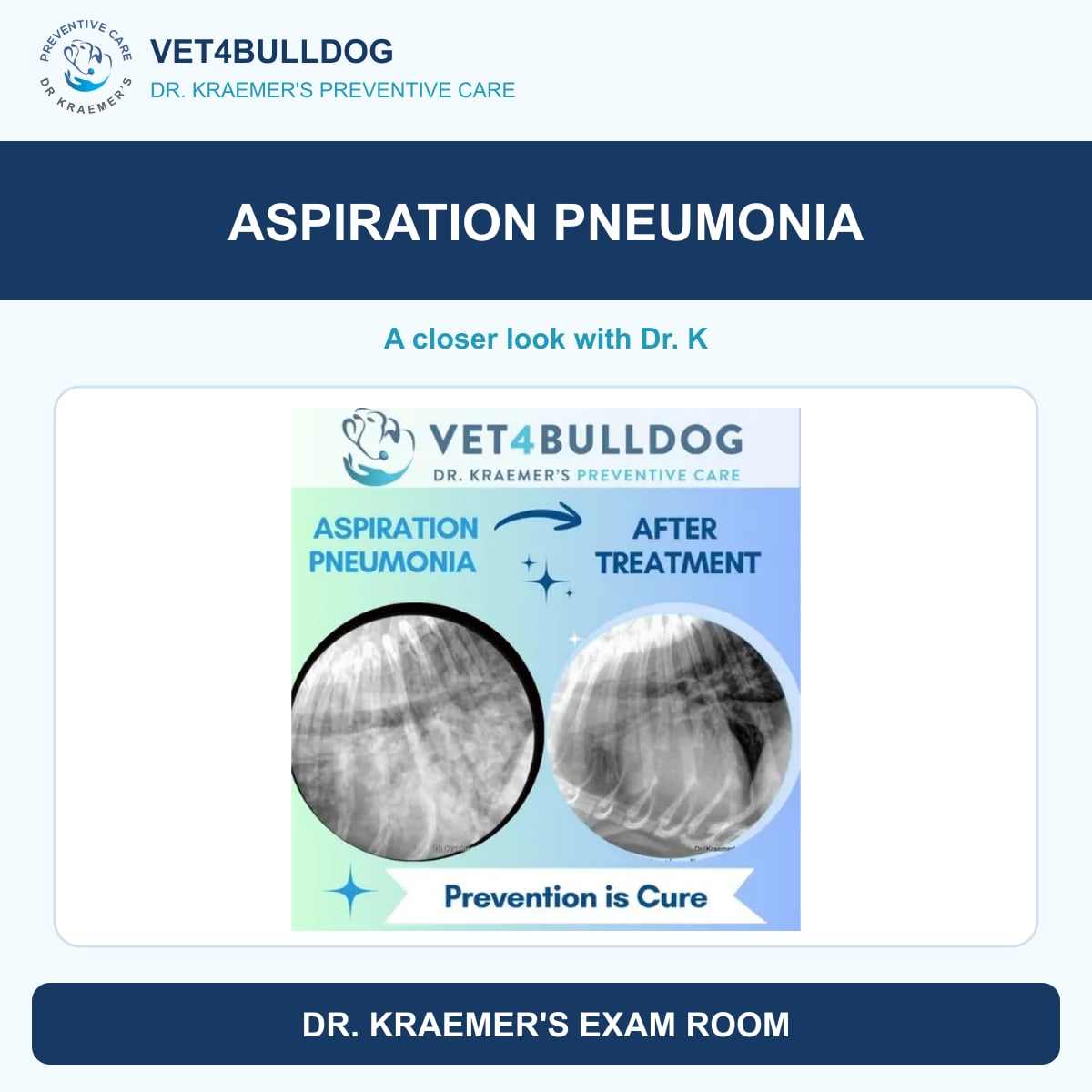
How does Bulldog Megaesophagus Cause ASPIRATION PNEUMONIA?
In brachycephalic breeds like French bulldogs and English Bulldogs, regurgitated, undigested food can accidentally enter the trachea, which may then pass into the lungs.
This condition, known as aspiration, often causes inflammation and infection in the lower airway, leading to a serious condition called aspiration pneumonia.
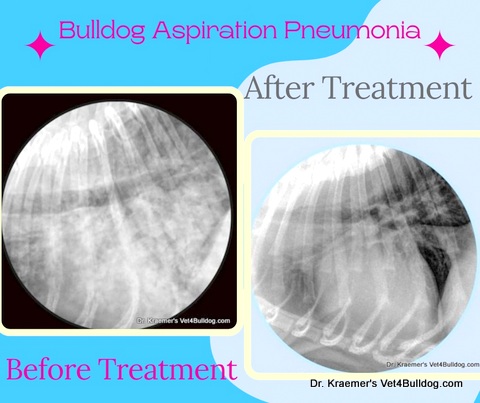
🚨BOAS===> vomiting, gastric reflux===>esophagitis===>megaesophagus===>regurgitation===>aspirating===>pneumonia
How to Best Diagnose Megaesophagus?
Many tests should be considered, but the most important ones for bulldogs and French bulldogs are:
1. NOSE AND SOFT PALATE EVALUATION
Airway assessment is relevant in Bulldogs, especially when breathing noise or effort accompanies regurgitation. It should be part of a broader examination, not the assumed explanation for every case.
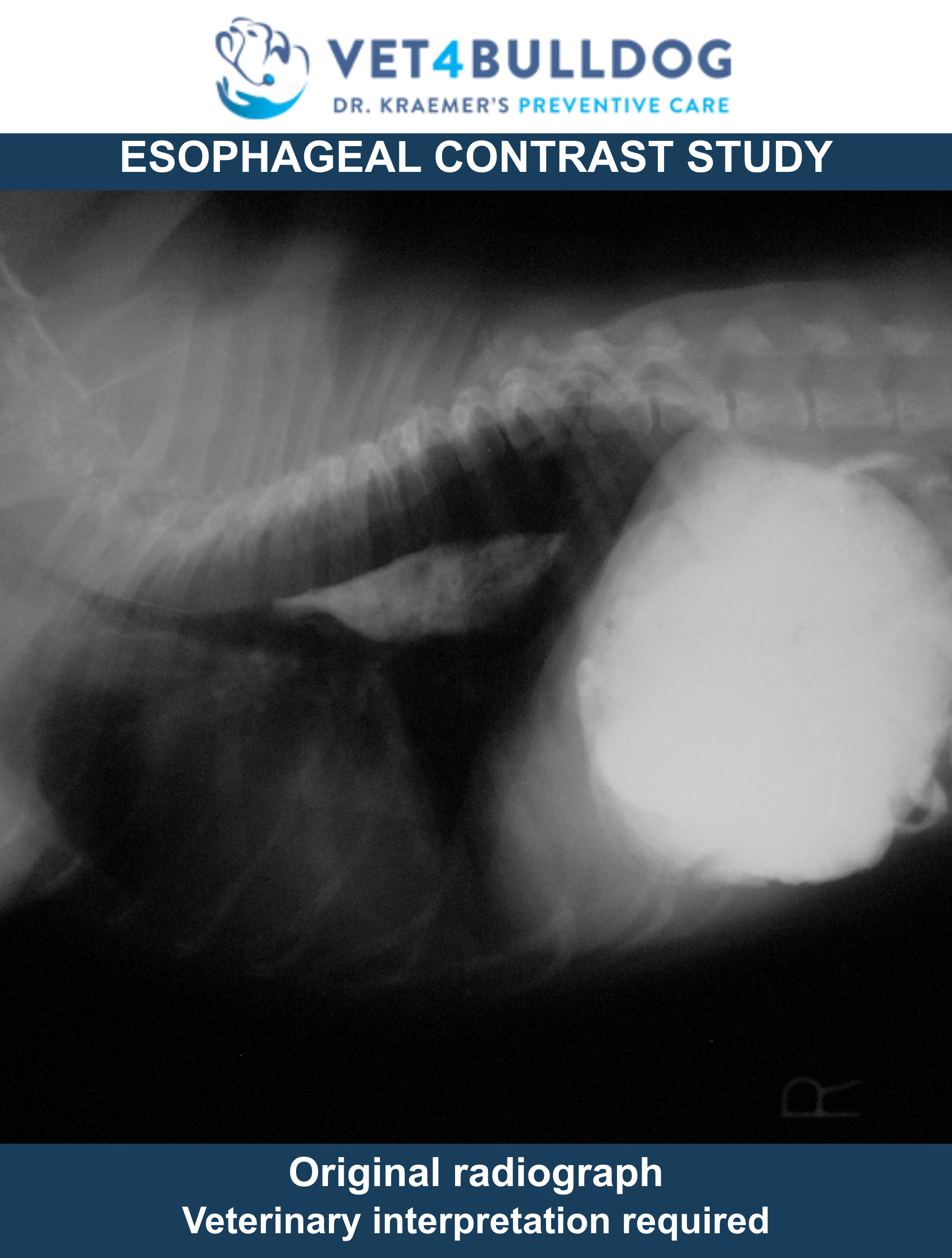
2. CONTRAST RADIOGRAPHS:
Chest radiographs may identify esophageal enlargement and aspiration-related lung changes. Contrast studies are selected case by case because swallowed contrast can also be aspirated.
3. OTHER IMAGING:
Endoscopy and ultrasound.
Gravity before pharmacy
Most of what helps a regurgitating bulldog costs nothing at all. The bowl goes up, the portion goes down, and the dog stays upright afterwards. I have watched owners spend a long stretch changing diets while still feeding from the floor, and the food texture was never the thing that needed changing.
Keep a short written record. The date, what came back up, how long after the meal it happened, and his weight once a week. A good few weeks of that tells your veterinarian more than any description you can give across the exam table, and it is the difference between guessing at a feeding plan and adjusting one.
One word about the medications further down this page. They are not interchangeable, and that catches people out. A drug that settles vomiting does not stop regurgitation, because regurgitation is not vomiting. Getting the diagnosis right first is what makes the prescription worth having.
How to Prevent and Treat Megaesophagus in Bulldogs and French Bulldogs?
Managing the megaesophagus in bulldogs requires multiple steps.
1. MEGAESOPHAGUS DIETS:
Ask your veterinarian to plan meal size, frequency, calories, food texture, and water delivery. Some dogs tolerate a slurry better; others do better with formed food. Record regurgitation and weight changes to guide adjustments.
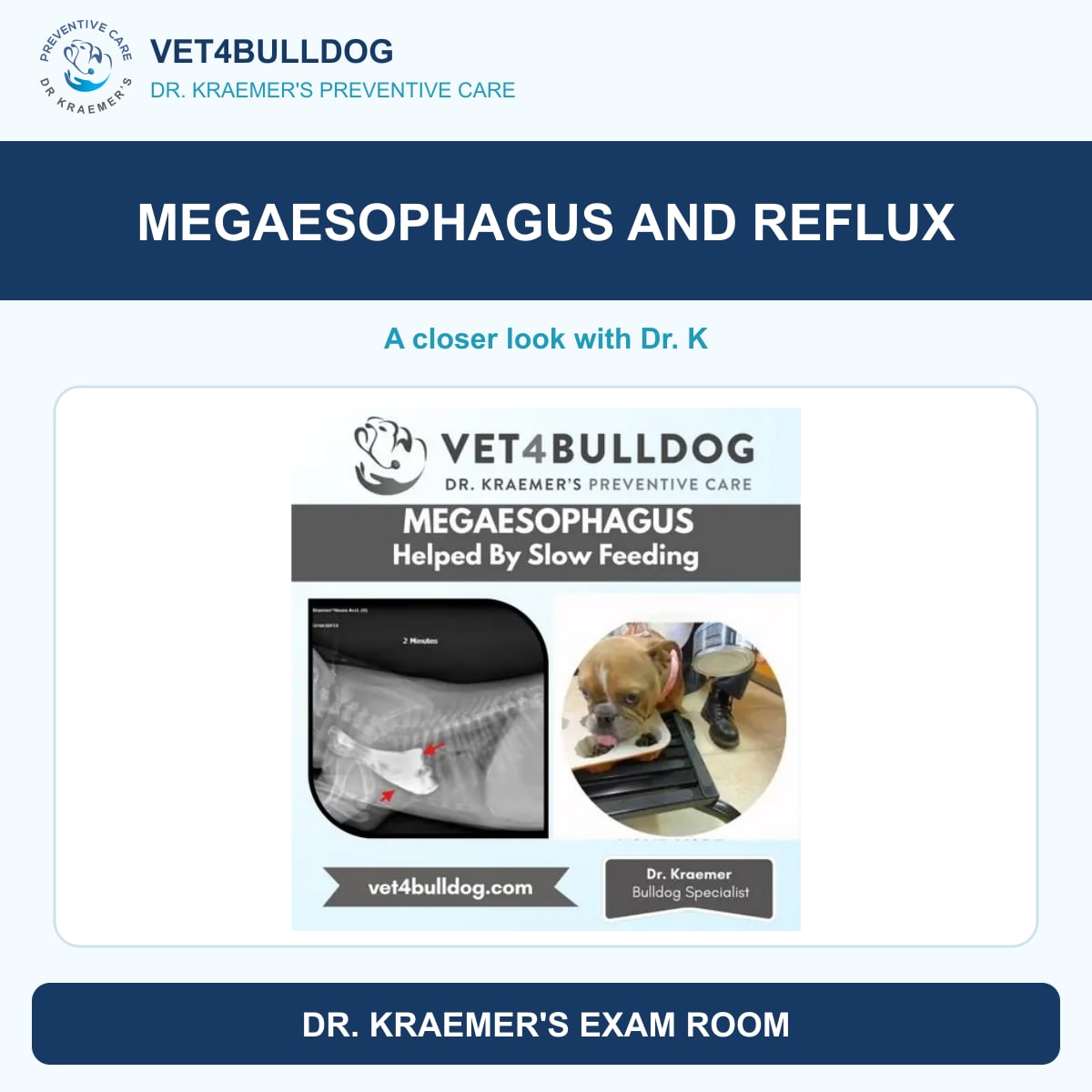
Raise the food and give only a little at a time, as demonstrated in this video
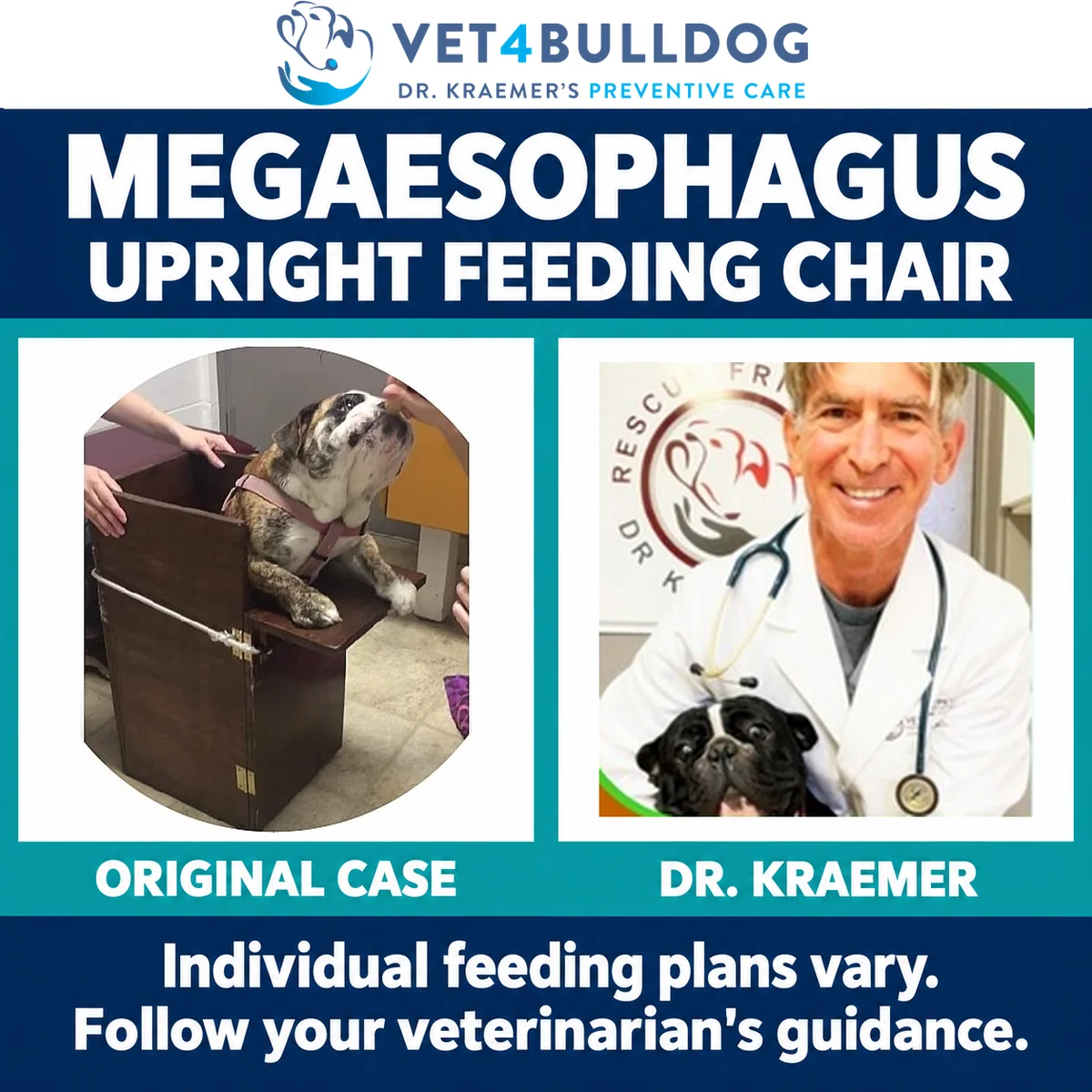
2. BULLDOG MEGAESOPHAGUS UPRIGHT FEEDING:
For bulldogs with megaesophagus, feeding should be done in an elevated position to use gravity to help move food toward the stomach. A custom “Bailey” chair is recommended, which places your bulldog in an upright position, ensuring that meals are more easily guided downward into the stomach.
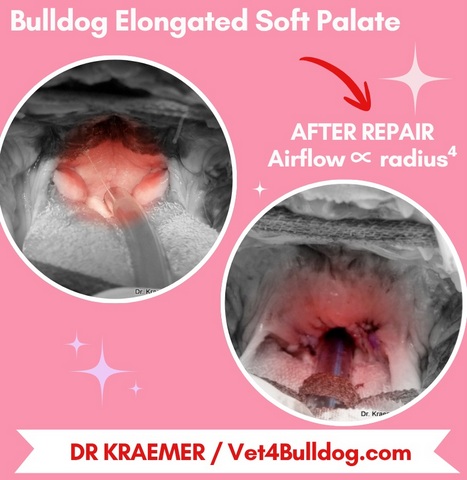
3. MEGAESOPHAGUS SOFT PALATE & NARES REPAIR:
An elongated soft palate and stenotic nares may contribute to clinically important airway obstruction.
Discuss airway treatment with a surgeon experienced in Bulldogs. The decision depends on the examination and respiratory signs; airway surgery does not guarantee resolution of megaesophagus.
4. BULLDOGMEGAESOPHAGUS, and GERD RX
These prescription drugs have different roles and are not interchangeable. Your veterinarian selects treatment for the diagnosed problem and reviews interactions; anti-vomiting medication does not necessarily stop regurgitation.
- Antiemetics (anti vomit):
- Reglan
- Cerenia
- Anti-Acid/Reflux:
- Famotidine
- Omeprazole
- Other:
- Cisapride
- Viagra (esophageal sphincter)

VIAGRA TREATMENT FOR BULLDOG MEGAESOPHAGUS:
Sildenafil, commonly known as Viagra, was originally developed to treat cardiovascular conditions, with its role in managing erectile dysfunction being a later, unintended discovery. Beyond its well-known use, sildenafil is also employed in both humans and pets to address pulmonary hypertension by relaxing the smooth muscles in the lungs and reducing the heart’s workload.
A 2022 randomized crossover study of compounded liquid sildenafil in dogs with generalized megaesophagus reported fewer regurgitation episodes. This is a selected-use option to discuss with a specialist, not a general cure. Its proposed role concerns relaxation at the lower esophageal sphincter, not restoration of normal esophageal movement by dilating nearby blood vessels.
MEGAESOPHAGUS and GERD THERAPEUTIC SUPPLEMENTS:
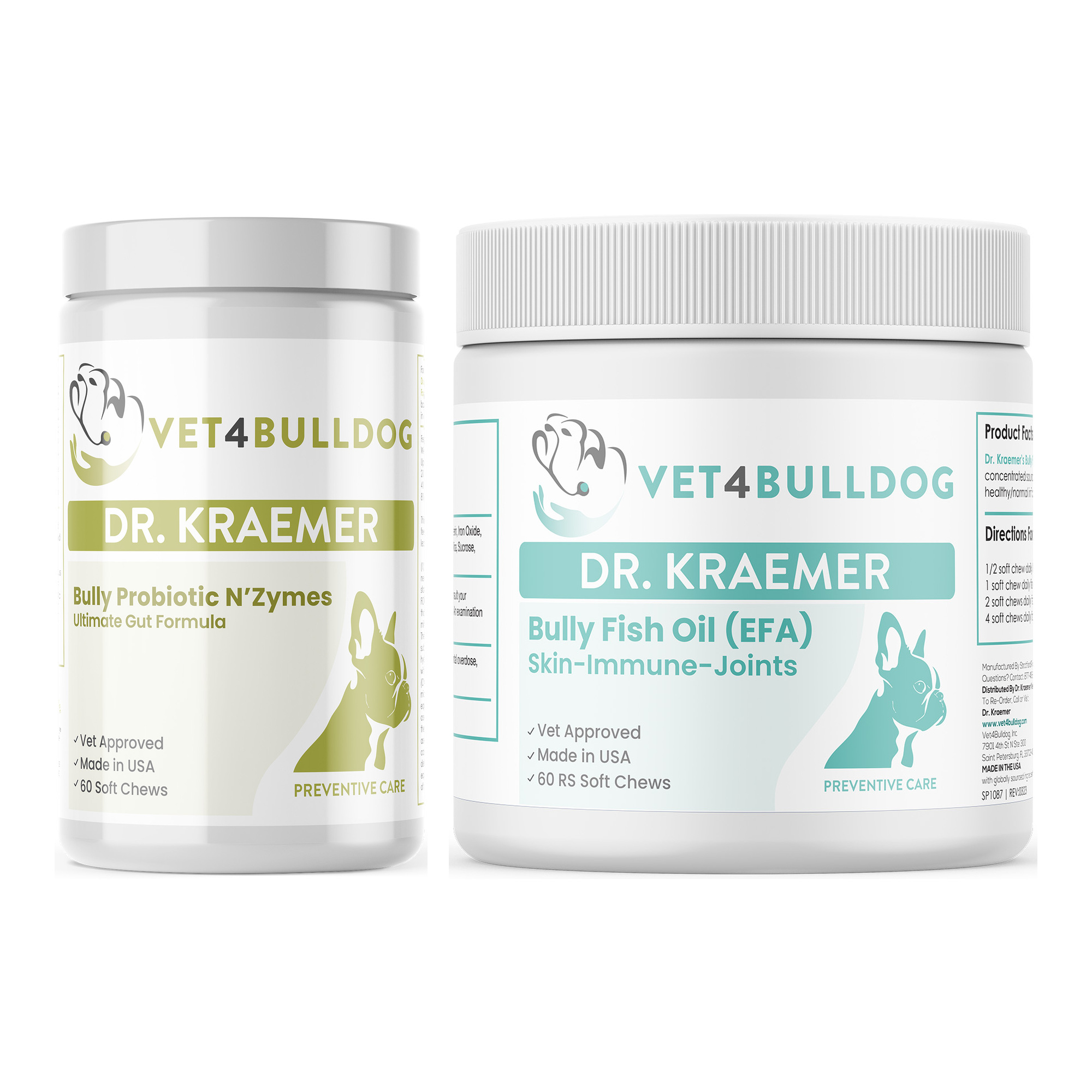
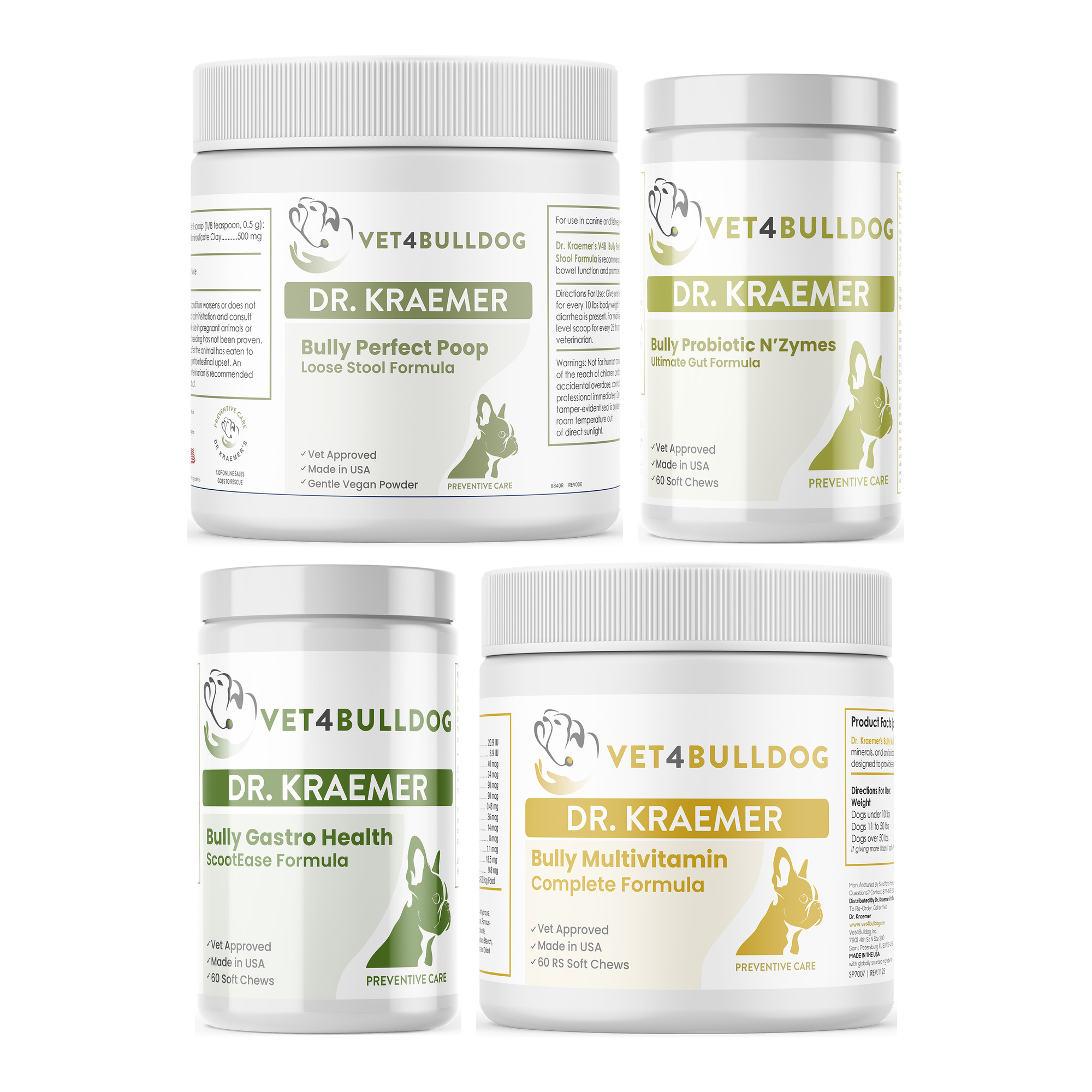
- Dr. Kraemer’s V4B Bully Probiotics Bundle helps balance the gut microbiome
- V4B Bully Immune Support and Anti-Oxidants are optional supplements to discuss with your veterinarian; they do not treat esophageal dilation
- V4B Bully HEMP Calm & Relax and Bully StressLess help reduce anxiety
Regurgitation is not vomiting, and the difference matters
If you take one piece of vocabulary from this page, take this one, because it changes what your veterinarian looks for first.
Vomiting is active. There is heaving, the belly works, the dog looks like he knows it is coming, and what arrives has usually been in the stomach a while. Regurgitation is passive. The food simply falls out, often still in the shape of the tube it was sitting in, with no warning and no effort at all. Owners describe both as being sick, because from across the kitchen they look the same.
They point at completely different parts of the body. Vomiting sends me to the stomach and the intestines. Regurgitation sends me to the esophagus, which is where megaesophagus lives. Get the word wrong on the phone and the first round of tests can be aimed at the wrong organ entirely.
So watch for the effort, not the mess. Was there heaving, or did it just arrive? That is the whole question. If you are not sure, film it on your phone the next time it happens. Ten seconds of video answers it instantly and no description ever will.
And tell the practice about any coughing or breathing change that has followed an episode, because that combination needs looking at sooner rather than at the next convenient appointment.
Megaesophagus in Bulldogs and French Bulldogs / TIPS & WARNINGS:
Here are a few megaesophagus and GERD tips and warnings courtesy of Dr. Kraemer
#1 MEGAESOPHAGUS WHOLE vs. DIGESTED FOOD TIP:
In cases of bulldog megaesophagus, the material expelled after regurgitation is typically whole, meaning it is undigested.
This regurgitation occurs shortly after your dog has eaten.
In contrast, vomiting involves the expulsion of partially or fully digested content, often mixed with yellow bile.
#2 MEGAESOPHAGUS CONTRAST RADIOGRAPH TIP:
Your veterinarian decides whether plain radiographs are sufficient or a contrast study, swallowing evaluation, endoscopy, or further tests are needed. Contrast is not automatically required.
#3 GERD & MEGAESOPHAGUS UPRIGHT FEEDING TIP
For serious cases of bulldog megaesophagus, I recommend a special chair that forces your bulldog puppy to eat in an upright, near-vertical position.
Ask your veterinarian how long your dog should remain upright after meals and water; the duration should fit the individual feeding assessment.
#4 BULLDOG MEGAESOPHAGUS FOOD CONSISTENCY TIP:
Use the food consistency selected for your dog’s swallowing function. A smooth diet is not the best choice for every dog; discuss any change with your veterinarian.
#5 MEGAESOPHAGUS & GERD SLOW FEEDER TIP:
For megaesophagus and GERD, I recommend using an elevated slow feeder, as demonstrated in this photo. You can purchase a specialized slow feeder or utilize something like a cupcake baking plate. Elevating the feeder can be achieved using a step or by hand-feeding from a higher position for effective management
#6 BULLDOG GERD and MEGAESOPHAGUS RX TIP:
Do not add a daily medication without a prescription plan. Promotility drugs, antiemetics, and acid suppressants act differently and may not be appropriate for the same dog.
Remember, prescription medication can have long-lasting side effects
#1 GERD and MEGAESOPHAGUS PNEUMONIA WARNING:
Aspiration pneumonia cases require aggressive antibiotic therapy and may also require hospitalization, which includes:
- oxygen supplementation
- injectable nausea and anti-vomiting medication
- intravenous fluid therapy
- nursing care
All bulldog aspiration pneumonia should be considered serious and potentially life-threatening.
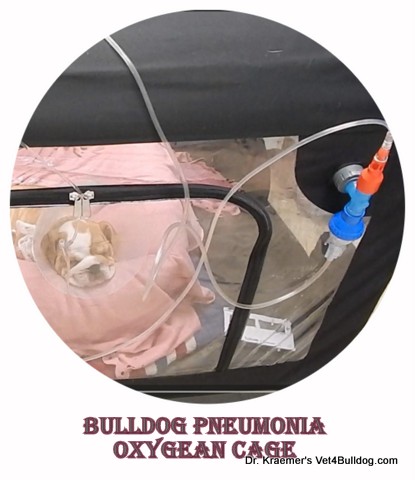
#2 BULLDOG MEGAESOPHAGUS & GERD BOAS WARNING:
Bulldogs and French Bulldog puppies suffering from Brachycephalic syndrome, like the elongated palate, stenotic nares, and hypoplastic trachea are at a higher risk of incurring megaesophagus
#3 MEGAESOPHAGUS & GERD BLENDED DIET WARNING:
Do not assume blending food solves regurgitation. Follow the individualized feeding plan and report coughing, weight loss, or increased episodes rather than repeatedly changing food texture on your own.
He brings his food back up whole. Is that vomiting?
Does the flat face cause this?
How high does the bowl need to be, and how long does he stay up?
Should I blend his food?
Will a probiotic or a supplement fix this?
What is the risk everyone keeps mentioning with the lungs?
I read something about Viagra for this. Is that real?
His medication is not helping. Why?
More Help from Dr. Kraemer
- Brachycephalic airway syndrome
- Elongated soft palate
- Stenotic nares, the pinched nose
- Three common bulldog emergencies
- What you can handle at home, and when to see the vet
Trusted by Vets ~ Recommended by Owners ~ Approved by Bulldogs
Shop Gut & Digestive Support →
References
- Merck Veterinary Manual. Diseases of the Esophagus in Small Animals
- American College of Veterinary Internal Medicine. Megaesophagus in dogs
- Quintavalla F et al. Sildenafil improves clinical signs in dogs with idiopathic megaesophagus, a randomized crossover study. 2022
- Poncet CM et al. Prevalence of gastrointestinal tract lesions in brachycephalic dogs with upper respiratory syndrome. Journal of Small Animal Practice
- Packer RMA et al. Impact of facial conformation on canine health, brachycephalic obstructive airway syndrome. PLOS ONE
To be clear: supplements or topicals are not substitutes for prescribed treatment. If your dog is unwell, is being treated for a condition, or is already on medication, review any supplement or topical with your veterinarian so it fits the plan you are already following. This page is educational and is not a diagnosis or a treatment plan for your own dog.