

Introduction to Bulldog and French Bulldog Head Tremors
Head tremors in bulldogs and French bulldogs go by several names, and owners searching at two in the morning will find all of them:
- Bulldog head bobbing
- Bulldog head shaking
- Bulldog head nodding
- Idiopathic bulldog head tremors
Head tremors, head shaking and head bobbing are interchangeable terms, and the cause is usually idiopathic.
Is Bulldog Head Bobbing Painful?
As far as we know, idiopathic head tremor in bulldogs and French bulldogs is not a painful condition and is not a distress signal. These episodes are generally considered benign and do not indicate a serious health problem. They look more like a neurological glitch than a symptom of an underlying illness, and they do not appear to cause the dog any discomfort.
“My English Bulldog, Zoey, is having unusual head tremors, shaking and bobbing. It is quite distressing to witness. She has no history of seizures or epilepsy. I have read about various possible causes but I am unsure whether this is an emergency. Is there something I can do at home for now? I watched a video on vet4bulldog that looks like what Zoey has, and you described that condition as idiopathic bulldog head tremors. Is that what it is?”
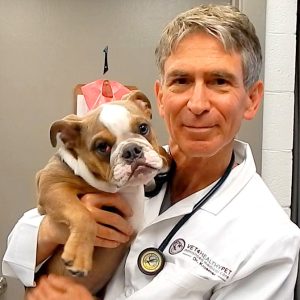
What Sara describes does fit the idiopathic picture, and the detail that matters most is the one she gave me without realizing it: Zoey knows she is there. In an idiopathic episode the dog stays alert and responsive and will take a treat from your hand mid-tremor. That is the single most useful thing you can tell a vet, and the second most useful is a video. Film it, note what the dog was doing beforehand, and bring both to the appointment. Then let your veterinarian decide whether anything further is needed. Most of these dogs need reassurance and a steady nervous system, not a prescription.
Bulldog Head Tremors: Five Things to Know
- The most common origin of bulldog head tremors is unknown, which is what idiopathic means.
- The condition is largely confined to bulldog breeds and is usually painless and harmless.
- Medication is usually not required, and idiopathic tremors are not seizures.
- An episode can often be stopped by diverting the dog’s attention to food or a toy.
- For nerve and calm support, see Dr. Kraemer’s Bulldog Head Tremors range.
Members of this bulldog community prefer prevention over RX

What Causes Head Tremors in Bulldogs and French Bulldogs?
The precise cause remains elusive. Despite a good deal of research, no definitive reason has been found for these seemingly spontaneous head-bobbing motions. Several factors may contribute.
- Idiopathic: cause unknown, and by far the most common.
- Focal seizures
- Intention tremors
- Sleep disorder
- Neurological imbalance: some theories point to imbalances in particular neurotransmitters.
- Genetics: a genetic link seems likely, given how much more often this is seen in bulldogs than in other breeds.
- Structural differences: the brain region responsible for coordination and balance may play a part.
- Environmental: toxins and stress.
- Nutritional: various mineral and vitamin deficits.
The most common type of bulldog and French bulldog head tremor is idiopathic.
1. Bulldog Idiopathic Head Tremors
The origin of this head nodding and bobbing is mostly unknown, which is why it is called benign. It is the most common reason for this strange and, at times, frightening episode.
Are Bulldog Head Tremors Harmful?
Idiopathic head tremors are usually harmless. The exact cause remains unclear, but it is reassuring for owners to know that these episodes typically do not lead to further complications and do not usually call for extensive treatment.
It can be mild, subtle and brief in some dogs, and more dramatic in others.
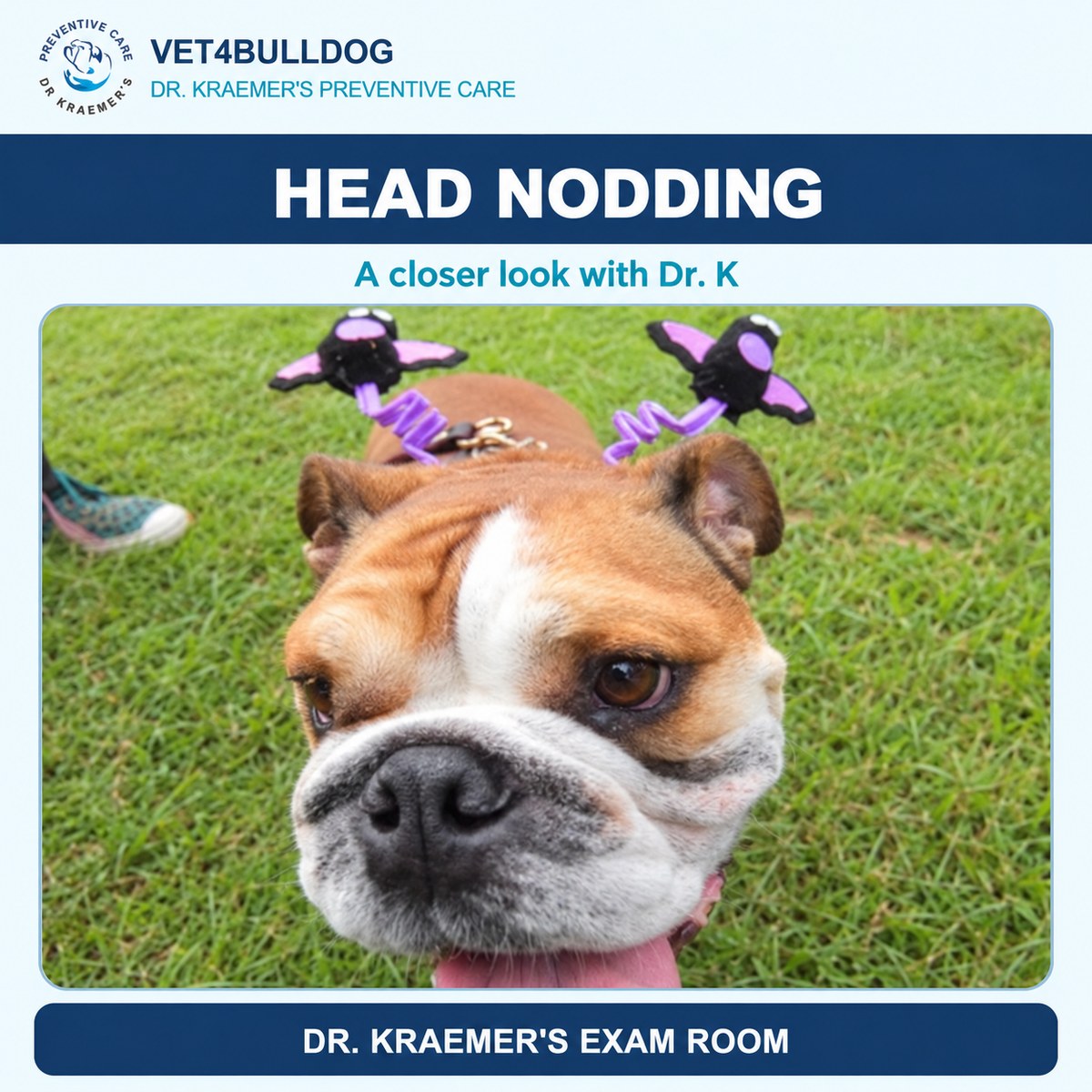
2. Bulldog Head Nodding Focal Seizure
In some cases a focal seizure, or a stretch mechanism localized to the head, could be the underlying cause.
The area of the brain involved in a focal seizure head tremor is the region that controls movement. When that part of the brain has abnormal electrical activity, the result can be involuntary head movements that look very much like the commoner idiopathic head shaking.
How Can I Tell a Head Tremor That Is Due to a Focal Seizure?
Telling the two apart matters, because it decides whether anything needs treating at all. That is a call for your veterinarian, and a video makes it far easier for them to make.
Focal Seizure and Idiopathic Head Tremor: What Looks the Same
- Movement: both can show as head shaking, bobbing or nodding.
- Frequency and intensity: both vary from dog to dog and episode to episode.
- Spontaneity: both can look unpredictable to a casual observer.
Focal Seizure and Idiopathic Head Tremor: What Differs
- Awareness: a dog may seem disoriented or unresponsive during a seizure, while awareness appears undisturbed during an idiopathic episode.
- Other movements: focal seizures may involve twitching, drooling, or changes in posture or eye movement.
- Triggers: excitement, stress or loud noise can set off a focal seizure, which is not the case with idiopathic episodes.
The brain region involved in a bulldog focal seizure head tremor is the same one that controls movement.
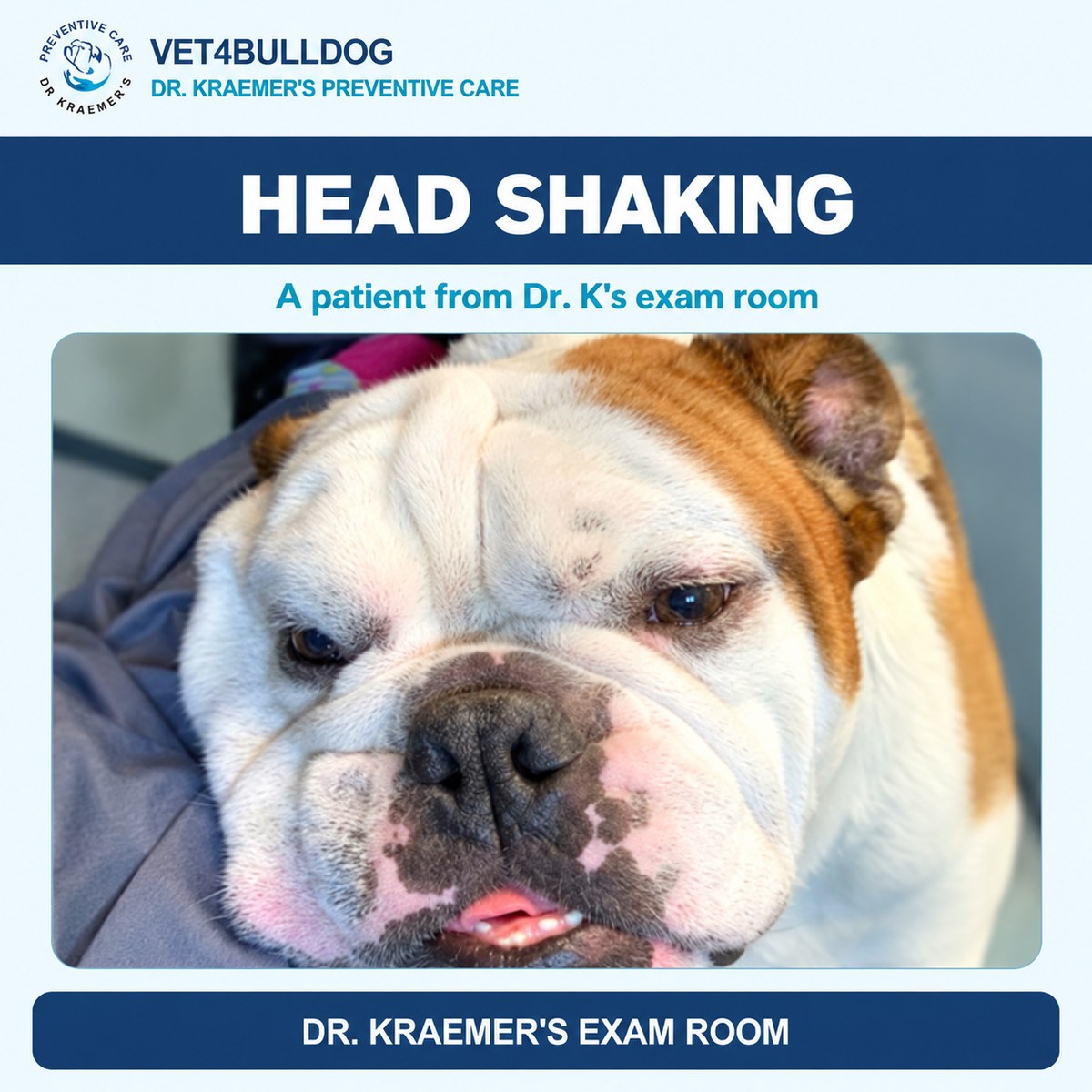
3. Bulldog Head-Shaking Intention Tremors
Intention tremors can look very similar to the commoner idiopathic head shaking. They originate in the cerebellum, and you can often tell them apart by their jerkier movement.
Idiopathic head shaking is generally considered harmless. Intention tremors, left unattended, can worsen and may start to affect everyday activities.
Intention Tremors: Prevent and Treat
Idiopathic head shaking may need no specific treatment. Intention tremors often benefit from medication or other management. A proper diagnosis from your veterinarian is what decides between the two, and it is worth having rather than guessing.
Intention Tremors and Idiopathic Head Tremors: What Looks the Same
- Both can involve head shaking, bobbing or nodding.
- Both can occur sporadically, with varying frequency and intensity.
- Both can look alarming to an owner at first glance.
Intention Tremors and Idiopathic Head Tremors: What Differs
- Origin: intention tremors stem from the cerebellum, the brain region responsible for coordination and balance. Idiopathic tremors have a multifactorial origin.
- Movement: intention tremors are jerkier and less rhythmic than the wave-like head shaking of idiopathic cases, and they become more pronounced during deliberate movement such as eating, drinking or walking.
- Triggers: idiopathic head shaking appears on its own, while intention tremors are typically set off by a voluntary action.
Bulldog intention tremors are jerkier, and are usually seen while your bulldog eats or drinks, or during other voluntary movement.
4. Bulldog Head Tremors Due to a Sleep Disorder
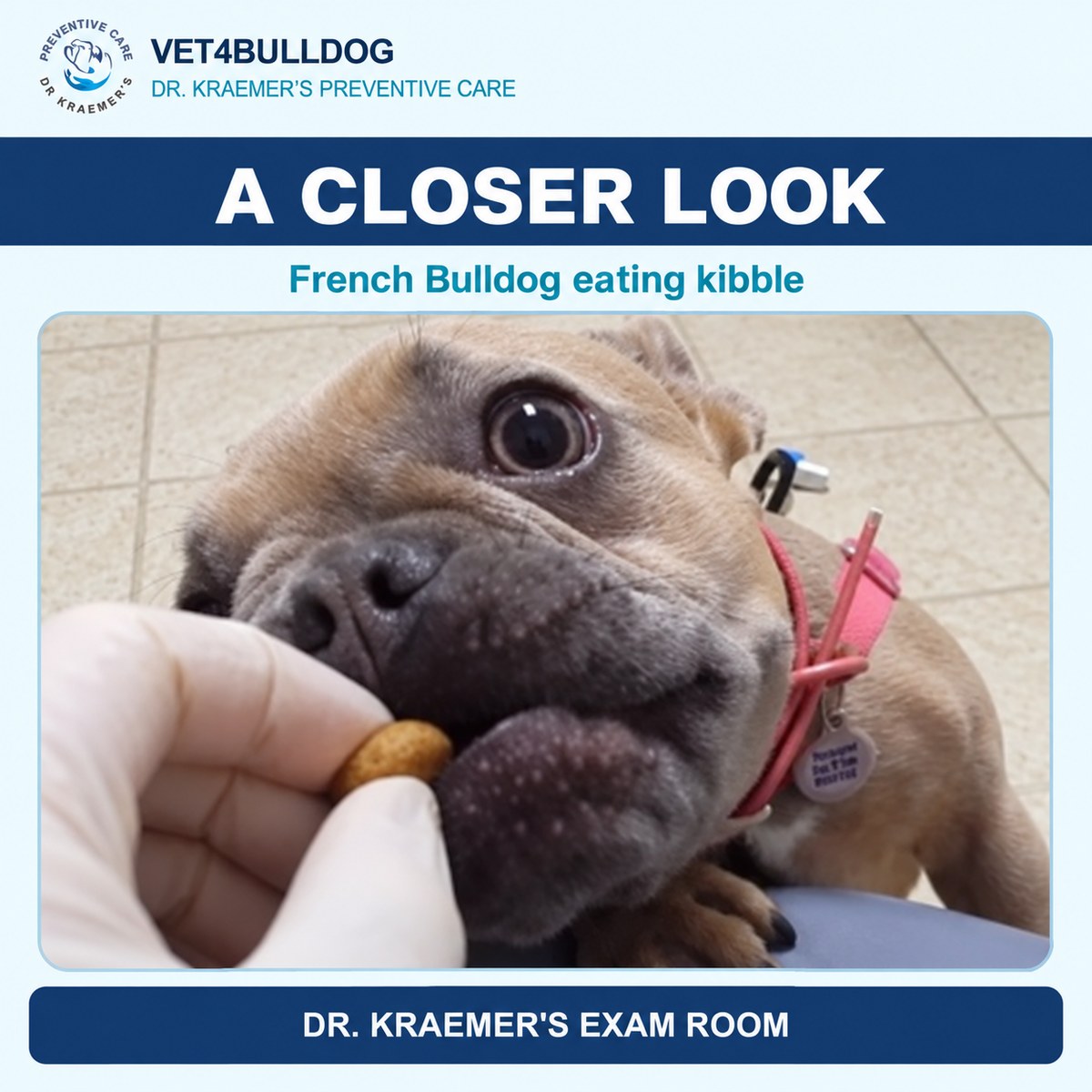
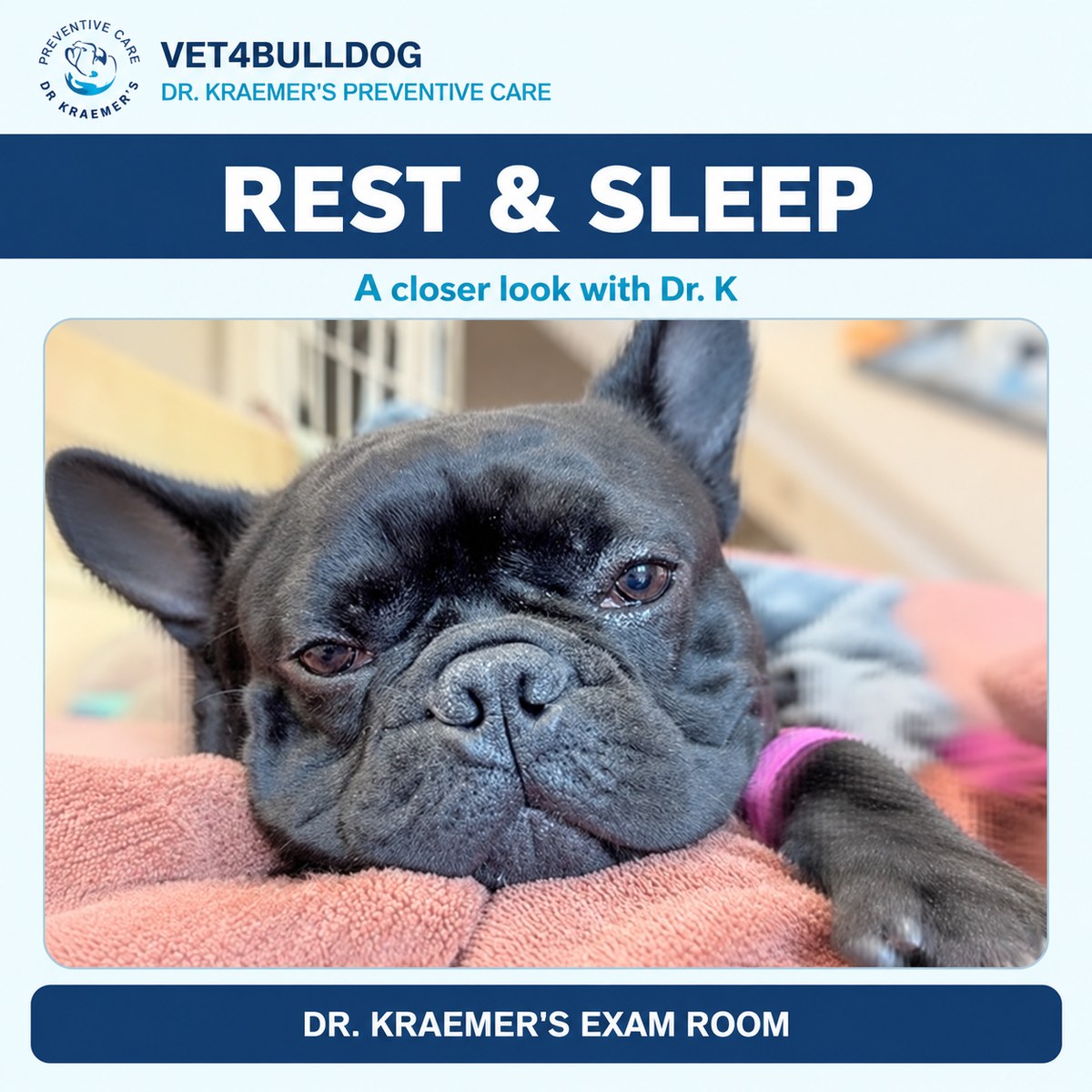
Sleep-related head tremors appear during the REM phase and are associated with active dreaming. The dog physically acts out the dream, sometimes with vigorous head movement.
In pronounced cases, head tremors or shaking can be part of the dream enactment.
How Do I Know If My Bulldog’s Head Shake Is a Sleep Disorder?
Context and timing usually give it away. If the tremors happen almost entirely while the dog is asleep, and particularly during the dreaming phase, a sleep disorder is more likely than a neurological problem or an idiopathic tremor.
Insider tip
Telling the Four Types Apart
The presentations overlap a great deal, so film the episode and make notes for your veterinarian or veterinary neurologist.
1. Idiopathic Head Shaking
The dog remains alert and responsive throughout.
2. Focal Seizure
There is a change in mental status during the episode.
3. Intention Tremor
Presentation resembles idiopathic head shaking, but the movement is jerkier and tied to deliberate action.
4. Sleep-Related Tremor
Occurs during the dreaming phase of sleep.
How Long Does an Episode Last?
Most head shaking, tremors, nodding and bobbing in bulldogs and French bulldogs is short lived, though an episode can occasionally run on for a few minutes.
Head Tremors in Bulldogs and French Bulldogs: Diagnosis
Tests your veterinarian may consider include:
- Physical and neurological examination
- Bile acid test: helps rule out portosystemic shunts, also called liver shunts.
- Blood work: a general panel including electrolytes and thyroid levels, to look for conditions that can produce seizure activity.
- Imaging: CT and MRI.
- Other: spinal fluid analysis and EEG.
Head Tremors in Bulldogs and French Bulldogs: Prevent and Treat
Head tremors are typically intermittent and considered harmless, so in most cases no specific treatment is needed.
Seizure medication is controversial here and is not necessary for idiopathic tremors.
It is worth keeping in mind that prescription medications always carry the potential for adverse effects.
Alongside whatever your veterinarian advises, nonprescription bully therapeutics aimed at relaxation, immune support and inflammation may help keep a sensitive nervous system steady.
Nonprescription bully therapeutics for relaxation, immune support and inflammation

Facts and Myths of Bulldog Head Tremors
Head tremor myths came up constantly in my practice and in email from customers.
The least accurate information tends to circulate on bulldog platforms online. The rule I keep coming back to is do no harm. There are moments when doing nothing beats doing something that might hurt, and when in doubt your veterinarian is the one to ask.
Here are the two myths I met most often.
1. The Sugar Myth
MYTH 🔍: Many owners swear by the syrup, honey or ice cream trick.
FACT 🩺: Head tremors are neither caused by low blood sugar nor directly influenced by sugar intake.
⚠️ A Word of Caution on Sugar
Sugar does not address the cause, and it can do harm, particularly in a diabetic dog. Excess sugar contributes to obesity, diabetes and dental disease. Treating your bulldog with ice cream or sugary liquid is not healthy.
When owners say the sugar trick works, what they are seeing is real but the explanation is wrong. It is not the sugar. It is the neck movement and the distraction.
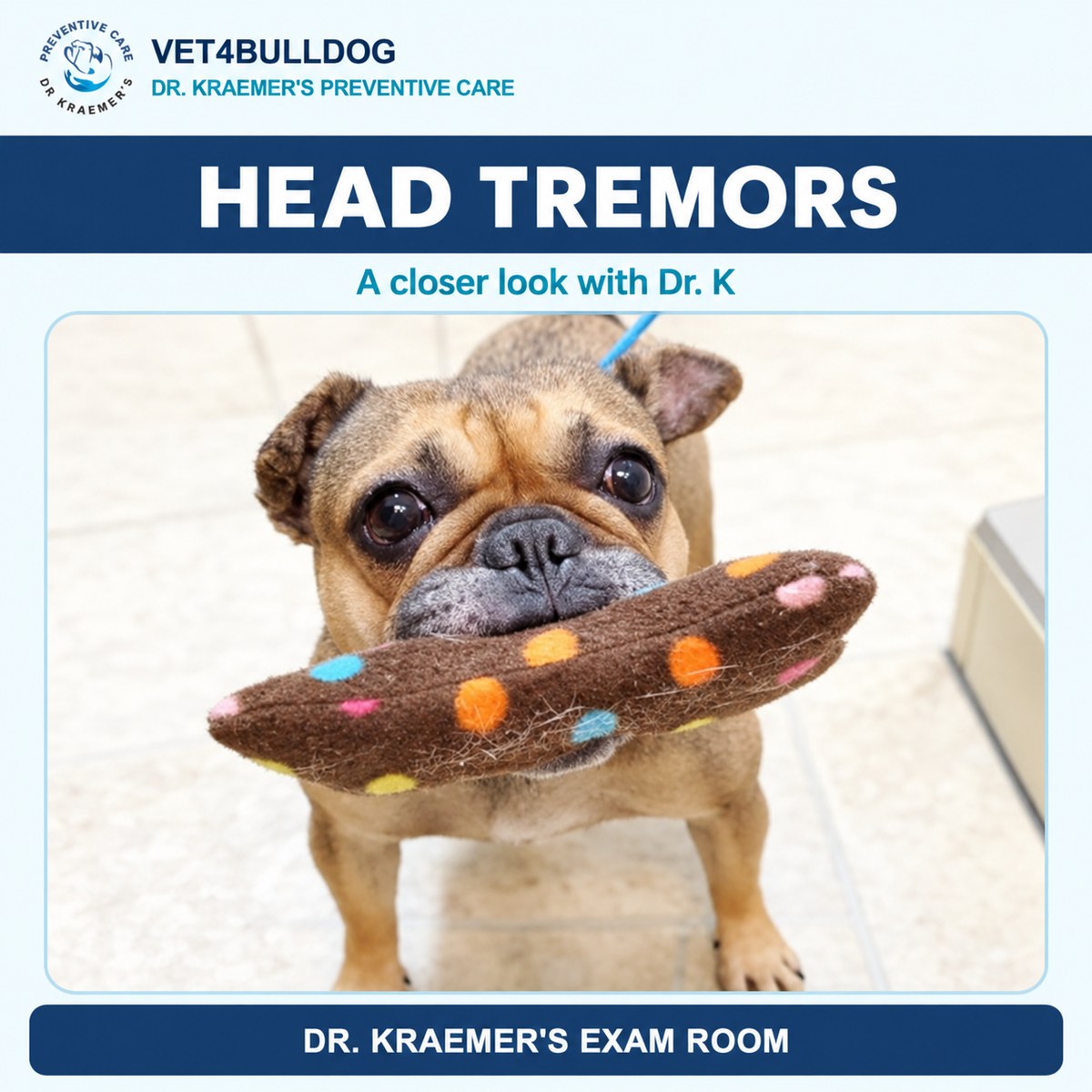
A toy or a treat achieves exactly the same thing.
Where the Sugar Idea Came From
Some breeders and online posts base the sugar recommendation on the fact that sugar is given to hypoglycemic puppies, or to diabetic adults who have had too much insulin. Bulldog head shaking has nothing to do with hypoglycemia.
To interrupt an idiopathic episode, distract your bulldog with food, a treat or a toy. That is both safer and healthier.
2. The Calcium Supplement Myth
MYTH 🔍: Giving calcium to a bulldog or French bulldog with a head shake will stop it.
FACT 🩺: As with sugar, even where owners testify that it works, the effect is incidental. The distraction and the neck movement are what did it.
FACT 🩺: Calcium is genuinely used for female bulldogs with postpartum calcium deficiency, shaking and tremors, known as eclampsia. That is a specific medical condition related to low calcium after whelping, and it is a different thing entirely.
Insider tip
Head Tremors: Tips and Warnings
Selected tips and warnings, courtesy of Dr. Kraemer.
Tip 1: Head Tremors Are Usually Not Harmful
Bulldog head shaking can be frightening to watch but is typically neither an emergency nor a life-threatening event. It is considered idiopathic, meaning the cause is unknown, and it is generally harmless. Even so, call your regular veterinarian for their advice.
Tip 2: Distraction Stops the Episode
What I advised worried owners to do, almost every time, is get the dog to move its head and neck. A toy or a treat is the easiest way.
Distraction will usually stop a bulldog or French bulldog head tremor:
- food
- toys
- “let’s go play” or “let’s go for a walk”
- showing the leash
Warning 1: Other Disease
We know of no medical or neurological condition that results directly from idiopathic head bobbing. Even so, take a video, make notes, and ask your veterinarian or a veterinary neurologist to look at it.
Warning 2: The Genetic Link
That head shaking is seen so predominantly in bulldogs does raise the suspicion of a genetic link. For that reason we do not recommend breeding bulldogs with a history of head tremors.
Warning 3: Distemper Virus
Head shaking in advanced distemper usually also involves the jaw and leg muscles and can be seen even while the dog sleeps. Distemper encephalomyelitis is rare now, thanks to the vaccine and its place in the core series. Not every dog is vaccinated, though, and unvaccinated dogs that meet infected animals remain at risk. Anything you suspect to be distemper is a matter for your veterinarian without delay.
Warning 4: Poisons and Toxins
Other tremors can be caused by poisons and toxins, hormonal abnormalities and electrolyte imbalance.
Warning 5: Other Neurological Conditions
Other neurological disorders that can produce head tremors include:
- Brain tumors
- Infections
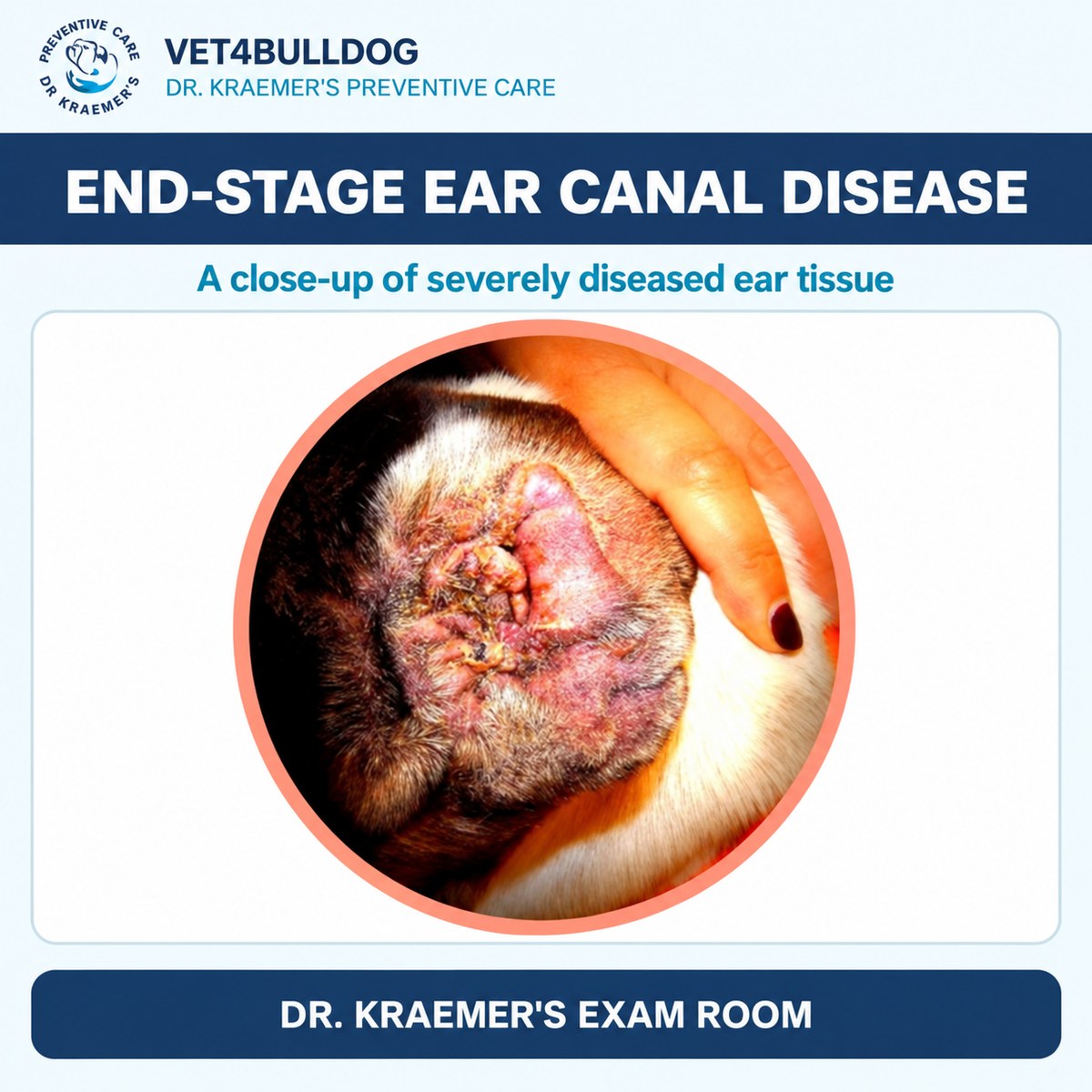
- Ear infections: inner ear infection can cause head shaking and head tilt.
- Aches and discomfort: discomfort from arthritis or dental disease can also produce shaking or trembling.
Leg Shaking in Aging Bulldogs
Senior bulldog and French bulldog owners sometimes notice that an aging dog’s hind legs begin to shake, standing or lying down, and that it gradually gets worse. Tempting as it is to draw a parallel with the head shaking seen in younger bulldogs, the two are generally considered unrelated.
What Causes Senior Bulldog Leg Shaking?
Hind leg shaking in older bulldogs is usually down to factors that come with age:
- Muscle weakness: muscles weaken with age, reducing the ability to stand for long or hold a posture.
- Joint problems: conditions common in bulldogs cause aches and discomfort, and the dog shakes as it tries to relieve them.
- Hip dysplasia
- Elbow dysplasia
- Osteoarthritis
- Neurological change: degenerative change in the nervous system can also produce muscle tremor in elderly dogs.
- IVDD
- Spondylosis
- Neuropathy
- Myelopathies
As with idiopathic head shaking, the cause of leg shaking in senior bulldogs sometimes stays unknown and is called idiopathic when nothing specific is found. Any new or worsening sign in a senior dog deserves a veterinary assessment, because some of the causes respond well to treatment.
How Is Senior Bulldog Leg Shaking Treated?
There is no known treatment for idiopathic leg shaking in aging bulldogs. In practice I would prescribe an anti-inflammatory, or recommend bully therapeutic supplements that may help support comfort and mobility:
- V4B Bully Total Joint Formula
- Bully Orthopedics Vital Bundle (59lb and Under)
- V4B Bully Comfort & AcheLess Formula
- V4B Bully Fish Oil EFA joint, skin and immune

Is a head tremor a seizure?
Does the honey or ice cream trick work?
Should I give calcium?
Will it get worse as my bulldog ages?
Should I breed a bulldog that has head tremors?
Can supplements help?
To be clear: supplements are not substitutes for prescribed medication, diagnostic work-up or veterinary care. If your dog is unwell, is being treated for a condition, or is already on medication, review any supplement with your veterinarian so it fits the plan you are already following. This page is educational and is not a diagnosis or a treatment plan for your own dog.
Veterinary Care and Supportive Products
If your bulldog is unwell, or an episode is new, changing or not settling the way it used to, that is a conversation for your veterinarian rather than a search engine. For long-term calm and nerve support, the Vet4Bulldog range below was put together for bulldogs and French bulldogs.
More Help from Dr. Kraemer
Every shaking bulldog has a slightly different story. These guides may help you connect the dots:
- Three types of bulldog seizures, and two that are not
- Poisons and toxins in bulldogs and French bulldogs
- Orthopedics and neurology in bulldogs
- IVDD and back disease in bulldogs
- What you can handle at home, and when to see the vet
- Are vets overprescribing medication?
About the Author
Roy Kraemer, DVM, is a veterinarian with extensive clinical experience caring for Bulldogs and French Bulldogs. His educational work emphasizes prevention, early recognition, appropriate at-home care, responsible medication use, and veterinary evaluation when a problem is persistent or severe.
Trusted by Vets ~ Recommended by Owners ~ Approved by Bulldogs
References
- Merck Veterinary Manual. Tremor Syndromes in Animals
- Wolf M, et al. Nonlesional idiopathic head tremor in dogs. Veterinary Record
- American College of Veterinary Internal Medicine. Consensus statements on seizure management in dogs
Related Products