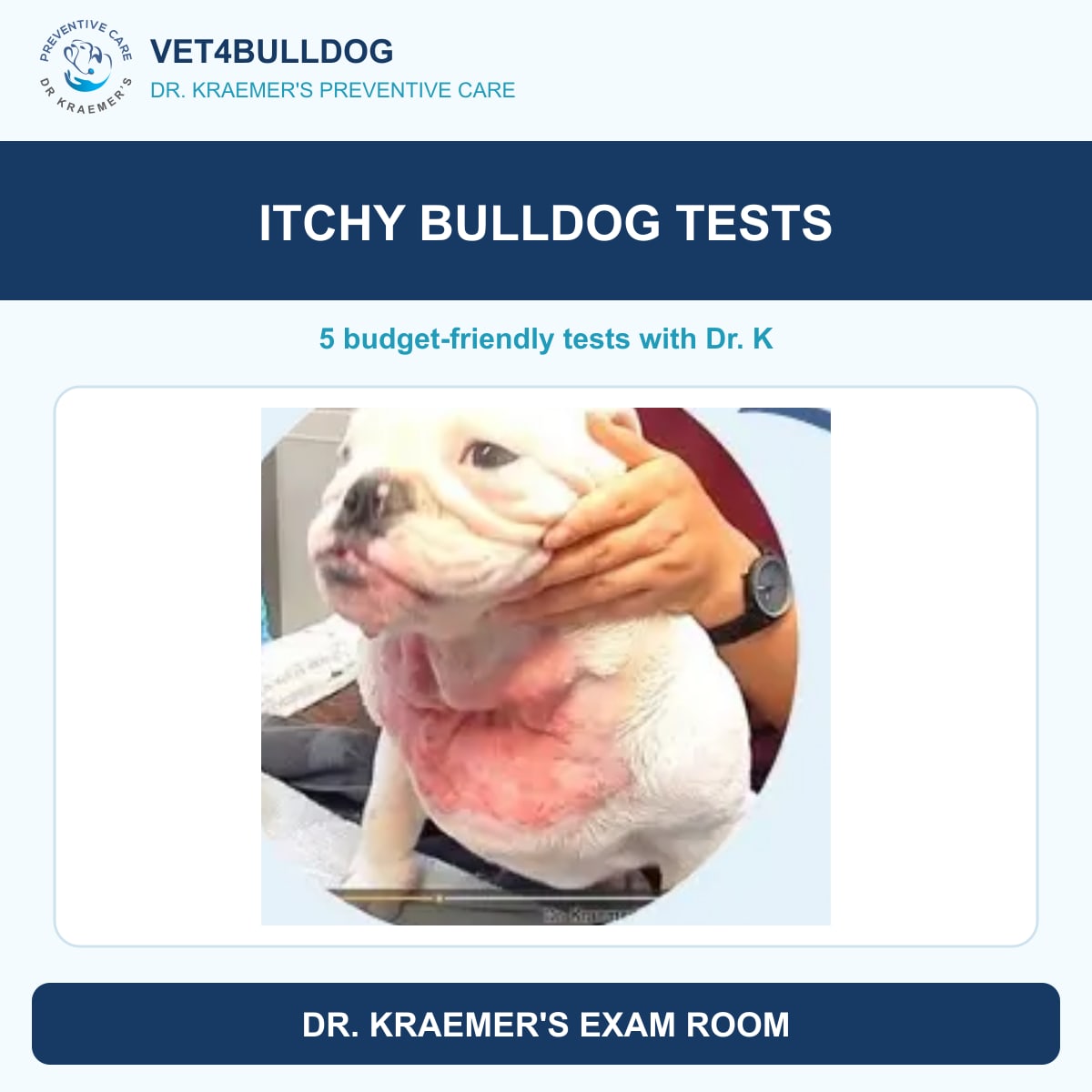

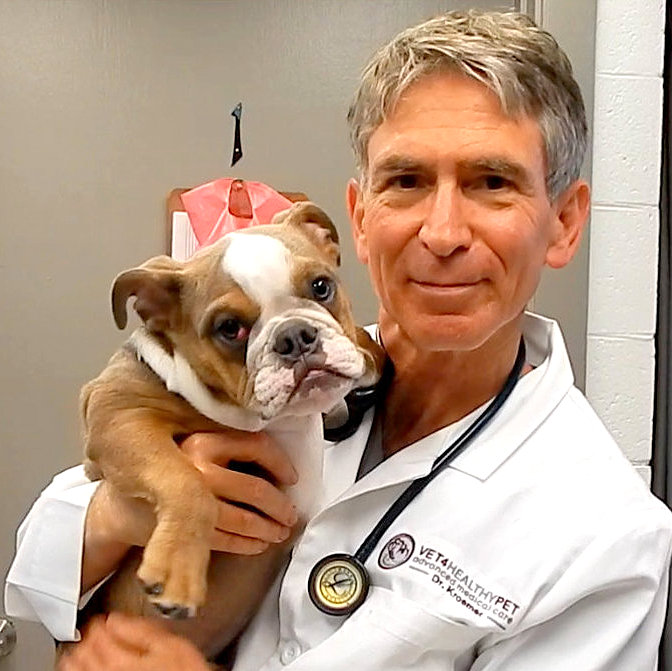


Think your Bulldog’s itching is caused by chicken? Believe grain-free food cures allergies? Think one flea bath solves the problem? [👇…]
After treating Bulldogs and French Bulldogs for more than 30 years, I’ve heard just about every allergy myth imaginable.
Unfortunately, many of these myths don’t just cost owners hundreds of dollars. They also leave bulldogs uncomfortable, constantly scratching, developing painful skin infections, ear infections, and unnecessary suffering.
So let’s separate fact from fiction so you can make better decisions for your precious bully and save a small fortune doing so.
Why Bulldogs and French Bulldogs Are So Prone to Allergies?
Bulldogs and French Bulldogs are among the most allergy-prone breeds.
Allergies Due To Genetics
Their genetically weak skin barrier allows allergens to penetrate the skin more easily, triggering inflammation, itching, ear infections, paw licking, skin fold irritation, and recurrent hot spots.
Add to that an immune system that is out of sync, compounded by selective breeding for those genes.
Understanding the real causes is the first step toward prevention.
Costly Myth #1: Most Bulldog Allergies Are Food Allergies
Many owners immediately blame food whenever their bulldog starts itching.
The Truth About Food Allergy
The Truth is, food allergies certainly exist, but they’re actually much less common than most owners believe.
Environmental allergies (atopic allergies) and flea allergies are far more common than food allergies.
Even more importantly…many bulldogs suffer from multiple allergies at the same time. For example:
- Environmental pollen
- Dust mites
- Flea allergy
- PLUS a food allergy
Treating only one problem often produces only partial improvement.
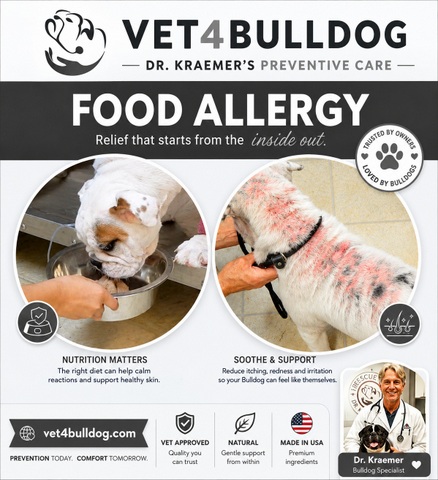
Dr. Kraemer’s Food Allergy Tip
If your Bulldog only becomes itchy every spring or fall, food is probably not the primary culprit.
Food allergies usually occur year-round.
Dr. Kraemer’s Money-Saving Tip:
Don’t believe everything you read in online chat rooms, Facebook groups, or social media forums. While they can be a wonderful source of support and shared experiences, remember that every Bulldog is different, and what worked for one dog may not work for yours.
Likewise, don’t fall for flashy marketing campaigns promising that an expensive, exotic food will magically solve all of your Bulldog’s allergy problems.
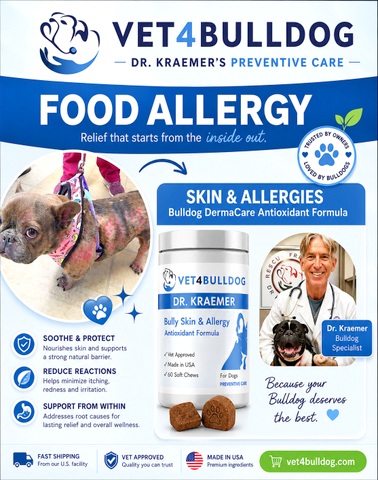
Before spending hundreds of dollars on specialty foods, consult your veterinarian.
In many cases, the most accurate and cost-effective first step is a prescription hypoallergenic diet (hydrolyzed or novel-protein) used as part of a properly supervised elimination diet trial.
It can save you money, prevent unnecessary diet changes, and help reach the correct diagnosis much faster.
Costly Myth #2: Dogs Get Environmental Allergies Mainly By Breathing Allergens
This surprises many owners. While humans inhale pollen, dogs usually don’t.
How Do Environmental Allergens Affect Your Pet?
The Truth is that most environmental allergens contact the skin, not the lungs.
Pollens, grasses, molds and dust settle on your bully’s skin, where they penetrate the defective skin barrier and trigger an allergic immune response.
This explains why Bulldogs commonly develop:
Bulldog Skin Barrier Tip
Many bulldogs are born with a naturally compromised skin barrier.
That makes protecting the skin just as important as treating the allergy itself.
Topical Therapy Often Beats More Expensive Medication
Why Bully Topical Treatment Often Beats Medication?
Because allergies begin on the skin…
Topical therapy can become one of your best weapons.
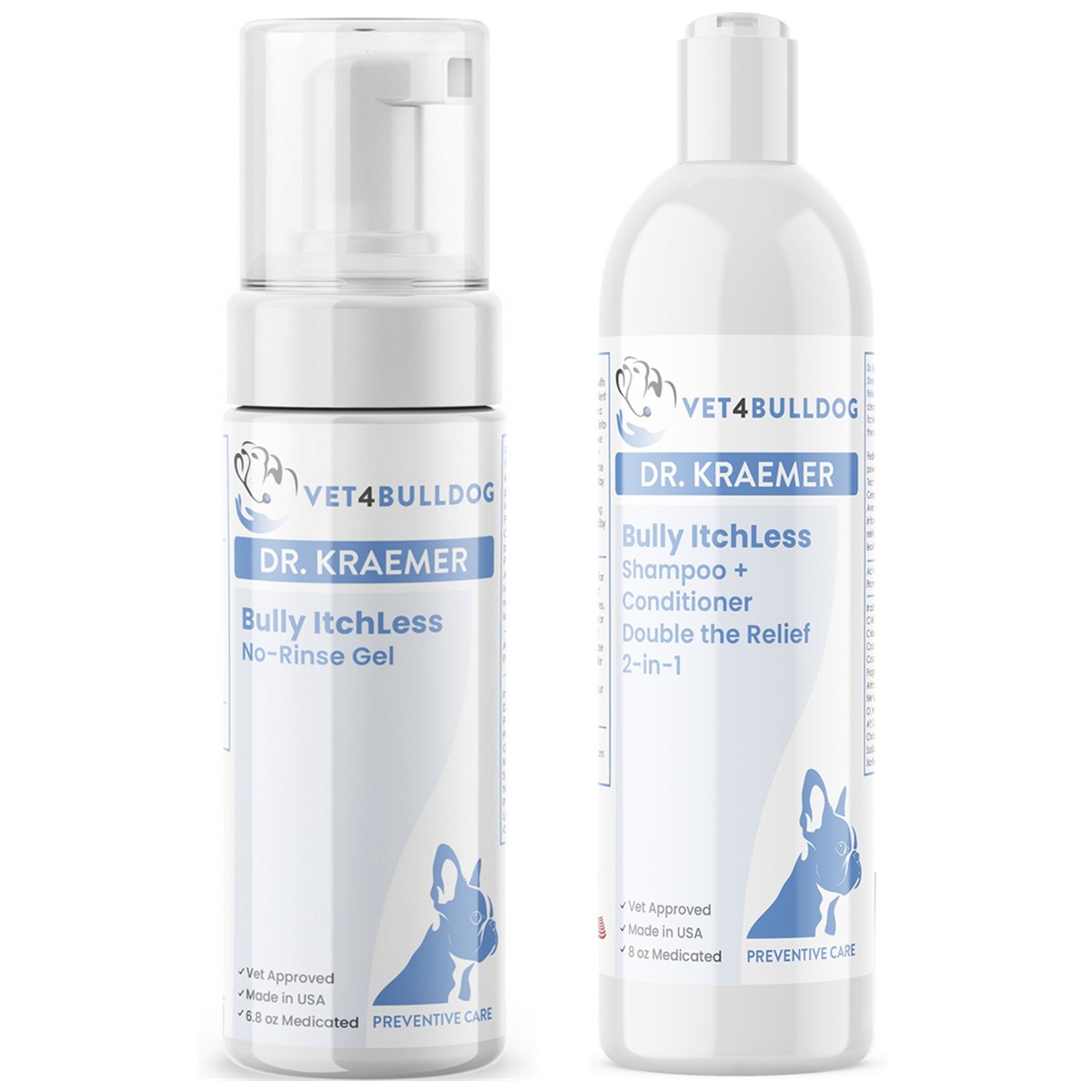
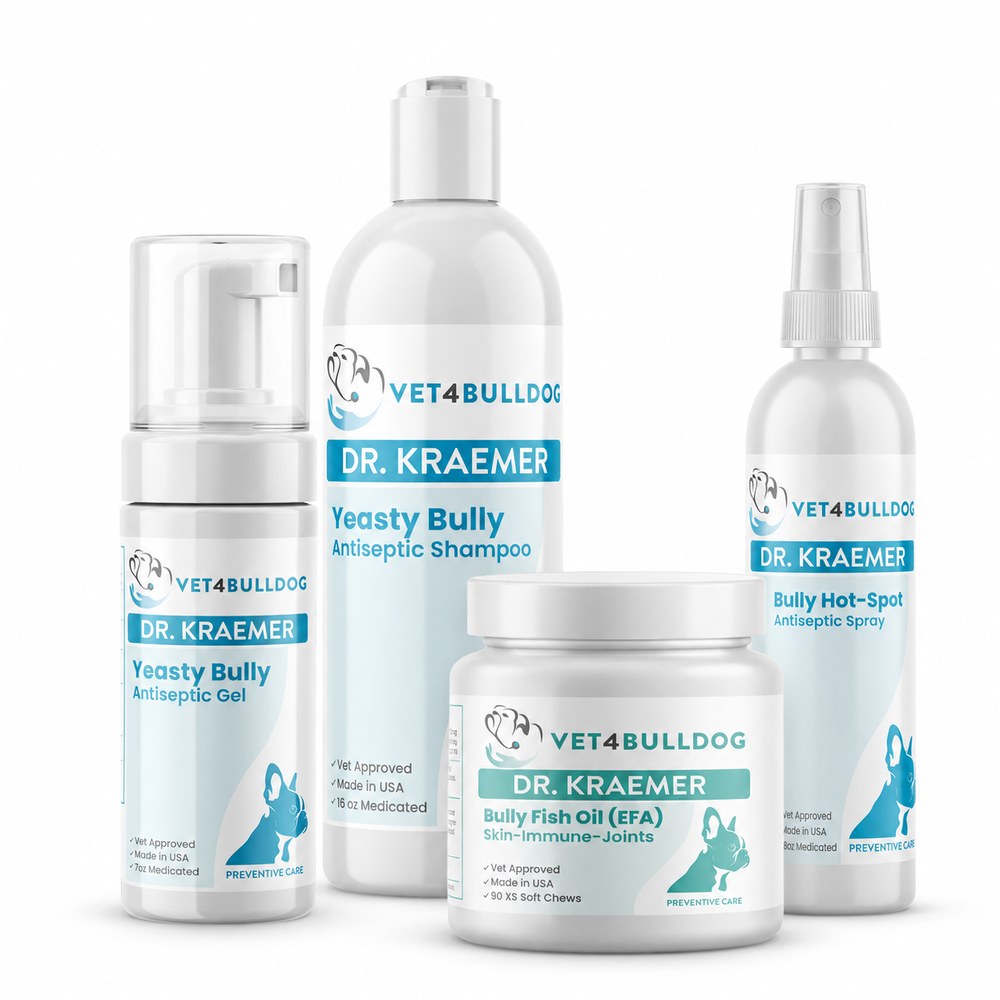
Examples include:
These help:
- wash away allergens
- repair the skin barrier
- reduce bacteria and yeast
- calm itching
- decrease flare-ups
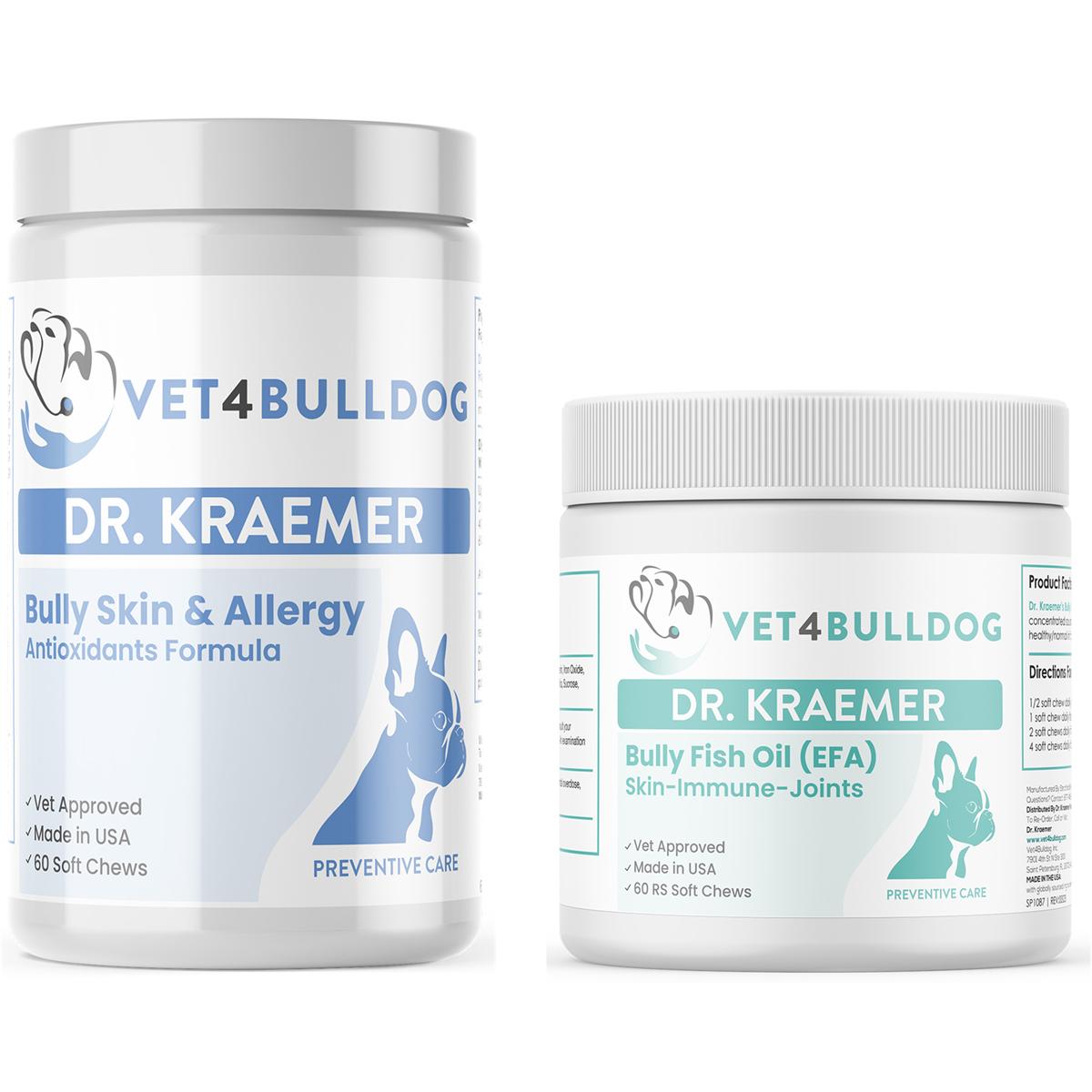
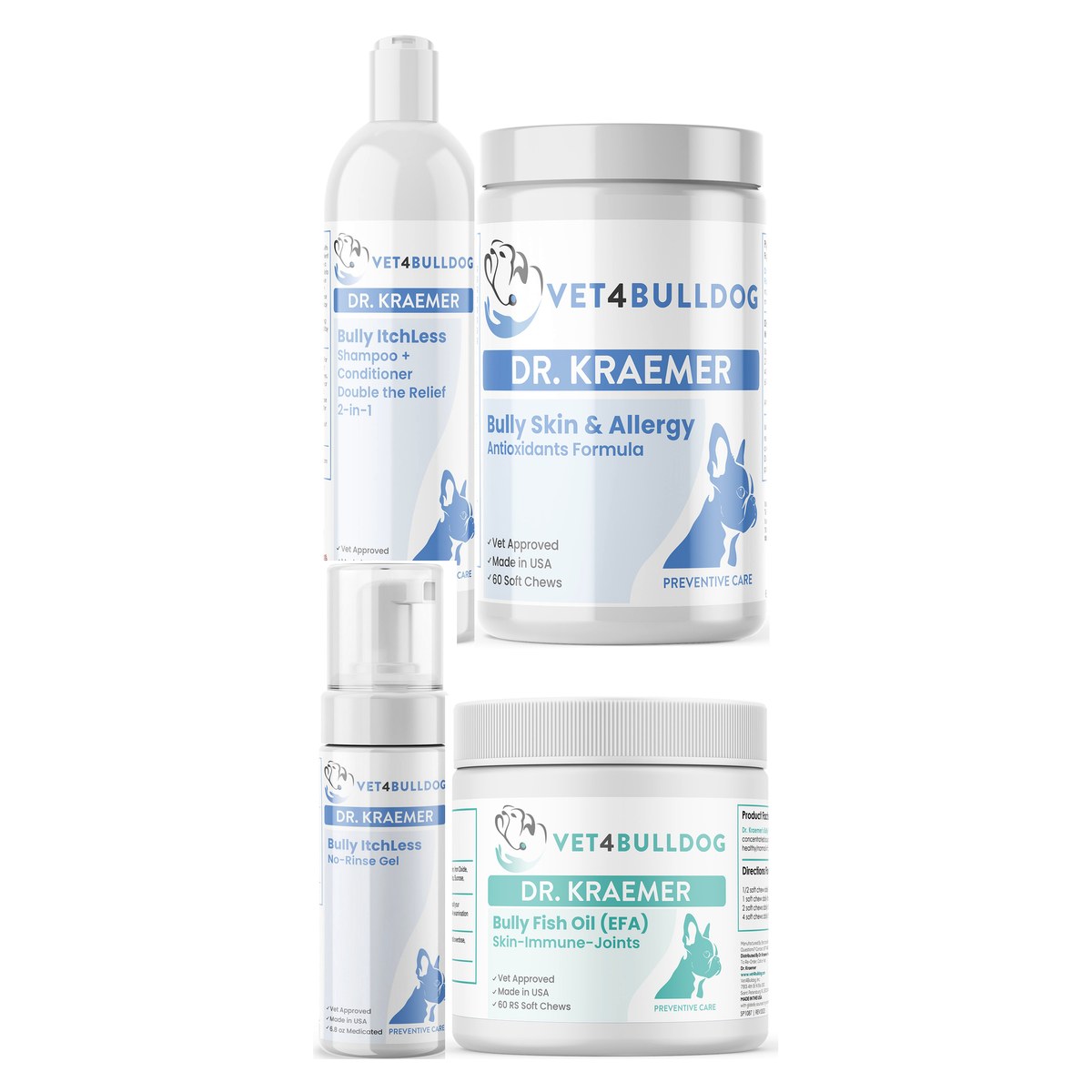
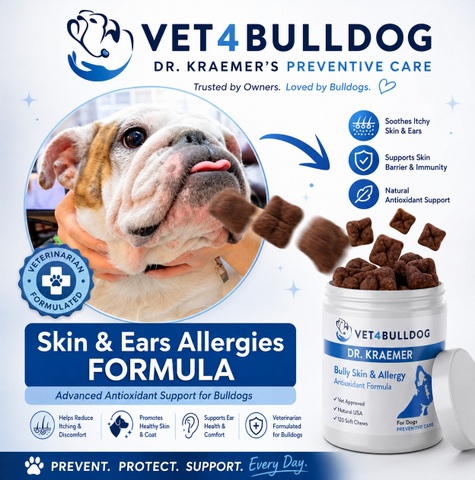
Many Bulldogs also benefit from bully therapeutics supplement support such as:
These supplements help support skin health from the inside while topical therapy works from the outside at minimal risk and a fraction of the cost.
Costly Myth #3: Blood Tests Can Accurately Diagnose Food Allergies
This is probably one of the biggest misconceptions among my bulldog community.
Why Allergy Blood Tests Are Not Recommended For Food Allergy?
The Truth is, veterinary allergy blood testing is excellent for identifying many environmental allergies, including:
- tree pollens
- grass pollens
- weeds
- molds
- fleas
- insects
- dust mites
However…Blood tests should not be relied upon for diagnosing food allergies. The same applies to saliva tests and hair tests.
Dr. Kraemer’s Money-Saving Tip
Don’t waste money on food allergy blood, saliva, or hair tests.
These tests have poor accuracy for diagnosing food allergies in dogs and often lead to unnecessary diet changes.
Blood Test for Pets Food Allergy Warning
False-positive and false-negative food allergy tests are common.
That means you might eliminate foods your dog actually tolerates, or
continue feeding ingredients your dog is truly allergic to.
The Gold Standard for Food Allergy Testing: Save Money and Get the Right Diagnosis
The only reliable way to diagnose a food allergy is a strict elimination diet trial.
I generally recommend:
Skin allergy symptoms:
- 8-week prescription hydrolyzed or novel-protein diet
Digestive symptoms:
- Approximately 2 weeks may be sufficient
In both cases:
- absolutely no treats
- no flavored medications
- no table food
- Afterward, the original diet should be reintroduced to confirm the diagnosis. (challenge testing)
Costly Myth #4: Grain Is Usually the Cause of Food Allergies
Thanks to aggressive marketing, many owners believe grains are enemy number one.
Are Grains Truly The Main Cause Of Food Allergy?
The Truth, they usually aren’t. The most common food allergens are actually animal proteins.
Most common animal protein triggers include:
- Beef
- Chicken
- Dairy
- Eggs
Grains such as:
- rice
- wheat
- corn
are responsible for only a small percentage of food allergy cases.
Grain-Free Diet Warning:
Many owners switch to a grain-free food and see improvement.
They naturally assume…”The grain caused the allergy.” But often that’s incorrect.
The improvement usually comes because the new “no-grain” food contains a completely different animal protein source, such as fish instead of chicken.
Grain-Free Heart Health Warning:
Recent research has identified an association between certain grain-free diets and Dilated Cardiomyopathy (DCM) in some dogs.
Grains also provide valuable fiber and nutrients that a grain-free pet food may deprive your pet of.

Costly Myth #5: One Flea Bath Solves Flea Allergies
If only it were that easy.
Are Flea Sprays and Baths Best Treatment for Flea Allergy?
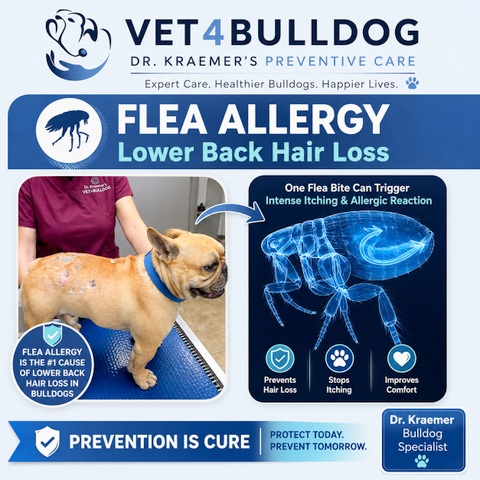
The Truth, adult fleas represent only about 5% of the entire flea life cycle.
The remaining 95% consists of: eggs, larvae and pupae
At best, a flea shampoo or spray only kills the fleas currently on your dog. It does little for the next generation waiting in your home or yard.
Dr. Kraemer’s Money-Saving Tip:
Before spending money on flea shampoos and sprays, remember this: they only kill the fleas you can see. About 95% of the flea population is still developing as eggs, larvae, and pupae in your home and yard.
The smartest, and ultimately most cost-effective approach is to break the entire flea life cycle with a comprehensive flea control program recommended by your veterinarian.
Year-round flea prevention is often the best strategy.
Flea & Tapeworm Warning:
Fleas commonly transmit tapeworms. If your bulldog has fleas, your veterinarian may also recommend treatment for tapeworms.
Managing Flea Allergy Itching Money-Saving Tip:
Flea allergy itching can become intense, leading to costly secondary conditions.
Excessive scratching often leads to:
- skin wounds
- bacterial infections
- yeast infections
- hair loss
Early Prevention and treatment can prevent costly vet visits and frequently combines:
- medicated shampoos
- soothing sprays
- antiseptic Waterless Gels
- skin barrier support
- Omega-3 fatty acids
- immune-support supplements
- and prescription itch medication (when needed)
Combining therapies often produces better results than relying on medication alone.
Final Thoughts: Don’t Let Allergy Myths Keep Your Bulldog Itching
When it comes to Bulldog and French Bulldog allergies, misinformation is everywhere.
Once you understand the real causes of itching, you’ll be far better equipped to help manage cost and help your bully stay comfortable.
Remember these 5 cost-saving key takeaways:
- Most Bulldog allergies are NOT food allergies.
- Environmental allergens usually enter through the skin, not the lungs.
- Blood tests are valuable for environmental allergies, but NOT for diagnosing food allergies.
- Animal proteins are far more common allergens than grains.
- Effective flea control means treating the entire flea life cycle, not just the fleas you can see.
With the right combination of prevention, skin care, nutrition, supplements, and veterinary guidance, most bulldogs can enjoy significantly fewer allergy flare-ups and a much happier, itch-free life.


The information provided on this platform is for general informational purposes only. It is not intended as a substitute for professional medical advice, diagnosis, or treatment. Always seek the advice of your veterinarian regarding any medical condition. It's important to always consider professional medical advice promptly and not to delay seeking it based on information you've read on this platform. Any reliance on the information provided here is entirely at your discretion.