


Intestinal Foreign Bodies in Dogs: When “Taste Testing” Turns Into Trouble
Dogs explore the world with their mouths.
For some, that means giving everything a lick, a chew and occasionally, a swallow.
Unfortunately, socks, toys, rocks, and other swallowed objects can become stuck in the digestive tract.
Veterinarians call these objects gastrointestinal foreign bodies.
When an object blocks the passage of food and fluid, it creates an obstruction that can become life-threatening.
If your Bulldog or French Bulldog stops eating, repeatedly vomits or retches, develops abdominal pain, or has unexplained weight loss, contact your veterinarian promptly.
These signs have several possible causes, but an obstruction is one that needs to be ruled out quickly.
Which Dogs Are Most Likely to Swallow Foreign Objects?
Puppies, adolescents, and young adult dogs are especially enthusiastic about the “mouth test.” Like curious toddlers, they are playful, mischievous, and still learning what belongs on the menu.
Then there are the repeat offenders: dogs who have swallowed something inappropriate before and are happy to try again. These dogs can be any age.
Always tell your veterinarian or emergency hospital about previous foreign-body episodes.
An older dog’s age should never rule out a swallowed object, particularly when there is a history of similar trouble.
What Kinds of Objects Do Dogs Swallow?
The list is longer and stranger than you might imagine:
- Chew toys and broken toy pieces
- Socks, underwear, towels and other fabrics
- String, ribbon and pieces of rope
- Rocks, balls and plastic objects
- Bones, corn cobs and items stolen from the trash
- Fishing hooks and other sharp objects
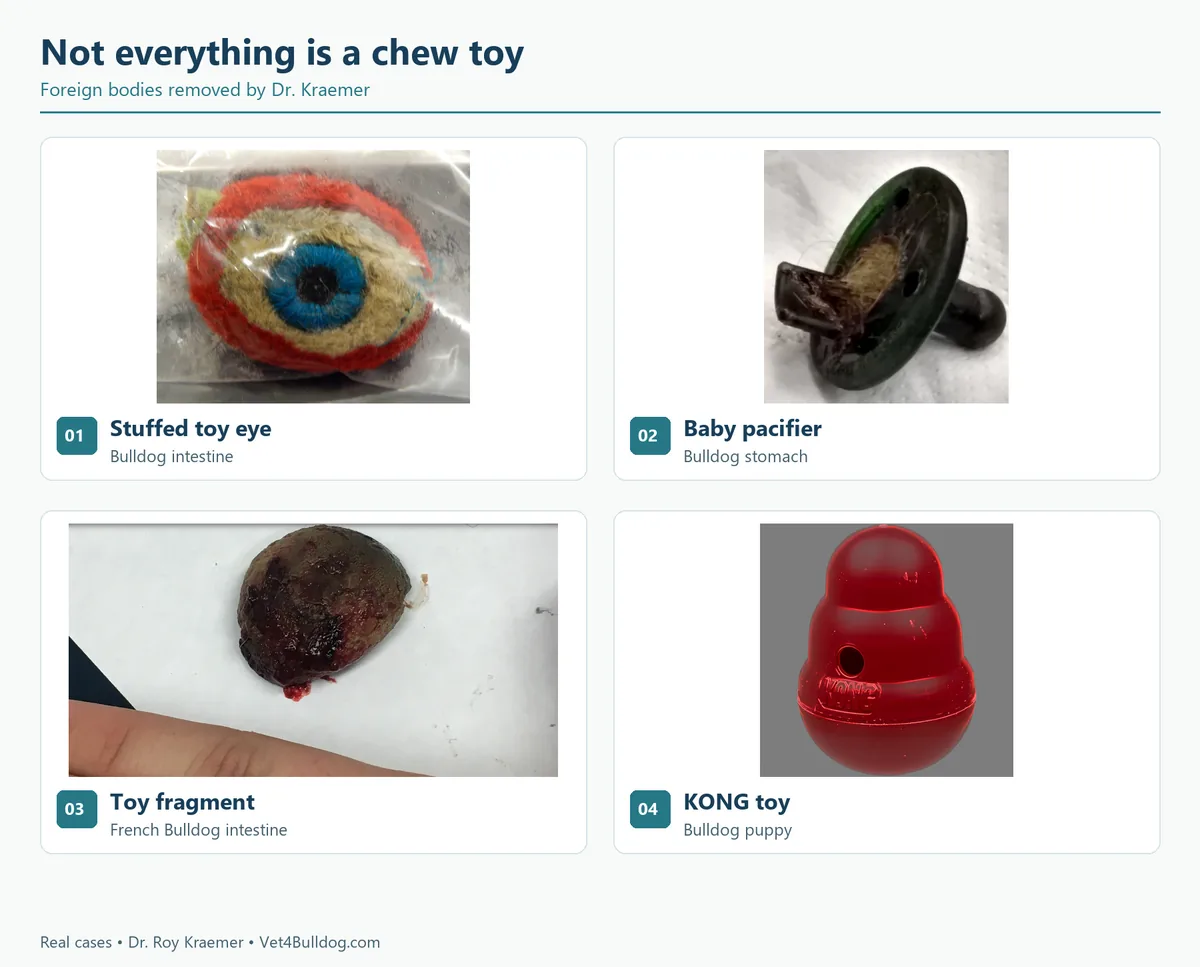
Even commercially sold dog toys can become a problem if your dog tears off and swallows pieces.
Over the years, I have removed an astonishing assortment of objects from the mouths, throats, stomachs, and intestines of dogs and cats.
One memorable patient lived next to a golf course. Stray golf balls apparently looked like excellent snacks, right up until the X-rays revealed where they had been collecting!
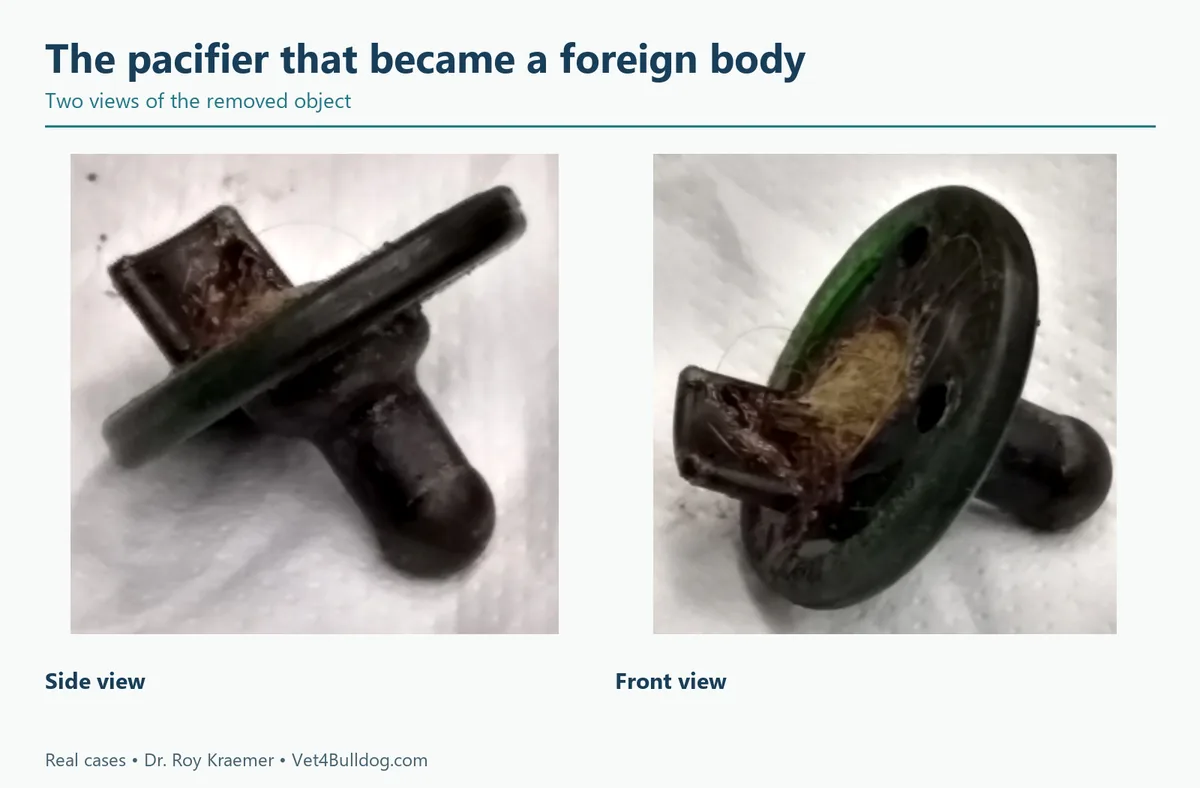
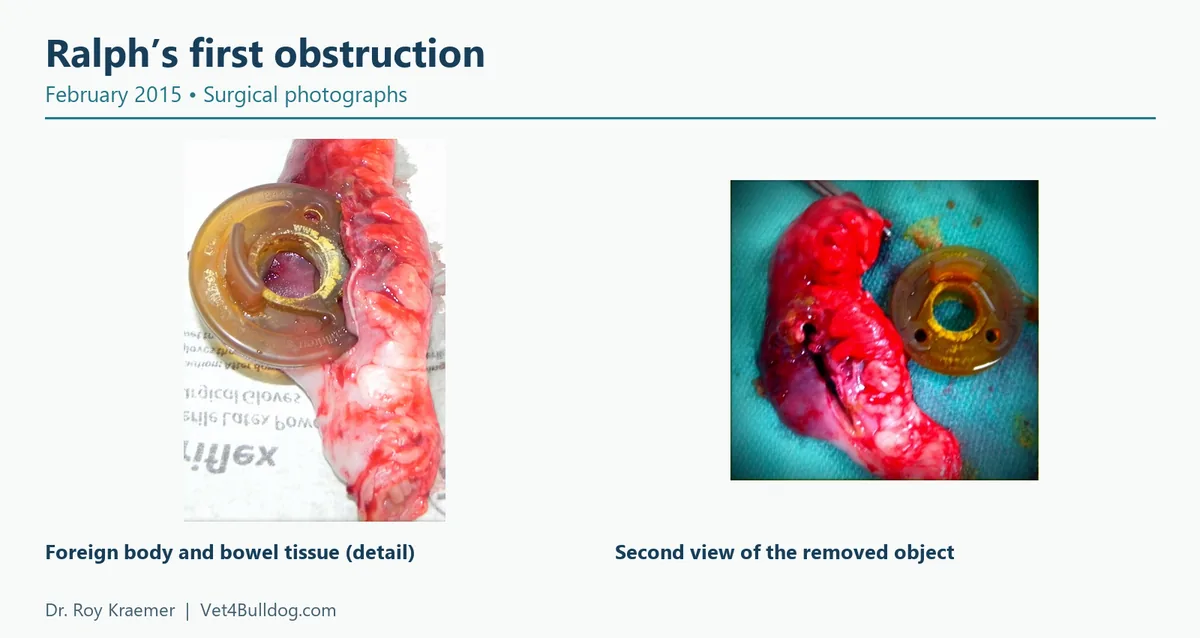
View the removed pacifier from two angles
What Are the Signs of an Intestinal Obstruction?
The signs depend on where the object is lodged, how long it has been there, and whether the blockage is partial or complete.
- Reduced Appetite and Weight Loss: Your dog may eat less, refuse meals, or gradually lose weight. A partial obstruction can cause subtle or intermittent signs, making it easier to overlook. Sometimes, unexplained weight loss is the warning that finally brings the problem to light.
- Retching and Vomiting: Repeated vomiting is a common warning sign. With a partial blockage, vomiting may come and go; with a complete blockage, it may become persistent. However, the absence of vomiting does not rule out an obstruction.
- A Painful or Swollen Belly: Your dog may seem uncomfortable, resist being picked up, or become unusually quiet. Some dogs develop a visibly distended abdomen.
- Changes in Bowel Movements: Diarrhea, straining, or reduced stool production may occur. Passing stool does not guarantee that the intestines are clear. Stool already beyond the blockage may still pass, and a partial obstruction may allow some material through especially liquid material, which is sometimes called paradoxical diarrhea.
When Not to Wait Until Morning
Most of the time what you are really deciding is whether to call today or tomorrow, so here is the simple version. If he looks like he is heading downhill rather than just a bit off, call today.
A dog who is a bit off still looks like himself. A dog who is in real trouble slowly stops looking like himself. He goes flat and quiet, he cannot get comfortable whichever way he lies down, and he keeps retching with nothing much coming up. Bulldogs understate everything, so by the time it is obvious to you it has usually been going on a while. Do not let a normal temperature talk you out of it either, because plenty of dogs with a blockage never run one.
You will not be wasting anybody’s time by calling. Prompt assessment may allow more treatment options and help limit bowel damage. The object, its location and your dog’s condition determine whether removal is needed and how complex treatment may be.
Do not wait. You have given me three things in one message: he is off his food, he is bringing it up, and a small object has gone missing. Any one of those on its own is a maybe. Together they are a phone call to your veterinarian today. The normal stool is the part owners find most reassuring and it reassures me least, because stool already past a blockage carries on coming out as normal for a while, and a partial blockage lets liquid through regardless. You are not being paranoid, you are being observant, and the missing toy is exactly the sort of detail a vet needs and rarely gets. Take it with you if you have a matching one.
Why Are Some Swallowed Objects More Dangerous Than Others?
An object’s size, shape, texture, and material all affect what happens next.
- A large ball may remain trapped in the stomach.
- A smaller object may travel farther before becoming lodged.
- Sharp objects, such as fishing hooks, can catch or puncture tissue anywhere along their path.
- Soft objects are not necessarily harmless.
- Fabric can wad up, trap other material, and form a bulky mass, much like laundry tangling into a bundle in the dryer.
- String and Rope Can Cause Intestinal Bunching: Long objects, such as string, ribbon, or rope, are called linear foreign bodies. If one end becomes anchored while the intestines continue moving, the bowel can gather along the material like an accordion. This is called intestinal plication, and it can cause severe injury.
- A different problem, intussusception, occurs when one section of intestine slides inside another, like a collapsing telescope. It can also cause obstruction and may occur in association with a foreign body.
Warning: Never pull string or similar material protruding from your pet’s mouth or anus. Contact your veterinarian.
Insider tip
How Is an Intestinal Obstruction Diagnosed?
Diagnosis starts with your dog’s history and a physical examination.
Tell your veterinarian about missing toys, chewed clothing, access to trash, or anything you saw your dog swallow.
You do not need to have witnessed the event for a foreign body to be suspected.
The usual work-up includes:
- Abdominal X-rays to look for objects and signs of obstruction
- Ultrasound to examine the stomach, intestines, and surrounding tissues
- Contrast imaging when appropriate
- Blood tests to assess dehydration, electrolyte changes, and overall health
Not every object shows up clearly on an X-ray.
Additional imaging may be needed when the symptoms and initial findings leave questions unanswered.
How Are Gastrointestinal Foreign Bodies Treated?
Treatment depends on the object, its location, and your dog’s condition.
Stabilizing Your Dog: A dog with an obstruction may be dehydrated and have an electrolyte imbalance.
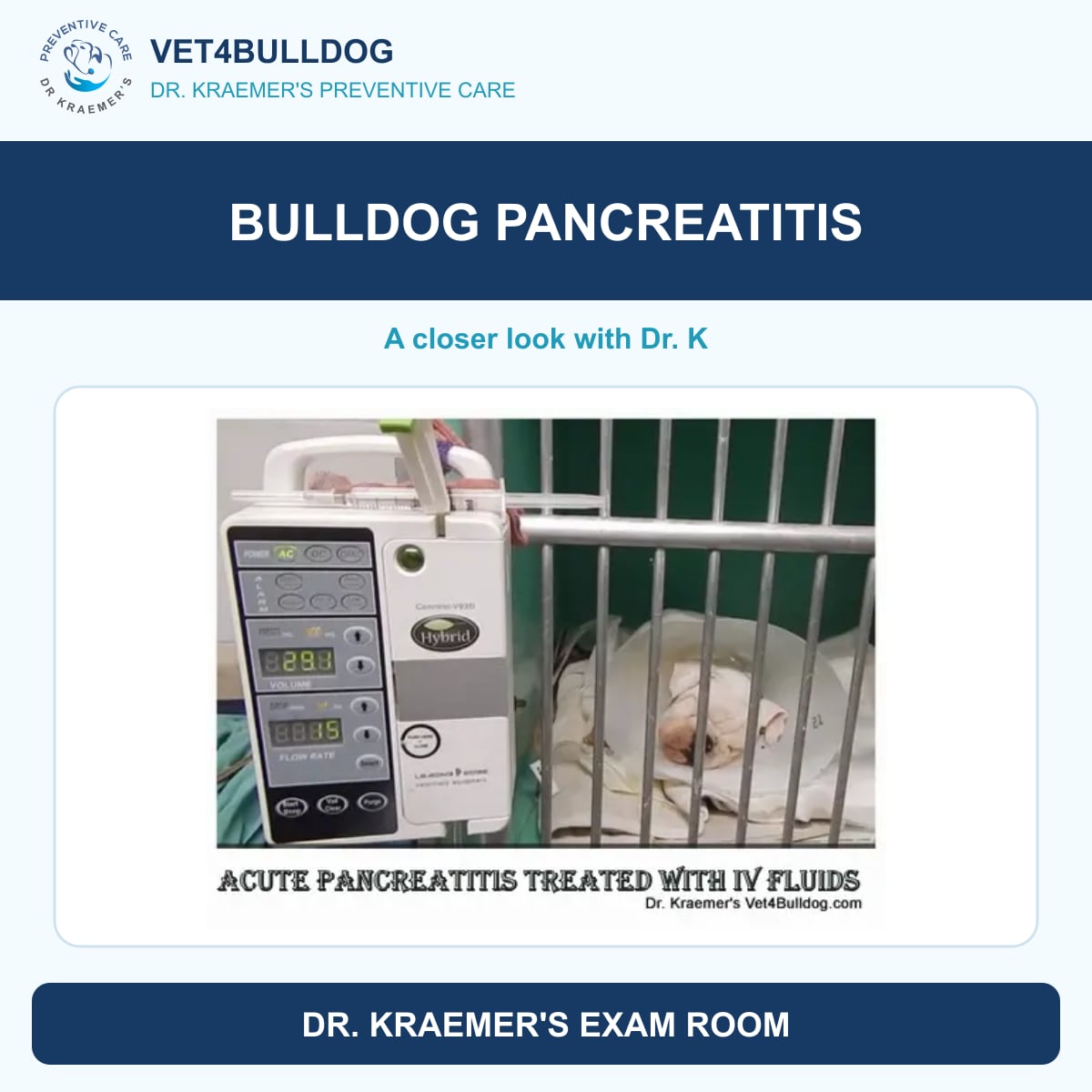
Initial care often includes intravenous fluids and pain relief. Antibiotics may be appropriate around intestinal surgery or when infection or contamination is a concern.
Stabilization and planning for removal often proceed together, particularly in urgent cases.
Can the Object Pass on Its Own?
Pass on Their Own: Some small, smooth objects may pass without removal. However, waiting should be a veterinarian-directed decision.
For a stable patient, repeat imaging may help confirm that the object is progressing.
Worsening symptoms or an object that stops moving can change the treatment plan.
Warning: Do not try to induce vomiting or give laxatives or home remedies unless your veterinarian specifically directs you.
Removal With an Endoscope: Some objects in the stomach can be removed with an endoscope, a flexible instrument with a camera and retrieval tools.
Whether this is suitable depends on the object’s size, shape, location, and whether it extends into the intestines.
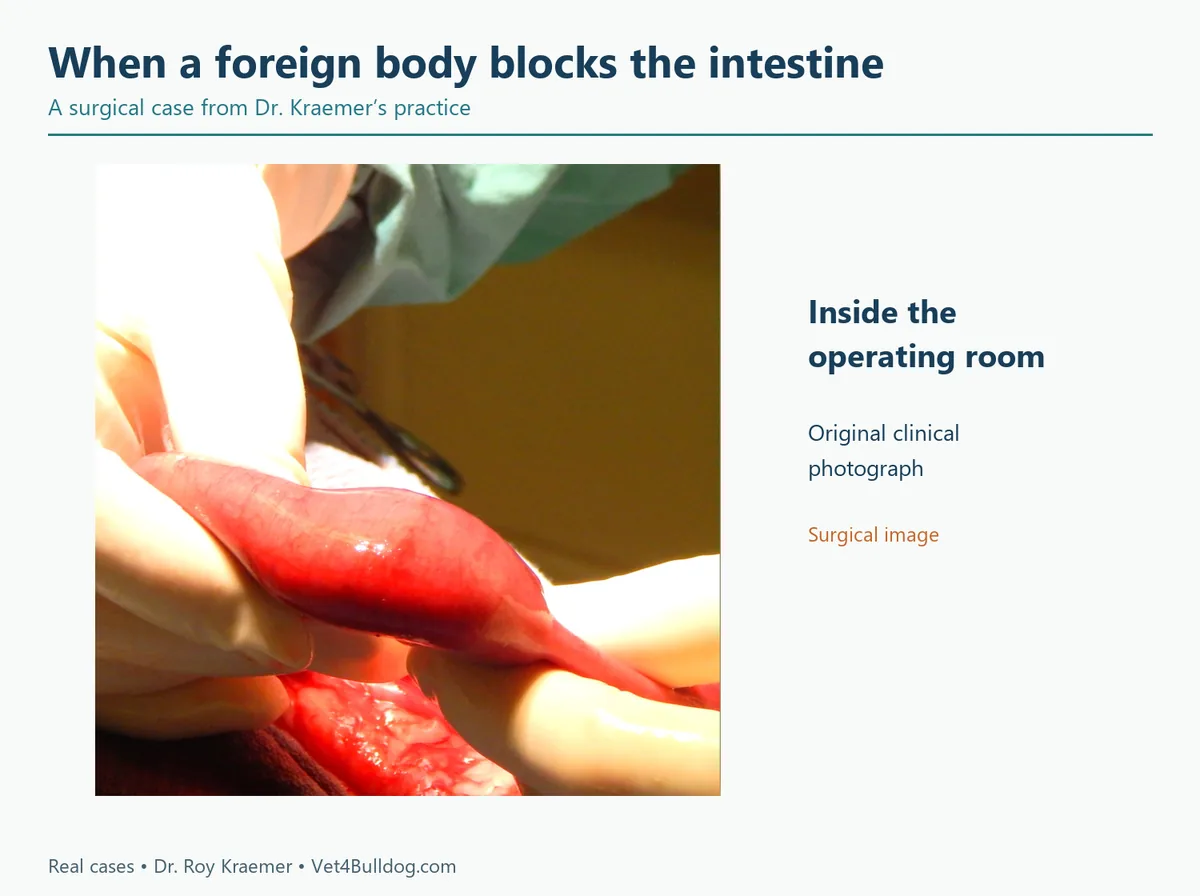
Surgical Removal: Objects lodged in the intestines, or those causing significant obstruction or damage, often require surgery.
The surgeon removes the object and examines the bowel.
If a section is too damaged to recover, it may need to be removed and the healthy ends reconnected.
This procedure is called intestinal resection and anastomosis.
View a surgical photograph of an intestinal obstruction
What Happens After Foreign-Body Surgery?
Some dogs need continued hospitalization, monitoring, and intravenous support.
Once stable, they can continue recovery at home with a prescribed feeding plan, medication, and activity restrictions.
Follow your veterinarian’s instructions closely, including guidance on:
- What to feed and how much
- Medication and follow-up visits
- Restricting activity
- Protecting and checking the incision
Contact your veterinarian immediately if vomiting returns, appetite declines, abdominal pain develops, or your dog becomes increasingly lethargic.
These changes can signal postoperative complications, including leakage from the intestinal repair.
What About Probiotics and Other Bully Therapeutic Supplements?
Recovery starts with appropriate nutrition and the treatment plan prescribed by your veterinarian.
- Probiotics or other digestive-support supplements may be considered for selected patients.
- Multivitamins are not automatically needed when a dog receives a complete, balanced diet.
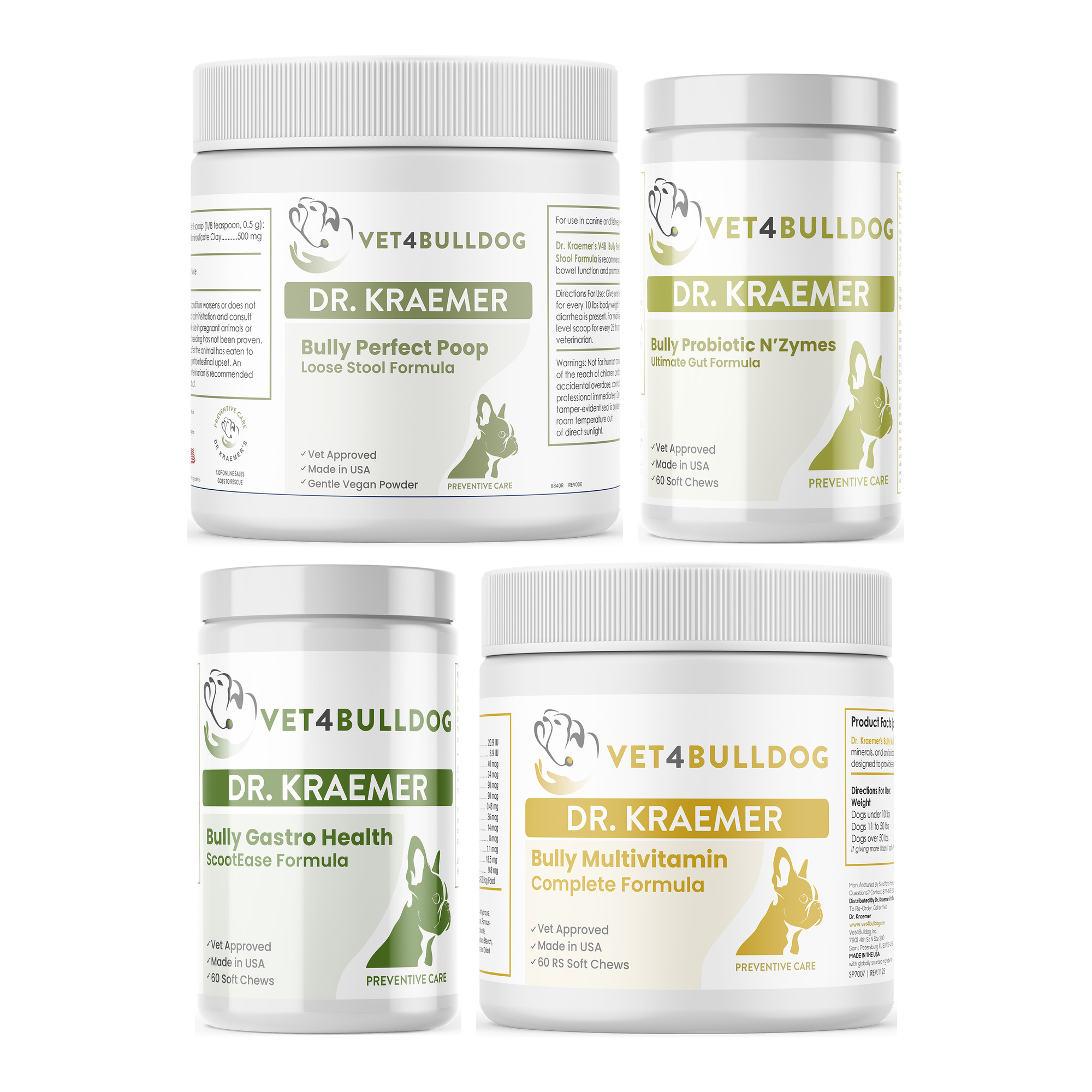
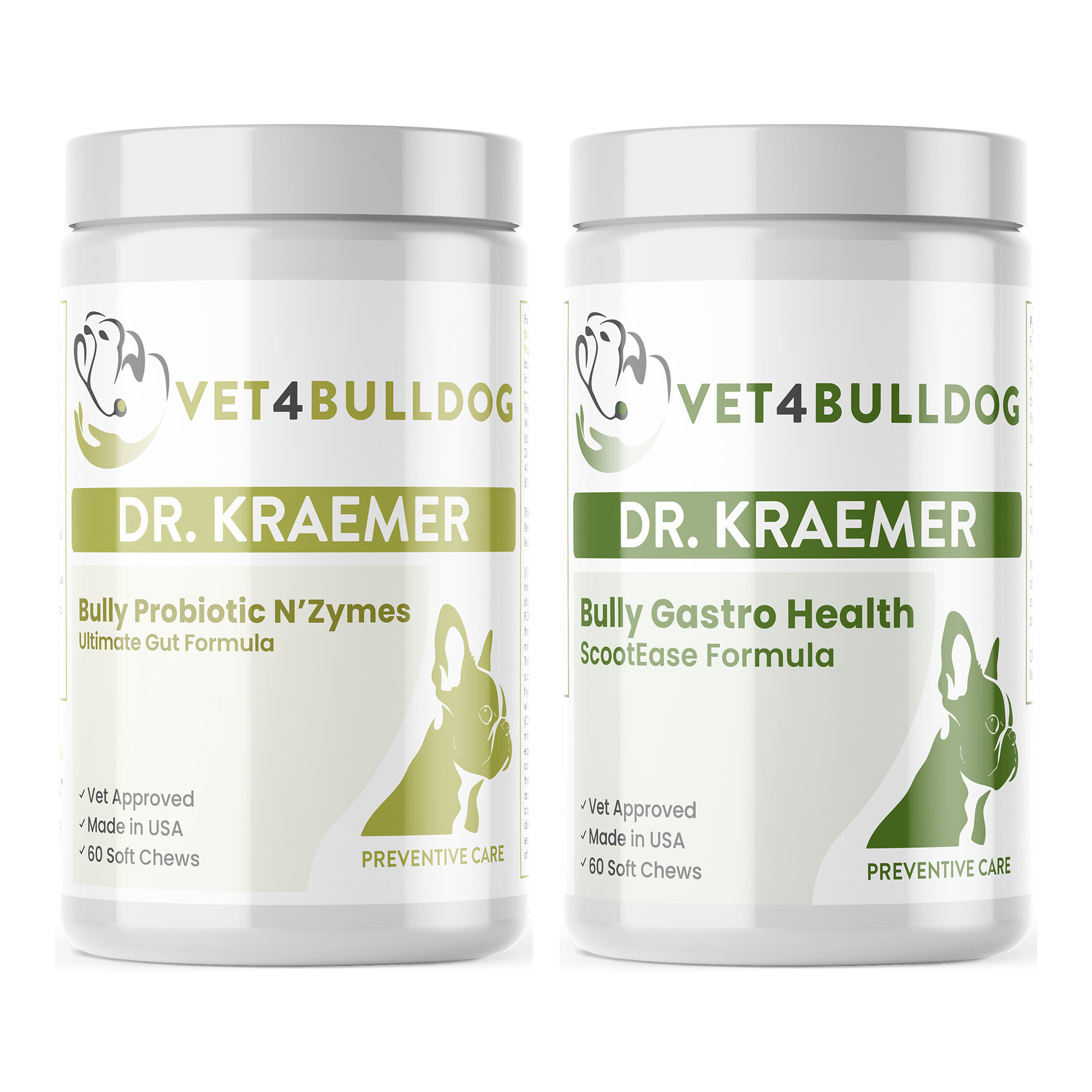
Before introducing products such as our Perfect Poop or Gastro Health, ask the treating veterinarian whether their ingredients and timing are appropriate for your dog’s recovery.
Supplements cannot relieve an obstruction or replace postoperative care.
Prevention Over Rx: Keep Trouble Off the Menu
You cannot remove a Bulldog’s curiosity, but you can make the environment safer.
Keep laundry and trash out of reach, supervise chewing, choose appropriately sized toys, and discard toys when they begin breaking apart.
For repeat offenders, discuss a prevention plan with your veterinarian.
Your Bulldog may believe every object deserves a taste test. A little supervision goes a long way towards keeping that curiosity from turning into an emergency.
Straight talk
The Story of Ralphie
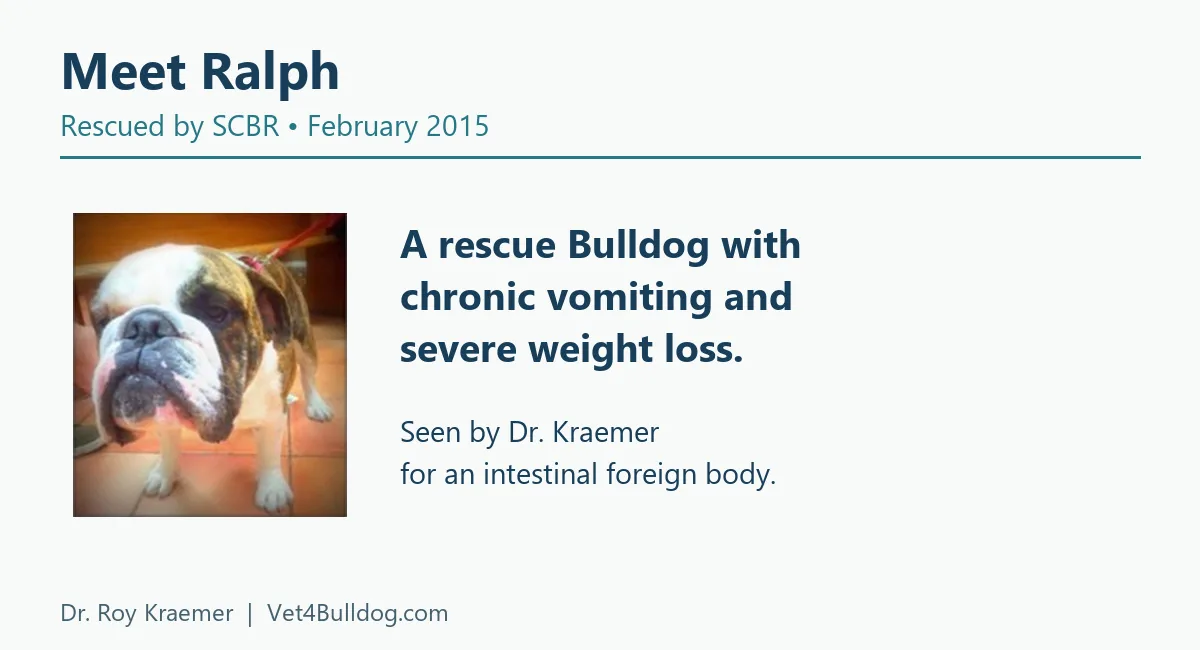
Ralphie came to Southern California Bulldog Rescue in February 2015 after several months of weight loss and vomiting. He was in critical condition, just skin and bones.
Dr. Kraemer discovered several foreign objects in his intestines: a hard circular piece of plastic the size of a pacifier and several pieces of wire that had penetrated his bowel and were sticking out.
Part of Ralphie’s small intestine had lost its blood supply, was dying and was beginning to develop holes. I removed the damaged section and joined the healthy ends together. This operation is called intestinal resection and anastomosis.
View Ralphie’s February 2015 surgical photographs
Ralphie made a rapid recovery and was adopted into a loving family…
In October, Ralphie’s adoptive parents called the rescue again after a long bout of vomiting.
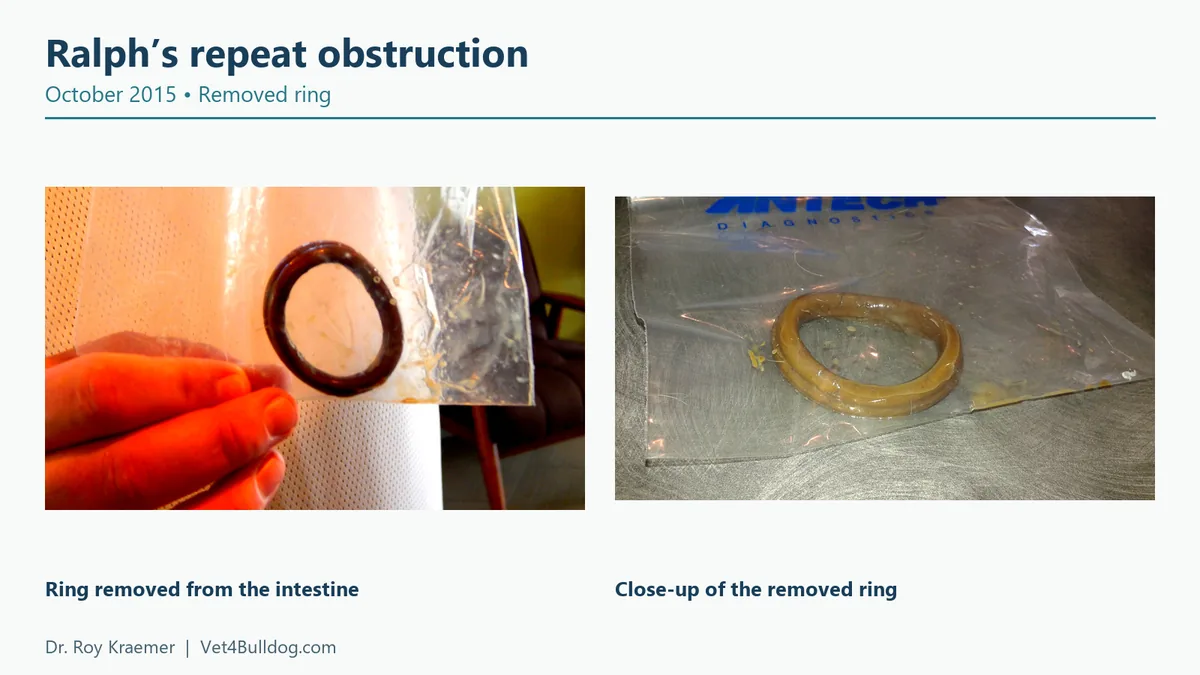
Ralphie’s x-ray showed that he swallowed a rubber gasket (from swimming goggles). The ring got stuck at the junction of his small and large intestines, and things were just about to go very bad (the wall of that segment was dying off).
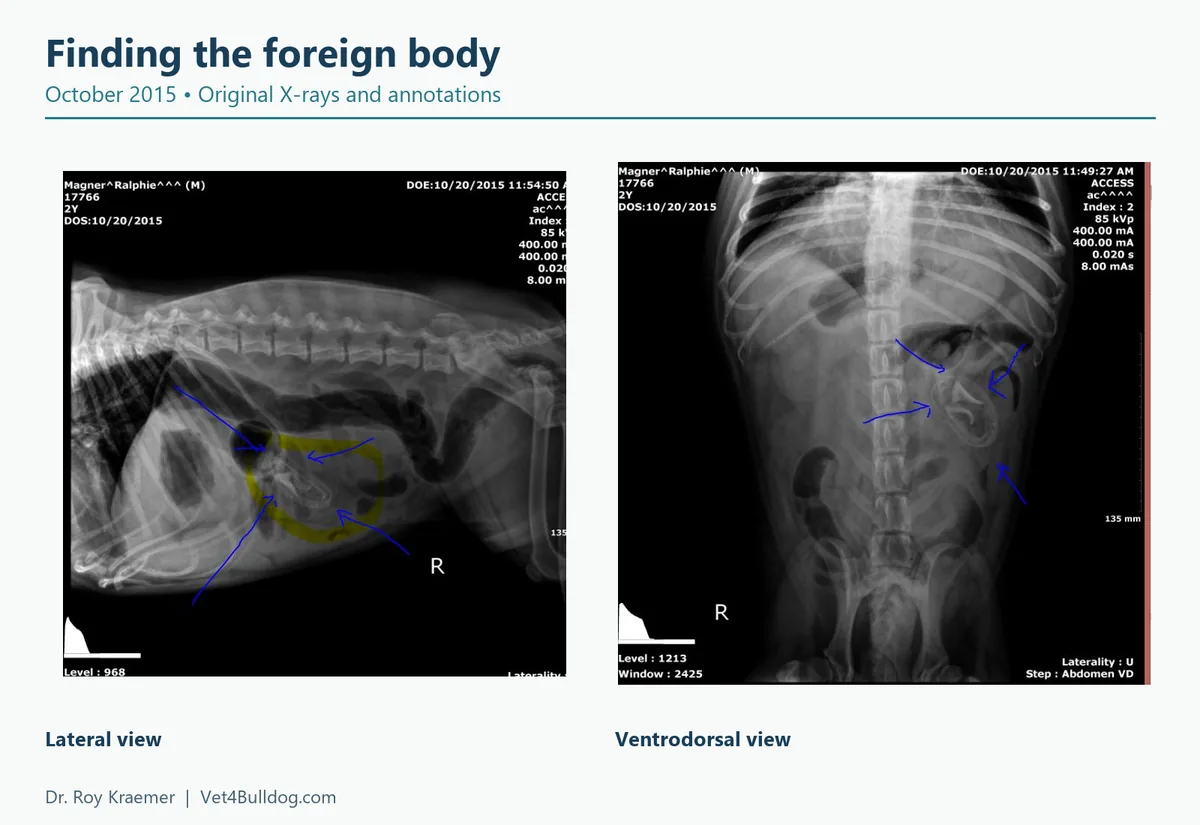
Dr. Kraemer conducted immediate surgery, and the object was once again successfully removed.
Ralphie was released back to his family…
Ralphie recovered fully both times and went home to his family.
My dog seems fine. Can I wait and see?
He did a normal stool this morning, so it cannot be stuck, can it?
Should I make him sick to bring it back up?
There is string coming out of him. Can I pull it?
Will an X-ray definitely show it?
Can a supplement help it pass?
To be clear: a suspected swallowed object is a veterinary matter and nothing sold on this site treats one. Do not induce vomiting or give laxatives or home remedies unless your veterinarian specifically directs you. Never pull string or other material protruding from the mouth or anus. Contact your veterinarian promptly. Supplements are not substitutes for prescribed medication or veterinary care, and anything you plan to give during recovery should be reviewed with the treating veterinarian so it fits the plan you are already following. This page is educational and is not a diagnosis or a treatment plan for your own dog.
Veterinary Care and Supportive Products
If you think your dog has swallowed something, stop reading and call. Everything below is for afterwards and for the ordinary days in between.
More Help from Dr. Kraemer
A dog who is off his food and being sick has several possible explanations. These guides cover the common ones:
- Gastroenteritis
- Colitis
- Intestinal worms and parasites
- Three common bulldog emergencies
- Poisons and toxins
- What you can handle at home, and when to see the vet
About the Author
Roy Kraemer, DVM, is a veterinarian with extensive clinical experience caring for Bulldogs and French Bulldogs. His educational work emphasizes prevention, early recognition, appropriate at-home care, responsible medication use, and veterinary evaluation when a problem is persistent or severe.
Trusted by Vets ~ Recommended by Owners ~ Approved by Bulldogs