



Elongated Soft Palate in Bulldogs and French Bulldogs INTRODUCTION:
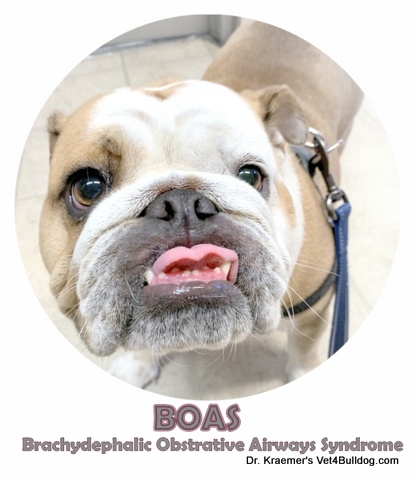
Elongated soft palate is one of the most common upper airway obstructions in Bulldogs and French Bulldogs, which are part of the “flat-faced” or brachycephalic breed group. These breeds are particularly prone to Brachycephalic Obstructive Airway Syndrome (BOAS), a condition that compromises their breathing due to structural abnormalities caused by their distinctive facial features. Breeds most frequently affected by BOAS include:
- English bulldogs
- French bulldogs
- Boston terriers
- Pugs
BOAS (BRACHYCEPHALIC AIRWAY SYNDROME)
An elongated soft palate is just one component of BOAS, and several other anatomical issues can contribute to this syndrome, including: The other BOAS conditions are:
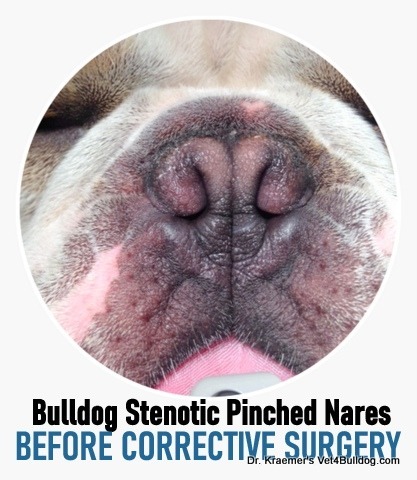
- Stenotic Nares
- Hypoplastic Trachea
- Thickened Bully Tongue
- Thickened Nasal Passages (turbinates)
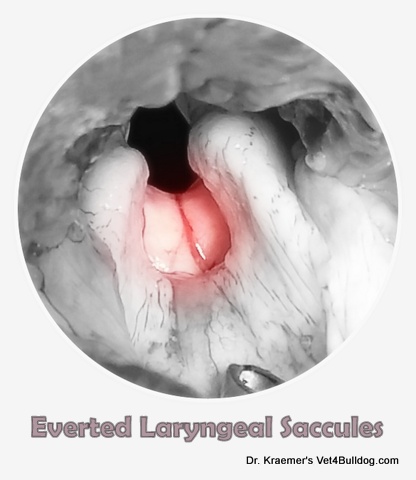
- Everted Laryngeal Saccules
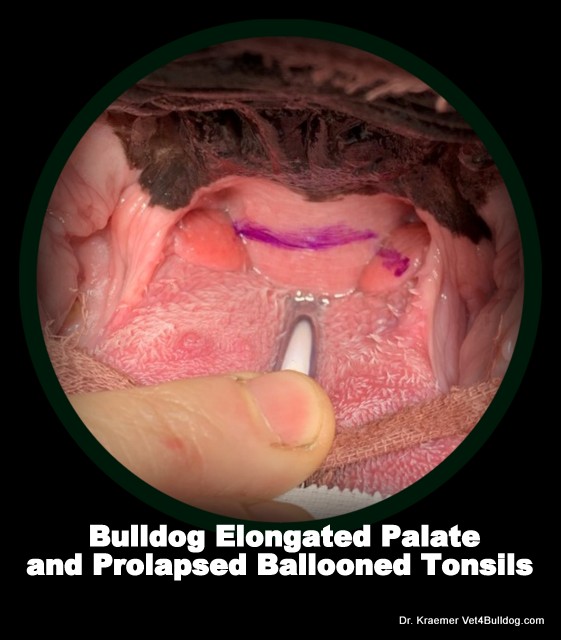
- Prolapsed Thickened Tonsils
Your bulldog or French bulldog puppy may be affected by a combination of one or more of these abnormalities.
Bulldog Elongated Soft Palate 5 X MUST KNOW
- The elongated soft palate is one of the most common airway problems in bulldogs.
- It is a severe, debilitating obstructive airway condition that usually requires surgery.
- It’s a progressive condition, thus, surgical repair should be done sooner rather than later.
- Management includes weight control, a stress-free environment, a cool temperature, and supplements
- Prevention & Care includes Dr. Kraemer’s Affordable Elongated Soft Palate Bundles
Members of this bulldog community prefer prevention over RX

The “pushed-in” compressed flat head bully conformation adversely affects the entire anatomy of your bulldog neck & head and its relation to the respective soft tissue and structures. Bulldog Elongated Palate BEFORE & AFTER Surgery (note the dramatic breathing sound improvement)
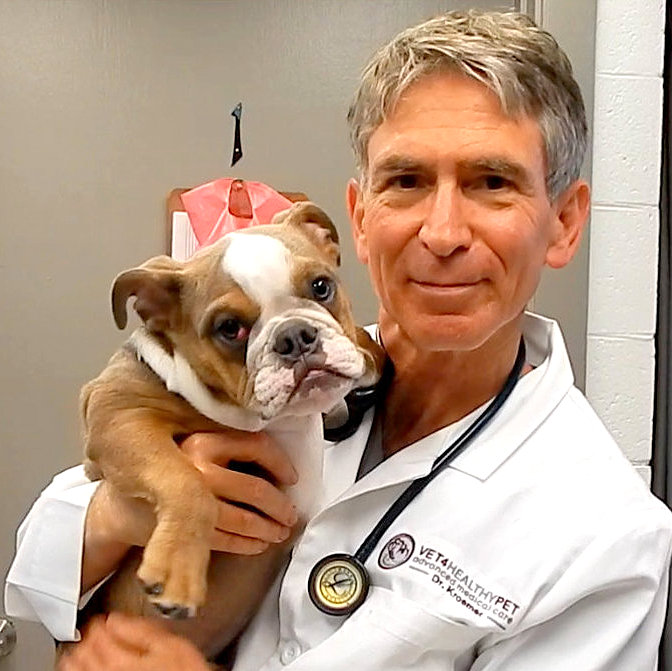
“Bubba” is a rambunctious 2-year-old puppy who was referred to Dr. Kraemer by his regular veterinarian after collapsing multiple times.
“We had to give him mouth to mouth to bring him back,” said his frantic and terribly worried owner “Bubba” 1 week AFTER Dr. Kraemer had repaired his elongated Soft Palate (note the normal breathing/panting)
This video was taken during Dr. Kraemer’s post-op recheck exam.
“In the first few days after his surgery I kept waking up in the middle of the night it was too quiet, I had to get up and check that he is still alive. His breathing was so quiet and relaxed, the terrible noise was gone, and he is now able to run around and take a walk with us, we are so happy for him, this surgery saved his life”
A bulldog who has collapsed twice and needed resuscitation is not a wait and see case. I understand the fear of anesthesia, and it is not irrational, but you are weighing it against the wrong alternative. The risk of not operating is not that things stay as they are. It is that they get worse in a direction that cannot be undone. Years of negative pressure on that airway produce enlarged tonsils, everted saccules, and eventually a collapsed laryngeal cartilage. Laryngeal collapse is irreversible and inoperable. Surgery now is a decision you still get to make. On the anesthesia itself, the answer is not to avoid it but to insist on how it is done. Ask whether your vet uses bulldog specific pre-anesthetic protocols, whether they pre-oxygenate, and whether they use sevoflurane rather than isoflurane, which I prefer in this breed for its faster recovery. Ask for bloodwork, an ECG and chest radiographs first, to check the esophagus, trachea, lungs, heart and diaphragm. And ask the question almost nobody asks: what happens after the tube comes out. In my practice the post extubation period is the most dangerous part of bulldog anesthesia, and a trained technician sits with every one of them, keeping them sternal with the tongue drawn forward and pink, with an oxygen cage ready. Most swelling settles in 24 to 48 hours. Choose the surgeon on their experience with this breed and this operation, not on price.
What Are The Causes of Elongated Soft Palate in Bulldogs?
Bulldog elongated soft palate and other brachycephalic obstructive airway syndromes (BOAS) abnormalities are due to their
- Skeletal face shortening
- Airway compression abnormalities
Combined, they adversely affect your bulldog’s airways by increasing
- Airway resistance
- Negative intra-airway pressure
If this negative intra-airway pressure exceeds the resistance of the surrounding tissue the following will occur:
- Tissue Inflammation
- Soft tissue swelling
- Laryngeal edema can occur, which further narrows the airways and increases the effort required for a Bulldog to inhale.
This swelling in the larynx adds to the breathing difficulties already present in brachycephalic breeds, making it even harder for them to get sufficient airflow. Over time, this added strain can worsen their respiratory distress. Over time, the laryngeal tissue and cartilage will fatigue and atrophy, leading to a progressive weakening of the airway structures. Eventually, this can result in irreversible laryngeal collapse, commonly referred to as “Bulldog Laryngeal Collapse.” This condition significantly impairs airflow, making it even more difficult for affected dogs to breathe, and can become life-threatening without proper intervention.
Bulldog Medical Conditions Associated with BOAS
Your Bulldog is likely to develop other serious medical issues as a result of chronic restrictive brachycephalic airway disease. Over time, the constant struggle to breathe can lead to complications, these conditions can further diminish their quality of life and require long-term management. Below is a short list:
- Chronic Vomiting, Retching, Reflux, and Regurgitation
- Exercise Intolerance
- Overweight due to inactivity
- Aspiration Pneumonia
- Acute Hyperthermia
- Heat Intolerance
- Stress and Excitement Intolerance
- Prolapsed Urethra due to intra-abdominal pressure
- Pulmonary Edema
- Heart Failure
- Sleep Apnea
- Anxiety
- Digestive Problems
- Megaesophagus
- Esophagitis
- Bully Gastric Emptying Disorder
- Faint due to high vasovagal tone
- Collapse and Sudden Death
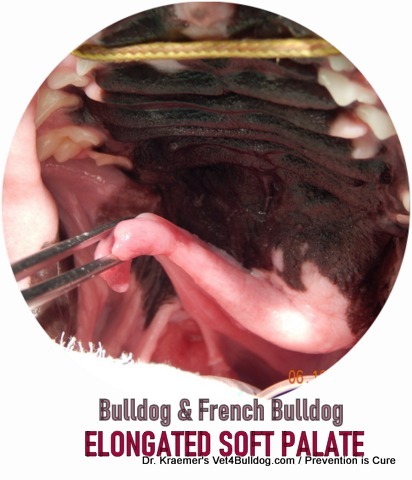
Elongated Soft Palate in English Bulldogs ANATOMY:
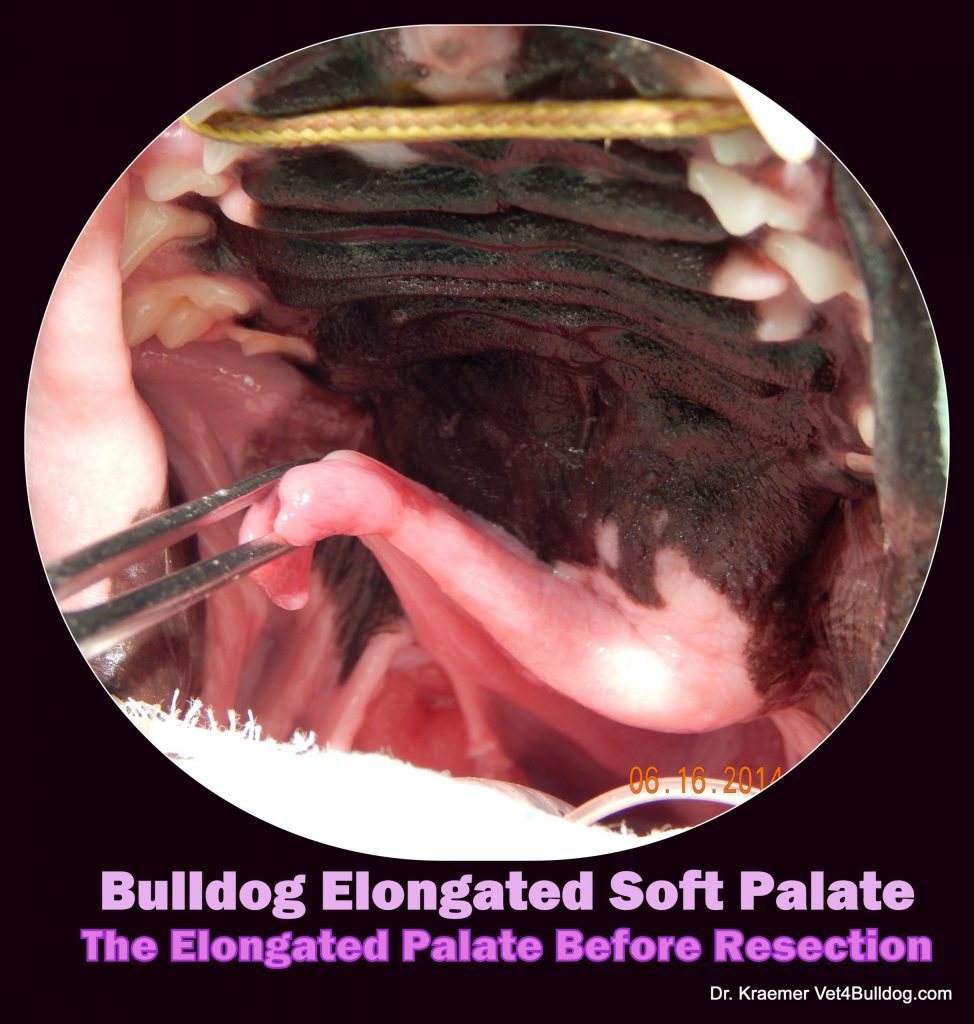
Your English bulldog and French bulldog palates are located on the roof of the mouth and have two parts: 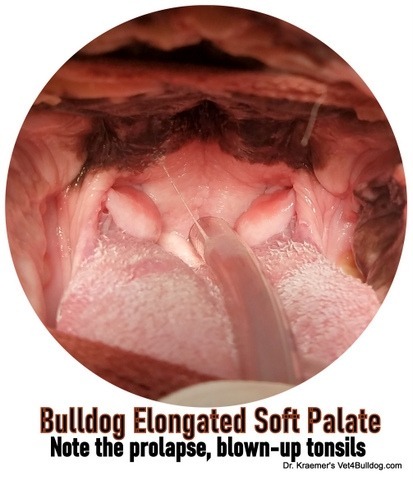
1. BULLDOG HARD PALATE:
The front (anterior) part of the palate is called the “hard palate,” named for the bone structure it’s made from. You can easily feel it by gently opening your Bulldog puppy’s mouth (or your own) and pressing your finger just behind the upper incisors. This area is firm to the touch and serves as a barrier between the mouth and the nasal passages.
2. BULLDOG SOFT PALATE:
The back (posterior) part of the palate is called the “soft palate,” located just behind the hard palate along the roof of the mouth, where bone transitions to soft tissue.
Unfortunately, in brachycephalic breeds like Bulldogs and French Bulldogs, selective inbreeding for the “cute smooshed face” look has altered the normal anatomical boundaries of the soft palate.
This leads to airway obstructions, making it more difficult to breathe.
Elongated Soft Palate in French Bulldogs DIAGNOSIS:
The diagnosis is composed of an auditory and visual exam
1. STRIDOR NOISY BREATHING:
Stridor is a harsh, high-pitched, mechanical respiratory sound that is a hallmark of Bulldogs and French Bulldogs with elongated soft palates. This laryngeal noise results from turbulent airflow through a restricted airway, which becomes more pronounced during increased airflow demands, such as exercise or excitement. Stridor in Bulldogs is often worsened by warm weather, as heat can exacerbate their already compromised breathing, making it even more difficult for them to cool down and catch their breath.
2. STERTOR NOISY BREATHING:
Stertor is different from stridor. While stridor is a high-pitched laryngeal airflow restriction, stertor is a sound produced by nasal or nasopharyngeal obstruction. It is characterized by snoring, snorting, or gasping noises, typically heard during inspiration. In Bulldogs and French Bulldogs, an initial diagnosis of an elongated soft palate is often made during the physical exam. This can involve a demonstration of the stridor noise by a member of the medical team, followed by confirmation from the owners. Alternatively, owners may bring in a video of their dog exhibiting stridor during excitement or exercise, or the noise may be observed directly during the exam. 👨⚕️A definitive diagnosis of an elongated palate, everted saccules, or other laryngeal abnormalities in Bulldogs requires visual inspection under mild sedation with proper illumination. This allows for a thorough examination of the airway structures to confirm the presence and extent of these conditions.
How To Prevent Elongated Soft Palate in Bulldogs and French Bulldogs?
- WEIGHT CONTROL: weight control is instrumental in proper bulldog care.
- EXERCISE: limited and controlled exercise is essential
- CONTROLLED TEMP: temp control and avoidance of hot or humid conditions is critical
- STRESS & ANXIETY CONTROL: A stress-free, calm, and relaxing environment is important.
ELONGATED SOFT PALATE BULLDOG THERAPEUTIC SUPPLEMENTS
You should offer your bulldog natural anxiety relief supplements like:

BULLDOG ELONGATED PALATE MUST KNOW
👨⚕️IMPORTANT: It’s essential to note that medical management, climate control, reduced activity, and weight management will not correct the underlying anatomical abnormalities. They can only help to alleviate the symptoms and improve the quality of life for your Bulldog.
Bulldog and French Bulldog Elongated Soft Palate SURGICAL REPAIR:
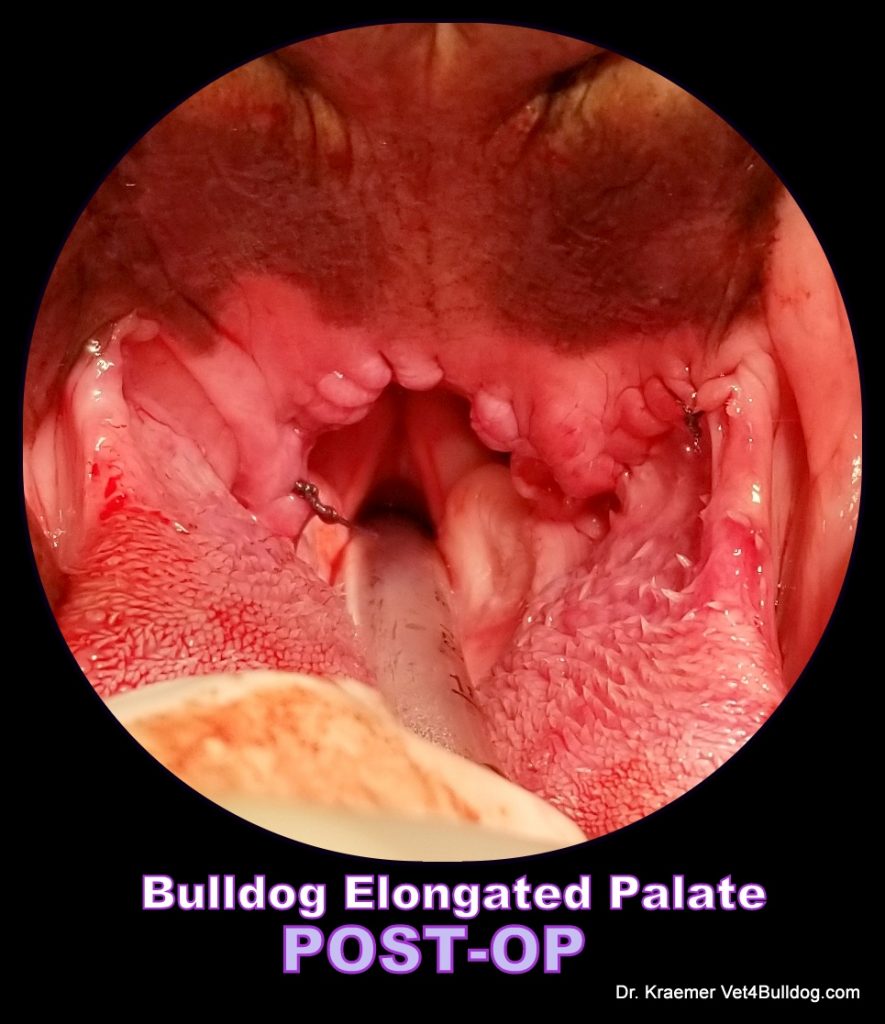
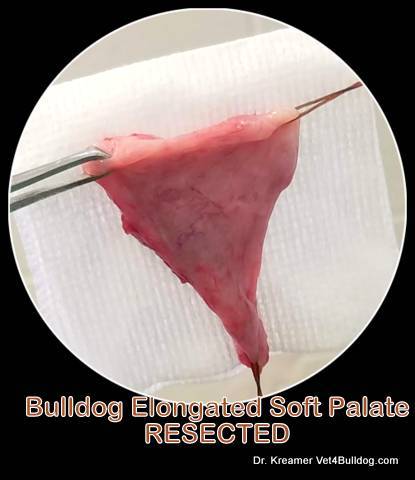
Timely Surgical repair is usually the best way to ensure a quality of life and a normal life expectancy Due to the serious and potentially dire consequences of untreated elongated soft palate and other brachycephalic obstructive airway syndrome issues in Bulldogs, early intervention is crucial. SURGERY: when anatomical abnormalities significantly impact the dog’s breathing Corrective surgery is the preferred treatment. This approach aims to address the structural issues and improve airflow, providing relief from the symptoms of brachycephalic obstructive airway syndrome.
Bulldog Elongated Soft Palate PROGNOSIS:
Early surgical correction of stenotic nares and elongated soft palate can significantly improve airway function and help prevent the development of everted laryngeal saccules and other secondary airflow-restrictive issues. The overall prognosis for Bulldog patients depends on:
- The number of anatomical abnormalities and defects present
- How promptly these issues were addressed
Since an elongated soft palate tends to worsen over time, timely intervention is essential to manage the condition effectively and improve the dog’s long-term quality of life. 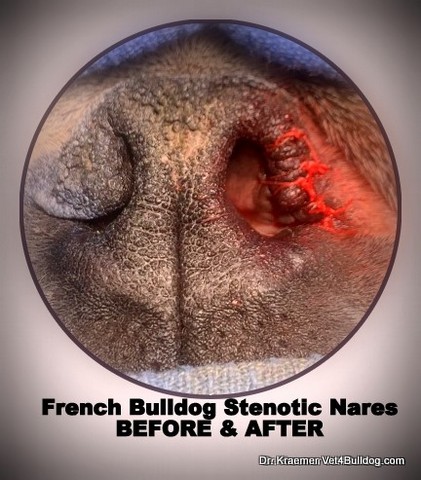
Elongated Soft Palate in Bulldogs and French Bulldogs TIPS & WARNINGS:
Below are elongated soft palate tips and warnings courtesy of Dr. Kraemer
#1 🩺 BULLDOG GAG & VOMIT TIP:
Bulldogs suffering from an elongated soft palate often experience gagging and vomiting due to high vasovagal reflex. This reflex is triggered by the obstruction and irritation in the airway, leading to the activation of the vagus nerve and resulting in gastrointestinal symptoms such as gagging and vomiting. 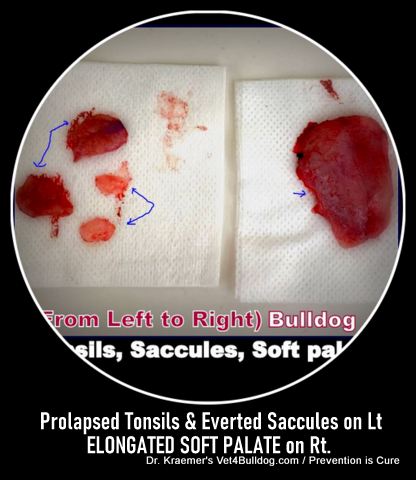
#2 🩺 ASPIRATION PNEUMONIA PREVENTION TIP:
Below are a few tips that should help you avoid food aspiration SLOW FEEDING: Avoid letting your Bulldog eat or drink too quickly. To slow them down, consider using a cupcake baking pan with small wells, which acts as a slow feeder. BLEND DIET: Mix their food with water to create a thick, soup-like consistency. This can make it easier for them to eat without triggering reflux. SMALLER & FREQUENT: Feed smaller portions more frequently throughout the day to reduce the amount of food in their stomach at one time. LATE NIGHTER: Offering a late-night meal may help reduce morning retching. HEADS UP: Feed your Bulldog on a step or stool to elevate their upper body. The more vertical their position, the better. ANTI-REFLUX: To decrease stomach acidity and gastric reflux, consult your vet about home medications like antacids and antiemetics (anti-vomiting agents). 
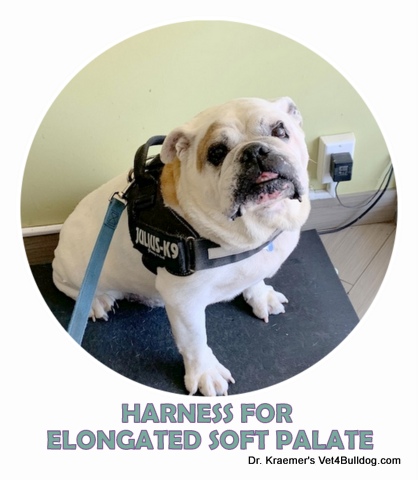
#3 🩺 HARNESS FOR ELONGATED SOFT PALATE TIP:
I recommend using a harness rather than a neck collar for all Bulldogs to prevent airflow restriction. A harness helps avoid pressure on the neck, which can worsen breathing difficulties in brachycephalic breeds.
#4🩺 BULLDOG HYPERTHERMIA TIP:
In the event of a respiratory crisis, check your dog’s rectal temperature; the normal range is between 100°F and 102.5°F. If the temperature exceeds 105°F and you cannot reach a veterinary hospital, rinse your dog with cool (not cold) water and place a fan over them until their temperature drops to around 103°F. Be careful not to let it drop below 100°F. 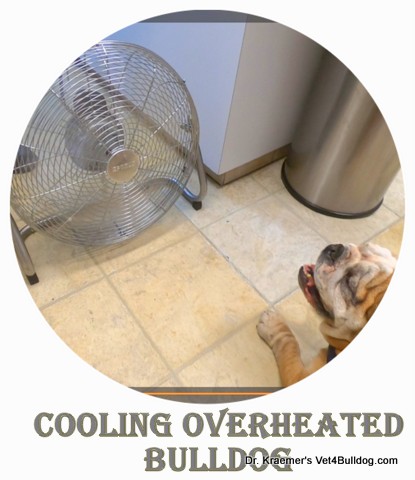
#5 🩺 BULLDOG SWOLLEN TONGUE TIP:
The thick, large tongue in Bulldogs can often retract inward during a respiratory crisis, worsening the situation. STERNAL POSITION: If your Bulldog is experiencing respiratory distress or collapses, ensure they are positioned sternally (lying on their chest and chin, not on their side). Gently pull their tongue forward to keep the airway as open as possible. Monitor the color of the tongue
- pink: indicates proper oxygenation
- purple-blue: this is a sign of inadequate oxygen levels and requires immediate attention.
Bulldog Soft Palate / TIMING:
I recommend surgical repair of the elongated palate and/or stenotic nares as soon as your bully reaches maturity at about 8 months of age.
#6 🩺 CALM & RELAX TIP:
If you cannot afford or have to delay surgical treatment, you can use a calm & cool environment, restricted activity, and supplements to help anxiety and inflammation like Dr. Kraemer’s

#7 🩺 HYPOPLASTIC TRACHEA TIP:
Contrary to common belief, in my experience, Bulldogs and French Bulldogs with a hypoplastic trachea tend to tolerate hypoplastic trachea well in the absence of Brachycephalic Obstructive Airway Syndrome (BOAS) or after BOAS-related issues have been corrected. While the trachea is underdeveloped, it often doesn’t cause significant problems unless compounded by other airway obstructions typical of brachycephalic breeds.
#8 🩺 BULLDOG AND FR. BULLDOG ANESTHESIA TIP:
Bulldogs with this syndrome have an increased risk of complications associated with general anesthesia. I recommend the routine pre-anesthetic screening tests:
- Blood Work
- Chest x-rays to evaluate the
- Esophagus (megaesophagus)
- Trachea (Hypoplastic)
- Lungs (aspiration pneumonia)
- Heart (heart disease),
- Diaphragm (hiatal hernia).
- ECG screening to r/o heart abnormalities
- Blood Pressure
#9 🩺 SEVOFLURANE BULLDOG ANESTHESIA TIP:
Read Dr. Kraemer’s anesthesia warning and recommendations. We have custom pre-anesthesia protocols specifically designed to minimize the anesthesia risks associated with Bulldogs and other brachycephalic breeds. Additionally, despite the higher cost Bulldog and brachycephalic patients are placed on sevoflurane anesthesia instead of isoflurane due to its increased safety and quicker recovery time. It is always best to ensure that your veterinarian uses sevoflurane for your pet’s anesthesia needs.
#1 ⚠️ SOFT PALATE HIGH-TEMPERATURE WARNING:
Symptoms of respiratory distress in Bulldogs and other brachycephalic breeds often worsen in hot or humid weather. The increased temperature and humidity make it harder for these dogs to cool down and breathe comfortably, exacerbating their existing airway issues.
#2 ⚠️ BULLDOG SOFT PALATE BREEDING WARNING:
Elongated soft palate issues are directly linked to the brachycephalic conformation and anatomy of Bulldogs. Due to the genetic nature of these airway obstructions, I do not recommend breeding a Bulldog that requires surgery to correct airway obstruction. This helps prevent passing on the anatomical issues to future generations.
#3 ⚠️ BULLDOG ELONGATED PALATE REPAIR TIMING WARNING:
Over time, Bulldogs with elongated soft palates can develop additional secondary problems due to years of negative intra-airway pressure (suction), which further obstructs airflow. Examples of these secondary issues include:
- Enlarged tonsils
- Everted laryngeal saccules
- Hypoplastic trachea
Tragically, these conditions can culminate in an irreversible, inoperable collapse of the laryngeal cartilage, leading to a condition known as laryngeal collapse, which severely compromises breathing.
#4 ⚠️ BULLDOG HEART STRAIN AND PROLAPSED URETHRA WARNING:
In the long term, the increased effort required for breathing in Bulldogs with brachycephalic syndrome can place significant strain on the heart, potentially leading to heart disease and even heart failure. Additionally, brachycephalic syndrome is suspected to be one of the underlying causes of prolapsed urethra, further complicating the health of these dogs.
#5 ⚠️ VAGAL TONE WARNING:
Vomiting and gagging are common in brachycephalic breeds like Bulldogs due to an increase in vagal tone, which is a direct result of excessive upper airway pressure. This increase in vagal tone can be further exacerbated in Bulldogs with an elongated palate and other Brachycephalic Obstructive Airway Syndrome (BOAS) issues, such as stenotic nares. These conditions intensify the airway pressure and contribute to more pronounced gastrointestinal symptoms.
#6 ⚠️ BULLDOG ASPIRATION WARNING:
Gagging and vomiting can lead to the aspiration of vomit contents, with Aspiration Pneumonia being a serious potential outcome. This condition can be particularly dangerous for Bulldog puppies due to their weaker immune systems and for Bulldogs undergoing anesthesia.
#7 ⚠️ ELONGATED PALATE AFTER SURGERY WARNING:
In the early postoperative period, swelling of the surgical sites (laryngeal edema) may occur and interfere with breathing, which is why we closely monitor Bulldogs after extubation. In my opinion, the post-extubation period is the most critical phase of “Bulldog anesthesia.” At our practice, we assign a trained technician to stay by the pet’s side, monitor vital signs, and ensure the dog remains sternal with their tongue stretched and pink. We also have an oxygen cage available in case of emergency. Most of the time, the swelling will subside within 24 to 48 hours, allowing for safe extubation and recovery. However, on rare occasions, if the swelling persists, we may need to replace the endotracheal tube with a temporary tracheostomy to secure the airway.
#8 ⚠️ ELONGATED SOFT PALATE SURGEON EXPERIENCE WARNING:
The surgeon performing the procedure must be experienced with both the breed and the specific surgery. Immediate postoperative complications are more common than severe chronic cases, making the expertise of the surgeon crucial for ensuring a smooth recovery and managing any potential issues that arise during the early postoperative period.
#9 ⚠️ BULLDOG LARYNGEAL EDEMA WARNING:
There are times when laryngeal edema prevents extubation, requiring those patients to remain sedated and intubated until the swelling subsides. In such cases, it’s essential to arrange for transportation to overnight care if the hospital does not offer this service. This ensures continuous monitoring and care for the patient until they are stable enough for safe extubation.
Insider tip
What is an elongated soft palate?
What does it sound like?
How is it confirmed?
Can supplements or weight loss fix it?
When should surgery happen?
What happens if we leave it?
Why does my bulldog gag and vomit so much?

Veterinary Care and Supportive Products
A bulldog who collapses, faints, turns purple at the tongue, or overheats easily needs an airway assessment now rather than at the next annual visit. A definitive diagnosis takes sedation and a vet who knows this breed. No supplement shortens a palate. What supplements do is reduce the anxiety and inflammation that add load to an already narrowed airway, which matters most in the months before surgery and the weeks after it.
The Elongated Soft Palate bundles
- Elongated Soft Palate Basic Bundle
- Elongated Soft Palate Essential Bundle
- Elongated Soft Palate ULTIMATE Bundle
More Help from Dr. Kraemer
The palate is one fault among several. These cover the rest of the airway and the complications that follow:
- BOAS, the whole picture
- Stenotic nares
- Sleep apnea in Bulldogs
- Aspiration pneumonia
- Megaesophagus
- Safer anesthesia for Bulldogs
About the Author
Roy Kraemer, DVM, is a veterinarian with extensive clinical experience caring for Bulldogs and French Bulldogs. His educational work emphasizes correcting airway faults before they become irreversible, breed specific anesthesia protocols, close post-extubation monitoring, and responsible breeding.
Trusted by Vets ~ Recommended by Owners ~ Approved by Bulldogs
Shop Breathing & Airway Support →
References
- American College of Veterinary Surgeons. Brachycephalic Syndrome
- Merck Veterinary Manual. Brachycephalic Airway Syndrome in Dogs
- American Animal Hospital Association. 2020 AAHA Anesthesia and Monitoring Guidelines