


Dr. Kraemer Jezz, my 2y old French bulldog is experiencing urinary incontinence. She has been having accidents inside the house more frequently. Could you please advise on the best course of action? #PetHealth #DogCare 🐾💦
Thank you, Diane ❤️
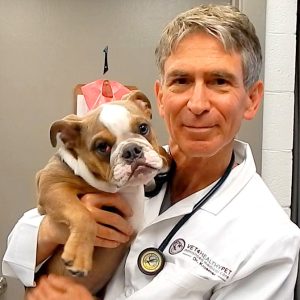
That description is doing most of the diagnostic work for you, so start with what it tells us. Leaking while she is asleep, with a dog who is otherwise normal and unaware of it, is the classic picture of a weak urethral sphincter, and in a spayed female it is the single most common reason I see. It is not her age, it is not her behavior, and it is not something she can control any more than you could.
That said, I would still want her seen rather than managed with towels, for two reasons. The first is that a urine sample settles in one test whether there is an infection sitting on top of it, which is common and which changes what she needs. The second is that a weak sphincter usually responds well to a prescription, and that is a conversation worth having rather than years of laundry. Bring the detail you have given me, because when it happens and whether she is aware of it are the parts that point the way.
Two things to mention at the appointment. If she has also started drinking noticeably more than she used to, say so out loud, because that is a different investigation and it should not be folded into the leaking. And if the skin around her back end has become red or sore, that is worth showing them too.
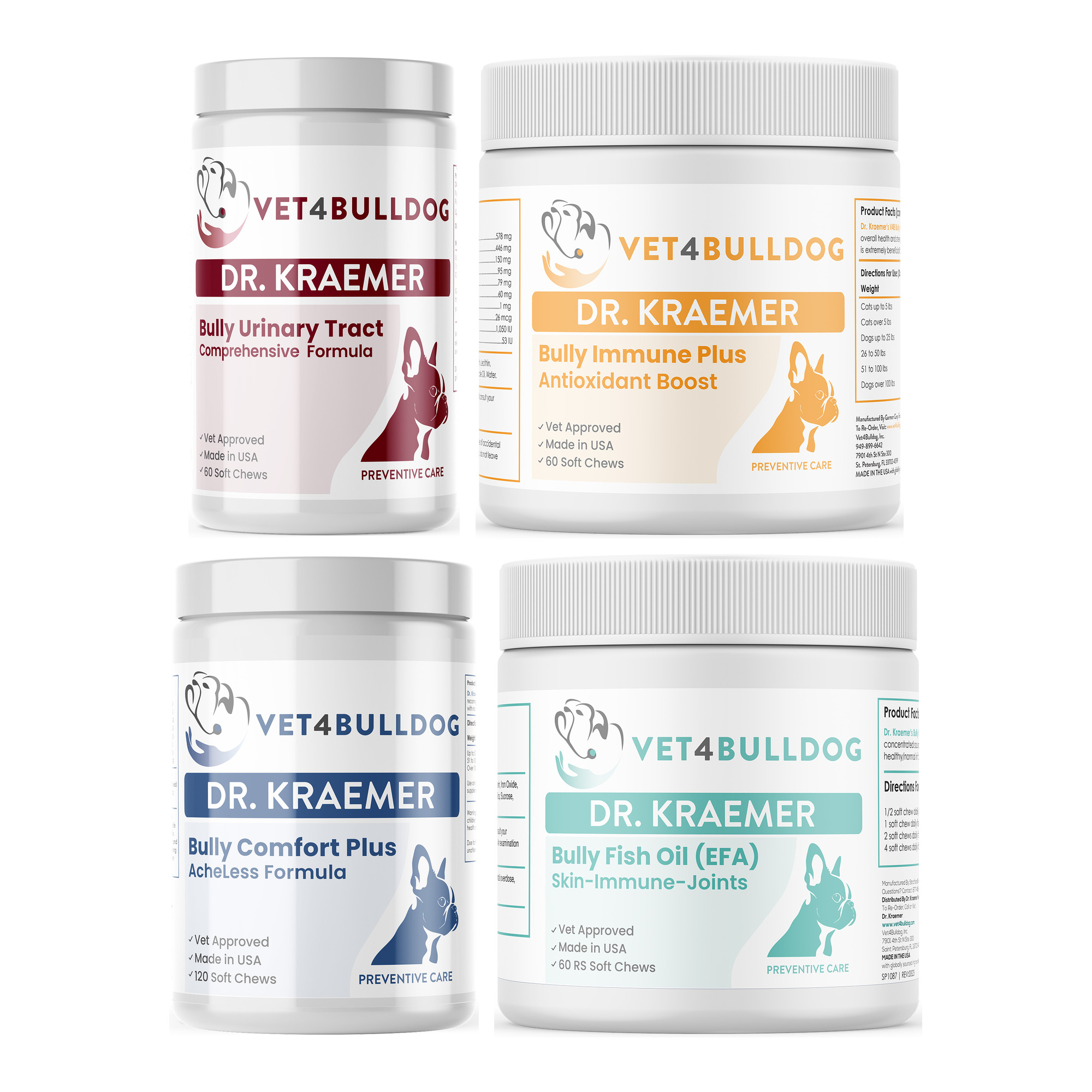
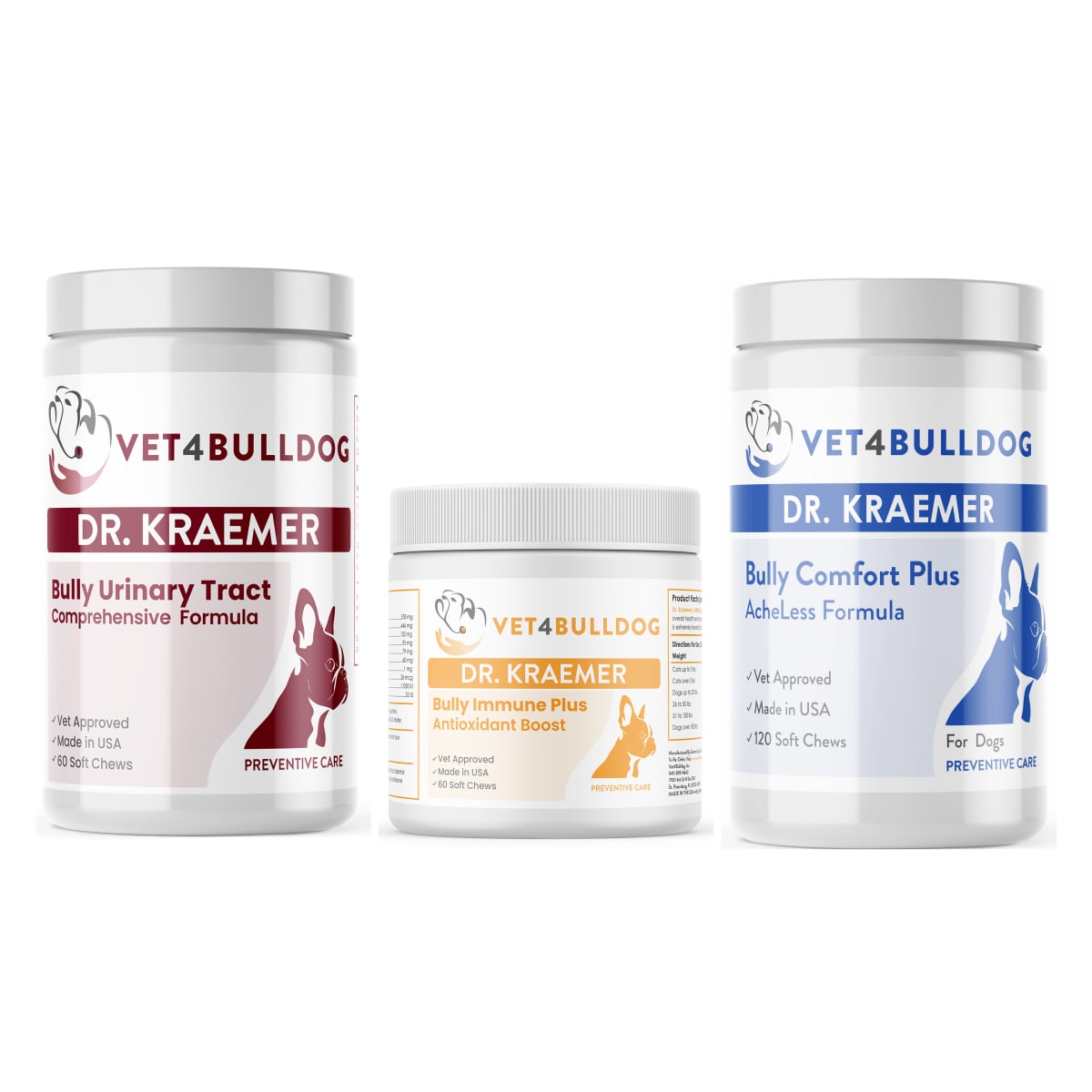
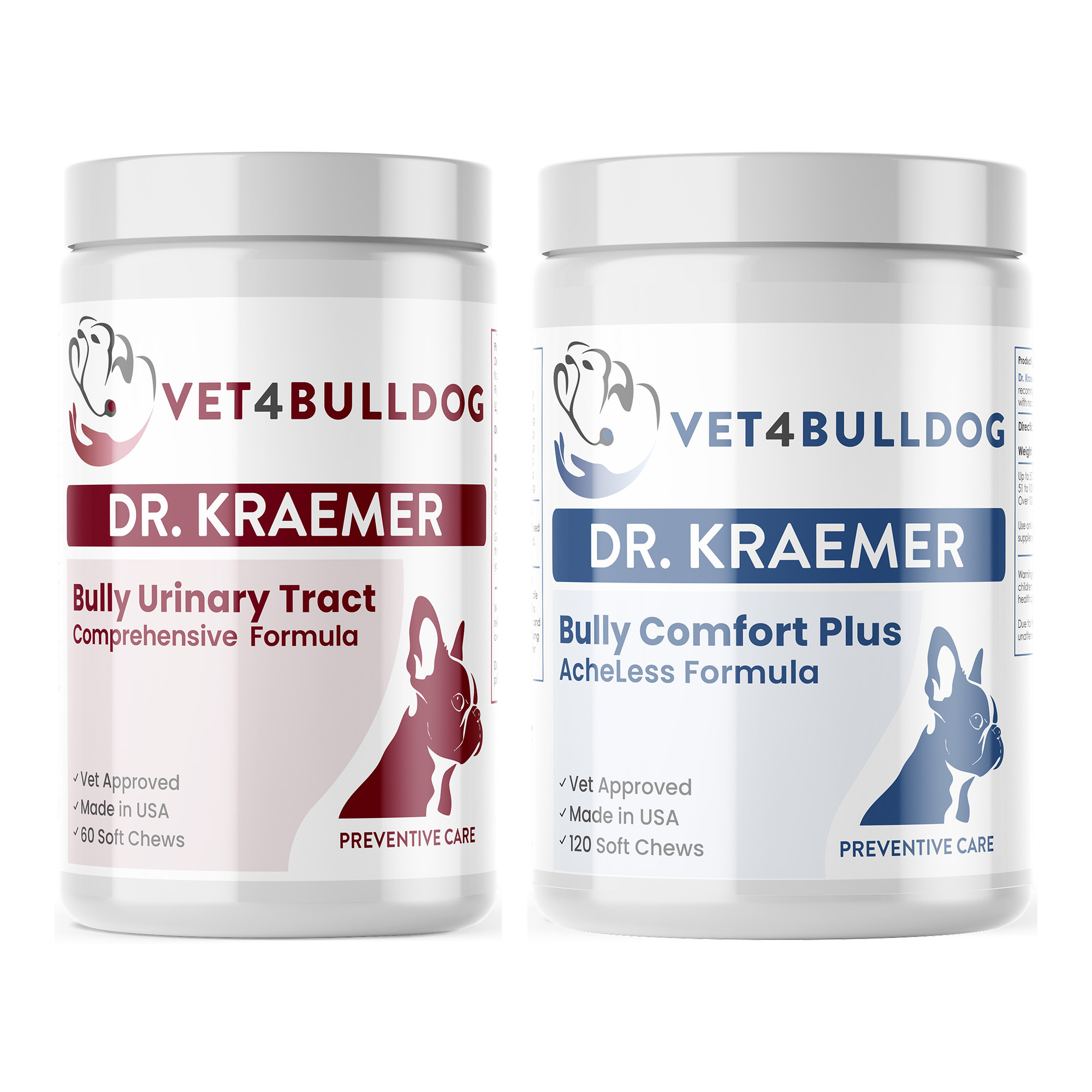
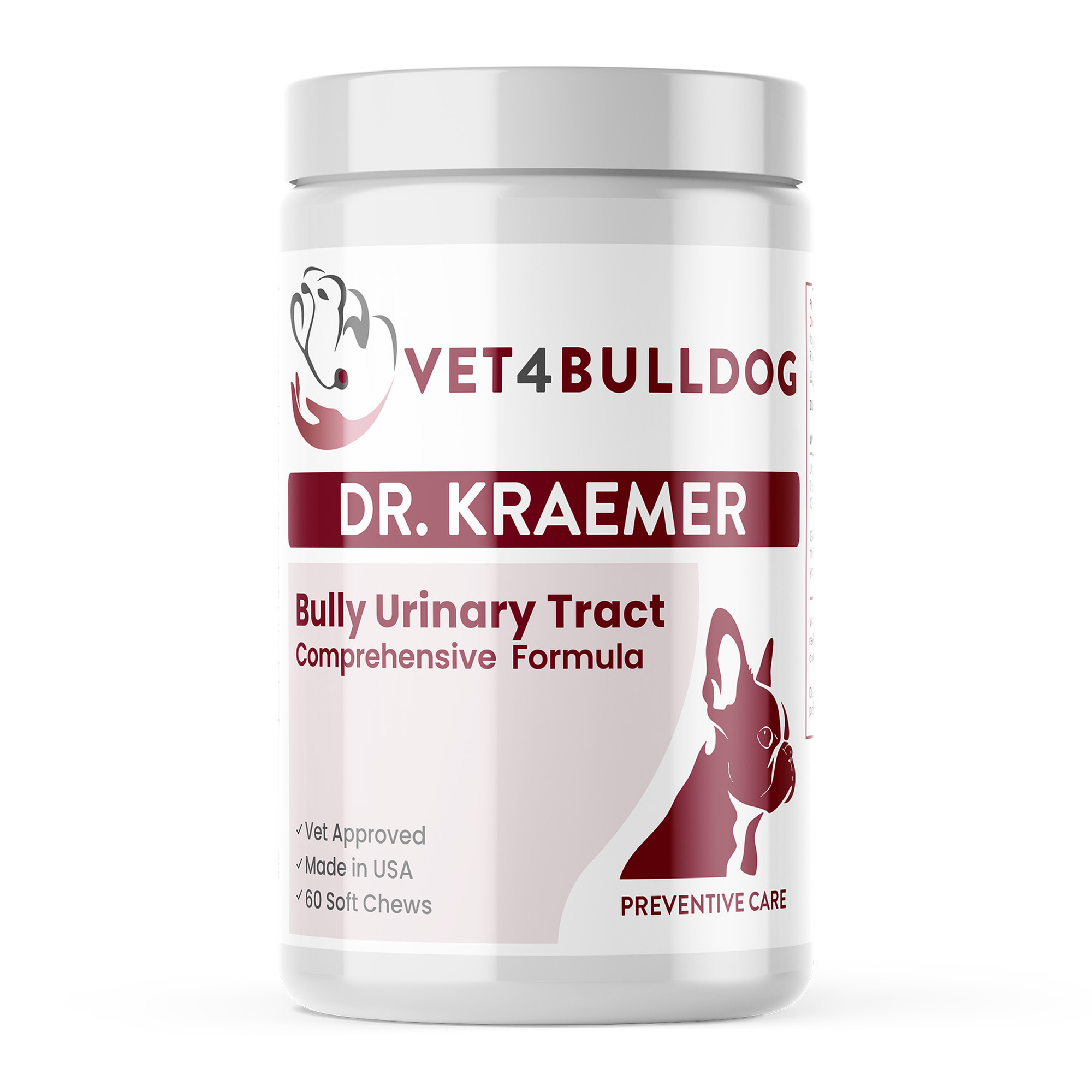
On what you can do alongside: our urinary support may help as part of the longer term picture, and your veterinarian is the right person to say whether it fits her plan. Keeping the area clean and dry with an antiseptic wipe made for the job belongs alongside whatever is prescribed rather than in place of it, because skin that is damp all night is the part that turns a nuisance into a sore. Belly bands and pads are fine for the laundry. They are not a treatment, and they are not a reason to wait.
Introduction To French Bulldog Incontinence
Urinary incontinence in Bulldogs and French Bulldogs is not due to a single medical problem but rather a manifestation of a wide range of medical conditions. Normal urination requires nerves, muscles, and sphincters to work voluntarily in sync. When any of these components fail to function correctly, it can result in involuntary urine leakage.
What Causes Urinary incontinence in Bulldogs and French Bulldogs?
Incontinence causes might vary between males and females and the age of your pet.
Below is a short list of the most common underlying reasons for urinary incontinence.
➡️ BEHAVIORAL:
- territorial
- fear
- anxiety
➡️ NEUROLOGICAL:
- spinal injury
- Vertebral malformation
- French bulldog IVDD
- bulldog Spina Bifida
- Overflow incontinence
➡️ MUSCLES: Injury to the bladder muscles
➡️ URETER: bladder bypass, such as bulldog ectopic ureter
➡️ URETHRA & BLADDER SPHINCTER: Injury, obstruction, or disfunction
➡️ STONES:
- Urinary stones
- kidney stone
- Bladder calculi
- Ureter, and Urethra stones
➡️ PROSTATE:
- Bulldog prostatitis
- Prostate cancer
- Bulldog Prostate Hyperplasia
➡️ INFECTION & INFLAMMATION:
- Bulldog Cystitis
- UTI (Irritation or urge incontinence)
➡️ ORTHOPEDIC: pelvis fracture and other debilitating orthopedic conditions
➡️ PU/PD: Urinary incontinence due to excessive drinking, such as
- bulldog diabetes
- kidney disease
- bulldog Cushing disease
➡️ OBESITY & CONSTIPATION: Due to excessive intraabdominal pressure (Stress incontinence),
➡️ USMI: Urethral sphincter mechanism incompetence
➡️ AGE: Older Bulldogs may experience incontinence due to weakened bladder muscles or age-related health issues.
Bulldog USMI cause
The exact cause of Urethral Sphincter Mechanism Incompetence (USMI) remains unclear, but it is thought to be associated with a weakening of the urethral muscle and decreased circulating estrogen levels.
USMI is more commonly observed in spayed females compared to intact females or male
She is not being naughty
Before anything else, three different things get called the same thing in the consulting room, and telling them apart does more good than any treatment. True incontinence is leaking the dog has no control over and often no awareness of: she gets up from a wet bed and looks faintly puzzled. Inappropriate urination is a dog deliberately squatting somewhere she should not, which is a training or anxiety question. And the third is a dog who simply cannot hold what she is producing because she is drinking far more than she used to. If you take one thing from this page, take that a wet bed under a sleeping dog is incontinence until proven otherwise, and that telling her off for it is both useless and unkind.
The drinking one is the one I would least like you to miss. If the water bowl is emptying faster than it did six months ago, the bladder is not the problem, it is the messenger. That pattern points at the kidneys, at diabetes, at a hormonal condition, and those need a blood test rather than a bladder tablet. It is also easy to check at home: measure what you put in the bowl for a couple of days and tell your veterinarian the number. That single piece of information often redirects the whole investigation.
Where age is the clue. A spayed adult female who starts leaking in her sleep is usually a weak urethral sphincter, which is the most common cause in this breed and responds well to treatment, so it is a good conversation to have rather than something to put up with. A young dog who never quite became reliable and dribbles without seeming to notice is a different story, and the thing worth ruling out is a ureter that bypasses the bladder altogether. That one is structural and surgical, and it gets missed for months because everyone assumes the house training simply failed.
Symptoms of Urinary Incontinence in Bulldogs and French Bulldogs
- Dribbling of urine: common to ectopic ureter, and prostate disease
- Excessive voluminous urination: common to
- hormonal abnormalities (diabetes, cushings)
- kidney disease
- Painful urination: common to
- stones
- UTI
- cystitis
- Frequent urination: common to most related medical conditions (hormonal, stones, infection, prostate disease)
- Excessive drinking: common to hormonal abnormalities and kidney disease
- Blood in the urine: common to
- Stones
- Cystitis
- UTI
- Cancer
- Discolored urine
- Light water-like vs dark yellow
- Bed pee
- Urine spots in irregular spots
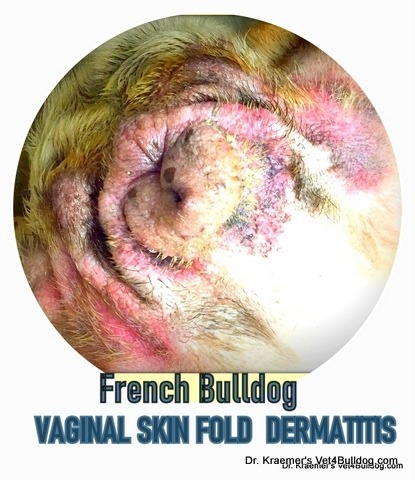
- Irritated and discolored skin and skin fold from dampness and wetness
- Smelly Vaginal Fold & Bulldog Vaginal Skin Fold Dermatitis
Bulldog Urinary Incontinence Diagnosis
- DR EXAM
- DIGITAL EXAM: vaginal, rectal (Prostate)
- BLOOD LAB TEST: chemistries, hormonal panel, and blood count (CBC)
- LAB URINE & CULTURE: Urine analysis and urine culture
- IMAGING: radiographs and ultrasound
- OTHER:
- contrast studies
- cystometrogram
- CT and excretory urography to evaluate the kidneys and ureters.
- Urethrocystoscoe (endoscope)
Urinary Incontinence in Bulldogs: Prevention and Treatment
For optimal treatment outcomes, it’s essential to identify the underlying cause:
- Training
- frequent walks to the bathroom
- stress reduction
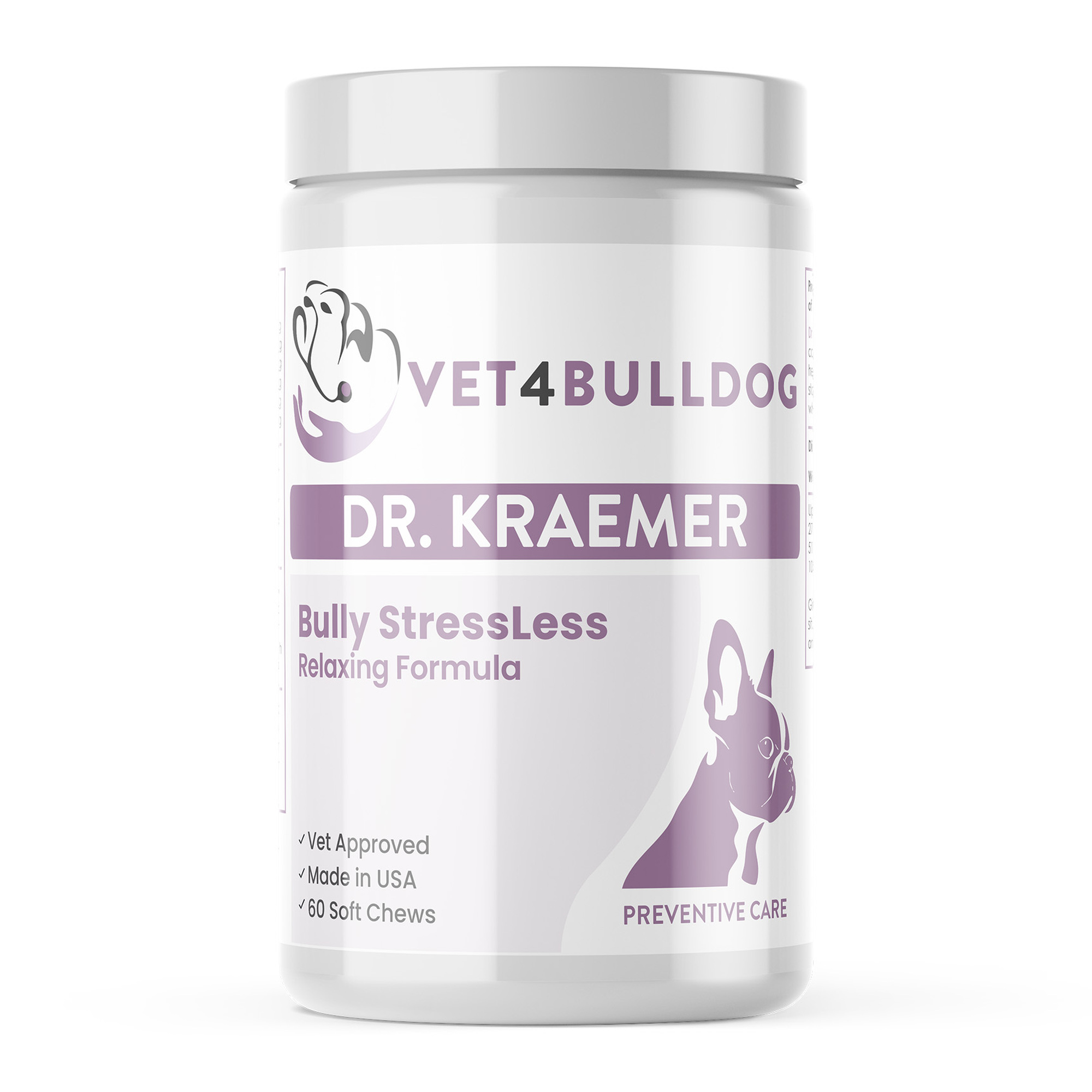
Urinary Incontinence Bully Therapeutic Supplements
2. How to treat and prevent medical related incontinence
➡️ PU/PD: If there is excessive Drinking & Urination, you must treat the underlying disease (diabetes, kidney disease, Cushing’s disease, etc)
➡️ HORMONAL RESPONSIVE: provide replacement hormones such as
- female-estrogen diethylstilbestrol DES
- males-testosterone
➡️ INFECTION: Antibiotics based on culture result
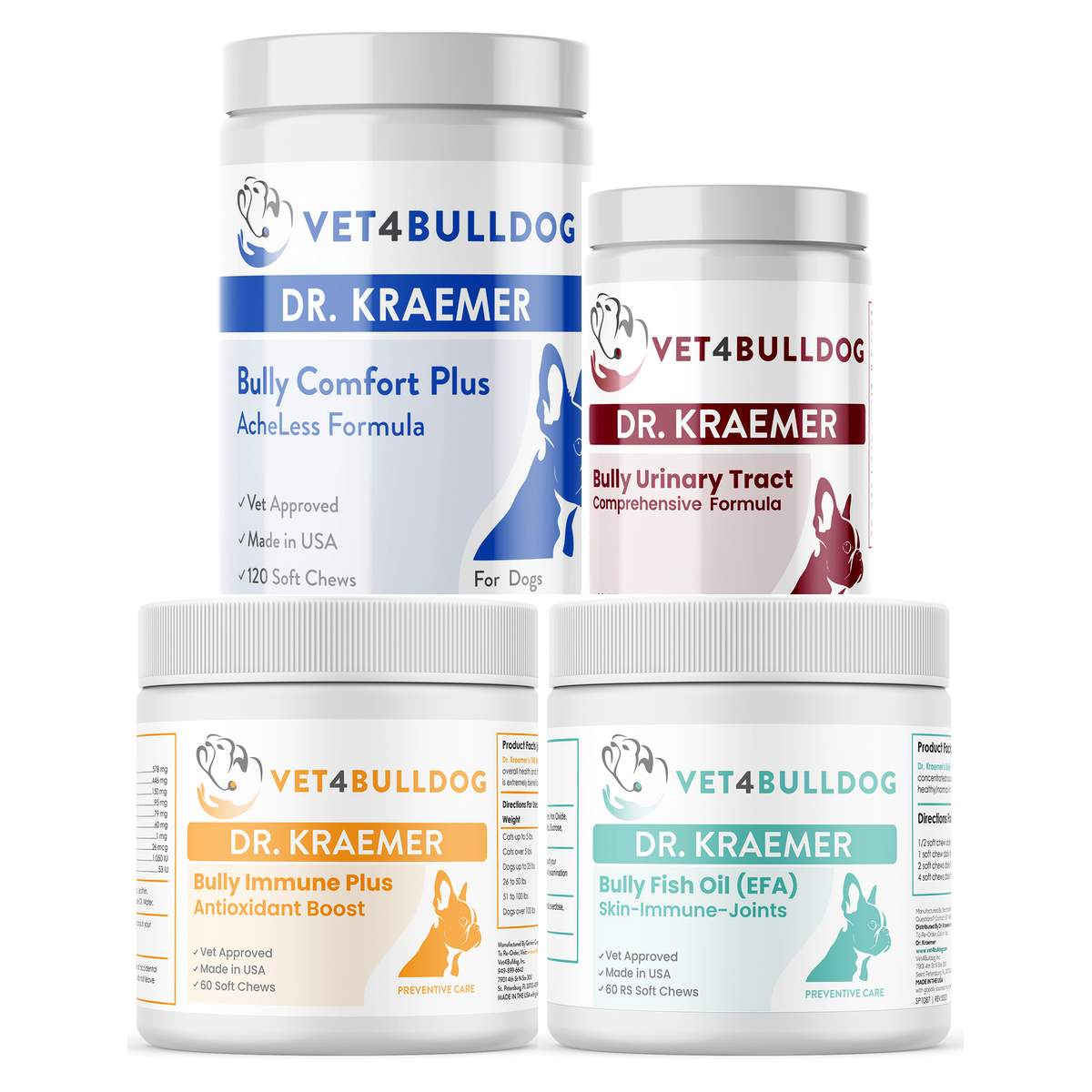
Dr. Kraemer’s V4B Urinary Support Formula
➡️ STONES (CALCULI):
- diet change
- increase water intake
- surgery removal
➡️ PROSTATE DISEASE:
- neutering
- antibiotics
- chemotherapy
- surgery
➡️ ECTOPIC URETER(S): surgery
➡️ NEUROLOGICAL: such as bulldog spina bifida and bulldog IVDD might require lifelong maintenance that includes
- manual expression of the bladder
- RX
- Diapers
- Skin Fold antiseptic wipe
- V4B Bully Antiseptic Skin Fold XL Wipes

➡️ ORTHOPEDIC: pain management and joint support like Dr. Kraemer’s
➡️ BLADDER MUSCLE DISORDER
- RX for a stimulus of the bladder detrusor muscles
- RX to help relax RX for the bladder sphincters.
- USMI: urinary sphincter mechanism incompetence is often treated with RX-like phenylpropanolamine (PRA, Proin)
I will not dress this one up. The treatments that actually stop the leaking are mostly prescriptions: medication for a weak sphincter, hormone replacement where that is the cause, an antibiotic chosen from a culture for an infection, surgery for a ureter in the wrong place. No supplement tightens a sphincter, and anything claiming to would be worth distrusting. Get the cause identified first, because the right answer here is usually sitting in a diagnosis rather than on a shelf.
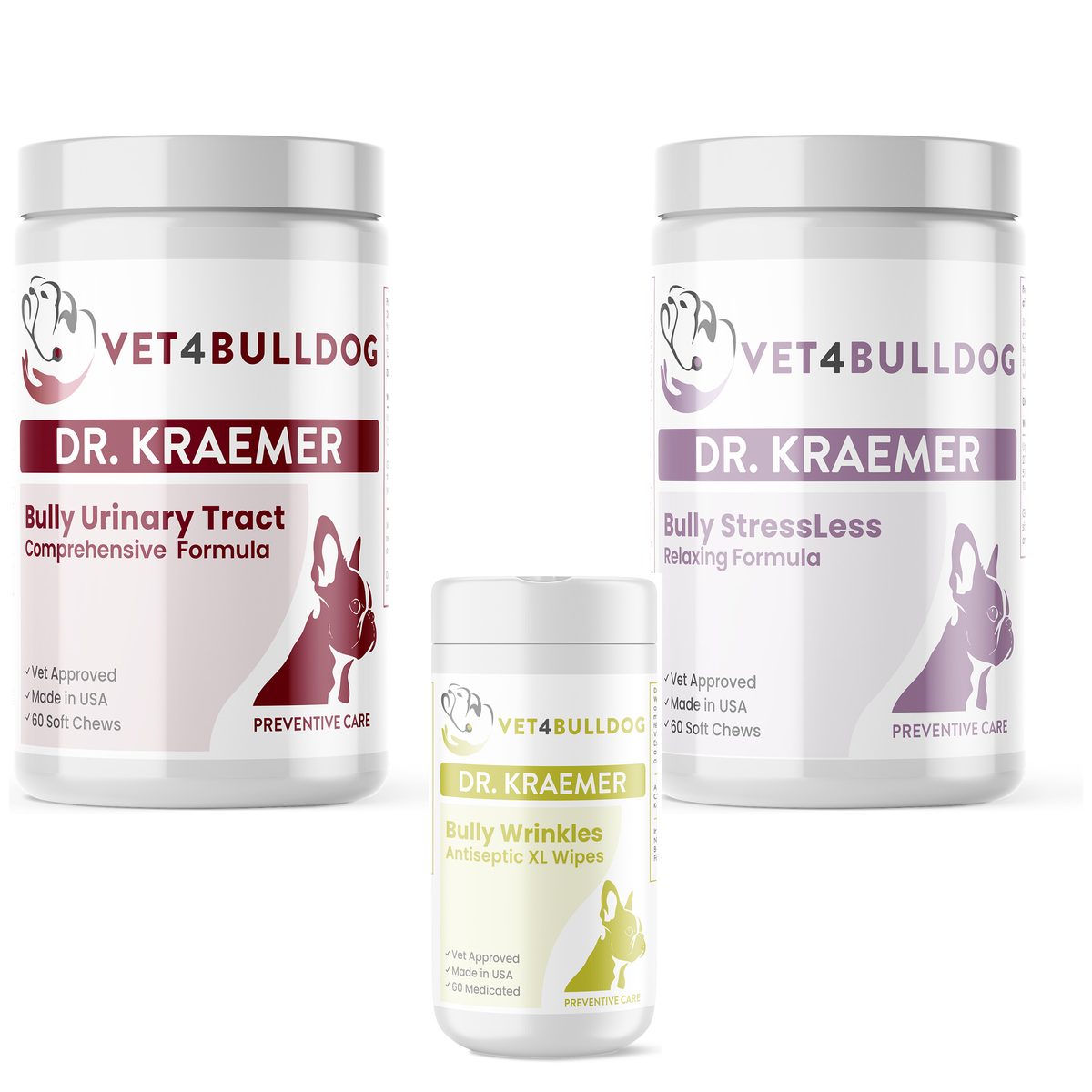
Where our range does earn its place is the complication that follows, and it is the one owners can genuinely prevent. A Bulldog lying in damp bedding develops sore skin and inflamed folds, and a damp vulval fold is the most common route to the urinary infections that then make the leaking worse. Daily antiseptic wiping of that area breaks the loop, and these are topicals, so they belong alongside the plan your veterinarian has set rather than instead of it. The urinary support chews are supplements and may help as part of that plan over a good few weeks. The Core bundle is the lighter option and the Ultimate is for a dog who needs the full daily routine, usually one with a neurological cause who will be managed for life.
To be clear: supplements or topicals are not substitutes for prescribed treatment. If your dog is unwell, is being treated for a condition, or is already on medication, review any supplement or topical with your veterinarian so it fits the plan you are already following. This page is educational and is not a diagnosis or a treatment plan for your own dog.
Leaking and drinking more are two different problems
When an owner tells me the dog is wetting in the house, I ask three questions before anything else, and the answers usually sort the problem into one of three piles.
Is she aware of it. A dog who squats, postures and empties on the carpet is urinating. A dog who leaves a puddle where she was lying and gets up none the wiser is leaking. They sound the same when they are described over the phone and they are not the same condition.
How much is she drinking. This is the one that gets missed. A dog who is taking in far more water than she used to will overflow a normal bladder, and no amount of tightening the sphincter will fix that, because the bladder is not the problem. Several conditions well outside the urinary system do this, which is why the honest answer to the owner is that we need a blood and urine panel rather than a prescription.
Is she emptying properly. A bladder that never fully empties will dribble, and that is a different mechanism again with a different answer.
I labor this because the mistake I have seen repeated is a dog put straight onto an incontinence drug because she is wet, when she was actually drinking twice her normal amount and the leak was the symptom rather than the disease. The drug takes the puddle away for a while, everybody relaxes, and the real condition carries on unexamined. Think of it as mopping the floor under a dripping pipe. The floor looks better and the pipe is still dripping.
So when you book the appointment, bring three facts: when it happens, whether she knows about it, and roughly how much water is going down. Those three will do more for her than anything you can buy.
Bulldog Urinary Incontinence Tips & Warnings:
Below is a selected urinary incontinence tips and warnings list courtesy of Dr. kraemer
Tip 1. 🩺 Bulldog and French Bulldog ectopic ureter
Bulldog and French bulldog puppies who are incontinent and nonresponsive to house training should be evaluated for congenital abnormalities such as ectopic ureter (ureters bypassing the bladder sphincter.)
Those bulldogs usually dribble and seem unaware

Tip 2. 🩺 Bulldog and French Bulldog PU/PD
Bulldogs who develop incontinence alongside an increase in water intake should undergo evaluation for disorders causing PU/PD (Polyuria/Polydipsia), which translates to excessive urination and excessive water intake.
Tip 3. 🩺 Bulldog and French Bulldog prostate
A rectal digital examination and palpation may help detect tumors and abnormal prostate size.
Prostate disease is more prevalent in intact male Bulldogs and male French Bulldogs. Therefore, neutering is often recommended to reduce the risk of prostate-related issues.
Tip 4. 🩺 Bulldog and French Bulldog UTI
Incontinence may predispose your bulldog to UTI either due to urine retention (inability to empty the bladder) or damp vaginal folds leading to bully moist skin dermatitis and an ascending infection.
Wipe your female bulldog’s vaginal folds daily and use his urinary chews
Tip 5. 🩺 Bulldog and French Bulldog USMI
Bulldog urethral sphincter mechanism incompetence is the most common cause of bulldog urinary incontinence.
The decline in estrogen levels after a spay may cause a decrease in the vasculature of the urethra and its supporting tissues
Warning 1. ⚠️ Bulldog inappropriate urination
It’s important not to confuse bulldog urinary incontinence with inappropriate urination due to behavioral issues such as dominance, territoriality, or anxiety.
Warning 2. ⚠️ Bulldog PU/PD
It’s crucial to differentiate between urinary incontinence and the inability to hold urine due to excessive drinking. Bulldogs experiencing PU/PD (Polyuria/Polydipsia), characterized by excessive drinking and urine production, often have
- dilute water-like urine
- and large volumes of urine
Their urine may contain sugar or high levels of proteins. Blood work and urine analysis can aid in distinguishing between these conditions.
Warning 3. ⚠️ Bulldog straining to urinate
Straining to urinate bulldogs is typically indicative of pain and discomfort, often stemming from underlying issues such as
- Cystitis
- Urinary stones
- Prostate disease
This discomfort may be accompanied by cloudy or discolored urine, which often contains visible blood.
To help diagnose these conditions, diagnostic tests are recommended, including urine
- urine analysis
- urine culture
- radiographs
- digital rectal exam
- ultrasound.
These tests help rule out potential causes and provide valuable insights into the underlying condition affecting the bulldog’s urinary health.
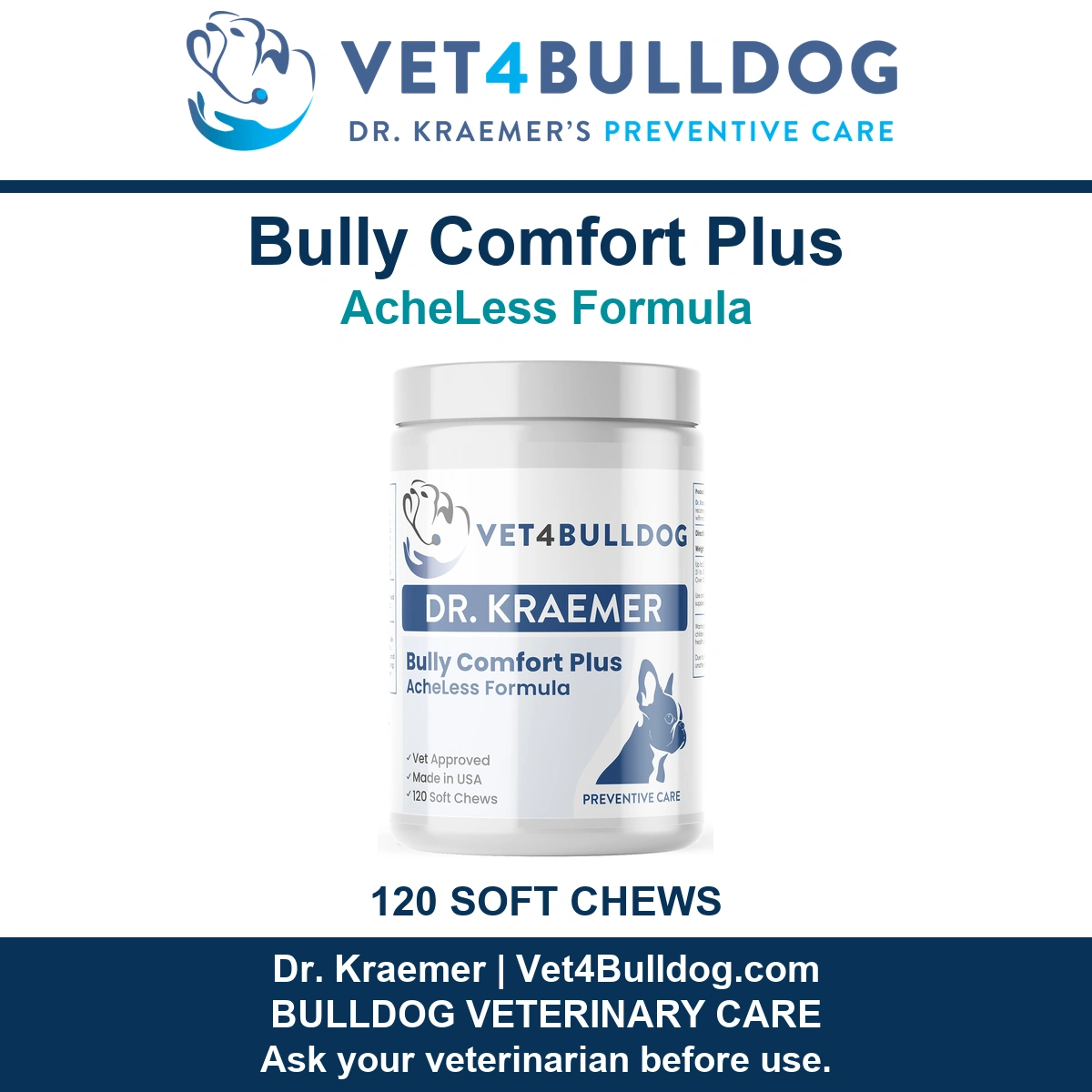
Pain medication should be considered as a remedy to the discomfort, as well as supplements like V4B Bully Comfort and AchLess
Warning 4. ⚠️ Bulldog and French Bulldog hypertension
Phenylpropanolamine (PPA) should not be administered to bulldogs with high blood pressure (hypertension). Before initiating treatment, it’s important to measure your bulldog’s blood pressure as a baseline assessment. Additionally, blood pressure should be monitored again one month after starting PPA treatment. This monitoring helps ensure the safety and efficacy of the treatment regimen for your bulldog.
Warning 5. ⚠️ Bulldog DES, pyometra and anemia
Treating bulldog urinary incontinence with diethylstilbestrol (DES) can potentially lead to complications in intact females such as pyometra and anemia due to bone marrow suppression. It’s crucial to monitor your bulldog closely and conduct frequent blood count tests to detect any adverse effects and ensure their well-being during treatment.
Is she doing it deliberately? She knows the rules.
She only leaks when she is asleep. Does that narrow it down?
She is drinking a lot more than she used to. Is that connected?
Did spaying cause this? Should I have left her entire?
My young dog never really became house trained and dribbles. Is that the same thing?
Can I just use dog diapers and manage it?
Her back end smells and the skin there looks red and sore.
More Help from Dr. Kraemer
Incontinence is a symptom, not a diagnosis, and the cause often sits on one of these pages instead:
- Urinary tract infection in Bulldogs
- Cystitis and bladder inflammation
- Bladder and urinary stones
- Vaginal fold dermatitis and the infections that follow it
- Cushing’s syndrome, one reason a dog drinks far more
- Spay risks and benefits, including timing
References
- Merck Veterinary Manual. Disorders of Micturition in Dogs and Cats
- Merck Veterinary Manual. Pharmacotherapeutics in Urinary Incontinence in Dogs and Cats
- Merck Veterinary Manual. Ureteral Anomalies in Animals
- Merck Veterinary Manual. Infectious Diseases of the Urinary System in Small Animals
Trusted by Vets ~ Recommended by Owners ~ Approved by Bulldogs