







Description
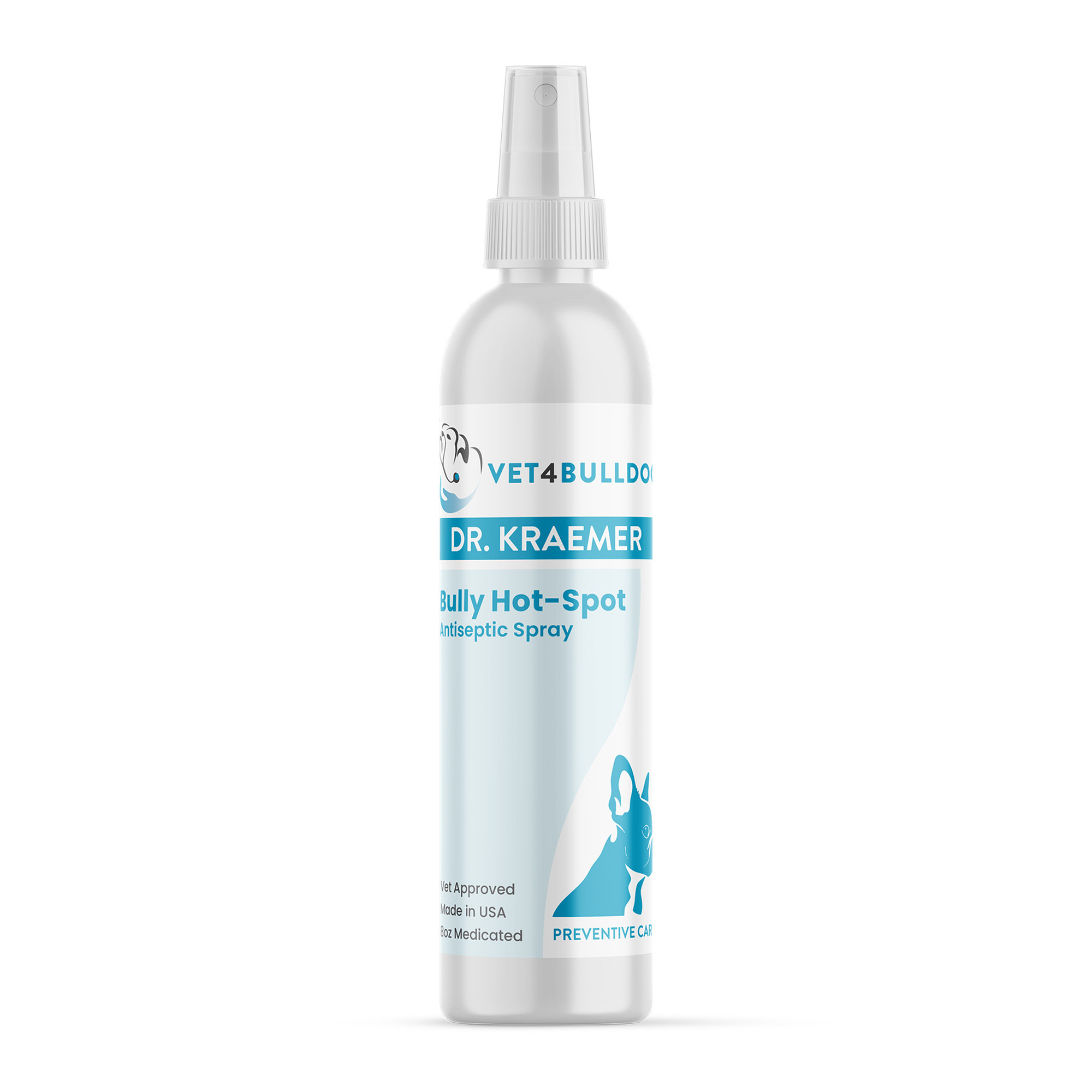
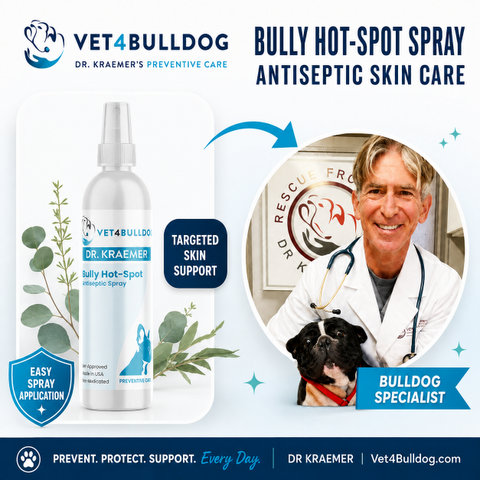
An antiseptic medicated spray for bulldogs and French bulldogs, with antibacterial and antiyeast action, for hot spots and sore patches that are too tender to bathe.
How to use it
Clip or part the hair around the patch, spray, let it dry, and stop her licking it while it dries. Dose and frequency by label instruction.
Yeasty Bully Antiseptic Hot Spot Spray May Help Support & Care For:
- Hot spots
- Superficial bacterial skin infection
- Superficial yeast overgrowth
- Skin flares driven by itch and allergy
- Sore patches too tender to bathe
- Skin care on the days a bath is not happening
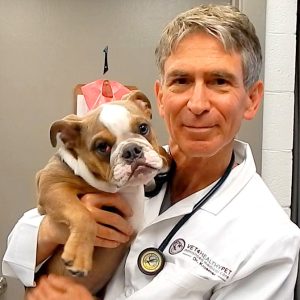
When should I use Yeasty Bully Antiseptic Hot Spot Spray on my Bulldog?
Why this one
A hot spot is the fastest moving skin problem I see. Nothing there last night, and by the evening a wet, red, hairless patch she will not leave alone. It is not an infection that crept in over weeks. It is an itch, a few minutes of determined licking and chewing, and a surface rubbed open and promptly colonized by the bacteria and yeast that already live on the skin.
Which is why timing matters more here than with anything else on the shelf. The difference between acting in the first hour and acting tomorrow is the difference between a coin sized patch and half a flank.
A buster collar is usually the difference between this settling and this spreading, because the licking is what made it and the licking is what keeps it. The surface also closes well before the skin underneath has finished, so do not stop early.
There is very little downside to antiseptic topical care. It is inexpensive, it carries none of the side effects that come with drugs, it is easy to keep up, and for superficial skin infection it is almost always effective to some degree, used alongside a prescription or on its own. It also keeps you hands on with your dog’s skin, which counts for more than people expect.
If the patch is spreading quickly, is painful to touch, is draining, or she seems unwell, see your veterinarian. Some of these need prescription treatment and a cone, not a spray alone. For any case the same rule applies: if your dog seems unwell, or the skin is not improving, or it is getting worse, see your veterinarian.
Not sure if this is the right one?
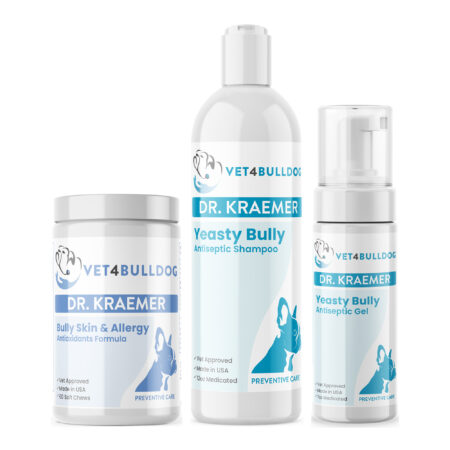
For the whole dog version of the same problem, the Yeasty Bully Antiseptic Shampoo is the weekly workhorse. If the itch is the issue and the skin is not broken yet, the Itchy Bully Medicated Spray with its numbing and oatmeal action is the better first reach. For the days a bath is not happening, the No-Rinse Medicated Gel does much the same job as a bath without the tub. To cover the skin properly, see the discounted bundles.
The members of this bulldog community prefer prevention over prescription
Important: This information is for general educational purposes only and is not a substitute for a veterinary examination, diagnosis, or treatment.
Trusted by Vets ~ Recommended by Owners ~ Approved by Bulldogs
Common questions
How fast do I need to act on a hot spot?
The same day. These spread by the hour, not by the week, and almost everything that decides how big one gets happens in the first twenty four hours.
Can I use it on her face?
Not close to the eyes. A spray drifts and a shampoo runs, so neither belongs near an eye. For a patch on the face or around the eyes, use a foam instead: the Yeasty Bully Antiseptic No-Rinse Medicated Gel can be put on your hand and laid carefully over the area, which keeps it clear of the eye.
Does she really need a cone?
Usually yes, and it is the part owners skip. The licking created the patch and the licking is what keeps it open. A spray working against a tongue that never stops is not a fair contest.
How do I know it is bacterial or yeast?
Not by looking or smelling. Your veterinarian takes a sample from the skin and looks at it under the microscope, which is called cytology, then counts what is there: yeast buds, or bacteria, which show up as either round ones or rod shaped ones. It matters because what is on the slide changes what should be done.
The antibiotics are not working. What now?
Worth taking seriously rather than waiting it out. The usual reason is a resistant staph: a common skin bacteria that has mutated, so the antibiotics normally used against it no longer work. The first course fails, and a culture and sensitivity test is what identifies one that will. During the time that takes, antiseptic topical care is often the most useful thing an owner can do, and it needs no prescription. Once the culture is back it generally carries on alongside whatever is prescribed.
Why does she keep getting hot spots?
Because a hot spot is a symptom rather than a diagnosis. Something is making her itch in that spot: an allergy, a flea, a damp fold, a sore joint underneath. Settling the patch is the immediate half. Finding what started the itch is the other half, and it is the one that stops the next one.
MANUFACTURING STANDARDS:
V4B products are manufactured to the highest quality specifications in FDA-registered facilities under strict CGMP (“Current Good Manufacturing Practices”) standards.
For animal use only. Follow the product label. Avoid the eyes and other areas the label tells you to avoid. If your dog’s condition worsens or does not improve, stop use and contact your veterinarian. Keep products out of the reach of children and animals.
CAUTION Safety for pregnant animals or animals intended for breeding has not been proven.
WARNING: If the animal’s condition worsens or does not improve, stop product administration and consult your veterinarian.
CARE THAT GIVES BACK
Empowering Bulldog Rescue
Your purchase helps Bulldogs in need. A portion of proceeds supports rescue organizations providing medical care and helping Bulldogs find loving homes.

Reviews
There are no reviews yet.