


Stones are not a single disease. They are four or five different chemistries that happen to end up in the same place, and they behave completely differently. Struvite stones in dogs are usually driven by infection and can often be dissolved with a prescription diet once the infection is dealt with. Calcium oxalate stones cannot be dissolved by anything, so they are removed. Urate and cystine stones have their own causes again, and both carry a genetic element.
That last point matters here more than on most sites, because Bulldogs are not an average breed for this. The breed is specifically over represented for cystine stones, which arise from an inherited fault in the way the kidney reabsorbs an amino acid, and urate stones turn up more often than they should as well. So a Bulldog with stones deserves the question of type asked properly rather than assumed.
There is also a trap in the imaging that catches people. Struvite and calcium oxalate show up readily on an x-ray. Urate and cystine frequently do not, which means a clear x-ray in this breed is less reassuring than it sounds and ultrasound or contrast may be needed to settle it.
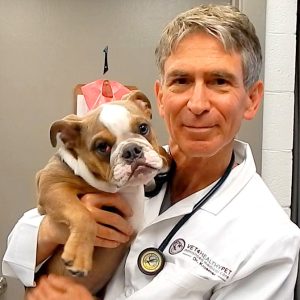
It is not bad luck, and I am sorry you are back here. The missing piece is in your own question: nobody knows what kind of stones they were.
Bladder stones are not one condition. They come in several types, and the type decides everything that happens next. Some are made by an infection and will not come back if the infection is properly dealt with. Some are driven by the urine chemistry and are prevented with a specific diet and a specific target for how dilute his urine is kept. Some are inherited and need lifelong management. Those are completely different plans, and you cannot choose between them by looking at the dog.
So when a stone comes out and goes in the bin rather than into a pot and off to a laboratory, the prevention plan afterward is a guess. A guess works for some dogs. For the rest you are back in eight months, which is roughly where you are.
What I would ask for now, in this order. Get him seen today, because a dog who cannot pass urine properly is an emergency and not a wait and see. When the stones come out this time, insist they are sent for analysis, and ask for that in writing on the consent form. Ask for a urine culture at the same time, because infection and stones feed each other. Then, once you know the type, build the prevention around it: the right diet, the right water intake, and a repeat scan on a schedule rather than waiting for symptoms.
Urinary support supplements may help as part of that longer plan, and which one suits him depends entirely on the stone type, so that is a conversation for after the laboratory report rather than before it.
Introduction to Urinary Stones In Bulldogs And French Bulldogs
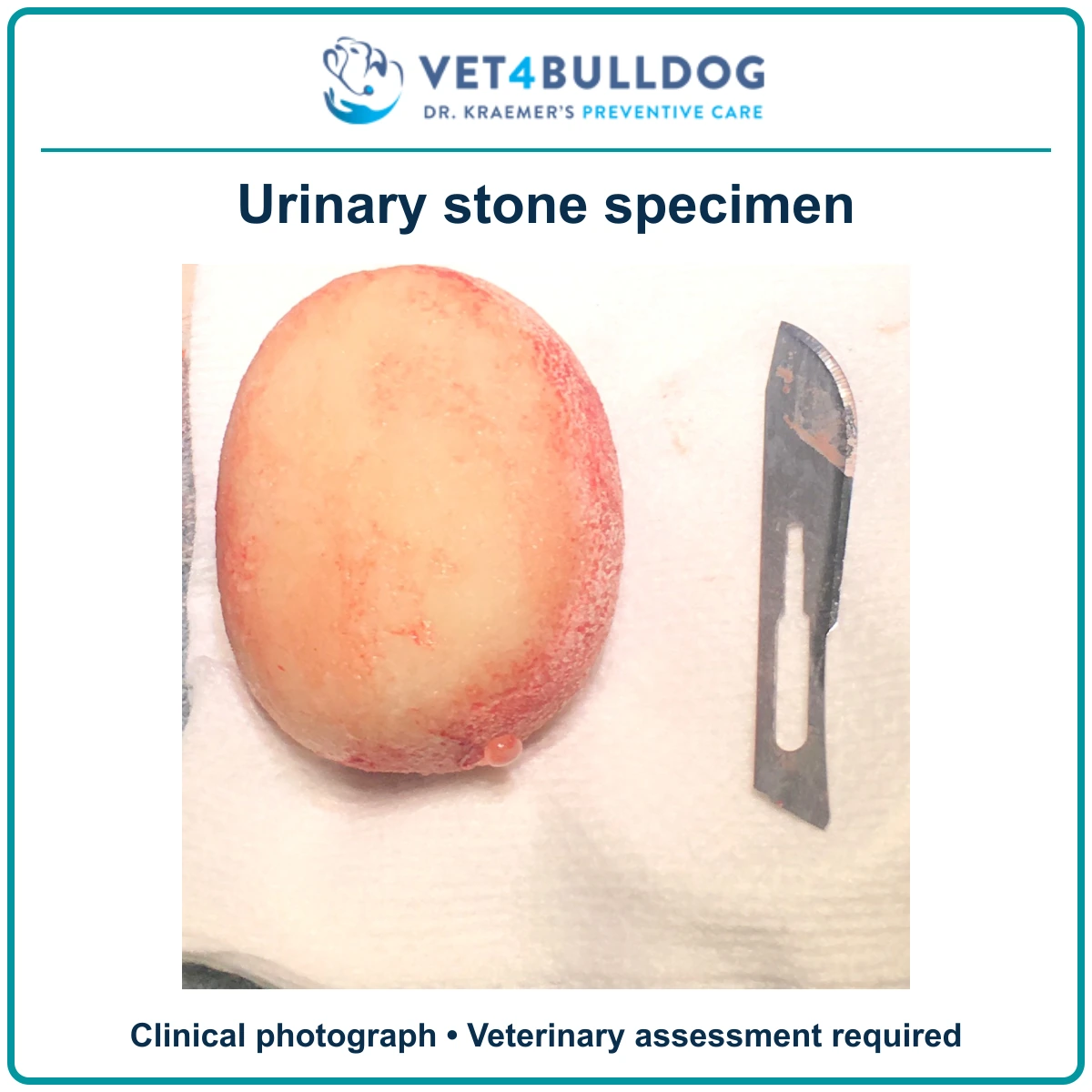
Urinary stones can be a significant health issue for bulldogs and French bulldogs. These stones are essentially hard, crystal-like formations that develop in the urinary tract and include
Other names for urinary stones are calculi and Uroliths:
What Is The Urinary Tract?
The urinary tract is a vital system responsible for filtering waste and maintaining fluid balance in the body. It includes the following structures:
- Kidneys: Two bean-shaped organs that filter toxins, waste products, and excess fluid from the bloodstream to produce urine.
- Ureters: Narrow tubes that carry urine from each kidney down to the bladder.
- Bladder: A muscular storage sac that holds urine until it’s time to eliminate it.
- Urethra: The final passageway that allows urine to exit the body during urination.
When mineral crystals accumulate and harden within this system, urinary stones (uroliths) can form.
Their impact on a dog’s health depends on:
- Size: Larger stones can obstruct urine flow or irritate the bladder lining.
- Location: Stones may form in the kidneys, bladder, or urethra, and symptoms vary accordingly.
- Underlying cause: Factors such as infection, genetics, diet, or metabolic disease all influence the type and recurrence risk of stones.
Urinary Stones in Bulldogs and French Bulldogs TYPE:
Listed below are some of the stone types found in the breed, their commonality, and their origin.
1. Bulldog struvite urinary stones
Struvite stones are often linked to urinary tract infections (UTIs).
They occur more frequently in female bulldogs, especially those with vaginal fold dermatitis or a hooded vulva, which predispose them to infections.
- Commonality: Less frequent in bulldogs compared to metabolic stones, but still seen.
- Origin: Infection-driven (urease-producing bacteria).
- Clinical Notes: They can grow to a considerable size and may cause pain, recurrent infections, or urinary blockages.

2. Bulldog calcium oxalate urinary stones
These stones tend to form in the bladder and are influenced by
- diet
- urine acidity
- calcium metabolism
- and sometimes underlying endocrine disorders such as Cushing’s disease or parathyroid abnormalities.
They can be differentiated from other stones by their unique:
- Commonality: Not very common in bulldogs.
- Origin: Metabolic and dietary factors, sometimes genetic.
- Clinical Notes: More common in other breeds, but bulldogs can still be affected.

3. Bulldog urate urinary stones
Unlike most breeds, bulldogs are genetically predisposed to urate stone formation due to a defect in purine metabolism.
- Commonality: Relatively common in bulldogs, but rare in most other breeds.
- Origin: Genetic/metabolic.
- Clinical Notes: These stones are challenging to prevent and manage, often requiring specialized diets and ongoing medical care.

4. Bulldog cystine urinary stones
Cystine stones result from a hereditary defect that causes excessive cystine (an amino acid) to spill into the urine.
- Commonality: Rare in most dogs but seen more frequently in bulldogs.
- Origin: Genetic.
- Clinical Notes: Cystine stones, like urate stones, have a high recurrence rate even with preventive measures.

Understanding the type of stone is critical for effective treatment and long-term prevention.
While struvite stones are infection-driven, urate and cystine stones are genetically based and particularly relevant in bulldogs.
The type of stone decides everything
The first thing I want to settle is that this is not one condition with one answer. The stones have different chemistries, and the chemistry decides whether a diet can dissolve them or whether they have to be physically removed. Struvite stones in dogs are usually the consequence of a urinary infection, and with the infection treated they can often be dissolved with a prescription diet, no surgery involved. Calcium oxalate stones will not dissolve for anybody, no matter what diet is tried, and persisting with a dietary attempt just loses time. Urate and cystine are different again. So the question of type is not an academic detail, it is the question that decides what happens next.
And this breed is not average here. English Bulldogs are specifically over represented for cystine stones, which come from an inherited fault in the way the kidney reabsorbs a particular amino acid, so the dog keeps spilling it into the urine where it crystallizes. Urate stones also appear more often in the breed than they should. Both of those have a genetic component, which has two consequences worth saying out loud: your dog is more likely than average to recur, and if he is a breeding animal that is a conversation with whoever manages the line.
Now the imaging trap, because it costs people months. Struvite and calcium oxalate stones contain enough mineral to show up clearly on a plain x-ray. Urate and cystine stones frequently do not. That means a Bulldog can have a bladder full of stones and a radiograph that looks unremarkable, and an owner can be told the x-ray was clear and reasonably conclude the matter is closed. It is not closed. If the signs persist and the film was clean, ultrasound or a contrast study is the next step, and in this breed I would push for it rather than wait.
The step most often skipped is the one that protects you afterward. When stones are removed, they should be sent for analysis, and you should ask for the result and keep it. The entire prevention plan, the diet, the monitoring, what the target is for the urine, depends on which type they were. Without that result, prevention is guesswork, and since recurrence rates in this breed are not low, guessing is expensive. If your dog has had stones out and nobody told you the type, that is a fair thing to ring up and ask about.
The single biggest lever you hold at home is water, and it is unglamorous enough that it gets dismissed. Dilute urine is simply less able to hold a crystal in solution, so increasing water intake works against every type on this page. Canned food instead of dry, or water stirred into the food, moves more water into a dog than a second bowl ever will, because most dogs do not drink on demand just because the bowl is full. This is not a substitute for the prescription diet your veterinarian chooses. It sits underneath it and it costs you nothing.
Two closing points. Prevention here is permanent rather than a course of treatment: a dog who has formed stones once has shown you what his chemistry does, and the monitoring continues for life. And a blockage in a male dog is the one complication on this page that is a genuine emergency rather than something to watch, which is covered in its own section below. If you have a male Bulldog with a history of stones, read that section now, while nothing is wrong, rather than looking for it on a Sunday night.
What Causes Urinary Stones in Bulldogs and French Bulldogs?
- DIET: such as diets with excess minerals and proteins, diets impacting urine PH, and diets impacting hydration.
- WATER: A lack of water can lead to mineral/crystal oversaturation, which will speed up stone formation.
- GENETICS: Urate and Cystine Stones in bulldogs have genetic origins.
- INFECTION: Bacterial infections can lead to urinary stones (Struvite).
- CONGENITAL DEFECTS: such as ectopic ureter, and kidney dysplasia.
- METABOLIC DISEASE: such as excess calcium, as in the case of parathyroid gland disease.
What Are The Symptoms of Urinary Stones in Bulldogs and French Bulldogs?
- INCONTINENCE: pee accidents.
- FREQUENCY: frequent urination.
- STRAIN: painful straining when voiding.
- BLOOD: hematuria, blood in the urine, red urine.
- THICK, DISTENDED ABDOMEN, UNABLE TO PEE: in the event of complete blockage (more common to male bulldogs).
- INABILITY TO URINATE: in the event of a full blockage, that will rapidly lead to a distended, painful abdomen and a critical illness.
Bladder Stones in Bulldogs and French Bulldog Diagnosis
- URINE ANALYSIS: including urine PH, white blood cells, bacteria, crystals, etc.
- URINE CULTURE: bacteria type and ideal antibiotics.
- BLOOD TEST: kidney function and blood count, etc.
- IMAGING: radiographs & ultrasounds are the most common.
- STONE ANALYSIS: tests that determine the stone type.

How To Prevent Urinary Stones in Bulldogs?
- Genetic Testing
- Neutering: androgen-responsive case (cystine)
- Sufficient water
- Annual urine analysis
- Annual radiograph or ultrasound
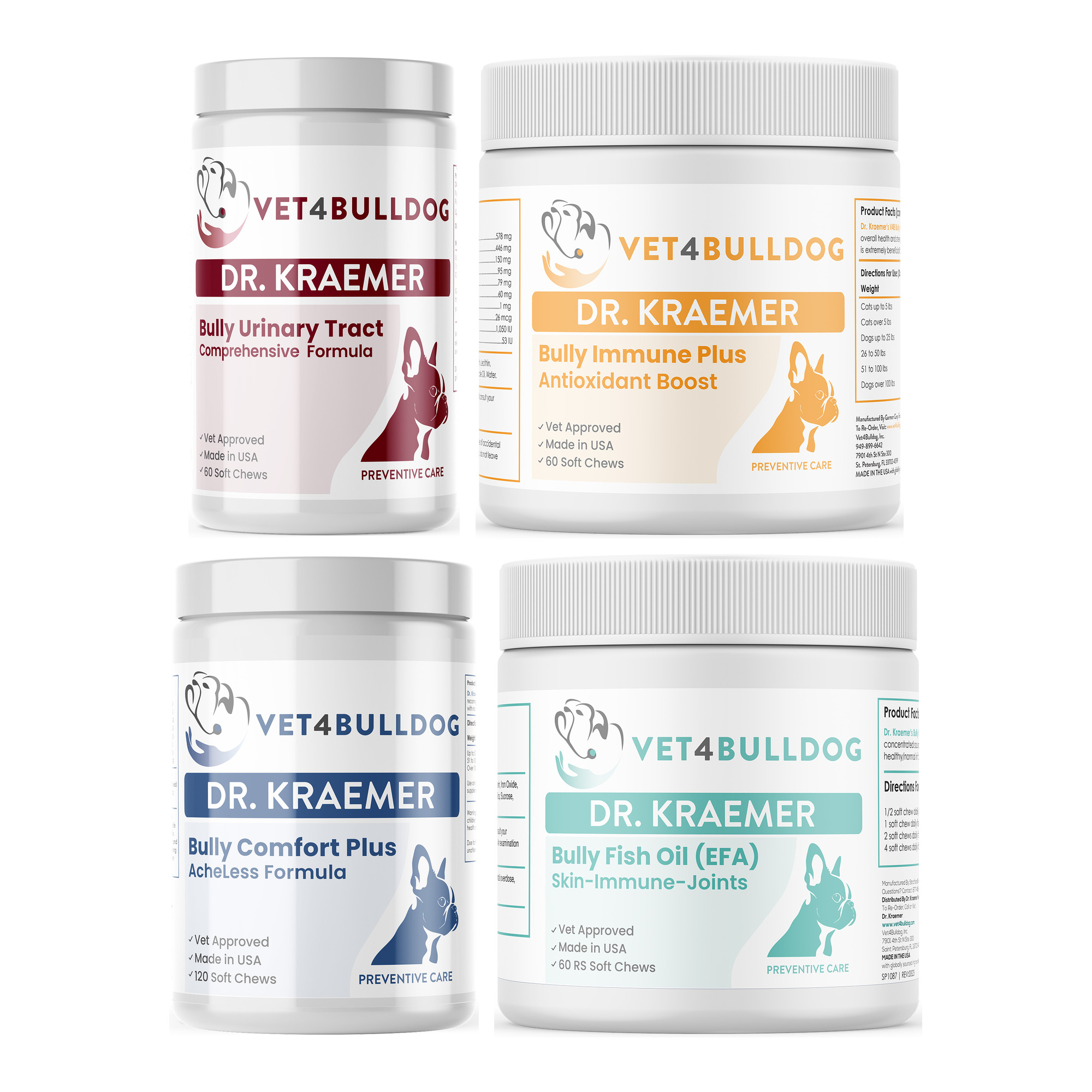
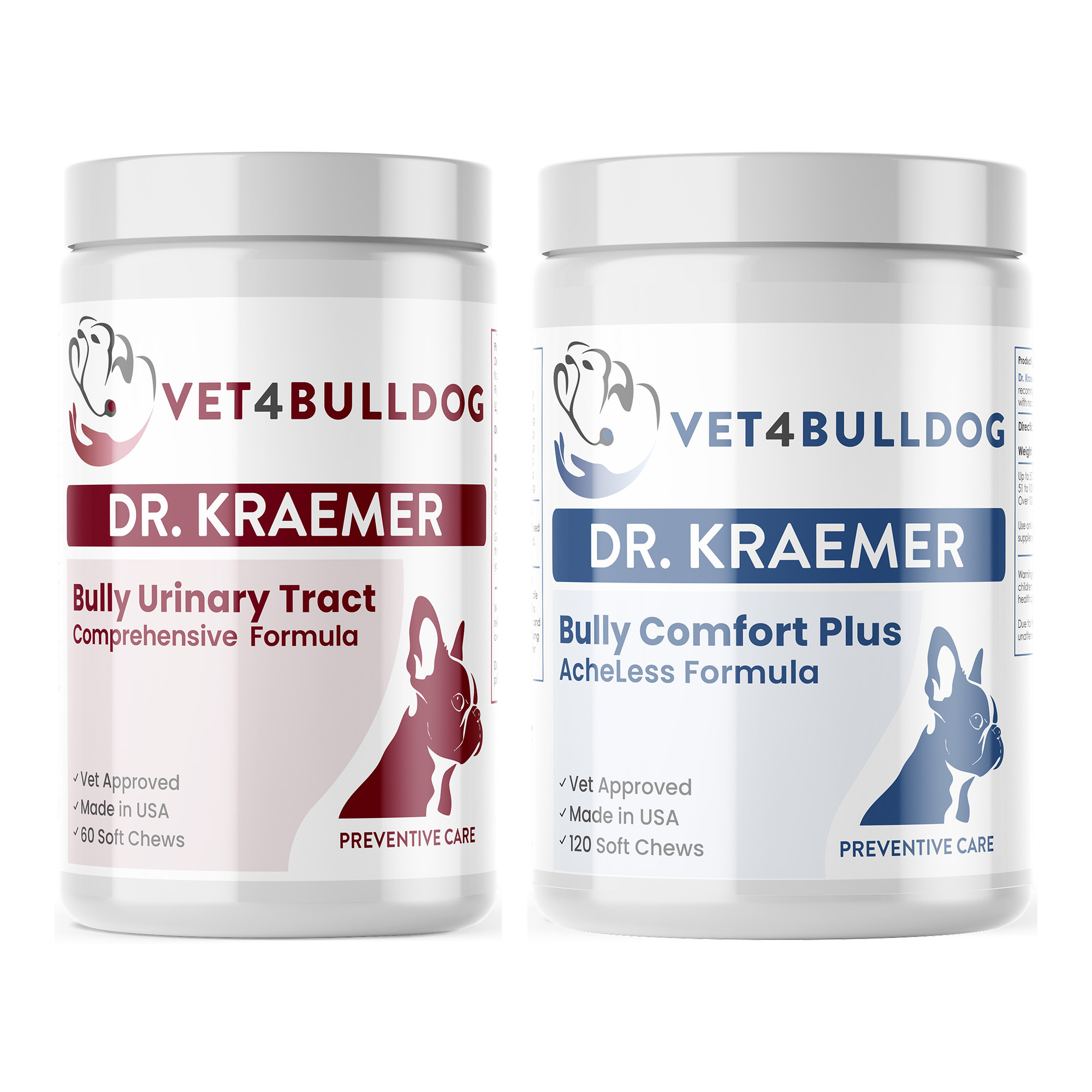
- Bully Urinary Health Supplement
- Female proper vaginal hygiene with Bully skin fold Antiseptic wipes

How To Treat Urinary Stones in Bulldogs and French Bulldogs?
- RX DIET: Depending on the stone type, diet helps to reduce offensive minerals or proteins, and improve PH and hydration.
- WATER: Proper hydration helps to dilute the urine and prevent supersaturating.
- ANTIBIOTICS: when a bacterial infection is detected.
- PAIN RX: analgesics to manage pain.
- ANTI-INFLAMMATORY: Anti-inflammatories such as NSAIDs
I want to be unambiguous, because this is a page where a vague product claim would be genuinely harmful. Nothing we sell dissolves a bladder stone. Dissolving struvite is done with a prescription diet chosen by your veterinarian, and the other types are removed rather than dissolved. If your dog has stones now, the plan is theirs and the diet is theirs, and this is not part of that decision.
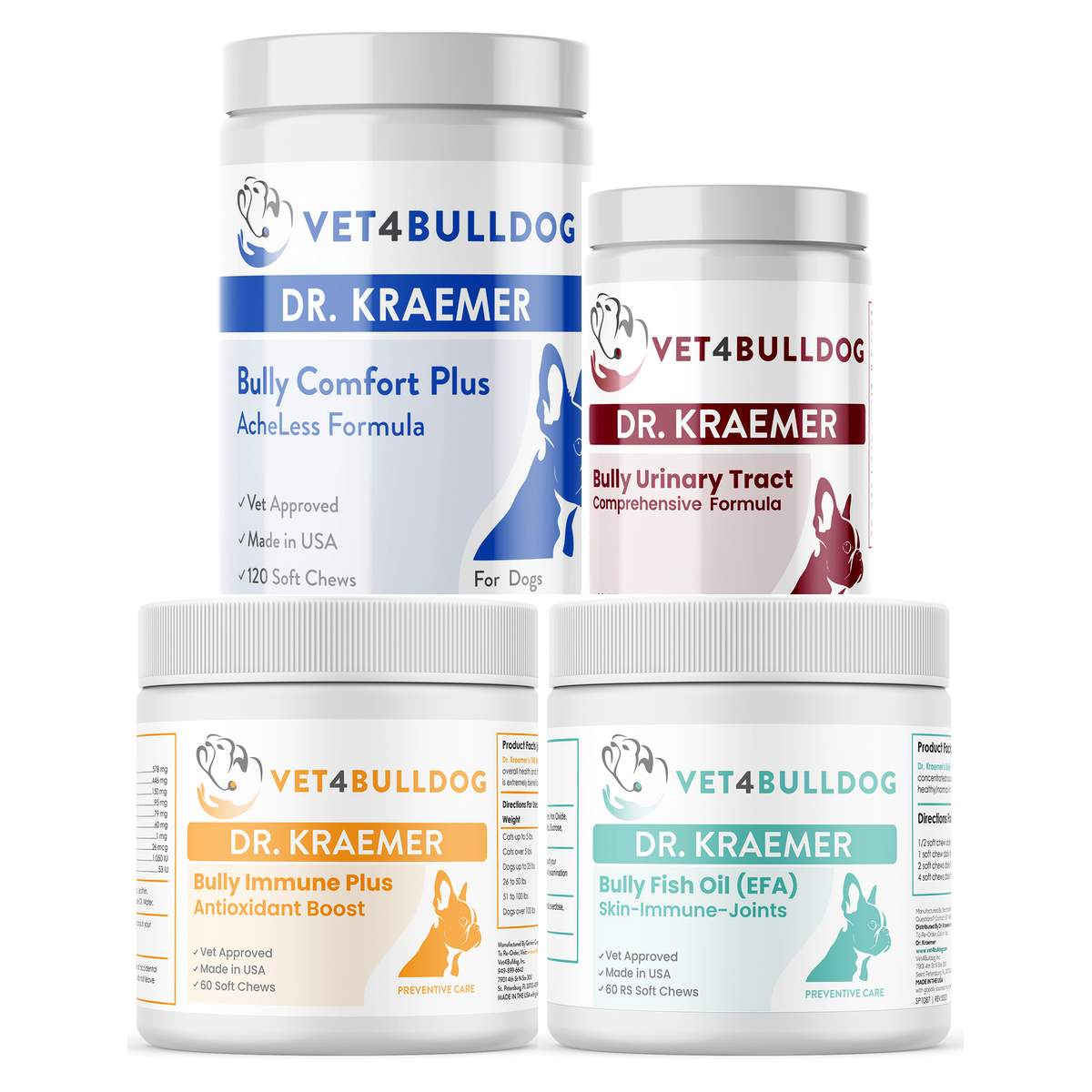
Where urinary tract health does bear on this is recurrence, and only for one type. Struvite stones in dogs are usually driven by infection, so anything that supports a healthier urinary tract works against the conditions that produced them in the first place. This range may help on that front over a good few weeks, alongside whatever prescription diet is in place rather than instead of it. If the recurring problem is infection rather than stones, the urinary tract infection page is the better read. And if the stones turned out to be calcium oxalate, urate or cystine, be clear that this is general support and not prevention for those: that is diet and monitoring, set by the stone type.
To be clear: supplements or topicals are not substitutes for prescribed treatment. If your dog is unwell, is being treated for a condition, or is already on medication, review any supplement or topical with your veterinarian so it fits the plan you are already following. This page is educational and is not a diagnosis or a treatment plan for your own dog.
Bulldog therapeutic urinary supplements treatment
Supplements can be grouped by
#1 Pain relief
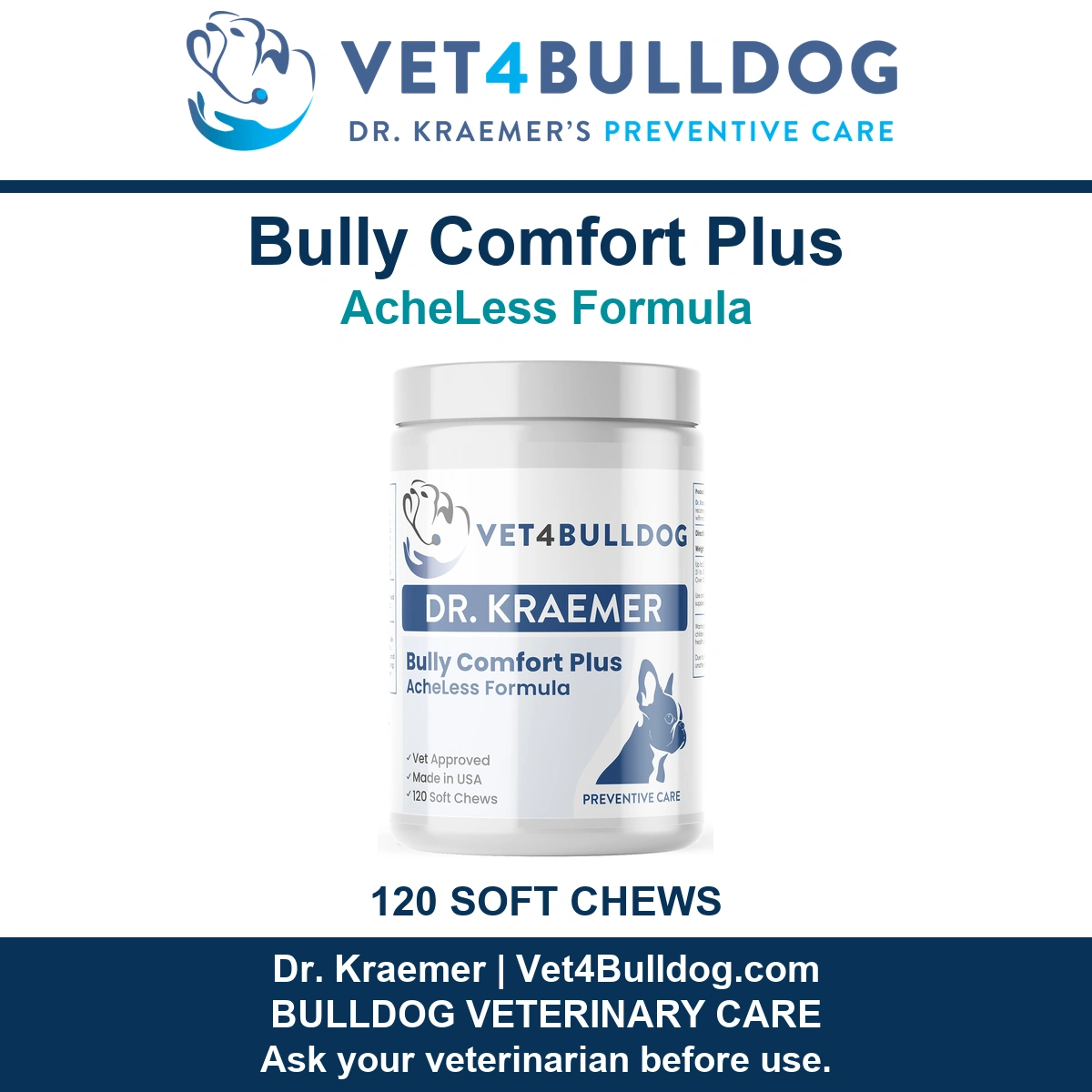
like Dr. Kraemer’s V4B Bully Comfort Formula
#2 Anti-inflammatory
EFA Omega 3 and Glucosamine, like Dr. Kraemer’sV4B Bully Fish Oil and V4B Bully Advanced Total Joint
#3 ANTI-BACTERIAL:
Like Dr. Kraemer’s V4B Bully Urinary Support, which helps to reduce multi-drug resistance and biofilms.
#4 Topicals (bully antiseptic wipes)
For female bulldog’s proper hygiene and UTI prevention, clean the virginal fold with antiseptic wipes, such as Dr. Kraemer’s V4B Bully Antiseptic XL Skin Fold Wipes.
OTHER URINARY STONE THERAEPUTICS:
Never let the stone go in the bin
If you remember one sentence from this page, make it this one. Every stone that comes out of a dog should go into a pot and off to a laboratory for analysis.
It is a small cost on top of a surgery that was not small, and it is the difference between a prevention plan and a hopeful one. The analysis tells you what the stone was made of, and that single fact decides the diet, the water target, whether an infection has to be chased, and how often he should be rescanned. Without it, everybody involved is working from the odds rather than from your dog.
It is the difference between a mechanic replacing the part that failed and replacing the part that usually fails.
The reason I labor this is that recurrence in this breed is common, and the second surgery is harder on the dog and on the owner than the first. I have seen dogs go through three. Almost always, nobody could tell me what the first stone was made of.
So ask before the surgery, not after. Say that you want the stones submitted for analysis and that you want the result explained to you, and have it written on the consent form. No reasonable practice will mind. While you are there, ask for a urine culture too, because some stone types are built by bacteria and treating one without the other leaves the job half done.
Bulldog Urinary Stones Surgical Removal
Surgical options depend on
- gender
- stone size
- health status
- stone location
- stone type
- stone history
#1 Bulldog Urinary Stone Cystotomy
A cystotomy is a surgical procedure that provides direct access to the bladder for the removal of urinary stones (uroliths).
It is most commonly performed to:
- Remove bladder stones.
- Retrieve urethral stones that have been gently pushed back into the bladder for safer extraction.
A cystotomy allows for complete removal of stones, relief of discomfort, and prevention of further urinary complications.
#2 Bulldog Urinary Stone Urethrotomy
A urethrotomy is a surgical procedure in which an incision is made directly into the urethra to remove stones that have become lodged and are causing an obstruction.
This intervention can provide immediate relief by restoring urine flow and alleviating discomfort.
However, similar to a cystotomy, a urethrotomy does not address the underlying cause of stone formation. As a result, there remains a risk that new stones may form and migrate into the urethra, leading to future blockages.
Because of this recurrence risk, long-term management often requires a combination of
- dietary changes
- medical therapy
- and preventive monitoring to reduce the chances of stones re-forming.
#3 Bulldog Urinary Stone Urethrostomy
A urethrostomy is a surgical procedure used to create a new, permanent urinary opening in male dogs.
It is most often considered for patients with recurrent urethral obstructions that cannot be managed through less invasive means.
The surgery is usually performed at the scrotal region, where the urethra is naturally wider in diameter. This anatomical advantage allows urine, and any future stones that may develop to pass more freely, thereby reducing the risk of recurrent blockages.
By providing a permanent outlet, scrotal urethrostomy can significantly improve quality of life in male bulldogs prone to urinary stones.
However, it is generally regarded as a salvage procedure, reserved for cases where other surgical or medical options have failed or where obstruction is a recurring, life-threatening problem.

#4 Bulldog and French Bulldogs Urinary Stone Vaginoplasty:
Female Bulldogs and French Bulldogs are prone to recurrent urinary stones (such as struvite stones) when chronic urinary tract infections (UTIs) are present. Two common contributing factors are vaginal skin fold dermatitis and a hooded vulva, both of which create a moist, poorly ventilated environment that encourages bacterial growth.
A vaginoplasty is a corrective surgical procedure designed to reshape and open the vaginal folds and hood. By improving air circulation and reducing trapped moisture, this surgery helps alleviate dermatitis and significantly lowers the risk of recurring UTIs. In turn, this can decrease the likelihood of infection-induced stone formation.
For female Bulldogs experiencing these chronic issues, vaginoplasty can provide both comfort and preventive health benefits, making it an important consideration in the overall management of urinary health.
Urinary Stones in Bulldogs and French Bulldogs Tips & Warnings
Below are selected urinary stone tips and warnings, courtesy of Dr. Kraemer
#1 Urinary stones water tip
Drinking sufficient water will help with normal urination and prevent supersaturation and stone formation.
To help improve the water intake, mix low-salt broth with water, make ice cubes, and add one daily to your bulldog’s water dish.
#2 Bulldog bladder stones canned food tip
Canned food has more moisture than dry food, which will help in the same manner as above by increasing water intake.
#3 Urinary stones RX diets tip
Adhere to your veterinarian’s recommendations for stone dissolution and prevention.
#4 Urinary female hygiene tip
Many female bulldogs suffer from vaginal fold dermatitis. Proper daily hygiene with wipes, like Dr. Kraemer’s V4B Bully Antiseptic XL Skin Fold Wipes may help prevent urinary tract problems.
#5 Urinary stones imaging tip
Your bully might exhibit the same clinical signs as a stone or UTI. Therefore, I recommend that you take radiographs and/or an ultrasound of your bully’s abdomen, in addition to urine, to help rule out urethral, bladder, ureter, and/or kidney stones.

BULLDOG CULTURE & SENSITIVITY:
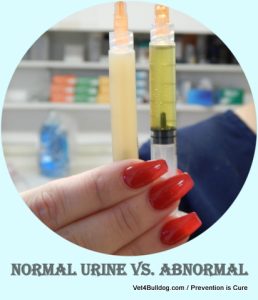
Urine analysis is not adequate for ruling out bacterial infections (UTI).
A culture and antibiotic sensitivity test should be combined with it to determine the bacteria type and best antibiotic combination.
#1 Urinary stones bacteria resistance warning
Bacteria can defend themselves by adhering to your bulldog’s bladder wall and forming a biofilm. There are various natural supplements, such as extracts, like Dr. Kraemer’s V4B Bully Urinary Support Formula may help prevent resistance and help antibiotics with the elimination of resistant bugs.
#2 Bulldog emergency blockage & ureterostomy
Suppose your male dog was diagnosed with stones in the bladder and/or urethra.
In that case, you should consider a permanent urethrostomy instead of just a cystotomy (opening the bladder) and/or a urethrotomy (opening the urethra).
A urethrostomy provides for a permanent “stoma” (opening), usually at the scrotal area
A urethrotomy is just a temporary opening to allow the stone to be removed.
#3 Bulldog urinary stone recurrence warning
Unfortunately, urinary stones in Bulldogs have a high rate of recurrence, even when owners follow strict preventive measures. This recurrence poses a significant risk of re-blockage, which may require another round of anesthesia and emergency surgery.
Too often, veterinarians either do not fully explain this risk to their clients or underestimate how likely recurrence is in this breed.
In my own experience, I have seen many Bulldogs develop new stones shortly after their initial stone removal surgery.
For some families, the financial and emotional burden of a second surgery or an unexpected emergency can be overwhelming. Sadly, this has led some owners to make the heartbreaking decision of surrendering their dogs to rescue organizations when treatment becomes unmanageable.
Because of this, it is important that veterinarians discuss all surgical options upfront, including combining a permanent urethrostomy with the initial stone removal.
While urethrostomy is typically considered a salvage procedure, offering it at the time of first surgery can, in select cases, prevent future blockages and reduce the need for repeated emergency interventions.
#4 Bulldog urinary stone removal surgeon warning
It’s essential to entrust this procedure to a qualified professional to minimize potential complications and ensure the best outcome for your pet, common complications are strictures and bleeding.
#5 Stone removal bleeding warning
Following the surgery, it’s normal to observe some bleeding from the surgical site. In some cases, this bleeding may require medical attention, which could involve hospitalization and sedation for your bulldog.
Bulldog and French Bulldog Urethrostomy Final Note
In my practice, I have performed numerous urethrostomy surgeries on Bulldogs suffering from recurrent urinary stones despite prior stone removal procedures. The results have been overwhelmingly positive, all patients recovered well and were able to return to normal activity without significant complications.
Bulldogs tend to adapt quickly to urinating through the new opening. While some may experience minor accidents during the initial adjustment period, most owners report that their dogs soon establish normal urination habits. In fact, it is not uncommon for owners to observe stones passing naturally during urination after surgery. Should a minor obstruction occur, it can often be easily relieved by flushing.
Overall, urethrostomy has proven to be a highly effective solution for Bulldogs with recurring stone issues. By reducing the risk of life-threatening blockages and eliminating the need for repeated emergency surgeries, this procedure significantly improves both the dog’s comfort and quality of life.
Urinary Stones in Bulldogs and Fr. Bulldogs Monitoring
- optimal PH
- crystals
- infection
The x-ray came back clear. Does that rule out stones?
Can they be dissolved instead of operated on?
Why do they keep coming back?
Are Bulldogs more prone to this than other dogs?
What is the single most useful thing I can do at home?
Do I actually need to know which type they were?
Is this ever an emergency?
More Help from Dr. Kraemer
Stones rarely travel alone in this breed. These pages cover what sits alongside them:
- Urinary tract infection in Bulldogs
- Cystitis and bladder inflammation
- Vaginal fold dermatitis and the infections that follow it
- Urinary incontinence
- The best food and diet for Bulldogs
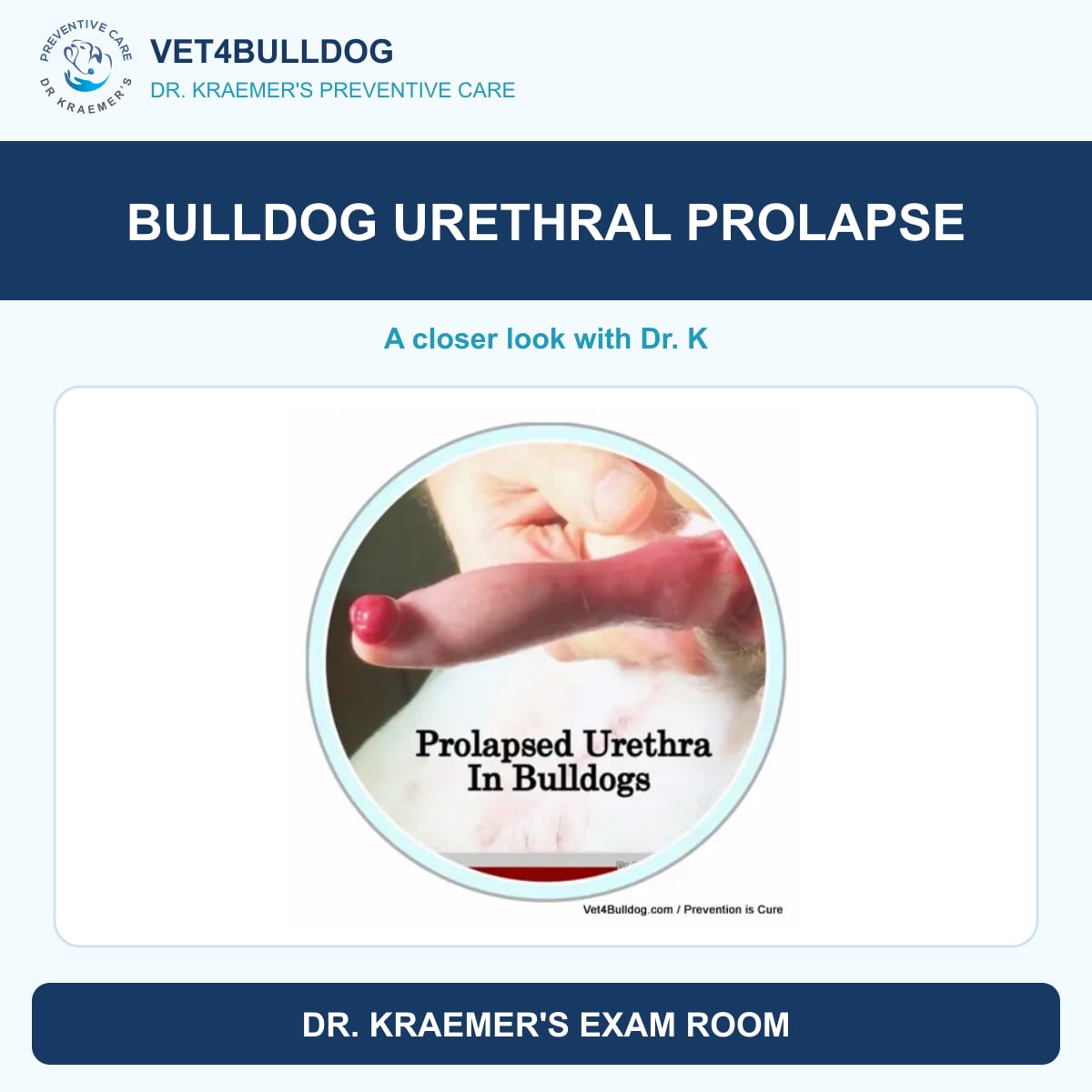
- Urethral prolapse in Bulldogs
References
- Merck Veterinary Manual. Urethral Obstruction in Small Animals
- Merck Veterinary Manual. Obstructive Uropathy in Dogs and Cats
- Merck Veterinary Manual. Infectious Diseases of the Urinary System in Small Animals
- WSAVA Global Nutrition Guidelines
Trusted by Vets ~ Recommended by Owners ~ Approved by Bulldogs