


Quick answer
Everted laryngeal saccules are secondary, not primary. Your bulldog was not born with them. They are what an elongated soft palate and stenotic nares do to the throat over time: obstruction raises respiratory effort, effort creates abnormal negative pressure, and the laryngeal mucosa balloons inward under it.
They sit near the base of the tongue, one on each side of the larynx, just below the tonsils and close to the vocal cords. Early on they look like small bubbles. Left alone they grow, and the airway they were already crowding gets tighter.
They are also stage one of laryngeal collapse, and stage one is the only stage with a good prognosis. Saccules are typically inspected and removed during soft palate surgery, so if your bulldog is having the palate done, this is the moment to have it dealt with. Delay and you move toward cartilage atrophy, collapse, and a permanent tracheostomy as the only option left.
Laryngeal Problems In Bulldogs and Fr. Bulldog INTRODUCTION:
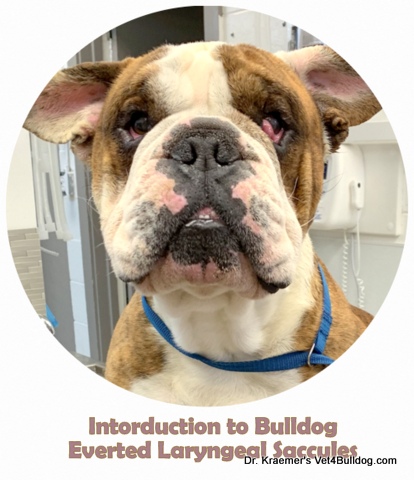
Everted laryngeal saccules in Bulldogs and French Bulldogs are a secondary outcome to the better-known primary bulldog obstructive airway syndrome (BOAS). Laryngeal saccules are the first phase of laryngeal collapse, a grave, irreversible, end stage airway obstruction disease.
PRIMARY BULLDOG BOAS
SECONDARY BULLDOG BOAS
- Bulldog Laryngeal Saccules
- Bulldog Prolapsed Tonsil
- Bulldog Laryngeal Collapse
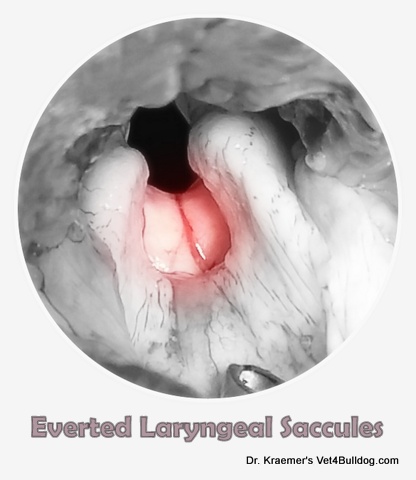
Bulldog Everted Laryngeal Saccule 5 X MUST KNOW
- Everted laryngeal saccules are secondary to chronic severe BOAS
- Everted laryngeal saccules can turn into irreversible laryngeal collapse
- Everted saccules symptoms are loud breathing sounds that get worse during excitement and activity.
- Management includes weight control, a stress-free environment, a cool temperature, supplements, and surgery
- Prevention & Care includes Dr. Kraemer’s Affordable Obstructive Airway Disease Bundles
Bulldog and Fr. Bulldog Laryngeal Anatomy:
Many bulldog owners become concerned when they notice their dog’s noisy breathing and intolerance to excitement, exercise, or physical activity, prompting them to seek information about BOAS (Brachycephalic Obstructive Airway Syndrome) and possible treatment options to relieve their pet’s discomfort.
Many are also unfamiliar with the anatomical location and function of the larynx and saccules, leaving them unsure of how these structures might obstruct breathing and affect their bulldog’s overall health.
BULLDOG LARYNGEAL SACCULES ANATOMY:
The bulldog’s saccules are located inside the throat, near the base of the tongue, with one on each side of the larynx.
They sit below the tonsils, close to the vocal cords.
In a healthy bulldog, the laryngeal saccules are part of the normal laryngeal mucosa, lying flat and deflated, where they remain invisible and do not obstruct airflow. However, when the saccules become everted, they protrude into the airway and are visible at the bottom of the larynx.
Depending on the severity and duration of the condition, they may initially appear as small bubbles in the early stages but can grow larger over time, becoming more pronounced and obstructive as they balloon outward.
The laryngeal saccules are situated below the tonsils, close to the vocal cords.
What Causes Everted Laryngeal Saccules in Bulldog and French Bulldog?
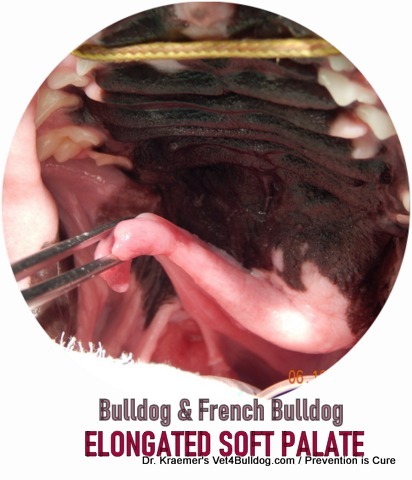
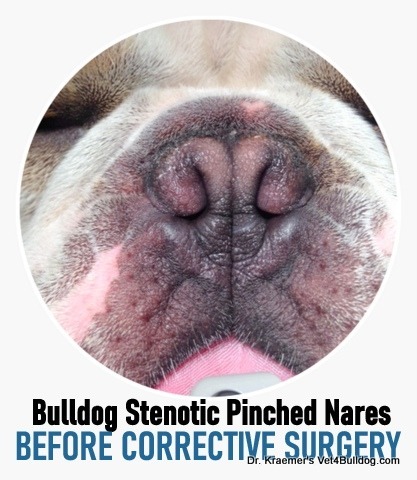
The likelihood of developing everted laryngeal saccules and a hypoplastic trachea significantly increases when a bulldog or French bulldog suffers from any of the primary airway abnormalities associated with BOAS (Brachycephalic Obstructive Airway Syndrome), such as:
- Elongated soft palate
- Stenotic nares
- Prolapsed tonsils
- Hypoplastic trachea
These BOAS conditions exacerbate your bulldog’s respiratory effort by further obstructing the airway and restricting airflow through the larynx. This leads to abnormal negative pressure and suction forces, similar to the effect of excessive suction on a straw. The laryngeal mucosa responds to these forces by bulging inward, and as the suction intensifies, the tissue balloons further.
This ballooned tissue takes up critical space needed for airflow, adding to the already significant respiratory challenges caused by BOAS.

Your surgeon is being straight with you, and I would answer the same way. The saccules cannot be properly assessed in an awake dog. It takes a laryngoscope, good light, and adequate sedation or general anesthesia, which is exactly the situation Olive will be in next month. Deciding under anesthesia is not indecision, it is the only honest sequence. What I would ask him is different and more useful: confirm that if the saccules are everted he will remove them in the same anesthetic rather than bringing her back. That is the answer you want, and almost every good surgeon will give it, because saccules are routinely inspected and removed during palate surgery. Two more things for the weeks before. Keep her stress, excitement and activity to a minimum, because a sudden surge in respiratory effort in a dog with a crowded larynx is how emergencies happen. And use a harness rather than a neck lead, nothing restrictive around that throat. Afterwards, the risky window is not the surgery itself, it is recovery. Close monitoring and supplementary oxygen matter, because most complications happen in the hours after she wakes. Ask where she will be monitored and by whom overnight.
What Are the Symptoms of Bulldog Everted Laryngeal Saccules?
- Stridor: Raspy mechanical breathing sound that gets worse during excitement and activity
- Gastrointestinal: Hacking, gagging, regurgitating, and vomiting due to high vasovagal tone
- Coughing and Labored breathing: lower airway problems consistent with inflamed, infected lungs due to inhalation of gastric content common to hacking, regurgitating, and vomiting bulldogs
- Hyperthermia: High body temperature reaching critical overheating can happen in extreme cases
- Hypoxia: Oxygenation deficiencies and ventilation-perfusion problems manifested by the cyanotic-looking blue-purple gums and tongue
- Collapse and fainting: Due to the high parasympathetic tone and oxygen deprivation
How to Treat Bulldog Everted Laryngeal Saccules?
Medical treatment is usually prescribed for short-term management.
1. RELAX AND CALM
Drugs: Injectable tablets like acepromazine and/or trazodone can help relax and calm your bulldog and prevent an anxiety-related respiratory crisis.
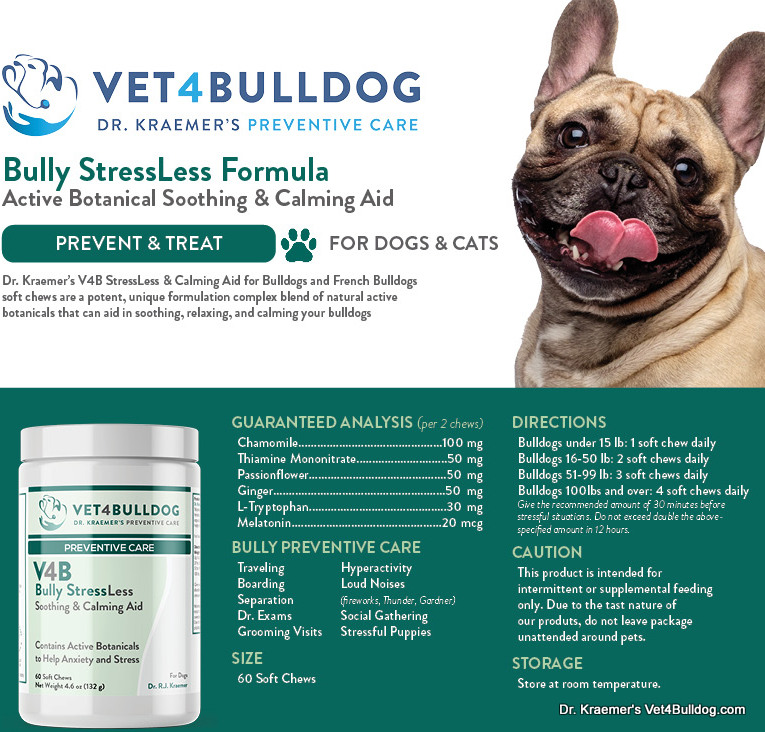
Supplements: like Dr. Kraemer’s
2. ANTI-INFLAMMATORIES:
➡️ Steroids can help reduce swelling and inflammation
3. ANTI-VOMITING, NAUSEA & REFLUX RX:
➡️Anti-Emetics & H2-Blockers can help prevent bulldog aspiration pneumonia
4. ANTIBIOTICS
➡️ Antibiotics should be added if or when bulldog aspiration pneumonia is suspected
Everted Laryngeal Saccule SURGERY:
Surgical removal of the bulging saccules is usually required for severe cases.
Everted laryngeal saccules are typically inspected and removed during soft palate surgery
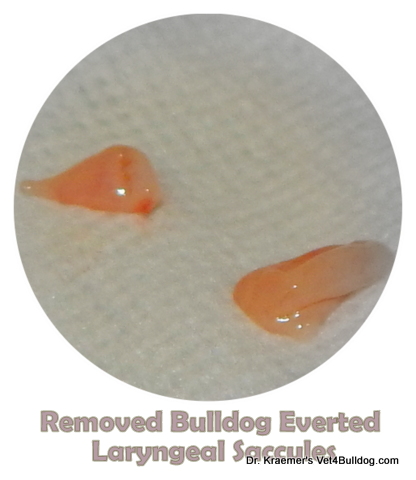
Bulldog Everted Laryngeal Saccules TIPS & WARNINGS:
Below are everted saccules tips and warnings courtesy of Dr. Kraemer
#1 🩺BULLDOG LARYNGEAL EXAM TIP:
A comprehensive oropharyngeal examination using a laryngoscope and appropriate lighting is essential.
Examination of the saccules should be performed under adequate sedation or general anesthesia.
#2 🩺BULLDOG WEIGHT CONTROL TIP:
Obesity and overweight will exacerbate respiratory problems, thus weight loss is critical.

#3 🩺 SACCULES EXCITEMENT & ACTIVITY TIP:
Stress, excitement, and physical activity should be kept to a minimum till the saccules and your bulldog BOAS are repaired, as any sudden increase in respiratory effort could result in serious complications.
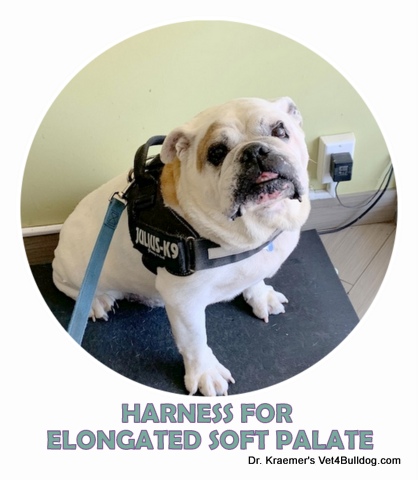
#4 🩺 EVERTED SACCULES HARNESS TIP:
Don’t use anything restrictive or irritating on your bulldog and French bulldog neck. Avoid a neck leash, a harness is preferred.
#5 🩺EVERTED SACCULES HEAT & HUMIDITY TIP:
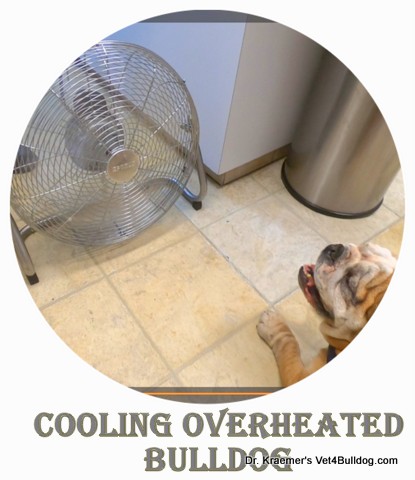
Keep your bulldog cool and calm, and avoid outdoor activities during the hottest and most humid parts of the day. Bulldogs with everted laryngeal saccules are more likely to overheat and are at increased risk for heat stroke.
#1 ⚠️ BULLDOG LARYNX OTHER OBSTRUCTIONS WARNING:
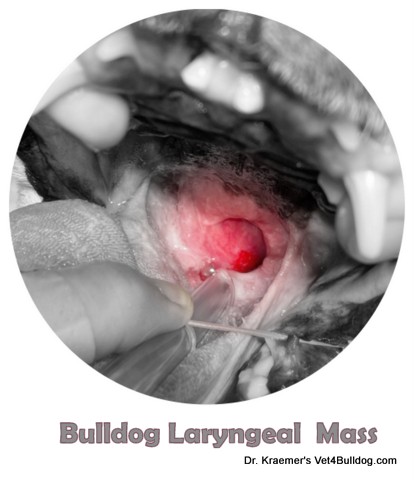
In addition to bulldog everted laryngeal saccules and other common brachycephalic obstructive airway syndrome (BOAS) conditions, it is crucial to rule out other laryngeal obstructions that are not directly related to BOAS but can mimic its symptoms.
Examples include laryngeal and pharyngeal
- tumors,
- polyps
- masses
- swelling
- laryngeal paralysis
- laryngeal collapse.
#2 ⚠️ BULLDOG SACCULES SURGERY DELAY WARNING:
Delaying the correction of bulldog everted laryngeal saccules and other obstructive airway conditions can result in complications that may necessitate a temporary or even permanent tracheostomy.
#3 ⚠️ SACCULES SURGERY MONITORING WARNING:
Close monitoring and supplementary oxygen are essential during post-operative recovery, as most complications and emergencies tend to occur during this critical phase.
#4 ⚠️ LARYNGEAL COLLAPSE WARNING:
Neglected and untreated bulldog BOAS conditions, such as everted laryngeal saccules, can lead to fatigue of the laryngeal apparatus, cartilage atrophy, and eventually irreversible laryngeal collapse.
There is no worthy surgical remedy for bulldog laryngeal collapse

Insider tip
Throw away the neck collar. Every time a bulldog with crowded saccules pulls against a collar, the pressure lands exactly where you least want it. A harness costs a few dollars and takes that force off the throat entirely. Of all the free advice on this site, this is the one owners adopt least and benefit from most.
Second, the one people get wrong about recovery. Owners brace for the operation and relax when the dog comes home. It is the other way round. Most complications and emergencies happen during post-operative recovery, which is why close monitoring and supplementary oxygen in that window are not optional extras.
And a diagnostic caution. Not everything obstructing a bulldog’s larynx is BOAS. Tumors, polyps, masses, swelling and laryngeal paralysis all mimic it. If the picture does not fit, it should be ruled out rather than assumed.
What are laryngeal saccules?
Why do they evert?
What are the symptoms?
How are they diagnosed?
Do they always need surgery?
What happens if we wait?
What can I do at home in the meantime?

Veterinary Care and Supportive Products
Saccules cannot be seen in an awake dog, so the request to make of your vet is a laryngeal exam under sedation or anesthesia, ideally combined with a procedure your bulldog already needs. If the palate is being shortened, ask for the saccules to be inspected and removed in the same anesthetic. No supplement flattens an everted saccule. What supplements do is reduce the anxiety, inflammation and reflux that drive respiratory effort up and make the problem grow faster.
What I would actually use
- Respiratory & Airways Essential Bundle
- Bully StressLess & Calming Aid
- Bully HEMP Relax & Calm
- Bulldog Immune Support Plus Chews
- Bully Fish Oil EFA
More Help from Dr. Kraemer
Saccules sit in the middle of a chain. These cover what comes before and after:
- BOAS, the whole picture
- Elongated soft palate
- Stenotic nares, the pinched nose
- Hypoplastic trachea
- Laryngeal collapse, where this ends
- Sleep apnea in Bulldogs
- Aspiration pneumonia
About the Author
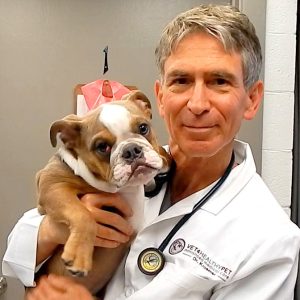
Roy Kraemer, DVM, is a veterinarian with extensive clinical experience caring for Bulldogs and French Bulldogs. His educational work emphasizes catching airway problems at the stage where they are still reversible, combining procedures under one anesthetic, and responsible breeding.
Trusted by Vets ~ Recommended by Owners ~ Approved by Bulldogs
References
- American College of Veterinary Surgeons. Brachycephalic Syndrome
- Merck Veterinary Manual. Laryngeal Disease in Dogs
- University of Cambridge. BOAS Respiratory Function Grading Scheme