


Squinting, a closed eye, or new cloudiness? Contact your veterinarian promptly for an eye examination. A deep ulcer or visible puncture is an emergency. Prevent rubbing with a properly fitted protective collar, and do not use leftover eye medication, especially steroid drops, unless your veterinarian directs you.
“My one and a half year old French Bulldog has been squinting a lot since this morning, and the right eye looks red and puffy. She keeps trying to rub it with her paw. Should I bring her in for this, or is it something I can watch for a day?”
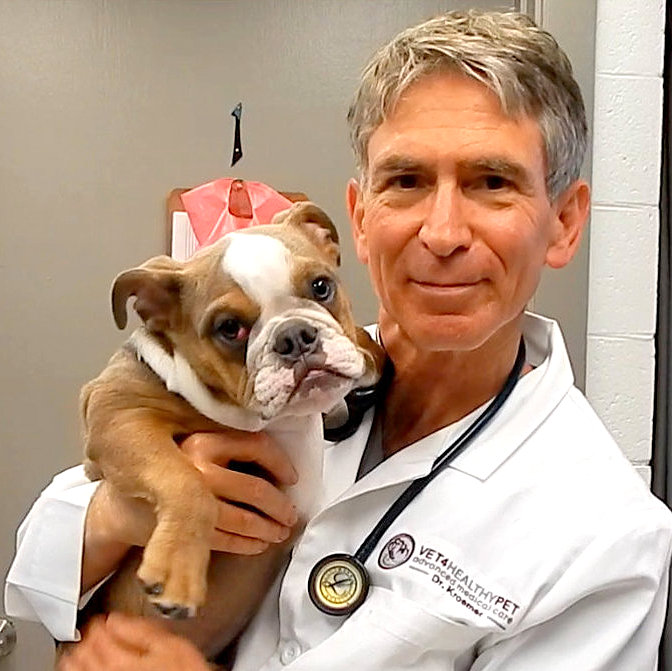
Bring her in today rather than watching it. Squinting and rubbing together usually mean the surface of the eye is sore, and in this breed that most often means an ulcer on the cornea. An ulcer is thin at breakfast and can be considerably deeper by bedtime if whatever started it is still rubbing, which is why this is the one eye problem I never ask an owner to sleep on. Two things before you leave the house. Keep her from rubbing it, because a paw can turn a healing ulcer into a far worse one in seconds, so a cone on today is worth more than any drop. And do not reach for leftover eye medication from a previous problem: if the bottle says pred, dex or hydro, it is a steroid, and a steroid on an open ulcer slows the surface from closing.
Corneal Ulcers in Bulldogs and French Bulldogs
Corneal ulcers are a common and significant concern in Bulldogs and French Bulldogs, often ranking as their most frequent eye problem. These ulcers can occur at any stage of life. In contrast to many other breeds, where environmental trauma is the leading cause, corneal ulcers in Bulldogs typically stem from underlying breed-related issues such as:
- eyelid problems (entropion)
- abnormal eyelashes (distichiasis, trichiasis, ectopic cilia)
- dry eye (KCS)
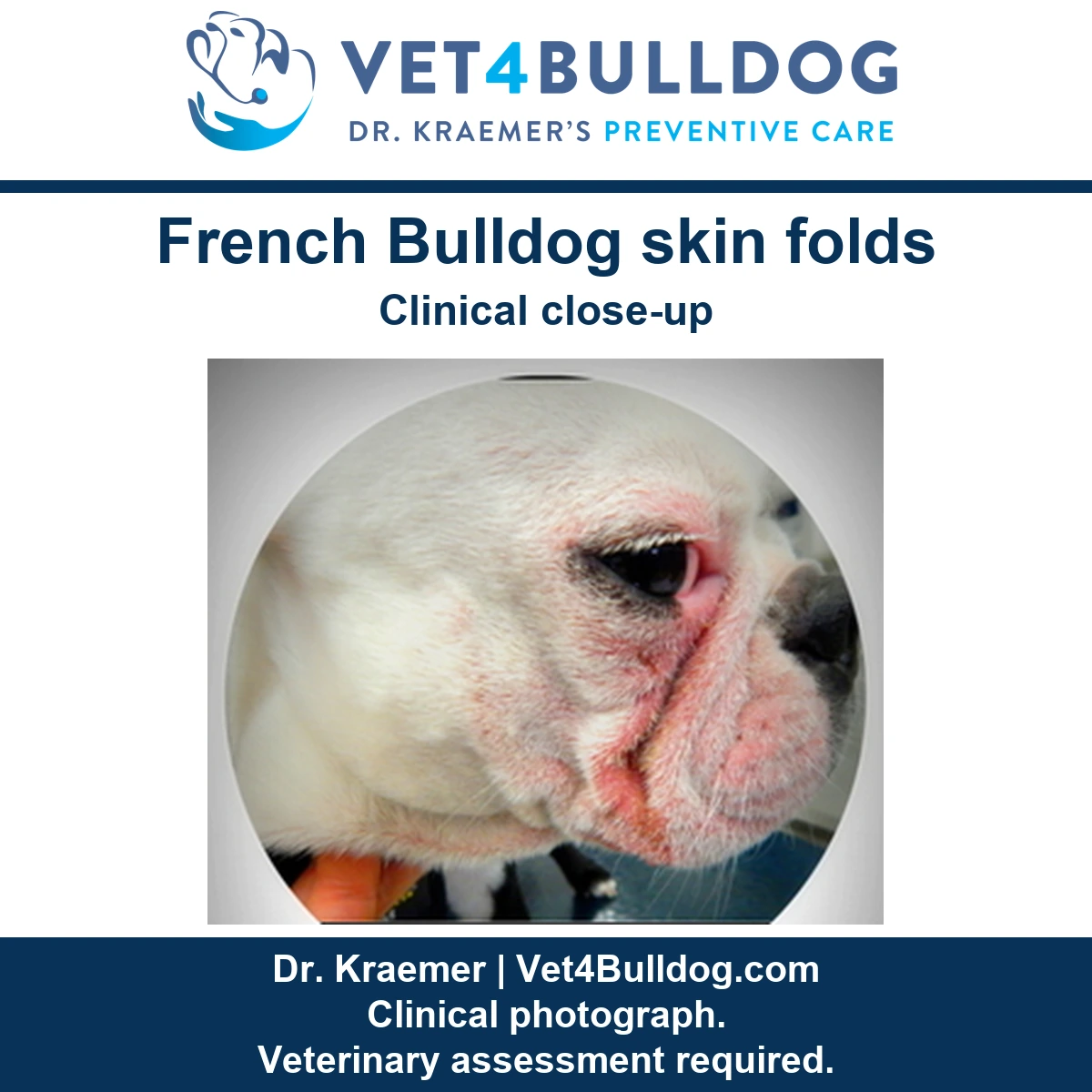
- wrinkled skin fold moist dermatitis
Why Do Bulldogs and French Bulldogs Have So Many Eye Problems?
The elevated risk in bulldogs stems from their distinctive features, such as
- flattened skulls
- excess skin folds
- prominent bulging eyes
- Insufficient tear production
- eyelid inward rotation
- Ingrown or abnormal eyelashes
These factors contribute to a significantly increased susceptibility to corneal ulcers compared to most other dog breeds.
Bulldog Corneal Ulcers: 5 Things to Know
- Corneal ulcers are more common in bulldogs than in most dog breeds due to their flat faces and folds.
- In contrast to other dog breeds, bulldogs’ corneal ulcers are mostly due to dry eyes, abnormal eyelashes, and eyelids.
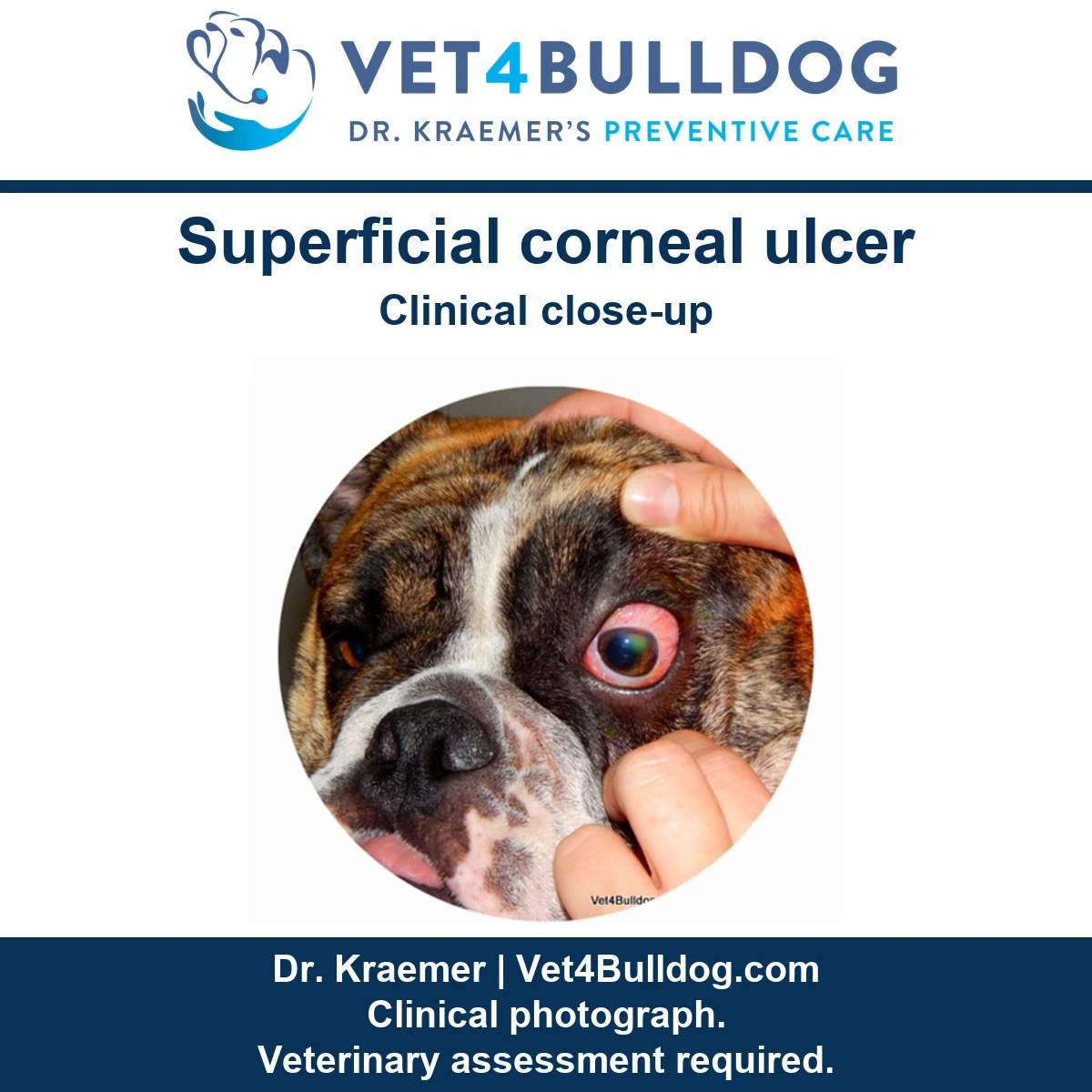
- Corneal ulcers can range from superficial and mild to deep and severe
- All bulldog and French bulldog corneal ulcers are considered an emergency
- A suspected ulcer needs an eye examination and prescribed treatment. Tear-stain products and supplements do not treat a corneal ulcer.
Members of this bulldog community prefer prevention over RX
Check the bottle for pred, dex or hydro
If you take one thing from this page, take this. Somewhere in a lot of bulldog households there is a half used bottle of eye drops from a previous problem, and the moment an eye looks sore it comes out of the cupboard. If that bottle contains a steroid, and you cannot tell by looking at the eye, you can do real damage with it. A steroid on an ulcer that is still open slows the surface from closing and can let a shallow ulcer become a deep one. The practical test takes two seconds: read the name on the bottle, and if it contains pred, dex or hydro, do not put it in that eye. Those three fragments cover most of the ophthalmic steroids you will have been given. Steroid drops have their place, and it is after the surface has healed, prescribed by the person who looked at the eye.
The second thing is about time, and this is the part that separates a corneal ulcer from almost everything else on this website. Most of what I write about here is managed over a good few weeks, and a day either way changes nothing. An ulcer is the opposite. The cornea is about as thick as a credit card is, in layers, and an ulcer that is superficial in the morning can be a great deal deeper by the evening if what caused it is still rubbing. So I am not going to tell you to monitor it. A bulldog squinting, holding an eye shut, or with an eye that has gone cloudy needs looking at that day, by somebody with a stain and a light.
And the third, which is really the whole bulldog story. Ask what caused it, not just how to heal it. In most breeds an ulcer is an accident, a thorn or a scratch. In this breed it is usually something structural doing it over and over: an eyelid rolled inward, a stray lash growing the wrong way, a nasal fold whose hair sweeps the eye every time the dog breathes, or an eye that does not make enough tears to protect itself. Heal the ulcer and leave the cause and you will be back. That is why the long list of causes on this page is the useful part, and why the eye that keeps ulcerating belongs in front of an ophthalmologist rather than on a third course of drops.
Corneal Ulcer in Bulldogs and French Bulldogs: ANATOMY
Your bulldog’s cornea is the front part of the eye; it is transparent and acts like a windshield, covering the bulldog’s eye. Its curved, clear surface makes it more noticeable when viewed from the side or in a profile position.
This is the area where we normally apply eye drops.
What Is the Purpose of Your Bulldog Cornea?
The cornea plays a vital role in your bulldog’s vision by allowing light to enter the eye and guiding it through the inner chambers and lens.
This transparent structure directs light to the back of the eye, where the retina and optic nerve work together to create an image.
Think of the eye as a camera:
- The cornea is the lens
- The retina is the film capturing the picture
Just like scratches and “dirt spots” on a camera lens that can blur and reduce the quality of developed photos, scratches on the cornea and a decrease in transparency obstruct the passage of light. If light cannot fully enter the eye, it will affect the sharpness of the image formed by the retina, directly impacting your bulldog’s eyesight.
BULLDOG CORNEA: 3 X LAYERS
The bulldog cornea is made from three specialized layers
- EPITHELIAL: the first layer, the outermost layer
- STROMAL: the second layer sandwiched in between the superficial epithelial and the posterior deep Descemet’s membrane
- DESCEMET’S MEMBRANE & ENDOTHELIUM: the deepest, most posterior layer
BULLDOG TEAR PRODUCTION
The bulldog’s cornea is bathed and “lubricated” with tears.
The tear film helps provide nutrients and oxygen to the cornea.
Corneal Ulcer Types in Bulldogs and French Bulldogs
There are a few types of corneal ulcers, ranging from superficial and mild to deep and severe.🚨
#1. BULLDOG CORNEAL EPITHELIAL ULCER
- It can be difficult to see with the naked eye and might require a stain for a diagnosis
- It is considered the least severe
- And typically responds promptly to appropriate treatment, resulting in quick healing.
The superficial corneal ulcer in bulldogs is the most prevalent type
#2. BULLDOG STROMAL ULCER
A bulldog stromal corneal ulcer is
- deeper
- easier to see with the naked eye
- It’s usually cloudy-looking
#3. BULLDOG CORNEAL DESCEMET ULCER
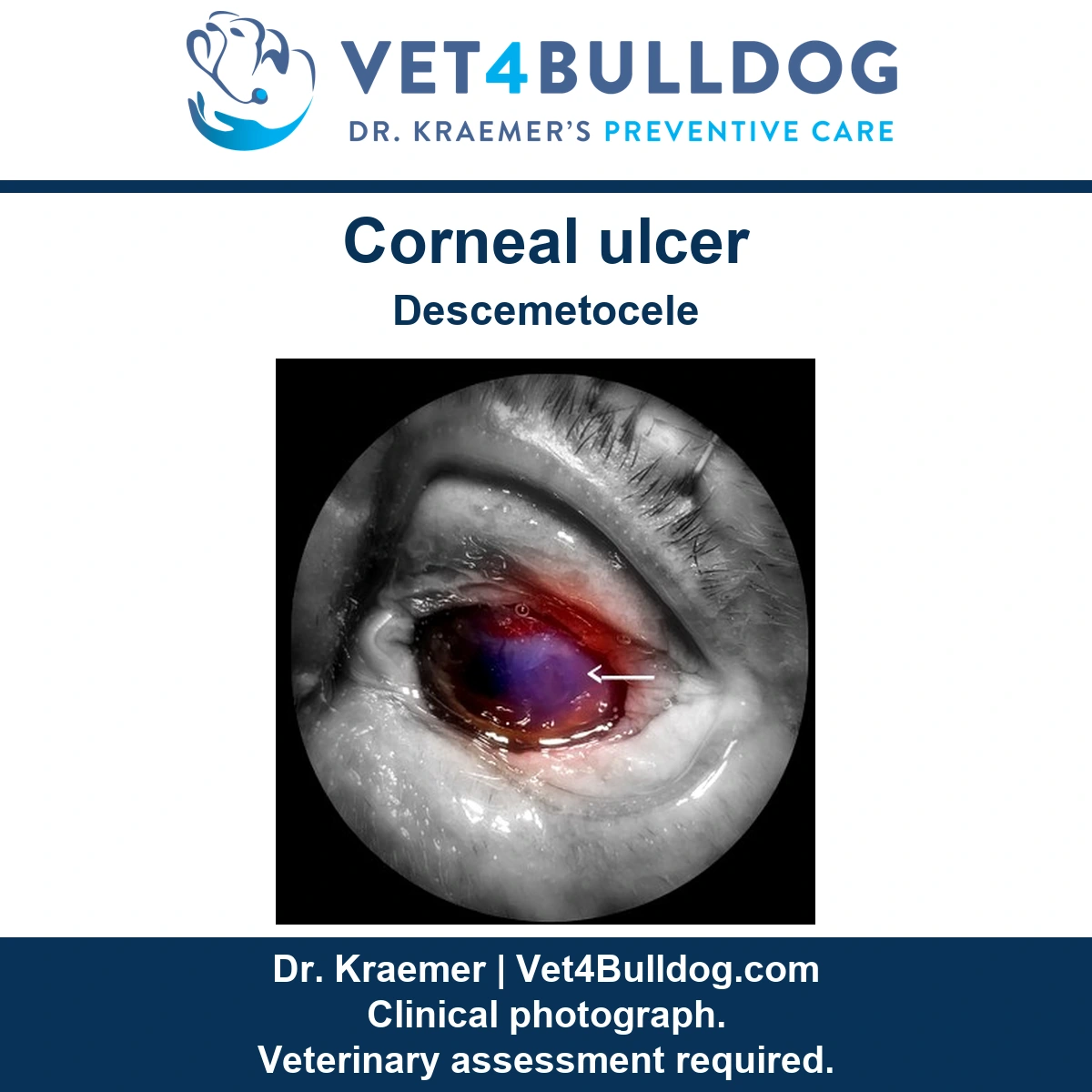
Bulldog descemetocele ulcer is the
- deepest
- most serious
- can melt and perforate
- challenging to treat
- duration to full healing is often much longer
🚨A Descemetocele deep corneal ulcer has the potential to perforate, leading to permanent loss of sight in your bulldog. Thus, it requires urgent care.
What Causes Corneal Ulcers in Bulldogs and French Bulldogs?
For most breeds, exterior trauma is the #1 cause; it is not so for bulldogs In contrast to other breeds, the most common causes of bulldog corneal ulcers are due to the breed’s anatomical characteristics and structural defects:
#1. ULCER DUE TO ENTROPION
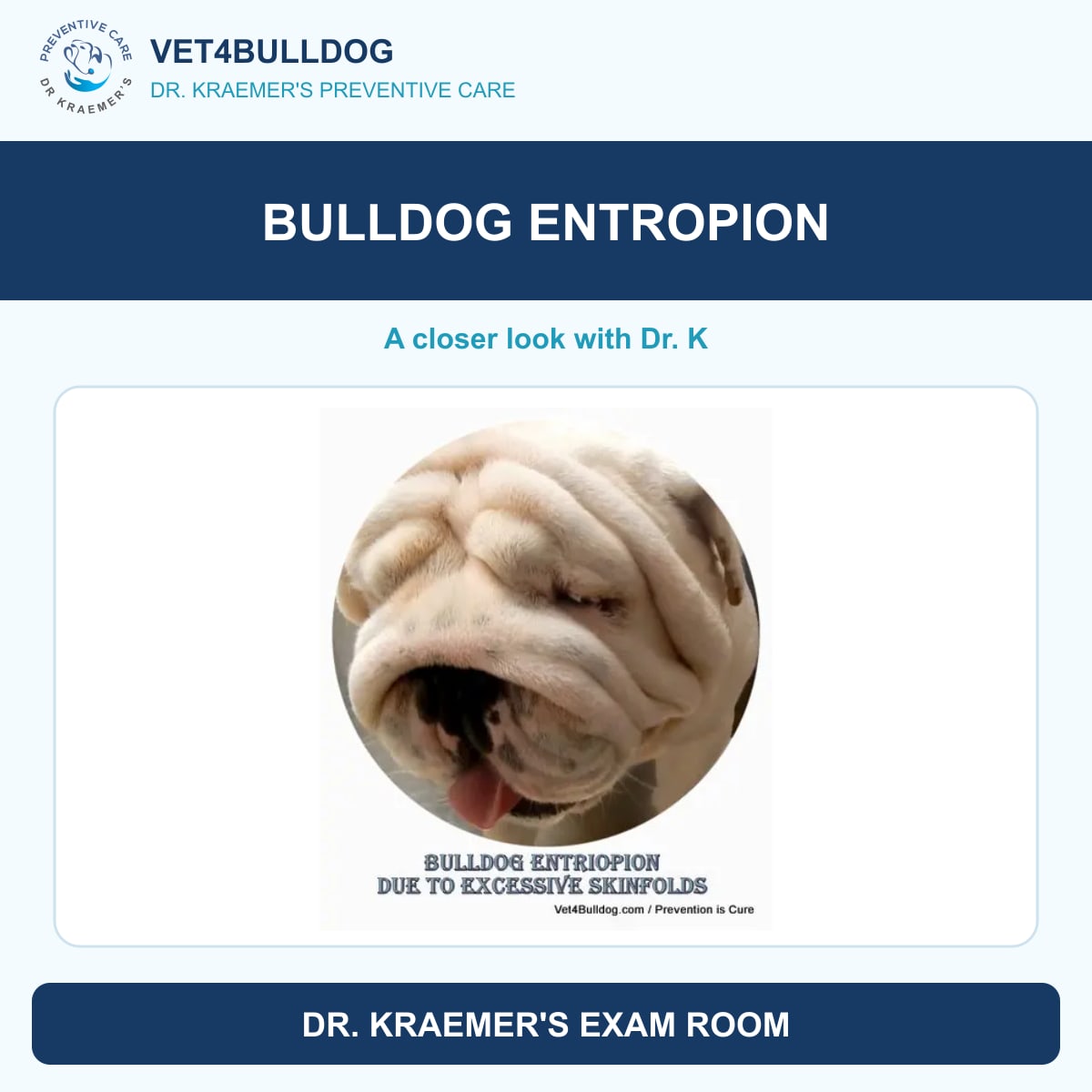
The inversion of eyelids, caused by the abundance of facial skin folds, leads to the lid and eyelashes rubbing against the cornea, causing irritation and injury. There is a full article on entropion in bulldogs and bulldog 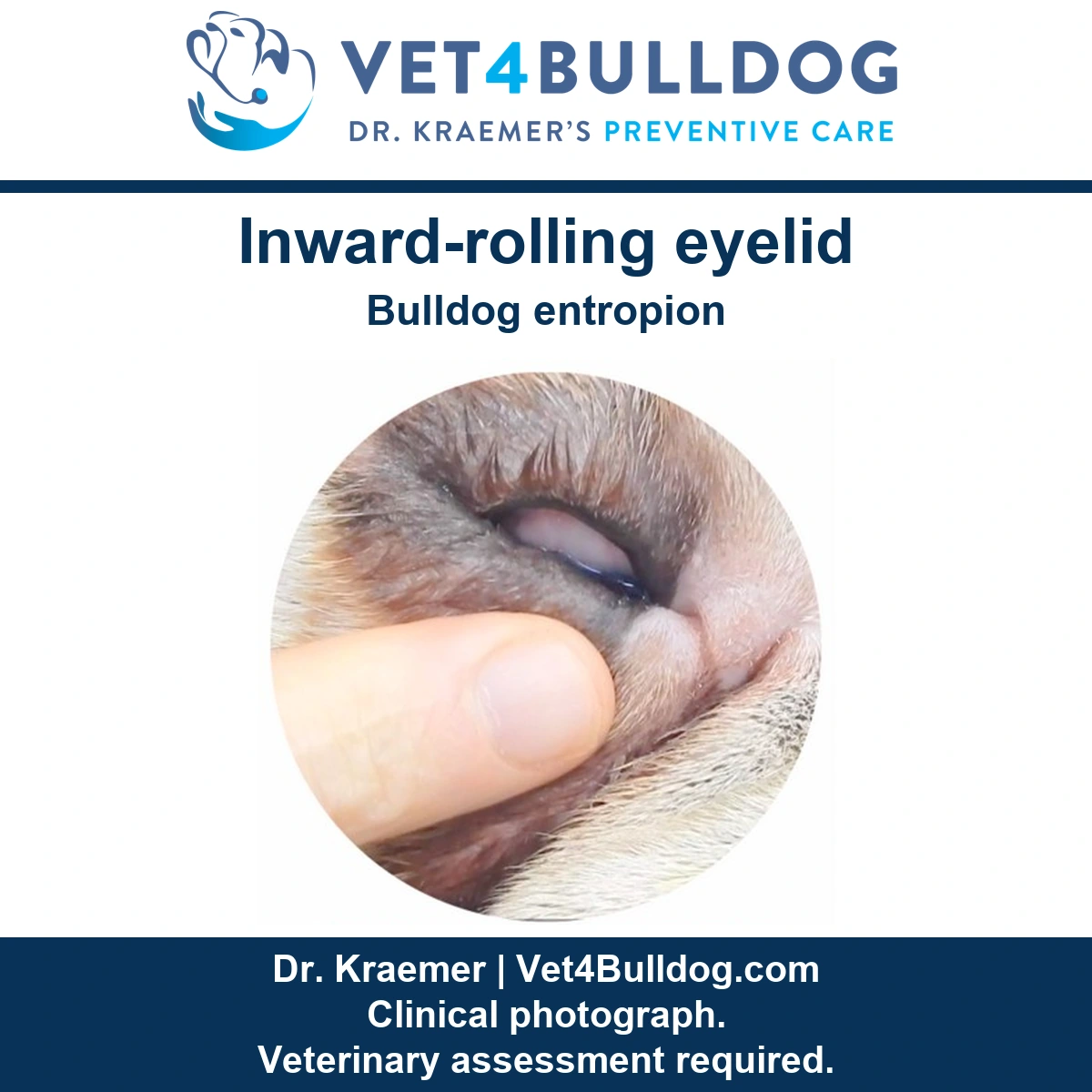
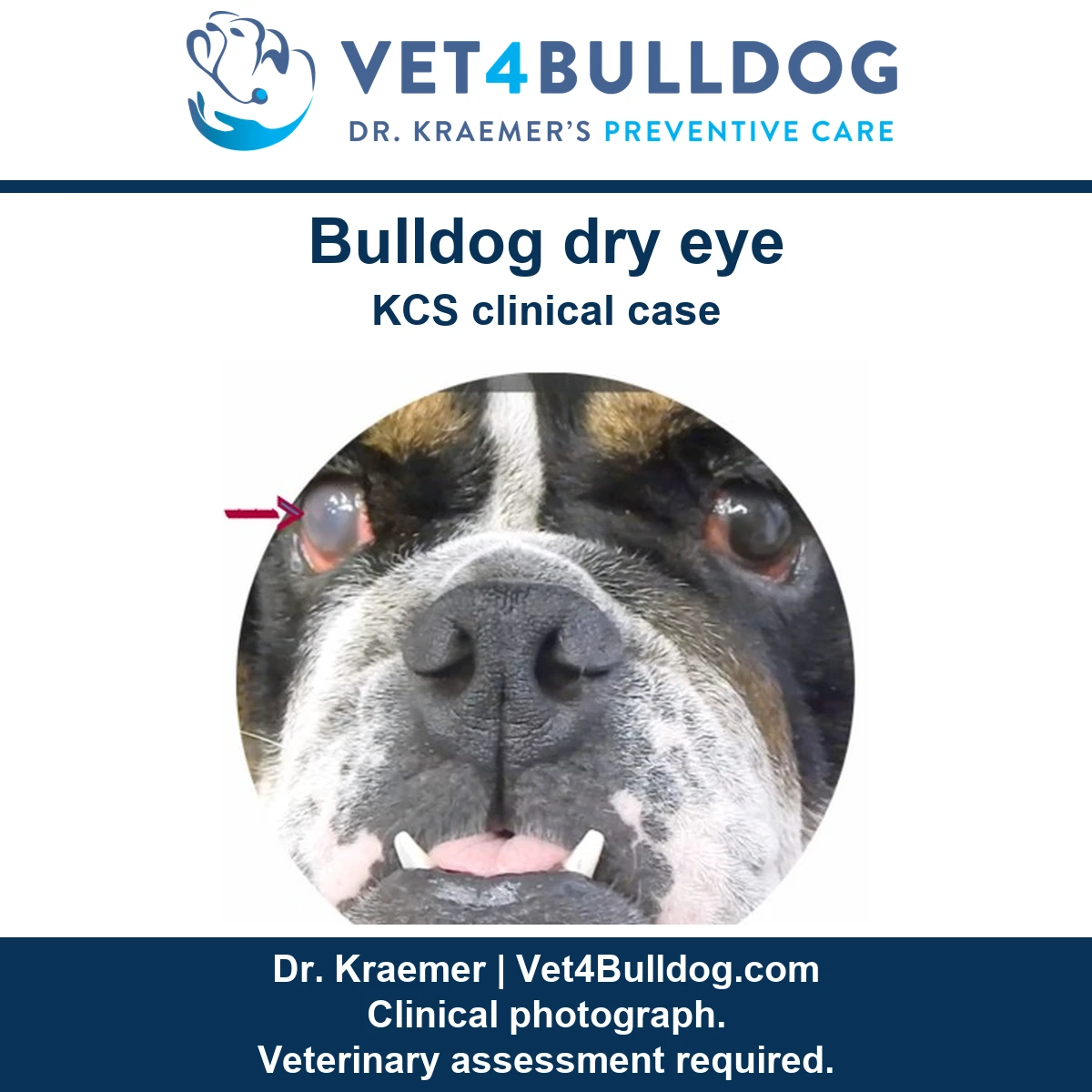
#2. CORNEAL ULCER DUE TO DRY EYE
Bulldog dry eye (keratoconjunctivitis sicca, KCS) is a prevalent immune-mediated condition unique to the breed that impacts tear production. The deficiency in tears deprives the cornea of
- vital nutrients
- oxygen
- lubrication
– This leads to chronic corneal disease and ulceration.
#3. CORNEAL ULCER DUE TO ABNORMAL EYELASHES
Irregular eyelashes that come into contact with the cornea can cause pain and an urge to rub, leading to direct and indirect injuries to the cornea. Direct injuries happen when the eyelashes touch the cornea, while indirect injuries result from rubbing and itching in response to the irritant. 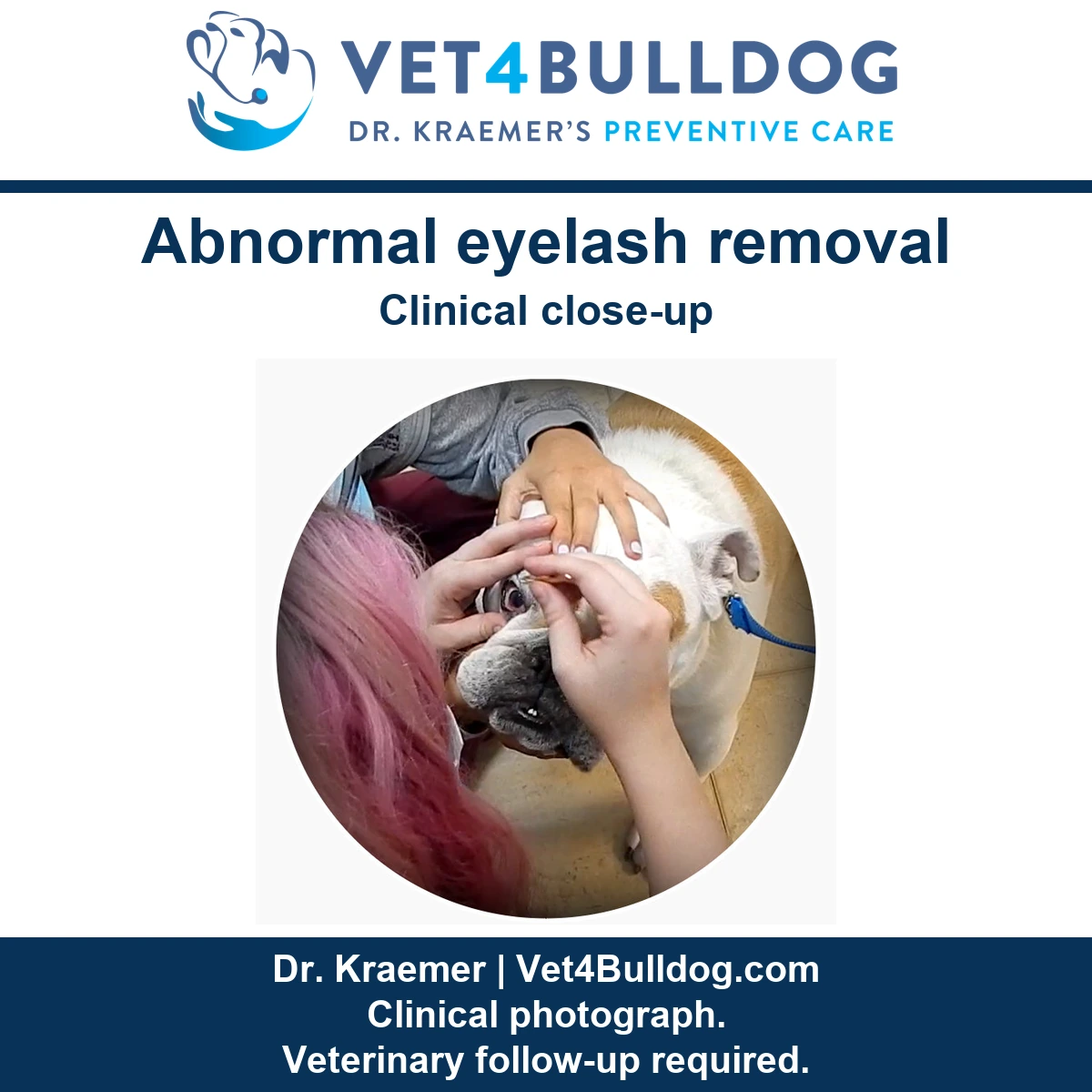 Examples of abnormal eyelashes include:
- distichiasis
- trichiasis
- ectopic cilia
#4. BULLDOG CORNEA ULCER DUE TO TRAUMA
While less frequent, corneal ulcers may also arise from external traumatic incidents, such as:
- Running into a rose bush
- Cat Scratch
- A chemical injury, such as soap or shampoo
- Accidentally rubbing the eye due to allergies such as bulldog food allergy and atopic dermatitis
- Rubbing the eyes due to bulldog skin fold dermatitis
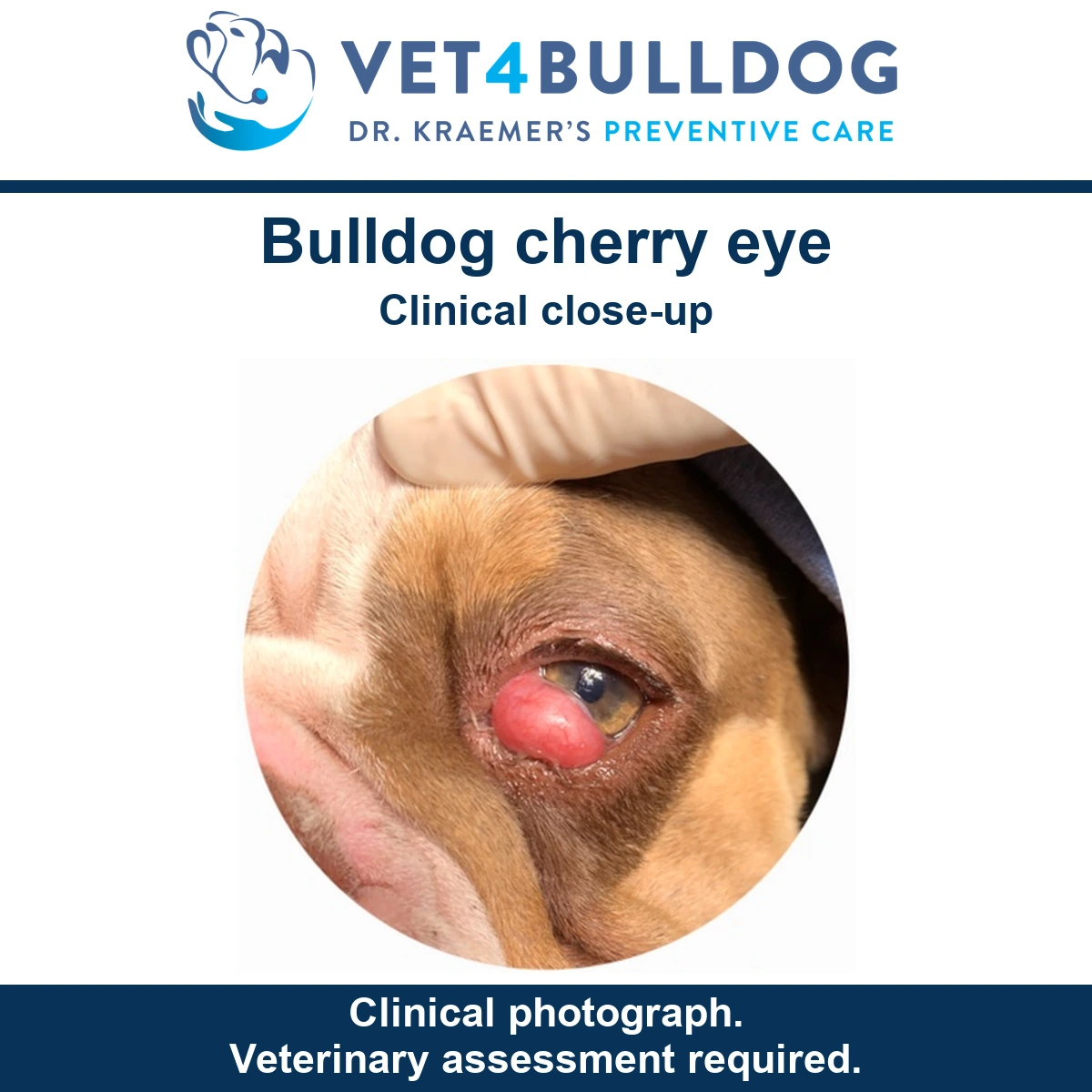
#5. BULLDOG CORNEAL ULCER DUE TO CHERRY EYE
Cherry eye is common in French bulldog and English bulldog puppies.
A large, protruded cherry eye could rub the cornea and also impede tear production
#6. CORNEAL ULCER DUE TO EXPOSURE KERATOPATHY
Injuries resulting from exposure are a consequence of the breed’s brachycephalic conformation. The compressed skull affects the eye sockets, causing bulging eyes and an inability of the eyelids to close fully. These bulging eyes, coupled with insufficient tear distribution, contribute to corneal exposure and issues with the tear film
#7. CORNEAL ULCER CAUSE: OTHER
CORNEAL ULCER: HORMONAL
Endocrine diseases such as
- diabetes
- hypothyroid
- Cushing’s
VIRAL & BACTERIA CORNEA ULCER
CORNEAL DYSTROPHY
FACIAL NERVE PARALYSIS: can contribute to dry eyes by disrupting the blinking mechanism, consequently affecting the spread of tear film.
Insufficient tear film distribution leads to dry eyes, and persistent dry eye conditions can result in corneal ulcers.
Corneal Ulcers in Bulldogs and French Bulldogs PRESENTATION
Depending on severity, your bulldog may exhibit a wide range of symptoms
1. CORNEA ULCER SEVERE PAIN
Pain is typically manifested by:
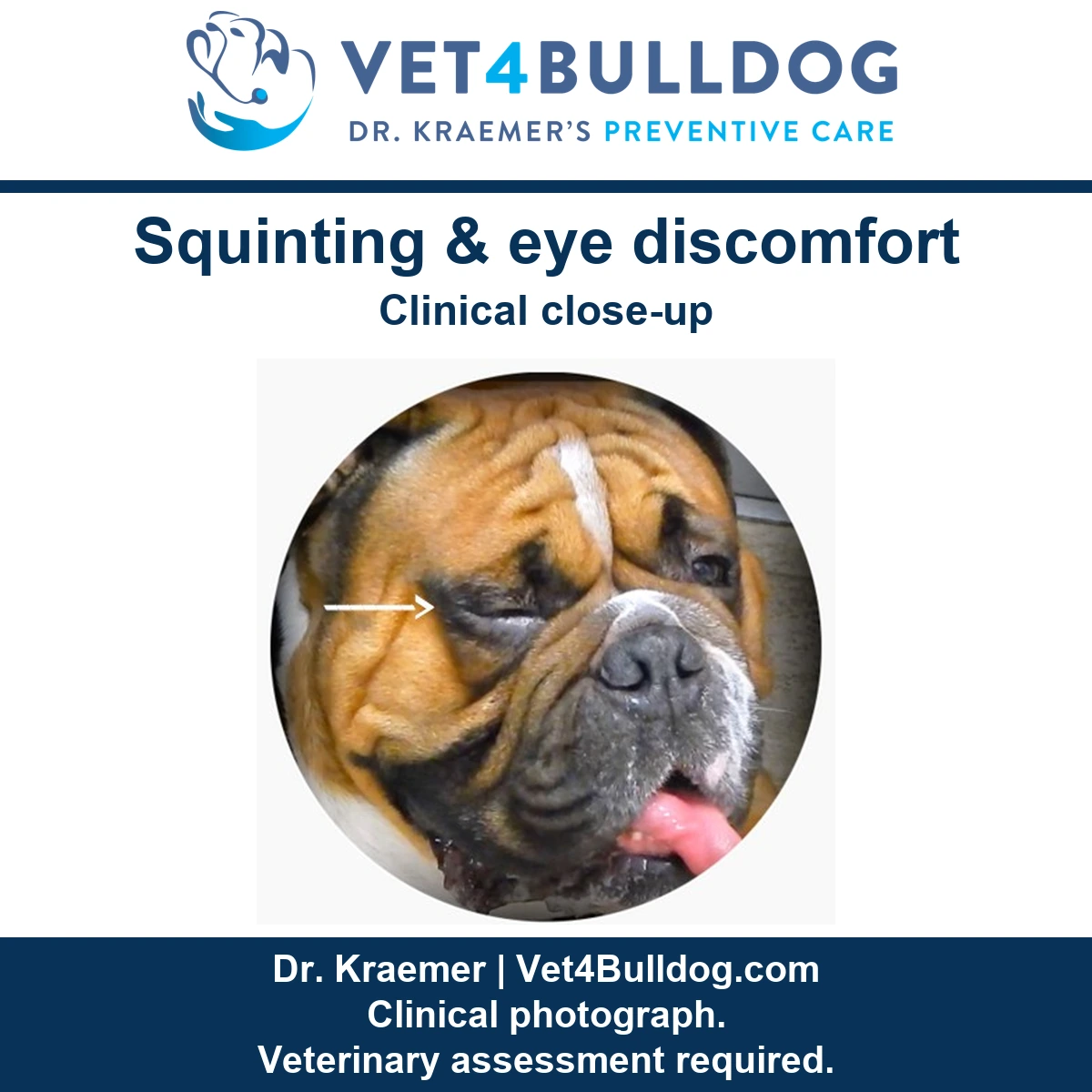
- Blinking & Squinting
- Tearing & Discharge
- Rubbing & Pawing
- Shut often swollen eyelids (closed eye)
- Other: Change in appetite and other behavioral abnormalities associated with PAIN
Bulldog and French bulldog corneal ulcers can be very painful
2. CORNEA ULCER DISCOLORATION
- white patches
- opaque area
- vascular areas
- pigmented areas
- redness
- hemorrhagic
3. CORNEA ULCER PUNCTURE
Visible “holes,” punctures, and concave lesions are prone to infection and can rapidly deteriorate. It should always be regarded as an emergency. 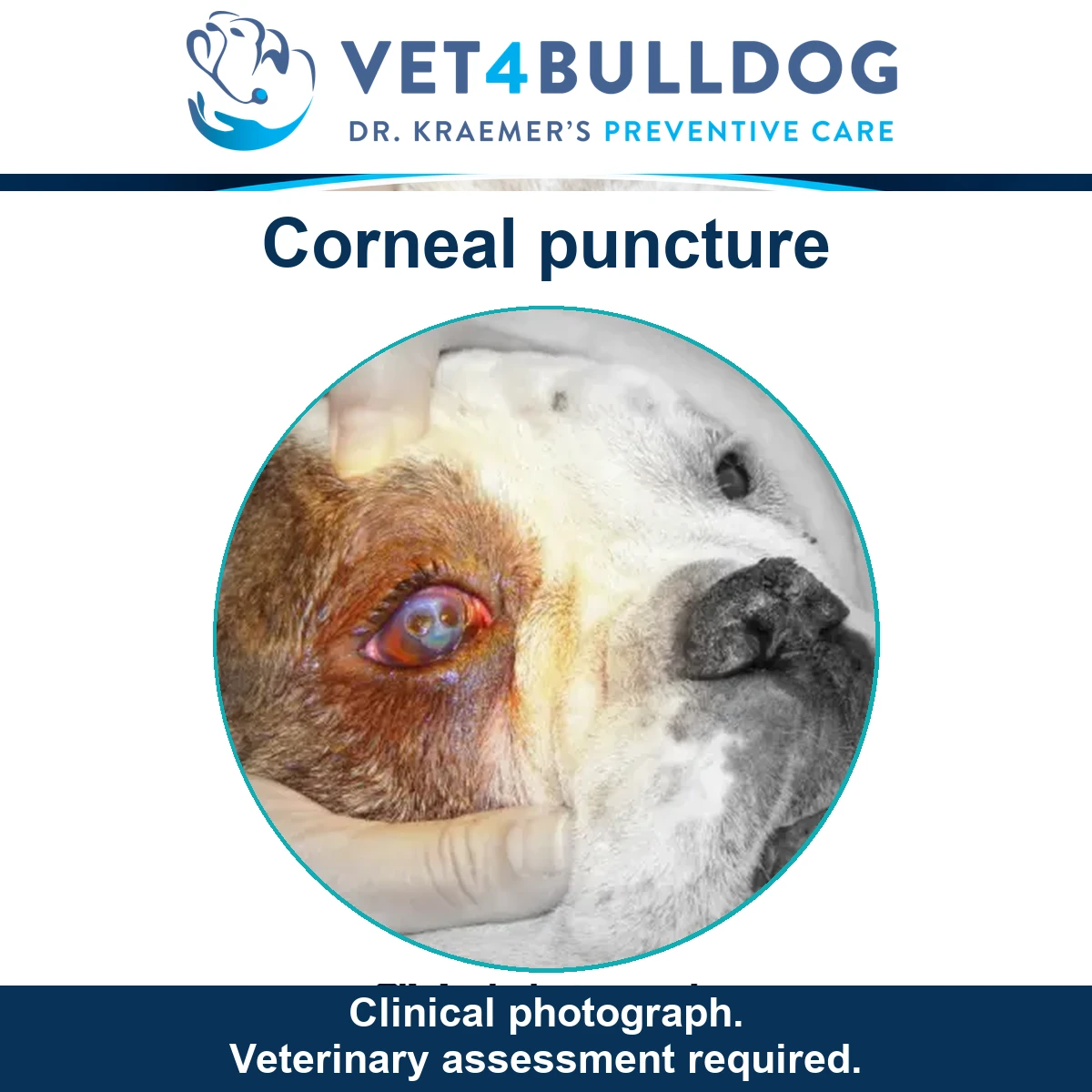
Corneal Ulcer in Bulldogs and French Bulldogs: DIAGNOSIS
A. DOCTOR EXAM
Visual examination and ophthalmoscopy exam:
B. EXHIBITING PAIN
Evidence of ocular discomfort, squinting, abnormal blinking,
C. ITCHING AND RUBBING
Skin irritation and redness can trigger rubbing and pawing. Common causes include:
D. BULLDOG ENTROPION
Evidence of underlying traumatic causes, such as abnormally rotating eyelids.
E. ABNORMAL EYELASHES:
It usually requires a magnifier and special bright illumination.
F. OTHER BULLDOG OCULAR DISEASES:
We are looking for evidence of ocular diseases such as glaucoma and uveitis, including ocular discoloration and bulging consistently. The diagnosis will require tonometry (measurement of the intraocular pressure) 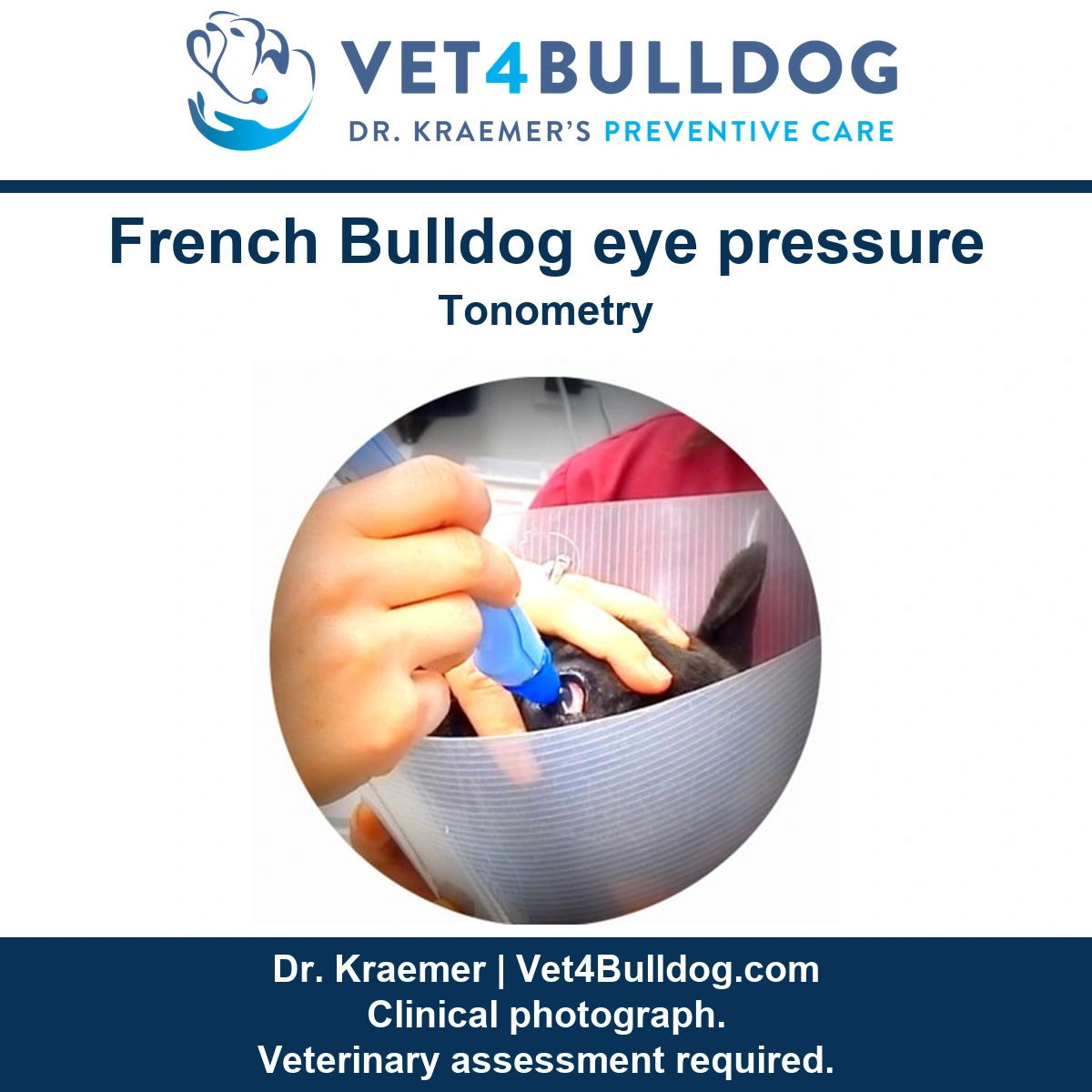
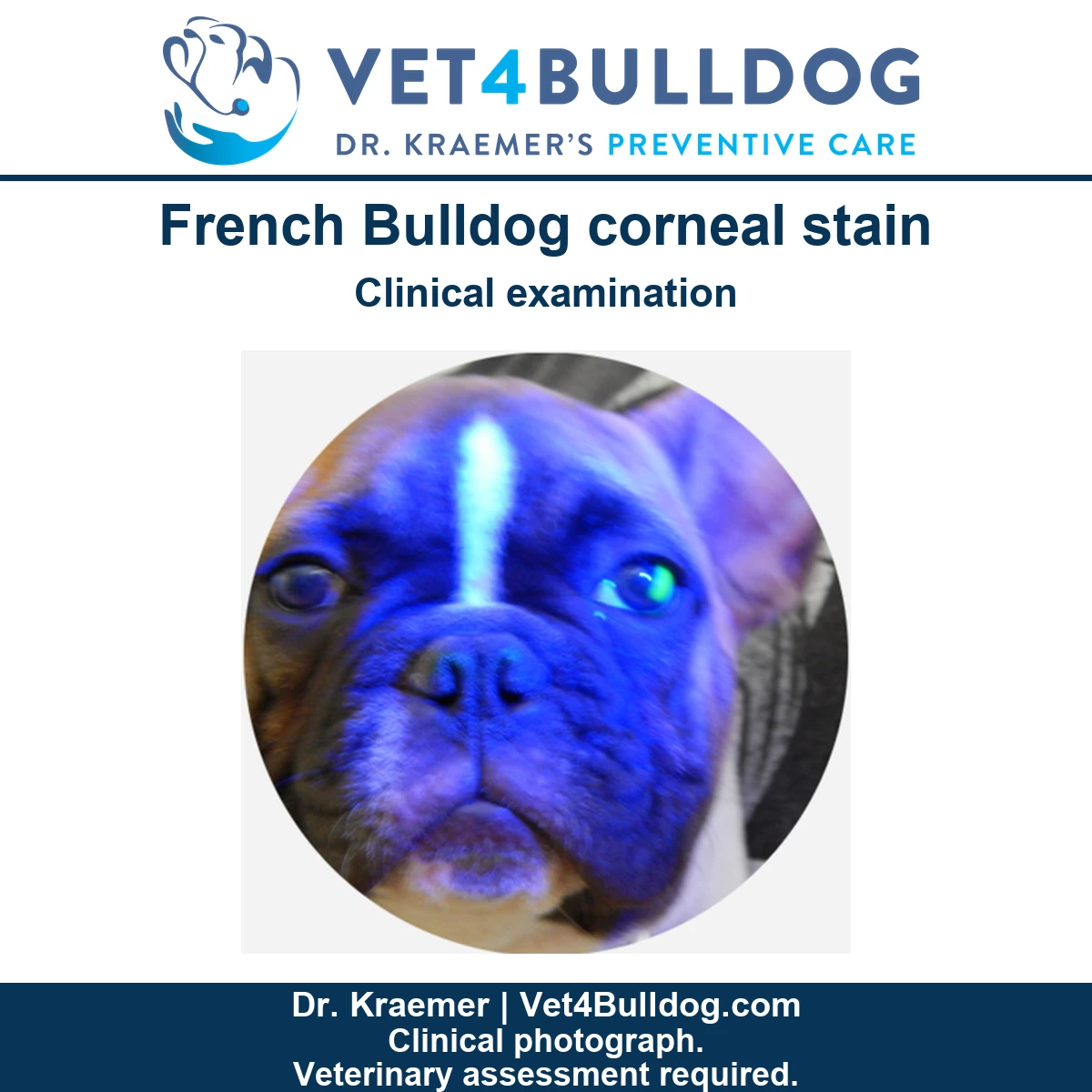
BULLDOG CORNEAL ULCER STAINING
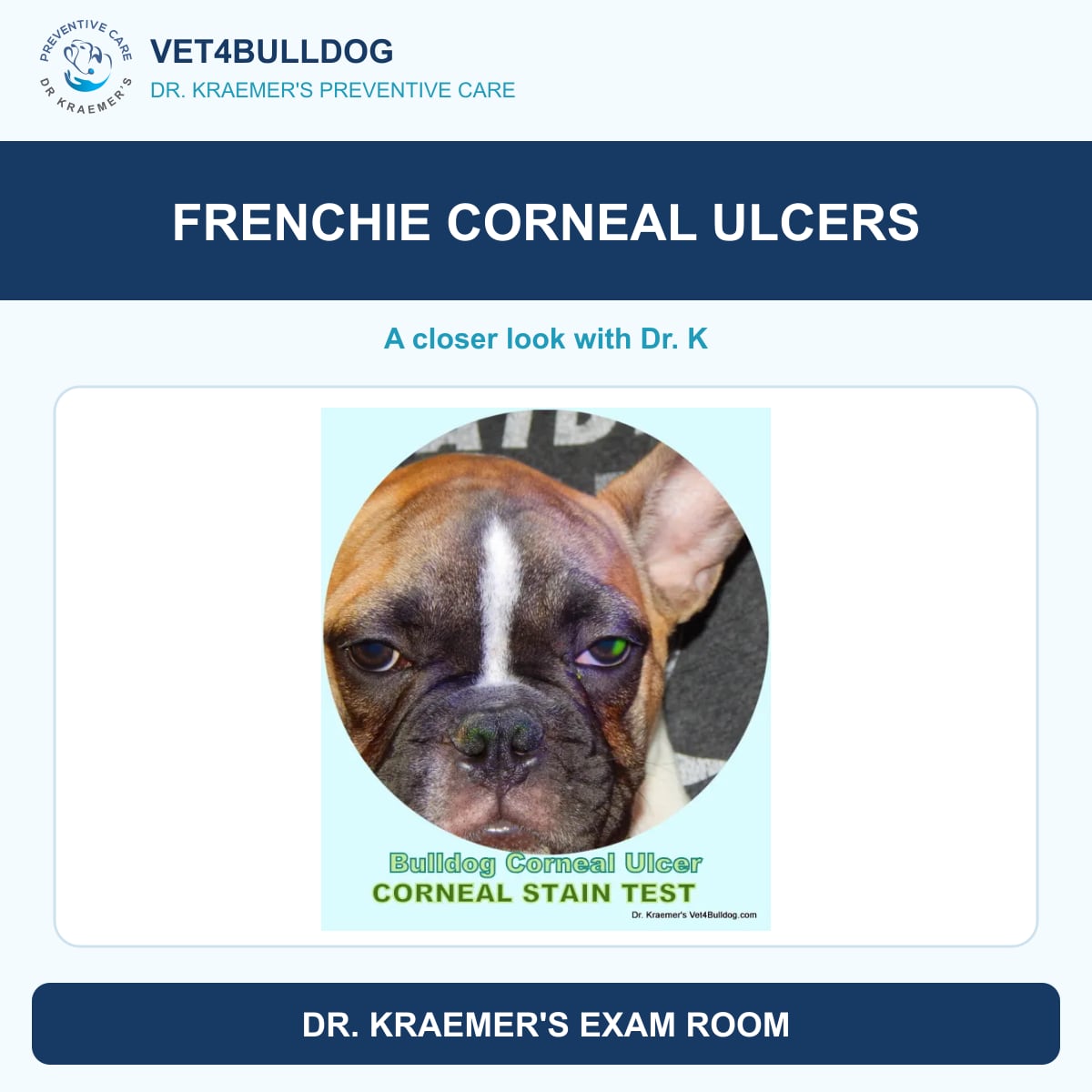
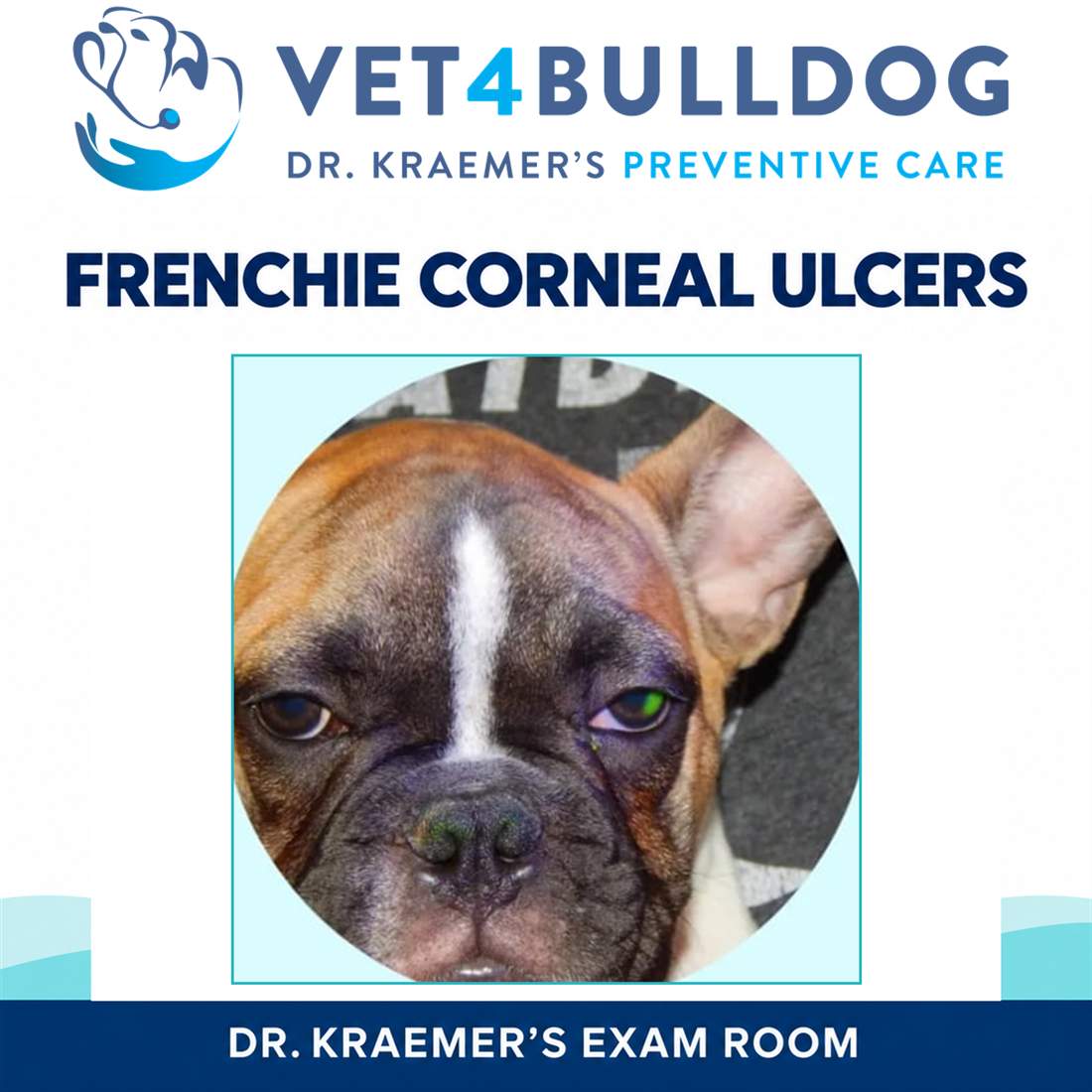
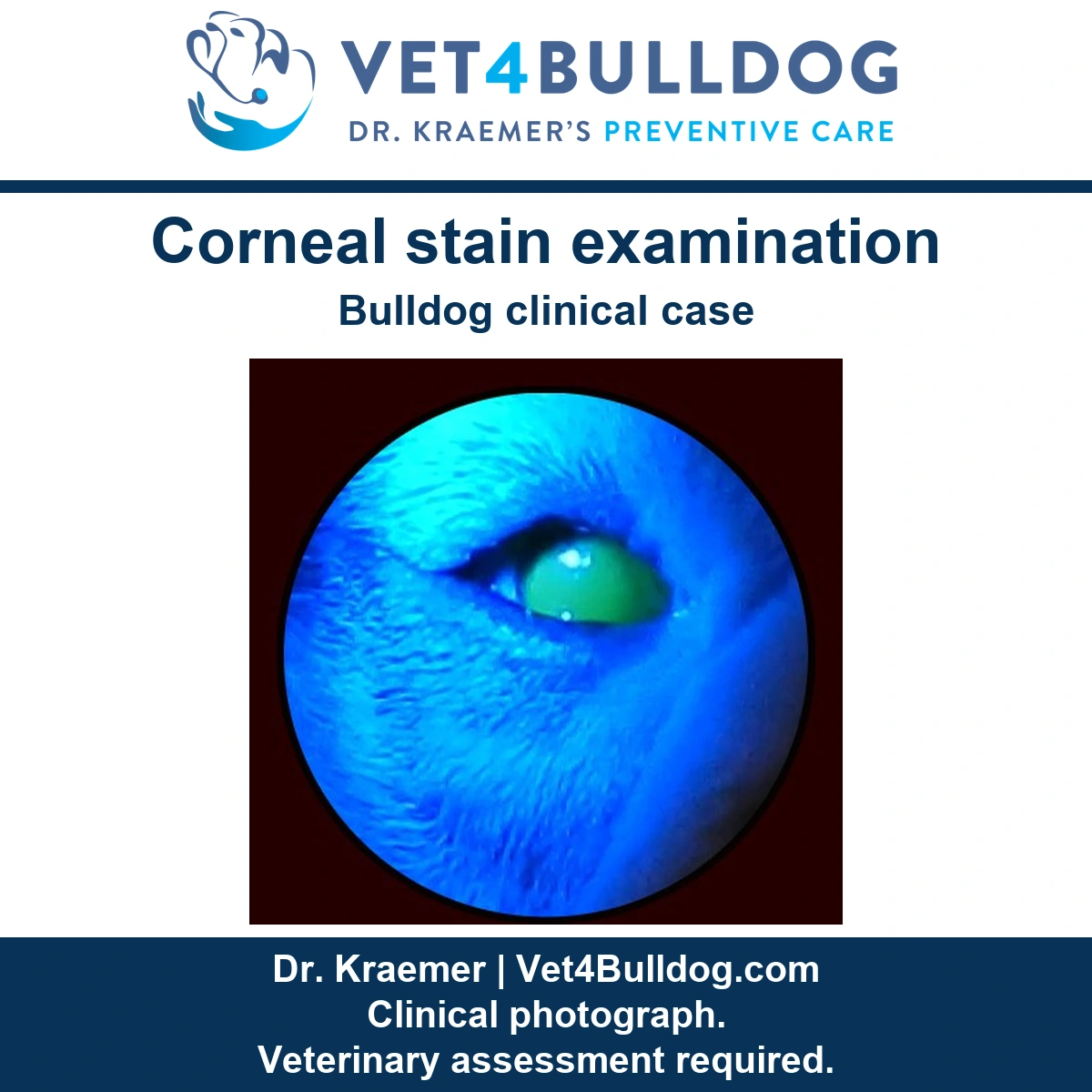
Using a special corneal stain and ultraviolet light, we can detect ulcers that might be difficult to see on an exam.
The fluorescein stain test is the most common bulldog cornea ulcer test performed
1. SCHIRMER TEAR TEST
A tear production test should be done on any bulldog presented with a corneal ulcer. 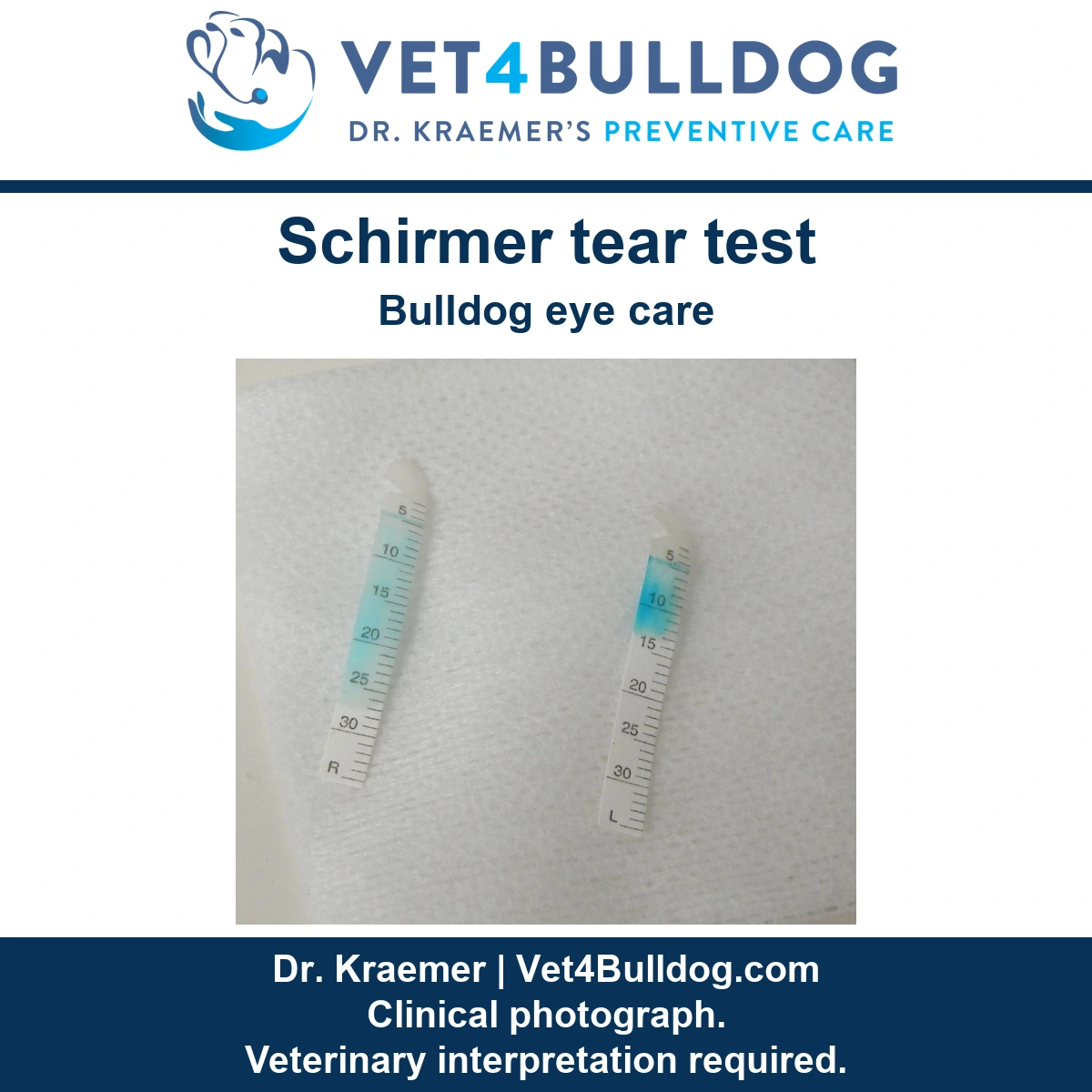
2. CORNEA ULCER CULTURE & CYTOLOGY
A deeper, more advanced corneal ulcer or a non-healing one will require a sample for culture and cytology.
How to Treat Corneal Ulcers in Bulldogs and French Bulldogs?
Treatment depends on the type of ulcer and the underlying cause
TOPICAL TREATMENT
1. TOPICAL ANTIBIOTIC: ophthalmic antibacterial ointment or drops placed a few times daily 2. TOPICAL SPASM & PAIN RELIEF: Ophthalmic atropine drops or ointment may help with ocular pain and discomfort 3. LUBRICATION AND TEAR PRODUCTION: Ophthalmic drops or ointment should be used for excessive exposure. Examples are:
- saline
- hyaluronic acid
lifelong drops/ointment to help maintain adequate tear production
4. SERUM & PRP: Autologous serum eye drops and PRP (platelet-rich plasma) may also help heal some types of corneal ulcers
5. BULLY SKIN FOLD ANTISEPTIC WIPES:
It is important to recognize the cause and effect of itching, painful nasal or facial bulldog skin fold dermatitis, and bulldog corneal ulcers. The proximity of the infected folds to the eyes means that an itching, pawing, or rubbing of the infected skin fold can lead to an accidentally injured cornea.
Caring for irritated skin folds may help reduce rubbing around the eyes. A painful or cloudy eye still needs prompt veterinary care.
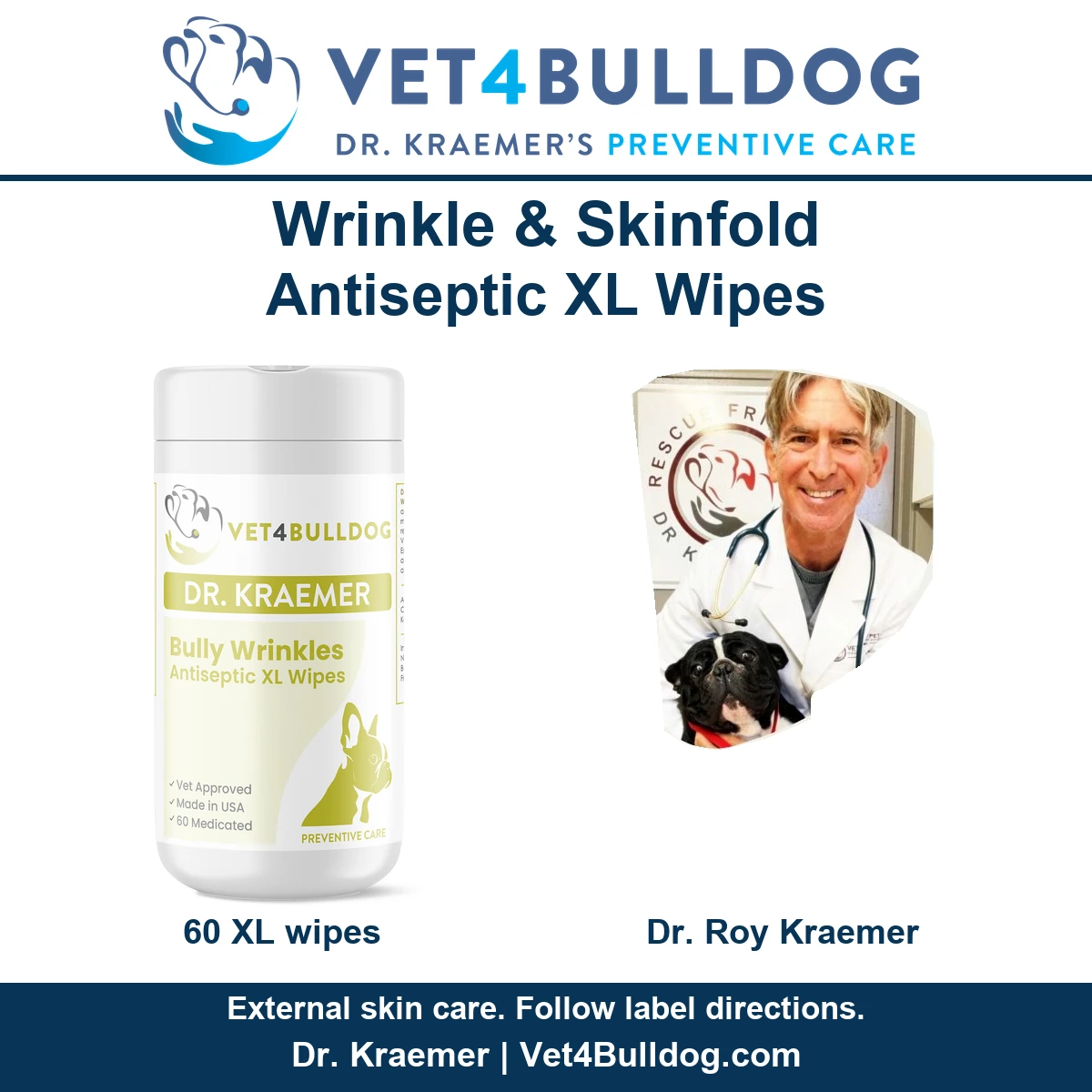
Using Dr. Kraemer’s V4B Antiseptic Bully Skin Fold XL wipes may be part of a veterinarian-directed skin fold-care routine. These are skin wipes, not eye drops or ulcer treatment. Keep them out of the eye and follow the product label. 6. SYSTEMIC RX
- Pain Relief: Oral NSAID anti-inflammatory and pain relief analgesics might be needed, especially for bulldogs with deep stromal and descemetocele corneal ulcers
- Antibiotics: oral antibiotics are not necessary for superficial ulcers but often are for deep stromal and/or descemetocele corneal ulcers
The cone is the cheapest part of the treatment
Corneal Ulcers in Bulldogs and French Bulldogs: SURGERY
1. GRID KERATECTOMY:
Surgery might be necessary for indolent ulcers to help remove detached or poorly healing corneal epithelium
2. CORNEAL GRAFT:
A graft might be required to help save a corneal descemetocele (deep melting ulcer)
3. ENTROPION SURGERY:
When your bulldog’s inward eyelid rotation is the source of the corneal ulcer, entropion surgical treatment is immediately required.
4. TEMPORARY ENTROPION SURGERY:
Bulldogs experiencing inwardly rotating eyelids (entropion) can find relief through this procedure. The surgery is also advantageous for eyelids experiencing spasms due to pain. Moreover, it serves as an emergency measure until a permanent entropion correction can be scheduled. 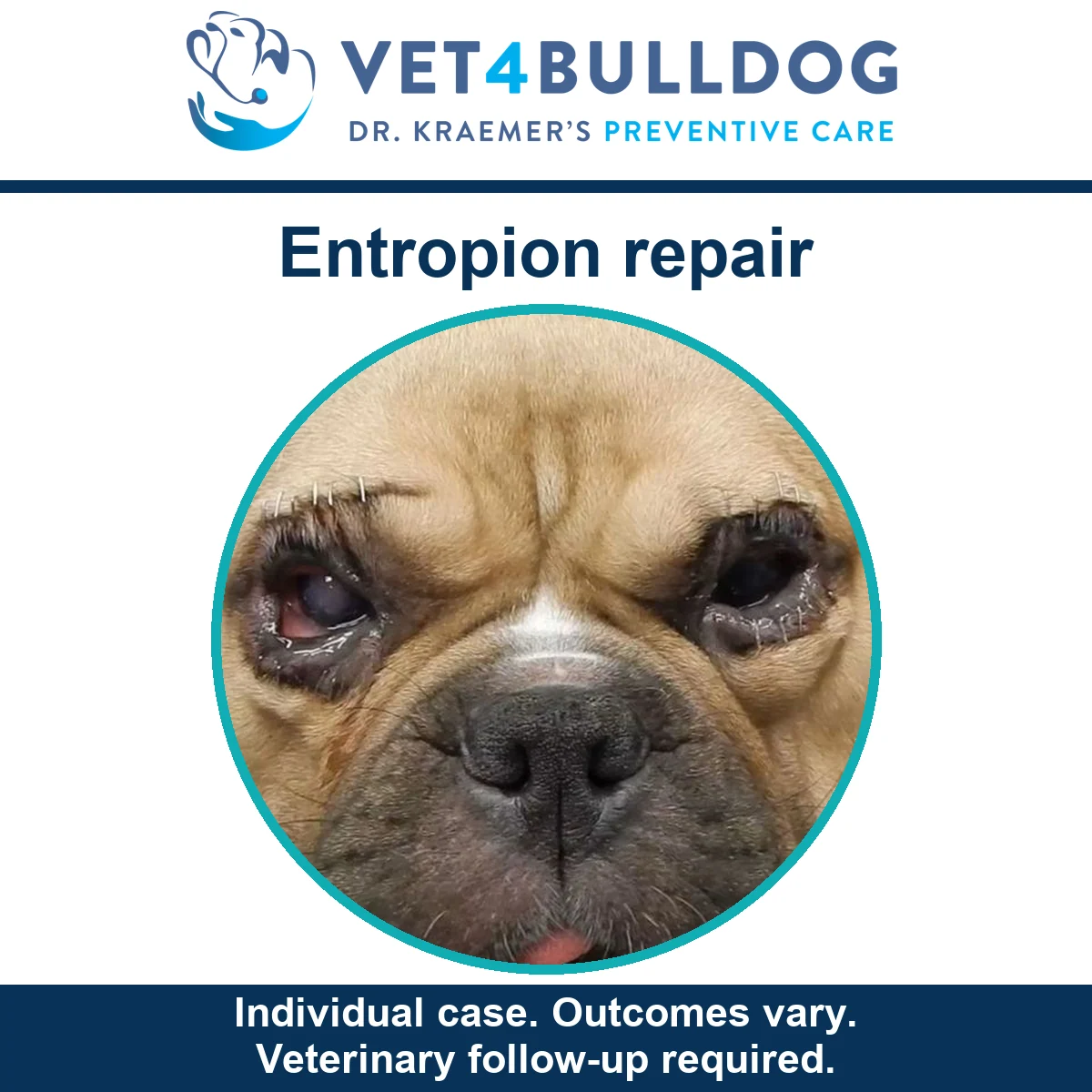 It is usually done with surgical staples This procedure can be swiftly performed in an emergency setting within seconds and without anesthesia, or with mild sedation if necessary.
5. ABNORMAL EYELASH SURGERY:
Abnormally ingrown eyelashes that are either growing in the wrong direction or inside the eyelid will require surgical intervention. It is usually done with liquid nitrogen freezing (cryo freezing) 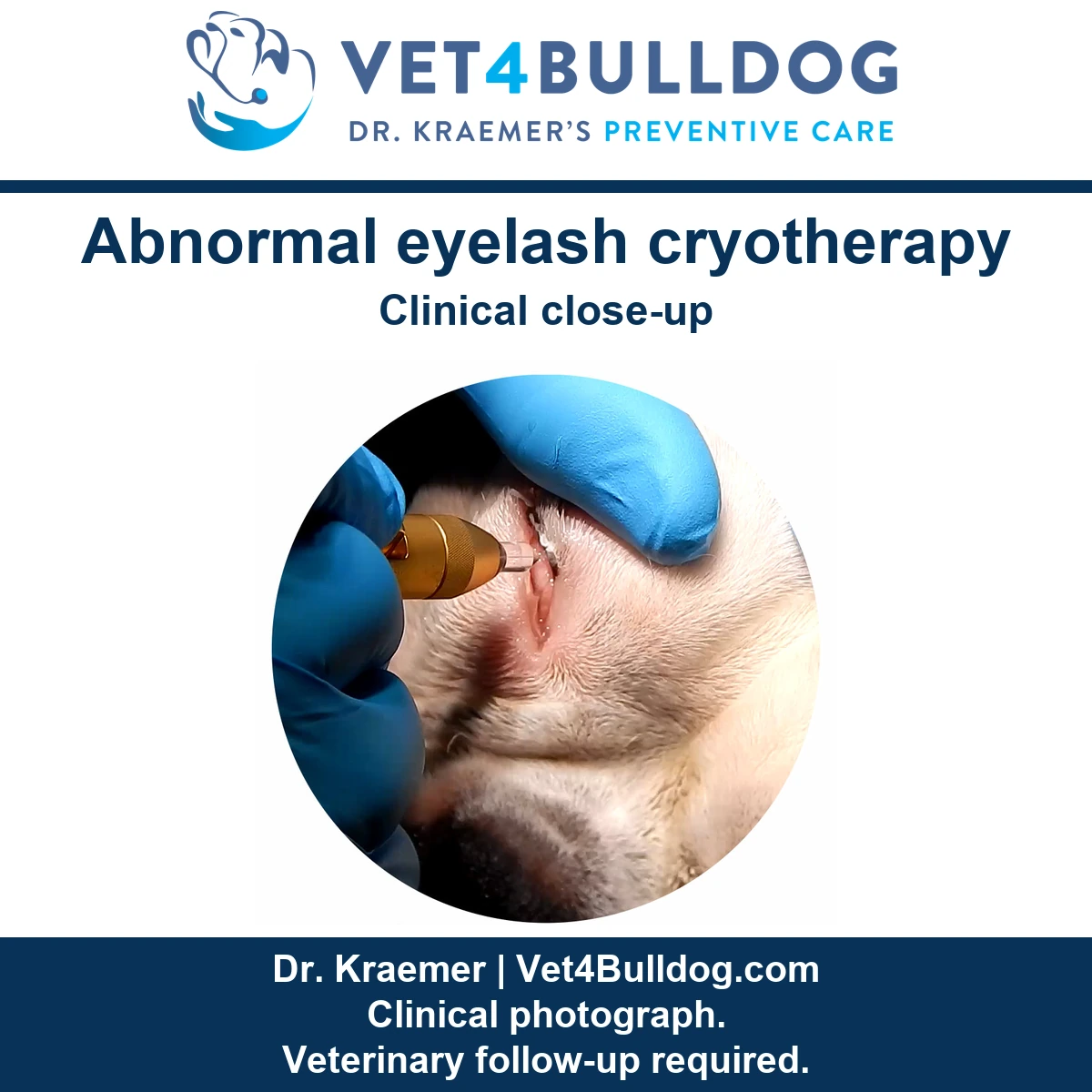
6. CHERRY EYE SURGERY:
Some protruding third eyelid glands (“cherry”) can rub against the cornea, resulting in injury. Bulldog cherry eye can also hinder tear production, leading to dry eyes and subsequently causing corneal ulcers.
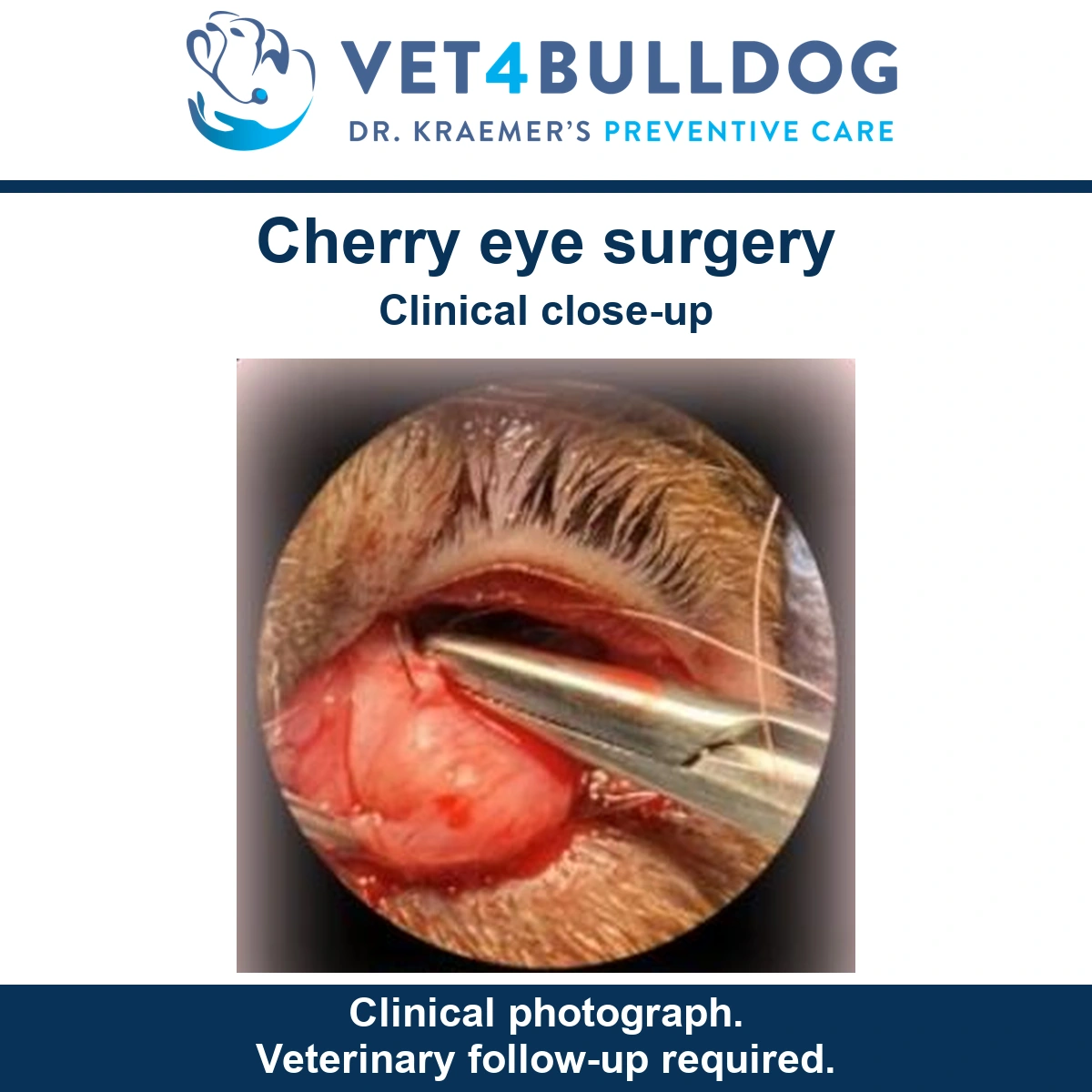
Cherry eye surgical repair must preserve the glands; they are critical for tear production.
If the ulcer keeps coming back, the useful reading is the cause rather than a product page: entropion, dry eye, abnormal eyelashes or cherry eye. Fixing the cause is what stops the next one.
Bulldog and French Bulldog Corneal Ulcer TIPS & WARNINGS
Below are selected corneal ulcer tips and warnings courtesy of Dr. Kraemer
#1 PROTECTIVE GEAR TIP:
Place a buster collar to prevent any further injury 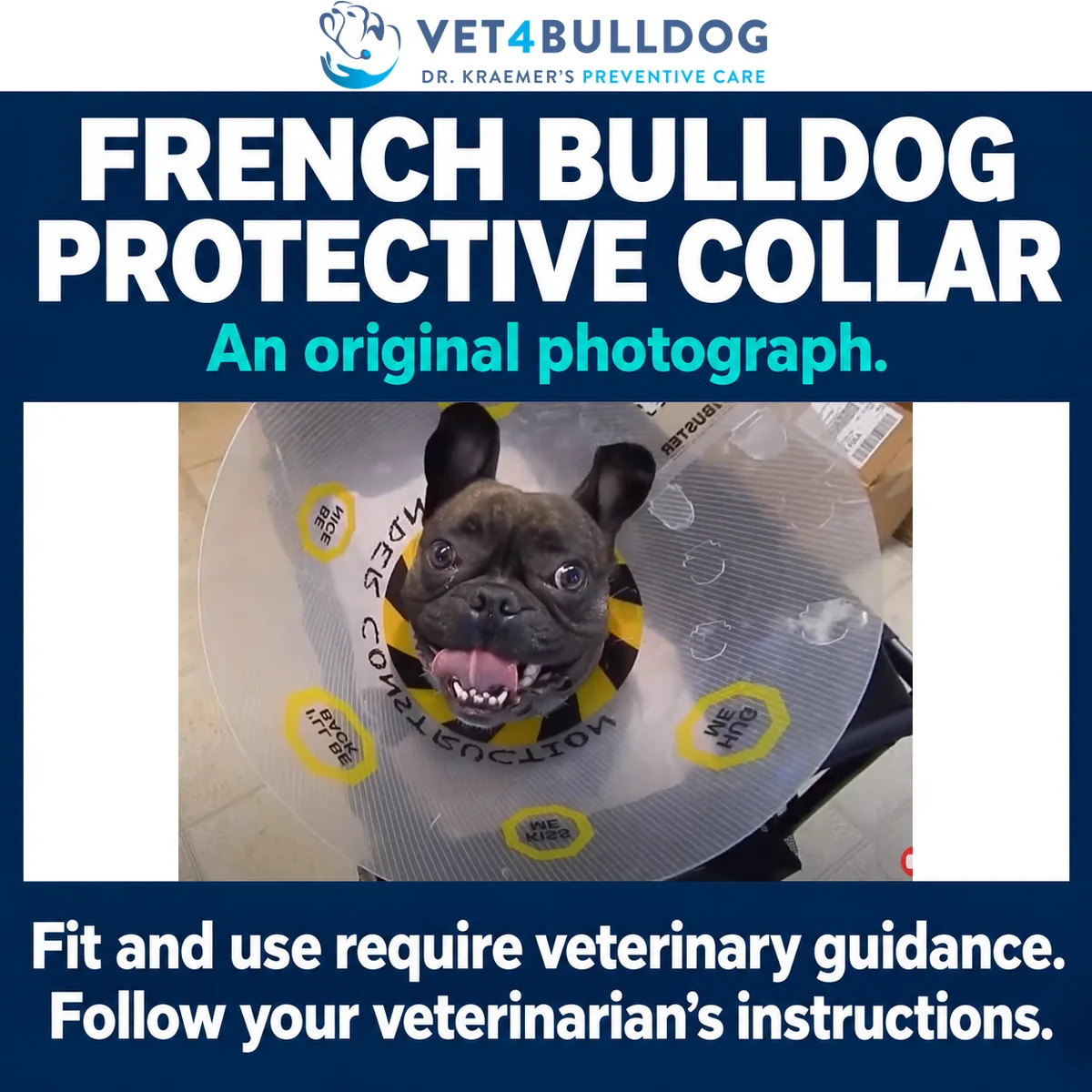
#2 Recheck EXAM TIP:
Recheck examinations are important to confirm healing, usually with a repeat fluorescein stain test. Do not stop prescribed treatment just because the eye looks better.
#3 OPHTHALMOLOGIST TIP:
A referral to a specialist might be required for a nonhealing corneal ulcer or a severe, deep, melting, or perforating one.
#1 ATROPINE WARNING:
The atropine ophthalmic drops will dilate your bulldog’s pupils in addition to alleviating the spasm. As a result, you should avoid exposing your bulldog to harsh light.
#2 STEROID WARNING:
Topical ophthalmic steroids are widely used to treat various eye conditions, but they must only be applied after a corneal ulcer has fully healed. It is vital to NEVER use steroids on an active corneal ulcer, as they can hinder healing and potentially cause severe complications. If, after using any topical ophthalmic containing a steroid (indicated by terms like “pred,” “dex,” or “hydro,” your bulldog symptoms get worse, such as
- squinting
- abnormal blinking
- discolored cornea
- discomfort
-in that case, you must discontinue the topical ophthalmic application and seek veterinary attention.
#3 EMERGENCY WARNING:
Corneal ulcers constitute an emergency. If you observe your bulldog squinting or notice the cornea appearing discolored, vascular, or opaque, it is imperative to seek veterinary assistance promptly.
Can I use the eye drops left over from last time?
That next part is about OLDER, leftover medication, not about a bottle your veterinarian has just dispensed and told you to use. With an old bottle, even when it is not a steroid, I would leave it alone if the label is no longer clear, if the prescription and the instructions that came with it have gone missing, if it is past its date, or if anything could have affected it, a cap left open, a tip that touched the eye or the counter, a summer in a hot car. By then it is no longer the clean, sterile bottle it was on the day it was dispensed. Better safe than sorry. A bottle of drops is a cheap thing to replace. An eye is not.
How quickly does this need seeing?
Why do bulldogs get these when other breeds do not?
It healed and then came back. What am I missing?
Does he really need the cone?
Is there anything in your store that treats an ulcer?
More Help from Dr. Kraemer
- Entropion in Bulldogs and Bulldog puppies
- Dry eye and KCS in Bulldogs
- Abnormal eyelashes and corneal ulcers
- Cherry eye in Bulldogs and French Bulldogs
- Anesthesia in Bulldogs and French Bulldogs
Trusted by Vets ~ Recommended by Owners ~ Approved by Bulldogs
Shop the Antiseptic XL Wipes →
References
- Merck Veterinary Manual. Corneal Ulcers in Animals
- American College of Veterinary Ophthalmologists. Corneal Ulceration in Dogs
- Maggs DJ, Miller PE, Ofri R. Slatter’s Fundamentals of Veterinary Ophthalmology