


Help for My Precious Bulldog’s Tear Stains! 🐾😢 #StellaCares
Dear Dr. Kraemer, my adorable bulldog, Stella, has been struggling with facial brownish stains lately, and I could use your expert advice on how to care for them. Her teary eyes are breaking my heart, and I want to ensure she’s comfortable and happy.
Any tips or recommendations you have would mean the world to us! 🙏🏼 Warm regards, [Samanth J.] & Stella 🐶💖 #StellaCares
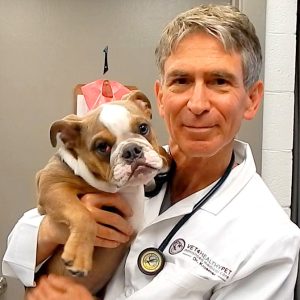
Stop it, and I am glad you read the label, because most people never do.
A number of tear stain powders sold as supplements contain tylosin, which is an antibiotic. It works, which is exactly why it keeps being sold. The problem is what you are doing to get it: giving a healthy dog a daily antibiotic, indefinitely, for a cosmetic stain. That is the sort of use that selects for resistant bacteria, and it is being done without a diagnosis, without a prescription in many cases, and without anybody monitoring her.
The honest version is that the stain itself is not a disease. It is porphyrin, a pigment in tears, and it darkens where tears sit on the fur. So the question I would be asking about Pearl is not how to bleach the fur, it is why her face is wet. In this breed that is usually either too many tears being made or not enough draining away, and the causes behind each are things your veterinarian can look for in a few minutes: the eyelashes, the lids, the surface of the eye and the drainage holes at the inner corner.
What works without reaching for an antibiotic is dull and it is daily. Keep the face clean and, more to the point, dry, because a dry face does not stain. Use a wipe made for the job, which belongs alongside anything your veterinarian advises rather than in place of it. Filtered water and a stainless or ceramic bowl rather than plastic. A non-tylosin supplement may help some dogs over a good few weeks. And have the eyes themselves looked at once, properly, so you are treating a cause rather than a color.
Tear Stains in Bulldogs and French Bulldogs Introduction:
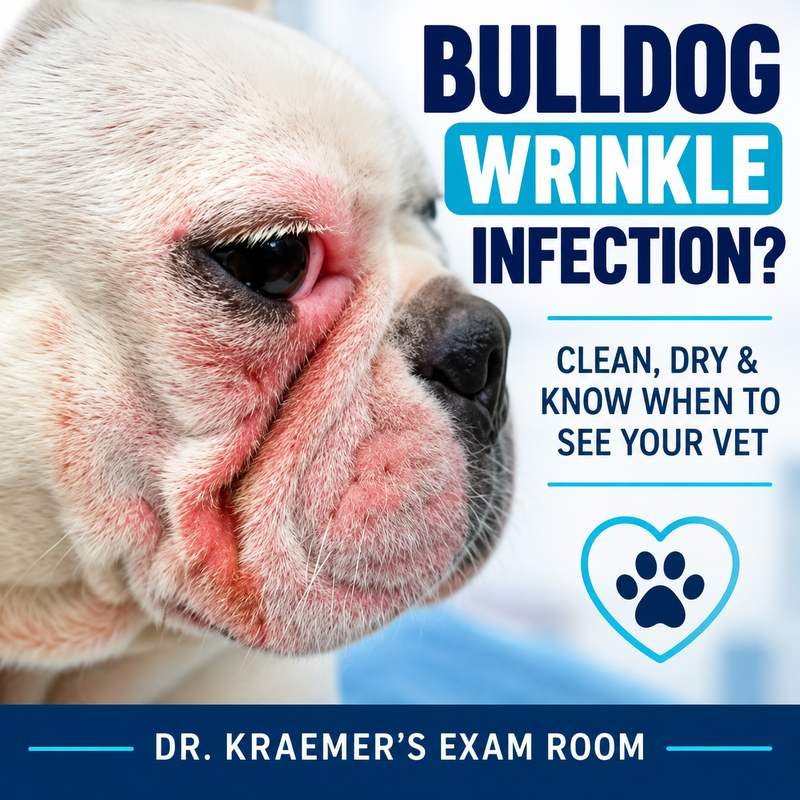
Tear stains are a frequent concern among bulldog and French bulldog owners, particularly those with light-colored coats. Many mistakenly blame the unsightly, wet, reddish stains on the elusive “RED YEAST,” influenced by advice from “Dr. Yahoo” and “Dr. Google.”
However, this is a common misconception!
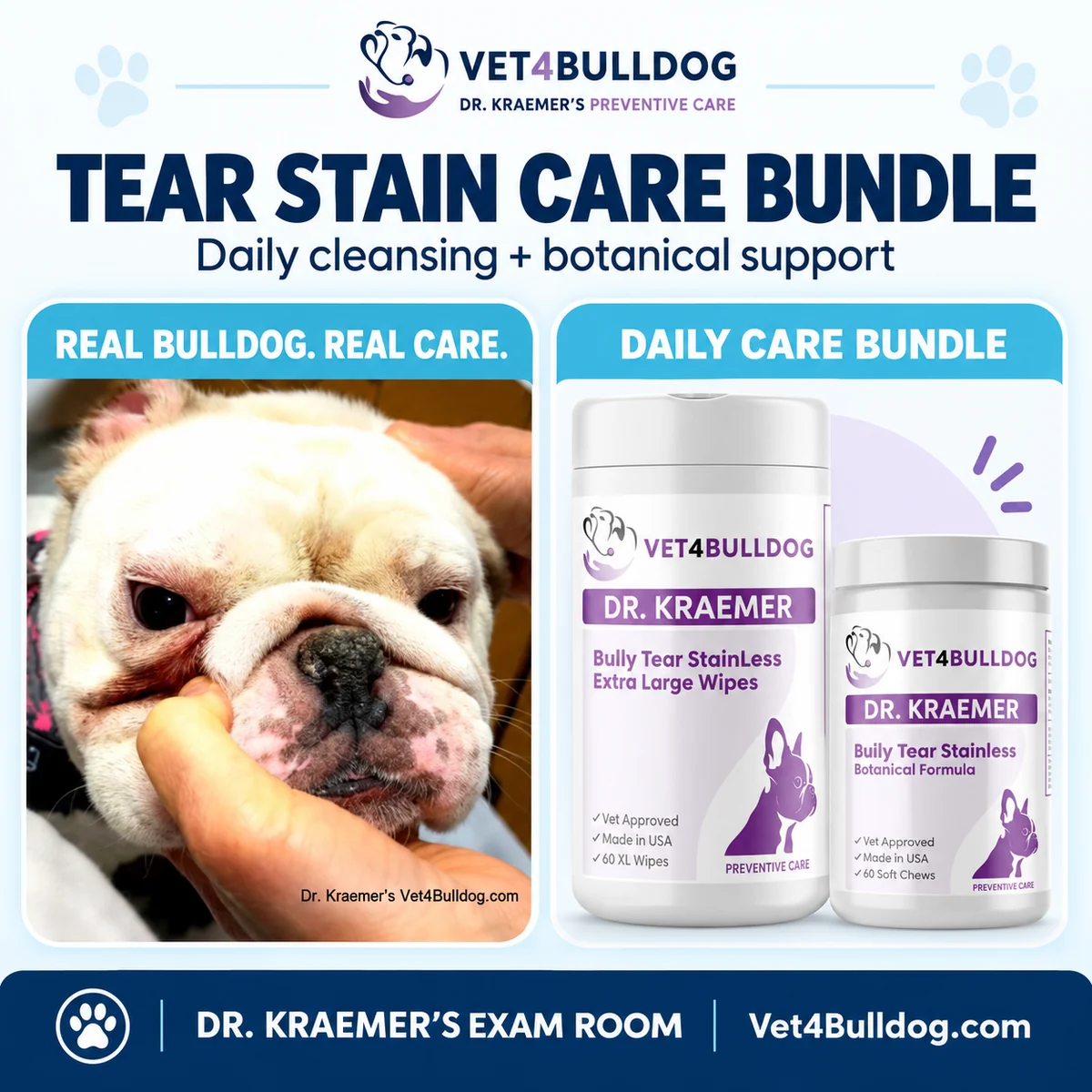
Bulldog Tear Stains 5 Must Know
- Tear stains common to the fur of the face and leg are not due to a mysterious “red yeast.
- In contrast to skin fold dermatitis, tear stains are not due to an infection
- Tear stains are due to a red blood cell by-product found in tears and saliva that turns dark when exposed to light
- Treatment includes supplements and an antiseptic therapeutic bully wipe
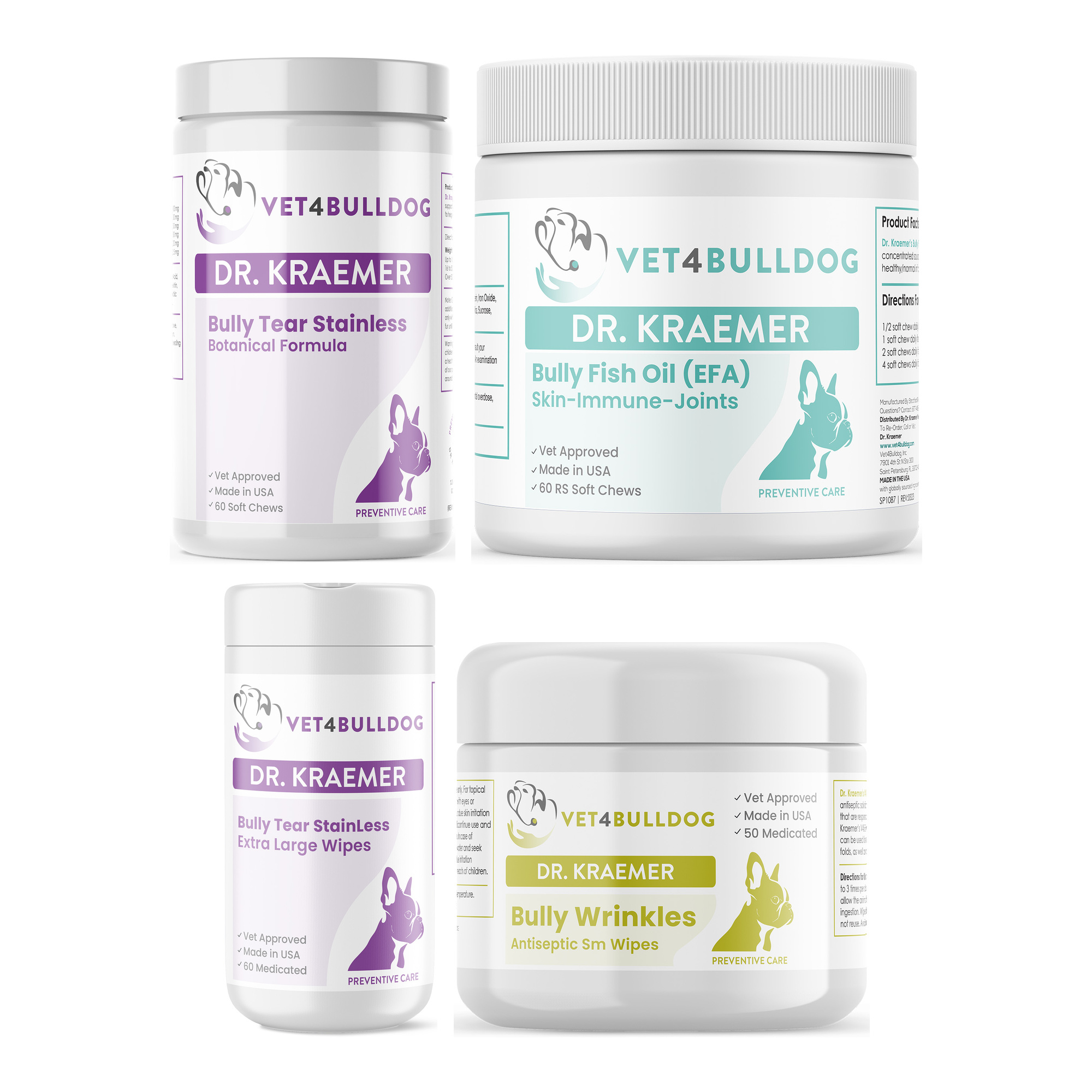
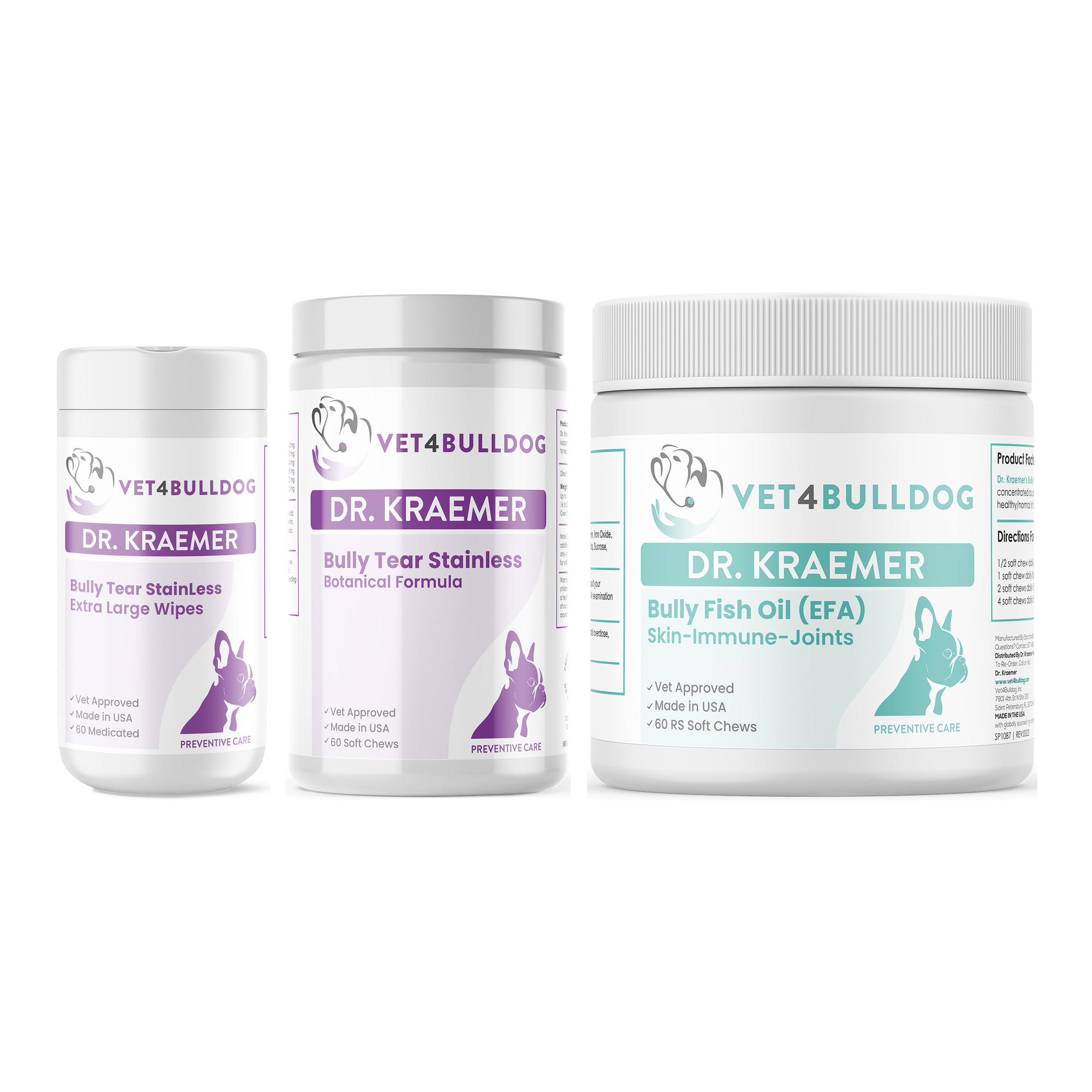
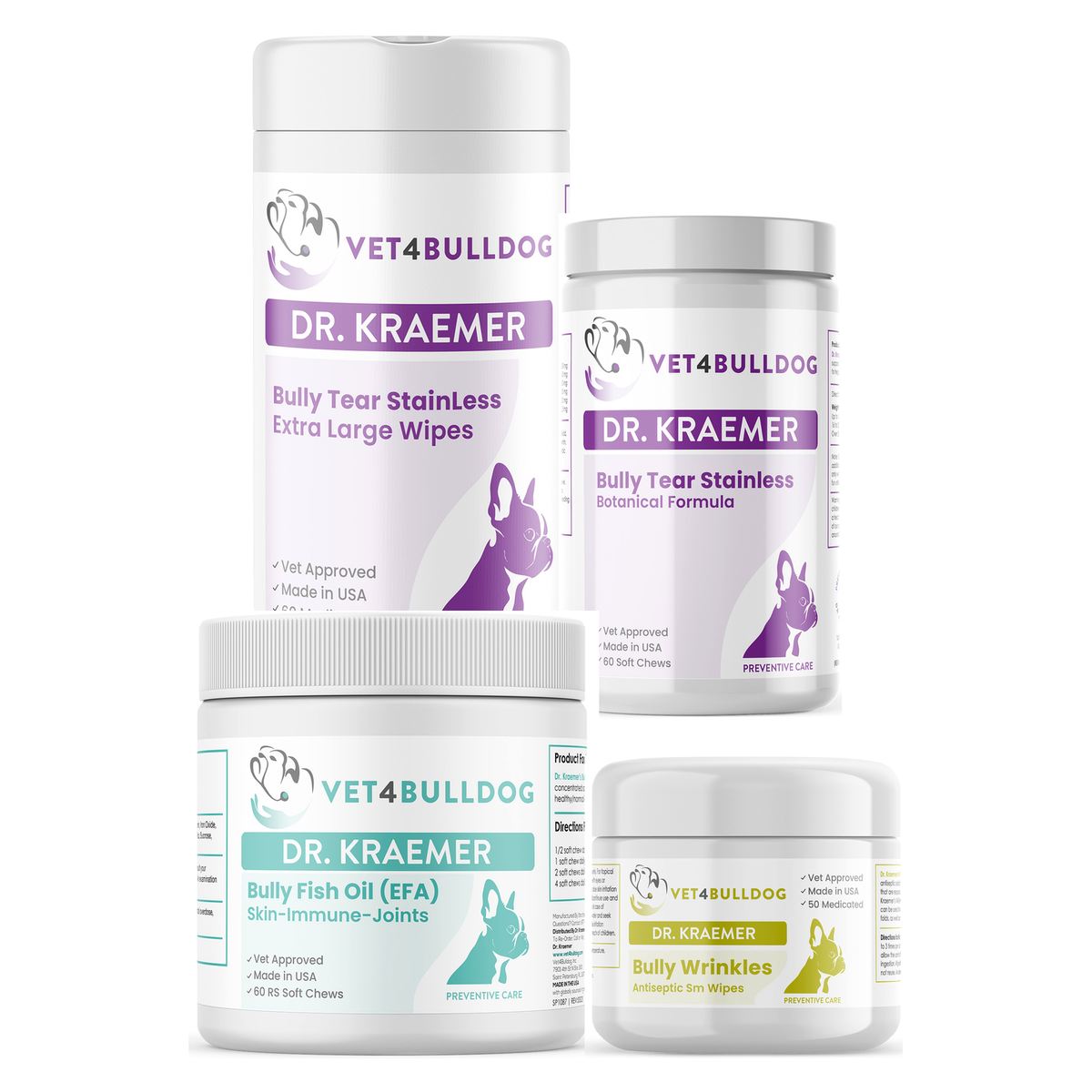
- Prevention includes Dr. Kraemer’s Tear StainLess Bundle
Welcome to Our “Prevention Over RX” Bulldog Community
What Causes Tear Stains in Bulldogs and French Bulldogs?
The true origin of those mysterious tearstains is a red blood cell (RBC) by-product called “porphyrin.”
The typical lifespan of your bulldog’s red blood cells is about 4 months. When these red blood cells expire, their remnants, including porphyrin, are processed through the liver, biliary system, gastrointestinal tract, and urine.
Eventually, these byproducts are expelled through your bulldog’s saliva and tears.
How Does Porphyrin Tear Stain Your Bulldog Fur and Face?
Porphyrin, a byproduct of your bulldog red blood cell, is extracted in two common places. Porphyrin is excreted in your bully’s tears and saliva.

Bulldog tears porphyrin light activation
Porphyrin is a light-sensitive iron molecule that undergoes oxidation, turning reddish when exposed to sunlight. Hence, in cases like:
- Bulldog Allergies
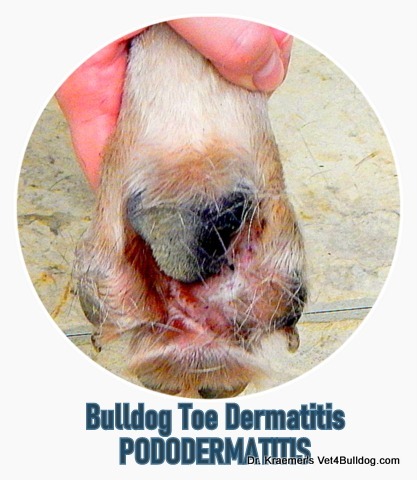
- Bulldog pododermatitis
- Bulldog lick granuloma
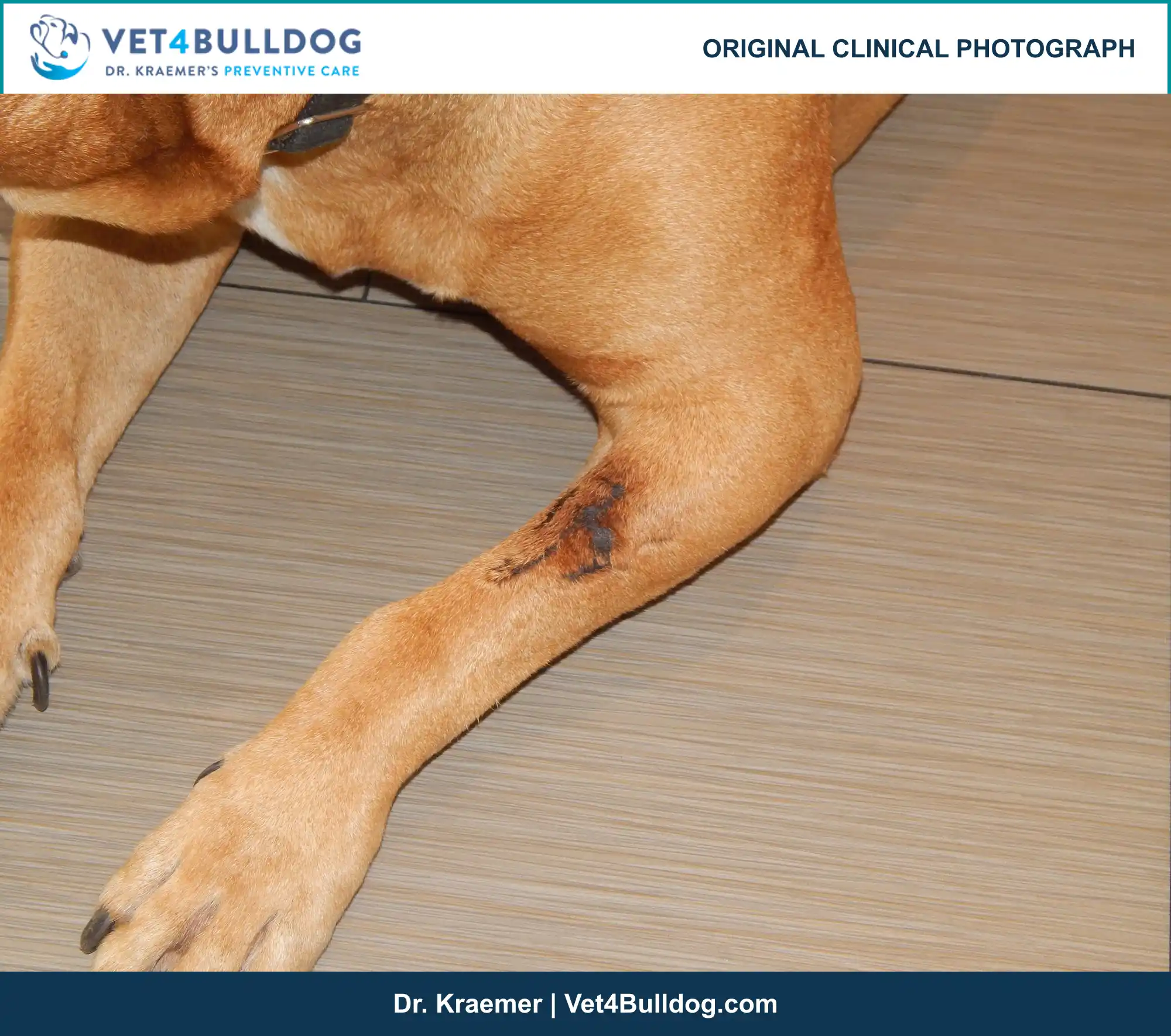
The areas that your bulldog licks, such as the paws or legs, may frequently exhibit a reddish and dark appearance upon exposure to sunlight.

Why Does Porphyrin Tear Stain Your Bulldog Fur and Face?
It stains your bulldog’s fur and face due to two common reasons.
- EXCESSIVE TEARING & LICKING: The activated porphyrin in your bully tears and saliva turns the fur area a reddish color.
- DEAR DRAINAGE PROBLEMS: There is insufficient drainage
Excessive tears are the most common reason for tear stains
It is not yeast, and that matters
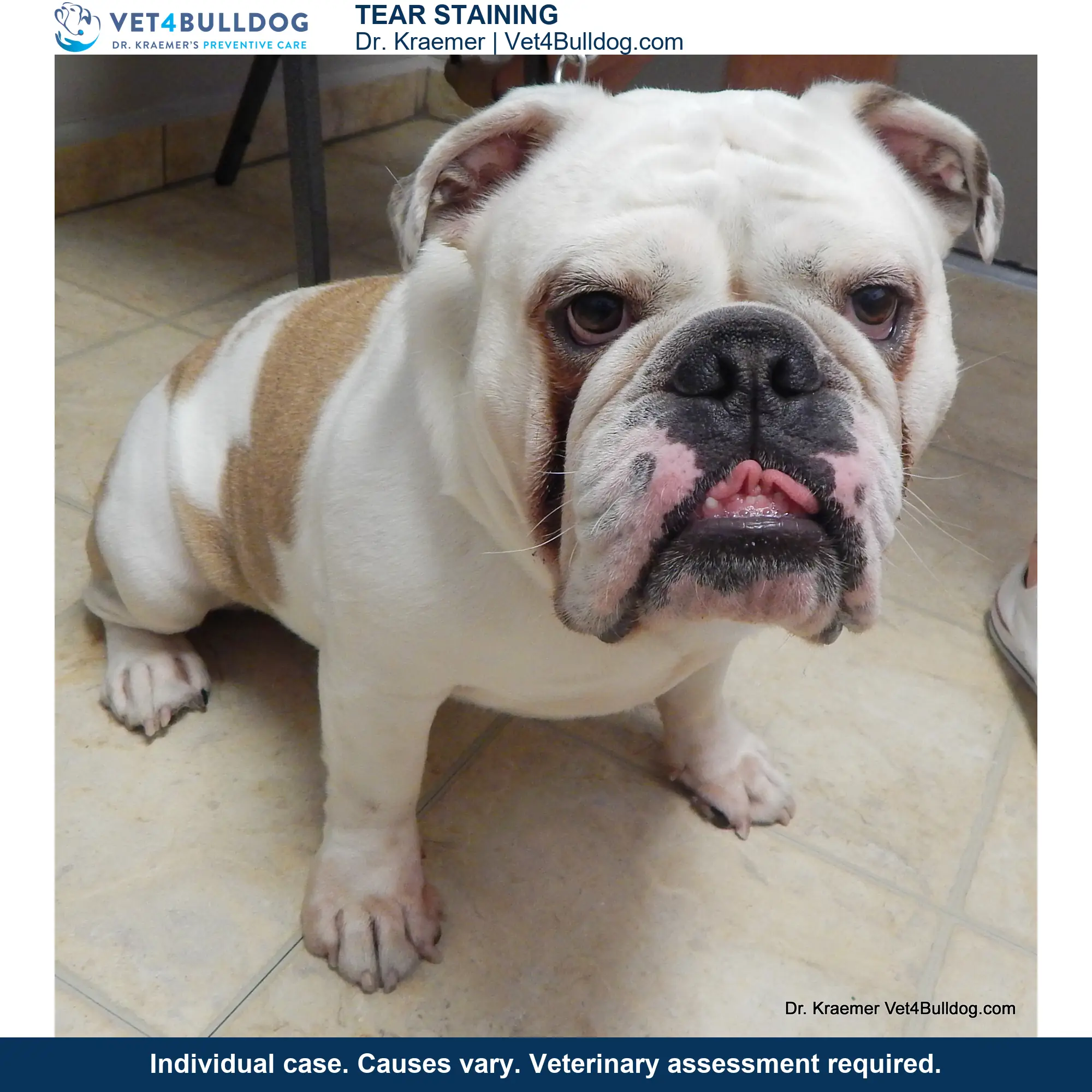
I will take the myth first because it changes what you buy. The reddish brown track down a Bulldog’s face is not an infection and it is not red yeast. It is porphyrin, a byproduct of red blood cells breaking down, and it leaves in the tears and the saliva and then darkens in daylight. That is also why the paws of a dog who licks go the same color. Products sold to kill a yeast that is not there are aimed at the wrong target, which is why owners get through several of them and conclude nothing works.
The useful question is not how to bleach the fur, it is why the eyes are watering that much. In this breed the answers are mostly mechanical rather than medical: eyelashes growing where they rub the surface of the eye, an eyelid rolled inward, a shallow socket that leaves the eye more exposed than it should be, or tear ducts squashed by the shape of the face so the tears spill over the lid instead of draining away. Some of those are a cosmetic nuisance. Some are a dog in genuine discomfort with an eye that is being rubbed every time he blinks. A Bulldog who squints, shies from light or paws at his face needs his eyes examined, not a wipe.
One last thing, and it is the part of this page I would most want an owner to read. A good number of over the counter tear stain products contain tylosin, an antibiotic, often without saying so plainly on the front of the pack. That means giving a healthy dog a daily antibiotic for months for an appearance problem, which is how resistant bacteria get made. Check the ingredients on anything you buy for this, including ours, and if a product clears stains impressively fast, that is usually the reason.
1. Tear Stains in Bulldogs Due to Tears Overproduction
The most common reasons for tear overproduction in bulldogs and French bulldogs are:
A. tear stain due to abnormal eyelashes
Bulldog eyelash problems like
- distichiasis
- trichiasis
- ectopic cilia
all of which will irritate and injure the cornea can tear up the eyes.

B. tear stain due to abnormal eyelid
Bulldog eyelid problems like entropion are an inner rotation of the eyelids that will lead to tearing.
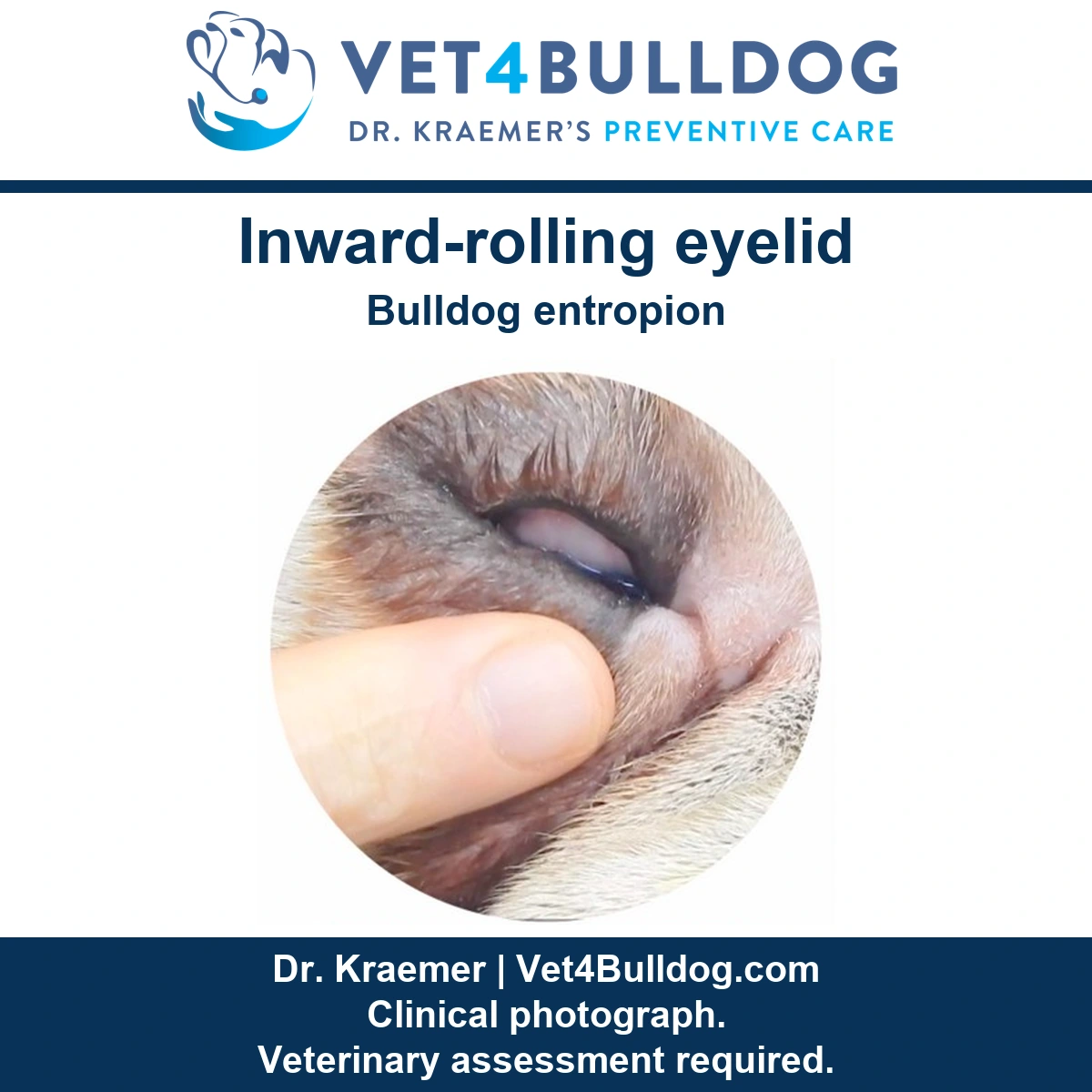
C. Bulldog tear stain due to cornea ulcers
Bulldog corneal ulcers are painful, irritating injuries to your bulldog’s cornea that lead to excessive tears.
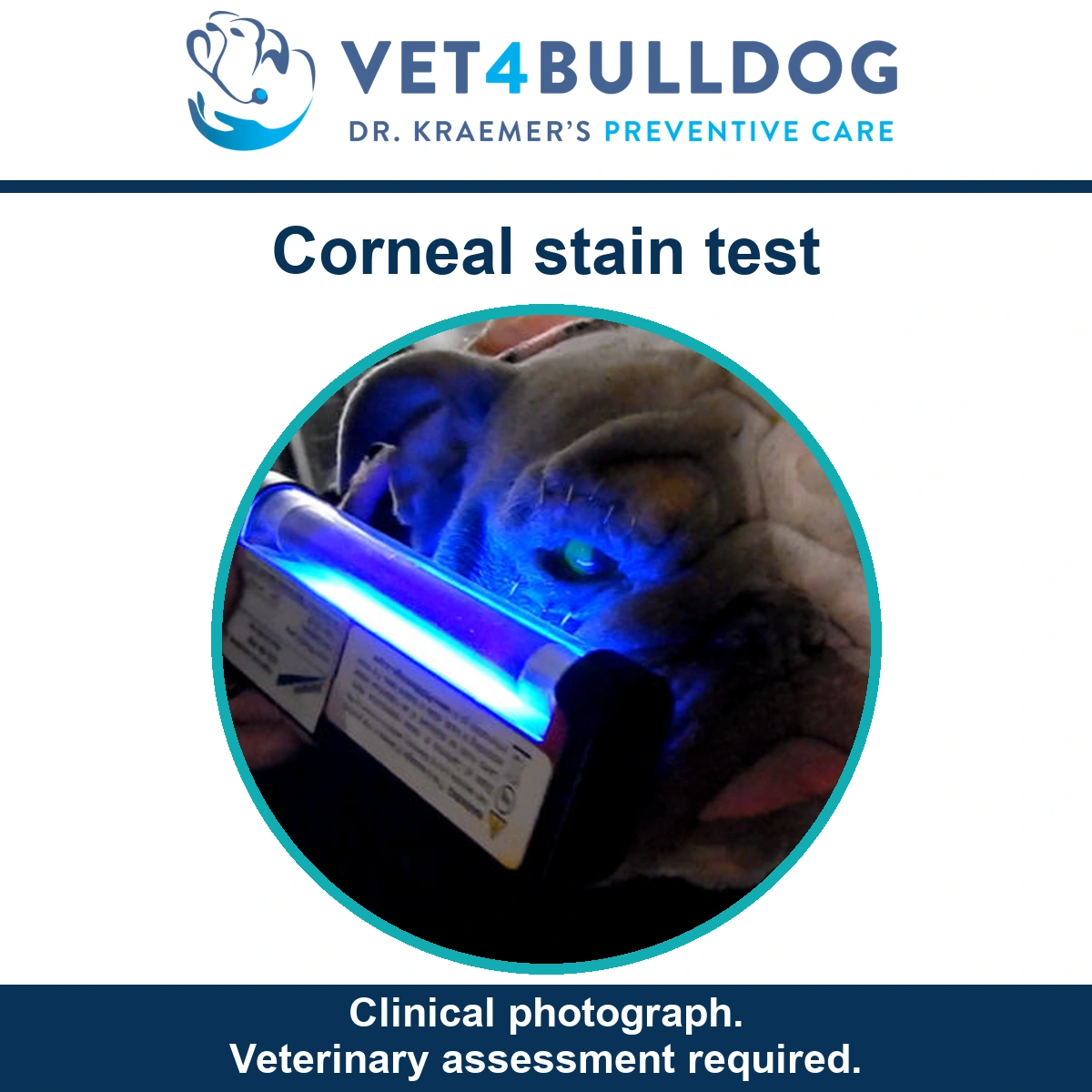
D. tear stain due to eyeball abnormalities
Bulldog exophthalmos which is a protrusion of the eyeball, is common in brachycephalic breeds and causes excessive tearing
E. tear stain due to Bulldog allergies
Bulldog allergies, such as bulldog atopic itch dermatitis and bulldog food allergy, lead to licking and rubbing, causing saliva stains as well as excessive tearing.
2. Bulldog Tear Stains Due to Drainage Problems:
The second cause of excessive tears in bulldogs is inadequate drainage, often due to occluded tear ducts resulting from the breed’s compressed facial bones.
Tear Stains in Bulldogs and French Bulldogs Symptoms
Common clinical presentations for those conditions are:
- SHUT EYE LIDS: Difficulty opening eyes
- SQUINTING: Squinting and shying away from direct light
- RUBBING: Scratching and rubbing the face and eyes
- DISCHARGE: Discharge and gunk
- REDNESS: Red, puffed, irritated eyes (Conjunctivitis, Scleritis)
- CLOUDINESS: Cloudiness, scaring, and the opaqueness of the cornea
For additional information about those common bulldog conditions, please read Dr. Kraemer’s “Eyes & Eye Lids” pages.
Tear Stains in Bulldogs “Red Yeast”
The “Red Yeast” is an urban myth.
The red-colored tear stains result from porphyrin, a by-product of red blood cells (RBC) excreted through your bulldog’s tears and saliva. The misconception may arise from a mix-up with the prevalent yeast organism affecting bulldog skin and ears, which is Malassezia (a Pityrosporum, NOT Porphyrin)
What is Bulldog red yeast?
Yeasty bully (Malassezia) stains and discharge typically exhibit a dark brownish color and may have an associated odor.
“Red yeast” (Malassezia) is commonly found in damp, moist areas like inside your bulldog’s ear canal, skin, and skin folds, leading to conditions such as
- Bully Yeasty Otitis
- Bully Yeasty Moist Skin Fold Dermatitis
- Bully Yeasty Dermatitis.
The diagnosis of Bully Malassezia can be confirmed through culture or cytology, which involves taking samples from your bulldog’s skin, skin folds, or ear canal using a swab or skin impression.

How to Prevent Treat Red Yeast in Bulldogs?
Skin stains and discoloration due to bulldog yeast infection are best prevented and treated by topical therapeutics
Yeasty bully topical therapeutics
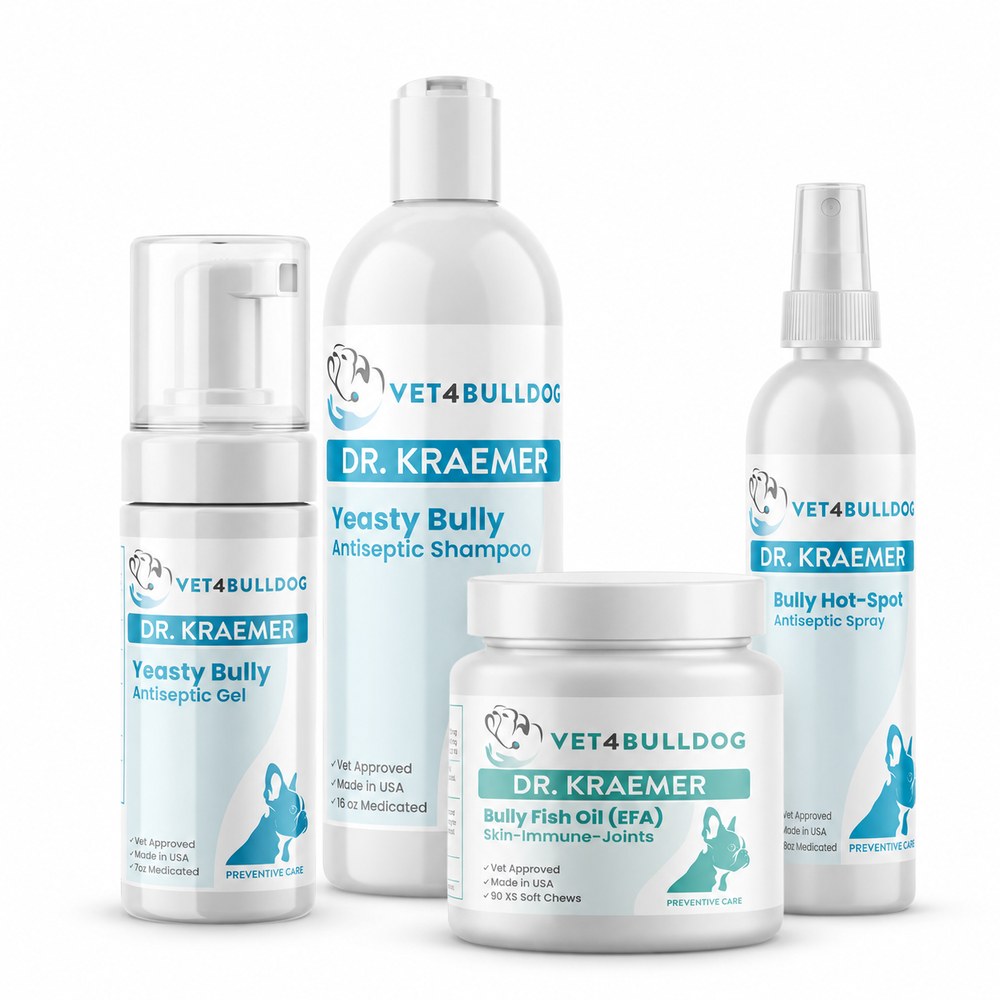
Dr. Kraemer’s provides a wide range of topical v4b bully anti-yeast products:
- V4B Bully Skin Fold Antiseptic Wipes
- Bully Yeasty Antiseptic Shampoo
- Waterless Rinse-Free Lotions
- Bully Yeasty Antiseptic Ear Rinse
Read the label before you buy a stain remover
This is the one subject on this site where I get genuinely uncomfortable with what is for sale, and I want to be specific about why rather than just disapproving.
Several popular tear stain products are powders that you sprinkle on food every day. Many of them contain tylosin, an antibiotic. The marketing calls them supplements, and the ingredient is often listed in a way that an owner would not recognize. The stain fades, the reviews are glowing, and nobody involved thinks of it as giving a dog antibiotics.
But that is what it is. A healthy dog, on an antibiotic, every day, for months, to change the color of some fur. Resistance is not an abstract worry to me. I have treated the dogs at the other end of it, the ones whose skin or bladder infection no longer answers to the usual drugs, and the list of things that still work is not long.
It is the equivalent of taking a course of antibiotics every day because you do not like the look of your teeth.
So before you buy anything for this, read the ingredients. If you see tylosin, or if the label is vague about what is in it, put it down. If a product has already been started, do not just stop and say nothing, mention it at the next appointment so it is on the record.
Then do the boring things that have no downside: keep the face dry, sort out the bowl and the water, and have the eyes themselves examined once so you know whether there is a fixable reason the tears are running in the first place.
Bulldog and French Bulldog Tear Stain Prevention
Listed below is a Dr. Kremer summary of 6 steps to prevent and remove tear stains.
1. Bulldog tear stain grooming
Proper Grooming of the area under the eyes keeps the hair short and the skin dry

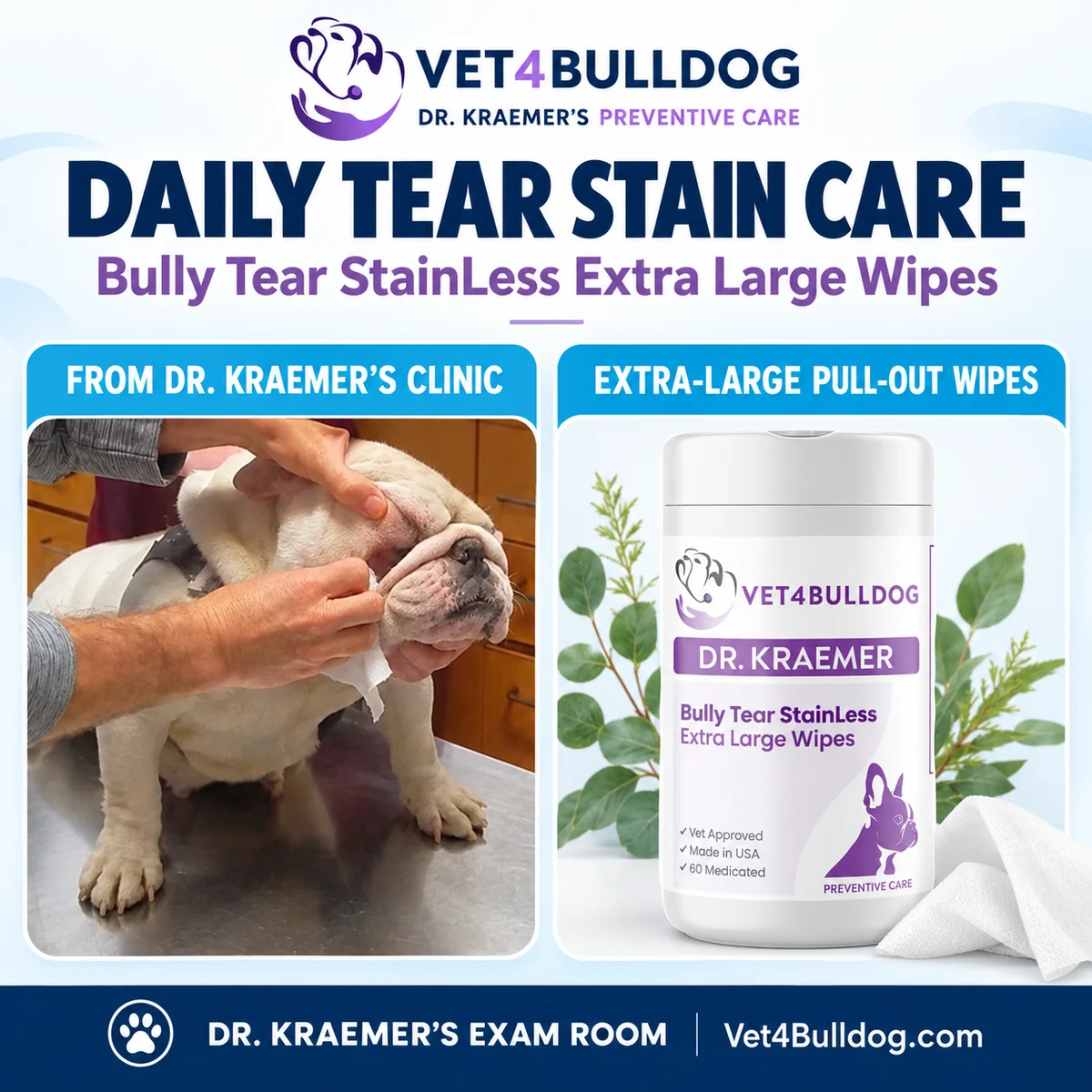
2. Bulldog tear stains bully wipes
Bulldog tear stains can be reduced by wiping the wet surface often with an appropriate wipe, like
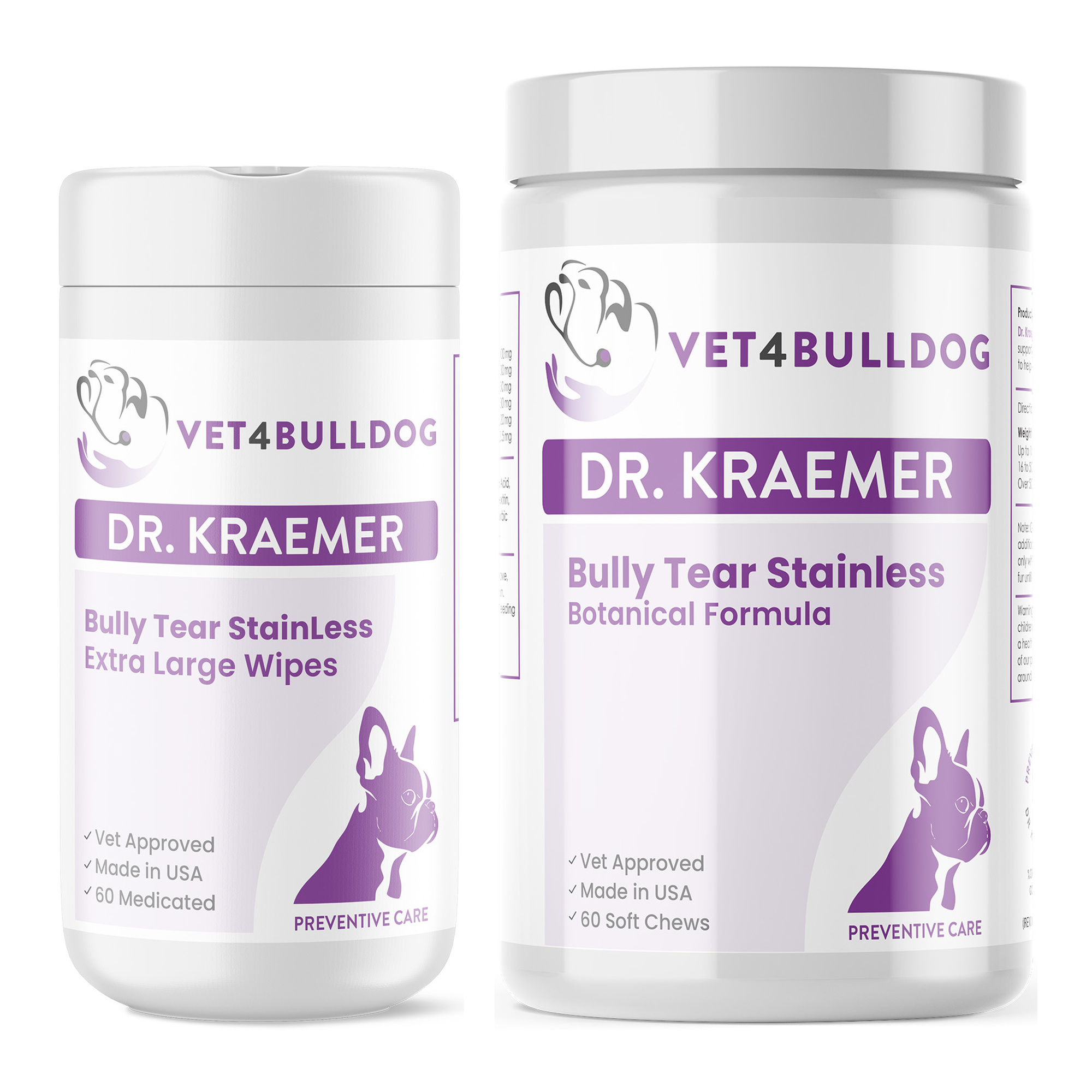
- Dr. Kraemer’s V4B Bully Tear StainLess XL Wipes.
Skin Folds and Tear Stains wiping is an important therapeutic preventive

3. Non-tylosin tear stain removal supplement safety
In contrast to other OTC products that contain unauthorized, potentially harmful antibiotics,
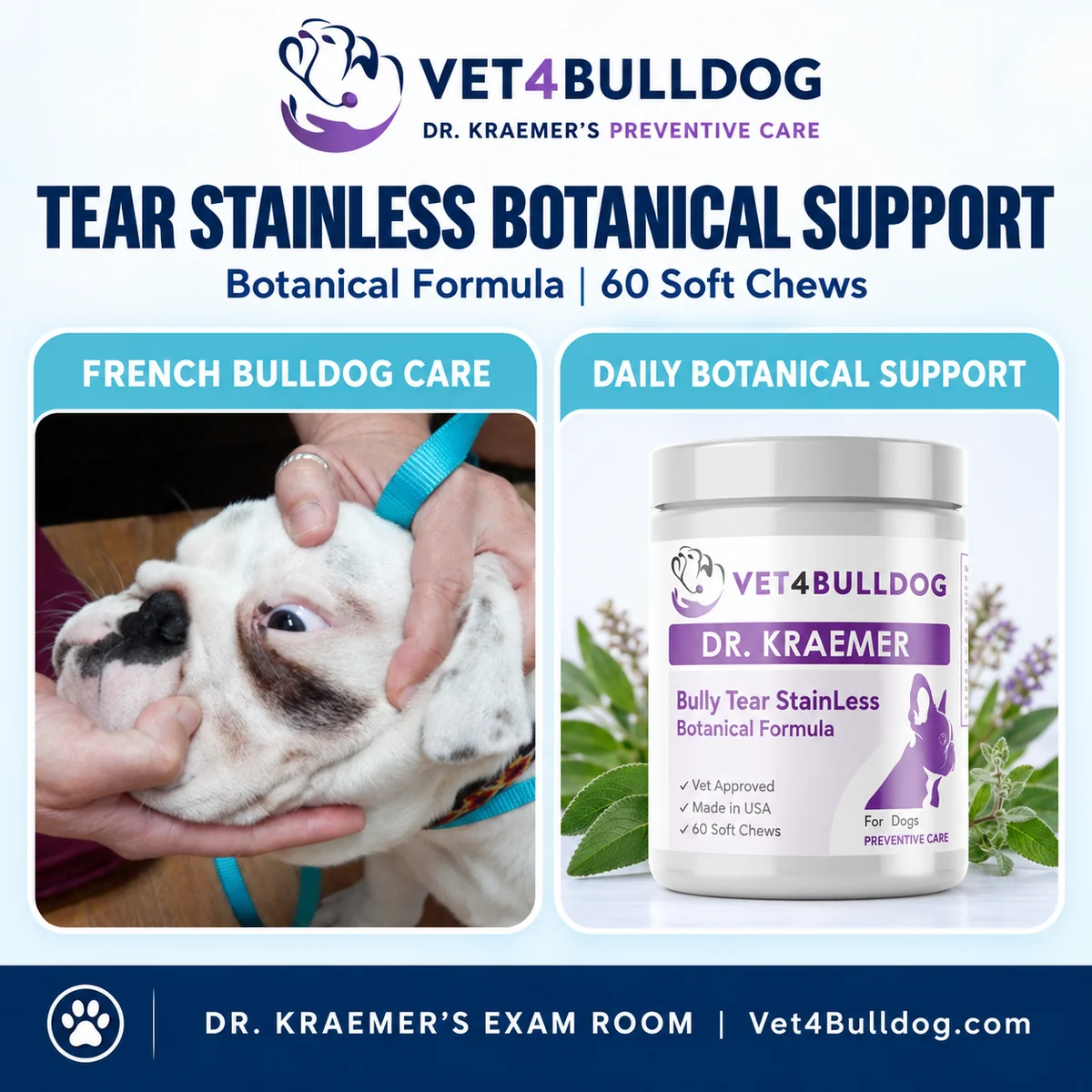
- Dr. Kraemer’s V4B Bully Tear StainLess Chews are tylosin-free (ANTIBIOTICS FREE).
The Bully Tear StainLess contains natural ingredients and is an easy-to-administer chew
4. Bulldog tear stain water & food bowls
Stainless steel feeding and water bowls are less likely to crack and easier to clean, thus less likely to harbor and colonize porphyrin-stimulating bacteria.
5. Skin fold moist yeast dermatitis
Maintain and dry your bulldog and French bulldog skin folds to help eliminate bacteria and Malassezia yeast microorganisms (skin fold moist dermatitis).
Dr. Kraemer’s V4B Bully Antiseptic Skin Fold XL wipes are ideal for the daily maintenance of those folds.
6. Tear stain stress & nutrition
Reducing stress, boosting the immune system, and feeding a balanced nutrition diet could help prevent and/or eliminate tear stains.
The honest order of importance here is dull. Keep the hair under the eye short, keep the skin dry, and wipe the wet area often, because porphyrin only stains where it is left sitting on damp fur in daylight. The Tear StainLess XL wipes exist to make that a ten second job rather than a chore, and these are topicals, so they sit alongside whatever your veterinarian advises rather than in place of it.
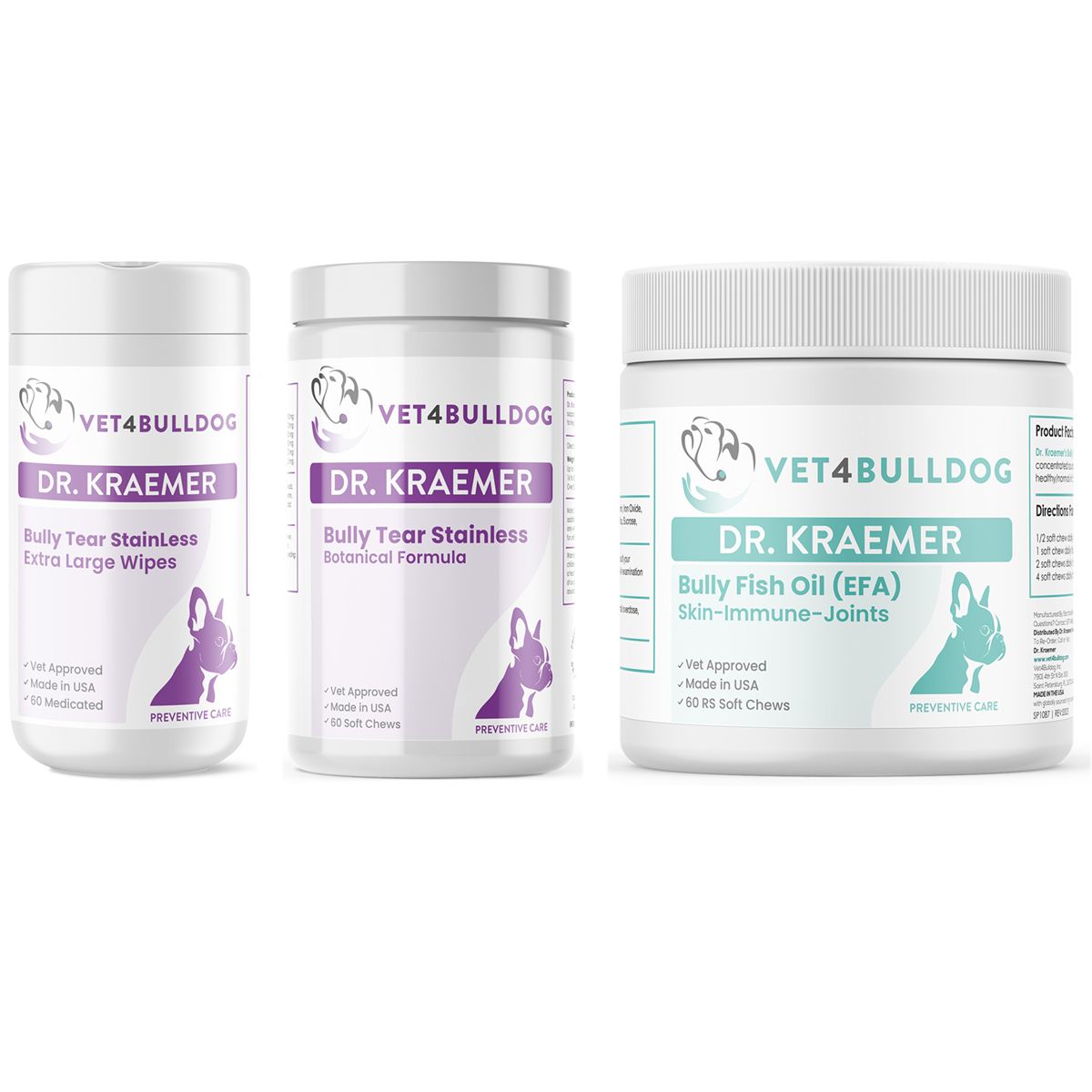
On the supplement side, the thing worth knowing is what is not in it. Our Tear StainLess chews are tylosin free, meaning no antibiotic, which is a deliberate choice rather than a selling point I enjoy making. They may help over a good few weeks, and they will not act in a week, because anything that does is usually working by a route I would not want used on a healthy dog for a cosmetic result. The Basic bundle suits a mild case and the Ultimate is built for a Bulldog whose folds and face need the full routine. None of it replaces having a watering eye examined.
To be clear: supplements or topicals are not substitutes for prescribed treatment. If your dog is unwell, is being treated for a condition, or is already on medication, review any supplement or topical with your veterinarian so it fits the plan you are already following. This page is educational and is not a diagnosis or a treatment plan for your own dog.
Tear Stains in Bulldogs and French Bulldogs Warnings
Below are tear stains selected warning courtesy of Dr. Kraemer
#1. Tear stain tylosin antibiotics warning
Antibiotics like Tylosin have sometimes been shown to help reduce porphyrin levels in tears. This suggests that bacteria may play a role in the condition, with possible sources of bacterial contamination including contact with unclean plastic water bowls or face scratching due to allergies.
#2 Bulldog tear stains OTC warning
Many over-the-counter tear stain removal products, such as
- “Angel Dust
- “Tear Stain STy”
- “Pet Spark
often contain antibiotics like Tylosin. This practice is considered borderline illegal, unethical, and potentially harmful to your bulldog. It poses risks of adverse reactions to the drug and contributes to the endangerment and propagation of resistance to essential antibiotics, all for cosmetic purposes and vanity.
#3. Tear stains antibiotics warning
I strongly advise against using prescription antibiotics for cosmetic concerns, as we must always adhere to the “Do No Harm” principle. Antibiotics, whether for treating medical conditions or addressing tear stains in bulldogs, should only be prescribed by a veterinarian and used under their supervision.
Everyone says it is red yeast. Is it?
Will the fur that is already stained ever come clean?
My friend’s Bulldog has none of this. Why does mine?
Is it actually harmful, or just ugly?
I saw a product that works fast. Is that a good sign?
Does changing his water help? I have read about filtered and distilled.
He squints and paws at that eye. Is that part of the same thing?
More Help from Dr. Kraemer
A wet face usually has a reason. These pages cover the ones we look for in this breed:
- Dry eye and KCS in Bulldogs
- Entropion, when the eyelid rolls inward
- Eyelash disorders and corneal ulcers
- Yeast infection, which is a different thing from the stain
- Skin fold dermatitis under the eyes and nose
- Are vets overprescribing antibiotics?
References
- Merck Veterinary Manual. Nasolacrimal and Lacrimal Apparatus in Animals
- Merck Veterinary Manual. The Conjunctiva in Animals
- Merck Veterinary Manual. Eyelids in Animals
- Merck Veterinary Manual. Antibacterials for Integumentary Disease in Animals
Trusted by Vets ~ Recommended by Owners ~ Approved by Bulldogs