


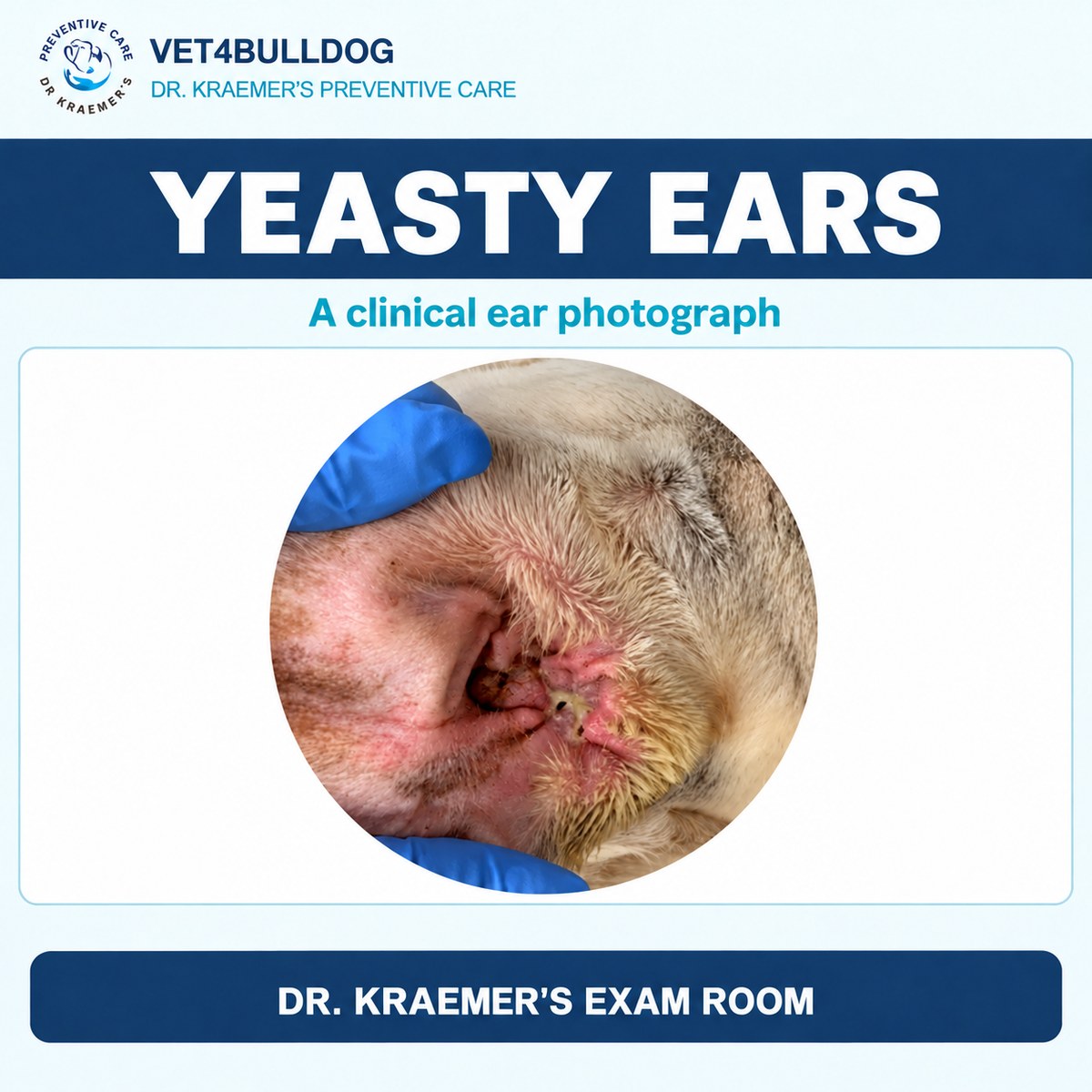
The smell is the most useful detail in that message. Owners often mention it almost apologetically, as though it were beside the point, and it is frequently the earliest sign that anything is wrong at all.
Two things matter here. The first is getting it confirmed rather than assumed. Yeast and bacterial ear infections look much the same from the outside and are not treated the same way, and a swab under the microscope settles the question in minutes. Treating the wrong organism is the commonest reason an ear seems to improve and then does not.
The second is that Luna is a year old. A yeasty ear in a young French Bulldog is usually sitting on top of something else, most often allergy, sometimes the shape of the ear canal itself. Ask for that question to be asked at the same appointment, because otherwise you are signed up to managing ears for years instead of managing the cause.
Meanwhile, keep the ear clean and dry with the routine your veterinarian approves. And do not pour anything down an ear that has not been looked into first.
Yeast Infection in Bulldogs and French Bulldogs Introduction:
Yeast organisms that commonly affect bulldogs’ skin, skin folds, and ears are primarily of the species Malassezia pachydermatis.
This yeast is a normal part of the skin flora but can overgrow and cause skin infections when conditions allow, such as in cases of allergies, skin folds, or compromised skin barriers
Yeast infections in bulldogs and French bulldogs are common to moist damp areas:
- SKIN
- EARS
- ARMPITS
- GROIN
- SKIN WRINKLES
- facial skin folds
- nasal wrinkles
- tail pocket
- toes and interdigital
- vaginal folds and hood
Among the bulldog owners’ community, this skin and ear condition has been called:
- “Bulldog Yeast Dermatitis”
- “Bulldog Yeast Otitis”
- “Bulldog Yeast Ear Infection”
- “Bulldog Yeast Skin Fold Dermatitis”
But most commonly it is known as “YEASTY BULLY”!
Yeasty Bulldog Infection 5 MUST KNOW
- Yeast organisms are common on the normal bulldog’s skin and toes.
- Yeasty infections are usually secondary to allergies and otitis.
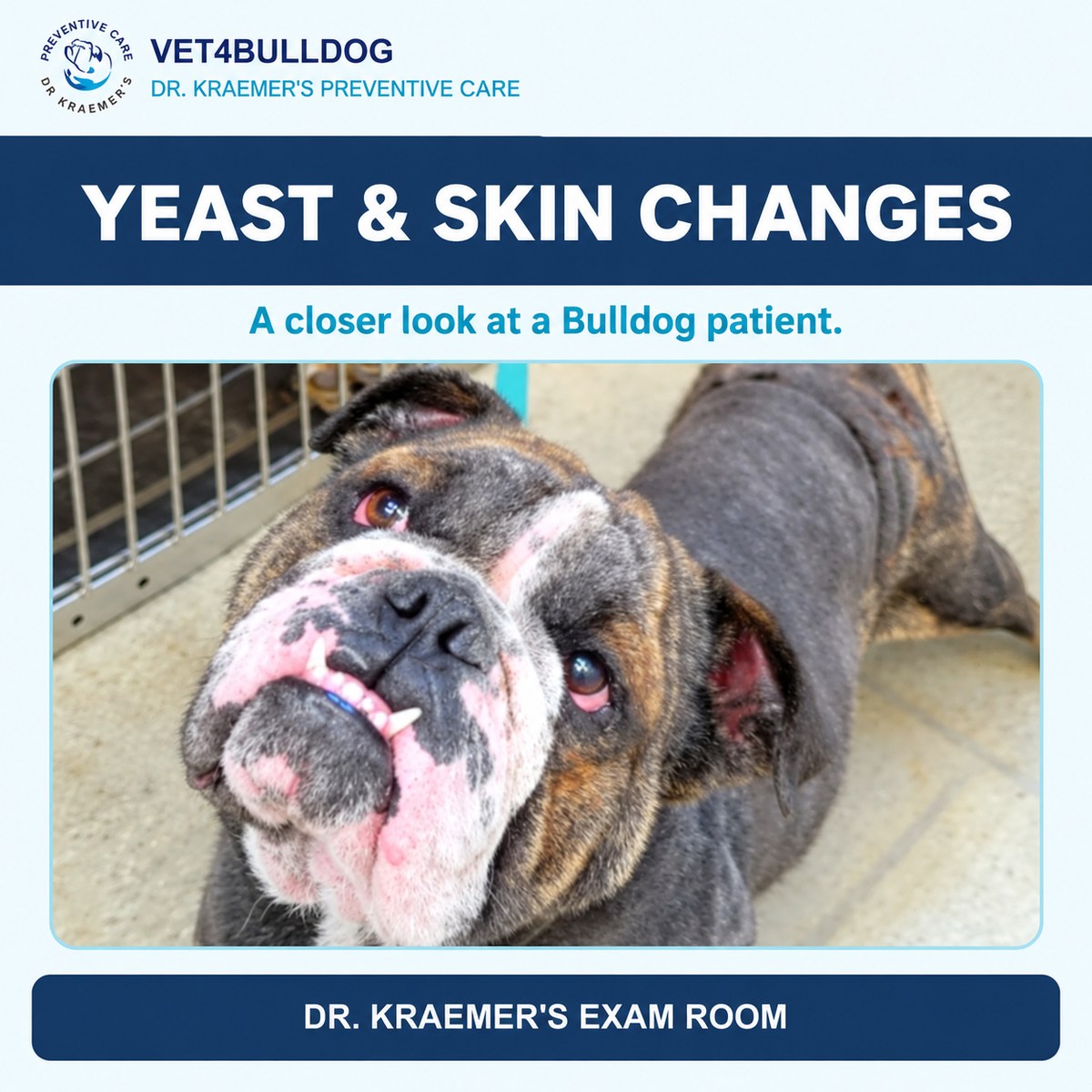
- Discoloration, redness, smell, crustiness, itching, and hair loss of the skin and ears
- Treatment includes ear bully therapeutics, rinses, shampoos, sprays, gels, and wipes.
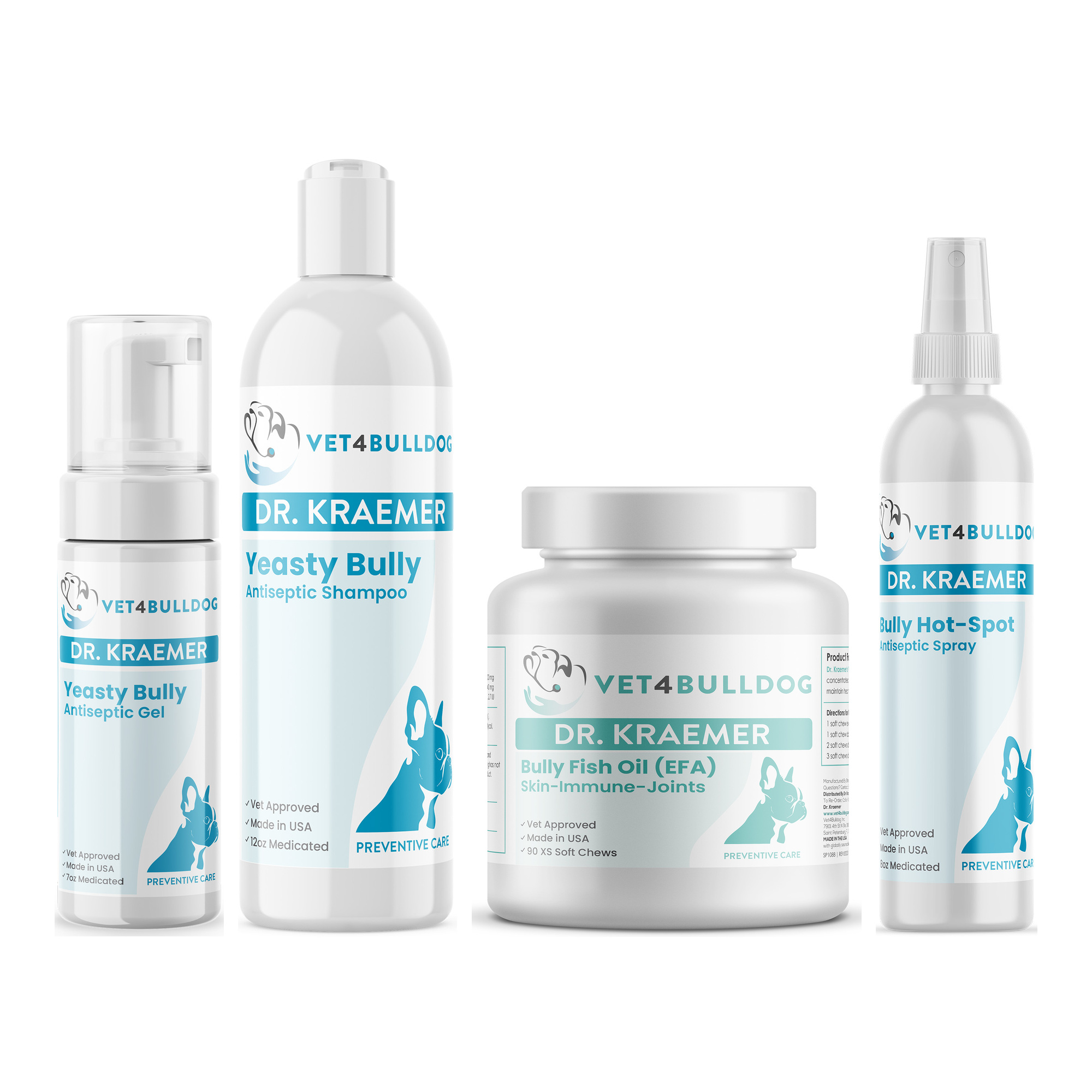
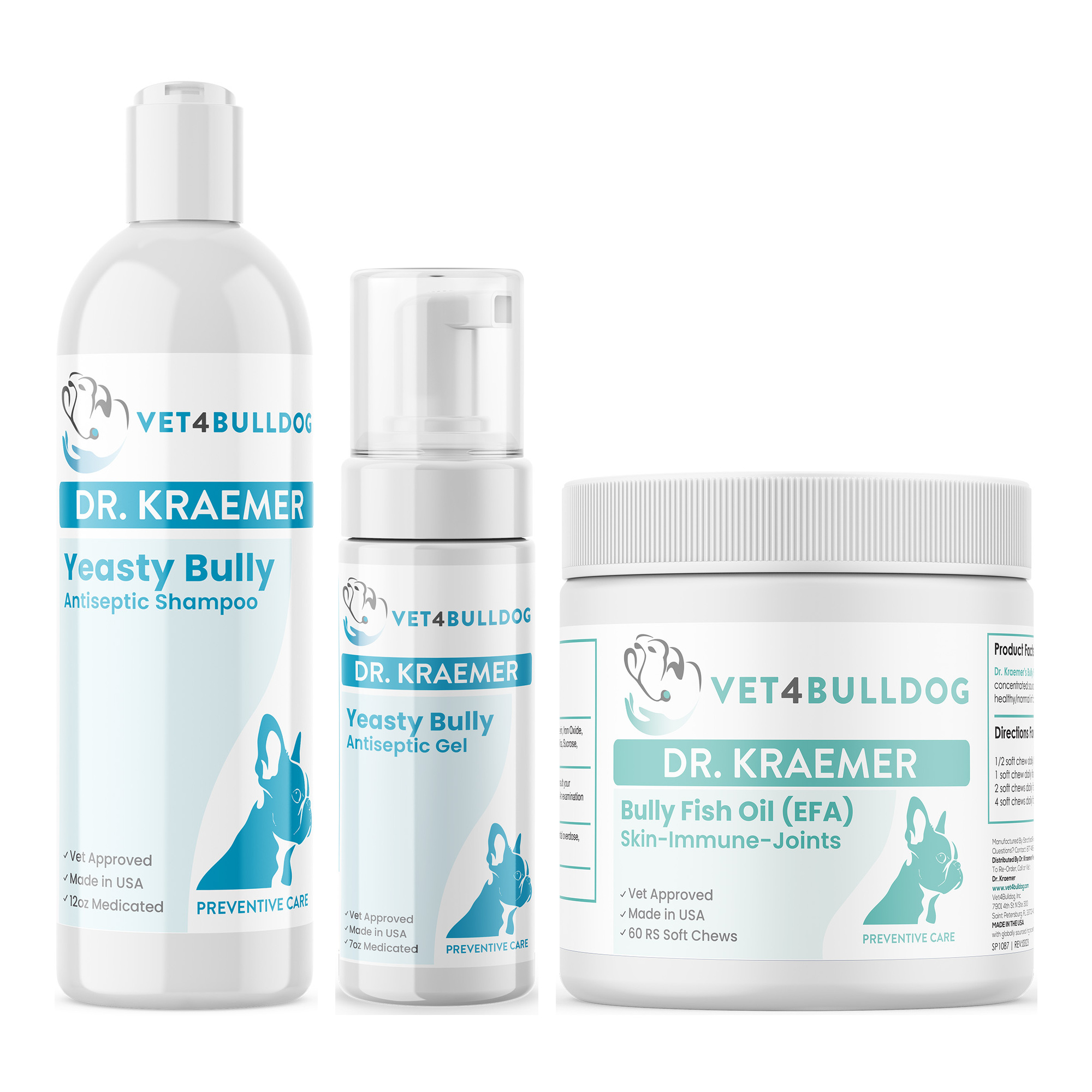
- Prevention includes Dr. Kraemer’s Yeasty Bully Ear & Yeasty Bully Skin Care Bundles.
Members of this bulldog community prefer prevention over RX
What Causes Yeast Infection in Bulldogs and French Bulldogs?
The medical name for the yeast most commonly involved is Malassezia pachydermatis.
Here’s the surprising part: Malassezia pachydermatis normally lives on your bulldog’s skin and inside the ear canals. It isn’t an “invader” or something your dog catches from being dirty.
This yeast settles on a bulldog or French bulldog’s
- skin
- ears
- and between the toes shortly after birth.
From puppyhood on, it becomes part of the normal skin ecosystem, also known as the natural cutaneous microflora of a happy, healthy bulldog.
Problems only arise when this normally harmless yeast is given the opportunity to overgrow.
What Causes Yeast Overgrowth?
Alteration in your bulldog surface lipids due to:
- DAMPNESS: Increased moisture and humidity
- BACTERIA: Increased bacteria numbers
- SKIN BARRIER: Disruption of your bulldog skin barrier
- IMMUNE SUPPRESSION: incompetent or suppressed immunity
- MICROBIOME: change of skin and ear microbiome
WHAT ARE OPPORTUNISTIC MICROORGANISMS?
Yeasty overgrowth in bulldog ears and skin typically develops when there are pathological changes to the:
- skin barrier
- immune system
- gut microbiome
- or the ear’s epithelial lining.
These disruptions create an environment that allows normally harmless yeast to multiply and cause infection.
In most cases, this yeast overgrowth is secondary to an underlying medical problem. most commonly allergies which alter the skin and ear canal environment and reduce the body’s natural defenses.
Examples of common underlying ear and skin conditions include:
- Bulldog allergy
- Atopic itch dermatitis
- Bulldog food allergy
- Bulldog skin folds moist dermatitis
- Bulldog Demodex
- Bulldog mange
- Hormonal abnormalities like
- Bulldog hypothyroid
- Bulldog Cushing syndrome.
Yeast Infection as well as bulldog staph pyoderma, are usually secondary (opportunistic infection).
How To Diagnose Yeast Infection in Bulldogs and French Bulldogs?
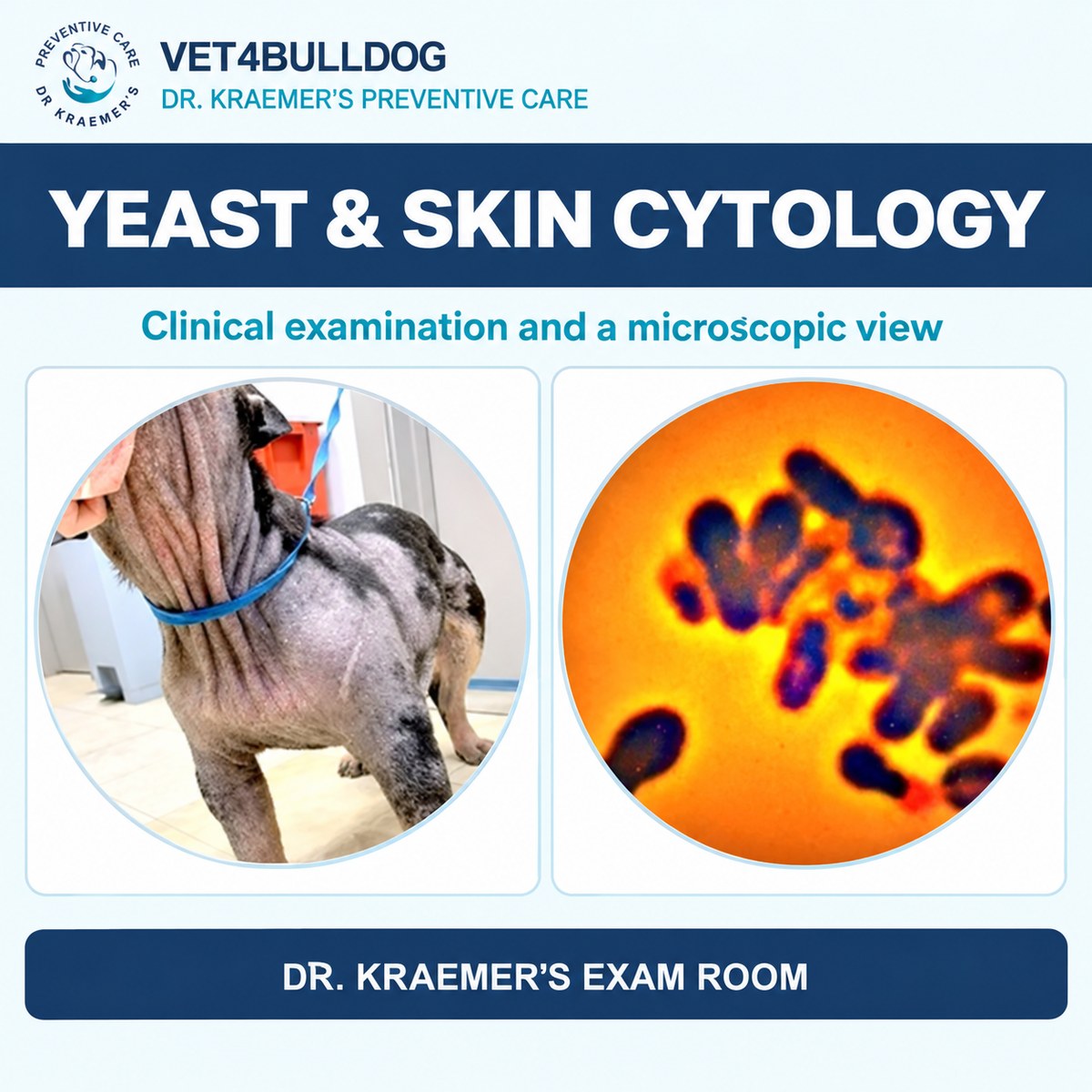
A small number of budding yeast organisms may be seen on a random skin or ear cytology, and this is considered normal.
In healthy bulldogs, yeast is present only in low numbers. In contrast, yeast dermatitis (skin infection) and yeast otitis (ear infection) occur when there is a significant overgrowth of yeast, this represents a pathological state, not a normal one.
Cytology is the diagnostic test used to confirm this.
It typically involves gently pressing a microscope slide onto affected skin, or smearing material collected from a skin fold or the ear canal onto a slide. The sample is then stained and fixed before being examined under high magnification.
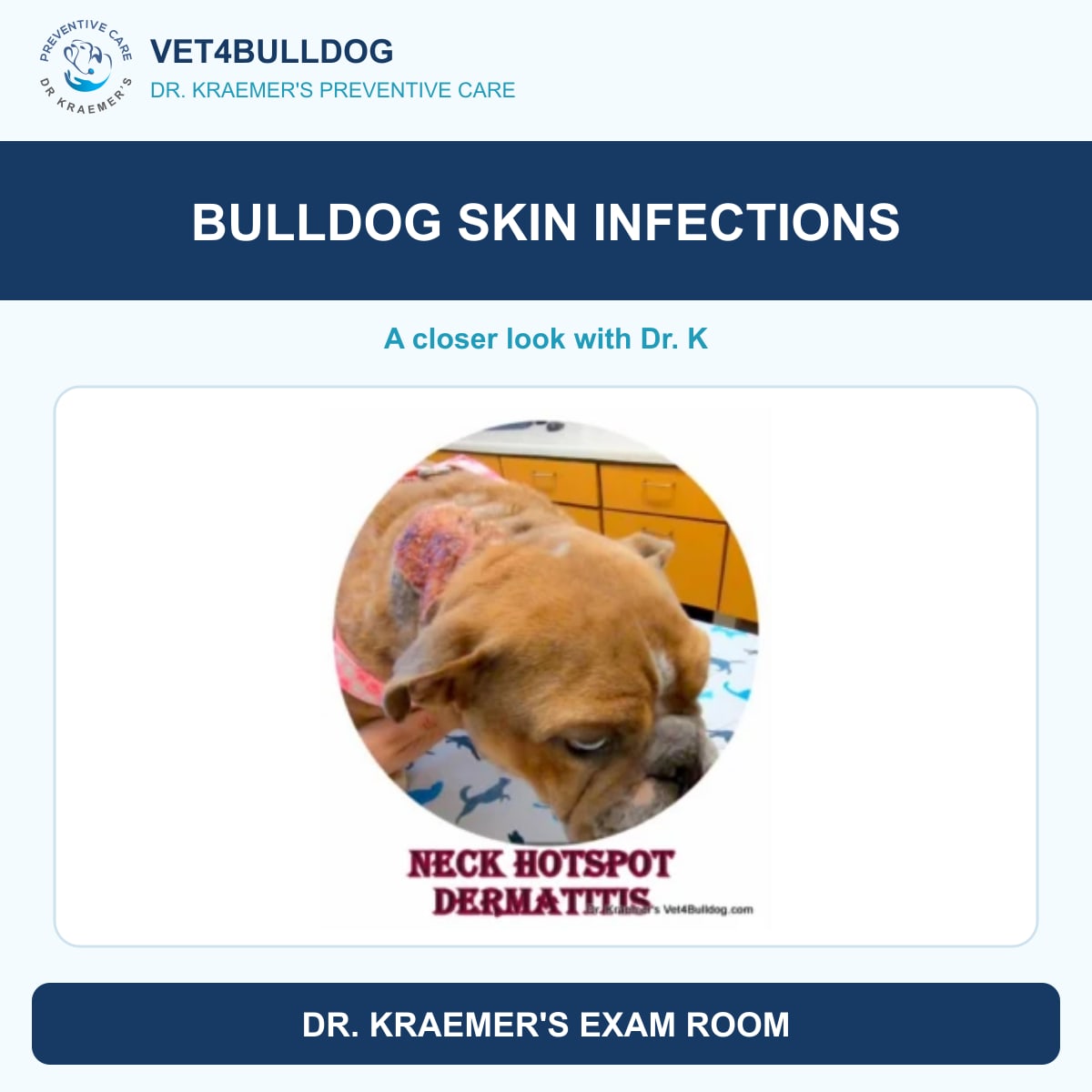
Yeast Overgrowth Skin Infection
What Are The Symptoms Of Bulldog Yeast Infection?
The below list may include skin, ears, digits, interdigital, nails, groin, and armpit.
- Itching & Scratching
- Hyperpigmentation: Skin color change, usually darker
- Crust, Scales
- Dry Skin (seborrhea sicca)
- Greasy Skin (Seborrhea olesoa)
- Skin Thickening (“bulldog elephant skin”)
- Funky Moldy Musty Odor ( “bulldog yeasty smell”)
- Red, irritated ears
Dry is the whole plan
Dry is the treatment plan in one word. Yeast wants moisture and warmth, and a bulldog arrives equipped with both, in every fold and in both ears. Most of what I ask owners to do is simply take the damp away, on a routine, before anything has gone wrong.
I would far rather you cleaned a fold weekly for a year than treated an infection twice. The weekly version takes a minute and costs next to nothing. The treatment version involves an unhappy dog, a prescription, and a good few weeks of your attention.
One caution about ears, and I mean this one. Do not put anything down an ear canal that has not been looked into first. If the eardrum is not intact, some of what is perfectly fine in a healthy ear is the last thing you want in there, and that is not something anyone can judge from the outside.
And if it keeps coming back after proper treatment, stop treating the yeast and start asking why the skin keeps letting it overgrow. The answer is usually allergy, and that is a different conversation to have with your veterinarian.
Bulldog and French Bulldog Yeast Infection PREVENTION CARE:
Yeast infections are exacerbated by the excessive production of lipids therefore for medicated bathing to help control skin lipids, PH, and microbiome may help prevent yeast overgrowth.
1. YEAST PREVENTIVE WITH BATHING:
To help manage and treat these infections, it’s essential to include regular bathing with a medicated shampoo as part of your treatment protocol. This helps reduce the lipid levels on the skin, making the environment less conducive to yeast overgrowth.
Yeast organisms thrive on fats, such as lipids and sebum.
2. YEAST PREVENTION WITH BULLY SKIN THERAPEUTICS:
There is a wide range of antifungal (yeast) topicals, including
- wipes
- rinses
- sprays
- lotions
- shampoos
- and gels.
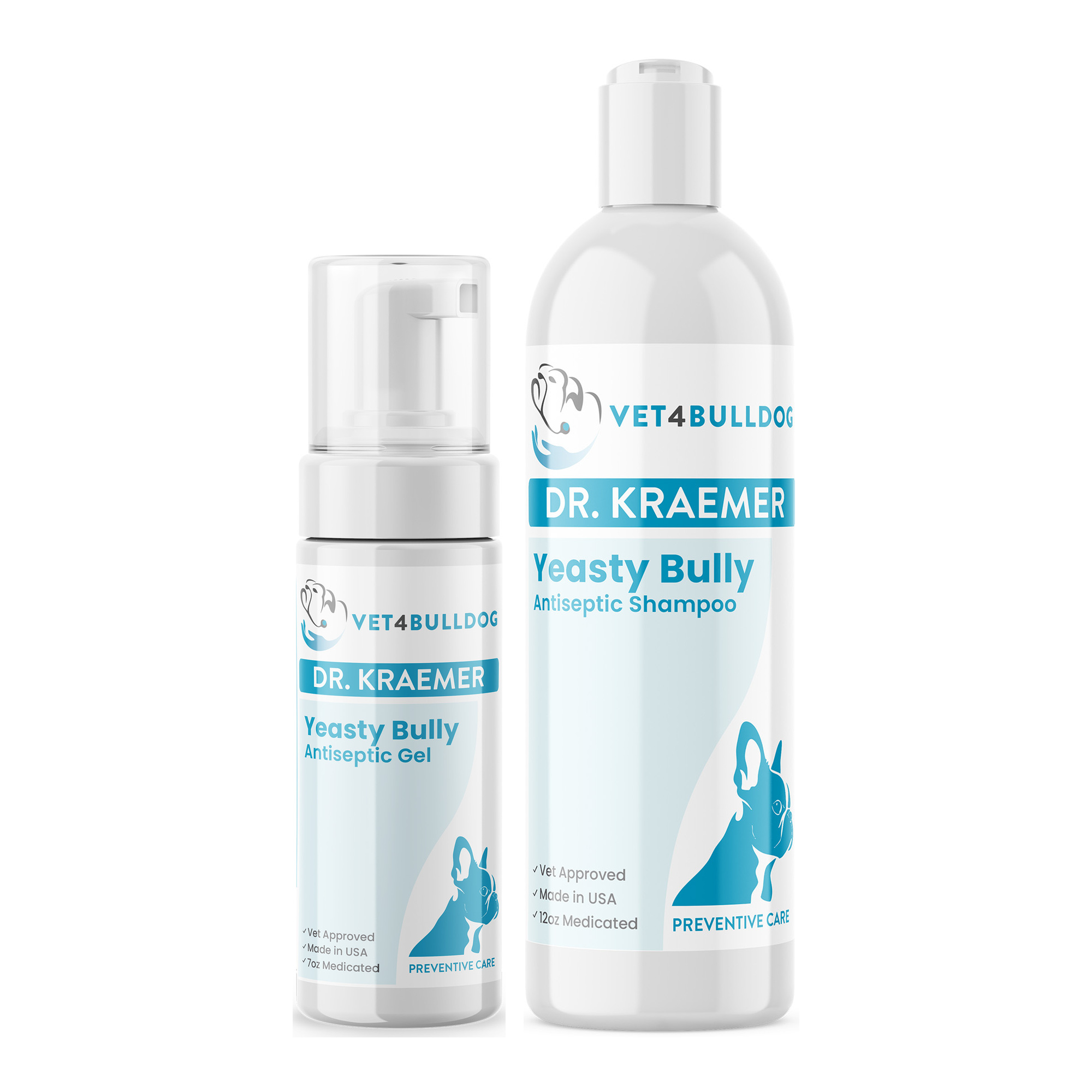
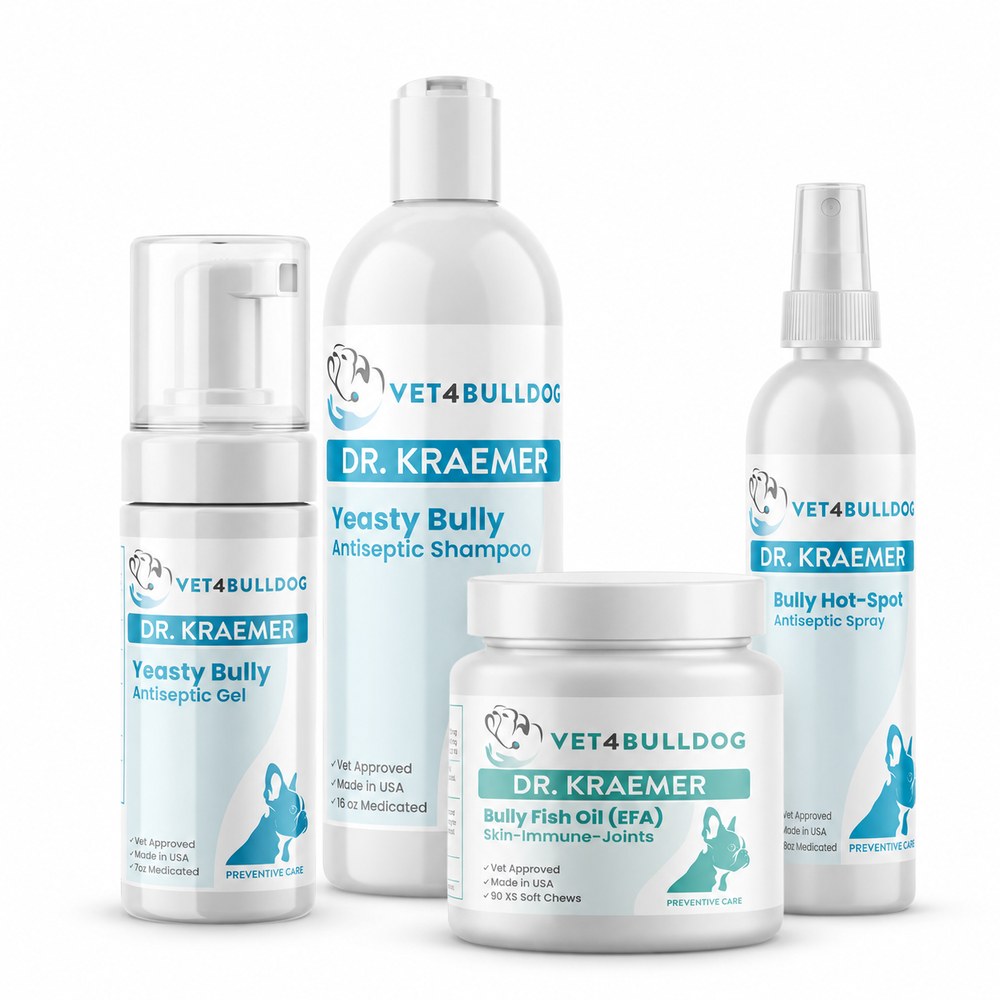
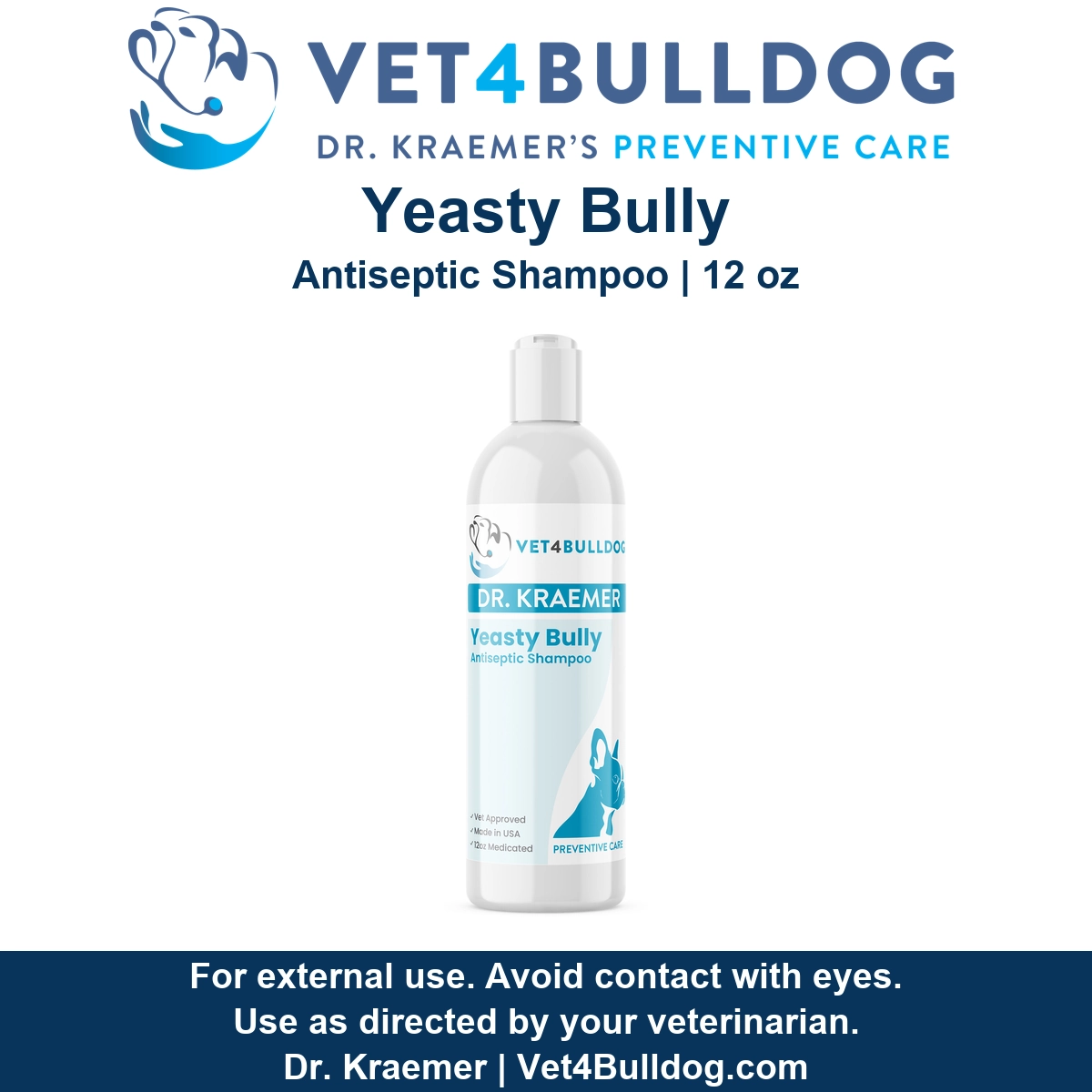
2A. YEASTY BULLY ANTISEPTIC MEDICATED SHAMPOO:
V4B Yeasty Bully Antiseptic Medicated Shampoo
- FREQUENCY: Twice a week
- CONTACT TIME: at least 10 minutes before rinsing
- CONDITIONER: After shampooing, use cream rinses like the V4B oatmeal or itch relief conditioners.
2B. YEASTY BULLY ANTISEPTIC MEDICATED NO-RINSE GEL:
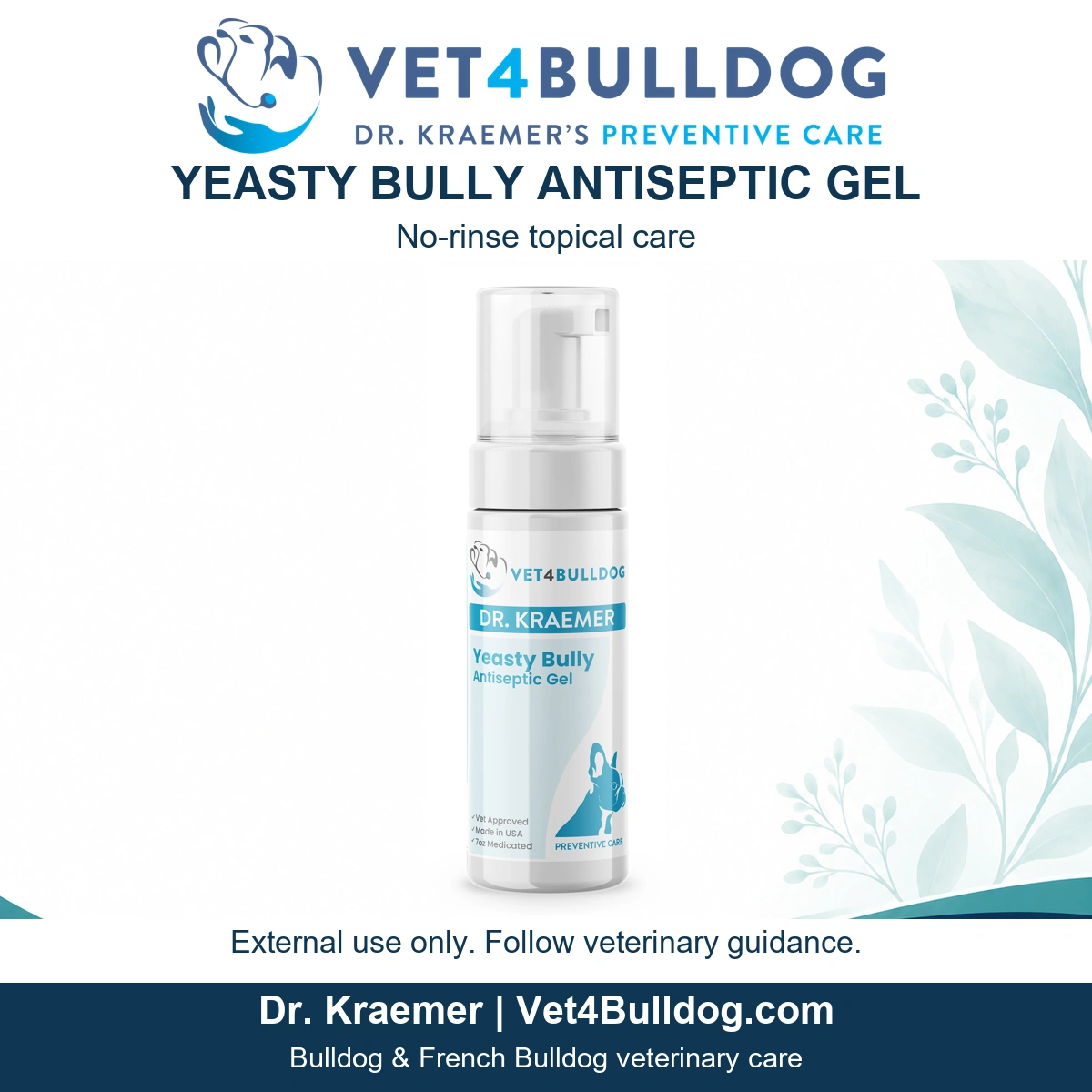
Dr.Kraemer’s Yeasty Bully Antiseptic Waterless Gel.
- FREQUENCY: In between bathing days
- CONTACT TIME: Leave on (no-rinse)
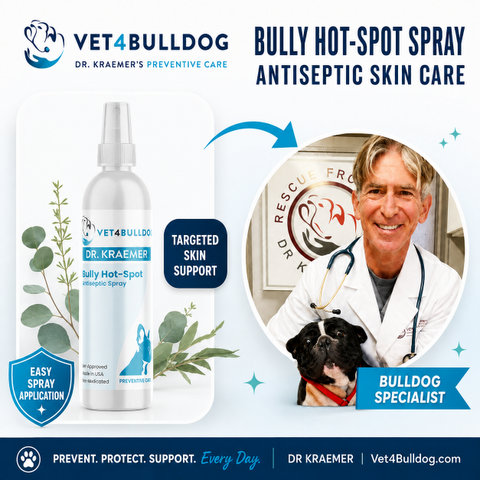
2C. YEASTY BULLY ANTISEPTIC MEDICATED SPRAY:
Dr.Kraemer’s Yeasty Bully Antiseptic Rinse.
- FREQUENCY: As needed
- CONTACT TIME: Leave on (no-rinse)
For Dr. Kraemer’s affordable yeasty skin disease preventive bundles, click HERE
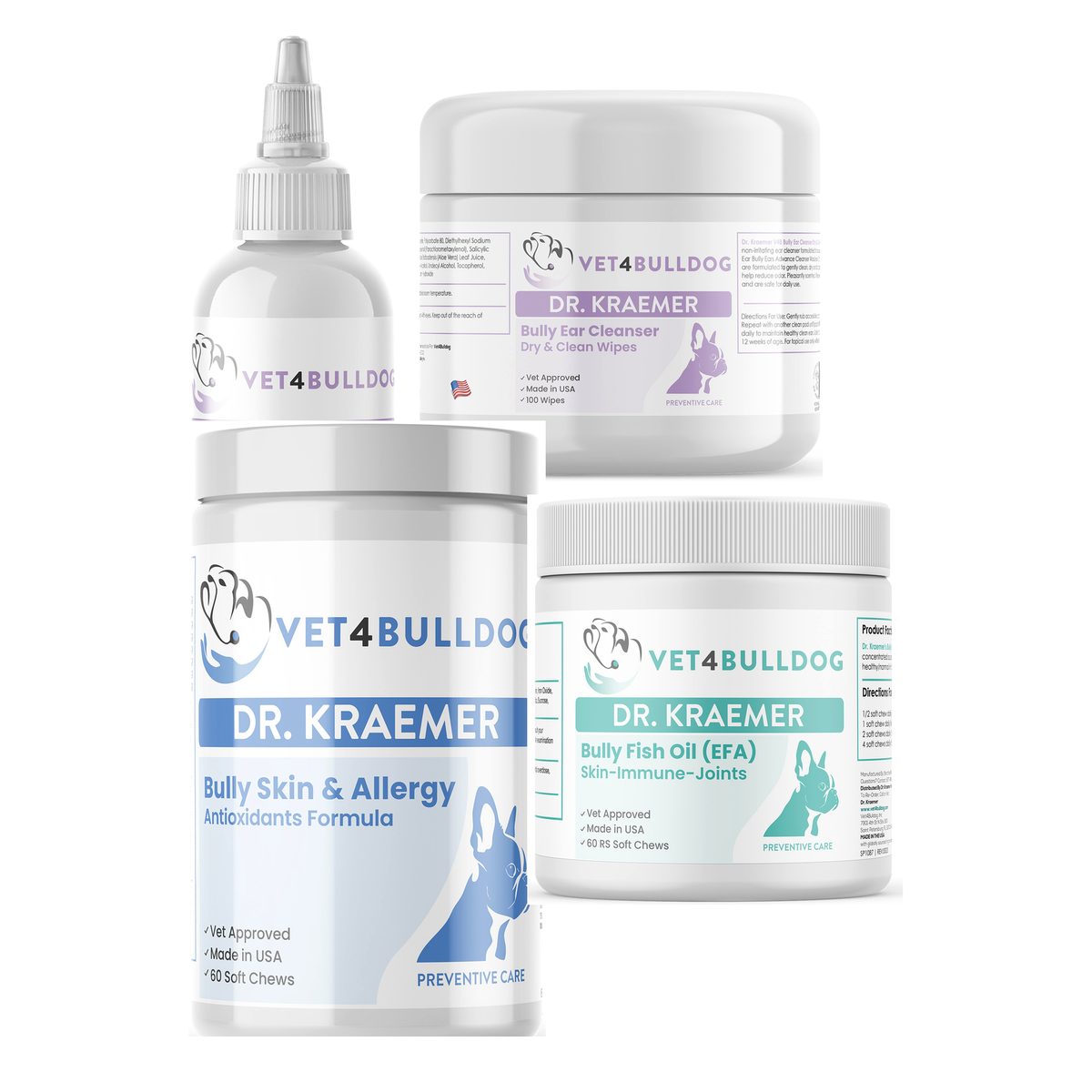
3. YEASTY PREVENTION WITH BULLY EAR THERAPEUTICS:
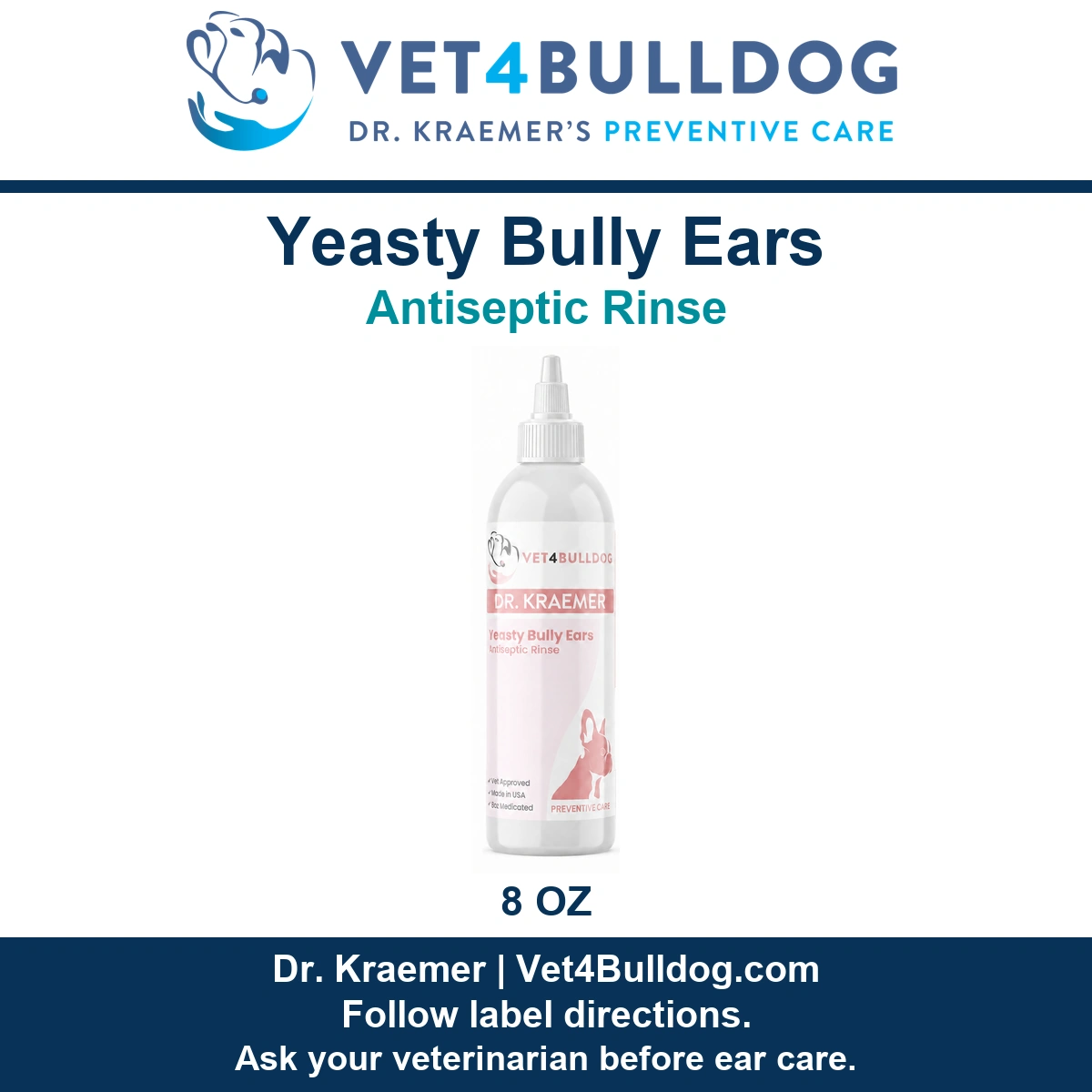
Dr. Kraemer’s V4B Yeasty Bully Ears Antiseptic Rinse
- FREQUENCY: Every other day
- CONTACT TIME: Feel the ear canal, slash around, and dry out with a cotton ball
- WIPE: When done rinsing, use Dr. Kraemer’s ear cleanser wipes to help wipe the pinna and canal.
For Dr. Kraemer’s affordable yeasty ear disease preventive bundles click HERE
4. YEAST THERAPEUTIC SUPPLEMENTS
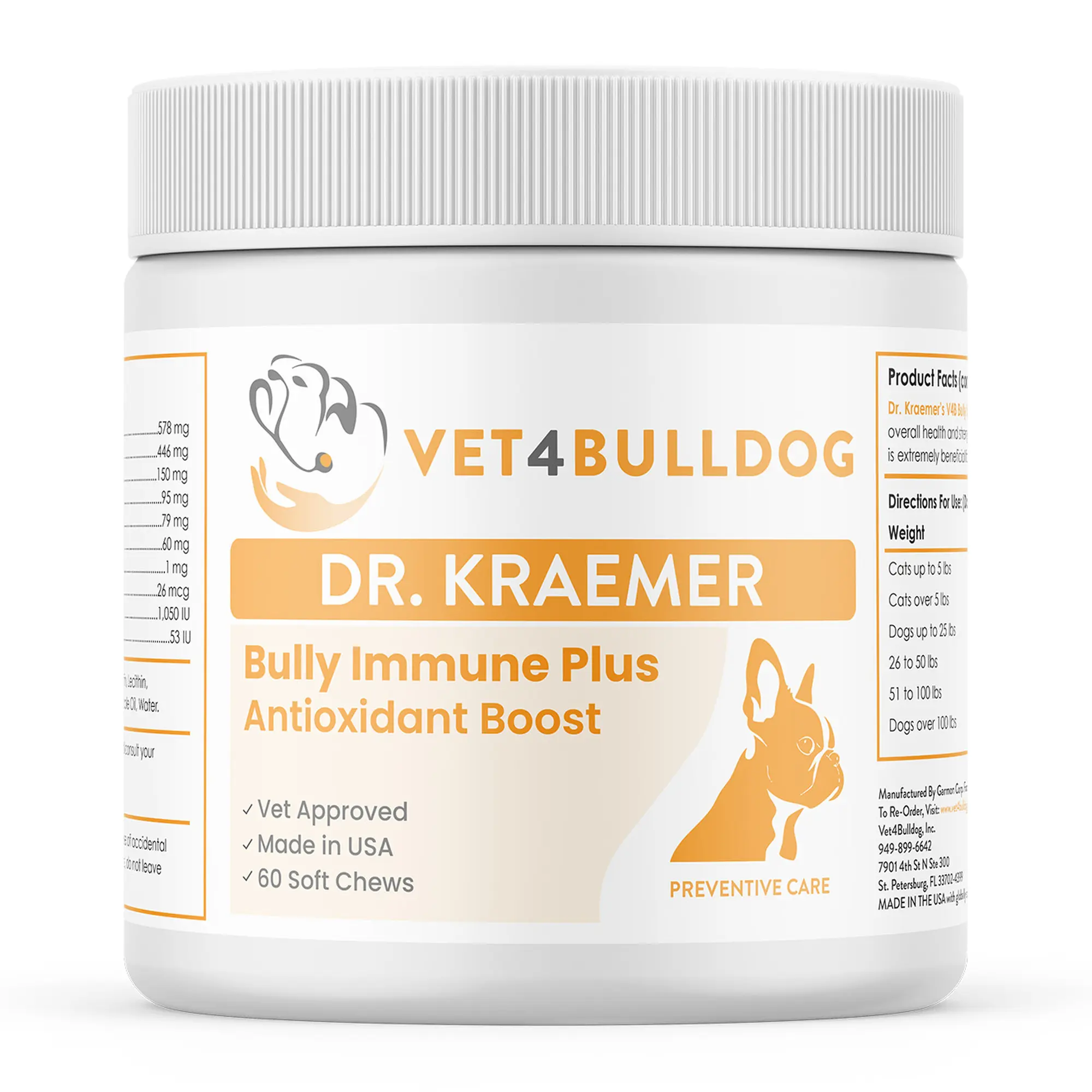
Several bully supplements may help manage yeast infection, inflammation, and itch
- V4B Fish Oil Omega 3 EFA chews:
- V4B Bully Immune Support
- V4B Bully Pre/Probiotics
- V4B Bully Itch & Allergy Formula
How to Treat Bulldog Yeast Infection?
Treatment usually requires a short-term prescription medication combined with long-term bully therapeutics
1. BULLDOG ANTIFUNGAL RX:
Oral Antifungal medication for a minimum of 20 days (often longer) for yeast skin
2. BULLDOG ANTIMICROBIAL (topical, oral):
When bacterial overgrowth is found on cytology (usually bully staphylococcus ), antibiotics are often prescribed.
For otitis externa, I don’t recommend systemic antibiotics; only topical (only for otitis media and end-stage bully ear disease)
3. ANTI-INFLAMMATORIES AND ITCH CONTROL:
Often with short-term topical or/and systemic steroids (prednisone)
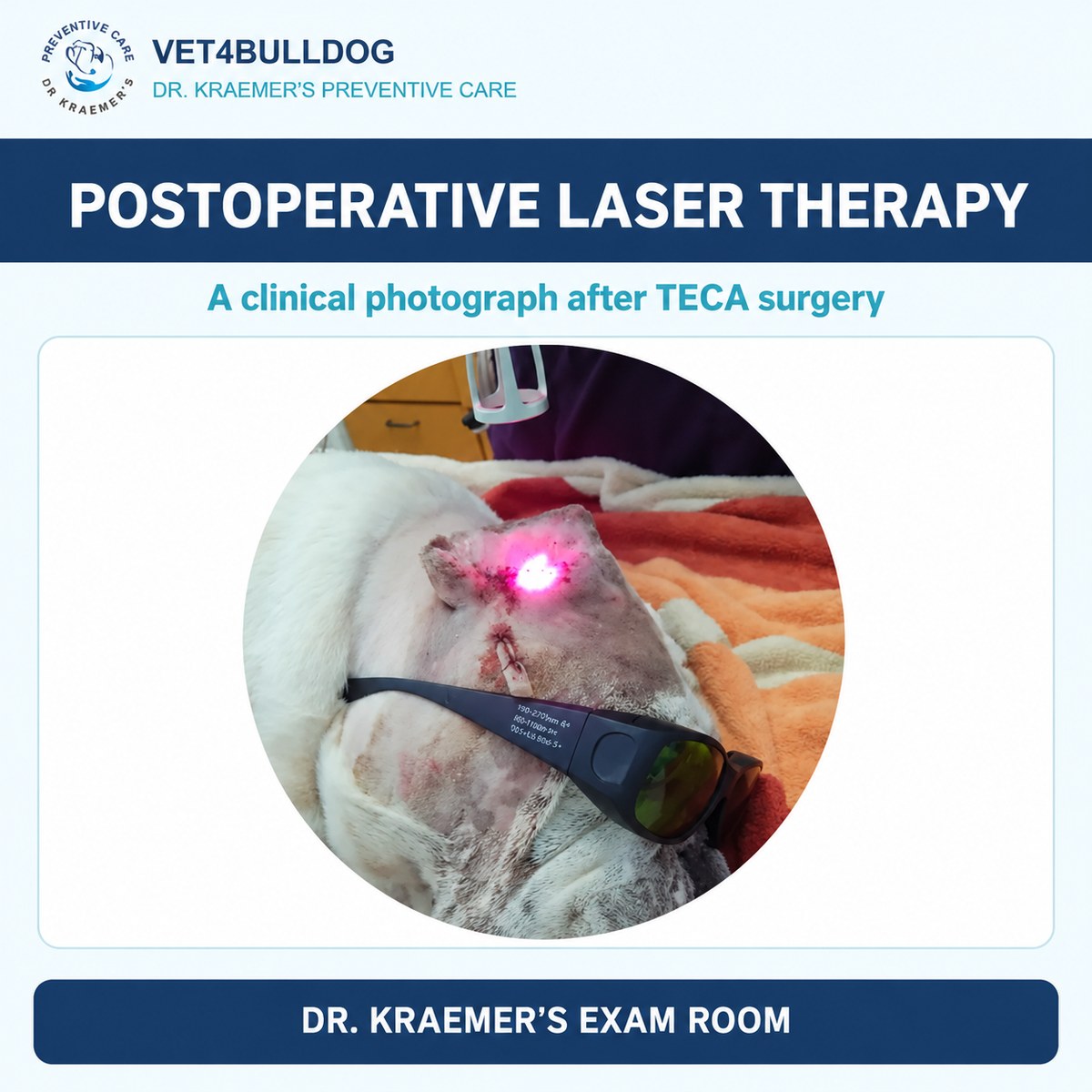
COLD LASER: Class 4 Cold Laser
It smells before it looks like anything
Owners usually bring me a yeasty Bulldog once the skin has gone red and thick. By then we are treating something that has been building for weeks. The signal arrives much earlier than that, and it does not arrive through your eyes.
It is the smell. Sweet, slightly stale, a bit like old bread or corn chips. You will notice it on your hands after you have fussed him, or off his bedding, or when he shakes his head and you catch it across the room. At that stage the skin can still look perfectly normal, and that is exactly the moment when a routine clean sorts it out.
The reason it works as a signal is that yeast is always there. It lives on every dog. What changes is how much of it there is, and the smell tracks the population long before the skin reacts to it.
So use your nose on a schedule, not just when something looks wrong. Once a week, go through the folds, the tail pocket, the feet and both ears. If something smells where it did not last week, that is the week to clean it properly rather than the month to book an appointment.
One thing the smell does not tell you: whether it is yeast alone or yeast sitting on top of a bacterial infection, or something underneath driving both, such as allergy or a hormone problem. If it keeps returning however well you clean, the question stops being the skin and starts being what is underneath it.
Dr. Kraemer’s Yeast Infection in Bulldogs: TIPS & WARNINGS
Below are yeast infection tips and warnings courtesy of Dr. Kraemer
#1. YEAS INFECTION DISTRIBUTION TIP:
Yeast Infection often resembles bacterial dermatitis (bulldog staphylococcal pyoderma), another common secondary opportunistic skin condition.
Yeast Infection in Bulldogs and French Bulldogs’ most common body parts are:
- Your bulldog’s skin fold (face, nose, tail, vaginal, toes, and interdigital)
- The skin under the armpit
- Groin area (inguinal) and limbs
- Ears & Ear Canal
#2. YEAST INFECTION PRIMARY CAUSE TIP:
Always check for an underlying primary problem, like
- Bulldog Atopic Allergic Itch Dermatitis
- Bulldog Food allergy
- Bulldog and French Bulldog Demodex
Remember yeast infections in bulldogs are usually secondary and not the primary cause.
#3 YEASTY BULLDOG TOPICAL THERAPY TIP:
Yeast infection in bulldogs could take weeks to treat, but it should get better if the underlying medical condition is recognized and controlled.
As with any case of dermatitis, always combine topical treatments (shampoos, gels, conditioners).
#1. YEASTY BULLDOG TREATMENT FAILURE WARNING:
Undiagnosed or misdiagnosed secondary bulldog yeast infections and/or staph pyoderma are the most common reasons I encounter for the failure or lack of response to medications prescribed for treating your bulldog’s itching and allergies.
#2 YEASTY EAR IRREVERSIBLE DISEASE WARNING:
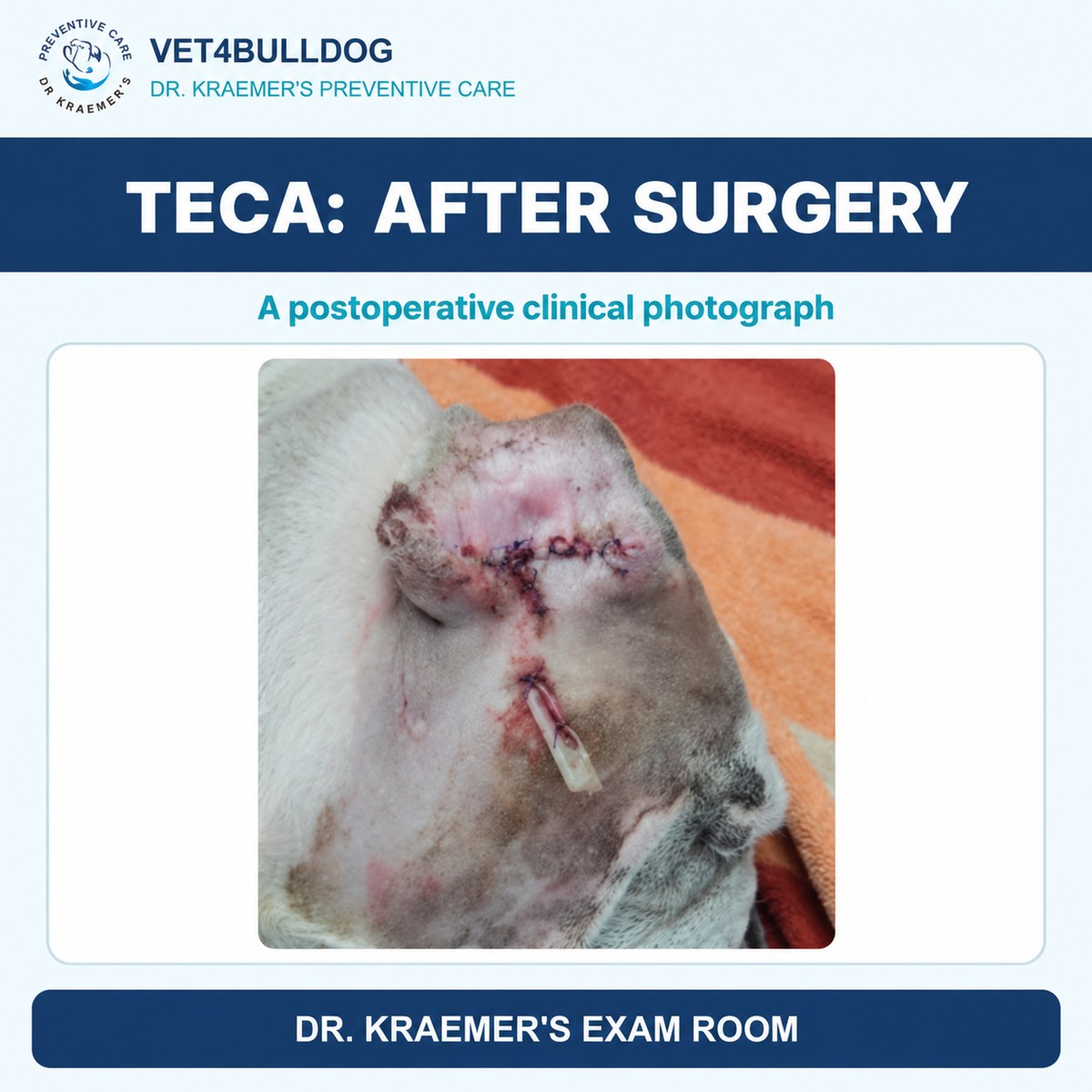
Undiagnosed chronic yeast infection of the ears can bring on chronic non-resolving otitis that can lead to end-stage ear disease forcing us to perform total ear canal resection with bulla osteotomy (TECA w LBO)
#3. YEASTY BULLDOG BACTERIA INFECTION WARNING:
Yeast infections often resemble bacterial dermatitis and bacterial ear infections, such as bulldog staphylococcal pyoderma and bulldog staphylococcal otitis. Like yeast, these common bacterial infections are also secondary opportunistic conditions that affect the skin and ears.
Why does my bulldog smell like that?
Is it contagious, to my other dog or to me?
Can I just use the antiseptic shampoo and skip the appointment?
Why does it keep coming back?
Can I put an ear rinse in before anyone has looked at the ear?
How often should I be cleaning the folds?
Is it yeast or is it bacteria?
Will a supplement clear it up?
More Help from Dr. Kraemer
- Ear infection and otitis
- Allergic otitis, the itchy ear
- Itchy skin and allergies
- End-stage ear disease, where untreated ears end up
- What you can handle at home, and when to see the vet
Trusted by Vets ~ Recommended by Owners ~ Approved by Bulldogs
References
- Merck Veterinary Manual. Malassezia Dermatitis in Dogs
- Bond R et al. Biology, diagnosis and treatment of Malassezia dermatitis in dogs and cats, clinical consensus guidelines. Veterinary Dermatology
- Bajwa J. Canine Malassezia dermatitis. Canadian Veterinary Journal
- Nuttall T. Successful management of otitis externa. In Practice
To be clear: supplements or topicals are not substitutes for prescribed treatment. If your dog is unwell, is being treated for a condition, or is already on medication, review any supplement or topical with your veterinarian so it fits the plan you are already following. This page is educational and is not a diagnosis or a treatment plan for your own dog.