


Bulldog and Fr. Bulldog Itching Atopic Allergy Introduction
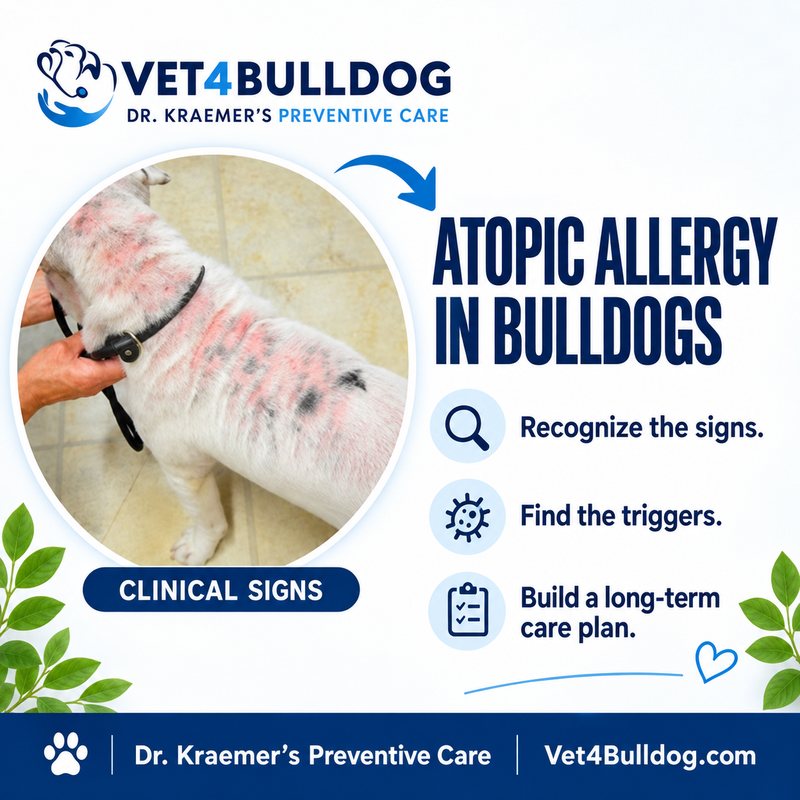
Allergic Atopic Itch Dermatitis is the most common allergy seen in bulldogs. Atopic dermatitis is a chronic, itchy inflammatory skin disease associated with genetic susceptibility, skin-barrier changes and environmental allergens such as pollen, dust mites and mold. Food reactions can cause similar signs and may coexist. Common allergens are:
- pollen
- dust mites
- mold spores
- or certain foods.
It’s similar to allergies in humans and is characterized by itching, redness, and skin irritation. 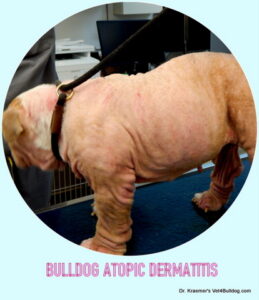
Bulldog Atopic Itch Allergy 5 MUST KNOW Facts
- While environmental atopic itch allergy is the most common allergy in bulldogs, persistent itching can have other causes.
- Environmental triggers can be found indoors and outdoors.
- Bacterial and yeast infections are secondary to allergies and likely to compound the problem.
- Washing the allergens off the skin and itch control is essential and should include non-RX bully therapeutics.
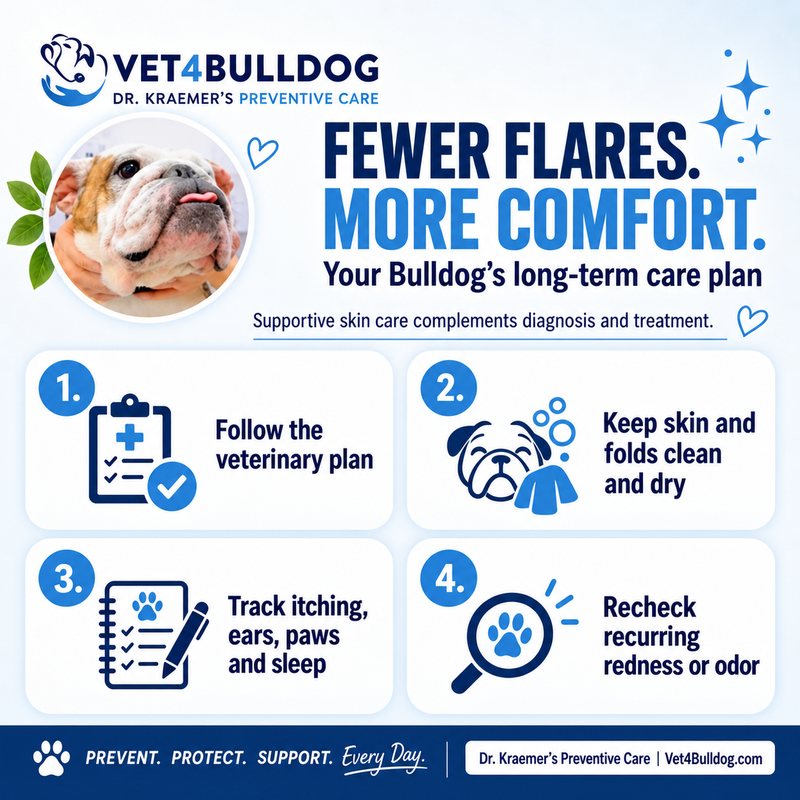
- Consistent skin care, appropriate treatment and reassessment support comfort between flares. Prevention and care may include Dr. Kraemer’sBulldog Allergy and Itch Control Bundles.
Members of this bulldog community prefer prevention over RX
Insider tip
What Are The Common Allergies in Bulldogs?
- BULLDOG ALLERGIC ATOPIC ITCH DERMATITIS
- BULLDOG FLEA ALLERGY DERMATITIS
- BULLDOG FOOD ALLERGY DERMATITIS
- BULLDOG CONTACT ALLERGY DERMATITIS
Other less common bulldog and French bulldog skin conditions are:
- Bulldog demodex red mites
- Bulldog sarcoptic mites
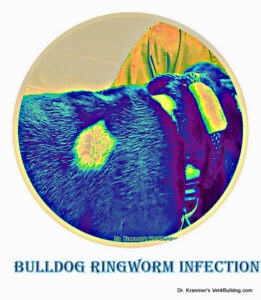
- Bulldog dermatophytes: (ringworm)
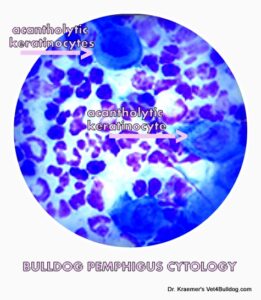
- Bulldog pemphigus: an autoimmune skin disease
- Bulldog Keratinization abnormalities
- Bulldog skin cancer: mast cell tumors, lymphoma, etc
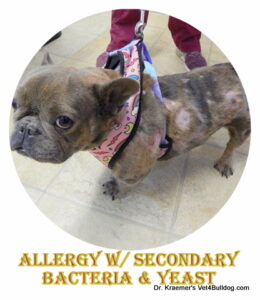
Most bulldog skin allergies will also present with secondary bacterial infections and/or yeast infections
What Causes Allergic Atopy in Bulldogs and French Bulldogs?
IMMUNE: Atopic dermatitis is primarily caused by an overactive immune response to environmental allergens. INHERENT: Genetics also play a significant role, with certain breeds such as Bulldogs being more predisposed to the condition.
1. BULLDOG ALLERGY OUTDOOR ALLERGENS
- WEEDS
- GRASS
- POLLEN
2. BULLDOG ALLERGY INDOOR ALLERGENS
- MOLD
- DUST MITE
- HUMAN DANDER
Most allergens affect pets via contact with the skin (inhalation allergies are rare)
Allergic Atopic Itch Dermatitis in Bulldogs: Symptoms
Symptoms include:
- INTENSE ITCH:
- REDNESS & SORES: often worsened by scratching, licking or chewing
- FLAKY & CRUSTY
- SEBORRHEA SICCA or OLEOSA: Bully Dry or/ Oily Flaky Skin Seborrhea
- SMELL
- ALOPECIA: bald patches and hair loss
- BACTERIAL INFECTION: secondary to scratching and inflammation
- YEAST INFECTION: Secondary bully Yeast Infection
Itching is the hallmark of bulldog and French bulldog allergies
How to Diagnose Bulldog Atopic Allergy?
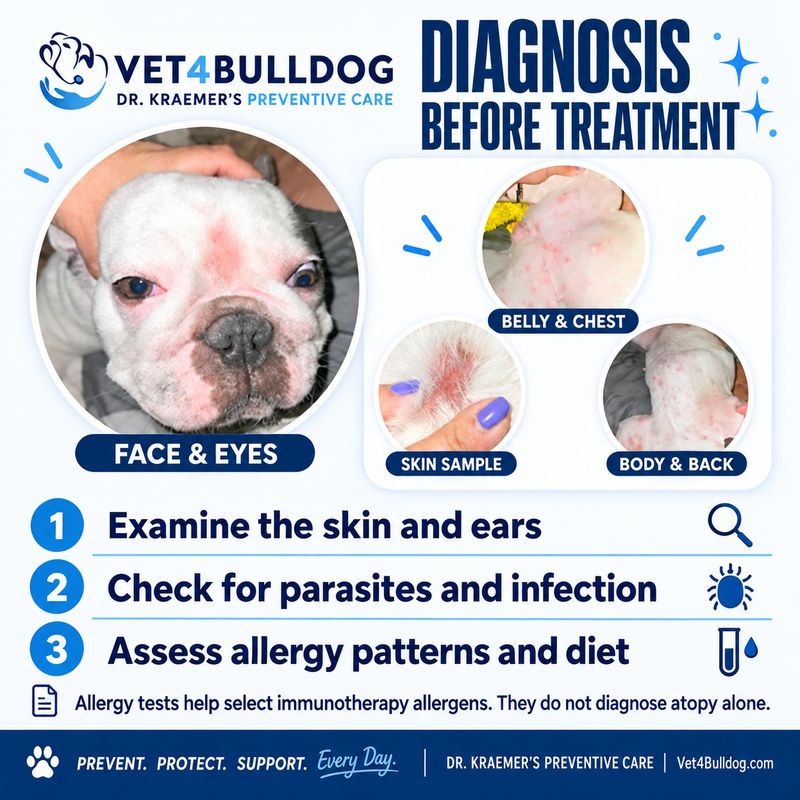
Atopic dermatitis is diagnosed from the history, examination and evaluation of other causes of itching. Skin or blood allergy testing does not diagnose atopy on its own. After the clinical diagnosis, these tests can help select relevant allergens for immunotherapy, interpreted alongside your Bulldog’s history and exposure. The veterinarian diagnostic method starts with a history of your bulldog’s diet and environment: is your bulldog itching, and where is the hair loss distributed?
- CYTOLOGY: microscopic examination of a skin impression to check for bacteria, yeast, and abnormal cells
- SCRAPE: skin scrape microscopic exam to check for demodex and sarcoptic mange
- VARL: Liquid Gold serum allergy blood test to test for indoor and outdoor allergen sensitivity
- FOOD TRIAL: hypoallergenic diet trial to rule out food allergy
- FLEA EXAM: check for typical dorsal lumbar lesions and flea poop
- SKIN CULTURE: culture sensitivity for nonresponsive pets to multidrug-resistant bacteria such as MRSP
- FUNGAL CULTURE: check for ringworm (dermatophytes)
How to Prevent and Treat Bulldog Atopic Allergy?
- Bathing
- supplements
- bully topicals
- bully therapeutics
These are critical to relieve itching, repair the skin barrier, remove scale and flakiness, restore the skin microbiome, and support immunity.
1. BULLY ITCH CONTROL THERAPEUTIC
Therapeutic topicals and supplements are an essential part of managing any bully skin problem.
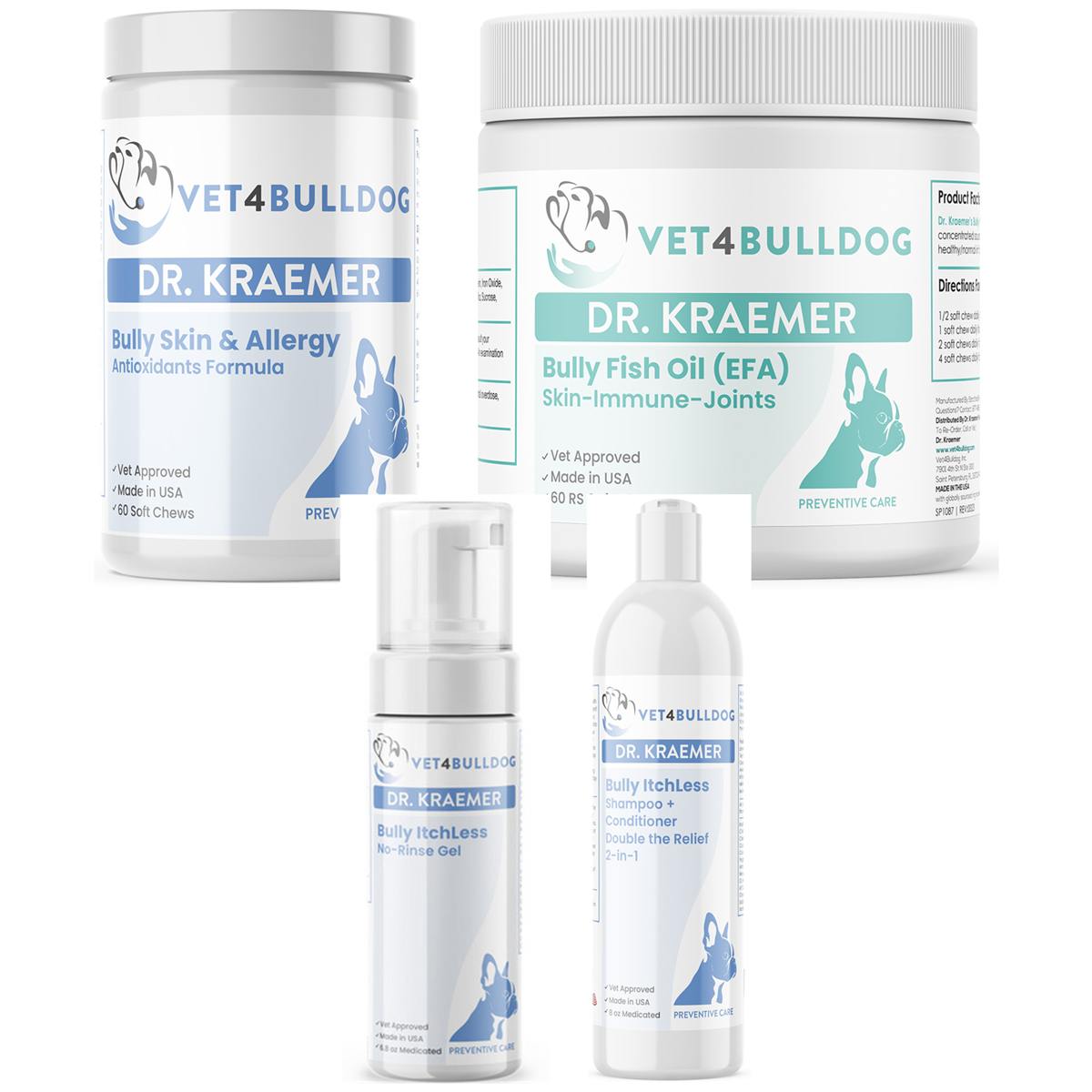
- Medicated 2-in-1 Shampoo + Conditioner: Dr. Kraemer’s V4B Bully ItchLess 2-in-1 Shampoo + Conditioner
- Between Baths: Dr. Kraemer’s V4B Bully ItchLess No-Rinse Gel
HOW OFTEN: 1-2 baths a week HOW LONG: 10 min. lathering before rinsing 2-IN-1: cleans and conditions in a single step, so there is no separate cream rinse to buy BETWEEN BATHS: apply the no-rinse gel on non-bath days, no water and no rinsing needed
2. BULLDOG HYPOALLERGENIC THERAPEUTICS:
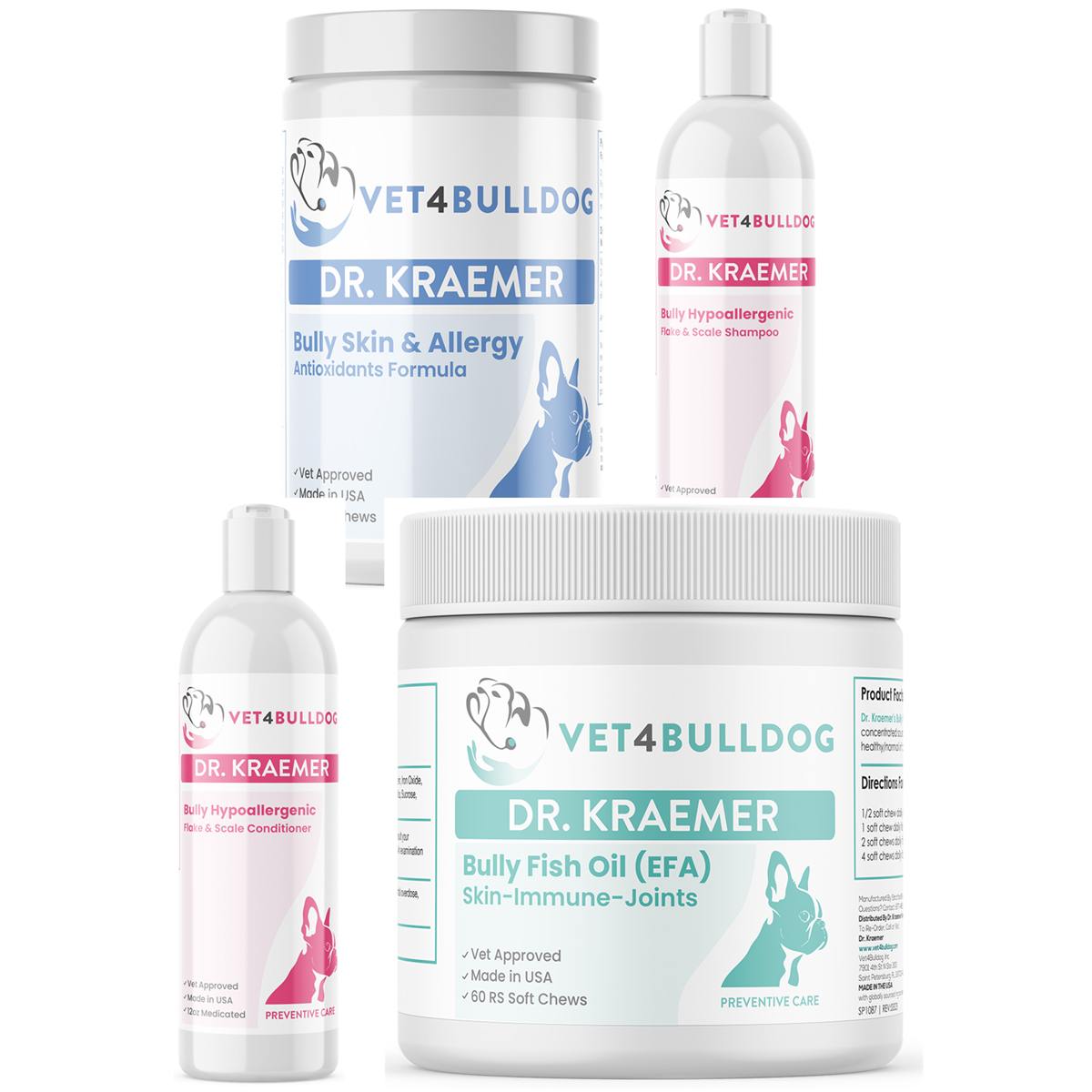
- Medicated Shampoo: Dr. Kraemer’s V4B Hypoallergenic Bully Skin Shampoo
- Medicated Conditioner: Dr. Kraemer’s V4B Bully Hypoallergenic After Shampoo Conditioner.
HOW OFTEN: 1-2/week with a medicated shampoo HOW LONG: 10 min. Lathering before rinsing CREAM RINSE CONDITIONER: Recommend after shampooing
For optimal outcomes use a conditioner after shampoo
3. BULLDOG ALLERGY ANTISEPTIC THERAPEUTICS:
Medicated Shampoo & Waterless Gel
- Dr. Kraemer’s V4B Yeasty Bully Antiseptic Shampoo. (10 minutes of lathering before rinsing)
- Dr. Kraemer’s V4B Yeasty Bully Waterless Gel
HOW OFTEN: 1-2/week with a medicated shampoo HOW LONG: 10 min. Lathering before rinsing ANTISEPTIC GEL: The waterless gel application is best used on non-bath days; shake and then apply it to hands or directly; finish by rubbing it into the skin and coat.
For optimal outcome, we offer bundles at a reduced cost.
ATOPIC ALLERGY BULLY THERAPEUTIC SUPPLEMENTS:
- FISH OIL (EFA): Essential fatty acids (EFA) that combine Omega 3 and 6 fish oils, vitamins A and D
- PRE & PROBIOTICS: Pre & Probiotics help restore and assist the good gut bacteria (microbiome) and prevent Leaky Gut Syndrome, like
That seasonal pattern makes environmental allergy a possibility, but a simple food switch does not rule out food allergy. A useful diet trial needs a strict, veterinarian-directed plan; if signs improve, a controlled challenge helps confirm the result. I would start with an examination and checks for parasites and secondary bacterial or yeast overgrowth. If atopy is diagnosed and you want to consider immunotherapy, allergy testing can help select the allergens. Meanwhile, choose a bathing and skin-care routine that fits the findings.

Atopic Allergy in Bulldog REGENERATIVE MEDICINE TREATMENT:
If bulldogs cannot tolerate anti-itch medication such as prednisone (steroid) because of adverse effects, or if pet owners prefer to avoid these drugs due to their potential long-term risks, they should discuss alternative options with their veterinarian.
BULLDOG ALLERGY STEM CELL THERAPY & CRYOBANKING:
Stem cell therapy is emerging as a revolutionary and safe treatment for allergic bulldogs, French bulldogs, and other pets suffering from chronic, unresolved itching caused by atopic dermatitis. This innovative, non-pharmaceutical approach, known as stem cell therapy, shows tremendous promise in treating various inflammatory, immune-mediated, and painful conditions. By utilizing the pet’s mesenchymal stem cells, which are natural repair and anti-inflammatory agents, this therapy promotes organic healing for persistent and treatment-resistant allergies.
Dr. Kraemer offers cryobanking program, enabling future stem cell treatments to be readily available.
Atopic Itch Dermatitis in Bulldogs: PRESCRIPTION RX:
- Cytopoint: Cytopoint is a new, long-lasting, non-steroidal monoclonal antibody that targets IL-31, and is a safe itch relief injection that I now offer to my bulldog and French bulldog patients with allergic itch atopic dermatitis. It is usually administered every 4 to 8 weeks, or as needed.
- Itch Control: Steroids, Apoquel, Cyclosporine (Atopica), Anti-Histamines (not very effective)
- Antibiotics
- Antifungal
- Other: Pentoxifylline
Allergic Atopic Itch in Bulldogs RULE OF THUMB:
Bulldogs and French Bulldogs experiencing intense itching should be examined for allergic atopic itch dermatitis. This severe itching often leads to self-trauma, causing stress, and potential sleep disturbances, and as the itch worsens, it can become painful. Bulldog atopic itch dermatitis can quickly escalate into a significant quality-of-life issue, requiring prompt intervention. In many cases, it necessitates lifelong management and care.
Bulldog Allergic Atopic Dermatitis TIPS & WARNINGS:
Below are selective atopic dermatitis tips & warnings courtesy of Dr. Kraemer
#1. BULLDOG ALLERGIES ITCHING TIP:
English Bulldogs or French Bulldogs showing symptoms like itchy, red, irritated skin, bumps, chronic pigment changes, or thickened skin should be evaluated for bully atopic allergic dermatitis.
#2. BULLDOG ALLERGIES BODY DISTRIBUTION TIP
Bulldog atopic allergic dermatitis distribution is usually to the
- ears
- paws
- legs
- armpits
- abdomen
#3. BULLDOG ALLERGY IMMUNE THERAPY TIP:
A bulldog experiencing itchy skin attributed to environmental allergic atopic itch dermatitis could find relief through a blood test, which identifies the specific allergen causing the allergy. Once the allergens are pinpointed, immune therapy can be initiated to help manage the condition.
- Common outdoor allergens are grass, weeds, and tree/pollen.
- Common indoor allergens are mold, dust mites, and dandruff.
Achieving success in managing atopic allergic itch dermatitis in bulldogs may necessitate lifelong and consistent treatment. It’s important for bulldog owners committed to immunotherapy to understand that while it can provide relief, there are no guarantees of a complete cessation of itchiness. Therefore, ongoing use of topical and systemic medications to some degree may still be necessary.
It could take months before your bulldog’s itching improves.
#4. BULLDOG FOOD ALLERGY TIP
I recommend a food elimination trial with a hypoallergenic prescription diet to rule out bulldog and French bulldog food allergies.
#5. BULLDOG CONTACT ALLERGY TIP:
If your bulldog presents with itching after a topical product is applied, bully contact allergy is the most likely cause.
#6. BULLDOG FLEA ALLERGY TIP:
I always recommend year-round flea prevention, especially in areas where fleas are common.
#7. ANTI-HISTAMINES TIP:
Over-the-counter antihistamines are sometimes used to manage allergic itch and atopic dermatitis in bulldogs, though their effectiveness can vary. However, they are generally safe and may provide a mild sedative effect, helping both the pet and the owner get a better night’s sleep. Administering one before bedtime could offer some relief.
#8. BULLDOG ALLERGY GENETIC ORIGIN TIP:
We believe that in bulldogs, there is a genetic disposition to atopic, itchy, allergic dermatitis.
#9. BULLDOG ATOPIC ALLERGY CYTOLOGY TIP:
Common tests advised for any bulldog or French bulldog suspected of allergic-itch atopic dermatitis include cytology, which involves examining skin cells under a microscope, and sometimes bacterial cultures.
#10. ATOPIC ALLERGY STEM CELL THERAPY TIP:
For bulldog and French bulldog puppy owners concerned about the adverse effects of traditional treatments, I now offer a safe, cutting-edge alternative: stem cell therapy. This innovative approach utilizes your pet’s repair and anti-inflammatory cells to naturally heal and manage chronic allergic atopic itch dermatitis, providing a more holistic solution to their allergies.
#11. ALLERGIES BATHING TIP:
Most environmental allergens are absorbed through the skin; thus, just a water rinse alone helps remove the allergen, as well as scales and dander.
#12. BULLDOG ALLERGY ENVIRONMENT CONTROL TIP:
Unlike bulldog food allergies, eliminating the environmental allergens that trigger allergic itch and atopic dermatitis is often not possible. However, certain avoidance strategies can still be effective. Limiting outdoor playtime, especially when pollen counts are high, keeping the grass short, bathing your bulldog frequently, and regularly changing air conditioner filters can all help minimize allergen exposure.
#13. BULLDOG ALLERGY DUST MITES TIP:
To reduce the impact of indoor allergens like dust mites, regularly dust your home and use synthetic materials for your bulldog’s bedding. Frequent vacuuming, washing bedding regularly, replacing air conditioner filters, and keeping indoor humidity levels below 50% are also effective measures to manage allergens.
#14. ITCHING ALLERGIES MOLD TIP:
Reduce dampness, repair leaks and keep bedding clean and dry. Where indoor humidity is high, appropriate dehumidification can help control moisture. A humidifier should not be recommended as a mold-control measure.
#15. ALLERGY TOPICAL TREATMENT TIP:
Topical skin treatment is critical and should always be part of your therapeutic strategy and planning. They should usually include anti-itch and hypoallergenic shampoo and lotion.
Remember, among the benefits of topical therapy is the mechanical removal of allergens from your bulldog and French bulldog’s skin and coat.
#16. FOOD ALLERGY AND GUT TIP:
Itchy bulldog and French bulldog puppies suffering from concurrent gastrointestinal problems should be suspected of a food allergy.
#17. CYTOPOINT INJECTION TIP:
I now offer bulldogs with atopic itch allergies an effective, safe, long-lasting, new monoclonal antibody-specified injection.
#18. FISH OIL FOR BULLDOG ALLERGIES TIP:
I always recommend a holistic approach to atopic allergic itch dermatitis in bulldogs that includes essential fatty acids.
#1. FOOD ALLERGY WARNING:
Food allergies can present with itching patterns and skin distributions similar to allergic itch and atopic dermatitis, but they are distinct conditions. Food allergies are more common in young bulldog puppies and do not typically follow a seasonal pattern. Unlike atopic dermatitis, they may not respond to itching medications, such as prednisone, in the same way. Food hypersensitivity involves an adverse reaction to specific protein sources in your bulldog’s diet.
#2. BULLDOG DEMODEX MITE WARNING:
Bulldogs exhibiting skin allergies suspected of atopic dermatitis should undergo testing for skin mites, including Demodex and sarcoptic mange.
#3. BULLDOG RINGWORM WARNING:
If your bulldog did not respond adequately to prescribed allergy treatments, they should also be tested for
- DTM: ringworm with a DTM fungi culture
- HISTOPATHOLOGY: undergoes a biopsy for histopathology to exclude immune-mediated keratinization defects and cancer.
- HORMONAL TEST: Lastly, a blood test should be conducted to rule out hormonal abnormalities such as hypothyroidism and hyper-adrenal issues.
#4. ALLERGY HYPERSENSITIVITY WARNING:
Don’t confuse hypersensitivity with atopic allergy dermatitis. Hypersensitivity disorders are usually due to vaccine reactions or insect bites and will present with acute onset and swelling, often of the face, lips, and paws.
#5. ATOPIC ALLERGY STEROID WARNING:
Relieving the itch with a steroid might be effective, but long-term use is likely to be damaging, with the potential to cause multiple adverse effects.
Insider tip
#6 ATOPIC ALLERGY SECONDARY INFECTION WARNING:
We have been seeing a rise in bacteria that are resistant to common antibiotics (MRSP).
If your bulldog is not responsive to the empirical antibiotic prescribed, a culture should be done.
#7. ITCHING DURATION WARNING:
Allergic atopic itch dermatitis in bulldogs is often a long-term condition that can last for the life of your pet and usually requires treatment over an extended period.
#8. INDOOR AND OUTDOOR ALLERGY WARNING:
In contrast to bulldog and French bulldog food allergies, whereby elimination of allergens is possible as the method of treatment, avoiding implicated outdoor allergens (grasses, weeds, trees, etc.) and even indoor allergens (mold, dust mites, human dander, etc.) is usually difficult to accomplish.
Why is my Bulldog itching so much?
Is it a food allergy or an environmental allergy?
How often should I bathe an allergic Bulldog?
Do antihistamines work for Bulldogs?
Is long-term prednisone safe?
Will my Bulldog outgrow it?
Recommended by Owners · Approved by Bulldogs
Veterinary Care and Supportive Products
If your Bulldog has persistent or severe itching, recurring ear disease, infection, pain, hair loss, or open skin, a veterinary examination is likely needed. For allergy prevention, itch control and long-term management, explore Vet4Bulldog skin-care and allergy-support options selected for Bulldogs and French Bulldogs.
More Help from Dr. Kraemer
Every itchy bully has a slightly different story. These real-world guides and answered questions can help you connect the dots:
- Cytopoint itch-control injection guide
- Itchy French Bulldog on steroids: what now?
- Breakouts, hives and itch Q&A
- Top 5 budget-friendly tests for an itchy Bulldog
- Five Bulldog allergy myths that waste money and prolong itching
- Can probiotics help skin allergies and ear infections?
About the Author
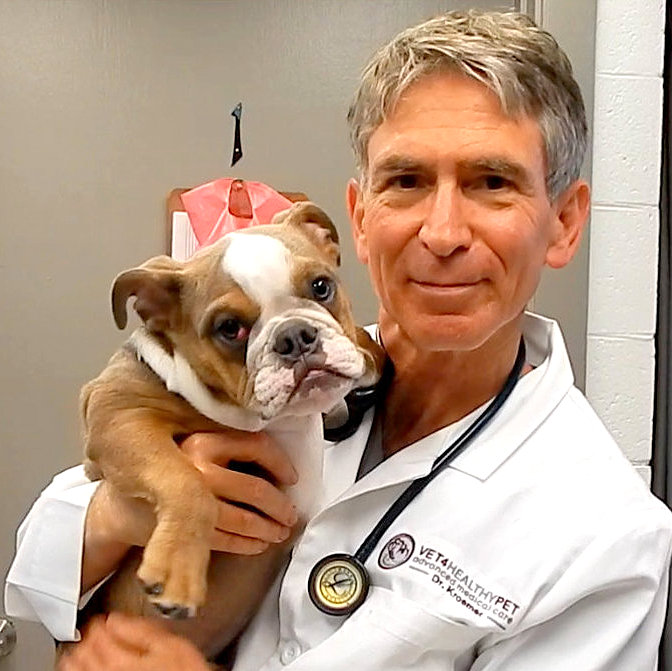
Roy Kraemer, DVM, is a veterinarian with extensive clinical experience caring for Bulldogs and French Bulldogs. His educational work emphasizes prevention, early recognition, appropriate at-home care, responsible medication use, and veterinary evaluation when disease is persistent or severe.
Trusted by Vets ~ Recommended by Owners ~ Loved by Bulldogs
Shop the Hypoallergenic Bundle →
References
- American Animal Hospital Association. 2023 AAHA Management of Allergic Skin Diseases in Dogs and Cats Guidelines
- Merck Veterinary Manual. Atopic Dermatitis in Dogs
- WSAVA. Global Nutrition Guidelines